Tobit, Chapter 13 (Codex Alexandrinus)
Introduction
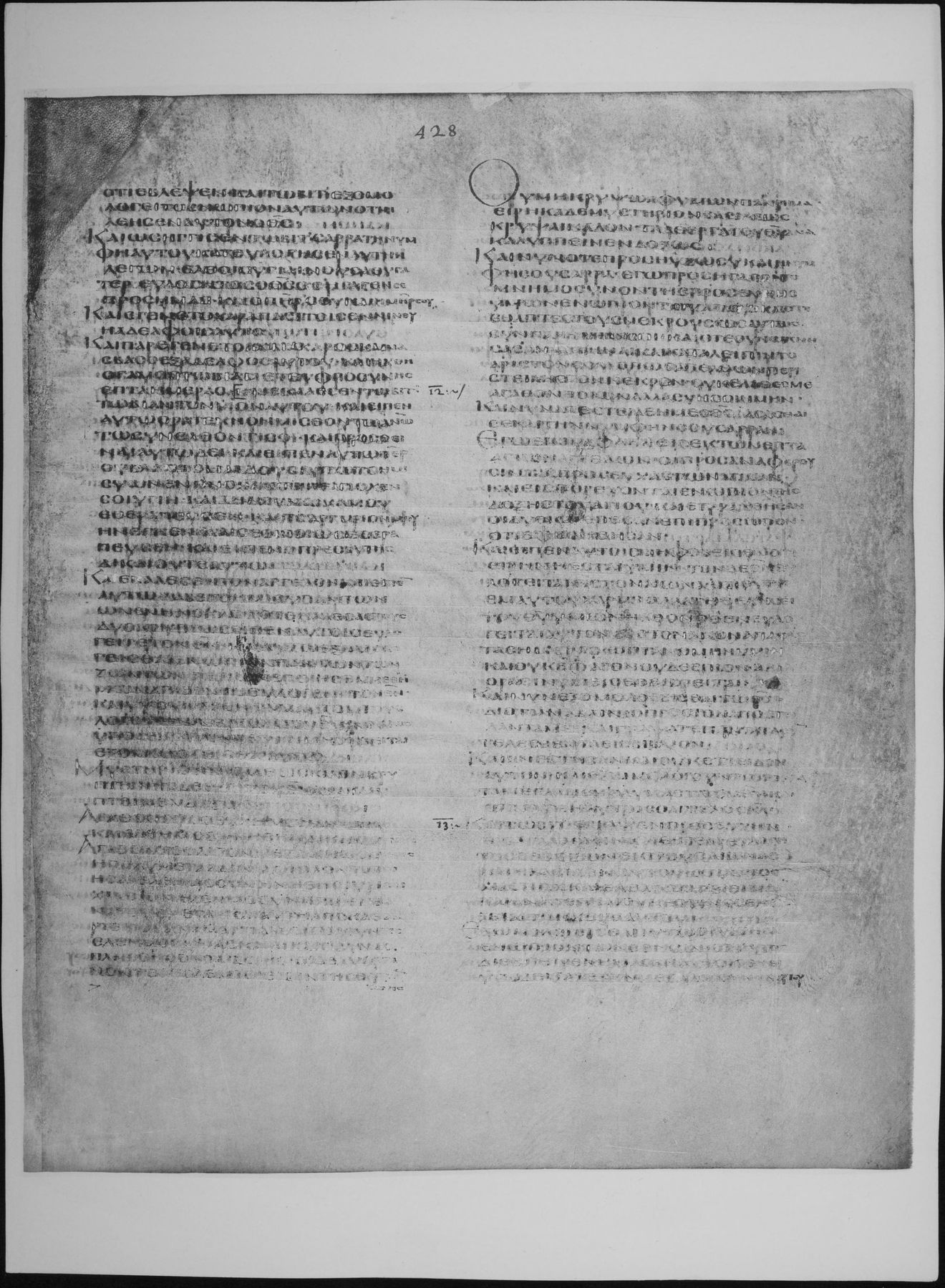
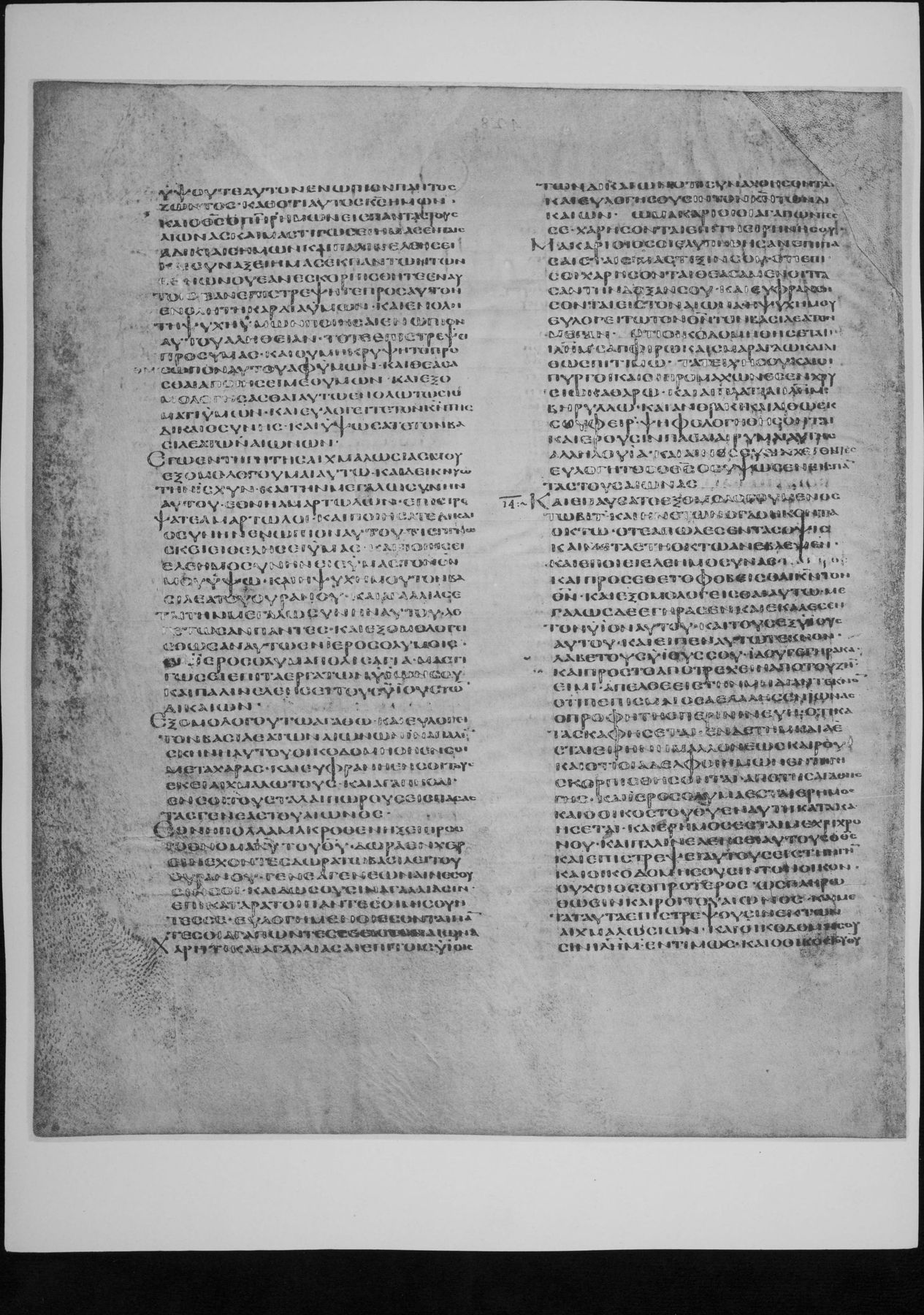
Tobit 13 in the Greek Old Testament (the Septuagint) as written in Codex Alexandrinus, a Greek Bible copied in the fifth century, probably in Egypt, and now in the British Library (Royal MS 1 D. VI, the second of its four volumes). It is one of the three great early codices of the whole Greek Bible, with Codex Vaticanus and Codex Sinaiticus.
Two Greek forms of Tobit: Tobit survives in a shorter and a longer Greek form. Codex Alexandrinus, like Codex Vaticanus, has the shorter form, which Swete prints from Vaticanus as his main text (he prints the longer form of Codex Sinaiticus beneath it; that form is not used here). Brenton's English also translates the shorter form.
Numbering: Swete's Greek and Brenton's English number or divide some verses of this chapter differently (Swete 13:7-10 = Brenton 13:7). Each column keeps its own verse numbers, and sections are cut only where the two texts agree, so each section holds the same passage in both languages.
This entry meets the strict three-criteria standard of the Theosis Library:
- Manuscript scan: the pages of Codex Alexandrinus carrying this chapter (fol. 428r, fol. 428v), from the full-size photographic (autotype) facsimile published by the British Museum in 1879-1883, as digitised on the Internet Archive. The verse range of every page comes from the reduced photographic facsimile of 1936, which prints it beneath each plate, and the opening words of every page were read on the plate to confirm the page and the verse it begins with. Each section links to the page or pages that hold its verses. Folio numbers are those written at the head of each leaf and visible on the plates.
- Original text: Swete's edition, which here prints the text of Codex Vaticanus (Vat. gr. 1209), the base of his edition, and gives the readings of Alexandrinus only in his apparatus. The Greek column is therefore Vaticanus' text; where Alexandrinus differs, the plate shows what Alexandrinus reads.
- English translation: Sir Lancelot C. L. Brenton, The Septuagint Version of the Old Testament (1844; 1851 edition), a translation of the Greek, public domain, from the eBible.org text.
How was this verified? (Provenance)
Where on the image
Tobit 13:1-4 is on fol. 428r (full-size facsimile of 1879-83, Internet Archive codex-alexandrinus leaf 880). The 1936 reduced facsimile prints beneath this page: Tobit xi. 17-xiii. 4. Checked on the plate: the page begins inside Tobit 11:16 (first words read: ΟΤΙ ΕΒΛΕΨΕΝ ΚΑΙ ΤΩΒΙΤ ΕΞΩΜΟΛΟΓΕΙΤΟ). Note: the caption gives xi. 17, but the page begins with ΟΤΙ ΕΒΛΕΨΕΝ, the last words of Swete's verse 11:16, so verse 11:16 is credited to both pages. Tobit 13:4-10 is on fol. 428v (full-size facsimile of 1879-83, Internet Archive codex-alexandrinus leaf 881). The 1936 reduced facsimile prints beneath this page: Tobit xiii. 4-xiv. 5. Checked on the plate: the page begins inside Tobit 13:4 (first words read: ΥΨΟΥΤΕ ΑΥΤΟΝ ΕΝΩΠΙΟΝ ΠΑΝΤΟΣ ΖΩΝΤΟΣ ΚΑΘΟΤΙ ΑΥΤΟΣ ΚΣ ΗΜΩΝ).
1Καὶ Τωβεὶτ ἔγραψεν προσευχὴν εἰς ἀγαλλίασιν καὶ εἶπεν Εὐλογητὸς ὁ θεὸς ὁ ζῶν εἰς τοὺς αἰῶνας καὶ ἡ βασιλεία αὐτοῦ, 2ὅτι αὐτὸς μαστιγοῖ καὶ ἐλεᾷ, κατάγει εἰς ᾅδην καὶ ἀνάγει, καὶ οὐκ ἔστιν ὃς ἐκφεύξεται τὴν χεῖρα αὐτοῦ. 3ἐξομολογεῖσθε αὐτῷ, οἱ υἱοὶ Ἰσραήλ, ἐνώπιον τῶν ἐθνῶν, ὅτι αὐτὸς διέσπειρεν ἡμᾶς ἐν αὐτοῖς. 4ἐκεῖ ὑποδείξατε τὴν μεγαλωσύνην αὐτοῦ, ὑψοῦτε αὐτὸν ἐνώπιον παντὸς ζῶντος· καθότι αὐτὸς κύριος ἡμῶν, καὶ θεὸς αὐτὸς πατὴρ ἡμῶν εἰς πάντας τοὺς αἰῶνας. 5καὶ μαστιγώσει ἡμᾶς ἐν ταῖς ἀδικίαις ἡμῶν, καὶ πάλιν ἐλεήσει καὶ συνάξει ἡμᾶς ἐκ πάντων τῶν ἐθνῶν, οὗ ἐὰν σκορπισθῆτε ἐν αὐτοῖς. 6ἐὰν ἐπιστρέψητε πρὸς αὐτὸν ἐν ὅλῃ καρδίᾳ ὑμῶν καὶ ἐν ὅλῃ τῇ ψυχῇ ποιῆσαι ἐνώπιον αὐτοῦ ἀλήθειαν, τότε ἐπιστρέψει πρὸς ὑμᾶς καὶ οὐ μὴ κρύψῃ τὸ πρόσωπον αὐτοῦ ἀφ᾽ ὑμῶν. καὶ θεάσασθε ἃ ποιήσει μεθ᾽ ὑμῶν, καὶ ἐξομολογήσασθε αὐτῷ ἐν ὅλῳ τῷ σώματι ὑμῶν· καὶ εὐλογήσατε τὸν κύριον τῆς δικαιοσύνης, καὶ ὑψώσατε τὸν βασιλέα τῶν αἰώνων. ἐγὼ ἐν τῇ γῇ τῆς αἰχμαλωσίας μου ἐξομολογοῦμαι αὐτῷ, καὶ δεικνύω τὴν ἰσχὺν καὶ τὴν μεγαλωσύνην αὐτοῦ ἔθνη ἁμαρτωλῶν. ἐπιστρέψατε, ἁμαρτωλοί, καὶ ποιήσατε δικαιοσύνην ἐνώπιον αὐτοῦ· τίς γινώσκει εἰ θελήσει ὑμᾶς καὶ ποιήσει ἐλεημοσύνην ὑμῖν; 7τὸν θεόν μου ὑψῶ, καὶ ἡ ψυχή μου τῷ βασιλεῖ τοῦ οὐρανοῦ, καὶ ἀγαλλιάσεται τὴν μεγαλωσύνην αὐτοῦ. 8λεγέτωσαν πάντες καὶ ἐξομολογείσθωσαν αὐτῷ ἐν Ἰεροσολύμοις. 9Ἰεροσόλυμα πόλις ἁγίου· μαστιγώσει ἐπὶ τὰ ἔργα τῶν υἱῶν σου, καὶ πάλιν ἐλεήσει τοὺς υἱοὺς τῶν δικαίων. 10ἐξομολογοῦ τῷ κυρίῳ ἀγαθῶς, καὶ εὐλόγει τὸν βασιλέα τῶν αἰώνων, ἵνα πάλιν ἡ σκηνὴ αὐτοῦ οἰκοδομηθῇ σοι μετὰ χαρᾶς· καὶ εὐφράναι ἐν σοὶ τοὺς αἰχμαλώτους καὶ ἀγαπήσαι ἐν σοὶ τοὺς ταλαιπώρους εἰς πάσας τὰς γενεὰς τοῦ αἰῶνος.
1Then Tobit wrote a prayer of rejoicing, and said, 2For he doth scourge, and hath mercy: he leadeth down to hell, and bringeth up again: neither is there any that can avoid his hand. 3Confess him before the Gentiles, ye children of Israel: for he hath scattered us among them. 4There declare his greatness, and extol him before all the living: for he is our Lord, and he is the God our Father for ever. 5And he will scourge us for our iniquities, and will have mercy again, and will gather us out of all nations, among whom he hath scattered us. 6If ye turn to him with your whole heart, and with your whole mind, and deal uprightly before him, then will he turn unto you, and will not hide his face from you. Therefore see what he will do with you, and confess him with your whole mouth, and praise the Lord of might, and extol the everlasting King. In the land of my captivity do I praise him, and declare his might and majesty to a sinful nation. O ye sinners, turn and do justice before him: who can tell if he will accept you, and have mercy on you? 7I will extol my God, and my soul shall praise the King of heaven, and shall rejoice in his greatness. Let all men speak, and let all praise him for his righteousness. O Jerusalem, the holy city, he will scourge thee for thy children's works, and will have mercy again on the sons of the righteous. Give praise to the Lord, for he is good: and praise the everlasting King, that his tabernacle may be builded in thee again with joy, and let him make joyful there in thee those that are captives, and love in thee for ever those that are miserable.
Where on the image
Tobit 13:11-18 is on fol. 428v (full-size facsimile of 1879-83, Internet Archive codex-alexandrinus leaf 881). The 1936 reduced facsimile prints beneath this page: Tobit xiii. 4-xiv. 5. Checked on the plate: the page begins inside Tobit 13:4 (first words read: ΥΨΟΥΤΕ ΑΥΤΟΝ ΕΝΩΠΙΟΝ ΠΑΝΤΟΣ ΖΩΝΤΟΣ ΚΑΘΟΤΙ ΑΥΤΟΣ ΚΣ ΗΜΩΝ).
11ἔθνη πολλὰ μακρόθεν ἥξει πρὸς τὸ ὄνομα Κυρίου τοῦ θεοῦ, δῶρα ἐν χερσὶν ἔχοντες καὶ δῶρα τῷ βασιλεῖ τοῦ οὐρανοῦ· γενεαὶ γενεῶν δώσουσίν σοι ἀγαλλίαμα. 12ἐπικατάρατοι πάντες οἱ μισοῦντές σε, εὐλογημένοι ἔσονται πάντες οἱ ἀγαπῶντές σε εἰς τὸν αἰῶνα. 13χάρηθι καὶ ἀγαλλίασαι ἐπὶ τοῖς υἱοῖς τῶν δικαίων, ὅτι συναχθήσονται καὶ εὐλογήσουσιν τὸν κύριον τῶν δικαίων. 14ὢ μακάριοι οἱ ἀγαπῶντές σε· χαρήσονται ἐπὶ τῇ εἰρήνῃ σου. μακάριοι ὅσοι ἐλυπήθησαν ἐπὶ ταῖς μάστιξίν σου, ὅτι ἐπὶ σοὶ χαρήσονται θεασάμενοι πᾶσαν τὴν δόξαν σου· καὶ εὐφρανθήσεται εἰς τὸν αἰῶνα ἡ ψυχή μου. 15εὐλόγει τὸν θεὸν τὸν βασιλέα τὸν μέγαν, 16ὅτι οἰκοδομηθήσεται Ἰερουσαλὴμ σαπφείρῳ καὶ σμαράγδῳ, καὶ λίθῳ ἐντίμῳ τὰ τείχη σου, καὶ οἱ πύργοι καὶ οἱ προμαχῶνες χρυσίῳ καθαρῷ, 17καὶ αἱ πλατεῖαι Ἰερουσαλὴμ βηρύλλῳ καὶ ἄνθρακι καὶ λίθῳ ἐκ Σουφεὶρ ψηφολογηθήσονται. 18καὶ ἐροῦσιν πᾶσαι αἱ ῥῦμαι αὐτῆς ἁλληλουιὰ καὶ αἴνεσιν, λέγοντες Εὐλογητὸς ὁ θεὸς ὃς ὕψωσεν πάντας τοὺς αἰῶνας.
11Many nations shall come from far to the name of the Lord God with gifts in their hands, even gifts to the King of heaven; all generations shall praise thee with great joy. 12Cursed are all they which hate thee, and blessed shall all be which love thee for ever. 13Rejoice and be glad for the children of the just: for they shall be gathered together, and shall bless the Lord of the just. 14O blessed are they which love thee, for they shall rejoice in thy peace: blessed are they which have been sorrowful for all thy scourges; for they shall rejoice for thee, when they have seen all thy glory, and shall be glad for ever. 15Let my soul bless God the great King. 16For Jerusalem shall be built up with sapphire, and emerald, and precious stone: thy walls and towers and battlements with pure gold. 17And the streets of Jerusalem shall be paved with beryl and carbuncle and stone of Ophir. 18And all her streets shall say, Alleluia; and they shall praise him, saying, Blessed be God, which hath extolled it for ever.
Cite
Sources
- Source: Codex Alexandrinus (British Library Royal MS 1 D. VI) via the British Museum photographic facsimiles of 1879-83 and 1936 (Internet Archive) + Swete's Septuagint + Brenton's English (holding institution)
- Critical edition: H. B. Swete, The Old Testament in Greek according to the Septuagint (1909)
← previous · → next · v cycle view · l back to library