Tobit, Chapter 7 (Codex Alexandrinus)
Introduction
Tobit 7 in the Greek Old Testament (the Septuagint) as written in Codex Alexandrinus, a Greek Bible copied in the fifth century, probably in Egypt, and now in the British Library (Royal MS 1 D. VI, the second of its four volumes). It is one of the three great early codices of the whole Greek Bible, with Codex Vaticanus and Codex Sinaiticus.
Two Greek forms of Tobit: Tobit survives in a shorter and a longer Greek form. Codex Alexandrinus, like Codex Vaticanus, has the shorter form, which Swete prints from Vaticanus as his main text (he prints the longer form of Codex Sinaiticus beneath it; that form is not used here). Brenton's English also translates the shorter form.
Numbering: Swete's Greek and Brenton's English number or divide some verses of this chapter differently (Swete 7:8-9 = Brenton 7:8; Swete 7:10 = Brenton 7:9-10; Swete 7:11 = Brenton 7:11-12; Swete 7:12-17 = Brenton 7:13-18). Each column keeps its own verse numbers, and sections are cut only where the two texts agree, so each section holds the same passage in both languages.
This entry meets the strict three-criteria standard of the Theosis Library:
- Manuscript scan: the pages of Codex Alexandrinus carrying this chapter (fol. 426v, fol. 427r), from the full-size photographic (autotype) facsimile published by the British Museum in 1879-1883, as digitised on the Internet Archive. The verse range of every page comes from the reduced photographic facsimile of 1936, which prints it beneath each plate, and the opening words of every page were read on the plate to confirm the page and the verse it begins with. Each section links to the page or pages that hold its verses. Folio numbers are those written at the head of each leaf and visible on the plates.
- Original text: Swete's edition, which here prints the text of Codex Vaticanus (Vat. gr. 1209), the base of his edition, and gives the readings of Alexandrinus only in his apparatus. The Greek column is therefore Vaticanus' text; where Alexandrinus differs, the plate shows what Alexandrinus reads.
- English translation: Sir Lancelot C. L. Brenton, The Septuagint Version of the Old Testament (1844; 1851 edition), a translation of the Greek, public domain, from the eBible.org text.
How was this verified? (Provenance)
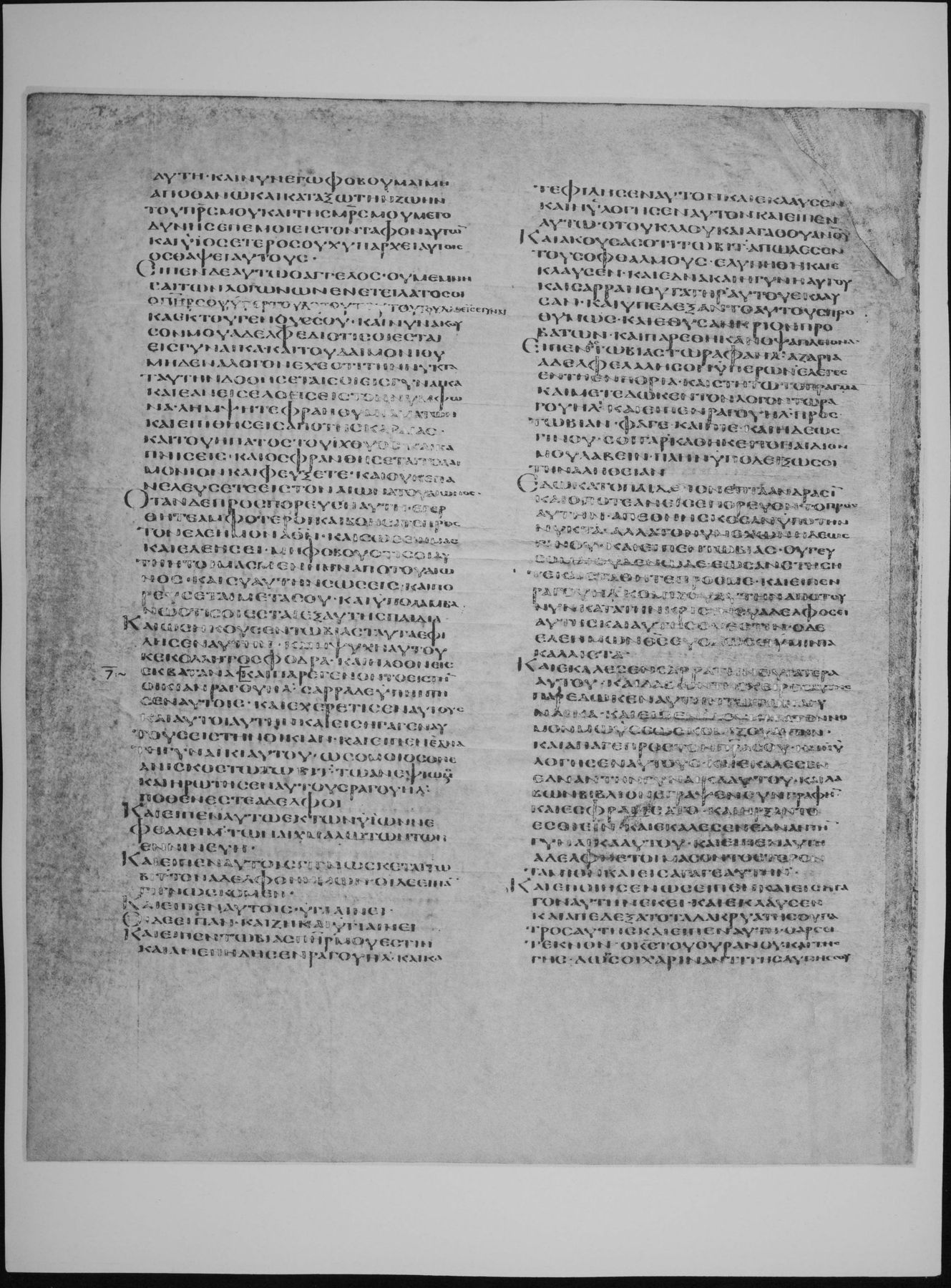
Where on the image
Tobit 7:1-9 is on fol. 426v (full-size facsimile of 1879-83, Internet Archive codex-alexandrinus leaf 877). The 1936 reduced facsimile prints beneath this page: Tobit vi. 15-vii. 17. Checked on the plate: the page begins inside Tobit 6:15 (first words read: ΑΥΤΗ ΚΑΙ ΝΥΝ ΕΓΩ ΦΟΒΟΥΜΑΙ ΜΗ ΑΠΟΘΑΝΩ ΚΑΙ ΚΑΤΑΞΩ ΤΗΝ ΖΩΗΝ ΤΟΥ ΠΡΣ ΜΟΥ).
1Καὶ ἦλθεν εἰς Ἐκβάτανα καὶ παρεγένετο εἰς τὴν οἰκίαν Ῥαγουήλ, καὶ Σάρρα δὲ ὑπήντησεν αὐτῷ· καὶ ἐχαιρέτισεν αὐτὸν καὶ αὐτὸς αὐτούς. καὶ εἰσήγαγεν αὐτοὺς εἰς τὴν οἰκίαν. 2καὶ εἶπεν Ἔδνᾳ τῇ γυναικὶ αὐτοῦ Ὡς ὅμοιος ὁ νεανίσκος Τωβεὶτ τῷ ἀνεψιῷ μου. 3καὶ ἠρώτησεν αὐτοὺς Ῥαγουήλ Πόθεν ἐστέ, ἀδελφοί; καὶ εἶπαν αὐτῷ Ἐκ τῶν υἱῶν Νεφθαλεὶ τῶν αἰχμαλώτων ἐκ Νινευή. 4καὶ εἶπεν αὐτοῖς Γινώσκετε Τωβεὶτ τὸν ἀδελφὸν ἡμῶν; 5οἱ δὲ εἶπαν Καὶ ζῇ καὶ ὑγιαίνει. καὶ εἶπεν Τωβίας Πατήρ μού ἐστιν. 6καὶ ἀνεπήδησεν Ῥαγουήλ, καὶ κατεφίλησεν αὐτὸν καὶ ἔκλαυσε· 7καὶ εὐλόγησεν αὐτὸν καὶ εἶπεν αὐτῷ Ὁ τοῦ καλοῦ καὶ ἀγαθοῦ ἀνθρώπου· καὶ ἀκούσας ὅτι Τωβεὶτ ἀπώλεσεν τοὺς ὀφθαλμοὺς ἑαυτοῦ, ἐλυπήθη καὶ ἔκλαυσεν. 8καὶ Ἔδνα ἡ γυνὴ αὐτοῦ καὶ Σάρρα ἡ θυγάτηρ αὐτοῦ ἔκλαυσαν· καὶ ὑπεδέξαντο αὐτοὺς προθύμως. 9καὶ ἔθυσαν κριὸν προβάτων, καὶ παρέθηκαν ὄψα πλείονα. Εἶπεν δὲ Τωβείας τῷ Ῥαφαήλ Ἀζαρία ἀδελφέ, λάλησον ὑπὲρ ὧν ἔλεγες ἐν τῇ πορείᾳ, καὶ τελεσθήτω τὸ πρᾶγμα.
1And he came to the house of Raguel; and Sara met him: and saluted him, and he them; and she brought them into the house. 2Then said Raguel to Edna his wife, How like is this young man to Tobit my cousin! 3And Raguel asked them, From whence are ye, brethren? To whom they said, We are of the sons of Nephthali, which are captives in Nineve. 4Then he said to them, Do ye know Tobit our kinsman? And they said, We know him. Then said he, Is he in good health? 5And they said, He is both alive, and in good health: and Tobias said, He is my father. 6Then Raguel leaped up, and kissed him, and wept, 7and blessed him, and said unto him, Thou art the son of an honest and good man. But when he had heard that Tobit was blind, he was sorrowful, and wept. 8And likewise Edna his wife and Sara his daughter wept. Moreover they entertained them cheerfully; and after that they had killed a ram of the flock, they set store of meat on the table. Then said Tobias to Raphael, Brother Azarias, speak of those things of which thou didst talk in the way, and let this business be dispatched.
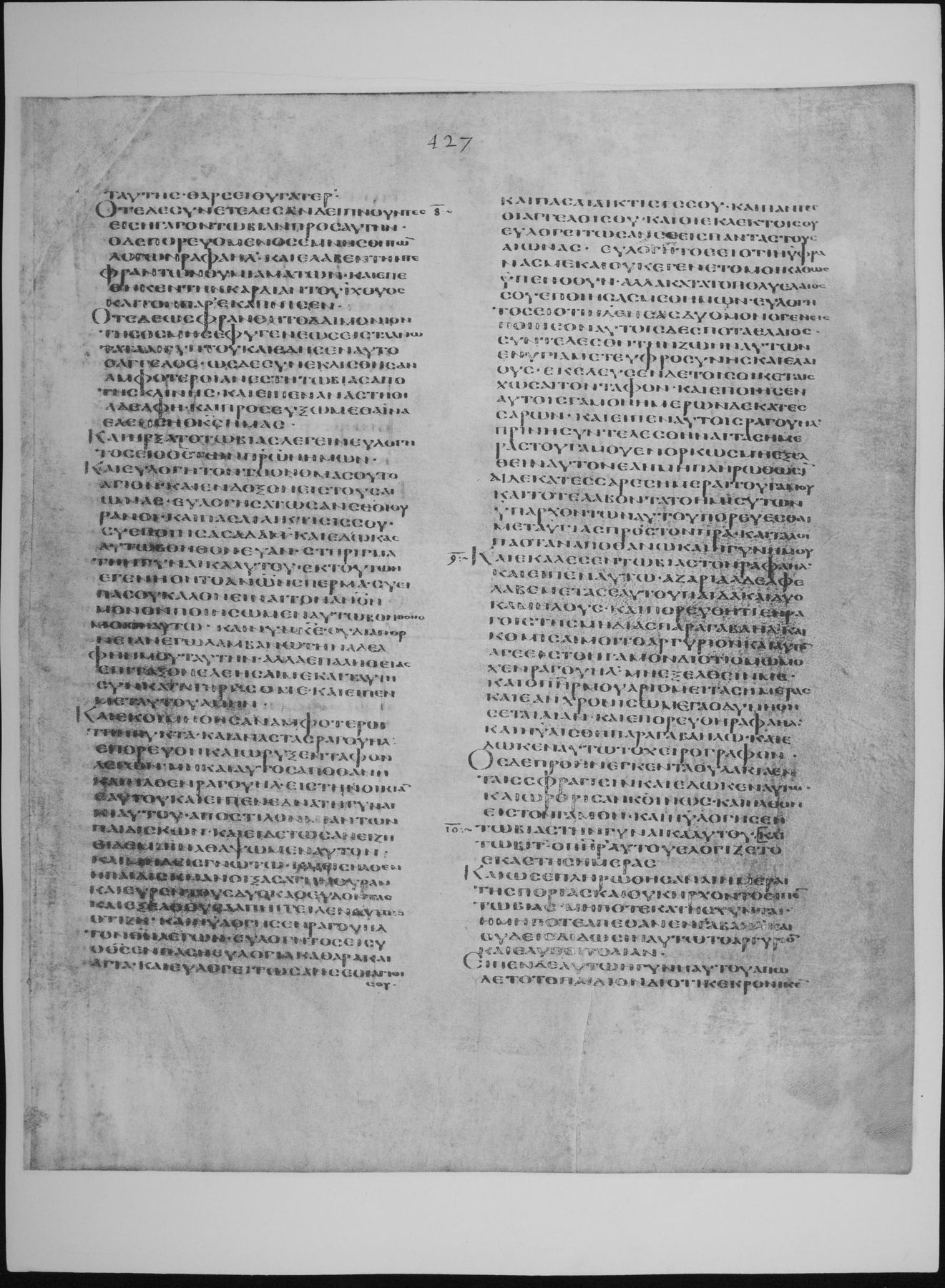
Where on the image
Tobit 7:10-17 is on fol. 426v (full-size facsimile of 1879-83, Internet Archive codex-alexandrinus leaf 877). The 1936 reduced facsimile prints beneath this page: Tobit vi. 15-vii. 17. Checked on the plate: the page begins inside Tobit 6:15 (first words read: ΑΥΤΗ ΚΑΙ ΝΥΝ ΕΓΩ ΦΟΒΟΥΜΑΙ ΜΗ ΑΠΟΘΑΝΩ ΚΑΙ ΚΑΤΑΞΩ ΤΗΝ ΖΩΗΝ ΤΟΥ ΠΡΣ ΜΟΥ). Tobit 7:17 is on fol. 427r (full-size facsimile of 1879-83, Internet Archive codex-alexandrinus leaf 878). The 1936 reduced facsimile prints beneath this page: Tobit vii. 17-x. 4. Checked on the plate: the page begins inside Tobit 7:17 (first words read: ΤΑΥΤΗΣ ΘΑΡΣΕΙ ΘΥΓΑΤΕΡ ΟΤΕ ΔΕ ΣΥΝΕΤΕΛΕΣΑΝ ΔΕΙΠΝΟΥΝΤΕΣ ΕΙΣΗΓΑΓΟΝ ΤΟΝ ΤΩΒΙΑΝ ΠΡΟΣ ΑΥΤΗΝ).
10καὶ μετέδωκεν τὸν λόγον τῷ Ῥαγουήλ. καὶ εἶπεν Ῥαγουὴλ πρὸς Τωβείαν Φάγε, πίε καὶ ἡδέως γίνου, σοὶ γὰρ καθήκει τὸ παιδίον μου λαβεῖν· πλὴν ὑποδείξω τὴν ἀλήθειαν. 11ἔδωκα τὸ παιδίον μου ἑπτὰ ἀνδράσιν, καὶ ὁπότε ἐὰν εἰσεπορεύοντο πρὸς αὐτήν, ἀπέθνησκον ὑπὸ νύκτα. ἀλλὰ τὸ νῦν ἔχων ἡδέως γίνου. καὶ εἶπεν Τωβίας Οὐ γεύομαι οὐδὲν ὧδε ἕως ἂν στήσητε καὶ σταθῆτε πρὸς μέ. καὶ εἶπεν Ῥαγουήλ Κομίζου αὐτὴν ἀπὸ τοῦ νῦν κατὰ τὴν κρίσιν· σὺ δὲ ἀδελφὸς εἶ αὐτῆς, καὶ αὐτή σού ἐστιν· ὁ δὲ ἐλεήμων θεὸς εὐοδώσει ὑμῖν τὰ κάλλιστα. 12καὶ ἐκάλεσεν Σάρραν τὴν θυγατέρα αὐτοῦ, καὶ λαβὼν τῆς χειρὸς αὐτῆς παρέδωκεν αὐτὴν Τωβείᾳ γυναῖκα, καὶ εἶπεν Ἰδοὺ κατὰ τὸν νόμον Μωυσέως κομίζου αὐτὴν καὶ ἄπαγε πρὸς τὸν πατέρα σου· καὶ εὐλόγησεν αὐτούς. 13καὶ ἐκάλεσεν Ἔδναν τὴν γυναῖκα αὐτοῦ· καὶ λαβὼν βιβλίον ἔγραψεν συνγραφὴν καὶ ἐσφραγίσαντο. 14καὶ ἤρξαντο ἐσθίειν. 15καὶ ἐκάλεσεν Ῥαγουὴλ Ἔδναν τὴν γυναῖκα αὐτοῦ καὶ εἶπεν αὐτῇ Ἀδελφή, ἑτοίμασον τὸ ἕτερον ταμεῖον καὶ εἴσαγε αὐτήν. 16καὶ ἐποίησεν ὡς εἶπεν καὶ εἰσήγαγεν αὐτὴν ἐκεῖ, καὶ ἔκλαυσεν· καὶ ἀπεδέξατο τὰ δάκρυα τῆς θυγατρὸς αὐτῆς καὶ εἶπεν αὐτῇ 17Θάρσει, τέκνον, ὁ κύριος τοῦ οὐρανοῦ καὶ τῆς γῆς δῴη σοι χάριν ἀντὶ τῆς λύπης σου ταύτης· θάρσει, θύγατερ.
9So he communicated the matter with Raguel: and Raguel said to Tobias, Eat and drink, and make merry: 10for it is meet that thou shouldest marry my daughter: nevertheless I will declare unto thee the truth. 11I have given my daughter in marriage to seven men, who died that night they came in unto her: nevertheless for the present be merry. But Tobias said, I will eat nothing here, till we agree and swear one to another. 12And Raguel said, Then take her from henceforth according to the manner, for thou art her cousin, and she is thine, and the merciful God give you good success in all things. 13Then he called his daughter Sara, and she came to her father, and he took her by the hand, and gave her to be wife to Tobias, saying, Behold, take her after the law of Moses, and lead her away to thy father. And he blessed them; 14and called Edna his wife, and took paper, and did write an instrument of covenants, and sealed it. 15Then they began to eat. 16After Raguel called his wife Edna, and said unto her, Sister, prepare another chamber, and bring her in thither. 17Which when she had done as he had bidden her, she brought her thither: and she wept, and she received the tears of her daughter, and said unto her, 18Be of good comfort, my daughter; the Lord of heaven and earth give thee joy for this thy sorrow: be of good comfort, my daughter.
Cite
Sources
- Source: Codex Alexandrinus (British Library Royal MS 1 D. VI) via the British Museum photographic facsimiles of 1879-83 and 1936 (Internet Archive) + Swete's Septuagint + Brenton's English (holding institution)
- Critical edition: H. B. Swete, The Old Testament in Greek according to the Septuagint (1909)
← previous · → next · v cycle view · l back to library