Tobit, Chapter 6 (Codex Alexandrinus)
Introduction
Tobit 6 in the Greek Old Testament (the Septuagint) as written in Codex Alexandrinus, a Greek Bible copied in the fifth century, probably in Egypt, and now in the British Library (Royal MS 1 D. VI, the second of its four volumes). It is one of the three great early codices of the whole Greek Bible, with Codex Vaticanus and Codex Sinaiticus.
Two Greek forms of Tobit: Tobit survives in a shorter and a longer Greek form. Codex Alexandrinus, like Codex Vaticanus, has the shorter form, which Swete prints from Vaticanus as his main text (he prints the longer form of Codex Sinaiticus beneath it; that form is not used here). Brenton's English also translates the shorter form.
Numbering: Swete's Greek and Brenton's English number or divide some verses of this chapter differently (Swete 6:1 = Brenton 5:22; Swete 6:2-10 = Brenton 6:1-9; Swete 6:11-12 = Brenton 6:10-11; Swete 6:13-18 = Brenton 6:12-17). Each column keeps its own verse numbers, and sections are cut only where the two texts agree, so each section holds the same passage in both languages.
This entry meets the strict three-criteria standard of the Theosis Library:
- Manuscript scan: the pages of Codex Alexandrinus carrying this chapter (fol. 426r, fol. 426v), from the full-size photographic (autotype) facsimile published by the British Museum in 1879-1883, as digitised on the Internet Archive. The verse range of every page comes from the reduced photographic facsimile of 1936, which prints it beneath each plate, and the opening words of every page were read on the plate to confirm the page and the verse it begins with. Each section links to the page or pages that hold its verses. Folio numbers are those written at the head of each leaf and visible on the plates.
- Original text: Swete's edition, which here prints the text of Codex Vaticanus (Vat. gr. 1209), the base of his edition, and gives the readings of Alexandrinus only in his apparatus. The Greek column is therefore Vaticanus' text; where Alexandrinus differs, the plate shows what Alexandrinus reads.
- English translation: Sir Lancelot C. L. Brenton, The Septuagint Version of the Old Testament (1844; 1851 edition), a translation of the Greek, public domain, from the eBible.org text.
How was this verified? (Provenance)
Where on the image
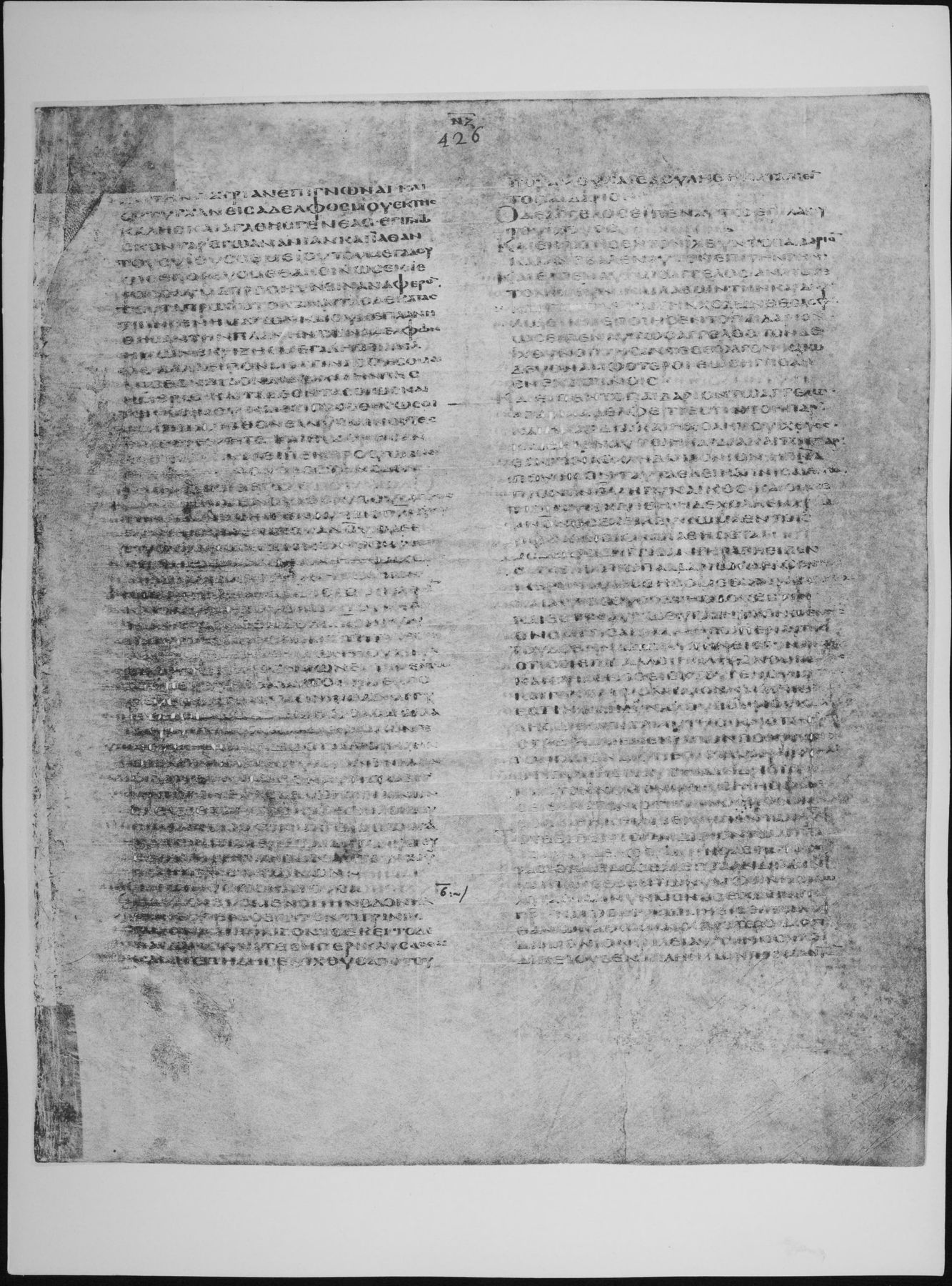
Tobit 6:1-8 is on fol. 426r (full-size facsimile of 1879-83, Internet Archive codex-alexandrinus leaf 876). The 1936 reduced facsimile prints beneath this page: Tobit v. 14-vi. 15. Checked on the plate: the page begins inside Tobit 5:14 (first words read: ΣΥ ΤΥΓΧΑΝΕΙΣ ΑΔΕΛΦΟΣ ΜΟΥ ΕΚ ΤΗΣ ΚΑΛΗΣ ΚΑΙ ΑΓΑΘΗΣ ΓΕΝΕΑΣ ΕΠΕΓΙΝΩΣΚΟΝ ΓΑΡ ΕΓΩ ΑΝΑΝΙΑΝ ΚΑΙ ΙΑΘΑΝ). Note: the first line of the column is faint on the plate; the words given are the first that can be read with confidence.
1καὶ ἐπαύσατο κλαίουσα. 2Οἱ δὲ πορευόμενοι τὴν ὁδὸν ἦλθον ἑσπέρας ἐπὶ τὸν Τίγριν ποταμόν, καὶ ηὐλίζοντο ἐκεῖ. 3τὸ δὲ παιδάριον κατέβη περικλύσασθαι, καὶ ἀνεπήδησεν ἰχθὺς ἀπὸ τοῦ ποταμοῦ καὶ ἐβουλήθη καταπεῖν τὸ παιδάριον. 4ὁ δὲ ἄγγελος εἶπεν αὐτῷ Ἐπιλαβοῦ τοῦ ἰχθύος· καὶ ἐκράτησεν τὸν ἰχθὺν τὸ παιδάριον, καὶ ἀνέβαλεν αὐτὸν ἐπὶ τὴν γῆν. 5καὶ εἶπεν αὐτῷ ὁ ἄγγελος Ἀνάτεμε τὸν ἰχθύν, καὶ λαβὼν τὴν καρδίαν καὶ τὸ ἧπαρ καὶ τὴν χολὴν θὲς ἀσφαλῶς. 6καὶ ἐποίησεν τὸ παιδάριον ὡς εἶπεν αὐτῷ ὁ ἄγγελος, τὸν δὲ ἰχθὺν ὀπτήσαντες ἔφαγον· καὶ ὥδευον ἀμφότεροι ἕως ἤγγισαν ἐν Ἐκβατάνοις. 7καὶ εἶπεν τὸ παιδάριον τῷ ἀγγέλῳ Ἀζαρία ἀδελφέ, τί ἐστιν τὸ ἧπαρ καὶ ἡ καρδία καὶ ἡ χολὴ τοῦ ἰχθύος; 8καὶ εἶπεν αὐτῷ Ἡ καρδία καὶ τὸ ἧπαρ, ἐάν τινα ὀχλῇ δαιμόνιον ἢ πνεῦμα πονηρόν· ταῦτα δὲ καπνίσαι ἐνώπιον ἀνθρώπου ἢ γυναικός, καὶ οὐ μηκέτι ὀχληθῇ.
5:22Then she made an end of weeping. 1And as they went on their journey, they came in the evening to the river Tigris, and they lodged there. 2And when the young man went down to wash himself, a fish leaped out of the river, and would have devoured him. 3Then the angel said unto him, Take the fish. And the young man laid hold of the fish, and drew it to land. 4To whom the angel said, Open the fish, and take the heart and the liver and the gall, and put them up safely. 5So the young man did as the angel commanded him; and when they had roasted the fish, they did eat it: then they both went on their way, till they drew near to Ecbatane. 6Then the young man said to the angel, Brother Azarias, to what use is the heart and the liver and the gall of the fish? 7And he said unto him, Touching the heart and the liver, if a devil or an evil spirit trouble any, we must make a smoke thereof before the man or the woman, and the party shall be no more vexed.
Where on the image
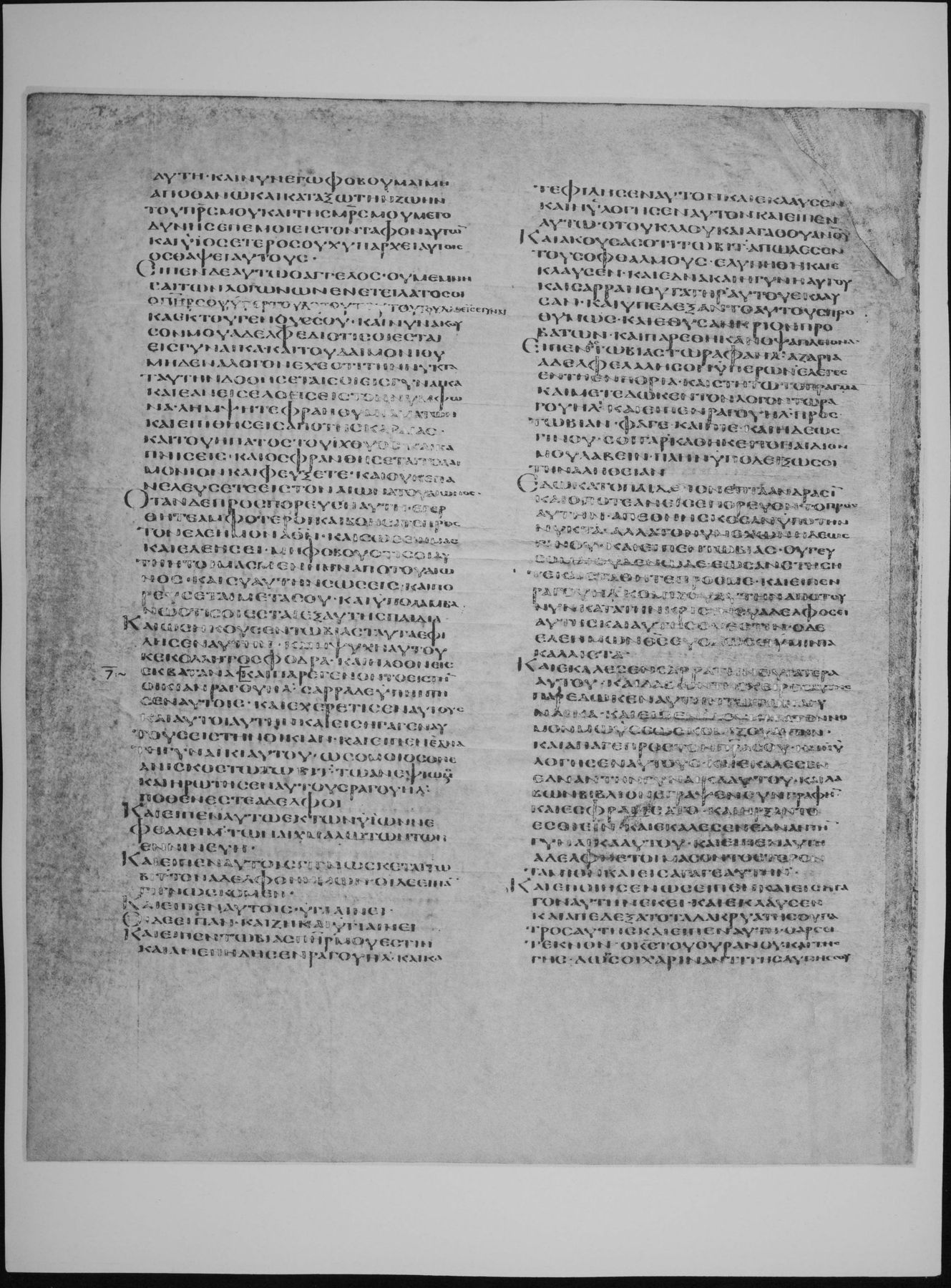
Tobit 6:9-15 is on fol. 426r (full-size facsimile of 1879-83, Internet Archive codex-alexandrinus leaf 876). The 1936 reduced facsimile prints beneath this page: Tobit v. 14-vi. 15. Checked on the plate: the page begins inside Tobit 5:14 (first words read: ΣΥ ΤΥΓΧΑΝΕΙΣ ΑΔΕΛΦΟΣ ΜΟΥ ΕΚ ΤΗΣ ΚΑΛΗΣ ΚΑΙ ΑΓΑΘΗΣ ΓΕΝΕΑΣ ΕΠΕΓΙΝΩΣΚΟΝ ΓΑΡ ΕΓΩ ΑΝΑΝΙΑΝ ΚΑΙ ΙΑΘΑΝ). Note: the first line of the column is faint on the plate; the words given are the first that can be read with confidence. Tobit 6:15-18 is on fol. 426v (full-size facsimile of 1879-83, Internet Archive codex-alexandrinus leaf 877). The 1936 reduced facsimile prints beneath this page: Tobit vi. 15-vii. 17. Checked on the plate: the page begins inside Tobit 6:15 (first words read: ΑΥΤΗ ΚΑΙ ΝΥΝ ΕΓΩ ΦΟΒΟΥΜΑΙ ΜΗ ΑΠΟΘΑΝΩ ΚΑΙ ΚΑΤΑΞΩ ΤΗΝ ΖΩΗΝ ΤΟΥ ΠΡΣ ΜΟΥ).
9ἡ δὲ χολὴ ἐνχρῖσαι ἄνθρωπον ὃς ἔχει λευκώματα ἐν τοῖς ὀφθαλμοῖς, καὶ ἰαθήσεται. 10Ὡς δὲ προσήγγισαν τῇ Ῥάγῃ, 11εἶπεν ὁ ἄγγελος τῷ παιδαρίῳ Ἀδελφέ, σήμερον αὐλισθησόμεθα παρὰ Ῥαγουήλῳ· καὶ αὐτὸς συγγενής σού ἐστιν, καὶ ἔστιν αὐτῷ θυγάτηρ ὀνόματι Σάρρα. 12λαλήσω περὶ αὐτῆς τοῦ δοθῆναί σοι αὐτὴν εἰς γυναῖκα, ὅτι σοὶ ἐπιβάλλει ἡ κληρονομία αὐτῆς, καὶ σὺ μόνος εἶ ἐκ τοῦ γένους αὐτῆς· καὶ τὸ κοράσιον καλὸν καὶ φρόνιμόν ἐστιν. 13καὶ νῦν ἄκουσόν μου καὶ λαλήσω τῷ πατρὶ αὐτῆς, καὶ ὅταν ὑποστρέψωμεν ἐκ Ῥάγων, ποιήσωμεν τὸν γάμον. διότι ἐπίσταμαι Ῥαγουὴλ ὅτι οὐ μὴ δῷ αὐτὴν ἀνδρὶ ἑτέρῳ κατὰ τὸν νόμον Μωυσῆ, ἢ ὀφειλέσει θάνατον, ὅτι τὴν κληρονομίαν σοὶ καθήκει λαβεῖν ἢ πάντα ἄνθρωπον. 14τότε εἶπεν τὸ παιδάριον τῷ ἀγγέλῳ Ἀζαρία ἀδελφέ, ἀκήκοα ἐγὼ τὸ κοράσιον δεδόσθαι ἑπτὰ ἀνδράσιν, καὶ πάντας ἐν τῷ νυμφῶνι ἀπολωλότας. 15καὶ νῦν ἐγὼ μόνος εἰμὶ τῷ πατρί, καὶ φοβοῦμαι μὴ εἰσελθὼν ἀποθάνω καθὼς καὶ οἱ πρότεροι, ὅτι δαιμόνιον φιλεῖ αὐτὴν ὃ οὐκ ἀδικεῖ οὐδένα πλὴν τῶν προσαγόντων αὐτῇ. καὶ νῦν ἐγὼ φοβοῦμαι μὴ ἀποθάνω, καὶ κατάξω τὴν ζωὴν τοῦ πατρός μου καὶ τῆς μητρός μου μετ᾽ ὀδύνης ἐπ᾽ ἐμοὶ εἰς τὸν τάφον αὐτῶν· καὶ υἱὸς ἕτερος οὐχ ὑπάρχει αὐτοῖς ὃς θάψει αὐτούς. 16εἶπεν δὲ αὐτῷ ὁ ἄγγελος Οὐ μέμνησαι τῶν λόγων ὧν ἐνετείλατό σοι ὁ πατήρ σου ὑπὲρ τοῦ λαβεῖν σε γυναῖκα ἐκ τοῦ γένους σου; καὶ νῦν ἄκουσόν μου, ἀδελφέ, διότι σοὶ ἔσται εἰς γυναῖκα, καὶ τοῦ δαιμονίου μηδένα λόγον ἔχε, ὅτι τὴν νύκτα ταύτην δοθήσεταί σοι αὕτη εἰς γυναῖκα. 17καὶ ἐὰν εἰσέλθῃς εἰς τὸν νυμφῶνα, λήμψῃ τέφραν θυμιαμάτων καὶ ἐπιθήσεις ἀπὸ τῆς καρδίας καὶ τοῦ ἥπατος τοῦ ἰχθύος· καὶ καπνίσεις, 18καὶ ὀσφρανθήσεται τὸ δαιμόνιον καὶ φεύξεται, καὶ οὐκ ἐπανελεύσεται τὸν αἰῶνα τοῦ αἰῶνος. ὅταν δὲ προσπορεύῃ αὐτῇ, ἐγέρθητε ἀμφότεροι καὶ βοήσατε πρὸς τὸν ἐλεήμονα θεόν, καὶ σώσει ὑμᾶς καὶ ἐλεήσει. μὴ φοβοῦ, ὅτι σοὶ αὕτη ἡτοιμασμένη ἦν ἀπὸ τοῦ αἰῶνος, καὶ σὺ αὐτὴν σώσεις, καὶ πορεύσεται μετὰ σοῦ, καὶ ὑπολαμβάνω ὅτι σοὶ ἔσται ἐξ αὐτῆς παιδία. καὶ ὡς ἤκουσεν Τωβίας ταῦτα, ἐφίλησεν αὐτήν, καὶ ἡ ψυχὴ αὐτοῦ ἐκολλήθη αὐτῇ σφόδρα.
8As for the gall, it is good to anoint a man that hath whiteness in his eyes, and he shall be healed. 9And when they were come near to Rages, 10the angel said to the young man, Brother, to day we shall lodge with Raguel, who is thy cousin; he also hath one only daughter, named Sara; I will speak for her, that she may be given thee for a wife. 11For to thee doth the right of her appertain, seeing thou only art of her kindred. 12And the maid is fair and wise: now therefore hear me, and I will speak to her father; and when we return from Rages we will celebrate the marriage: for I know that Raguel cannot marry her to another according to the law of Moses, but he shall be guilty of death, because the right of inheritance doth rather appertain to thee than to any other. 13Then the young man answered the angel, I have heard, brother Azarias, that this maid hath been given to seven men, who all died in the marriage chamber. 14And now I am the only son of my father, and I am afraid, lest, if I go in unto her, I die, as the others before: for a wicked spirit loveth her, which hurteth no one except those which come unto her: wherefore I also fear lest I die, and bring my father's and my mother's life because of me to the grave with sorrow: for they have no other son to bury them. 15Then the angel said to him, Dost thou not remember the precepts that thy father gave thee, that thou shouldest marry a wife of thine own kindred? wherefore hear me, O my brother; for she shall be given thee to wife; and make thou no reckoning of the evil spirit; for this same night shall she be given thee in marriage. 16And when thou shalt come into the marriage chamber, thou shalt take the ashes of perfume, and shalt lay upon them some of the heart and liver of the fish, and shalt make a smoke with it: 17and the devil shall smell it, and flee away, and never come again any more: but when thou shalt come to her, rise up both of you, and pray to God which is merciful, who will have pity on you, and save you: fear not, for she is appointed unto thee from the beginning; and thou shalt preserve her, and she shall go with thee. Moreover I suppose that she shall bear thee children. Now when Tobias had heard these things, he loved her, and his heart was effectually joined to her. And he came to Ecbatane.
Cite
Sources
- Source: Codex Alexandrinus (British Library Royal MS 1 D. VI) via the British Museum photographic facsimiles of 1879-83 and 1936 (Internet Archive) + Swete's Septuagint + Brenton's English (holding institution)
- Critical edition: H. B. Swete, The Old Testament in Greek according to the Septuagint (1909)
← previous · → next · v cycle view · l back to library