Zechariah, Chapter 11 (Codex Alexandrinus)
Introduction
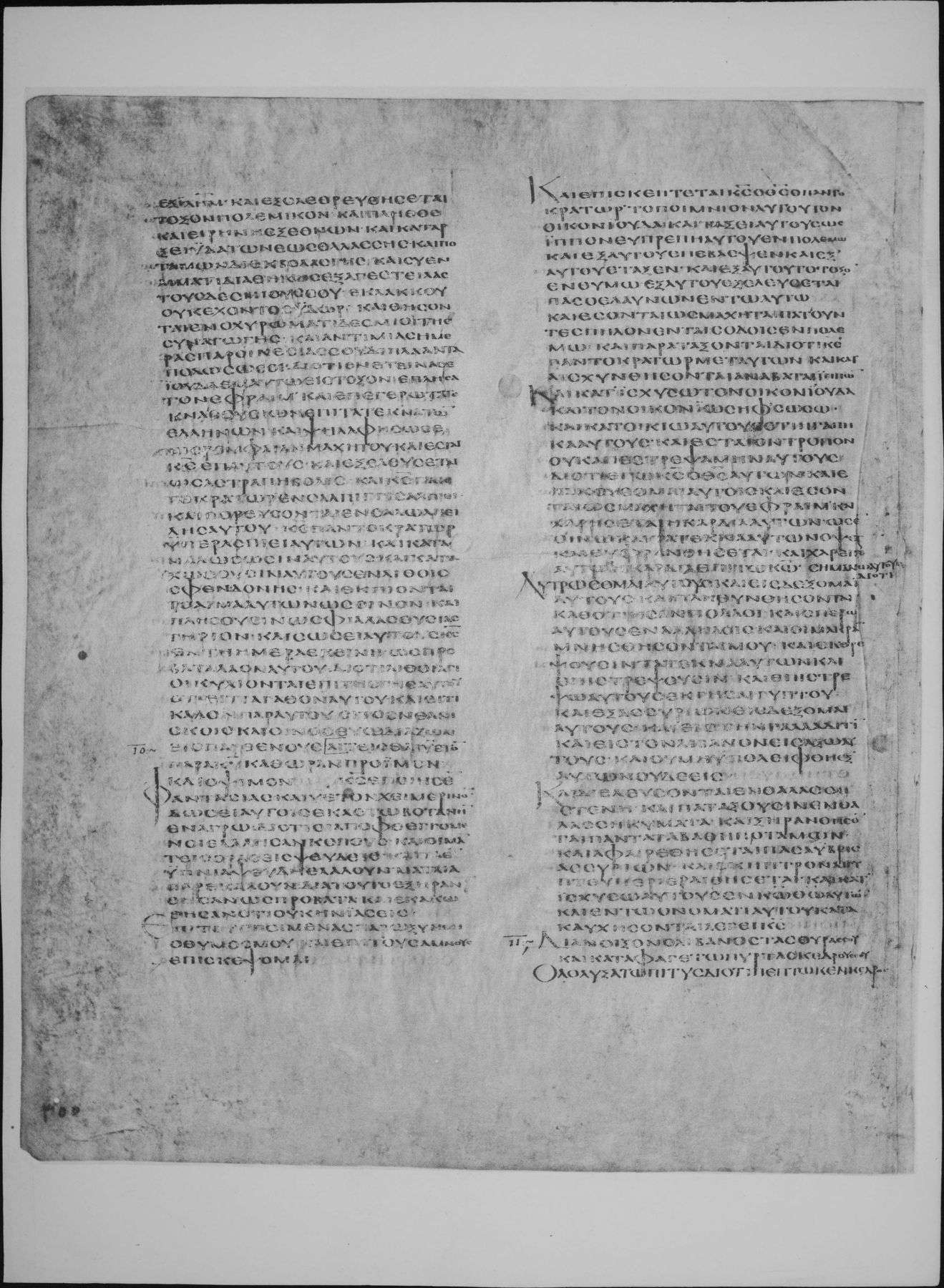
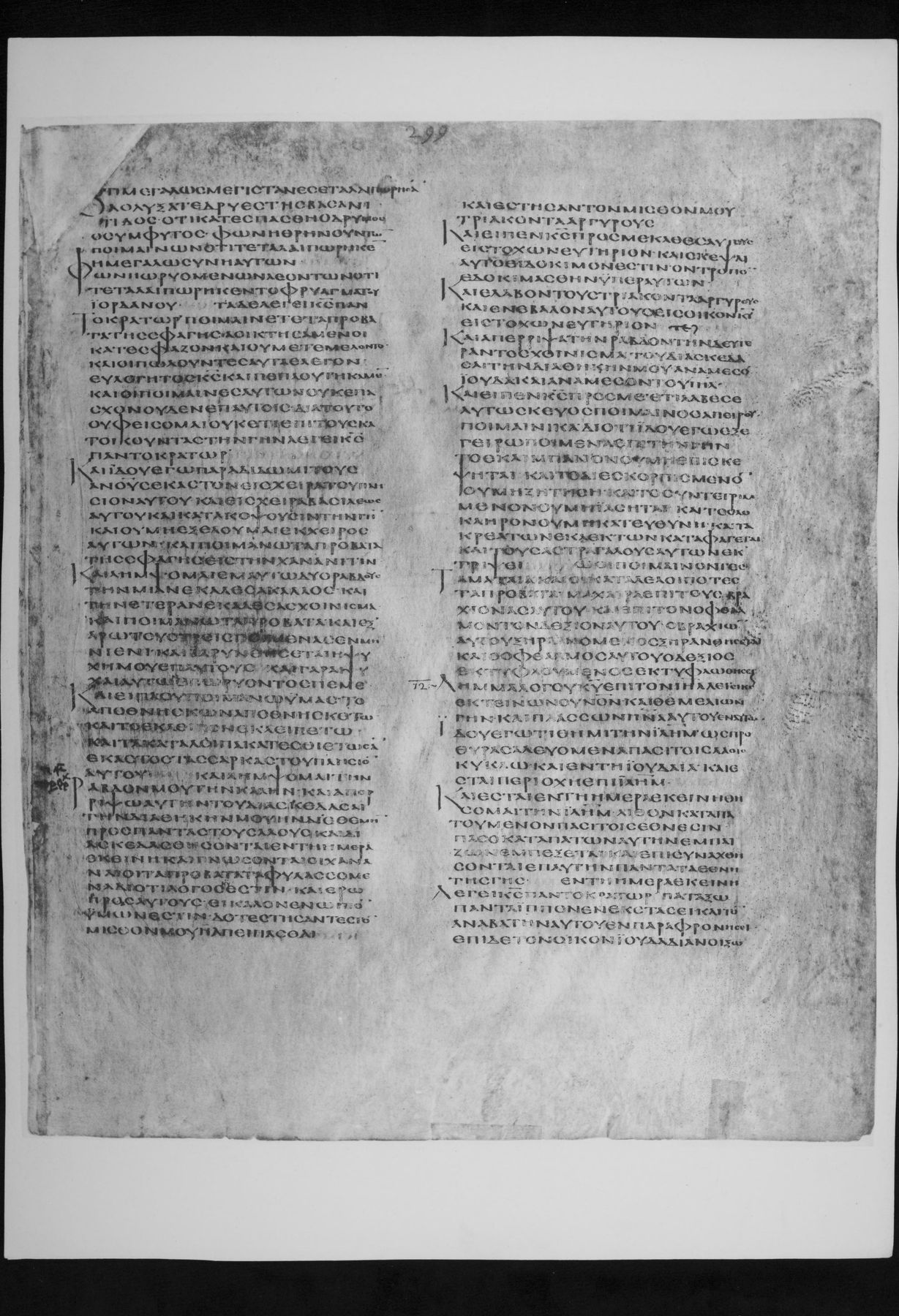
Zechariah 11 in the Greek Old Testament (the Septuagint) as written in Codex Alexandrinus, a Greek Bible copied in the fifth century, probably in Egypt, and now in the British Library (Royal MS 1 D. VI, the second of its four volumes). It is one of the three great early codices of the whole Greek Bible, with Codex Vaticanus and Codex Sinaiticus.
This entry meets the strict three-criteria standard of the Theosis Library:
- Manuscript scan: the pages of Codex Alexandrinus carrying this chapter (fol. 298v, fol. 299r), from the full-size photographic (autotype) facsimile published by the British Museum in 1879-1883, as digitised on the Internet Archive. The verse range of every page comes from the reduced photographic facsimile of 1936, which prints it beneath each plate, and the opening words of every page were read on the plate to confirm the page and the verse it begins with. Each section links to the page or pages that hold its verses. Folio numbers are those written at the head of each leaf and visible on the plates.
- Original text: Swete's edition, which here prints the text of Codex Vaticanus (Vat. gr. 1209), the base of his edition, and gives the readings of Alexandrinus only in his apparatus. The Greek column is therefore Vaticanus' text; where Alexandrinus differs, the plate shows what Alexandrinus reads.
- English translation: Sir Lancelot C. L. Brenton, The Septuagint Version of the Old Testament (1844; 1851 edition), a translation of the Greek, public domain, from the eBible.org text.
How was this verified? (Provenance)
Where on the image
Zechariah 11:1-2 is on fol. 298v (full-size facsimile of 1879-83, Internet Archive codex-alexandrinus leaf 621). The 1936 reduced facsimile prints beneath this page: Zech. ix. 10-xi. 2. Checked on the plate: the page begins inside Zechariah 9:10 (first words read: ΚΑΙ ΕΞΟΛΕΘΡΕΥΘΗΣΕΤΑΙ ΤΟΞΟΝ ΠΟΛΕΜΙΚΟΝ ΚΑΙ ΠΛΗΘΟΣ ΚΑΙ ΕΙΡΗΝΗ ΕΞ ΕΘΝΩΝ). Zechariah 11:2-8 is on fol. 299r (full-size facsimile of 1879-83, Internet Archive codex-alexandrinus leaf 622). The 1936 reduced facsimile prints beneath this page: Zech. xi. 2-xii. 4. Checked on the plate: the page begins inside Zechariah 11:2 (first words read: ΟΤΙ ΜΕΓΑΛΩΣ ΜΕΓΙΣΤΑΝΕΣ ΕΤΑΛΑΙΠΩΡΗΣΑΝ ΟΛΟΛΥΞΑΤΕ ΔΡΥΕΣ ΤΗΣ ΒΑΣΑΝΙΤΙΔΟΣ).
1Διάνοιξον ὁ Λίβανος τὰς θύρας σου, καὶ καταφαγέτω πῦρ τὰς κέδρους σου· 2ὀλολυξάτω πίτυς, διότι πέπτωκεν κέδρος, ὅτι μεγάλως μεγιστᾶνες ἐταλαιπώρησαν· ὀλολύξατε, δρύες τῆς Βασανείτιδος, ὅτι κατεσπάσθη ὁ δρυμὸς ὁ σύμφυτος. 3φωνὴ θρηνούντων ποιμένων, ὅτι τεταλαιπώρηκεν ἡ μεγαλοσύνη αὐτῶν· φωνὴ ὠρυομένων λεόντων, ὅτι τεταλαιπώρηκεν τὸ φρύαγμα τοῦ Ἰορδάνου. 4τάδε λέγει Κύριος Παντοκράτωρ Ποιμαίνετε τὰ πρόβατα τῆς σφαγῆς, 5ἃ οἱ κτησάμενοι κατέσφαζον καὶ οὐ μετεμέλοντο, καὶ οἱ πωλοῦντες αὐτὰ ἔλεγον Εὐλογητὸς Κύριος, καὶ πεπλουτήκαμεν· καὶ οἱ ποιμένες αὐτῶν οὐκ ἔπασχον οὐδὲν ἐπ᾽ αὐτοῖς. 6διὰ τοῦτο οὐ φείσομαι οὐκέτι ἐπὶ τοὺς κατοικοῦντας τὴν γῆν, λέγει Κύριος· καὶ ἰδοὺ ἐγὼ παραδίδωμι τοὺς ἀνθρώπους, ἕκαστον εἰς χεῖρας τοῦ πλησίον αὐτοῦ καὶ εἰς χεῖρας βασιλέως αὐτοῦ, καὶ κατακόψουσιν τὴν γῆν, καὶ οὐ μὴ ἐξέλωμαι ἐκ χειρὸς αὐτῶν. 7καὶ ποιμανῶ τὰ πρόβατα τῆς σφαγῆς εἰς τὴν Χαναανῖτιν· καὶ λήμψομαι ἐμαυτῷ δύο ῥάβδους, τὴν μὲν μίαν ἐκάλεσα Κάλλος, καὶ τὴν ἑτέραν ἐκάλεσα Σχοίνισμα, καὶ ποιμανῶ τὰ πρόβατα. 8καὶ ἐξαρῶ τοὺς τρεῖς ποιμένας ἐν μηνὶ ἑνί, καὶ βαρυνθήσεται ἡ ψυχή μου ἐπ᾽ αὐτούς, καὶ γὰρ αἱ ψυχαὶ αὐτῶν ἐπωρύοντο ἐπ᾽ ἐμέ.
1Open thy doors, O Libanus, and let the fire devour thy cedars. 2Let the pine howl, because the cedar has fallen; for the mighty men have been greatly afflicted: howl, ye oaks of the land of Basan; for the thickly planted forest has been torn down. 3There is a voice of the shepherds mourning; for their greatness is brought low: a voice of roaring lions; for the pride of Jordan is brought down. 4Thus saith the Lord Almighty, Feed the sheep of the slaughter; 5which their possessors have slain, and have not repented: and they that sold them said, Blessed be the Lord; for we have become rich: and their shepherds have suffered no sorrow for them. 6Therefore I will no longer have mercy upon the inhabitants of the land, saith the Lord: but, behold, I will deliver up the men every one into the hand of his neighbour, and into the hand of his king; and they shall destroy the land, and I will not rescue out of their hand. 7And I will tend the flock of slaughter in the land of Chanaan: and I will take for myself two rods; the one I called Beauty, and the other I called Line; and I will tend the flock. 8And I will cut off three shepherds in one month; and my soul shall grieve over them, for their souls cried out against me.
Where on the image
Zechariah 11:9-17 is on fol. 299r (full-size facsimile of 1879-83, Internet Archive codex-alexandrinus leaf 622). The 1936 reduced facsimile prints beneath this page: Zech. xi. 2-xii. 4. Checked on the plate: the page begins inside Zechariah 11:2 (first words read: ΟΤΙ ΜΕΓΑΛΩΣ ΜΕΓΙΣΤΑΝΕΣ ΕΤΑΛΑΙΠΩΡΗΣΑΝ ΟΛΟΛΥΞΑΤΕ ΔΡΥΕΣ ΤΗΣ ΒΑΣΑΝΙΤΙΔΟΣ).
9καὶ εἶπα Οὐ ποιμανῶ ὑμᾶς· τὸ ἀποθνῆσκον ἀποθνησκέτω, καὶ τὸ ἐκλιπὸν ἐκλιπέτω, καὶ τὰ λοιπὰ κατεσθιέτωσαν ἕκαστος τὰς σάρκας τοῦ πλησίον αὐτοῦ. 10καὶ λήμψονται τὴν ῥάβδον μου τὴν καλήν, καὶ ἀπορρίψω τοῦ διασκεδάσαι τὴν διαθήκην μου ἣν διεθέμην πρὸς πάντας τοὺς λαούς· 11καὶ διασκεδασθήσεται ἐν τῇ ἡμέρᾳ ἐκείνῃ, καὶ γνώσονται οἱ Χαναναῖοι τὰ πρόβατα τὰ φυλασσόμενά μοι· διότι λόγος Κυρίου ἐστίν. 12καὶ ἐρῶ πρὸς αὐτούς Εἰ καλὸν ἐνώπιον ὑμῶν ἐστιν, δότε τὸν μισθόν μου ἢ ἀπείπασθε· καὶ ἔστησαν τὸν μισθόν μου τριάκοντα ἀργυροῦς. 13καὶ εἶπεν Κύριος πρὸς μέ Κάθες αὐτοὺς εἰς τὸ χωνευτήριον, καὶ σκέψομαι εἰ δόκιμόν ἐστιν, ὃν τρόπον ἐδοκιμάσθη ὑπὲρ αὐτῶν. καὶ ἔλαβον τοὺς τριάκοντα ἀργυροῦς καὶ ἐνέβαλον αὐτοὺς εἰς τὸν οἶκον Κυρίου εἰς τὸ χωνευτήριον. 14καὶ ἀπέρριψα τὴν ῥάβδον τὴν δευτέραν, τὸ σχοίνισμα, τοῦ διασκεδάσαι τὴν κατάσχεσιν ἀνὰ μέσον Ἰούδα καὶ ἀνὰ μέσον Ἰσραήλ. 15Καὶ εἶπεν Κύριος πρὸς μέ Ἔτι λάβε σεαυτῷ σκεύη ποιμενικὰ ποιμένος ἀπείρου. 16διότι ἰδοὺ ἐξεγείρω ποιμένα ἐπὶ τὴν γῆν· τὸ ἐκλιμπάνον οὐ μὴ ἐπισκέψηται, καὶ τὸ ἐσκορπισμένον οὐ μὴ ζητήσῃ, καὶ τὸ συντετριμμένον οὐ μὴ ἰάσηται, καὶ τὸ ὁλόκληρον οὐ μὴ κατευθύνῃ, καὶ τὰ κρέα τῶν ἐκλεκτῶν καταφάγεται, καὶ τοὺς ἀστραγάλους αὐτῶν ἐκστρέψει. 17ὢ οἱ ποιμαίνοντες τὰ μάταια καὶ καταλελοιπότες τὰ πρόβατα· μάχαιρα ἐπὶ τοὺς βραχίονας αὐτοῦ καὶ ἐπὶ τὸν ὀφθαλμὸν τὸν δεξιὸν αὐτοῦ· ὁ βραχίων αὐτοῦ ξηραινόμενος ξηρανθήσεται, καὶ ὀφθαλμὸς ὁ δεξιὸς αὐτοῦ ἐκτυφλούμενος ἐκτυφλωθήσεται.
9And I said, I will not tend you: that which dies, let it die; and that which falls off, let it fall off; and let the rest eat every one the flesh of his neighbour. 10And I will take my beautiful staff, and cast it away, that I may break my covenant which I made with all the people. 11And it shall be broken in that day; and the Chananites, the sheep that are kept for me, shall know that it is the word of the Lord. 12And I will say to them, If it be good in your eyes, give me my price, or refuse it. And they weighed for my price thirty pieces of silver. 13And the Lord said to me, Drop them into the furnace, and I will see if it is good metal, as I was proved for their sakes. And I took the thirty pieces of silver, and cast them into the furnace in the house of the Lord. 14And I cast away my second rod, even Line, that I might break the possession between Juda and Israel. 15And the Lord said to me, Take yet to thee shepherd's implements belonging to an unskilful shepherd. 16For, behold, I will raise up a shepherd against the land: he shall not visit that which is perishing, and he shall not seek that which is scattered, and he shall not heal that which is bruised, nor guide that which is whole: but he shall devour the flesh of the choice ones, and shall dislocate the joints of their necks. 17Alas for the vain shepherds that have forsaken the sheep! the sword shall be upon the arms of such a one, and upon his right eye: his arm shall be completely withered, and his right eye shall be utterly darkened.
Cite
Sources
- Source: Codex Alexandrinus (British Library Royal MS 1 D. VI) via the British Museum photographic facsimiles of 1879-83 and 1936 (Internet Archive) + Swete's Septuagint + Brenton's English (holding institution)
- Critical edition: H. B. Swete, The Old Testament in Greek according to the Septuagint (1909)
← previous · → next · v cycle view · l back to library