Zechariah, Chapter 12 (Codex Alexandrinus)
Introduction
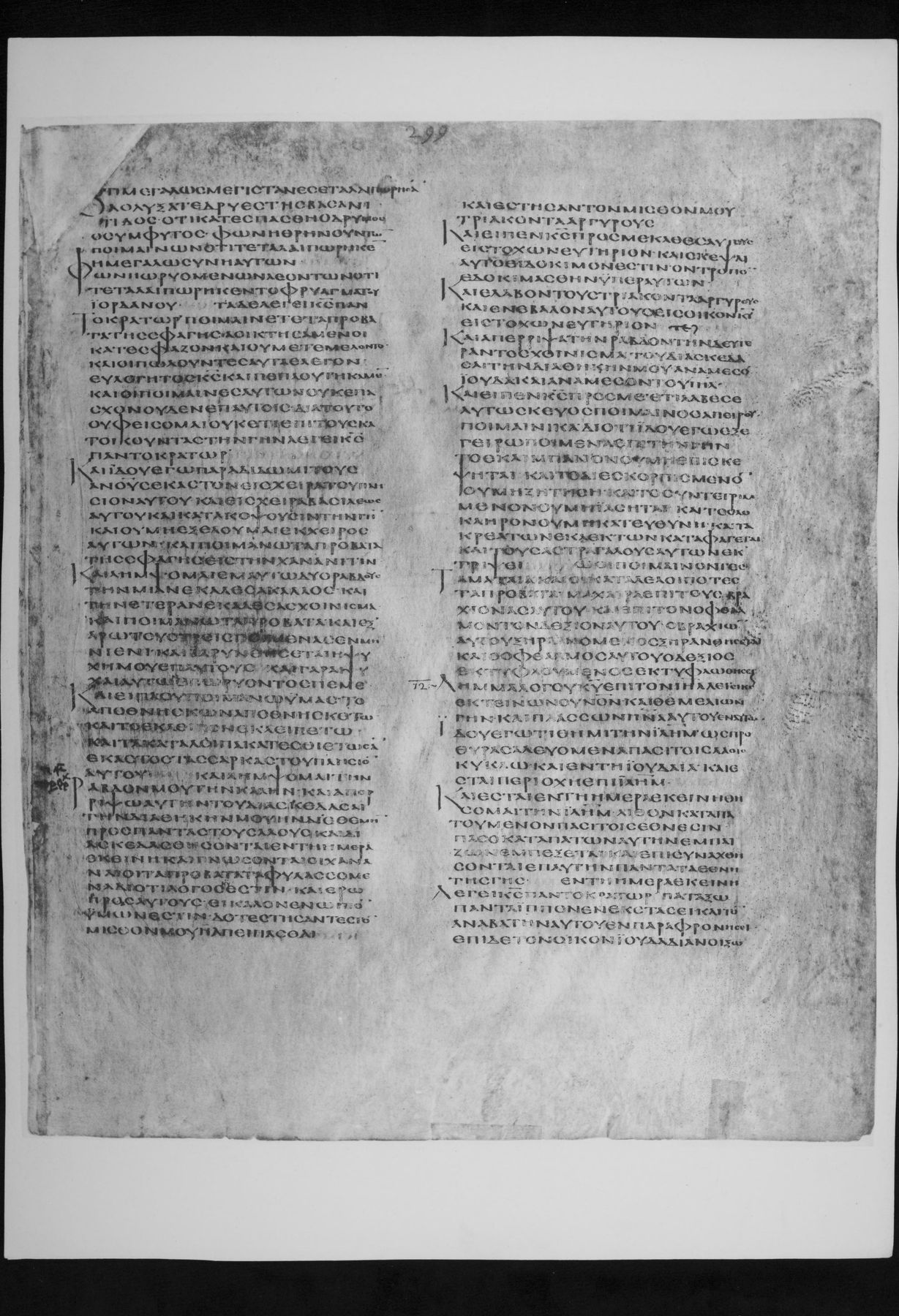
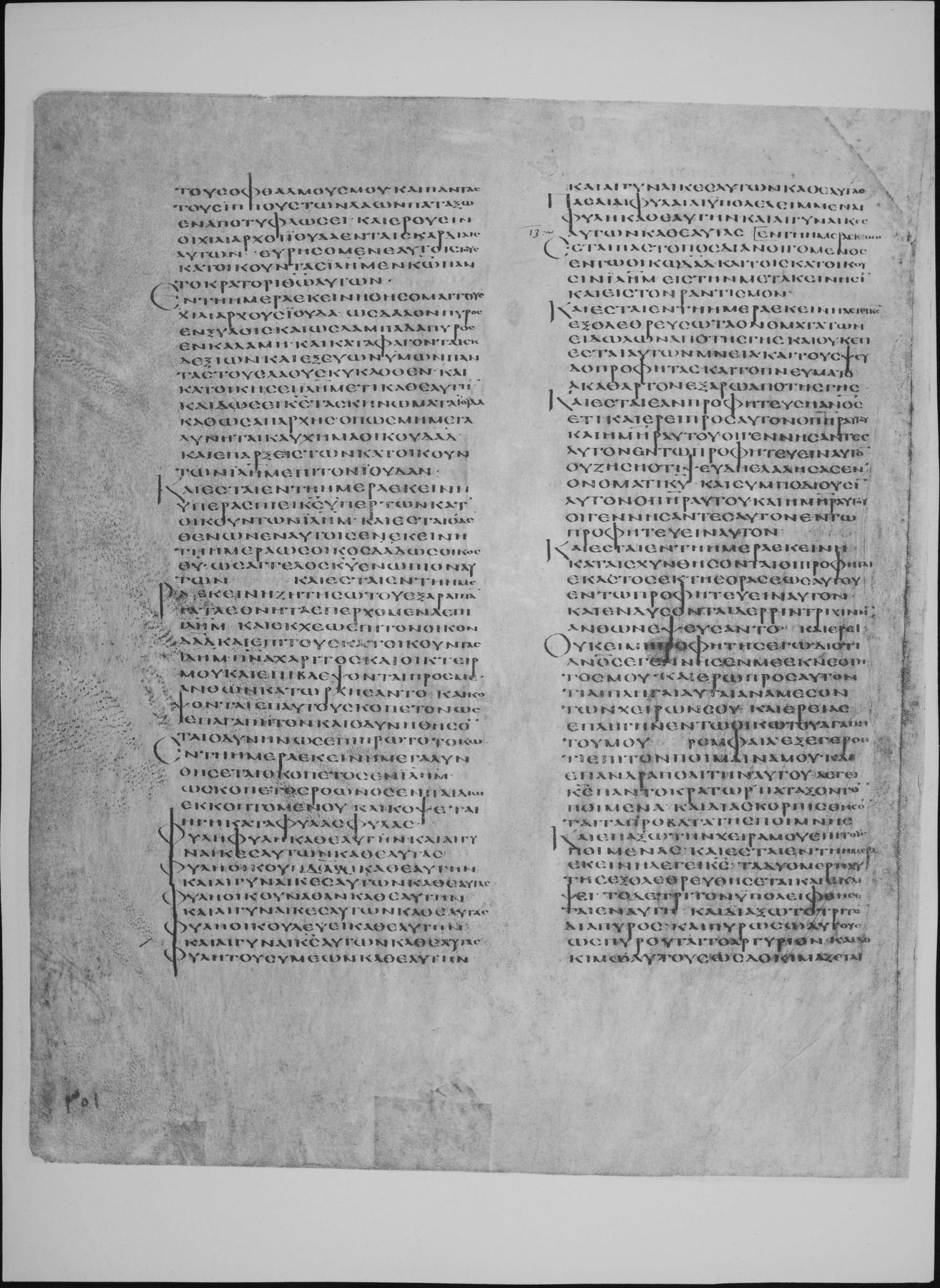
Zechariah 12 in the Greek Old Testament (the Septuagint) as written in Codex Alexandrinus, a Greek Bible copied in the fifth century, probably in Egypt, and now in the British Library (Royal MS 1 D. VI, the second of its four volumes). It is one of the three great early codices of the whole Greek Bible, with Codex Vaticanus and Codex Sinaiticus.
This entry meets the strict three-criteria standard of the Theosis Library:
- Manuscript scan: the pages of Codex Alexandrinus carrying this chapter (fol. 299r, fol. 299v), from the full-size photographic (autotype) facsimile published by the British Museum in 1879-1883, as digitised on the Internet Archive. The verse range of every page comes from the reduced photographic facsimile of 1936, which prints it beneath each plate, and the opening words of every page were read on the plate to confirm the page and the verse it begins with. Each section links to the page or pages that hold its verses. Folio numbers are those written at the head of each leaf and visible on the plates.
- Original text: Swete's edition, which here prints the text of Codex Vaticanus (Vat. gr. 1209), the base of his edition, and gives the readings of Alexandrinus only in his apparatus. The Greek column is therefore Vaticanus' text; where Alexandrinus differs, the plate shows what Alexandrinus reads.
- English translation: Sir Lancelot C. L. Brenton, The Septuagint Version of the Old Testament (1844; 1851 edition), a translation of the Greek, public domain, from the eBible.org text.
How was this verified? (Provenance)
Where on the image
Zechariah 12:1-4 is on fol. 299r (full-size facsimile of 1879-83, Internet Archive codex-alexandrinus leaf 622). The 1936 reduced facsimile prints beneath this page: Zech. xi. 2-xii. 4. Checked on the plate: the page begins inside Zechariah 11:2 (first words read: ΟΤΙ ΜΕΓΑΛΩΣ ΜΕΓΙΣΤΑΝΕΣ ΕΤΑΛΑΙΠΩΡΗΣΑΝ ΟΛΟΛΥΞΑΤΕ ΔΡΥΕΣ ΤΗΣ ΒΑΣΑΝΙΤΙΔΟΣ). Zechariah 12:4-8 is on fol. 299v (full-size facsimile of 1879-83, Internet Archive codex-alexandrinus leaf 623). The 1936 reduced facsimile prints beneath this page: Zech. xii. 4-xiii. 9. Checked on the plate: the page begins inside Zechariah 12:4 (first words read: ΤΟΥΣ ΟΦΘΑΛΜΟΥΣ ΜΟΥ ΚΑΙ ΠΑΝΤΑΣ ΤΟΥΣ ΙΠΠΟΥΣ ΤΩΝ ΛΑΩΝ ΠΑΤΑΞΩ ΕΝ ΑΠΟΤΥΦΛΩΣΕΙ).
1Λῆμμα λόγου Κυρίου ἐπὶ τὸν Ἰσραήλ. Λέγει Κύριος, ἐκτείνων οὐρανόν, καὶ θεμελιῶν γῆν, καὶ πλάσσων πνεῦμα ἀνθρώπου ἐν αὐτῷ 2Ἰδοὺ ἐγὼ τίθημι τὴν Ἰερουσαλὴμ ὡς πρόθυρα σαλευόμενα πᾶσι τοῖς λαοῖς κύκλῳ, καὶ ἐν τῇ Ἰουδαίᾳ ἔσται περιοχὴ ἐπὶ Ἰερουσαλήμ. 3καὶ ἔσται ἐν τῇ ἡμέρᾳ ἐκείνῃ θήσομαι τὴν Ἰερουσαλὴμ λίθον καταπατούμενον πᾶσιν τοῖς ἔθνεσιν· πᾶς ὁ καταπατῶν αὐτὴν ἐμπαίζων ἐμπαίξεται, καὶ ἐπισυναχθήσεται ἐπ᾽ αὐτὴν πάντα τὰ ἔθνη τῆς γῆς. 4ἐν τῇ ἡμέρᾳ ἐκείνῃ, λέγει Κύριος Παντοκράτωρ, πατάξω πάντα ἵππον ἐν ἐκστάσει καὶ τὸν ἀναβάτην αὐτοῦ ἐν παραφρονήσει, ἐπὶ δὲ τὸν οἶκον Ἰούδα διανοίξω τοὺς ὀφθαλμούς μου, καὶ πάντας τοὺς ἵππους τῶν λαῶν πατάξω ἐν ἀποτυφλώσει. 5καὶ ἐροῦσιν οἱ χιλίαρχοι Ἰούδα ἐν ταῖς καρδίαις αὐτῶν Εὑρήσομεν ἑαυτοῖς τοὺς κατοικοῦντας Ἰερουσαλὴν ἐν Κυρίῳ Παντοκράτορι θεῷ αὐτῶν. 6ἐν τῇ ἡμέρᾳ ἐκείνῃ θήσομαι τοὺς χιλιάρχους Ἰούδα ὡς δαλὸν πυρὸς ἐν ξύλοις, καὶ ὡς λαμπάδα πυρὸς ἐν καλάμῃ, καὶ καταφάγονται ἐκ δεξιῶν καὶ ἐξ εὐωνύμων πάντας τοὺς λαοὺς κυκλόθεν, καὶ κατοικήσει Ἰερουσαλὴμ ἔτι καθ᾽ ἑαυτὴν ἐν Ἰερουσαλήμ. 7καὶ σώσει Κύριος τὰ σκηνώματα Ἰούδα καθὼς ἀπ᾽ ἀρχῆς, ὅπως μὴ μεγαλύνηται καύχημα οἴκου Δαυεὶδ καὶ ἐπάρσεις τῶν κατοικούντων Ἰερουσαλὴμ ἐπὶ τὸν Ἰούδαν. 8καὶ ἔσται ἐν τῇ ἡμέρᾳ ἐκείνῃ ὑπερασπιεῖ Κύριος ὑπὲρ τῶν κατοικούντων Ἰερουσαλήμ· καὶ ἔσται ὁ ἀσθενῶν ἐν αὐτοῖς ἐν ἐκείνῃ τῇ ἡμέρᾳ ὡς Δαυείδ, ὁ δὲ οἶκος Δαυεὶδ ὡς οἶκος θεοῦ, ὡς ἄγγελος Κυρίου ἐνώπιον αὐτῶν.
1The burden of the word of the Lord for Israel; saith the Lord, that stretches out the sky, and lays the foundation of the earth, and forms the spirit of man within him. 2Behold, I will make Jerusalem as trembling door-posts to all the nations round about, and in Judea there shall be a siege against Jerusalem. 3And it shall come to pass in that day that I will make Jerusalem a trodden stone to all the nations: every one that tramples on it shall utterly mock at it, and all the nations of the earth shall be gathered together against it. 4In that day, saith the Lord Almighty, I will smite every horse with amazement, and his rider with madness: but I will open mine eyes upon the house of Juda, and I will smite all the horses of the nations with blindness. 5And the captains of thousands of Juda shall say in their hearts, We shall find for ourselves the inhabitants of Jerusalem in the Lord Almighty their God. 6In that day I will make the captains of thousands of Juda as a firebrand among wood, and as a torch of fire in stubble; and they shall devour on the right hand and on the left all the nations round about: and Jerusalem shall dwell again by herself, even in Jerusalem. 7And the Lord shall save the tabernacles of Juda as at the beginning, that the boast of the house of David, and the pride of the inhabitants of Jerusalem, may not magnify themselves against Juda. 8And it shall come to pass in that day, that the Lord shall defend the inhabitants of Jerusalem; and the weak one among them in that day shall be as David, and the house of David as the house of God, as the angel of the Lord before them.
Where on the image
Zechariah 12:9-14 is on fol. 299v (full-size facsimile of 1879-83, Internet Archive codex-alexandrinus leaf 623). The 1936 reduced facsimile prints beneath this page: Zech. xii. 4-xiii. 9. Checked on the plate: the page begins inside Zechariah 12:4 (first words read: ΤΟΥΣ ΟΦΘΑΛΜΟΥΣ ΜΟΥ ΚΑΙ ΠΑΝΤΑΣ ΤΟΥΣ ΙΠΠΟΥΣ ΤΩΝ ΛΑΩΝ ΠΑΤΑΞΩ ΕΝ ΑΠΟΤΥΦΛΩΣΕΙ).
9καὶ ἔσται ἐν τῇ ἡμέρᾳ ἐκείνῃ ζητήσω ἐξᾶραι πάντα τὰ ἔθνη τὰ ἐρχόμενα ἐπὶ Ἰερουσαλήμ, 10καὶ ἐκχεῶ ἐπὶ τὸν οἶκον Δαυεὶδ καὶ ἐπὶ τοὺς κατοικοῦντας Ἰερουσαλὴμ πνεῦμα χάριτος καὶ οἰκτιρμοῦ· καὶ ἐπιβλέψονται πρὸς μὲ ἀνθ᾽ ὧν κατωρχήσαντο, καὶ κόψονται ἐπ᾽ αὐτὸν κοπετὸν ὡς ἐπ᾽ ἀγαπητῷ, καὶ ὀδυνηθήσονται ὀδύνην ὡς ἐπὶ τῷ πρωτοτόκῳ. 11ἐν τῇ ἡμέρᾳ ἐκείνῃ μεγαλυνθήσεται ὁ κοπετὸς ἐν Ἰερουσαλὴμ ὡς κοπετὸς ῥοῶνος ἐν πεδίῳ ἐκκοπτομένου, 12καὶ κόψεται ἡ γῆ κατὰ φυλὰς φυλάς· φυλὴ οἴκου Δαυεὶδ καθ᾽ ἑαυτήν, καὶ αἱ γυναῖκες αὐτῶν καθ᾽ ἑαυτάς· φυλὴ οἴκου Ναθὰν καθ᾽ ἑαυτήν, καὶ αἱ γυναῖκες αὐτῶν καθ᾽ ἑαυτάς· 13φυλὴ οἴκου Λευεὶ καθ᾽ ἑαυτήν, καὶ αἱ γυναῖκες αὐτῶν καθ᾽ ἑαυτάς· φυλὴ τοῦ Συμεὼν καθ᾽ ἑαυτήν, καὶ αἱ γυναῖκες αὐτῶν καθ᾽ ἑαυτάς. 14πᾶσαι αἱ ὑπολελιμμέναι φυλαί, φυλὴ καθ᾽ ἑαυτήν, καὶ αἱ γυναῖκες αὐτῶν καθ᾽ ἑαυτάς.
9And it shall come to pass in that day, that I will seek to destroy all the nations that come against Jerusalem. 10And I will pour upon the house of David, and upon the inhabitants of Jerusalem, the spirit of grace and compassion: and they shall look upon me, because they have mocked me, and they shall make lamentation for him, as for a beloved friend, and they shall grieve intensely, as for a first-born son. 11In that day the lamentation in Jerusalem shall be very great, as the mourning for the pomegranate grove cut down in the plain. 12And the land shall lament in separate families, the family of the house of David by itself, and their wives by themselves; the family of the house of Nathan by itself, and their wives by themselves; 13the family of the house of Levi by itself, and their wives by themselves; the family of Symeon by itself, and their wives by themselves; 14all the families that are left, each family by itself, and their wives by themselves.
Cite
Sources
- Source: Codex Alexandrinus (British Library Royal MS 1 D. VI) via the British Museum photographic facsimiles of 1879-83 and 1936 (Internet Archive) + Swete's Septuagint + Brenton's English (holding institution)
- Critical edition: H. B. Swete, The Old Testament in Greek according to the Septuagint (1909)
← previous · → next · v cycle view · l back to library