Zechariah, Chapter 13 (Codex Alexandrinus)
Introduction
Zechariah 13 in the Greek Old Testament (the Septuagint) as written in Codex Alexandrinus, a Greek Bible copied in the fifth century, probably in Egypt, and now in the British Library (Royal MS 1 D. VI, the second of its four volumes). It is one of the three great early codices of the whole Greek Bible, with Codex Vaticanus and Codex Sinaiticus.
This entry meets the strict three-criteria standard of the Theosis Library:
- Manuscript scan: the pages of Codex Alexandrinus carrying this chapter (fol. 299v, fol. 300r), from the full-size photographic (autotype) facsimile published by the British Museum in 1879-1883, as digitised on the Internet Archive. The verse range of every page comes from the reduced photographic facsimile of 1936, which prints it beneath each plate, and the opening words of every page were read on the plate to confirm the page and the verse it begins with. Each section links to the page or pages that hold its verses. Folio numbers are those written at the head of each leaf and visible on the plates.
- Original text: Swete's edition, which here prints the text of Codex Vaticanus (Vat. gr. 1209), the base of his edition, and gives the readings of Alexandrinus only in his apparatus. The Greek column is therefore Vaticanus' text; where Alexandrinus differs, the plate shows what Alexandrinus reads.
- English translation: Sir Lancelot C. L. Brenton, The Septuagint Version of the Old Testament (1844; 1851 edition), a translation of the Greek, public domain, from the eBible.org text.
How was this verified? (Provenance)
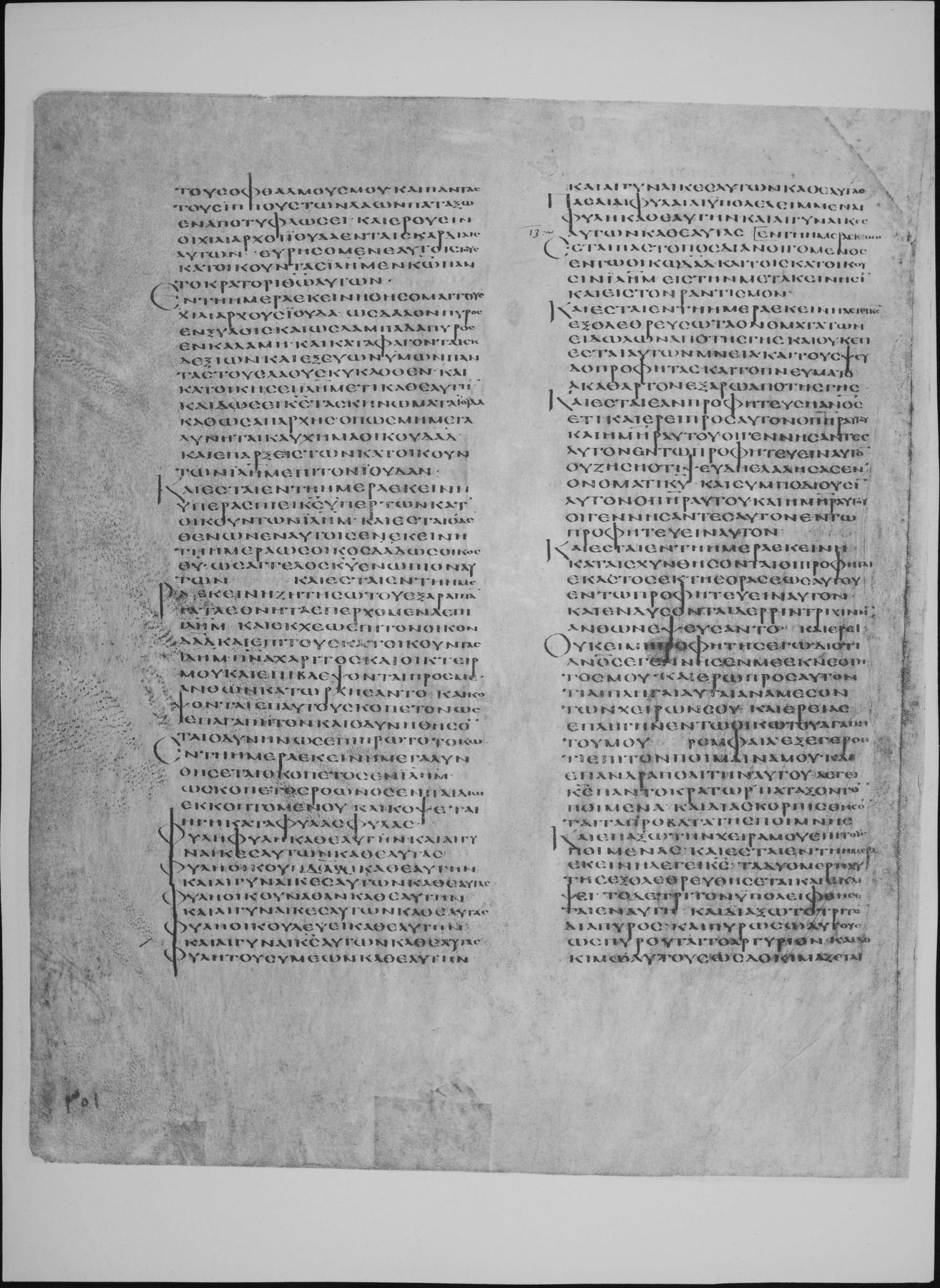
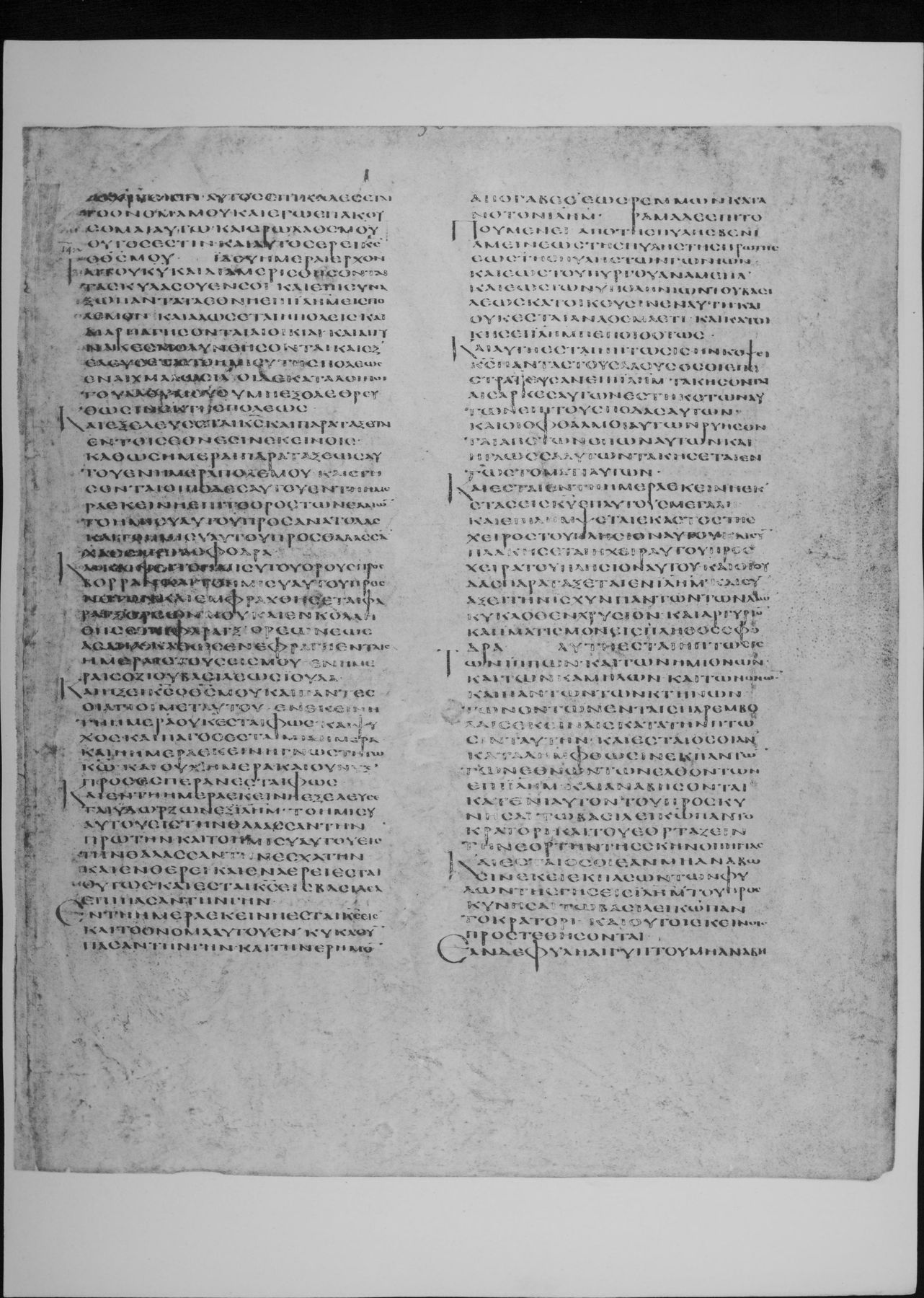
Where on the image
Zechariah 13:1-9 is on fol. 299v (full-size facsimile of 1879-83, Internet Archive codex-alexandrinus leaf 623). The 1936 reduced facsimile prints beneath this page: Zech. xii. 4-xiii. 9. Checked on the plate: the page begins inside Zechariah 12:4 (first words read: ΤΟΥΣ ΟΦΘΑΛΜΟΥΣ ΜΟΥ ΚΑΙ ΠΑΝΤΑΣ ΤΟΥΣ ΙΠΠΟΥΣ ΤΩΝ ΛΑΩΝ ΠΑΤΑΞΩ ΕΝ ΑΠΟΤΥΦΛΩΣΕΙ). Zechariah 13:9 is on fol. 300r (full-size facsimile of 1879-83, Internet Archive codex-alexandrinus leaf 624). The 1936 reduced facsimile prints beneath this page: Zech. xiii. 9-xiv. 18. Checked on the plate: the page begins inside Zechariah 13:9 (first words read: ΑΥΤΟΣ ΕΠΙΚΑΛΕΣΕΤΑΙ ΤΟ ΟΝΟΜΑ ΜΟΥ ΚΑΙ ΕΓΩ ΕΠΑΚΟΥΣΟΜΑΙ ΑΥΤΩ ΚΑΙ ΕΡΩ ΛΑΟΣ ΜΟΥ ΟΥΤΟΣ ΕΣΤΙΝ).
1Ἐν τῇ ἡμέρᾳ ἐκείνῃ ἔσται πᾶς τόπος διανοιγόμενος τῷ οἴκῳ Δαυεὶδ καὶ τοῖς κατοικοῦσιν Ἰερουσαλὴμ εἰς τὴν μετακίνησιν καὶ εἰς τὸν χωρισμόν. 2καὶ ἔσται ἐν τῇ ἡμέρᾳ ἐκείνῃ, λέγει Κύριος σαβαώθ, ἐξολεθρεύσω τὰ ὀνόματα τῶν εἰδώλων ἀπὸ τῆς γῆς, καὶ οὐκέτι ἔσται αὐτῶν μνεία· καὶ τοὺς ψευδοπροφήτας καὶ τὸ πνεῦμα τὸ ἀκάθαρτον ἐξαρῶ ἀπὸ τῆς γῆς. 3καὶ ἔσται ἐὰν προφητεύσῃ ἄνθρωπος ἔτι, καὶ ἐρεῖ πρὸς αὐτὸν ὁ πατὴρ αὐτοῦ καὶ ἡ μήτηρ αὐτοῦ, οἱ γεννήσαντες αὐτόν Οὐ ζήσῃ, ὅτι ψευδῆ ἐλάλησας ἐπ᾽ ὀνόματι Κυρίου· καὶ συμποδιοῦσιν αὐτὸν ὁ πατὴρ αὐτοῦ καὶ ἡ μήτηρ αὐτοῦ, οἱ γεννήσαντες αὐτόν, ἐν τῷ προφητεύειν αὐτόν. 4καὶ ἔσται ἐν τῇ ἡμέρᾳ ἐκείνῃ καταισχυνθήσονται οἱ προφῆται, ἕκαστος ἐκ τῆς ὁράσεως αὐτοῦ ἐν τῷ προφητεύειν αὐτόν, καὶ ἐνδύσονται δέρριν τριχίνην ἀνθ᾽ ὧν ἐψεύσαντο. 5καὶ ἐρεῖ Οὐκ εἰμὶ προφήτης ἐγώ, διότι ἄνθρωπος ἐργαζόμενος τὴν γῆν ἐγώ εἰμι, ὅτι ἄνθρωπος ἐγέννησέν με ἐκ νεότητός μου. 6καὶ ἐρεῖ πρὸς αὐτόν Τί αἱ πληγαὶ αὗται ἀνὰ μέσον τῶν χειρῶν σου; καὶ ἐρεῖ Ἃς ἐπλήγην ἐν τῷ οἴκῳ τῷ ἀγαπητῷ μου. 7Ῥομφαία, ἐξεγέρθητι ἐπὶ τοὺς ποιμένας μου καὶ ἐπ᾽ ἄνδρα πολίτην μου, λέγει Κύριος Παντοκράτωρ· πατάξατε τοὺς ποιμένας καὶ ἐκσπάσατε τὰ πρόβατα, καὶ ἐπάξω τὴν χεῖρά μου ἐπὶ τοὺς μικρούς. 8καὶ ἔσται ἐν πάσῃ τῇ γῇ, λέγει Κύριος, τὰ δύο μέρη αὐτῆς ἐξολεθρευθήσεται καὶ ἐκλείψει, τὸ δὲ τρίτον ὑπολειφθήσεται ἐν αὐτῇ· 9καὶ διάξω τὸ τρίτον διὰ πυρός, καὶ πυρώσω αὐτοὺς ὡς πυροῦται τὸ ἀργύριον, καὶ δοκιμῶ αὐτοὺς ὡς δοκιμάζεται τὸ χρυσίον· αὐτὸς ἐπικαλέσεται τὸ ὄνομά μου, κἀγὼ ἐπακούσομαι αὐτῷ, καὶ ἐρῶ Λαός μου οὗτός ἐστιν, καὶ αὐτὸς ἐρεῖ Κύριος ὁ θεός μου.
1In that day every place shall be opened to the house of David and to the inhabitants of Jerusalem for removal and for separation. 2And it shall come to pass in that day, saith the Lord of hosts, that I will utterly destroy the names of the idols from off the land, and there shall be no longer any remembrance of them: and I will cut off the false prophets and the evil spirit from the land. 3And it shall come to pass, if a man will yet prophesy, that his father and his mother which gave birth to him shall say to him, Thou shalt not live; for thou hast spoken lies in the name of the Lord: and his father and his mother who gave him birth shall bind him as he is prophesying. 4And it shall come to pass in that day, that the prophets shall be ashamed every one of his vision when he prophesies; and they shall clothe themselves with a garment of hair, because they have lied. 5And one shall say, I am not a prophet, for I am a tiller of the ground, for a man brought me up thus from my youth. 6And I will say to him, What are these wounds between thine hands? and he shall say, Those with which I was wounded in my beloved house. 7Awake, O sword, against my shepherds, and against the man who is my citizen, saith the Lord Almighty: smite the shepherds, and draw out the sheep: and I will bring mine hand upon the little ones. 8And it shall come to pass, that in all the land, saith the Lord, two parts thereof shall be cut off and perish; but the third shall be left therein. 9And I will bring the third part through the fire, and I will try them as silver is tried, and I will prove them as gold is proved: they shall call upon my name, and I will hear them, and say, This is my people: and they shall say, The Lord is my God.
Cite
Sources
- Source: Codex Alexandrinus (British Library Royal MS 1 D. VI) via the British Museum photographic facsimiles of 1879-83 and 1936 (Internet Archive) + Swete's Septuagint + Brenton's English (holding institution)
- Critical edition: H. B. Swete, The Old Testament in Greek according to the Septuagint (1909)
← previous · → next · v cycle view · l back to library