Zephaniah, Chapter 2 (Codex Alexandrinus)
Introduction
Zephaniah 2 in the Greek Old Testament (the Septuagint) as written in Codex Alexandrinus, a Greek Bible copied in the fifth century, probably in Egypt, and now in the British Library (Royal MS 1 D. VI, the second of its four volumes). It is one of the three great early codices of the whole Greek Bible, with Codex Vaticanus and Codex Sinaiticus.
This entry meets the strict three-criteria standard of the Theosis Library:
- Manuscript scan: the page of Codex Alexandrinus carrying this chapter (fol. 293v), from the full-size photographic (autotype) facsimile published by the British Museum in 1879-1883, as digitised on the Internet Archive. The verse range of every page comes from the reduced photographic facsimile of 1936, which prints it beneath each plate, and the opening words of every page were read on the plate to confirm the page and the verse it begins with. Each section links to the page or pages that hold its verses. Folio numbers are those written at the head of each leaf and visible on the plates.
- Original text: Swete's edition, which here prints the text of Codex Vaticanus (Vat. gr. 1209), the base of his edition, and gives the readings of Alexandrinus only in his apparatus. The Greek column is therefore Vaticanus' text; where Alexandrinus differs, the plate shows what Alexandrinus reads.
- English translation: Sir Lancelot C. L. Brenton, The Septuagint Version of the Old Testament (1844; 1851 edition), a translation of the Greek, public domain, from the eBible.org text.
How was this verified? (Provenance)
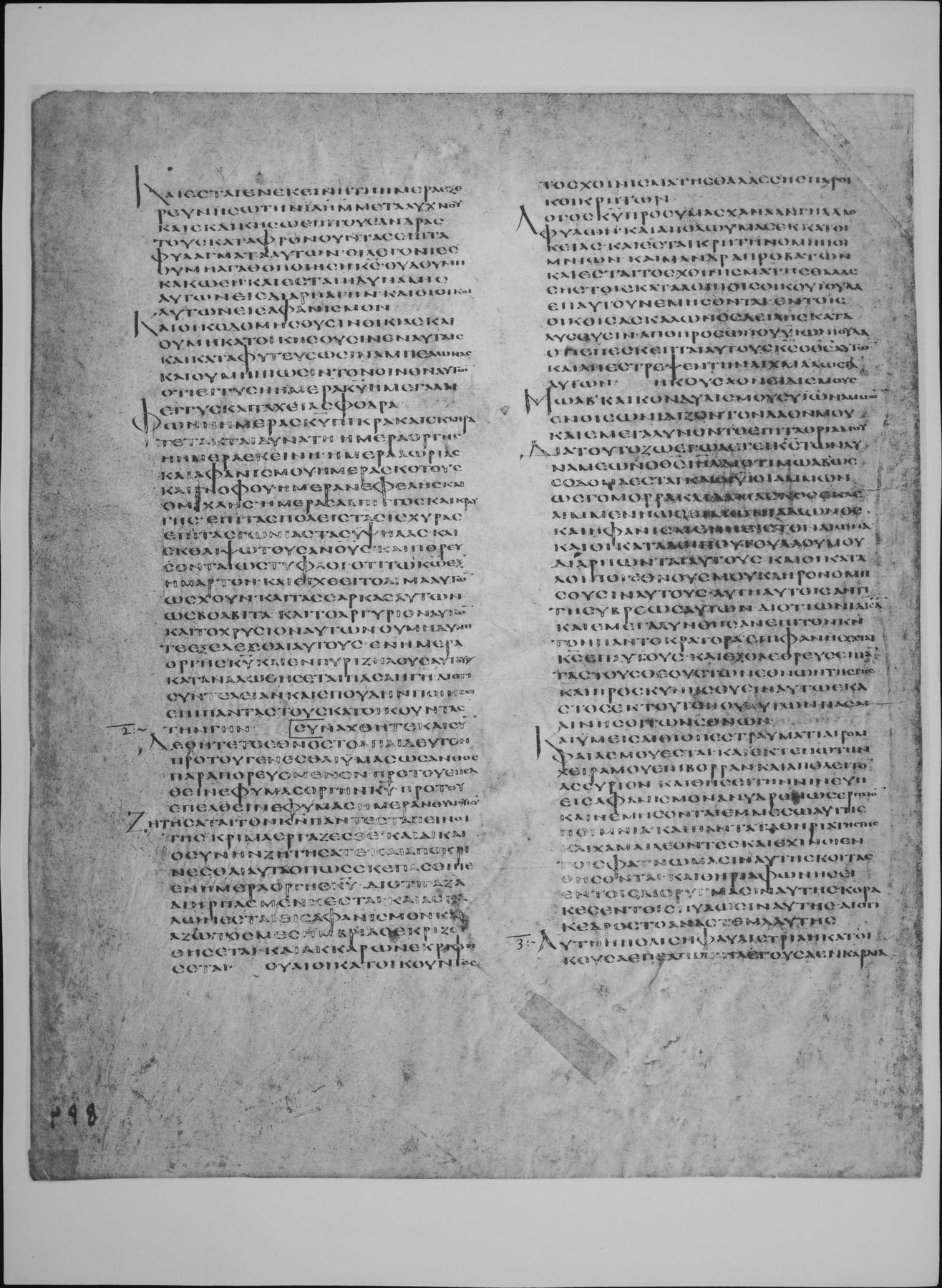
Where on the image
Zephaniah 2:1-8 is on fol. 293v (full-size facsimile of 1879-83, Internet Archive codex-alexandrinus leaf 611). The 1936 reduced facsimile prints beneath this page: Zeph. i. 12-iii. 1. Checked on the plate: the page begins at the start of Zephaniah 1:12 (first words read: ΚΑΙ ΕΣΤΑΙ ΕΝ ΕΚΕΙΝΗ ΤΗ ΗΜΕΡΑ ΕΞΕΡΕΥΝΗΣΩ ΤΗΝ ΙΕΡΟΥΣΑΛΗΜ ΜΕΤΑ ΛΥΧΝΟΥ).
1Συνάχθητε καὶ συνδέθητε, τὸ ἔθνος τὸ ἀπαίδευτον, 2πρὸ τοῦ γενέσθαι ὑμᾶς ὡς ἄνθος παραπορευόμενον, πρὸ τοῦ ἐπελθεῖν ἐφ᾽ ὑμᾶς ὀργήν Κυρίου, πρὸ τοῦ ἐπελθεῖν ἐφ᾽ ὑμᾶς ἡμέραν θυμοῦ Κυρίου. 3ζητήσατε τὸν κύριον, πάντες ταπεινοὶ γῆς· κρίμα ἐργάζεσθε καὶ δικαιοσύνην ζητήσατε, καὶ ἀποκρίνεσθε αὐτά, ὅπως σκεπασθῆτε ἐν ἡμέρᾳ ὀργῆς Κυρίου. 4Διότι Γάζα διηρπασμένη ἔσται, καὶ Ἀσκάλων εἰς ἀφανισμόν, καὶ Ἄζωτος μεσημβρίας ἐκριφήσεται, καὶ Ἀκκαρὼν ἐκριζωθήσεται. 5οὐαὶ οἱ κατοικοῦντες τὸ σχοίνισμα τῆς θαλάσσης, πάροικοι Κρητῶν· λόγος Κυρίου ἐφ᾽ ὑμᾶς Χανάαν, γῆ ἀλλοφύλων, καὶ ἀπολῶ ὑμᾶς ἐκ κατοικίας· 6καὶ ἔσται Κρήτη νομὴ ποιμνίων καὶ μάνδρα προβάτων, 7καὶ ἔσται τὸ σχοίνισμα τῆς θαλάσσης τοῖς καταλοίποις οἴκου Ἰούδα· ἐπ᾽ αὐτοὺς νεμήσονται ἐν τοῖς οἴκοις Ἀσκάλωνος, δείλης καταλύσουσιν ἀπὸ προσώπου υἱῶν Ἰούδα, ὅτι ἐπέσκεπται αὐτοὺς Κύριος ὁ θεὸς αὐτῶν, καὶ ἀπέστρεψε τὴν αἰχμαλωσίαν αὐτῶν. 8Ἤκουσα ὀνειδισμοὺς Μωὰβ καὶ κονδυλισμοὺς υἱῶν Ἀμμών, ἐν οἷς ὠνείδιζον τὸν λαόν μου καὶ ἐμεγαλύνοντο ἐπὶ τὰ ὅριά μου.
1Be ye gathered and closely joined together, O unchastened nation; 2before ye become as the flower that passes away, before the anger of the Lord come upon you, before the day of the wrath of the Lord come upon you. 3Seek ye the Lord, all ye meek of the earth; do judgment, and seek justice, and answer accordingly; that ye may be hid in the day of the wrath of the Lord. 4For Gaza shall be utterly spoiled, and Ascalon shall be destroyed; and Azotus shall be cast forth at noon-day, and Accaron shall be rooted up. 5Woe to them that dwell on the border of the sea, neighbours of the Cretans! the word of the Lord is against you, O Chanaan, land of the Philistines, and I will destroy you out of your dwelling-place. 6And Crete shall be a pasture of flocks, and a fold of sheep. 7And the sea coast shall be for the remnant of the house of Juda; they shall pasture upon them in the houses of Ascalon; they shall rest in the evening because of the children of Juda; for the Lord their God has visited them, and he will turn away their captivity. 8I have heard the revilings of Moab, and the insults of the children of Ammon, wherewith they have reviled my people, and magnified themselves against my coasts.
Where on the image
Zephaniah 2:9-14 is on fol. 293v (full-size facsimile of 1879-83, Internet Archive codex-alexandrinus leaf 611). The 1936 reduced facsimile prints beneath this page: Zeph. i. 12-iii. 1. Checked on the plate: the page begins at the start of Zephaniah 1:12 (first words read: ΚΑΙ ΕΣΤΑΙ ΕΝ ΕΚΕΙΝΗ ΤΗ ΗΜΕΡΑ ΕΞΕΡΕΥΝΗΣΩ ΤΗΝ ΙΕΡΟΥΣΑΛΗΜ ΜΕΤΑ ΛΥΧΝΟΥ).
9διὰ τοῦτο ζῶ ἐγώ, λέγει Κύριος τῶν δυνάμεων ὁ θεὸς Ἰσραήλ, διότι Μωὰβ ὡς Σόδομα ἔσται, καὶ υἱοὶ Ἀμμὼν ὡς Γόμορρα, καὶ Δαμασκὸς ἐκλελιμμένη ὡς θιμωνιὰ ἅλωνος καὶ ἠφανισμένη εἰς τὸν αἰῶνα· καὶ οἱ κατάλοιποι λαοῦ μου διαρπῶνται αὐτούς, καὶ οἱ κατάλοιποι ἔθνους μου κληρονομήσουσιν αὐτούς. 10αὕτη αὐτοῖς ἀντὶ τῆς ὕβρεως αὐτῶν, διότι ὠνείδισαν καὶ ἐμεγαλύνθησαν ἐπὶ τὸν κύριον τὸν παντοκράτορα. 11ἐπιφανήσεται Κύριος ἐπ᾽ αὐτούς, καὶ ἐξολεθρεύσει πάντας τοὺς θεοὺς τῶν ἐθνῶν τῆς γῆς, καὶ προσκυνήσουσιν αὐτῷ ἕκαστος ἐκ τοῦ τόπου αὐτοῦ, πᾶσαι αἱ νῆσοι τῶν ἐθνῶν. 12Καὶ ὑμεῖς, Αἰθίοπες, τραυματίαι ῥομφαίας μού ἐστε· 13καὶ ἐκτενεῖ τὴν χεῖρα αὐτοῦ ἐπὶ βορρᾶν καὶ ἀπολεῖ τὸν Ἀσσύριον, καὶ θήσει τὴν Νινευὴ εἰς ἀφανισμὸν ἄνυδρον ὡς ἔρημον· 14καὶ νεμήσονται ἐν μέσῳ αὐτῆς ποίμνια καὶ πάντα τὰ θηρία τῆς γῆς, καὶ χαμαιλέοντες καὶ ἐχῖνοι ἐν τοῖς φατνώμασιν αὐτῆς κοιτασθήσονται, καὶ θηρία φωνήσει ἐν τοῖς διορύγμασιν αὐτῆς, κόρακες ἐν τοῖς πυλῶσιν αὐτῆς, διότι κέδρος τὸ ἀνάστημα αὐτῆς.
9Therefore, as I live, saith the Lord of hosts, the God of Israel, Moab shall be as Sodoma, and the children of Ammon as Gomorrha; and Damascus shall be left as a heap of the threshing-floor, and desolate for ever: and the remnant of my people shall plunder them, and the remnant of my nation shall inherit them. 10This is their punishment in return for their haughtiness, because they have reproached and magnified themselves against the Lord Almighty. 11The Lord shall appear against them, and shall utterly destroy all the gods of the nations of the earth; and they shall worship him every one from his place, even all the islands of the nations. 12Ye Ethiopians also are the slain of my sword. 13And he shall stretch forth his hand against the north and destroy the Assyrian, and make Nineve a dry wilderness, even as a desert. 14And flocks, and all the wild beasts of the land, and chameleons shall feed in the midst thereof: and hedgehogs shall lodge in the ceilings thereof; and wild beasts shall cry in the breaches thereof, and ravens in her porches, whereas her loftiness was as a cedar.
Cite
Sources
- Source: Codex Alexandrinus (British Library Royal MS 1 D. VI) via the British Museum photographic facsimiles of 1879-83 and 1936 (Internet Archive) + Swete's Septuagint + Brenton's English (holding institution)
- Critical edition: H. B. Swete, The Old Testament in Greek according to the Septuagint (1909)
← previous · → next · v cycle view · l back to library