Zephaniah, Chapter 3 (Codex Alexandrinus)
Introduction
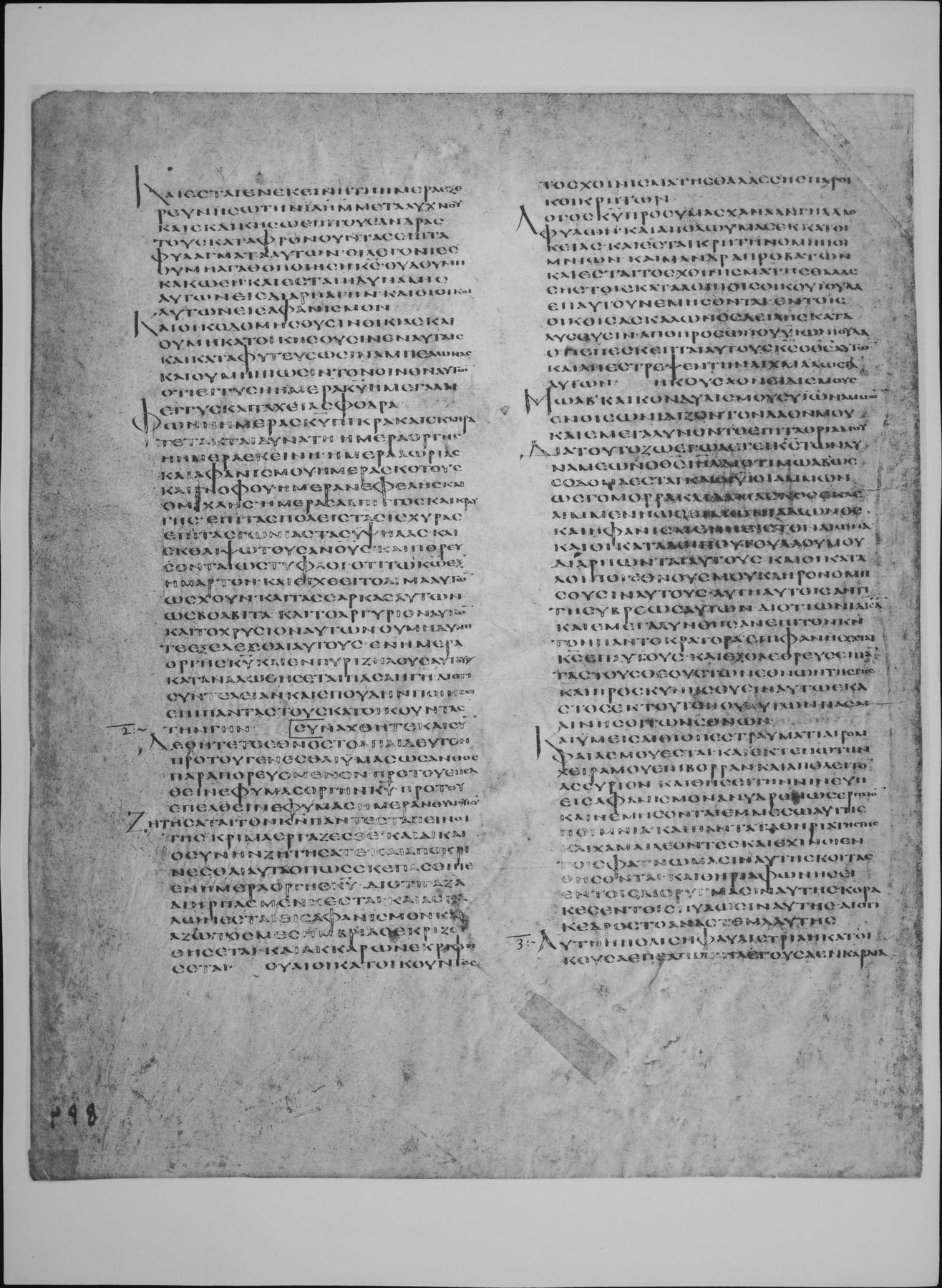
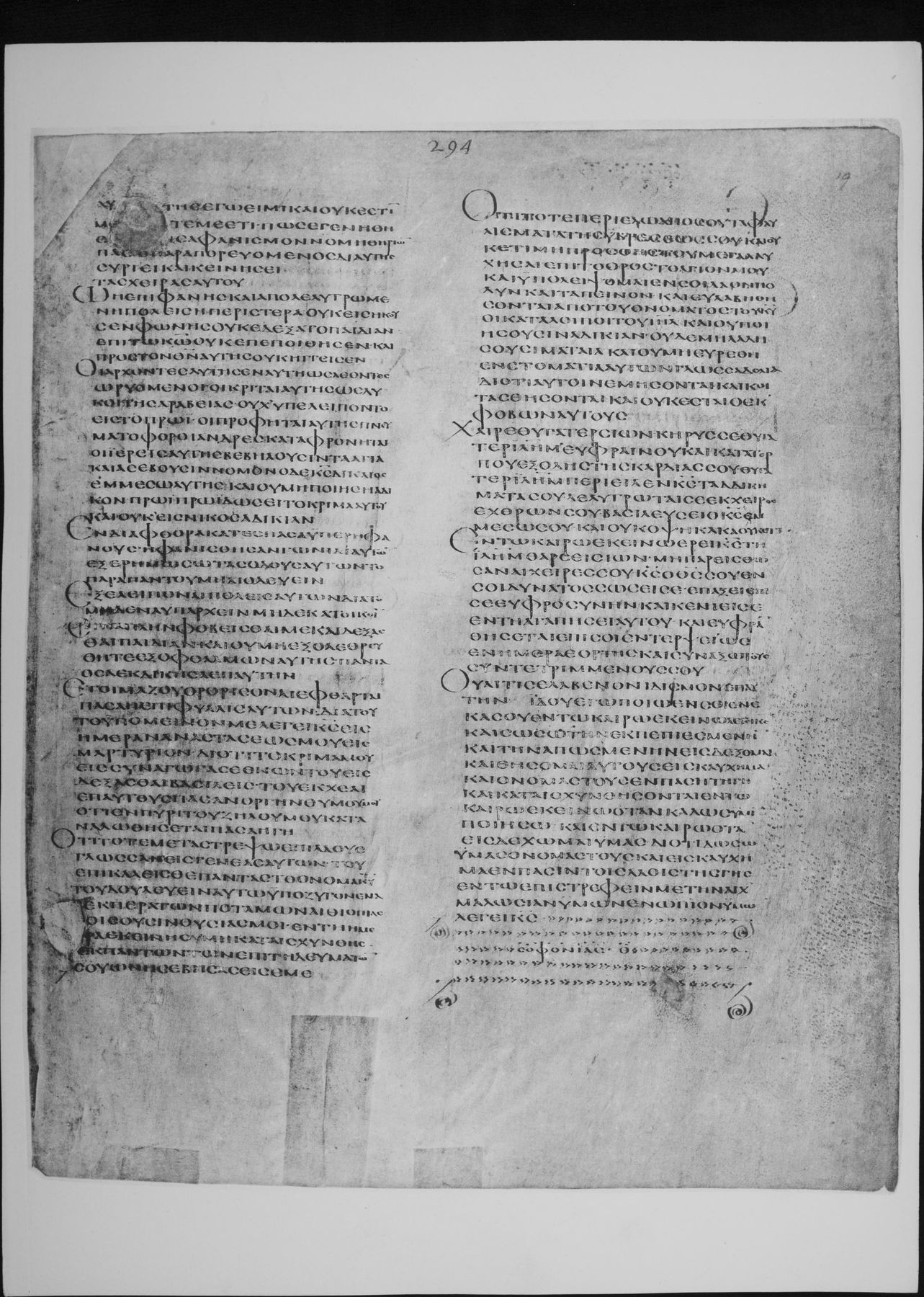
Zephaniah 3 in the Greek Old Testament (the Septuagint) as written in Codex Alexandrinus, a Greek Bible copied in the fifth century, probably in Egypt, and now in the British Library (Royal MS 1 D. VI, the second of its four volumes). It is one of the three great early codices of the whole Greek Bible, with Codex Vaticanus and Codex Sinaiticus.
Numbering: Swete's Greek and Brenton's English number or divide some verses of this chapter differently (Swete 3:1 = Brenton 2:15; Swete 3:2 = Brenton 3:1-2). Each column keeps its own verse numbers, and sections are cut only where the two texts agree, so each section holds the same passage in both languages.
This entry meets the strict three-criteria standard of the Theosis Library:
- Manuscript scan: the pages of Codex Alexandrinus carrying this chapter (fol. 293v, fol. 294r), from the full-size photographic (autotype) facsimile published by the British Museum in 1879-1883, as digitised on the Internet Archive. The verse range of every page comes from the reduced photographic facsimile of 1936, which prints it beneath each plate, and the opening words of every page were read on the plate to confirm the page and the verse it begins with. Each section links to the page or pages that hold its verses. Folio numbers are those written at the head of each leaf and visible on the plates.
- Original text: Swete's edition, which here prints the text of Codex Vaticanus (Vat. gr. 1209), the base of his edition, and gives the readings of Alexandrinus only in his apparatus. The Greek column is therefore Vaticanus' text; where Alexandrinus differs, the plate shows what Alexandrinus reads.
- English translation: Sir Lancelot C. L. Brenton, The Septuagint Version of the Old Testament (1844; 1851 edition), a translation of the Greek, public domain, from the eBible.org text.
How was this verified? (Provenance)
Where on the image
Zephaniah 3:1 is on fol. 293v (full-size facsimile of 1879-83, Internet Archive codex-alexandrinus leaf 611). The 1936 reduced facsimile prints beneath this page: Zeph. i. 12-iii. 1. Checked on the plate: the page begins at the start of Zephaniah 1:12 (first words read: ΚΑΙ ΕΣΤΑΙ ΕΝ ΕΚΕΙΝΗ ΤΗ ΗΜΕΡΑ ΕΞΕΡΕΥΝΗΣΩ ΤΗΝ ΙΕΡΟΥΣΑΛΗΜ ΜΕΤΑ ΛΥΧΝΟΥ). Zephaniah 3:1-8 is on fol. 294r (full-size facsimile of 1879-83, Internet Archive codex-alexandrinus leaf 612). The 1936 reduced facsimile prints beneath this page: Zeph. iii. 1-20. Checked on the plate: the page begins inside Zephaniah 3:1 (first words read: ΕΓΩ ΕΙΜΙ ΚΑΙ ΟΥΚ ΕΣΤΙ ΜΕΤ ΕΜΕ ΕΤΙ ΠΩΣ ΕΓΕΝΗΘΗ ΕΙΣ ΑΦΑΝΙΣΜΟΝ ΝΟΜΗ ΘΗΡΙΩΝ).
1Αὕτη ἡ πόλις ἡ φαυλίστρια, ἡ κατοικοῦσα ἐπ᾽ ἐλπίδι, ἡ λέγουσα ἐν καρδίᾳ αὐτῆς Ἐγώ εἰμι, καὶ οὐκ ἔστιν μετ᾽ ἐμὲ ἔτι. πῶς ἐγενήθη εἰς ἀφανισμόν, νομὴ θηρίων· πᾶς ὁ διαπορευόμενος δι᾽ αὐτῆς συριεῖ καὶ κινήσει τὰς χεῖρας αὐτοῦ. 2ὢ ἡ ἐπιφανὴς, καὶ ἀπολελυτρωμένη πόλις, ἡ περιστερά· οὐκ εἰσήκουσεν φωνῆς, οὐκ ἐδέξατο παιδίαν, ἐπὶ τῷ κυρίῳ οὐκ ἐπεποίθει, καὶ πρὸς τὸν θεὸν αὐτῆς οὐκ ἤγγισεν. 3οἱ ἄρχοντες αὐτῆς ἐν αὐτῇ ὡς λέοντες ὠρυόμενοι· οἱ κριταὶ αὐτῆς ὡς λύκοι τῆς Ἀραβίας, οὐχ ὑπελίποντο εἰς τὸ πρωί· 4οἱ προφῆται αὐτῆς πνευματοφόροι, ἄνδρες καταφρονηταὶ· οἱ ἱερεῖς αὐτῆς βεβηλοῦσιν τὰ ἅγια καὶ ἀσεβοῦσιν νόμον. 5ὁ δὲ κύριος δίκαιος ἐν μέσῳ αὐτῆς καὶ οὐ μὴ ποιήσῃ ἄδικον· πρωὶ πρωὶ δώσει κρίμα αὐτοῦ εἰς φῶς, καὶ οὐκ ἀπεκρύβη καὶ οὐκ ἔγνω ἀδικίαν ἐν ἀπαιτήσει, καὶ οὐκ εἰς νῖκος ἀδικίαν. 6ἐν διαφθορᾷ κατέσπασα ὑπερηφάνους, ἠφανίσθησαν γωνίαι αὐτῶν· ἐξερημώσω τάς ὁδοὺς αὐτῶν τὸ παράπαν τοῦ μή διοδεύειν· ἐξέλιπον αἱ πόλεις αὐτῶν παρὰ τὸ μηδένα ὑπάρχειν μηδὲ κατοικεῖν. 7εἶπα Πλὴν φοβεῖσθέ με καὶ δέξασθε παιδείαν, καὶ οὐ μὴ ἐξολοθρευθῆτε ἐξ ὀφθαλμῶν αὐτῆς, πάντα ὅσα ἐξεδίκησα ἐπ᾽ αὐτήν· ἑτοιμάζου ὄρθρισον, ἔφθαρται πᾶσα ἡ ἐπιφυλλὶς αὐτῶν. 8Διὰ τοῦτο ὑπόμεινόν με, λέγει Κύριος, εἰς ἡμέραν ἀναστάσεώς μου εἰς μαρτύριον· διότι τὸ κρίμα μου εἰς συναγωγὰς ἐθνῶν, τοῦ εἰσδέξασθαι βασιλεῖς, τοῦ ἐκχέαι ἐπ᾽ αὐτοὺς πᾶσαν ὀργὴν θυμοῦ μου· διότι ἐν πυρὶ ζήλους μου καταναλωθήσεται πᾶσα ἡ γῆ.
2:15This is the scornful city that dwells securely, that says in her heart, I am, and there is no longer any to be after me: how is she become desolate, a habitation of wild beasts! every one that passes through her shall hiss, and shake his hands. 1Alas the glorious and ransomed city. 2The dove hearkened not to the voice; she received not correction; she trusted not in the Lord, and she drew not near to her God. 3Her princes within her were as roaring lions, her judges as the wolves of Arabia; they remained not till the morrow. 4Her prophets are light and scornful men: her priests profane the holy things, and sinfully transgress the law. 5But the just Lord is in the midst of her, and he will never do an unjust thing: morning by morning he will bring out his judgment to the light, and it is not hidden, and he knows not injustice by extortion, nor injustice in strife. 6I have brought down the proud with destruction; their corners are destroyed: I will make their ways completely waste, so that none shall go through: their cities are come to an end, by reason of no man living or dwelling in them. 7I said, But do ye fear me, and receive instruction, and ye shall not be cut off from the face of the land for all the vengeance I have brought upon her: prepare thou, rise early: all their produce is spoilt. 8Therefore wait upon me, saith the Lord, until the day when I rise up for a witness: because my judgment shall be on the gatherings of the nations, to draw to me kings, to pour out upon them all my fierce anger: for the whole earth shall be consumed with the fire of my jealousy.
Where on the image
Zephaniah 3:9-16 is on fol. 294r (full-size facsimile of 1879-83, Internet Archive codex-alexandrinus leaf 612). The 1936 reduced facsimile prints beneath this page: Zeph. iii. 1-20. Checked on the plate: the page begins inside Zephaniah 3:1 (first words read: ΕΓΩ ΕΙΜΙ ΚΑΙ ΟΥΚ ΕΣΤΙ ΜΕΤ ΕΜΕ ΕΤΙ ΠΩΣ ΕΓΕΝΗΘΗ ΕΙΣ ΑΦΑΝΙΣΜΟΝ ΝΟΜΗ ΘΗΡΙΩΝ).
9ὅτι τότε μεταστρέψω ἐπὶ λαοὺς γλῶσσαν εἰς γενεὰν αὐτῆς, τοῦ ἐπικαλεῖσθαι πάντας τὸ ὄνομα Κυρίου, τοῦ δουλεύειν αὐτῷ ὑπὸ ζυγὸν ἕνα. 10ἐκ περάτων ποταμῶν Αἰθιοπίας προσδέξομαι ἐν διεσπαρμένοις μου, οἴσουσιν θυσίας μοι. 11ἐν τῇ ἡμέρᾳ ἐκείνῃ οὐ μὴ καταισχυνθῇς ἐκ πάντων τῶν ἐπιτηδευμάτων σου ὧν ἠσέβησας εἰς ἐμέ· ὅτι τότε περιελῶ ἀπὸ σοῦ τὰ φαυλίσματα τῆς ὕβρεώς σου, καὶ οὐκέτι μὴ προσθῇς τοῦ μεγαλαυχῆσαι ἐπὶ τὸ ὄρος τὸ ἅγιόν μου. 12καὶ ὑπολείψομαι ἐν σοὶ λαὸν πρᾳὺν καὶ ταπεινόν, καὶ εὐλαβηθήσονται ἀπὸ τοῦ ὀνόματος Κυρίου 13οἱ κατάλοιποι τοῦ Ἰσραήλ, καὶ οὐ ποιήσουσιν ἀδικίαν καὶ οὐ λαλήσουσιν μάταια, καὶ οὐ μὴ εὑρεθῇ ἐν τῷ στόματι αὐτῶν γλῶσσα δολία· διότι αὐτοὶ νεμήσονται καὶ κοιτασθήσονται, καὶ οὐκ ἔσται ὁ ἐκφοβῶν αὐτούς. 14Χαῖρε, θύγατερ Σειών, κήρυσσε, θύγατερ Ἰερουσαλήμ· εὐφραίνου καὶ κατατέρπου ἐξ ὅλης τῆς καρδίας σου, θύγατερ Ἰερουσαλήμ. 15περιεῖλεν Κύριος τὰ ἀδικήματά σου, λελύτρωταί σε ἐκ χειρὸς ἐχθρῶν σου· βασιλεὺς Ἰσραὴλ Κύριος ἐν μέσῳ σου, οὐκ ὄψῃ κακὰ οὐκέτι. 16ἐν τῷ καιρῷ ἐκείνῳ ἐρεῖ Κύριος τῇ Ἰερουσαλήμ Θάρσει, Σειών, μὴ παρείσθωσαν αἱ χεῖρές σου.
9For then will I turn to the peoples a tongue for her generation, that all may call on the name of the Lord, to serve him under one yoke. 10From the boundaries of the rivers of Ethiopia will I receive my dispersed ones; they shall offer sacrifices to me. 11In that day thou shalt not be ashamed of all thy practices, wherein thou hast transgressed against me: for then will I take away from thee thy disdainful pride, and thou shalt no more magnify thyself upon my holy mountain. 12And I will leave in thee a meek and lowly people; 13and the remnant of Israel shall fear the name of the Lord, and shall do no iniquity, neither shall they speak vanity; neither shall a deceitful tongue be found in their mouth: for they shall feed, and lie down, and there shall be none to terrify them. 14Rejoice, O daughter of Sion; cry aloud, O daughter of Jerusalem; rejoice and delight thyself with all thine heart, O daughter of Jerusalem. 15The Lord has taken away thine iniquities, he has ransomed thee from the hand of thine enemies: the Lord, the King of Israel, is in the midst of thee: thou shalt not see evil any more. 16At that time the Lord shall say to Jerusalem, Be of good courage, Sion; let not thine hands be slack.
Where on the image
Zephaniah 3:17-20 is on fol. 294r (full-size facsimile of 1879-83, Internet Archive codex-alexandrinus leaf 612). The 1936 reduced facsimile prints beneath this page: Zeph. iii. 1-20. Checked on the plate: the page begins inside Zephaniah 3:1 (first words read: ΕΓΩ ΕΙΜΙ ΚΑΙ ΟΥΚ ΕΣΤΙ ΜΕΤ ΕΜΕ ΕΤΙ ΠΩΣ ΕΓΕΝΗΘΗ ΕΙΣ ΑΦΑΝΙΣΜΟΝ ΝΟΜΗ ΘΗΡΙΩΝ).
17Κύριος ὁ θεός σου ἐν σοί, ὁ δυνατὸς σώσει σε, ἐπάξει ἐπὶ σὲ εὐφροσύνην καὶ καινιεῖ σε ἐν τῇ ἀγαπήσει αὐτοῦ, καὶ εὐφρανθήσεται ἐπὶ σὲ ἐν τέρψει ὡς ἐν ἡμέρᾳ ἑορτῆς. 18καὶ συνάξω τοὺς συντετριμμένους· οὐαί, τίς ἔλαβεν ἐπ᾽ αὐτὴν ὀνειδισμόν; 19ἰδοὺ ἐγὼ ποιῶ ἐν σοὶ ἕνεκεν σοῦ ἐν τῷ καιρῷ ἐκείνῳ, λέγει Κύριος, καὶ σώσω τὴν ἐκπεπιεσμένην καὶ τὴν ἀπωσμένην· εἰσδέξομαι αὐτοὺς εἰς καύχημα καὶ ὀνομαστοὺς ἐν πάσῃ τῇ γῇ. 20καὶ καταισχυνθήσονται ἐν τῷ καιρῷ ἐκείνῳ ὅταν καλῶς ὑμῖν ποιήσω, καὶ ἐν τῷ καιρῷ ὅταν εἰσδέξομαι ὑμᾶς· διότι δώσω ὑμᾶς ὀνομαστοὺς καὶ εἰς καύχημα ἐν πᾶσιν τοῖς λαοῖς τῆς γῆς, ἐν τῷ στρέφειν με τὴν αἰχμαλωσίαν ὑμῶν ἐνώπιον ὑμῶν, λέγει Κύριος.
17The Lord thy God is in thee; the Mighty One shall save thee: he shall bring joy upon thee, and shall refresh thee with his love; and he shall rejoice over thee with delight as in a day of feasting. 18And I will gather thine afflicted ones. Alas! who has taken up a reproach against her? 19Behold, I will work in thee for thy sake at that time, saith the Lord: and I will save her that was oppressed, and receive her that was rejected; and I will make them a praise, and honoured in all the earth. 20And their enemies shall be ashamed at that time, when I shall deal well with you, and at the time when I shall receive you: for I will make you honoured and a praise among all the nations of the earth, when I turn back your captivity before you, saith the Lord.
Cite
Sources
- Source: Codex Alexandrinus (British Library Royal MS 1 D. VI) via the British Museum photographic facsimiles of 1879-83 and 1936 (Internet Archive) + Swete's Septuagint + Brenton's English (holding institution)
- Critical edition: H. B. Swete, The Old Testament in Greek according to the Septuagint (1909)
← previous · → next · v cycle view · l back to library