Homer, Odyssey, Book 24: The suitors in Hades; Laertes; peace (lines 1-103)
Introduction
The Odyssey, composed around 700 BCE and attributed to Homer, tells of Odysseus' ten-year journey home from Troy and his return to Ithaca. Book 24 (548 lines): The suitors in Hades; Laertes; peace.
Laur. Plut. 32.24 ends with fol. 233v, which breaks off at line 103 of this book; the codex has no further leaves, so lines 104-548 are not in this manuscript. They are given in the next entry, from a second manuscript, Laur. Plut. 32.4 (15th century).
The page photographs are from Florence, Biblioteca Medicea Laurenziana, Plut. 32.24 (parchment, 10th century, 234 folios; the oldest manuscript of the Odyssey with published images), in the Biblioteca Medicea Laurenziana's Teca Digitale. This book is on fol. 231v-233v; each section below is one page, with its first and last line as read on the photograph. Many pages carry interlinear glosses and a few marginal notes in later hands.
The Greek is A. T. Murray's Loeb text (1919) via Perseus, not a transcription of this manuscript, whose wording differs in places. The English is Murray's prose translation (1919), divided every five lines; at a page break a five-line block goes with the page holding most of it, except at the page breaks where a section's note says the English is cut at the end of Murray's sentence. Each section's note gives its English line range.
Where the scribe left out a line, wrote one in the margin, changed the order or added a line not in Murray's text, the section's note on the photograph says so; the Greek and English shown are Murray's full text for the page's range.
How was this verified? (Provenance)
Where on the image
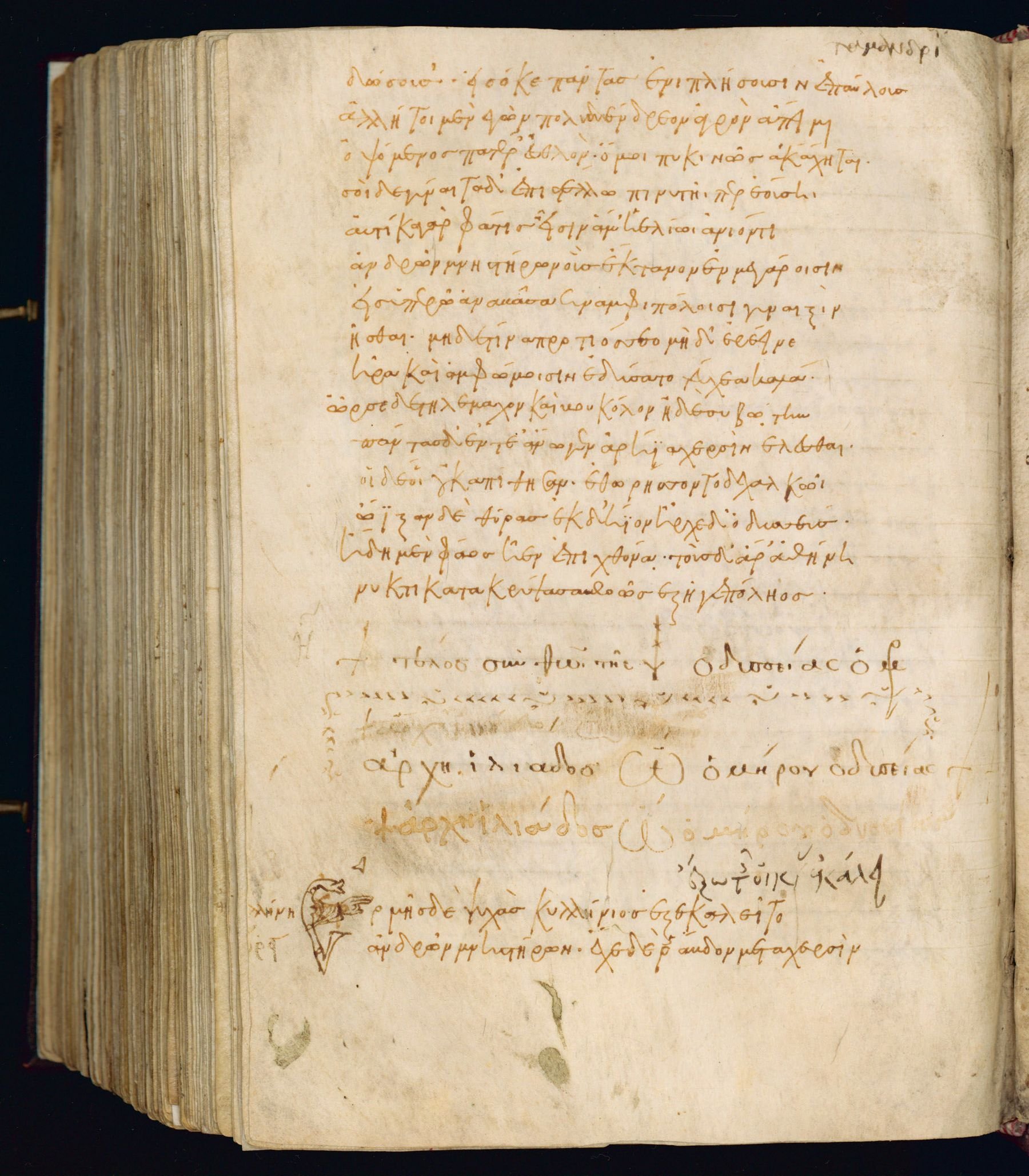
Laur. Plut. 32.24, fol. 231v: Odyssey 24.1-2, begins ‹Ἑρμῆς δὲ ψυχὰς Κυλλήνιος›, ends ‹δὲ ῥάβδον μετὰ χερσὶν›. Checked on the image: first and last lines read and matched to the Greek. Fol. 232r begins with 24.3. The page holds 23.358-372, 24.1-2. Book 23 ends with 23.372, followed by the subscription τέλος σὺν θεῷ τῆς ψ ὀδυσσείας and a line of ornament; then two heading lines in a later hand (the second faded), a short line in small script, and book 24 begins with a decorated initial Ε at the foot of the page. English here: 24.1-2. Line 24.2 holds the end of one sentence and the start of the next (ἀνδρῶν μνηστήρων· | ἔχε δὲ ῥάβδον); Murray's sentence for 24.2-5 (He held in his hands his wand ... they followed gibbering.) runs across the break between fol. 231v (Greek 24.1-2) and fol. 232r (Greek from 24.3) and is given whole with fol. 232r, so the English of fol. 231v is 24.1 and the first words of 24.2 (... the spirits of the wooers.) and that of fol. 232r begins in 24.2. At the page's other break the English follows Murray's five-line marks (a block that crosses the break goes with the page holding its middle line).
1Ἑρμῆς δὲ ψυχὰς Κυλλήνιος ἐξεκαλεῖτο
2ἀνδρῶν μνηστήρων· ἔχε δὲ ῥάβδον μετὰ χερσὶν
1Meanwhile Cyllenian Hermes called forth the spirits of the wooers.
Where on the image
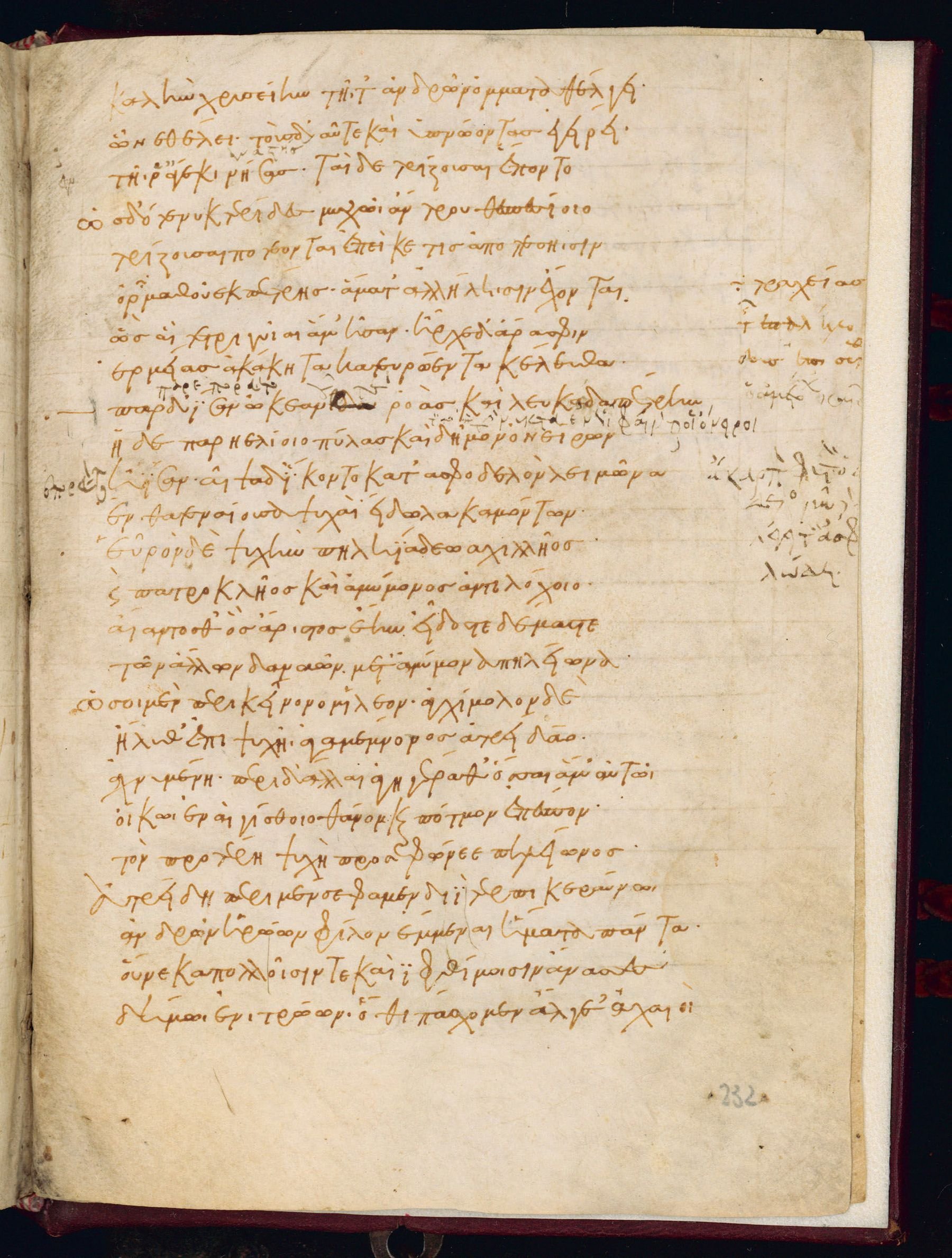
Laur. Plut. 32.24, fol. 232r: Odyssey 24.3-27, begins ‹καλὴν χρυσείην, τῇ τʼ›, ends ‹ὅθι πάσχομεν ἄλγεʼ Ἀχαιοί.›. Checked on the image: first and last lines read and matched to the Greek. Fol. 231v ends with 24.2. Fol. 232v begins with 24.28. English here: 24.2-29. Line 24.2 holds the end of one sentence and the start of the next (ἀνδρῶν μνηστήρων· | ἔχε δὲ ῥάβδον); Murray's sentence for 24.2-5 (He held in his hands his wand ... they followed gibbering.) runs across the break between fol. 231v (Greek 24.1-2) and fol. 232r (Greek from 24.3) and is given whole with fol. 232r, so the English of fol. 231v is 24.1 and the first words of 24.2 (... the spirits of the wooers.) and that of fol. 232r begins in 24.2. At the page's other break the English follows Murray's five-line marks (a block that crosses the break goes with the page holding its middle line).
3καλὴν χρυσείην, τῇ τʼ ἀνδρῶν ὄμματα θέλγει
4ὧν ἐθέλει, τοὺς δʼ αὖτε καὶ ὑπνώοντας ἐγείρει·
5τῇ ῥʼ ἄγε κινήσας, ταὶ δὲ τρίζουσαι ἕποντο.
6ὡς δʼ ὅτε νυκτερίδες μυχῷ ἄντρου θεσπεσίοιο
7τρίζουσαι ποτέονται, ἐπεί κέ τις ἀποπέσῃσιν
8ὁρμαθοῦ ἐκ πέτρης, ἀνά τʼ ἀλλήλῃσιν ἔχονται,
9ὣς αἱ τετριγυῖαι ἅμʼ ἤϊσαν· ἦρχε δʼ ἄρα σφιν
10Ἑρμείας ἀκάκητα κατʼ εὐρώεντα κέλευθα.
11πὰρ δʼ ἴσαν Ὠκεανοῦ τε ῥοὰς καὶ Λευκάδα πέτρην,
12ἠδὲ παρʼ Ἠελίοιο πύλας καὶ δῆμον ὀνείρων
13ἤϊσαν· αἶψα δʼ ἵκοντο κατʼ ἀσφοδελὸν λειμῶνα,
14ἔνθα τε ναίουσι ψυχαί, εἴδωλα καμόντων.
15εὗρον δὲ ψυχὴν Πηληϊάδεω Ἀχιλῆος
16καὶ Πατροκλῆος καὶ ἀμύμονος Ἀντιλόχοιο
17Αἴαντός θʼ, ὃς ἄριστος ἔην εἶδός τε δέμας τε
18τῶν ἄλλων Δαναῶν μετʼ ἀμύμονα Πηλεΐωνα.
19ὣς οἱ μὲν περὶ κεῖνον ὁμίλεον· ἀγχίμολον δὲ
20ἤλυθʼ ἔπι ψυχὴ Ἀγαμέμνονος Ἀτρεΐδαο
21ἀχνυμένη· περὶ δʼ ἄλλαι ἀγηγέραθʼ, ὅσσαι ἅμʼ αὐτῷ
22οἴκῳ ἐν Αἰγίσθοιο θάνον καὶ πότμον ἐπέσπον.
23τὸν προτέρη ψυχὴ προσεφώνεε Πηλεΐωνος·
24Ἀτρεΐδη, περὶ μέν σʼ ἔφαμεν Διὶ τερπικεραύνῳ
25ἀνδρῶν ἡρώων φίλον ἔμμεναι ἤματα πάντα,
26οὕνεκα πολλοῖσίν τε καὶ ἰφθίμοισιν ἄνασσες
27δήμῳ ἔνι Τρώων, ὅθι πάσχομεν ἄλγεʼ Ἀχαιοί.
2He held in his hands his wand, a fair wand of gold, wherewith he lulls to sleep the eyes of whom he will, while others again he wakens even out of slumber; 5with this he roused and led the spirits, and they followed gibbering. And as in the innermost recess of a wondrous cave bats flit about gibbering, when one has fallen from off the rock from the chain in which they cling to one another, so these went with him gibbering, and 10Hermes, the Helper, led them down the dank ways. Past the streams of Oceanus they went, past the rock Leucas, past the gates of the sun and the land of dreams, and quickly came to the mead of asphodel, where the spirits dwell, phantoms of men who have done with toils. 15Here they found the spirit of Achilles, son of Peleus, and those of Patroclus, of peerless Antilochus, and of Aias, who in comeliness and form was the goodliest of all the Danaans after the peerless son of Peleus. So these were thronging about Achilles, and near to them 20drew the spirit of Agamemnon, son of Atreus, sorrowing; and round about him others were gathered, the spirits of all those who were slain with him in the house of Aegisthus, and met their fate. And the spirit of the son of Peleus was first to address him, saying: “Son of Atreus, we deemed that thou 25above all other heroes wast all thy days dear to Zeus, who hurls the thunderbolt, because thou wast lord over many mighty men in the land of the Trojans, where we Achaeans suffered woes. But verily on thee too was deadly doom to come all too early, the doom that not one avoids of those who are born.
Where on the image
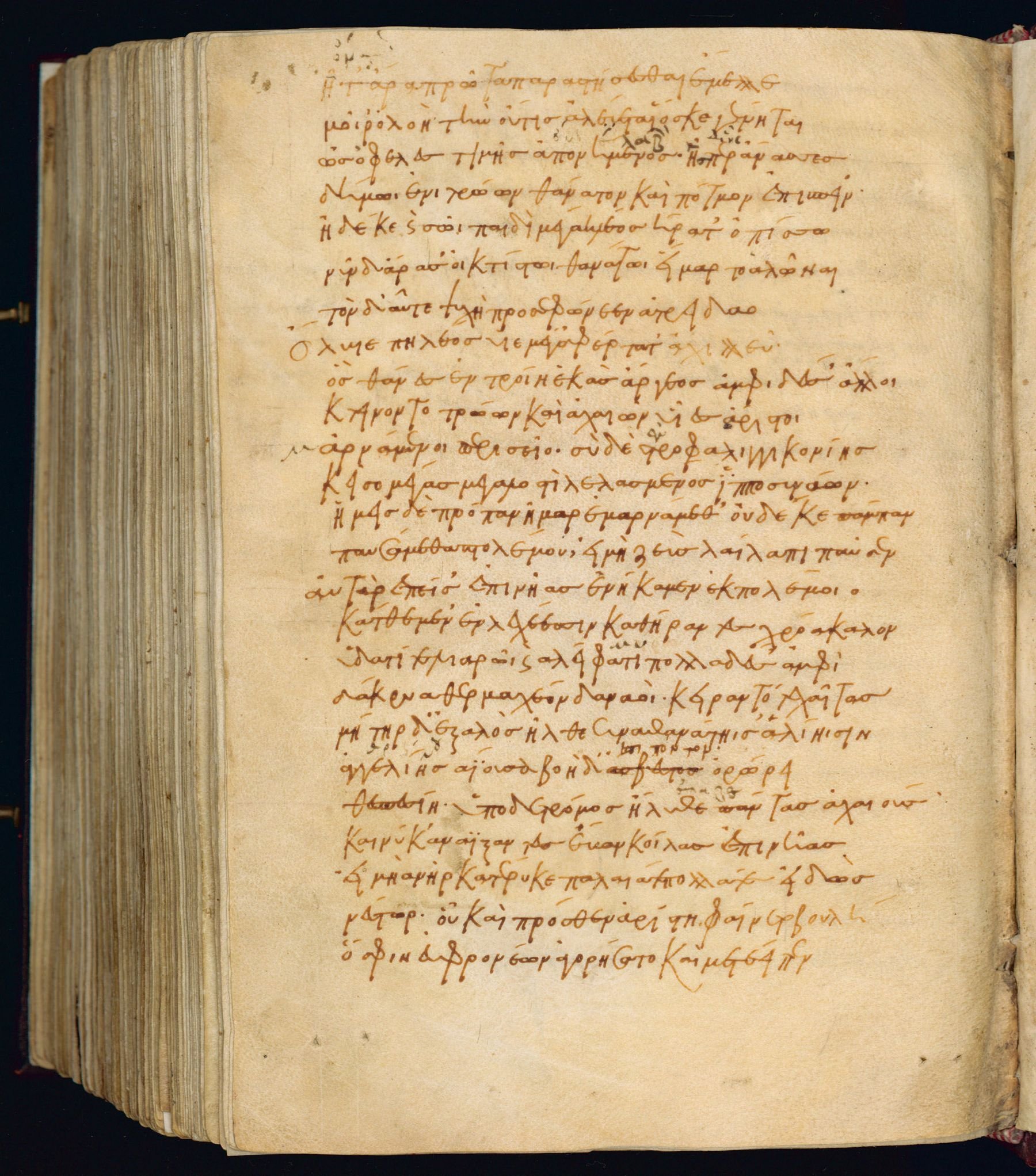
Laur. Plut. 32.24, fol. 232v: Odyssey 24.28-53, begins ‹ἦ τʼ ἄρα καὶ›, ends ‹ἐϋφρονέων ἀγορήσατο καὶ μετέειπεν·›. Checked on the image: first and last lines read and matched to the Greek. Fol. 232r ends with 24.27. Fol. 233r begins with 24.54. 24.32 (τῷ κέν τοι τύμβον μὲν ἐποίησαν Παναχαιοί) is not on the page: the scribe passes from 24.31 to 24.33 (25 lines). English blocks here: 30-34, 35-39, 40-44, 45-49, 50-54.
28ἦ τʼ ἄρα καὶ σοὶ πρῶϊ παραστήσεσθαι ἔμελλεν
29μοῖρʼ ὀλοή, τὴν οὔ τις ἀλεύεται ὅς κε γένηται.
30ὡς ὄφελες τιμῆς ἀπονήμενος, ἧς περ ἄνασσες,
31δήμῳ ἔνι Τρώων θάνατον καὶ πότμον ἐπισπεῖν·
32τῷ κέν τοι τύμβον μὲν ἐποίησαν Παναχαιοί,
33ἠδέ κε καὶ σῷ παιδὶ μέγα κλέος ἤραʼ ὀπίσσω·
34νῦν δʼ ἄρα σʼ οἰκτίστῳ θανάτῳ εἵμαρτο ἁλῶναι.
35τὸν δʼ αὖτε ψυχὴ προσεφώνεεν Ἀτρείδαο·
36ὄλβιε Πηλέος υἱέ, θεοῖς ἐπιείκελʼ Ἀχιλλεῦ,
37ὃς θάνες ἐν Τροίῃ ἑκὰς Ἄργεος· ἀμφὶ δέ σʼ ἄλλοι
38κτείνοντο Τρώων καὶ Ἀχαιῶν υἷες ἄριστοι,
39μαρνάμενοι περὶ σεῖο· σὺ δʼ ἐν στροφάλιγγι κονίης
40κεῖσο μέγας μεγαλωστί, λελασμένος ἱπποσυνάων.
41ἡμεῖς δὲ πρόπαν ἦμαρ ἐμαρνάμεθʼ· οὐδέ κε πάμπαν
42παυσάμεθα πτολέμου, εἰ μὴ Ζεὺς λαίλαπι παῦσεν.
43αὐτὰρ ἐπεί σʼ ἐπὶ νῆας ἐνείκαμεν ἐκ πολέμοιο,
44κάτθεμεν ἐν λεχέεσσι, καθήραντες χρόα καλὸν
45ὕδατί τε λιαρῷ καὶ ἀλείφατι· πολλὰ δέ σʼ ἀμφὶ
46δάκρυα θερμὰ χέον Δαναοὶ κείροντό τε χαίτας.
47μήτηρ δʼ ἐξ ἁλὸς ἦλθε σὺν ἀθανάτῃς ἁλίῃσιν
48ἀγγελίης ἀΐουσα· βοὴ δʼ ἐπὶ πόντον ὀρώρει
49θεσπεσίη, ὑπὸ δὲ τρόμος ἔλλαβε πάντας Ἀχαιούς·
50καί νύ κʼ ἀναΐξαντες ἔβαν κοίλας ἐπὶ νῆας,
51εἰ μὴ ἀνὴρ κατέρυκε παλαιά τε πολλά τε εἰδώς,
52Νέστωρ, οὗ καὶ πρόσθεν ἀρίστη φαίνετο βουλή·
53ὅ σφιν ἐϋφρονέων ἀγορήσατο καὶ μετέειπεν·
30Ah, would that in the pride of that honor of which thou wast master thou hadst met death and fate in the land of the Trojans. Then would the whole host of the Achaeans have made thee a tomb, and for thy son too wouldst thou have won great glory in days to come; but now, as it seems, it has been decreed that thou shouldst be cut off by a most piteous death.” 35Then the spirit of the son of Atreus answered him: “Fortunate son of Peleus, godlike Achilles, that wast slain in the land of Troy far from Argos, and about thee others fell, the best of the sons of the Trojans and Achaeans, fighting for thy body; and thou in the whirl of dust 40didst lie mighty in thy mightiness, forgetful of thy horsemanship. We on our part strove the whole day long, nor should we ever have stayed from the fight, had not Zeus stayed us with a storm. But after we had borne thee to the ships from out the fight, we laid thee on a bier, and cleansed thy fair flesh 45with warm water and with ointment, and many hot tears did the Danaans shed around thee, and they shore their hair. And thy mother came forth from the sea with the immortal sea-nymphs, when she heard the tidings, and a wondrous cry arose over the deep, and thereat trembling laid hold of all the Achaeans. 50Then would they all have sprung up and rushed to the hollow ships, had not a man, wise in the wisdom of old, stayed them, even Nestor, whose counsel had before appeared the best. He with good intent addressed their assembly, and said: “‘Hold, ye Argives; flee not, Achaean youths.
Where on the image
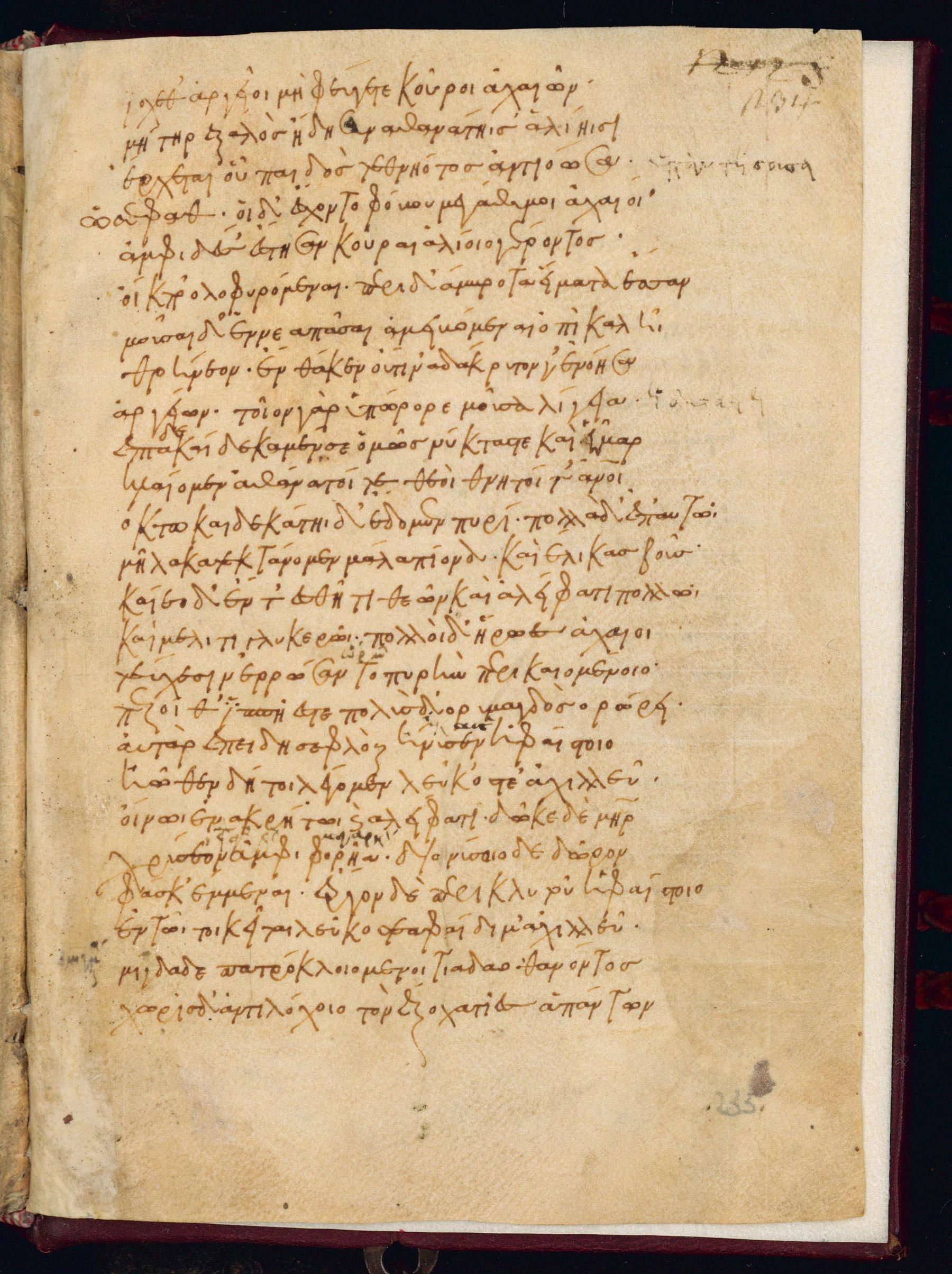
Laur. Plut. 32.24, fol. 233r: Odyssey 24.54-78, begins ‹ἴσχεσθʼ, Ἀργεῖοι, μὴ φεύγετε,›, ends ‹τὸν ἔξοχα τῖες ἁπάντων›. Checked on the image: first and last lines read and matched to the Greek. Fol. 232v ends with 24.53. Fol. 233v begins with 24.79. English blocks here: 55-59, 60-64, 65-69, 70-74, 75-79.
54ἴσχεσθʼ, Ἀργεῖοι, μὴ φεύγετε, κοῦροι Ἀχαιῶν·
55μήτηρ ἐξ ἁλὸς ἥδε σὺν ἀθανάτῃς ἁλίῃσιν
56ἔρχεται, οὗ παιδὸς τεθνηότος ἀντιόωσα.
57ὣς ἔφαθʼ, οἱ δʼ ἔσχοντο φόβου μεγάθυμοι Ἀχαιοί·
58ἀμφὶ δέ σʼ ἔστησαν κοῦραι ἁλίοιο γέροντος
59οἴκτρʼ ὀλοφυρόμεναι, περὶ δʼ ἄμβροτα εἵματα ἕσσαν.
60Μοῦσαι δʼ ἐννέα πᾶσαι ἀμειβόμεναι ὀπὶ καλῇ
61θρήνεον· ἔνθα κεν οὔ τινʼ ἀδάκρυτόν γʼ ἐνόησας
62Ἀργείων· τοῖον γὰρ ὑπώρορε Μοῦσα λίγεια.
63ἑπτὰ δὲ καὶ δέκα μέν σε ὁμῶς νύκτας τε καὶ ἦμαρ
64κλαίομεν ἀθάνατοί τε θεοὶ θνητοί τʼ ἄνθρωποι·
65ὀκτωκαιδεκάτῃ δʼ ἔδομεν πυρί, πολλὰ δέ σʼ ἀμφὶ
66μῆλα κατεκτάνομεν μάλα πίονα καὶ ἕλικας βοῦς.
67καίεο δʼ ἔν τʼ ἐσθῆτι θεῶν καὶ ἀλείφατι πολλῷ
68καὶ μέλιτι γλυκερῷ· πολλοὶ δʼ ἥρωες Ἀχαιοὶ
69τεύχεσιν ἐρρώσαντο πυρὴν πέρι καιομένοιο,
70πεζοί θʼ ἱππῆές τε· πολὺς δʼ ὀρυμαγδὸς ὀρώρει
71αὐτὰρ ἐπεὶ δή σε φλὸξ ἤνυσεν Ἡφαίστοιο,
72ἠῶθεν δή τοι λέγομεν λεύκʼ ὀστέʼ, Ἀχιλλεῦ,
73οἴνῳ ἐν ἀκρήτῳ καὶ ἀλείφατι· δῶκε δὲ μήτηρ
74χρύσεον ἀμφιφορῆα· Διωνύσοιο δὲ δῶρον
75φάσκʼ ἔμεναι, ἔργον δὲ περικλυτοῦ Ἡφαίστοιο.
76ἐν τῷ τοι κεῖται λεύκʼ ὀστέα, φαίδιμʼ Ἀχιλλεῦ,
77μίγδα δὲ Πατρόκλοιο Μενοιτιάδαο θανόντος,
78χωρὶς δʼ Ἀντιλόχοιο, τὸν ἔξοχα τῖες ἁπάντων
55'Tis his mother who comes here forth from the sea with the immortal sea-nymphs to look upon the face of her dead son.’ “So he spoke, and the great-hearted Achaeans ceased from their flight. Then around thee stood the daughters of the old man of the sea wailing piteously, and they clothed thee about with immortal raiment. 60And the Muses, nine in all, replying to one another with sweet voices, led the dirge. There couldst thou not have seen an Argive but was in tears, so deeply did the clear-toned Muse move their hearts. Thus for seventeen days alike by night and day did we bewail thee, immortal gods and mortal men, 65and on the eighteenth we gave thee to the fire, and many well-fatted sheep we slew around thee and sleek kine. So thou wast burned in the raiment of the gods and in abundance of unguents and sweet honey; and many Achaean warriors moved in their armour about the pyre, when thou wast burning, 70both footmen and charioteers, and a great din arose. But when the flame of Hephaestus had made an end of thee, in the morning we gathered thy white bones, Achilles, and laid them in unmixed wine and unguents. Thy mother had given a two-handled, golden urn, and 75said that it was the gift of Dionysus, and the handiwork of famed Hephaestus. In this lie thy white bones, glorious Achilles, and mingled with them the bones of the dead Patroclus, son of Menoetius, but apart lie those of Antilochus, whom thou didst honor above all the rest of thy comrades after the dead Patroclus.
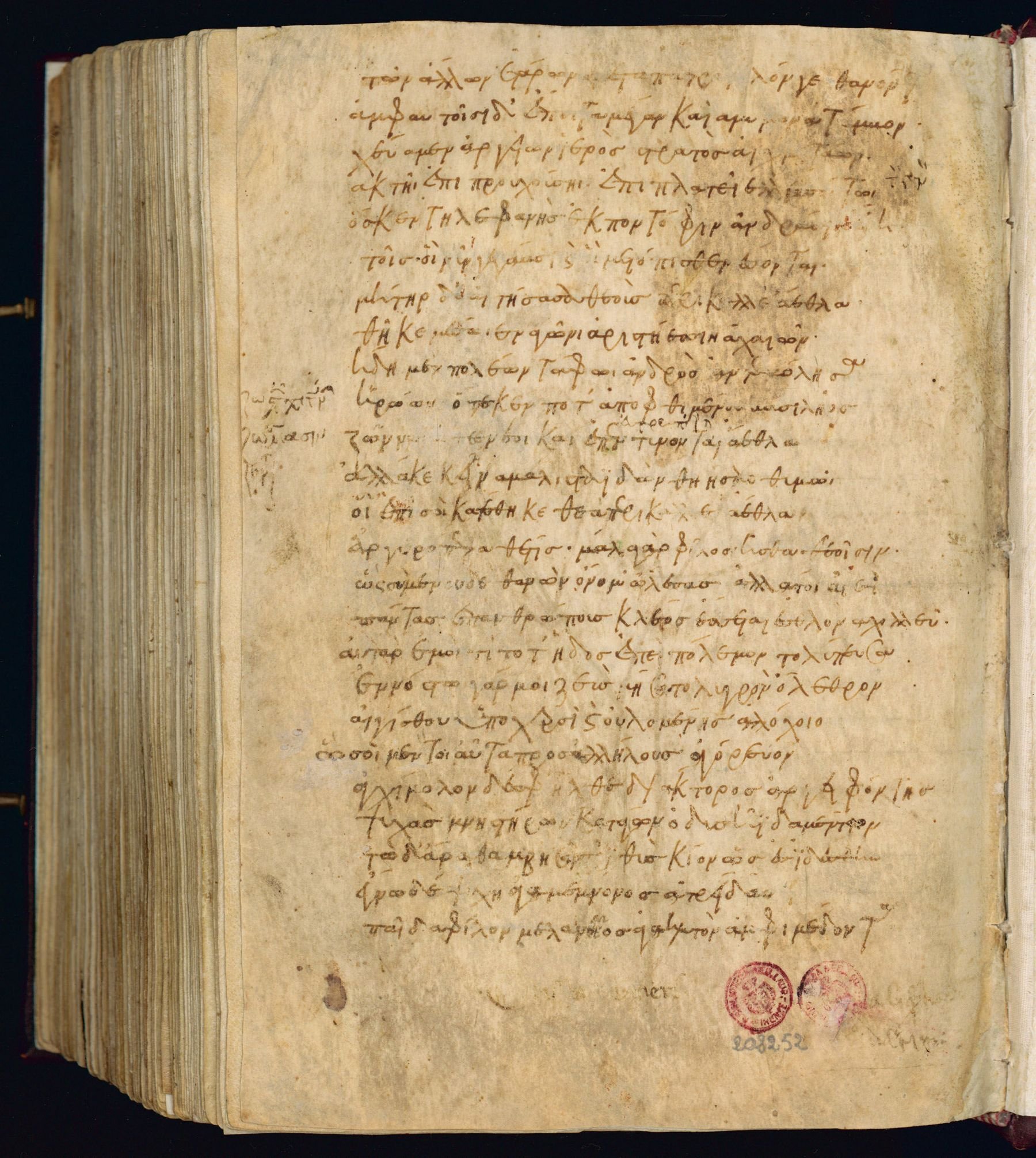
Where on the image
Laur. Plut. 32.24, fol. 233v: Odyssey 24.79-103, begins ‹τῶν ἄλλων ἑτάρων, μετὰ›, ends ‹φίλον Μελανῆος, ἀγακλυτὸν Ἀμφιμέδοντα·›. Checked on the image: first and last lines read and matched to the Greek. Fol. 233r ends with 24.78. This is the last page of the manuscript: the text breaks off at 24.103, and 24.104-548 are not in this codex. English blocks here: 80-84, 85-89, 90-94, 95-99, 100-104. Murray's last five-line block here (24.100-104) includes his translation of 24.104 (ξεῖνος γάρ οἱ ἔην Ἰθάκῃ ἔνι οἰκία ναίων), which is not on this page: the manuscript ends with 24.103.
79τῶν ἄλλων ἑτάρων, μετὰ Πάτροκλόν γε θανόντα.
80ἀμφʼ αὐτοῖσι δʼ ἔπειτα μέγαν καὶ ἀμύμονα τύμβον
81χεύαμεν Ἀργείων ἱερὸς στρατὸς αἰχμητάων
82ἀκτῇ ἔπι προὐχούσῃ, ἐπὶ πλατεῖ Ἑλλησπόντῳ,
83ὥς κεν τηλεφανὴς ἐκ ποντόφιν ἀνδράσιν εἴη
84τοῖς οἳ νῦν γεγάασι καὶ οἳ μετόπισθεν ἔσονται.
85μήτηρ δʼ αἰτήσασα θεοὺς περικαλλέʼ ἄεθλα
86θῆκε μέσῳ ἐν ἀγῶνι ἀριστήεσσιν Ἀχαιῶν.
87ἤδη μὲν πολέων τάφῳ ἀνδρῶν ἀντεβόλησας
88ἡρώων, ὅτε κέν ποτʼ ἀποφθιμένου βασιλῆος
89ζώννυνταί τε νέοι καὶ ἐπεντύνονται ἄεθλα·
90ἀλλά κε κεῖνα μάλιστα ἰδὼν θηήσαο θυμῷ,
91οἷʼ ἐπὶ σοὶ κατέθηκε θεὰ περικαλλέʼ ἄεθλα,
92ἀργυρόπεζα Θέτις· μάλα γὰρ φίλος ἦσθα θεοῖσιν.
93ὣς σὺ μὲν οὐδὲ θανὼν ὄνομʼ ὤλεσας, ἀλλά τοι αἰεὶ
94πάντας ἐπʼ ἀνθρώπους κλέος ἔσσεται ἐσθλόν, Ἀχιλλεῦ,
95αὐτὰρ ἐμοὶ τί τόδʼ ἦδος, ἐπεὶ πόλεμον τολύπευσα;
96ἐν νόστῳ γάρ μοι Ζεὺς μήσατο λυγρὸν ὄλεθρον
97Αἰγίσθου ὑπὸ χερσὶ καὶ οὐλομένης ἀλόχοιο.
98ὣς οἱ μὲν τοιαῦτα πρὸς ἀλλήλους ἀγόρευον,
99ἀγχίμολον δέ σφʼ ἦλθε διάκτορος ἀργεϊφόντης,
100ψυχὰς μνηστήρων κατάγων Ὀδυσῆϊ δαμέντων,
101τὼ δʼ ἄρα θαμβήσαντʼ ἰθὺς κίον, ὡς ἐσιδέσθην.
102ἔγνω δὲ ψυχὴ Ἀγαμέμνονος Ἀτρεΐδαο
103παῖδα φίλον Μελανῆος, ἀγακλυτὸν Ἀμφιμέδοντα·
80And over them we heaped up a great and goodly tomb, we the mighty host of Argive spearmen, on a projecting headland by the broad Hellespont, that it might be seen from far over the sea both by men that now are and that shall be born hereafter. 85But thy mother asked of the gods beautiful prizes, and set them in the midst of the list for the chiefs of the Achaeans. Ere now hast thou been present at the funeral games of many men that were warriors, when at the death of a king the young men gird themselves and make ready the contests, 90but hadst thou seen that sight thou wouldst most have marvelled at heart, such beautiful prizes did the goddess, silver-footed Thetis, set there in thy honor; for very dear wast thou to the gods. Thus not even in death didst thou lose thy name, but ever shalt thou have fair renown among all men, Achilles. 95But, as for me, what pleasure have I now in this, that I wound up the skein of war? For on my return Zeus devised for me a woeful doom at the hands of Aegisthus and my accursed wife.” Thus they spoke to one another, but the messenger, Argeiphontes, drew near, 100leading down the spirits of the wooers slain by Odysseus; and the two, seized with wonder, went straight toward them when they beheld them. And the spirit of Agamemnon, son of Atreus, recognized the dear son of Melaneus, glorious Amphimedon, who had been his host, dwelling in Ithaca.
Notes
- Greek: A. T. Murray, Homer: The Odyssey (Loeb Classical Library, 1919), via Perseus.
- English: A. T. Murray's translation in the same edition; his footnotes are omitted.
Cite
Sources
- Source: Laur. Plut. 32.24 (BML Teca Digitale IIIF) + Murray Greek (Loeb 1919, Perseus) + Murray English (Loeb 1919, Perseus) (holding institution)
- Critical edition: Murray, Loeb 1919, via Perseus
← previous · → next · v cycle view · l back to library