Quran, Sura 66 (at-taḥrīm) (Codex Parisino-petropolitanus)
Introduction
Sura 66 (at-taḥrīm) as preserved on 2 folio sides of the Codex Parisino-petropolitanus (Paris, BnF Arabe 328 (a) and (b)), one of the oldest surviving Quran manuscripts, written in hijazi script on parchment, c. 650-750 AD. Each section below is one folio side, and the image shown is that exact page.
- Manuscript scan: the specific folio side from Gallica (Bibliotheque nationale de France IIIF). The folio's sura:verse range was taken from the Corpus Coranicum "Manuscripta Coranica" record for that page, which states the first and last word on the page; the folio numbers of both services were cross-checked by comparing the two images pixel by pixel.
- Original text: the Arabic of the Tanzil Project Uthmani text (CC BY 3.0), reproduced unchanged, verse by verse.
- English: Marmaduke Pickthall, The Meaning of the Glorious Koran (1930), public domain, verse by verse.
Orthography: the codex is written in scriptio defectiva: no vowel signs, almost no consonantal dots, long vowels often unwritten, and letter shapes that differ from the printed Uthmani text. The modern text given here therefore differs orthographically from what is on the folio. It usually conveys the same reading, but the codex has some readings and verse divisions of its own, which can be checked on the folio; readers should expect, for example, the basmala and words such as qala to be spelled with fewer letters on the page.
Numbering: verse numbers follow the standard Kufan (Cairo 1924) division used by Corpus Coranicum, Tanzil and Pickthall. Early codices mark verse ends with ink dots that in places divide the text differently, so a verse count made on the page may not match these numbers exactly. In Tanzil's text the basmala opening each sura (except sura 9) is printed as part of verse 1. Where a page begins or ends in the middle of a verse the whole verse is given and the word position is stated in the section heading.
How was this verified? (Provenance)
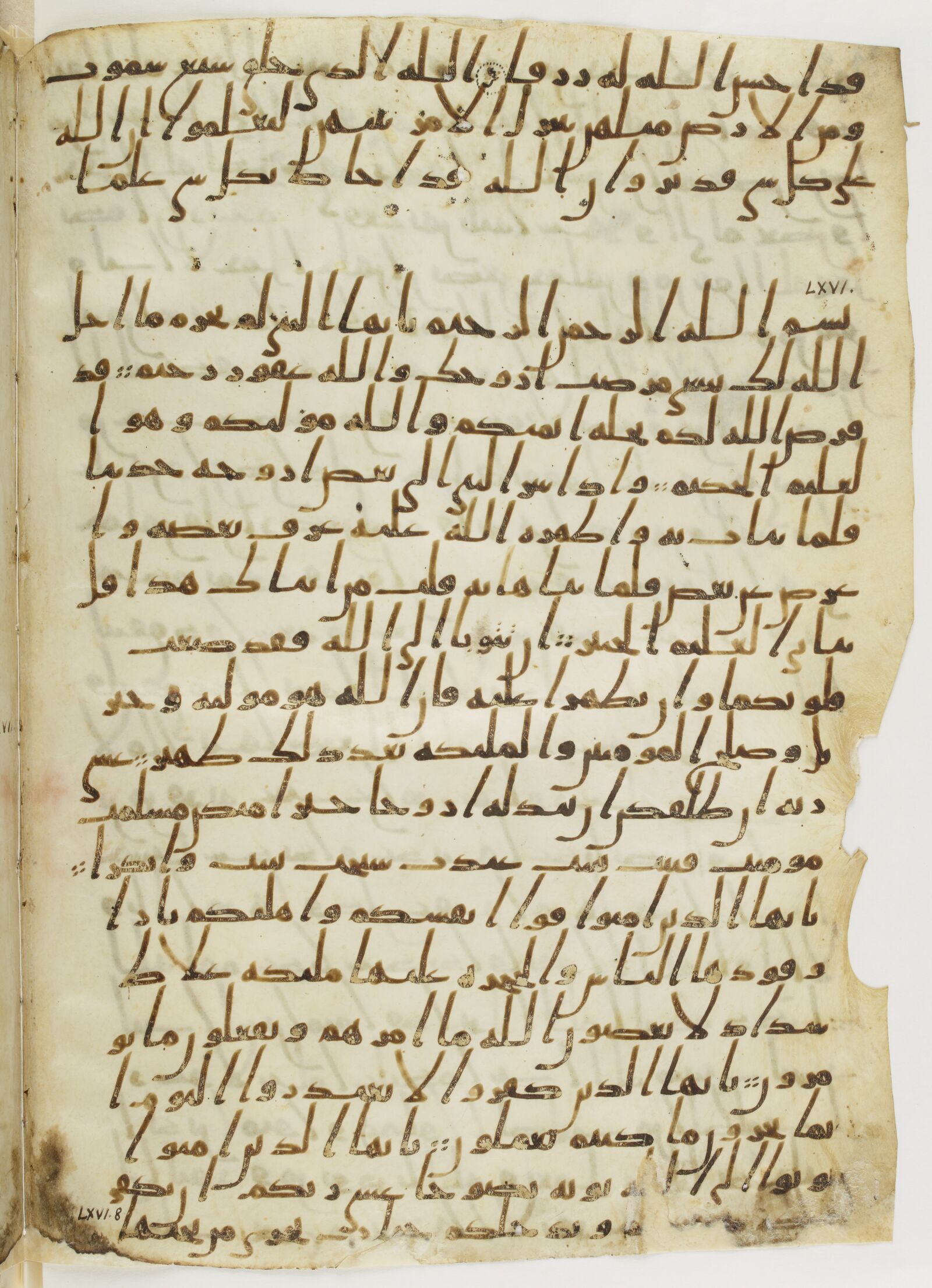
Where on the image
Corpus Coranicum page record: https://api.corpuscoranicum.de/api/data/language/en/manuscripts/157/pages/67v ; image: https://gallica.bnf.fr/iiif/ark:/12148/btv1b8415207g/f142/full/1600,/0/native.jpg
1بِسْمِ ٱللَّهِ ٱلرَّحْمَٰنِ ٱلرَّحِيمِ يَٰٓأَيُّهَا ٱلنَّبِىُّ لِمَ تُحَرِّمُ مَآ أَحَلَّ ٱللَّهُ لَكَ تَبْتَغِى مَرْضَاتَ أَزْوَٰجِكَ وَٱللَّهُ غَفُورٌ رَّحِيمٌ 2قَدْ فَرَضَ ٱللَّهُ لَكُمْ تَحِلَّةَ أَيْمَٰنِكُمْ وَٱللَّهُ مَوْلَىٰكُمْ وَهُوَ ٱلْعَلِيمُ ٱلْحَكِيمُ 3وَإِذْ أَسَرَّ ٱلنَّبِىُّ إِلَىٰ بَعْضِ أَزْوَٰجِهِۦ حَدِيثًا فَلَمَّا نَبَّأَتْ بِهِۦ وَأَظْهَرَهُ ٱللَّهُ عَلَيْهِ عَرَّفَ بَعْضَهُۥ وَأَعْرَضَ عَنۢ بَعْضٍ فَلَمَّا نَبَّأَهَا بِهِۦ قَالَتْ مَنْ أَنۢبَأَكَ هَٰذَا قَالَ نَبَّأَنِىَ ٱلْعَلِيمُ ٱلْخَبِيرُ 4إِن تَتُوبَآ إِلَى ٱللَّهِ فَقَدْ صَغَتْ قُلُوبُكُمَا وَإِن تَظَٰهَرَا عَلَيْهِ فَإِنَّ ٱللَّهَ هُوَ مَوْلَىٰهُ وَجِبْرِيلُ وَصَٰلِحُ ٱلْمُؤْمِنِينَ وَٱلْمَلَٰٓئِكَةُ بَعْدَ ذَٰلِكَ ظَهِيرٌ 5عَسَىٰ رَبُّهُۥٓ إِن طَلَّقَكُنَّ أَن يُبْدِلَهُۥٓ أَزْوَٰجًا خَيْرًا مِّنكُنَّ مُسْلِمَٰتٍ مُّؤْمِنَٰتٍ قَٰنِتَٰتٍ تَٰٓئِبَٰتٍ عَٰبِدَٰتٍ سَٰٓئِحَٰتٍ ثَيِّبَٰتٍ وَأَبْكَارًا 6يَٰٓأَيُّهَا ٱلَّذِينَ ءَامَنُوا۟ قُوٓا۟ أَنفُسَكُمْ وَأَهْلِيكُمْ نَارًا وَقُودُهَا ٱلنَّاسُ وَٱلْحِجَارَةُ عَلَيْهَا مَلَٰٓئِكَةٌ غِلَاظٌ شِدَادٌ لَّا يَعْصُونَ ٱللَّهَ مَآ أَمَرَهُمْ وَيَفْعَلُونَ مَا يُؤْمَرُونَ 7يَٰٓأَيُّهَا ٱلَّذِينَ كَفَرُوا۟ لَا تَعْتَذِرُوا۟ ٱلْيَوْمَ إِنَّمَا تُجْزَوْنَ مَا كُنتُمْ تَعْمَلُونَ 8يَٰٓأَيُّهَا ٱلَّذِينَ ءَامَنُوا۟ تُوبُوٓا۟ إِلَى ٱللَّهِ تَوْبَةً نَّصُوحًا عَسَىٰ رَبُّكُمْ أَن يُكَفِّرَ عَنكُمْ سَيِّـَٔاتِكُمْ وَيُدْخِلَكُمْ جَنَّٰتٍ تَجْرِى مِن تَحْتِهَا ٱلْأَنْهَٰرُ يَوْمَ لَا يُخْزِى ٱللَّهُ ٱلنَّبِىَّ وَٱلَّذِينَ ءَامَنُوا۟ مَعَهُۥ نُورُهُمْ يَسْعَىٰ بَيْنَ أَيْدِيهِمْ وَبِأَيْمَٰنِهِمْ يَقُولُونَ رَبَّنَآ أَتْمِمْ لَنَا نُورَنَا وَٱغْفِرْ لَنَآ إِنَّكَ عَلَىٰ كُلِّ شَىْءٍ قَدِيرٌ
1O Prophet! Why bannest thou that which Allah hath made lawful for thee, seeking to please thy wives? And Allah is Forgiving, Merciful. 2Allah hath made lawful for you (Muslims) absolution from your oaths (of such a kind), and Allah is your Protector. He is the Knower, the Wise. 3When the Prophet confided a fact unto one of his wives and when she afterward divulged it and Allah apprised him thereof, he made known (to her) part thereof and passed over part. And when he told it her she said: Who hath told thee? He said: The Knower, the Aware hath told me. 4If ye twain turn unto Allah repentant, (ye have cause to do so) for your hearts desired (the ban); and if ye aid one another against him (Muhammad) then lo! Allah, even He, is his Protecting Friend, and Gabriel and the righteous among the believers; and furthermore the angels are his helpers. 5It may happen that his Lord, if he divorce you, will give him in your stead wives better than you, submissive (to Allah), believing, pious, penitent, devout, inclined to fasting, widows and maids. 6O ye who believe! Ward off from yourselves and your families a Fire whereof the fuel is men and stones, over which are set angels strong, severe, who resist not Allah in that which He commandeth them, but do that which they are commanded. 7(Then it will be said): O ye who disbelieve! Make no excuses for yourselves this day. Ye are only being paid for what ye used to do. 8O ye who believe! Turn unto Allah in sincere repentance! It may be that your Lord will remit from you your evil deeds and bring you into Gardens underneath which rivers flow, on the day when Allah will not abase the Prophet and those who believe with him. Their light will run before them and on their right hands; they will say: Our Lord! Perfect our light for us, and forgive us! Lo! Thou art Able to do all things.
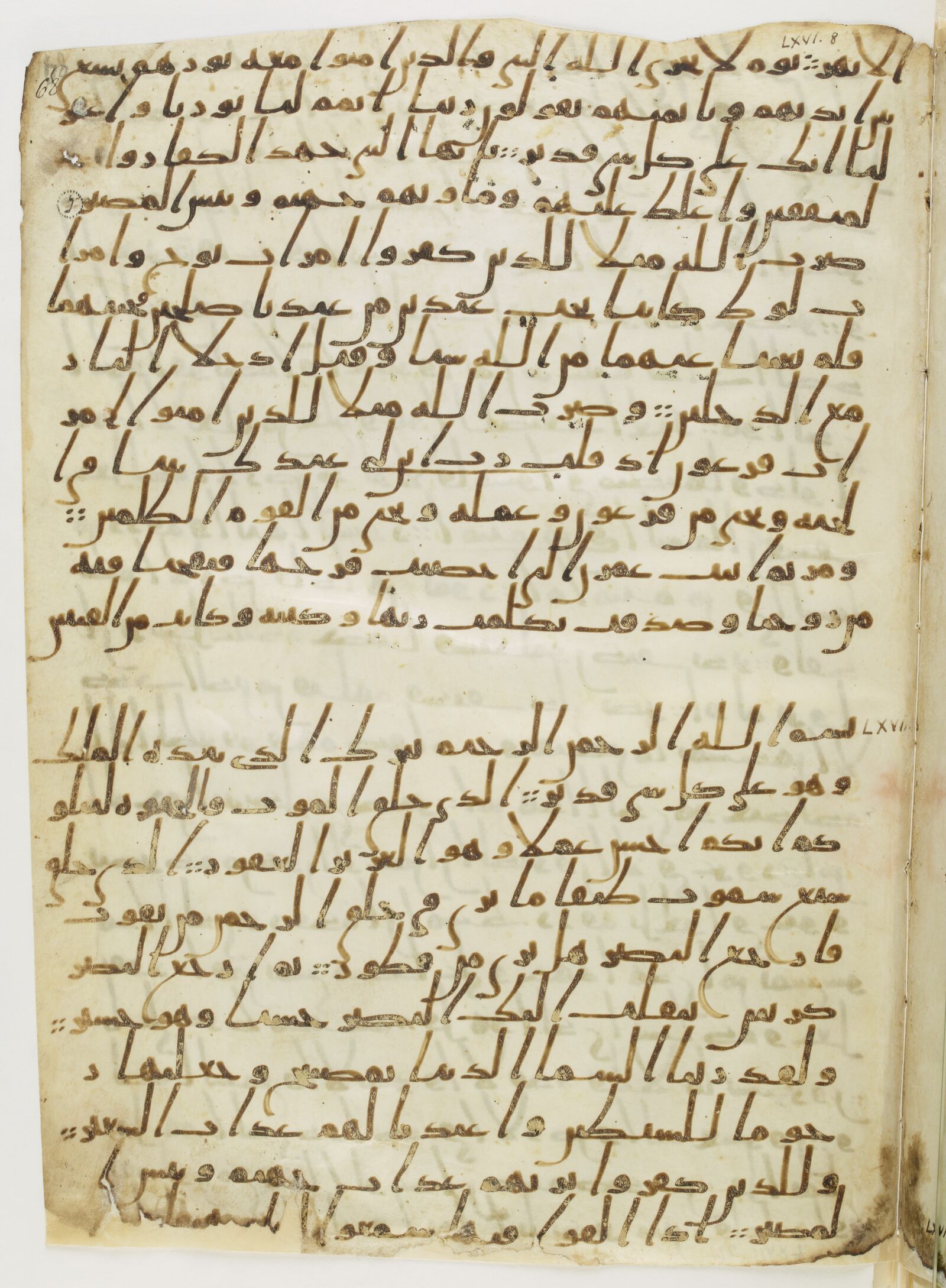
Where on the image
Corpus Coranicum page record: https://api.corpuscoranicum.de/api/data/language/en/manuscripts/157/pages/68r ; image: https://gallica.bnf.fr/iiif/ark:/12148/btv1b8415207g/f143/full/1600,/0/native.jpg
8يَٰٓأَيُّهَا ٱلَّذِينَ ءَامَنُوا۟ تُوبُوٓا۟ إِلَى ٱللَّهِ تَوْبَةً نَّصُوحًا عَسَىٰ رَبُّكُمْ أَن يُكَفِّرَ عَنكُمْ سَيِّـَٔاتِكُمْ وَيُدْخِلَكُمْ جَنَّٰتٍ تَجْرِى مِن تَحْتِهَا ٱلْأَنْهَٰرُ يَوْمَ لَا يُخْزِى ٱللَّهُ ٱلنَّبِىَّ وَٱلَّذِينَ ءَامَنُوا۟ مَعَهُۥ نُورُهُمْ يَسْعَىٰ بَيْنَ أَيْدِيهِمْ وَبِأَيْمَٰنِهِمْ يَقُولُونَ رَبَّنَآ أَتْمِمْ لَنَا نُورَنَا وَٱغْفِرْ لَنَآ إِنَّكَ عَلَىٰ كُلِّ شَىْءٍ قَدِيرٌ 9يَٰٓأَيُّهَا ٱلنَّبِىُّ جَٰهِدِ ٱلْكُفَّارَ وَٱلْمُنَٰفِقِينَ وَٱغْلُظْ عَلَيْهِمْ وَمَأْوَىٰهُمْ جَهَنَّمُ وَبِئْسَ ٱلْمَصِيرُ 10ضَرَبَ ٱللَّهُ مَثَلًا لِّلَّذِينَ كَفَرُوا۟ ٱمْرَأَتَ نُوحٍ وَٱمْرَأَتَ لُوطٍ كَانَتَا تَحْتَ عَبْدَيْنِ مِنْ عِبَادِنَا صَٰلِحَيْنِ فَخَانَتَاهُمَا فَلَمْ يُغْنِيَا عَنْهُمَا مِنَ ٱللَّهِ شَيْـًٔا وَقِيلَ ٱدْخُلَا ٱلنَّارَ مَعَ ٱلدَّٰخِلِينَ 11وَضَرَبَ ٱللَّهُ مَثَلًا لِّلَّذِينَ ءَامَنُوا۟ ٱمْرَأَتَ فِرْعَوْنَ إِذْ قَالَتْ رَبِّ ٱبْنِ لِى عِندَكَ بَيْتًا فِى ٱلْجَنَّةِ وَنَجِّنِى مِن فِرْعَوْنَ وَعَمَلِهِۦ وَنَجِّنِى مِنَ ٱلْقَوْمِ ٱلظَّٰلِمِينَ 12وَمَرْيَمَ ٱبْنَتَ عِمْرَٰنَ ٱلَّتِىٓ أَحْصَنَتْ فَرْجَهَا فَنَفَخْنَا فِيهِ مِن رُّوحِنَا وَصَدَّقَتْ بِكَلِمَٰتِ رَبِّهَا وَكُتُبِهِۦ وَكَانَتْ مِنَ ٱلْقَٰنِتِينَ
8O ye who believe! Turn unto Allah in sincere repentance! It may be that your Lord will remit from you your evil deeds and bring you into Gardens underneath which rivers flow, on the day when Allah will not abase the Prophet and those who believe with him. Their light will run before them and on their right hands; they will say: Our Lord! Perfect our light for us, and forgive us! Lo! Thou art Able to do all things. 9O Prophet! Strive against the disbelievers and the hypocrites, and be stern with them. Hell will be their home, a hapless journey's end. 10Allah citeth an example for those who disbelieve: the wife of Noah and the wife of Lot, who were under two of Our righteous slaves yet betrayed them so that they (the husbands) availed them naught against Allah and it was said (unto them): Enter the Fire along with those who enter. 11And Allah citeth an example for those who believe: the wife of Pharaoh when she said: My Lord! Build for me a home with thee in the Garden, and deliver me from Pharaoh and his work, and deliver me from evil-doing folk; 12And Mary, daughter of 'Imran, whose body was chaste, therefor We breathed therein something of Our Spirit. And she put faith in the words of her Lord and His scriptures, and was of the obedient.
Notes
- All 12 verses of this sura are present on the Paris leaves (2 folio sides).
- Corpus Coranicum records the first and last word of each page; a verse split across two pages is shown in full under both pages with the word position noted.
Cite
Sources
- Source: Codex Parisino-petropolitanus (BnF Arabe 328) via Gallica IIIF + Corpus Coranicum folio mapping + Tanzil + Pickthall (holding institution)
- Critical edition: Tanzil Uthmani text (CC BY 3.0); folio mapping Corpus Coranicum
← previous · → next · v cycle view · l back to library