Plato, Laws 3.680a-683a: from households to cities, Troy and the Dorians
Introduction
In book 3 of the Laws, Plato's last and longest dialogue (c. 350 BCE), an unnamed Athenian, the Cretan Clinias and the Spartan Megillus ask where political society began. The Athenian's answer is a history of the human race on a scale of tens of thousands of years: civilization has been destroyed many times by floods, plagues and other disasters, and after the last great flood only a few herdsmen survived on the mountain tops, without tools, metals or writing. He traces how they lived, how households under the rule of the eldest joined into villages and then into cities with lawgivers, and how the first city was built in the plain at Troy. The passage is the fullest statement in Plato of the cyclical destruction of civilization that the Egyptian priests describe to Solon in the Timaeus and Critias.
The manuscript is Paris, Bibliothèque nationale de France, grec 1807 (Plato "A"), written at Constantinople in the third quarter of the 9th century, one of the two oldest and most authoritative manuscripts of the Laws. Book 3 begins on fol. 174r; the passage occupies fols. 174r-176v, two columns to the page. Each section is one Stephanus section and points at the page(s) that carry it; the column breaks were read on the images and are recorded in each note.
This entry covers Laws 3.680a-683a on fols. 175r-176v.
How was this verified? (Provenance)
Where on the image
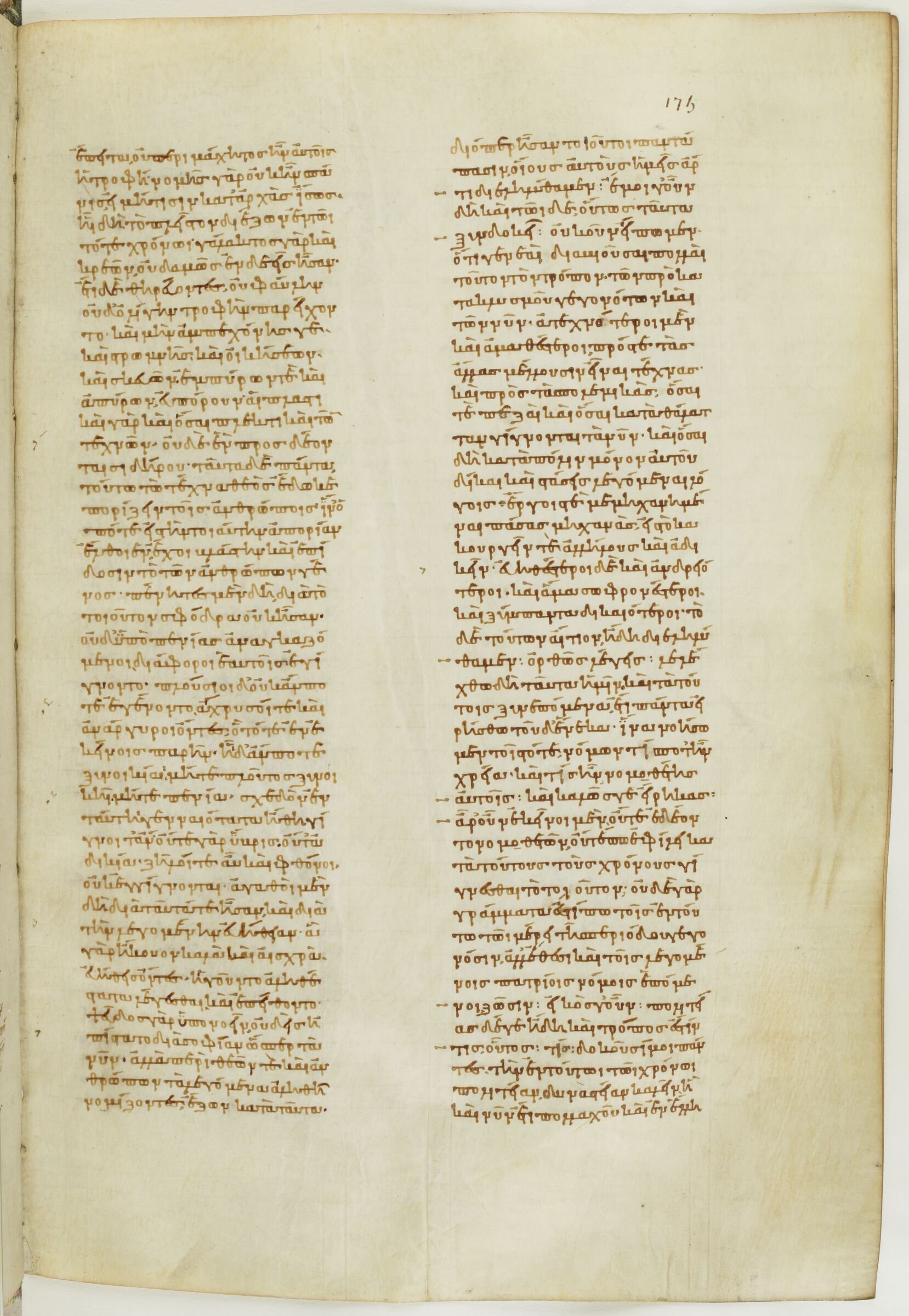
680a is on fol. 175r col. b. Fol. 175r: column a begins 'ἔπειτα οὐ περιμάχητος ἦν αὐτοῖς ἡ τροφή' (678e) and ends in 679c '...ἀληθῆ νομίζοντες ἔζων κατὰ ταῦτα'; column b begins 'διόπερ ἦσαν τοιοῦτοι παντάπασιν' and ends in 680b '...καὶ νῦν ἔτι πολλαχοῦ καὶ ἐν Ἕλλη-'. Checked on the image. Viewer: https://gallica.bnf.fr/ark:/12148/btv1b8419248n/f359.item
680aνόμων τίς ποτʼ ἦν χρεία καὶ τίς ἦν νομοθέτης αὐτοῖς. [ΚΛ.] καὶ καλῶς γε εἴρηκας. [ΑΘ.] ἆρʼ οὖν ἐκεῖνοι μὲν οὔτʼ ἐδέοντο νομοθετῶν οὔτε πω ἐφίλει κατὰ τούτους τοὺς χρόνους γίγνεσθαι τὸ τοιοῦτον; οὐδὲ γὰρ γράμματα ἔστι πω τοῖς ἐν τούτῳ τῷ μέρει τῆς περιόδου γεγονόσιν, ἀλλʼ ἔθεσι καὶ τοῖς λεγομένοις πατρίοις νόμοις ἑπόμενοι ζῶσιν. [ΚΛ.] εἰκὸς γοῦν. [ΑΘ.] πολιτείας δέ γε ἤδη καὶ τρόπος ἐστίν τις οὗτος. [ΚΛ.] τίς;
680awhat possible need of laws the men of that time had, and who their lawgiver was. [Clin.] Excellent. [Ath.] Shall we suppose that those men had no need of lawgivers, and that in those days it was not as yet usual to have such a thing? For those born in that age of the world’s history did not as yet possess the art of writing, but lived by following custom and what is called patriarchal law. [Clin.] That is certainly probable. [Ath.] But this already amounts to a kind of government. [Clin.] What kind?
Where on the image
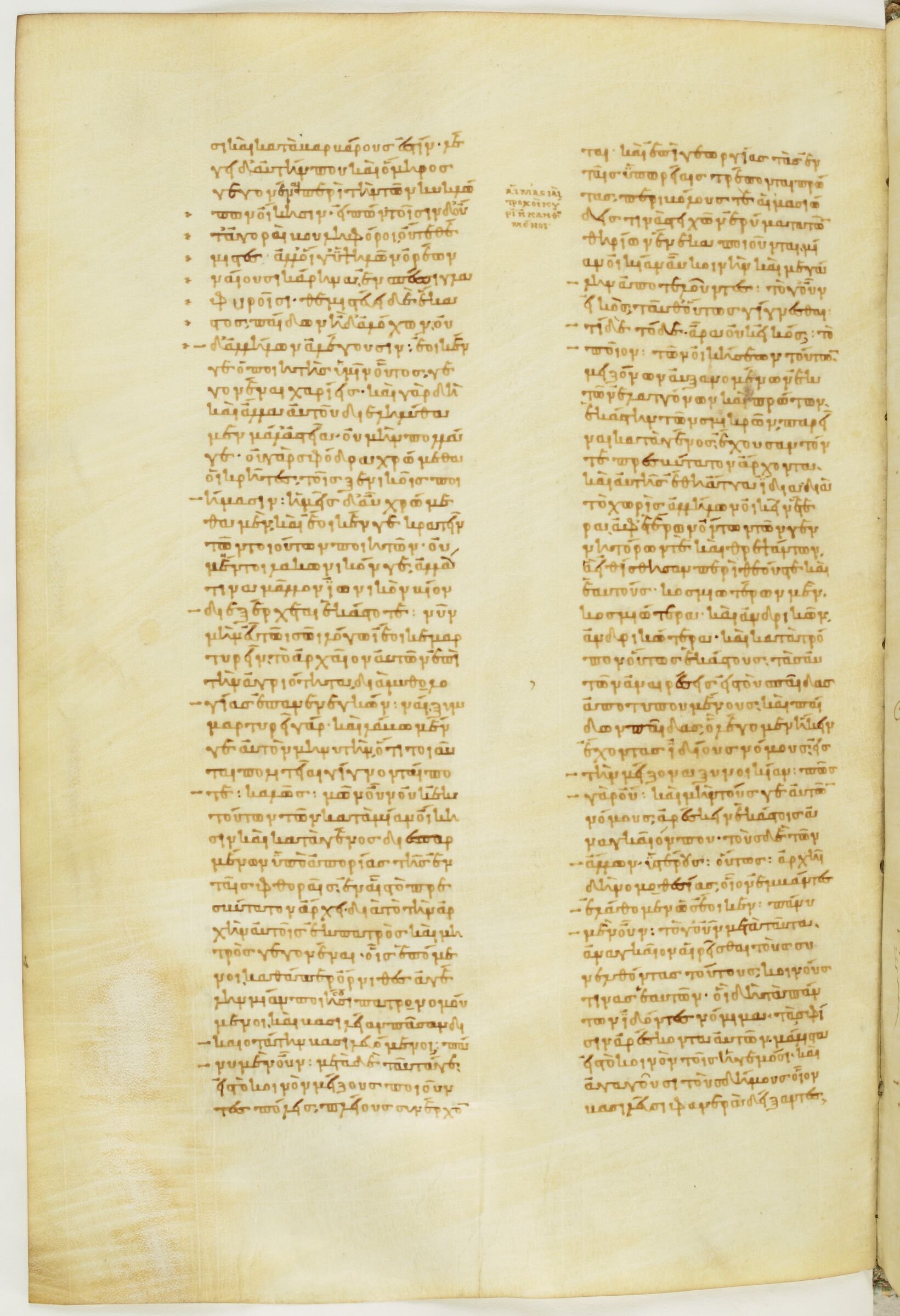
680b is on fol. 175r col. b and fol. 175v col. a. Fol. 175r: column a begins 'ἔπειτα οὐ περιμάχητος ἦν αὐτοῖς ἡ τροφή' (678e) and ends in 679c '...ἀληθῆ νομίζοντες ἔζων κατὰ ταῦτα'; column b begins 'διόπερ ἦσαν τοιοῦτοι παντάπασιν' and ends in 680b '...καὶ νῦν ἔτι πολλαχοῦ καὶ ἐν Ἕλλη-'. Fol. 175v: column a begins '-σι καὶ κατὰ βαρβάρους ἐστίν' (680b) and ends in 680e '...πόλεις πλείους συνέρχον-'; column b begins '-ται, καὶ ἐπὶ γεωργίας τὰς ἐν ταῖς ὑπωρείαις' and ends in 681d '...οἷον βασιλεῦσι φανερὰ δείξαντες'. Checked on the image. Viewer: https://gallica.bnf.fr/ark:/12148/btv1b8419248n/f359.item
680b[ΑΘ.] δοκοῦσί μοι πάντες τὴν ἐν τούτῳ τῷ χρόνῳ πολιτείαν δυναστείαν καλεῖν, ἣ καὶ νῦν ἔτι πολλαχοῦ καὶ ἐν Ἕλλησι καὶ κατὰ βαρβάρους ἐστίν· λέγει δʼ αὐτήν που καὶ Ὅμηρος γεγονέναι περὶ τὴν τῶν Κυκλώπων οἴκησιν, εἰπὼν— τοῖσιν δʼ οὔτʼ ἀγοραὶ βουληφόροι οὔτε θέμιστες, ἀλλʼ οἵ γʼ ὑψηλῶν ὀρέων ναίουσι κάρηνα ἐν σπέσσι γλαφυροῖσι, θεμιστεύει δὲ ἕκαστος
680b[Ath.] Everybody, I believe, gives the name of “headship” to the government which then existed,—and it still continues to exist to-day among both Greeks and barbarians in many quarters. And, of course, Homer mentions its existence in connexion with the household system of the Cyclopes, where he says— No halls of council and no laws are theirs, But within hollow caves on mountain heights Aloft they dwell, each making his own law.
Where on the image
680c is on fol. 175v col. a. Fol. 175v: column a begins '-σι καὶ κατὰ βαρβάρους ἐστίν' (680b) and ends in 680e '...πόλεις πλείους συνέρχον-'; column b begins '-ται, καὶ ἐπὶ γεωργίας τὰς ἐν ταῖς ὑπωρείαις' and ends in 681d '...οἷον βασιλεῦσι φανερὰ δείξαντες'. Checked on the image. Viewer: https://gallica.bnf.fr/ark:/12148/btv1b8419248n/f360.item
680cπαίδων ἠδʼ ἀλόχων, οὐδʼ ἀλλήλων ἀλέγουσιν. [ΚΛ.] ἔοικέν γε ὁ ποιητὴς ὑμῖν οὗτος γεγονέναι χαρίεις. καὶ γὰρ δὴ καὶ ἄλλα αὐτοῦ διεληλύθαμεν μάλʼ ἀστεῖα, οὐ μὴν πολλά γε· οὐ γὰρ σφόδρα χρώμεθα οἱ Κρῆτες τοῖς ξενικοῖς ποιήμασιν. [ΜΕ.] ἡμεῖς δʼ αὖ χρώμεθα μέν, καὶ ἔοικέν γε κρατεῖν τῶν τοιούτων ποιητῶν, οὐ μέντοι Λακωνικόν γε ἀλλά τινα
680cFor wife and child; of others reck they naught. [Clin.] This poet of yours seems to have been a man of genius. We have also read other verses of his, and they were extremely fine; though in truth we have not read much of him, since we Cretans do not indulge much in foreign poetry. [Meg.] But we Spartans do, and we regard Homer as the best of them; all the same, the mode of life he describes is always Ionian rather than Laconian.
Where on the image
680d is on fol. 175v col. a. Fol. 175v: column a begins '-σι καὶ κατὰ βαρβάρους ἐστίν' (680b) and ends in 680e '...πόλεις πλείους συνέρχον-'; column b begins '-ται, καὶ ἐπὶ γεωργίας τὰς ἐν ταῖς ὑπωρείαις' and ends in 681d '...οἷον βασιλεῦσι φανερὰ δείξαντες'. Checked on the image. Viewer: https://gallica.bnf.fr/ark:/12148/btv1b8419248n/f360.item
680dμᾶλλον Ἰωνικὸν βίον διεξέρχεται ἑκάστοτε. νῦν μὴν εὖ τῷ σῷ λόγῳ ἔοικε μαρτυρεῖν, τὸ ἀρχαῖον αὐτῶν ἐπὶ τὴν ἀγριότητα διὰ μυθολογίας ἐπανενεγκών. [ΑΘ.] ναί· συμμαρτυρεῖ γάρ, καὶ λάβωμέν γε αὐτὸν μηνυτὴν ὅτι τοιαῦται πολιτεῖαι γίγνονταί ποτε. [ΚΛ.] καλῶς. [ΑΘ.] μῶν οὖν οὐκ ἐκ τούτων τῶν κατὰ μίαν οἴκησιν καὶ κατὰ γένος διεσπαρμένων ὑπὸ ἀπορίας τῆς ἐν ταῖς φθοραῖς,
680dAnd now he appears to be confirming your statement admirably, when in his legendary account he ascribes the primitive habits of the Cyclopes to their savagery. [Ath.] Yes, his testimony supports us; so let us take him as evidence that polities of this sort do sometimes come into existence. [Clin.] Quite right. [Ath.] Did they not originate with those people who lived scattered in separate clans or in single households, owing to the distress which followed after the catastrophes; for amongst these the eldest holds rule, owing to the fact that the rule proceeds from the parents,
Where on the image
680e is on fol. 175v col. a-b. Fol. 175v: column a begins '-σι καὶ κατὰ βαρβάρους ἐστίν' (680b) and ends in 680e '...πόλεις πλείους συνέρχον-'; column b begins '-ται, καὶ ἐπὶ γεωργίας τὰς ἐν ταῖς ὑπωρείαις' and ends in 681d '...οἷον βασιλεῦσι φανερὰ δείξαντες'. Checked on the image. Viewer: https://gallica.bnf.fr/ark:/12148/btv1b8419248n/f360.item
680eἐν αἷς τὸ πρεσβύτατον ἄρχει διὰ τὸ τὴν ἀρχὴν αὐτοῖς ἐκ πατρὸς καὶ μητρὸς γεγονέναι, οἷς ἑπόμενοι καθάπερ ὄρνιθες ἀγέλην μίαν ποιήσουσι, πατρονομούμενοι καὶ βασιλείαν πασῶν δικαιοτάτην βασιλευόμενοι; [ΚΛ.] πάνυ μὲν οὖν. [ΑΘ.] μετὰ δὲ ταῦτά γε εἰς τὸ κοινὸν μείζους ποιοῦντες πόλεις πλείους συνέρχονται, καὶ ἐπὶ γεωργίας τὰς ἐν ταῖς
680eby following whom they form a single flock, like a covey of birds, and live under a patriarchal government and a kingship which is of all kingships the most just? [Clin.] Most certainly. [Ath.] Next, they congregate together in greater numbers, and form larger droves; and first they turn to farming on the hill-sides,
Where on the image
681a is on fol. 175v col. b. Fol. 175v: column a begins '-σι καὶ κατὰ βαρβάρους ἐστίν' (680b) and ends in 680e '...πόλεις πλείους συνέρχον-'; column b begins '-ται, καὶ ἐπὶ γεωργίας τὰς ἐν ταῖς ὑπωρείαις' and ends in 681d '...οἷον βασιλεῦσι φανερὰ δείξαντες'. Checked on the image. Viewer: https://gallica.bnf.fr/ark:/12148/btv1b8419248n/f360.item
681aὑπωρείαις τρέπονται πρώτας, περιβόλους τε αἱμασιώδεις τινὰς τειχῶν ἐρύματα τῶν θηρίων ἕνεκα ποιοῦνται, μίαν οἰκίαν αὖ κοινὴν καὶ μεγάλην ἀποτελοῦντες. [ΚΛ.] τὸ γοῦν εἰκὸς ταῦθʼ οὕτως γίγνεσθαι. [ΑΘ.] τί δέ; τόδε ἆρα οὐκ εἰκός; [ΚΛ.] τὸ ποῖον; [ΑΘ.] τῶν οἰκήσεων τούτων μειζόνων αὐξανομένων ἐκ τῶν ἐλαττόνων καὶ πρώτων, ἑκάστην τῶν σμικρῶν παρεῖναι κατὰ γένος ἔχουσαν τόν τε πρεσβύτατον ἄρχοντα καὶ αὑτῆς
681aand make ring-fences of rubble and walls to ward off wild beasts, till finally they have constructed a single large common dwelling. [Clin.] It is certainly probable that such was the course of events. [Ath.] Well, is not this also probable? [Clin.] What? [Ath.] That, while these larger settlements were growing out of the original small ones, each of the small settlements continued to retain, clan by clan, both the rule of the eldest
Where on the image
681b is on fol. 175v col. b. Fol. 175v: column a begins '-σι καὶ κατὰ βαρβάρους ἐστίν' (680b) and ends in 680e '...πόλεις πλείους συνέρχον-'; column b begins '-ται, καὶ ἐπὶ γεωργίας τὰς ἐν ταῖς ὑπωρείαις' and ends in 681d '...οἷον βασιλεῦσι φανερὰ δείξαντες'. Checked on the image. Viewer: https://gallica.bnf.fr/ark:/12148/btv1b8419248n/f360.item
681bἔθη ἄττα ἴδια διὰ τὸ χωρὶς ἀλλήλων οἰκεῖν, ἕτερα ἀφʼ ἑτέρων ὄντων τῶν γεννητόρων τε καὶ θρεψάντων, ἃ εἰθίσθησαν περὶ θεούς τε καὶ ἑαυτούς, κοσμιωτέρων μὲν κοσμιώτερα καὶ ἀνδρικῶν ἀνδρικώτερα, καὶ κατὰ τρόπον οὕτως ἑκάστους τὰς αὑτῶν ἂν αἱρέσεις εἰς τοὺς παῖδας ἀποτυπουμένους καὶ παίδων παῖδας, ὃ λέγομεν, ἥκειν ἔχοντας ἰδίους νόμους εἰς τὴν μείζονα συνοικίαν. [ΚΛ.] πῶς γὰρ οὔ;
681band also some customs derived from its isolated condition and peculiar to itself. As those who begot and reared them were different, so these customs of theirs, relating to the gods and to themselves, differed, being more orderly where their forefathers had been orderly, and more brave where they had been brave; and as thus the fathers of each clan in due course stamped upon their children and children’s children their own cast of mind, these people came (as we say) into the larger community furnished each with their own peculiar laws. [Clin.] Of course.
Where on the image
681c is on fol. 175v col. b. Fol. 175v: column a begins '-σι καὶ κατὰ βαρβάρους ἐστίν' (680b) and ends in 680e '...πόλεις πλείους συνέρχον-'; column b begins '-ται, καὶ ἐπὶ γεωργίας τὰς ἐν ταῖς ὑπωρείαις' and ends in 681d '...οἷον βασιλεῦσι φανερὰ δείξαντες'. Checked on the image. Viewer: https://gallica.bnf.fr/ark:/12148/btv1b8419248n/f360.item
681c[ΑΘ.] καὶ μὴν τούς γε αὑτῶν νόμους ἀρέσκειν ἑκάστοις ἀναγκαῖόν που, τοὺς δὲ τῶν ἄλλων ὑστέρους. [ΚΛ.] οὕτως. [ΑΘ.] ἀρχῇ δὴ νομοθεσίας οἷον ἐμβάντες ἐλάθομεν, ὡς ἔοικεν. [ΚΛ.] πάνυ μὲν οὖν. [ΑΘ.] τὸ γοῦν μετὰ ταῦτα ἀναγκαῖον αἱρεῖσθαι τοὺς συνελθόντας τούτους κοινούς τινας ἑαυτῶν, οἳ δὴ τὰ πάντων ἰδόντες νόμιμα, τά σφισιν ἀρέσκοντα αὐτῶν μάλιστα εἰς τὸ κοινὸν τοῖς ἡγεμόσι καὶ ἀγαγοῦσι τοὺς δήμους οἷον
681c[Ath.] And no doubt each clan was well pleased with its own laws, and less well with those of its neighbours. [Clin.] True. [Ath.] Unwittingly, as it seems, we have now set foot, as it were, on the starting-point of legislation. [Clin.] We have indeed. [Ath.] The next step necessary is that these people should come together and choose out some members of each clan who, after a survey of the legal usages of all the clans, shall notify publicly to the tribal leaders and chiefs (who may be termed their kings) which of those usages please them best,
Where on the image
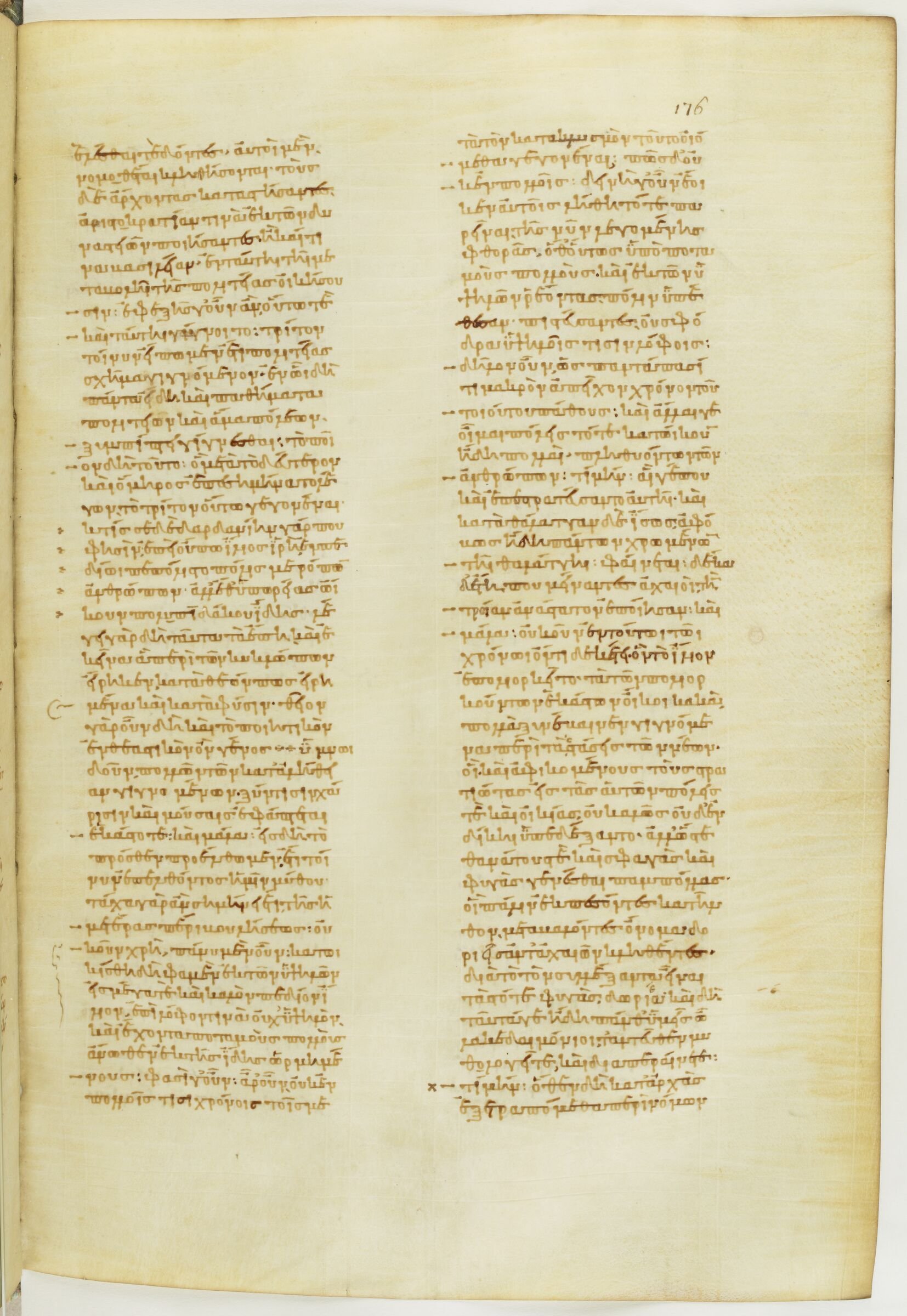
681d is on fol. 175v col. b and fol. 176r col. a. Fol. 175v: column a begins '-σι καὶ κατὰ βαρβάρους ἐστίν' (680b) and ends in 680e '...πόλεις πλείους συνέρχον-'; column b begins '-ται, καὶ ἐπὶ γεωργίας τὰς ἐν ταῖς ὑπωρείαις' and ends in 681d '...οἷον βασιλεῦσι φανερὰ δείξαντες'. Fol. 176r: column a begins 'ἑλέσθαι τε δόντες, αὐτοὶ μὲν νομοθέται κληθήσονται' (681d) and ends in 682b '...ἐν πολλοῖς τισι χρόνοις τοῖς με-'; column b begins '-τὰ τὸν κατακλυσμὸν τοῦτο οἰόμεθα γεγονέναι' and ends in 682e '...ὅθεν δὴ κατ’ ἀρχὰς ἐξετραπόμεθα περὶ νόμων'. Checked on the image. Viewer: https://gallica.bnf.fr/ark:/12148/btv1b8419248n/f360.item
681dβασιλεῦσι φανερὰ δείξαντες ἑλέσθαι τε δόντες, αὐτοὶ μὲν νομοθέται κληθήσονται, τοὺς δὲ ἄρχοντας καταστήσαντες, ἀριστοκρατίαν τινὰ ἐκ τῶν δυναστειῶν ποιήσαντες ἢ καί τινα βασιλείαν, ἐν ταύτῃ τῇ μεταβολῇ τῆς πολιτείας οἰκήσουσιν. [ΚΛ.] ἐφεξῆς γοῦν ἂν οὕτω τε καὶ ταύτῃ γίγνοιτο. [ΑΘ.] τρίτον τοίνυν εἴπωμεν ἔτι πολιτείας σχῆμα γιγνόμενον, ἐν ᾧ δὴ πάντα εἴδη καὶ παθήματα πολιτειῶν καὶ ἅμα πόλεων συμπίπτει γίγνεσθαι. [ΚΛ.] τὸ ποῖον δὴ τοῦτο;
681dand shall recommend their adoption. These men will themselves be named legislators, and when they have established the chiefs as magistrates, and have framed an aristocracy, or possibly even a monarchy, from the existing plurality of headships, they will live under the constitution thus transformed. [Clin.] The next steps would certainly be such as you describe. [Ath.] Let us go on to describe the rise of a third form of constitution, in which are blended all kinds and varieties of constitutions, and of States as well.
Where on the image
681e is on fol. 176r col. a. Fol. 176r: column a begins 'ἑλέσθαι τε δόντες, αὐτοὶ μὲν νομοθέται κληθήσονται' (681d) and ends in 682b '...ἐν πολλοῖς τισι χρόνοις τοῖς με-'; column b begins '-τὰ τὸν κατακλυσμὸν τοῦτο οἰόμεθα γεγονέναι' and ends in 682e '...ὅθεν δὴ κατ’ ἀρχὰς ἐξετραπόμεθα περὶ νόμων'. Checked on the image. Viewer: https://gallica.bnf.fr/ark:/12148/btv1b8419248n/f361.item
681e[ΑΘ.] ὃ μετὰ τὸ δεύτερον καὶ Ὅμηρος ἐπεσημήνατο, λέγων τὸ τρίτον οὕτω γεγονέναι. κτίσσε δὲ Δαρδανίην γάρ πού φησιν, ἐπεὶ οὔπω Ἴλιος ἱρὴ ἐν πεδίῳ πεπόλιστο, πόλις μερόπων ἀνθρώπων, ἀλλʼ ἔθʼ ὑπωρείας ᾤκουν πολυπιδάκου Ἴδης.
681e[Clin.] What form is that? [Ath.] The same that Homer himself mentioned next to the second, when he said that the third form arose in this way. His verses run thus— Dardania he founded when as yet The Holy keep of Ilium was not built Upon the plain, a town for mortal folk, But still they dwelt upon the highland slopes Of many-fountained Ida.
Where on the image
682a is on fol. 176r col. a. Fol. 176r: column a begins 'ἑλέσθαι τε δόντες, αὐτοὶ μὲν νομοθέται κληθήσονται' (681d) and ends in 682b '...ἐν πολλοῖς τισι χρόνοις τοῖς με-'; column b begins '-τὰ τὸν κατακλυσμὸν τοῦτο οἰόμεθα γεγονέναι' and ends in 682e '...ὅθεν δὴ κατ’ ἀρχὰς ἐξετραπόμεθα περὶ νόμων'. Checked on the image. Viewer: https://gallica.bnf.fr/ark:/12148/btv1b8419248n/f361.item
682a[ΑΘ.] λέγει γὰρ δὴ ταῦτα τὰ ἔπη καὶ ἐκεῖνα, ἃ περὶ τῶν Κυκλώπων εἴρηκεν, κατὰ θεόν πως εἰρημένα καὶ κατὰ φύσιν· θεῖον γὰρ οὖν δὴ καὶ τὸ ποιητικὸν ἐνθεαστικὸν ὂν γένος ὑμνῳδοῦν, πολλῶν τῶν κατʼ ἀλήθειαν γιγνομένων σύν τισιν Χάρισιν καὶ Μούσαις ἐφάπτεται ἑκάστοτε. [ΚΛ.] καὶ μάλα. [ΑΘ.] εἰς δὴ τὸ πρόσθεν προέλθωμεν ἔτι τοῦ νῦν ἐπελθόντος ἡμῖν μύθου· τάχα γὰρ ἂν σημήνειέ τι τῆς ἡμετέρας περὶ βουλήσεως. οὐκοῦν χρή;
682a[Ath.] Indeed, these verses of his, as well as those he utters concerning the Cyclopes, are in a kind of unison with the voices of both God and Nature. For being divinely inspired in its chanting, the poetic tribe, with the aid of Graces and Muses, often grasps the truth of history. [Clin.] It certainly does. [Ath.] Now let us advance still further in the tale that now engages us; for possibly it may furnish some hint regarding the matter we have in view. Ought we not to do so?
Where on the image
682b is on fol. 176r col. a-b. Fol. 176r: column a begins 'ἑλέσθαι τε δόντες, αὐτοὶ μὲν νομοθέται κληθήσονται' (681d) and ends in 682b '...ἐν πολλοῖς τισι χρόνοις τοῖς με-'; column b begins '-τὰ τὸν κατακλυσμὸν τοῦτο οἰόμεθα γεγονέναι' and ends in 682e '...ὅθεν δὴ κατ’ ἀρχὰς ἐξετραπόμεθα περὶ νόμων'. Checked on the image. Viewer: https://gallica.bnf.fr/ark:/12148/btv1b8419248n/f361.item
682b[ΚΛ.] πάνυ μὲν οὖν. [ΑΘ.] κατῳκίσθη δή, φαμέν, ἐκ τῶν ὑψηλῶν εἰς μέγα τε καὶ καλὸν πεδίον Ἴλιον, ἐπὶ λόφον τινὰ οὐχ ὑψηλὸν καὶ ἔχοντα ποταμοὺς πολλοὺς ἄνωθεν ἐκ τῆς Ἴδης ὡρμημένους. [ΚΛ.] φασὶ γοῦν. [ΑΘ.] ἆρʼ οὖν οὐκ ἐν πολλοῖς τισι χρόνοις τοῖς μετὰ τὸν κατακλυσμὸν τοῦτο οἰόμεθα γεγονέναι; [ΚΛ.] πῶς δʼ οὐκ ἐν πολλοῖς; [ΑΘ.] δεινὴ γοῦν ἔοικεν αὐτοῖς λήθη τότε παρεῖναι τῆς
682b[Clin.] Most certainly. [Ath.] Ilium was founded, we say, after moving from the highlands down to a large and noble plain, on a hill of no great height which had many rivers flowing down from Ida above. [Clin.] So they say. [Ath.] And do we not suppose that this took place many ages after the Deluge? [Clin.] Many ages after, no doubt. [Ath.] At any rate they seem to have been strangely forgetful
Where on the image
682c is on fol. 176r col. b. Fol. 176r: column a begins 'ἑλέσθαι τε δόντες, αὐτοὶ μὲν νομοθέται κληθήσονται' (681d) and ends in 682b '...ἐν πολλοῖς τισι χρόνοις τοῖς με-'; column b begins '-τὰ τὸν κατακλυσμὸν τοῦτο οἰόμεθα γεγονέναι' and ends in 682e '...ὅθεν δὴ κατ’ ἀρχὰς ἐξετραπόμεθα περὶ νόμων'. Checked on the image. Viewer: https://gallica.bnf.fr/ark:/12148/btv1b8419248n/f361.item
682cνῦν λεγομένης φθορᾶς, ὅθʼ οὕτως ὑπὸ ποταμοὺς πολλοὺς καὶ ἐκ τῶν ὑψηλῶν ῥέοντας πόλιν ὑπέθεσαν, πιστεύσαντες οὐ σφόδρα ὑψηλοῖς τισιν λόφοις. [ΚΛ.] δῆλον οὖν ὡς παντάπασί τινα μακρὸν ἀπεῖχον χρόνον τοῦ τοιούτου πάθους. [ΑΘ.] καὶ ἄλλαι γε οἶμαι πόλεις τότε κατῴκουν ἤδη πολλαί, πληθυόντων τῶν ἀνθρώπων. [ΚΛ.] τί μήν; [ΑΘ.] αἵ γέ που καὶ ἐπεστρατεύσαντο αὐτῇ, καὶ κατὰ θάλατταν δὲ ἴσως, ἀφόβως ἤδη πάντων χρωμένων τῇ θαλάττῃ.
682cof the catastrophe now mentioned, since they placed their city, as described, under a number of rivers descending from the mount, and relied for their safety upon hillocks of no great height. [Clin.] So it is evident that they were removed by quite a long interval from that calamity. [Ath.] By this time, too, as mankind multiplied, many other cities had been founded. [Clin.] Of course. [Ath.] And these cities also made attacks on Ilium, probably by sea too, as well as by land, since by this time all made use of the sea fearlessly. [Clin.] So it appears.
Where on the image
682d is on fol. 176r col. b. Fol. 176r: column a begins 'ἑλέσθαι τε δόντες, αὐτοὶ μὲν νομοθέται κληθήσονται' (681d) and ends in 682b '...ἐν πολλοῖς τισι χρόνοις τοῖς με-'; column b begins '-τὰ τὸν κατακλυσμὸν τοῦτο οἰόμεθα γεγονέναι' and ends in 682e '...ὅθεν δὴ κατ’ ἀρχὰς ἐξετραπόμεθα περὶ νόμων'. Checked on the image. Viewer: https://gallica.bnf.fr/ark:/12148/btv1b8419248n/f361.item
682d[ΚΛ.] φαίνεται. [ΑΘ.] δέκα δʼ ἔτη που μείναντες Ἀχαιοὶ τὴν Τροίαν ἀνάστατον ἐποίησαν. [ΚΛ.] καὶ μάλα. [ΑΘ.] οὐκοῦν ἐν τούτῳ τῷ χρόνῳ, ὄντι δεκέτει, ὃν τὸ Ἴλιον ἐπολιορκεῖτο, τὰ τῶν πολιορκούντων ἑκάστων οἴκοι κακὰ πολλὰ συνέβαινεν γιγνόμενα περὶ τὰς στάσεις τῶν νέων, οἳ καὶ ἀφικομένους τοὺς στρατιώτας εἰς τὰς αὑτῶν πόλεις τε καὶ οἰκίας οὐ καλῶς οὐδʼ ἐν δίκῃ ὑπεδέξαντο,
682d[Ath.] And after a stay of ten years the Achaeans sacked Troy. [Clin.] Very true. [Ath.] Now during this period of ten years, while the siege lasted, the affairs of each of the besiegers at home suffered much owing to the seditious conduct of the young men. For when the soldiers returned to their own cities and homes,
Where on the image
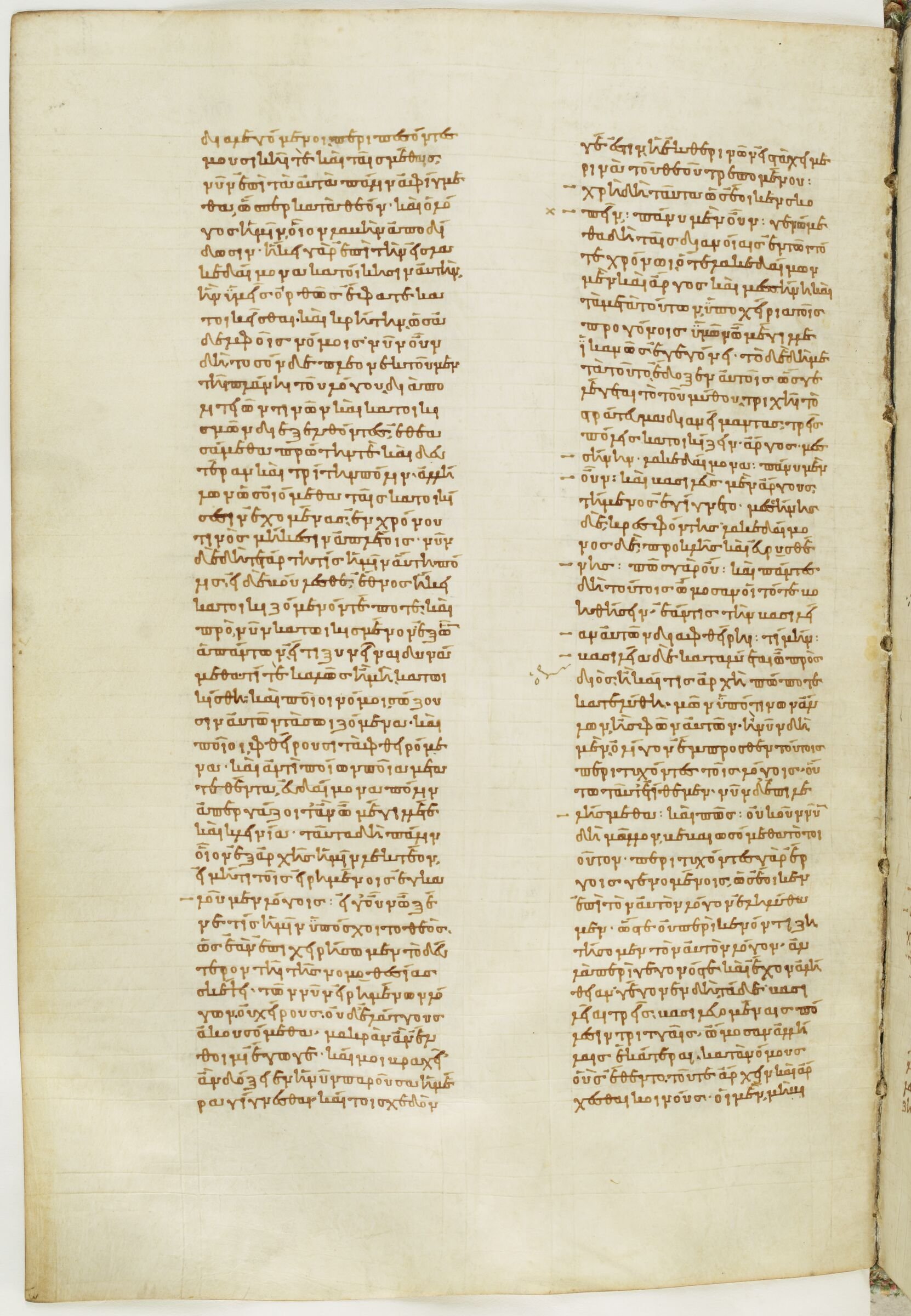
682e is on fol. 176r col. b and fol. 176v col. a. Fol. 176r: column a begins 'ἑλέσθαι τε δόντες, αὐτοὶ μὲν νομοθέται κληθήσονται' (681d) and ends in 682b '...ἐν πολλοῖς τισι χρόνοις τοῖς με-'; column b begins '-τὰ τὸν κατακλυσμὸν τοῦτο οἰόμεθα γεγονέναι' and ends in 682e '...ὅθεν δὴ κατ’ ἀρχὰς ἐξετραπόμεθα περὶ νόμων'. Fol. 176v: column a begins 'διαλεγόμενοι, περιπεσόντες μουσικῇ τε καὶ ταῖς μέθαις' (682e); 683a begins on line 7 'κατοίκισιν αὐτήν' and ends on line 24 '...καὶ νῦν κατῳκισμένον', where 683b 'ἐξ ὧν' follows. Checked on the image. Viewer: https://gallica.bnf.fr/ark:/12148/btv1b8419248n/f361.item
682eἀλλʼ ὥστε θανάτους τε καὶ σφαγὰς καὶ φυγὰς γενέσθαι παμπόλλας· οἳ πάλιν ἐκπεσόντες κατῆλθον μεταβαλόντες ὄνομα, Δωριῆς ἀντʼ Ἀχαιῶν κληθέντες διὰ τὸ τὸν συλλέξαντα εἶναι τὰς τότε φυγὰς Δωριᾶ. καὶ δὴ ταῦτά γε ἤδη πάνθʼ ὑμεῖς, ὦ Λακεδαιμόνιοι, τἀντεῦθεν μυθολογεῖτέ τε καὶ διαπεραίνετε. [ΜΕ.] τί μήν; [ΑΘ.] ὅθεν δὴ κατʼ ἀρχὰς ἐξετραπόμεθα περὶ νόμων διαλεγόμενοι, περιπεσόντες μουσικῇ τε καὶ ταῖς μέθαις, νῦν ἐπὶ τὰ αὐτὰ πάλιν ἀφίγμεθα ὥσπερ κατὰ θεόν, καὶ ὁ λόγος ἡμῖν οἷον λαβὴν ἀποδίδωσιν· ἥκει γὰρ ἐπὶ τὴν εἰς Λακεδαίμονα
682ethese young people did not receive them fittingly and justly, but in such a way that there ensued a vast number of cases of death, slaughter, and exile. So they, being again driven out, migrated by sea; and because Dorieus was the man who then banded together the exiles, they got the new name of Dorians, instead of Achaeans. But as to all the events that follow this, you Lacedaemonians relate them all fully in your traditions. [Meg.] Quite true. [Ath.] And now—as it were by divine direction—we have returned once more to the very point in our discourse on laws where we made our digression, when we plunged into the subject of music and drinking-parties; and we can, so to speak, get a fresh grip upon the argument, now that it has reached this point,—the settlement of Lacedaemon,
Where on the image
683a is on fol. 176v col. a. Fol. 176v: column a begins 'διαλεγόμενοι, περιπεσόντες μουσικῇ τε καὶ ταῖς μέθαις' (682e); 683a begins on line 7 'κατοίκισιν αὐτήν' and ends on line 24 '...καὶ νῦν κατῳκισμένον', where 683b 'ἐξ ὧν' follows. Checked on the image. Viewer: https://gallica.bnf.fr/ark:/12148/btv1b8419248n/f362.item
683aκατοίκισιν αὐτήν, ἣν ὑμεῖς ὀρθῶς ἔφατε κατοικεῖσθαι καὶ Κρήτην ὡς ἀδελφοῖς νόμοις. νῦν οὖν δὴ τοσόνδε πλεονεκτοῦμεν τῇ πλάνῃ τοῦ λόγου, διὰ πολιτειῶν τινων καὶ κατοικισμῶν διεξελθόντες· ἐθεασάμεθα πρώτην τε καὶ δευτέραν καὶ τρίτην πόλιν, ἀλλήλων, ὡς οἰόμεθα, ταῖς κατοικίσεσιν ἐχομένας ἐν χρόνου τινὸς μήκεσιν ἀπλέτοις, νῦν δὲ δὴ τετάρτη τις ἡμῖν αὕτη πόλις, εἰ δὲ βούλεσθε, ἔθνος ἥκει κατοικιζόμενόν τέ ποτε καὶ νῦν κατῳκισμένον.
683aabout which you said truly that it and Crete were settled under kindred laws. From the wandering course of our argument, and our excursion through various polities and settlements, we have now gained this much: we have discerned a first, a second and a third State, all, as we suppose, succeeding one another in the settlements which took place during vast ages of time. And now there has emerged this fourth State—or nation, if you so prefer—which was once upon a time in course of establishment and is now established.
Notes
- Greek: John Burnet's Oxford text (1907), from Perseus. Speaker names are given in brackets as in the digital edition (ΑΘ. the Athenian, ΚΛ. Clinias, ΜΕ. Megillus). The manuscript's wording differs from the edition in small details.
- English: R. G. Bury's Loeb translation (1926), from Perseus, with the spellings of the printed book restored. Bury's section letters are placed in his margin and do not always fall at the same word as the Greek; the English sections follow Bury's letters.
Cite
Sources
- Source: Paris gr. 1807 (9th c.) via Gallica + Burnet Greek (Perseus) + Bury English (Loeb 1926, Perseus) (holding institution)
- Critical edition: J. Burnet, Platonis opera V (Oxford 1907), via Perseus
← previous · → next · v cycle view · l back to library