Plato, Republic 6.506d-511e: the Sun and the Divided Line
Introduction
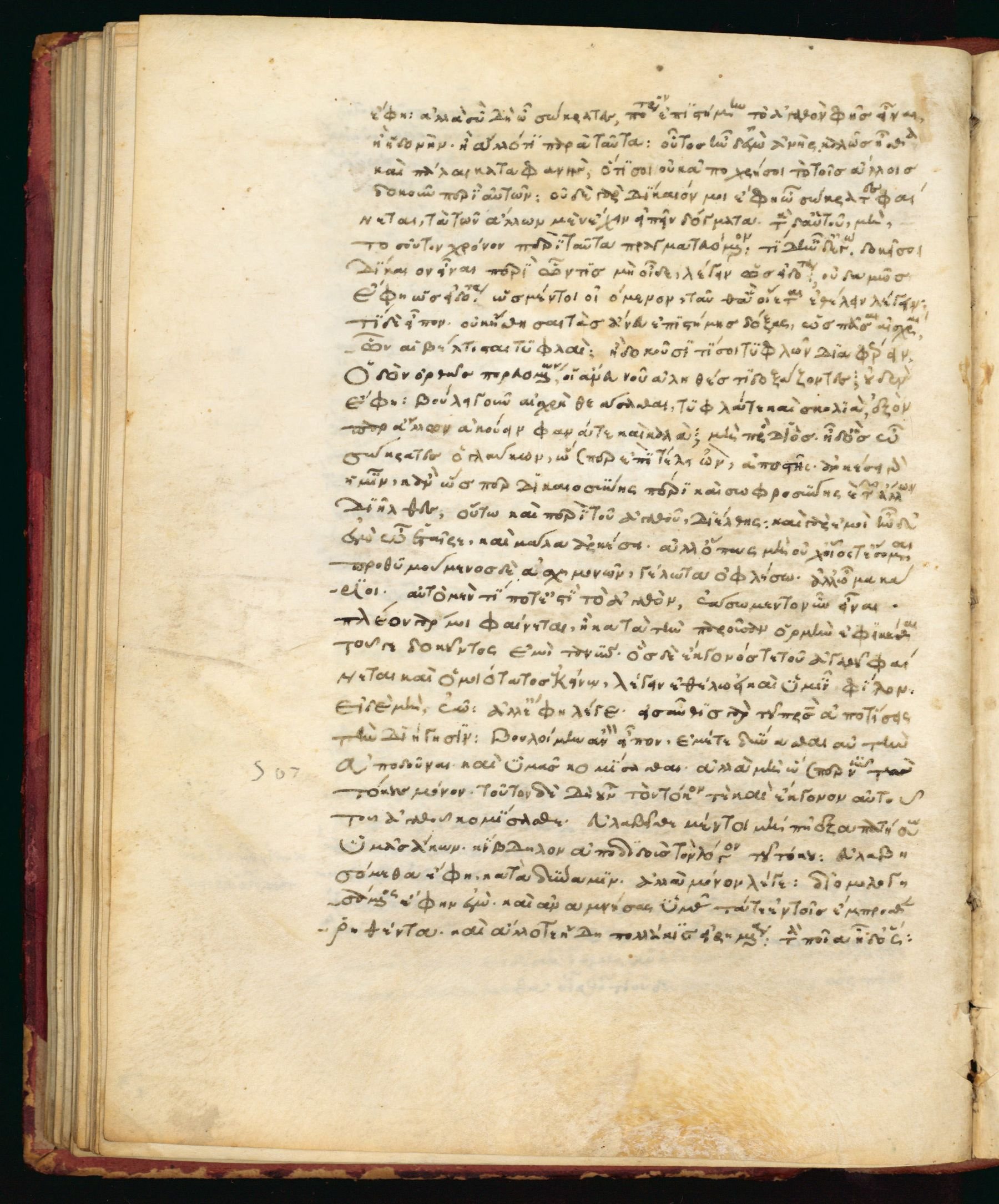
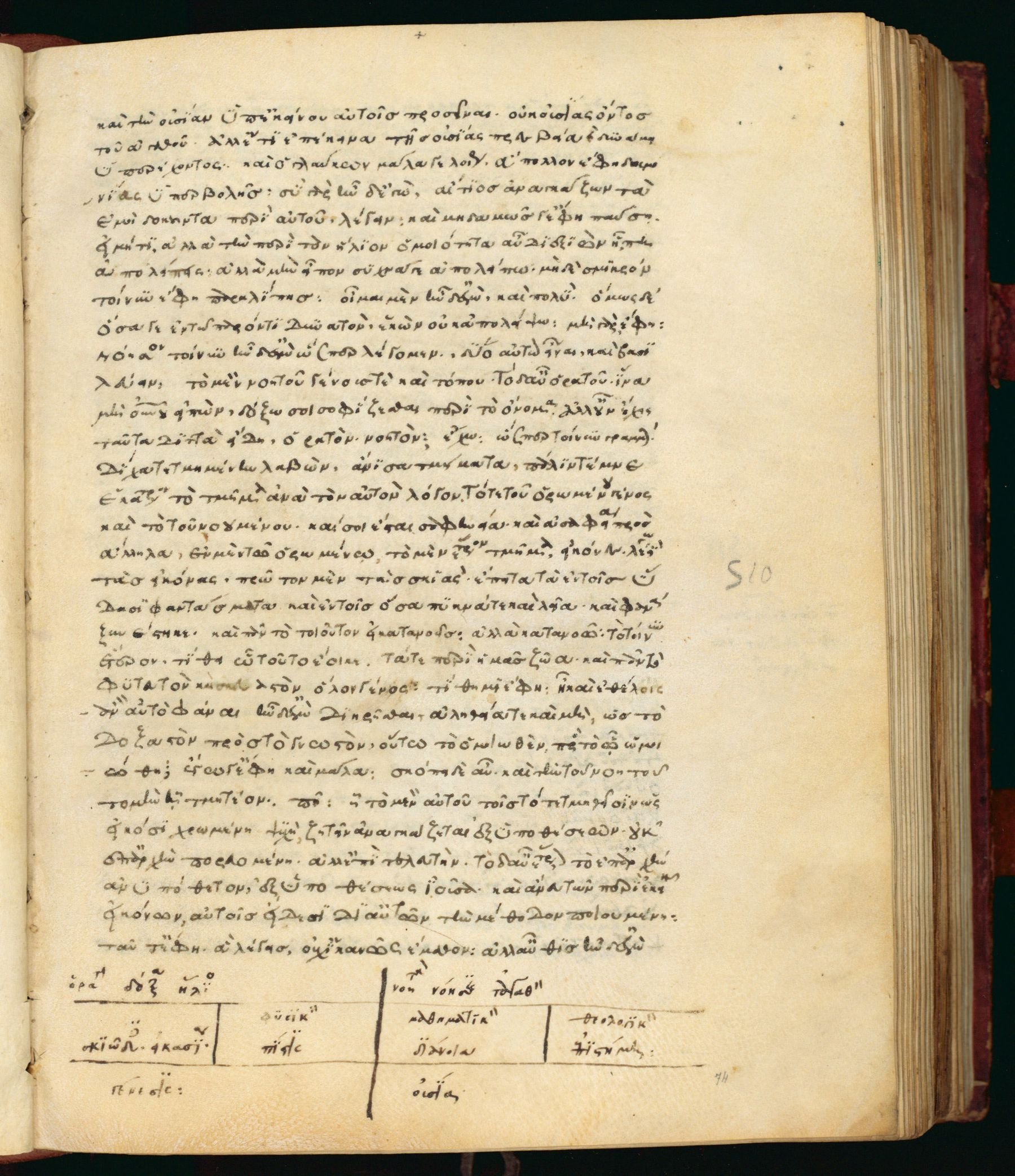
In book 6 of the Republic Socrates has argued that the rulers of the just city must know the Good, the greatest thing to be learned. Asked what the Good is, he declines to say directly and offers instead its 'offspring' (506e). As the sun gives visible things both their visibility and their coming into being and growth, so the Good gives the objects of knowledge their truth and their very being, though the Good 'is not essence but still transcends essence in dignity and surpassing power' (509b, in Shorey's words). Glaucon's laughing reply follows. Socrates then asks him to imagine a line divided into two unequal parts, the visible and the intelligible, each divided again in the same ratio: images and shadows; the things of which they are images; the objects the mind reaches through assumptions, as in geometry; and the forms reached by dialectic, which rises to 'the starting-point of all' (509d-511c). The four parts answer to four states of the soul: picture-thinking, belief, understanding and reason (511d-e). The Cave in book 7 applies these images.
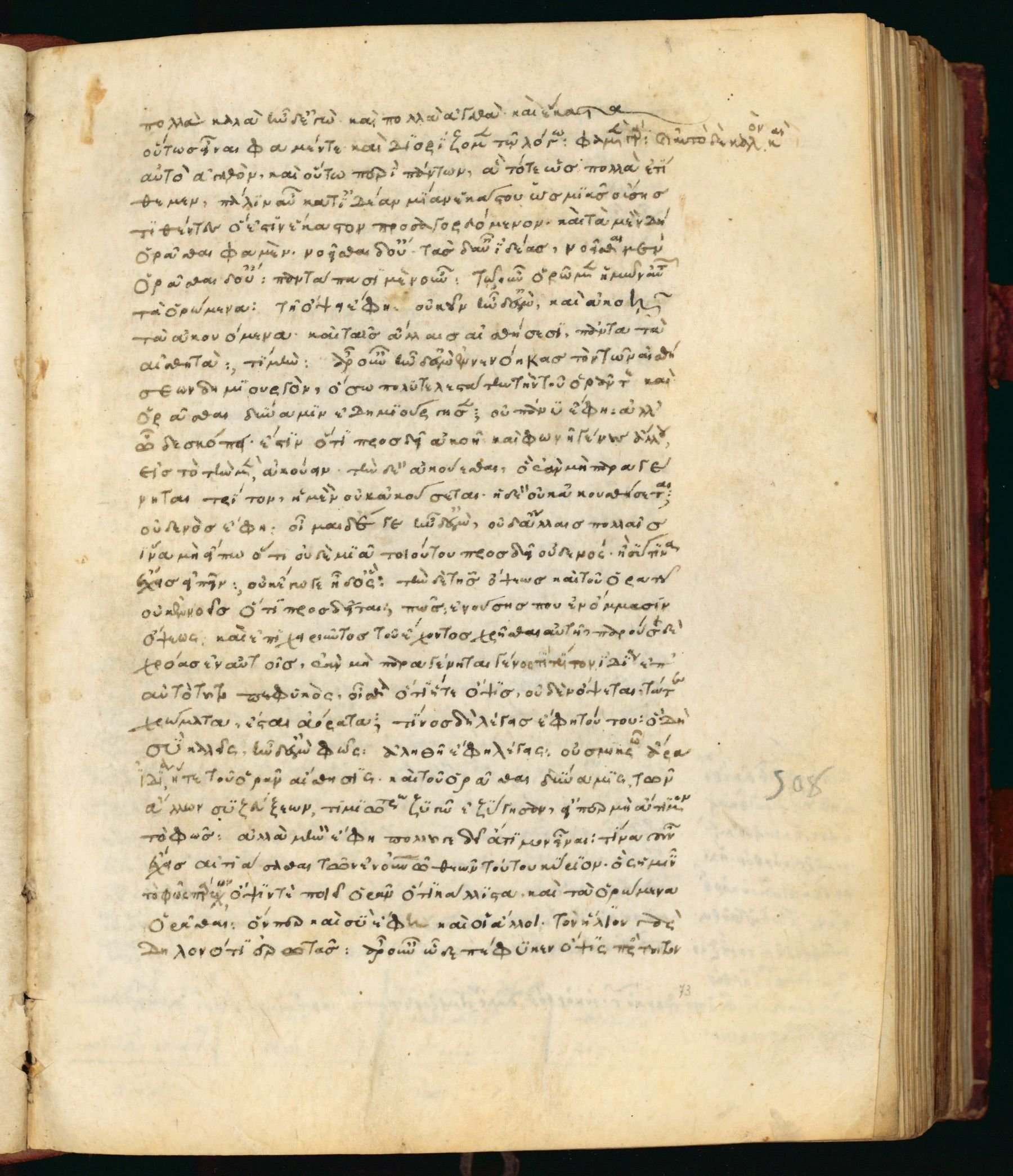
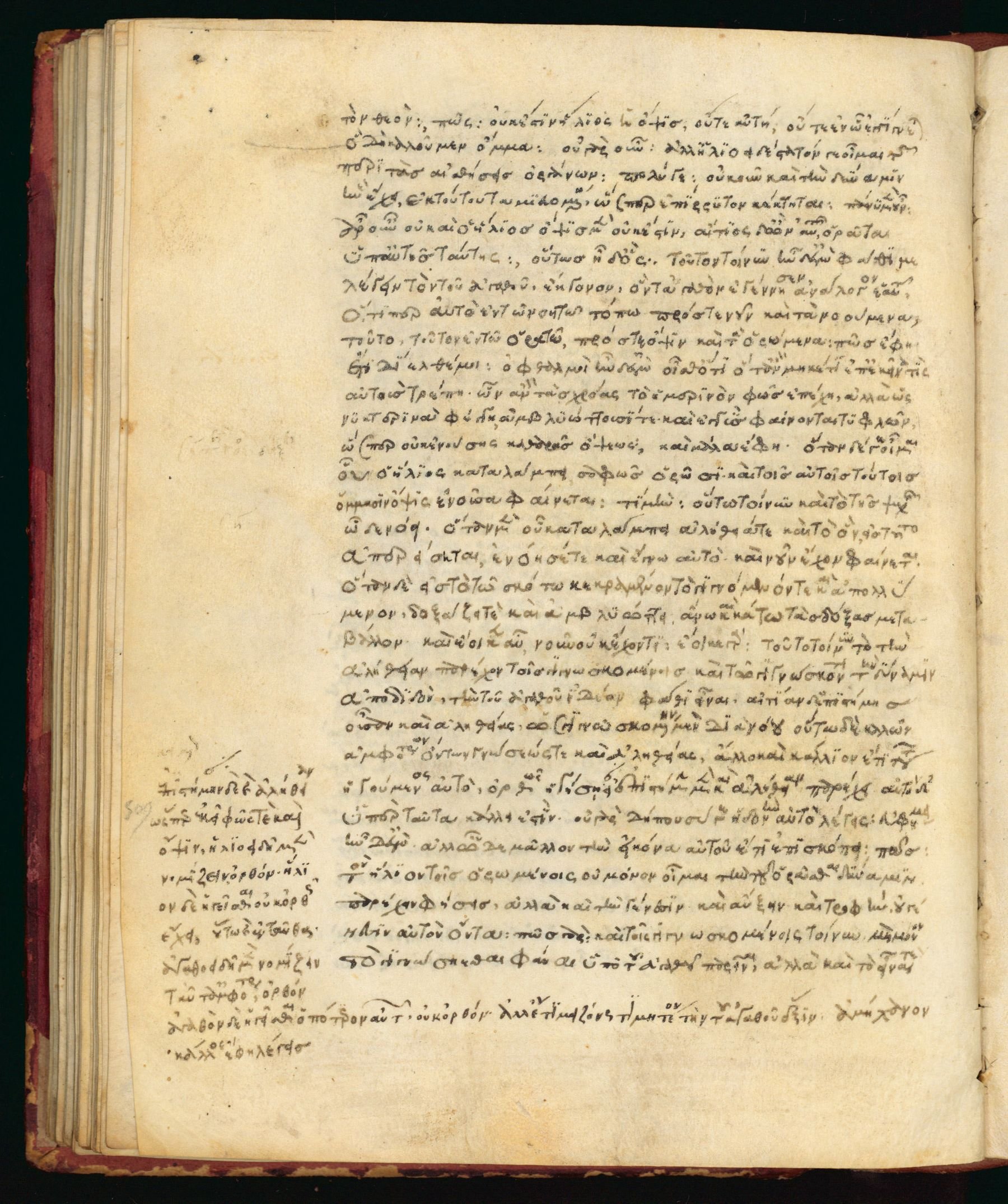
The pages shown are from Florence, Biblioteca Medicea Laurenziana, Plut. 80.19, a parchment manuscript of the Republic and the Timaeus of the 12th century (library dating). The passage fills fols. 72v-75r. On fol. 73v the scribe left out part of 509a and added it in the margin; on fol. 74r he drew the divided line as a table with its four parts named. Each section below is a Stephanus subsection, linked to the page or pages that carry its words; the pages were identified by reading the first and last lines of each page on the image. The Greek is Burnet's critical text (1902), not a transcription of this manuscript, so spelling and some words differ in places. The English is Paul Shorey's Loeb translation (1935). A subsection in which no new sentence begins is joined to the one before it (510d-e).
How was this verified? (Provenance)
Where on the image
On Laur. Plut. 80.19 fol. 72v. Laur. Plut. 80.19 fol. 72v begins 'ἔφη· ἀλλὰ σὺ δή, ὦ Σώκρατες, πότερον ἐπιστήμην τὸ ἀγαθὸν φῂς εἶναι' on its first line and ends 'ῥηθέντα καὶ ἄλλοτε ἤδη πολλάκις εἰρημένα. τὰ ποῖα; ἦ δ' ὅς' on its last line. Fol. 72r ends with 506b '... ὁ τούτων ἐπιστήμων· ἀνάγκη'. On 72v, 506d begins in line 13 with 'μὴ πρὸς Διός, ἦ δ' ὅς, ὦ Σώκρατες', after '... παρ' ἄλλων ἀκούειν φανά τε καὶ καλά;'; the later marginal number 507 stands in the left margin in the lower half of the page. Viewer: https://cdm21059.contentdm.oclc.org/digital/collection/plutei/id/950400 Checked on the images. The Greek shown is Burnet's edition, not a transcription of this manuscript.
μὴ πρὸς Διός, ἦ δʼ ὅς, ὦ Σώκρατες, ὁ Γλαύκων, ὥσπερ ἐπὶ τέλει ὢν ἀποστῇς. ἀρκέσει γὰρ ἡμῖν, κἂν ὥσπερ δικαιοσύνης πέρι καὶ σωφροσύνης καὶ τῶν ἄλλων διῆλθες, οὕτω καὶ περὶ τοῦ ἀγαθοῦ διέλθῃς. καὶ γὰρ ἐμοί, ἦν δʼ ἐγώ, ὦ ἑταῖρε, καὶ μάλα ἀρκέσει· ἀλλʼ ὅπως μὴ οὐχ οἷός τʼ ἔσομαι, προθυμούμενος δὲ ἀσχημονῶν γέλωτα ὀφλήσω. ἀλλʼ, ὦ μακάριοι, αὐτὸ μὲν τί ποτʼ ἐστὶ τἀγαθὸν ἐάσωμεν τὸ νῦν εἶναι—πλέον γάρ μοι φαίνεται ἢ κατὰ τὴν παροῦσαν ὁρμὴν ἐφικέσθαι τοῦ γε δοκοῦντος ἐμοὶ τὰ νῦν—ὃς δὲ ἔκγονός τε τοῦ ἀγαθοῦ φαίνεται καὶ ὁμοιότατος ἐκείνῳ, λέγειν ἐθέλω, εἰ καὶ ὑμῖν φίλον, εἰ δὲ μή, ἐᾶν.
“Nay, in heaven’s name, Socrates,” said Glaucon, “do not draw back, as it were, at the very goal. For it will content us if you explain the good even as you set forth the nature of justice, sobriety, and the other virtues.” “It will right well content me, my dear fellow,” I said, “but I fear that my powers may fail and that in my eagerness I may cut a sorry figure and become a laughing-stock. Nay, my beloved, let us dismiss for the time being the nature of the good in itself; for to attain to my present surmise of that seems a pitch above the impulse that wings my flight to-day. But of what seems to be the offspring of the good and most nearly made in its likeness I am willing to speak if you too wish it, and otherwise to let the matter drop.”
Where on the image
On Laur. Plut. 80.19 fol. 72v. Laur. Plut. 80.19 fol. 72v begins 'ἔφη· ἀλλὰ σὺ δή, ὦ Σώκρατες, πότερον ἐπιστήμην τὸ ἀγαθὸν φῂς εἶναι' on its first line and ends 'ῥηθέντα καὶ ἄλλοτε ἤδη πολλάκις εἰρημένα. τὰ ποῖα; ἦ δ' ὅς' on its last line. Fol. 72r ends with 506b '... ὁ τούτων ἐπιστήμων· ἀνάγκη'. On 72v, 506d begins in line 13 with 'μὴ πρὸς Διός, ἦ δ' ὅς, ὦ Σώκρατες', after '... παρ' ἄλλων ἀκούειν φανά τε καὶ καλά;'; the later marginal number 507 stands in the left margin in the lower half of the page. Viewer: https://cdm21059.contentdm.oclc.org/digital/collection/plutei/id/950400 Checked on the images. The Greek shown is Burnet's edition, not a transcription of this manuscript.
ἀλλʼ, ἔφη, λέγε· εἰς αὖθις γὰρ τοῦ πατρὸς ἀποτείσεις τὴν διήγησιν.
“Well, speak on,” he said, “for you will duly pay me the tale of the parent another time.”
Where on the image
On Laur. Plut. 80.19 fol. 72v. Laur. Plut. 80.19 fol. 72v begins 'ἔφη· ἀλλὰ σὺ δή, ὦ Σώκρατες, πότερον ἐπιστήμην τὸ ἀγαθὸν φῂς εἶναι' on its first line and ends 'ῥηθέντα καὶ ἄλλοτε ἤδη πολλάκις εἰρημένα. τὰ ποῖα; ἦ δ' ὅς' on its last line. Fol. 72r ends with 506b '... ὁ τούτων ἐπιστήμων· ἀνάγκη'. On 72v, 506d begins in line 13 with 'μὴ πρὸς Διός, ἦ δ' ὅς, ὦ Σώκρατες', after '... παρ' ἄλλων ἀκούειν φανά τε καὶ καλά;'; the later marginal number 507 stands in the left margin in the lower half of the page. Viewer: https://cdm21059.contentdm.oclc.org/digital/collection/plutei/id/950400 Checked on the images. The Greek shown is Burnet's edition, not a transcription of this manuscript.
βουλοίμην ἄν, εἶπον, ἐμέ τε δύνασθαι αὐτὴν ἀποδοῦναι καὶ ὑμᾶς κομίσασθαι, ἀλλὰ μὴ ὥσπερ νῦν τοὺς τόκους μόνον. τοῦτον δὲ δὴ οὖν τὸν τόκον τε καὶ ἔκγονον αὐτοῦ τοῦ ἀγαθοῦ κομίσασθε. εὐλαβεῖσθε μέντοι μή πῃ ἐξαπατήσω ὑμᾶς ἄκων, κίβδηλον ἀποδιδοὺς τὸν λόγον τοῦ τόκου. εὐλαβησόμεθα, ἔφη, κατὰ δύναμιν· ἀλλὰ μόνον λέγε. διομολογησάμενός γʼ ἔφην ἐγώ, καὶ ἀναμνήσας ὑμᾶς τά τʼ ἐν τοῖς ἔμπροσθεν ῥηθέντα καὶ ἄλλοτε ἤδη πολλάκις εἰρημένα.
“I could wish,” I said, “that I were able to make and you to receive the payment and not merely as now the interest. But at any rate receive this interest and the offspring of the good. Have a care, however, lest I deceive you unintentionally with a false reckoning of the interest.” “We will do our best,” he said, “to be on our guard. Only speak on.” “Yes,” I said, “after first coming to an understanding with you and reminding you of what has been said here before and often on other occasions.”
Where on the image
Starts on fol. 72v and continues on fol. 73r (page break inside this section). Laur. Plut. 80.19 fol. 72v begins 'ἔφη· ἀλλὰ σὺ δή, ὦ Σώκρατες, πότερον ἐπιστήμην τὸ ἀγαθὸν φῂς εἶναι' on its first line and ends 'ῥηθέντα καὶ ἄλλοτε ἤδη πολλάκις εἰρημένα. τὰ ποῖα; ἦ δ' ὅς' on its last line. Fol. 72r ends with 506b '... ὁ τούτων ἐπιστήμων· ἀνάγκη'. On 72v, 506d begins in line 13 with 'μὴ πρὸς Διός, ἦ δ' ὅς, ὦ Σώκρατες', after '... παρ' ἄλλων ἀκούειν φανά τε καὶ καλά;'; the later marginal number 507 stands in the left margin in the lower half of the page. Viewer: https://cdm21059.contentdm.oclc.org/digital/collection/plutei/id/950400 Laur. Plut. 80.19 fol. 73r begins 'πολλὰ καλά, ἦν δ' ἐγώ, καὶ πολλὰ ἀγαθὰ καὶ ἕκαστα' on its first line and ends 'δῆλον ὅτι ἐρωτᾷς. ἆρ' οὖν ὧδε πέφυκεν ὄψις πρὸς τοῦτον' on its last line. Viewer: https://cdm21059.contentdm.oclc.org/digital/collection/plutei/id/950401 Checked on the images. The Greek shown is Burnet's edition, not a transcription of this manuscript.
τὰ ποῖα; ἦ δʼ ὅς. πολλὰ καλά, ἦν δʼ ἐγώ, καὶ πολλὰ ἀγαθὰ καὶ ἕκαστα οὕτως εἶναί φαμέν τε καὶ διορίζομεν τῷ λόγῳ. φαμὲν γάρ. καὶ αὐτὸ δὴ καλὸν καὶ αὐτὸ ἀγαθόν, καὶ οὕτω περὶ πάντων ἃ τότε ὡς πολλὰ ἐτίθεμεν, πάλιν αὖ κατʼ ἰδέαν μίαν ἑκάστου ὡς μιᾶς οὔσης τιθέντες, ὃ ἔστιν ἕκαστον προσαγορεύομεν. ἔστι ταῦτα. καὶ τὰ μὲν δὴ ὁρᾶσθαί φαμεν, νοεῖσθαι δʼ οὔ, τὰς δʼ αὖ ἰδέας νοεῖσθαι μέν, ὁρᾶσθαι δʼ οὔ. παντάπασι μὲν οὖν.
“What?” said he. “We predicate ‘to be’ of many beautiful things and many good things, saying of them severally that they are, and so define them in our speech.” “We do.” “And again, we speak of a self-beautiful and of a good that is only and merely good, and so, in the case of all the things that we then posited as many, we turn about and posit each as a single idea or aspect, assuming it to be a unity and call it that which each really is.” “It is so.” “And the one class of things we say can be seen but not thought, while the ideas can be thought but not seen.” “By all means.”
Where on the image
On Laur. Plut. 80.19 fol. 73r. Laur. Plut. 80.19 fol. 73r begins 'πολλὰ καλά, ἦν δ' ἐγώ, καὶ πολλὰ ἀγαθὰ καὶ ἕκαστα' on its first line and ends 'δῆλον ὅτι ἐρωτᾷς. ἆρ' οὖν ὧδε πέφυκεν ὄψις πρὸς τοῦτον' on its last line. Viewer: https://cdm21059.contentdm.oclc.org/digital/collection/plutei/id/950401 Checked on the images. The Greek shown is Burnet's edition, not a transcription of this manuscript.
τῷ οὖν ὁρῶμεν ἡμῶν αὐτῶν τὰ ὁρώμενα; τῇ ὄψει, ἔφη. οὐκοῦν, ἦν δʼ ἐγώ, καὶ ἀκοῇ τὰ ἀκουόμενα, καὶ ταῖς ἄλλαις αἰσθήσεσι πάντα τὰ αἰσθητά; τί μήν; ἆρʼ οὖν, ἦν δʼ ἐγώ, ἐννενόηκας τὸν τῶν αἰσθήσεων δημιουργὸν ὅσῳ πολυτελεστάτην τὴν τοῦ ὁρᾶν τε καὶ ὁρᾶσθαι δύναμιν ἐδημιούργησεν; οὐ πάνυ, ἔφη. ἀλλʼ ὧδε σκόπει. ἔστιν ὅτι προσδεῖ ἀκοῇ καὶ φωνῇ γένους ἄλλου εἰς τὸ τὴν μὲν ἀκούειν, τὴν δὲ ἀκούεσθαι, ὃ ἐὰν μὴ παραγένηται τρίτον, ἡ μὲν οὐκ ἀκούσεται, ἡ δὲ οὐκ ἀκουσθήσεται;
“With which of the parts of ourselves, with which of our faculties, then, do we see visible things?” “With sight,” he said. “And do we not,” I said, “hear audibles with hearing, and perceive all sensibles with the other senses?” “Surely.” “Have you ever observed,” said I, “how much the greatest expenditure the creator of the senses has lavished on the faculty of seeing and being seen?” “Why, no, I have not,” he said. “Well, look at it thus. Do hearing and voice stand in need of another medium so that the one may hear and the other be heard, in the absence of which third element the one will not hear and the other not be heard?”
Where on the image
On Laur. Plut. 80.19 fol. 73r. Laur. Plut. 80.19 fol. 73r begins 'πολλὰ καλά, ἦν δ' ἐγώ, καὶ πολλὰ ἀγαθὰ καὶ ἕκαστα' on its first line and ends 'δῆλον ὅτι ἐρωτᾷς. ἆρ' οὖν ὧδε πέφυκεν ὄψις πρὸς τοῦτον' on its last line. Viewer: https://cdm21059.contentdm.oclc.org/digital/collection/plutei/id/950401 Checked on the images. The Greek shown is Burnet's edition, not a transcription of this manuscript.
οὐδενός, ἔφη. οἶμαι δέ γε, ἦν δʼ ἐγώ, οὐδʼ ἄλλαις πολλαῖς, ἵνα μὴ εἴπω ὅτι οὐδεμιᾷ, τοιούτου προσδεῖ οὐδενός. ἢ σύ τινα ἔχεις εἰπεῖν; οὐκ ἔγωγε, ἦ δʼ ὅς. τὴν δὲ τῆς ὄψεως καὶ τοῦ ὁρατοῦ οὐκ ἐννοεῖς ὅτι προσδεῖται; πῶς; ἐνούσης που ἐν ὄμμασιν ὄψεως καὶ ἐπιχειροῦντος τοῦ ἔχοντος χρῆσθαι αὐτῇ, παρούσης δὲ χρόας ἐν αὐτοῖς, ἐὰν μὴ παραγένηται γένος τρίτον ἰδίᾳ ἐπʼ αὐτὸ τοῦτο πεφυκός, οἶσθα ὅτι ἥ τε ὄψις οὐδὲν ὄψεται, τά τε χρώματα ἔσται ἀόρατα.
“They need nothing,” he said. “Neither, I fancy,” said I, “do many others, not to say that none require anything of the sort. Or do you know of any?” “Not I,” he said. “But do you not observe that vision and the visible do have this further need?” “How?” “Though vision may be in the eyes and its possessor may try to use it, and though colour be present, yet without the presence of a third thing specifically and naturally adapted to this purpose, you are aware that vision will see nothing and the colours will remain invisible.”
Where on the image
On Laur. Plut. 80.19 fol. 73r. Laur. Plut. 80.19 fol. 73r begins 'πολλὰ καλά, ἦν δ' ἐγώ, καὶ πολλὰ ἀγαθὰ καὶ ἕκαστα' on its first line and ends 'δῆλον ὅτι ἐρωτᾷς. ἆρ' οὖν ὧδε πέφυκεν ὄψις πρὸς τοῦτον' on its last line. Viewer: https://cdm21059.contentdm.oclc.org/digital/collection/plutei/id/950401 Checked on the images. The Greek shown is Burnet's edition, not a transcription of this manuscript.
τίνος δὴ λέγεις, ἔφη, τούτου; ὃ δὴ σὺ καλεῖς, ἦν δʼ ἐγώ, φῶς. ἀληθῆ, ἔφη, λέγεις. οὐ σμικρᾷ ἄρα ἰδέᾳ ἡ τοῦ ὁρᾶν αἴσθησις καὶ ἡ τοῦ ὁρᾶσθαι δύναμις τῶν ἄλλων συζεύξεων τιμιωτέρῳ ζυγῷ ἐζύγησαν, εἴπερ μὴ ἄτιμον τὸ φῶς.
“What is this thing of which you speak?” he said. “The thing,” I said, “that you call light.” “You say truly,” he replied. “The bond, then, that yokes together visibility and the faculty of sight is more precious by no slight form than that which unites the other pairs, if light is not without honour.”
Where on the image
Starts on fol. 73r and continues on fol. 73v (page break inside this section). Laur. Plut. 80.19 fol. 73r begins 'πολλὰ καλά, ἦν δ' ἐγώ, καὶ πολλὰ ἀγαθὰ καὶ ἕκαστα' on its first line and ends 'δῆλον ὅτι ἐρωτᾷς. ἆρ' οὖν ὧδε πέφυκεν ὄψις πρὸς τοῦτον' on its last line. Viewer: https://cdm21059.contentdm.oclc.org/digital/collection/plutei/id/950401 Laur. Plut. 80.19 fol. 73v begins 'τὸν θεόν; πῶς; οὐκ ἔστιν ἥλιος ἡ ὄψις, οὔτε αὐτή, οὔτε ἐν ᾧ' on its first line and ends 'τὸ γιγνώσκεσθαι φάναι ὑπὸ τοῦ ἀγαθοῦ παρεῖναι, ἀλλὰ καὶ τὸ εἶναί τε' on its last line. In 509a the scribe skipped from 'ἐπιστήμην' to the next 'ἐπιστήμην'; the omitted words, 'ἐπιστήμην δὲ καὶ ἀλήθειαν, ὥσπερ ἐκεῖ φῶς τε καὶ ὄψιν' to '... τιμητέον τὴν τοῦ ἀγαθοῦ ἕξιν. ἀμήχανον κάλλος ἔφη λέγεις', are written in the left margin and across the foot of the page, beside the later marginal number 509. Viewer: https://cdm21059.contentdm.oclc.org/digital/collection/plutei/id/950402 Checked on the images. The Greek shown is Burnet's edition, not a transcription of this manuscript.
ἀλλὰ μήν, ἔφη, πολλοῦ γε δεῖ ἄτιμον εἶναι. τίνα οὖν ἔχεις αἰτιάσασθαι τῶν ἐν οὐρανῷ θεῶν τούτου κύριον, οὗ ἡμῖν τὸ φῶς ὄψιν τε ποιεῖ ὁρᾶν ὅτι κάλλιστα καὶ τὰ ὁρώμενα ὁρᾶσθαι; ὅνπερ καὶ σύ, ἔφη, καὶ οἱ ἄλλοι· τὸν ἥλιον γὰρ δῆλον ὅτι ἐρωτᾷς. ἆρʼ οὖν ὧδε πέφυκεν ὄψις πρὸς τοῦτον τὸν θεόν; πῶς; οὐκ ἔστιν ἥλιος ἡ ὄψις οὔτε αὐτὴ οὔτʼ ἐν ᾧ ἐγγίγνεται, ὃ δὴ καλοῦμεν ὄμμα.
“It surely is far from being so,” he said. “Which one can you name of the divinities in heaven as the author and cause of this, whose light makes our vision see best and visible things to be seen?” “Why, the one that you too and other people mean,” he said; “for your question evidently refers to the sun.” “Is not this, then, the relation of vision to that divinity?” “What?” “Neither vision itself nor its vehicle, which we call the eye, is identical with the sun.”
Where on the image
On Laur. Plut. 80.19 fol. 73v. Laur. Plut. 80.19 fol. 73v begins 'τὸν θεόν; πῶς; οὐκ ἔστιν ἥλιος ἡ ὄψις, οὔτε αὐτή, οὔτε ἐν ᾧ' on its first line and ends 'τὸ γιγνώσκεσθαι φάναι ὑπὸ τοῦ ἀγαθοῦ παρεῖναι, ἀλλὰ καὶ τὸ εἶναί τε' on its last line. In 509a the scribe skipped from 'ἐπιστήμην' to the next 'ἐπιστήμην'; the omitted words, 'ἐπιστήμην δὲ καὶ ἀλήθειαν, ὥσπερ ἐκεῖ φῶς τε καὶ ὄψιν' to '... τιμητέον τὴν τοῦ ἀγαθοῦ ἕξιν. ἀμήχανον κάλλος ἔφη λέγεις', are written in the left margin and across the foot of the page, beside the later marginal number 509. Viewer: https://cdm21059.contentdm.oclc.org/digital/collection/plutei/id/950402 Checked on the images. The Greek shown is Burnet's edition, not a transcription of this manuscript.
οὐ γὰρ οὖν. ἀλλʼ ἡλιοειδέστατόν γε οἶμαι τῶν περὶ τὰς αἰσθήσεις ὀργάνων. πολύ γε. οὐκοῦν καὶ τὴν δύναμιν ἣν ἔχει ἐκ τούτου ταμιευομένην ὥσπερ ἐπίρρυτον κέκτηται; πάνυ μὲν οὖν. ἆρʼ οὖν οὐ καὶ ὁ ἥλιος ὄψις μὲν οὐκ ἔστιν, αἴτιος δʼ ὢν αὐτῆς ὁρᾶται ὑπʼ αὐτῆς ταύτης; οὕτως, ἦ δʼ ὅς. τοῦτον τοίνυν, ἦν δʼ ἐγώ, φάναι με λέγειν τὸν τοῦ ἀγαθοῦ ἔκγονον, ὃν τἀγαθὸν ἐγέννησεν ἀνάλογον ἑαυτῷ, ὅτιπερ αὐτὸ ἐν τῷ νοητῷ τόπῳ πρός τε νοῦν καὶ τὰ νοούμενα, τοῦτο τοῦτον ἐν τῷ ὁρατῷ πρός τε ὄψιν καὶ τὰ ὁρώμενα.
“Why, no.” “But it is, I think, the most sunlike of all the instruments of sense.” “By far the most.” “And does it not receive the power which it possesses as an influx, as it were, dispensed from the sun?” “Certainly.” “Is it not also true that the sun is not vision, yet as being the cause thereof is beheld by vision itself?” “That is so,” he said. “This, then, you must understand that I meant by the offspring of the good which the good begot to stand in a proportion with itself: as the good is in the intelligible region to reason and the objects of reason, so is this in the visible world to vision and the objects of vision.”
Where on the image
On Laur. Plut. 80.19 fol. 73v. Laur. Plut. 80.19 fol. 73v begins 'τὸν θεόν; πῶς; οὐκ ἔστιν ἥλιος ἡ ὄψις, οὔτε αὐτή, οὔτε ἐν ᾧ' on its first line and ends 'τὸ γιγνώσκεσθαι φάναι ὑπὸ τοῦ ἀγαθοῦ παρεῖναι, ἀλλὰ καὶ τὸ εἶναί τε' on its last line. In 509a the scribe skipped from 'ἐπιστήμην' to the next 'ἐπιστήμην'; the omitted words, 'ἐπιστήμην δὲ καὶ ἀλήθειαν, ὥσπερ ἐκεῖ φῶς τε καὶ ὄψιν' to '... τιμητέον τὴν τοῦ ἀγαθοῦ ἕξιν. ἀμήχανον κάλλος ἔφη λέγεις', are written in the left margin and across the foot of the page, beside the later marginal number 509. Viewer: https://cdm21059.contentdm.oclc.org/digital/collection/plutei/id/950402 Checked on the images. The Greek shown is Burnet's edition, not a transcription of this manuscript.
πῶς; ἔφη· ἔτι δίελθέ μοι. ὀφθαλμοί, ἦν δʼ ἐγώ, οἶσθʼ ὅτι, ὅταν μηκέτι ἐπʼ ἐκεῖνά τις αὐτοὺς τρέπῃ ὧν ἂν τὰς χρόας τὸ ἡμερινὸν φῶς ἐπέχῃ, ἀλλὰ ὧν νυκτερινὰ φέγγη, ἀμβλυώττουσί τε καὶ ἐγγὺς φαίνονται τυφλῶν, ὥσπερ οὐκ ἐνούσης καθαρᾶς ὄψεως; καὶ μάλα, ἔφη.
“How is that?” he said; “explain further.” “You are aware,” I said, “that when the eyes are no longer turned upon objects upon whose colours the light of day falls but that of the dim luminaries of night, their edge is blunted and they appear almost blind, as if pure vision did not dwell in them.” “Yes, indeed,” he said.
Where on the image
On Laur. Plut. 80.19 fol. 73v. Laur. Plut. 80.19 fol. 73v begins 'τὸν θεόν; πῶς; οὐκ ἔστιν ἥλιος ἡ ὄψις, οὔτε αὐτή, οὔτε ἐν ᾧ' on its first line and ends 'τὸ γιγνώσκεσθαι φάναι ὑπὸ τοῦ ἀγαθοῦ παρεῖναι, ἀλλὰ καὶ τὸ εἶναί τε' on its last line. In 509a the scribe skipped from 'ἐπιστήμην' to the next 'ἐπιστήμην'; the omitted words, 'ἐπιστήμην δὲ καὶ ἀλήθειαν, ὥσπερ ἐκεῖ φῶς τε καὶ ὄψιν' to '... τιμητέον τὴν τοῦ ἀγαθοῦ ἕξιν. ἀμήχανον κάλλος ἔφη λέγεις', are written in the left margin and across the foot of the page, beside the later marginal number 509. Viewer: https://cdm21059.contentdm.oclc.org/digital/collection/plutei/id/950402 Checked on the images. The Greek shown is Burnet's edition, not a transcription of this manuscript.
ὅταν δέ γʼ οἶμαι ὧν ὁ ἥλιος καταλάμπει, σαφῶς ὁρῶσι, καὶ τοῖς αὐτοῖς τούτοις ὄμμασιν ἐνοῦσα φαίνεται. τί μήν; οὕτω τοίνυν καὶ τὸ τῆς ψυχῆς ὧδε νόει· ὅταν μὲν οὗ καταλάμπει ἀλήθειά τε καὶ τὸ ὄν, εἰς τοῦτο ἀπερείσηται, ἐνόησέν τε καὶ ἔγνω αὐτὸ καὶ νοῦν ἔχειν φαίνεται· ὅταν δὲ εἰς τὸ τῷ σκότῳ κεκραμένον, τὸ γιγνόμενόν τε καὶ ἀπολλύμενον, δοξάζει τε καὶ ἀμβλυώττει ἄνω καὶ κάτω τὰς δόξας μεταβάλλον, καὶ ἔοικεν αὖ νοῦν οὐκ ἔχοντι. ἔοικε γάρ.
“But when, I take it, they are directed upon objects illumined by the sun, they see clearly, and vision appears to reside in these same eyes.” “Certainly.” “Apply this comparison to the soul also in this way. When it is firmly fixed on the domain where truth and reality shine resplendent it apprehends and knows them and appears to possess reason; but when it inclines to that region which is mingled with darkness, the world of becoming and passing away, it opines only and its edge is blunted, and it shifts its opinions hither and thither, and again seems as if it lacked reason.” “Yes, it does.”
Where on the image
On Laur. Plut. 80.19 fol. 73v. Laur. Plut. 80.19 fol. 73v begins 'τὸν θεόν; πῶς; οὐκ ἔστιν ἥλιος ἡ ὄψις, οὔτε αὐτή, οὔτε ἐν ᾧ' on its first line and ends 'τὸ γιγνώσκεσθαι φάναι ὑπὸ τοῦ ἀγαθοῦ παρεῖναι, ἀλλὰ καὶ τὸ εἶναί τε' on its last line. In 509a the scribe skipped from 'ἐπιστήμην' to the next 'ἐπιστήμην'; the omitted words, 'ἐπιστήμην δὲ καὶ ἀλήθειαν, ὥσπερ ἐκεῖ φῶς τε καὶ ὄψιν' to '... τιμητέον τὴν τοῦ ἀγαθοῦ ἕξιν. ἀμήχανον κάλλος ἔφη λέγεις', are written in the left margin and across the foot of the page, beside the later marginal number 509. Viewer: https://cdm21059.contentdm.oclc.org/digital/collection/plutei/id/950402 Checked on the images. The Greek shown is Burnet's edition, not a transcription of this manuscript.
τοῦτο τοίνυν τὸ τὴν ἀλήθειαν παρέχον τοῖς γιγνωσκομένοις καὶ τῷ γιγνώσκοντι τὴν δύναμιν ἀποδιδὸν τὴν τοῦ ἀγαθοῦ ἰδέαν φάθι εἶναι· αἰτίαν δʼ ἐπιστήμης οὖσαν καὶ ἀληθείας, ὡς γιγνωσκομένης μὲν διανοοῦ, οὕτω δὲ καλῶν ἀμφοτέρων ὄντων, γνώσεώς τε καὶ ἀληθείας, ἄλλο καὶ κάλλιον ἔτι τούτων ἡγούμενος αὐτὸ ὀρθῶς ἡγήσῃ· ἐπιστήμην δὲ καὶ ἀλήθειαν, ὥσπερ ἐκεῖ φῶς τε καὶ ὄψιν ἡλιοειδῆ μὲν νομίζειν ὀρθόν, ἥλιον δʼ ἡγεῖσθαι οὐκ ὀρθῶς ἔχει, οὕτω καὶ ἐνταῦθα ἀγαθοειδῆ μὲν νομίζειν ταῦτʼ ἀμφότερα ὀρθόν, ἀγαθὸν δὲ ἡγεῖσθαι ὁπότερον αὐτῶν οὐκ ὀρθόν, ἀλλʼ ἔτι μειζόνως τιμητέον τὴν τοῦ ἀγαθοῦ ἕξιν.
“This reality, then, that gives their truth to the objects of knowledge and the power of knowing to the knower, you must say is the idea of good, and you must conceive it as being the cause of knowledge, and of truth in so far as known. Yet fair as they both are, knowledge and truth, in supposing it to be something fairer still than these you will think rightly of it.” “But as for knowledge and truth, even as in our illustration it is right to deem light and vision sunlike, but never to think that they are the sun, so here it is right to consider these two their counterparts, as being like the good or boniform, but to think that either of them is the good is not right. Still higher honour belongs to the possession and habit of the good.”
Where on the image
On Laur. Plut. 80.19 fol. 73v. Laur. Plut. 80.19 fol. 73v begins 'τὸν θεόν; πῶς; οὐκ ἔστιν ἥλιος ἡ ὄψις, οὔτε αὐτή, οὔτε ἐν ᾧ' on its first line and ends 'τὸ γιγνώσκεσθαι φάναι ὑπὸ τοῦ ἀγαθοῦ παρεῖναι, ἀλλὰ καὶ τὸ εἶναί τε' on its last line. In 509a the scribe skipped from 'ἐπιστήμην' to the next 'ἐπιστήμην'; the omitted words, 'ἐπιστήμην δὲ καὶ ἀλήθειαν, ὥσπερ ἐκεῖ φῶς τε καὶ ὄψιν' to '... τιμητέον τὴν τοῦ ἀγαθοῦ ἕξιν. ἀμήχανον κάλλος ἔφη λέγεις', are written in the left margin and across the foot of the page, beside the later marginal number 509. Viewer: https://cdm21059.contentdm.oclc.org/digital/collection/plutei/id/950402 Checked on the images. The Greek shown is Burnet's edition, not a transcription of this manuscript.
ἀμήχανον κάλλος, ἔφη, λέγεις, εἰ ἐπιστήμην μὲν καὶ ἀλήθειαν παρέχει, αὐτὸ δʼ ὑπὲρ ταῦτα κάλλει ἐστίν· οὐ γὰρ δήπου σύ γε ἡδονὴν αὐτὸ λέγεις. εὐφήμει, ἦν δʼ ἐγώ· ἀλλʼ ὧδε μᾶλλον τὴν εἰκόνα αὐτοῦ ἔτι ἐπισκόπει.
“An inconceivable beauty you speak of,” he said, “if it is the source of knowledge and truth, and yet itself surpasses them in beauty. For you surely cannot mean that it is pleasure.” “Hush,” said I, “but examine the similitude of it still further in this way.”
Where on the image
Starts on fol. 73v and continues on fol. 74r (page break inside this section). Laur. Plut. 80.19 fol. 73v begins 'τὸν θεόν; πῶς; οὐκ ἔστιν ἥλιος ἡ ὄψις, οὔτε αὐτή, οὔτε ἐν ᾧ' on its first line and ends 'τὸ γιγνώσκεσθαι φάναι ὑπὸ τοῦ ἀγαθοῦ παρεῖναι, ἀλλὰ καὶ τὸ εἶναί τε' on its last line. In 509a the scribe skipped from 'ἐπιστήμην' to the next 'ἐπιστήμην'; the omitted words, 'ἐπιστήμην δὲ καὶ ἀλήθειαν, ὥσπερ ἐκεῖ φῶς τε καὶ ὄψιν' to '... τιμητέον τὴν τοῦ ἀγαθοῦ ἕξιν. ἀμήχανον κάλλος ἔφη λέγεις', are written in the left margin and across the foot of the page, beside the later marginal number 509. Viewer: https://cdm21059.contentdm.oclc.org/digital/collection/plutei/id/950402 Laur. Plut. 80.19 fol. 74r begins 'καὶ τὴν οὐσίαν ὑπ' ἐκείνου αὐτοῖς προσεῖναι, οὐκ οὐσίας ὄντος' on its first line and ends 'ταῦτ', ἔφη, ἃ λέγεις, οὐχ ἱκανῶς ἔμαθον. ἀλλ' αὖθις, ἦν δ' ἐγώ' on its last line. Below the last line the scribe drew the divided line as a table: 'ὁρατόν' (visible) and 'νοητόν' (intelligible) over the four parts 'εἰκασία', 'πίστις', 'διάνοια' and 'νόησις'. The later marginal number 510 stands beside the middle of the page. Viewer: https://cdm21059.contentdm.oclc.org/digital/collection/plutei/id/950403 Checked on the images. The Greek shown is Burnet's edition, not a transcription of this manuscript.
πῶς; τὸν ἥλιον τοῖς ὁρωμένοις οὐ μόνον οἶμαι τὴν τοῦ ὁρᾶσθαι δύναμιν παρέχειν φήσεις, ἀλλὰ καὶ τὴν γένεσιν καὶ αὔξην καὶ τροφήν, οὐ γένεσιν αὐτὸν ὄντα. πῶς γάρ; καὶ τοῖς γιγνωσκομένοις τοίνυν μὴ μόνον τὸ γιγνώσκεσθαι φάναι ὑπὸ τοῦ ἀγαθοῦ παρεῖναι, ἀλλὰ καὶ τὸ εἶναί τε καὶ τὴν οὐσίαν ὑπʼ ἐκείνου αὐτοῖς προσεῖναι, οὐκ οὐσίας ὄντος τοῦ ἀγαθοῦ, ἀλλʼ ἔτι ἐπέκεινα τῆς οὐσίας πρεσβείᾳ καὶ δυνάμει ὑπερέχοντος.
“How?” “The sun, I presume you will say, not only furnishes to visibles the power of visibility but it also provides for their generation and growth and nurture though it is not itself generation.” “Of course not.” “In like manner, then, you are to say that the objects of knowledge not only receive from the presence of the good their being known, but their very existence and essence is derived to them from it, though the good itself is not essence but still transcends essence in dignity and surpassing power.”
Where on the image
On Laur. Plut. 80.19 fol. 74r. Laur. Plut. 80.19 fol. 74r begins 'καὶ τὴν οὐσίαν ὑπ' ἐκείνου αὐτοῖς προσεῖναι, οὐκ οὐσίας ὄντος' on its first line and ends 'ταῦτ', ἔφη, ἃ λέγεις, οὐχ ἱκανῶς ἔμαθον. ἀλλ' αὖθις, ἦν δ' ἐγώ' on its last line. Below the last line the scribe drew the divided line as a table: 'ὁρατόν' (visible) and 'νοητόν' (intelligible) over the four parts 'εἰκασία', 'πίστις', 'διάνοια' and 'νόησις'. The later marginal number 510 stands beside the middle of the page. Viewer: https://cdm21059.contentdm.oclc.org/digital/collection/plutei/id/950403 Checked on the images. The Greek shown is Burnet's edition, not a transcription of this manuscript.
καὶ ὁ Γλαύκων μάλα γελοίως, Ἄπολλον, ἔφη, δαιμονίας ὑπερβολῆς. σὺ γάρ, ἦν δʼ ἐγώ, αἴτιος, ἀναγκάζων τὰ ἐμοὶ δοκοῦντα περὶ αὐτοῦ λέγειν. καὶ μηδαμῶς γʼ, ἔφη, παύσῃ, εἰ μή τι, ἀλλὰ τὴν περὶ τὸν ἥλιον ὁμοιότητα αὖ διεξιών, εἴ πῃ ἀπολείπεις. ἀλλὰ μήν, εἶπον, συχνά γε ἀπολείπω. μηδὲ σμικρὸν τοίνυν, ἔφη, παραλίπῃς. οἶμαι μέν, ἦν δʼ ἐγώ, καὶ πολύ· ὅμως δέ, ὅσα γʼ ἐν τῷ παρόντι δυνατόν, ἑκὼν οὐκ ἀπολείψω. μὴ γάρ, ἔφη.
And Glaucon very ludicrously said, “Heaven save us, hyperbole can no further go.” “The fault is yours,” I said, “for compelling me to utter my thoughts about it.” “And don’t desist,” he said, “but at least expound the similitude of the sun, if there is anything that you are omitting.” “Why, certainly,” I said, “I am omitting a great deal.” “Well, don’t omit the least bit,” he said. “I fancy,” I said, “that I shall have to pass over much, but nevertheless so far as it is at present practicable I shall not willingly leave anything out.” “Do not,” he said.
Where on the image
On Laur. Plut. 80.19 fol. 74r. Laur. Plut. 80.19 fol. 74r begins 'καὶ τὴν οὐσίαν ὑπ' ἐκείνου αὐτοῖς προσεῖναι, οὐκ οὐσίας ὄντος' on its first line and ends 'ταῦτ', ἔφη, ἃ λέγεις, οὐχ ἱκανῶς ἔμαθον. ἀλλ' αὖθις, ἦν δ' ἐγώ' on its last line. Below the last line the scribe drew the divided line as a table: 'ὁρατόν' (visible) and 'νοητόν' (intelligible) over the four parts 'εἰκασία', 'πίστις', 'διάνοια' and 'νόησις'. The later marginal number 510 stands beside the middle of the page. Viewer: https://cdm21059.contentdm.oclc.org/digital/collection/plutei/id/950403 Checked on the images. The Greek shown is Burnet's edition, not a transcription of this manuscript.
νόησον τοίνυν, ἦν δʼ ἐγώ, ὥσπερ λέγομεν, δύο αὐτὼ εἶναι, καὶ βασιλεύειν τὸ μὲν νοητοῦ γένους τε καὶ τόπου, τὸ δʼ αὖ ὁρατοῦ, ἵνα μὴ οὐρανοῦ εἰπὼν δόξω σοι σοφίζεσθαι περὶ τὸ ὄνομα. ἀλλʼ οὖν ἔχεις ταῦτα διττὰ εἴδη, ὁρατόν, νοητόν; ἔχω. ὥσπερ τοίνυν γραμμὴν δίχα τετμημένην λαβὼν ἄνισα τμήματα, πάλιν τέμνε ἑκάτερον τὸ τμῆμα ἀνὰ τὸν αὐτὸν λόγον, τό τε τοῦ ὁρωμένου γένους καὶ τὸ τοῦ νοουμένου, καί σοι ἔσται σαφηνείᾳ καὶ ἀσαφείᾳ πρὸς ἄλληλα ἐν μὲν τῷ ὁρωμένῳ τὸ μὲν ἕτερον τμῆμα εἰκόνες— λέγω δὲ τὰς εἰκόνας πρῶτον μὲν τὰς σκιάς, ἔπειτα τὰ ἐν τοῖς ὕδασι φαντάσματα καὶ ἐν τοῖς ὅσα πυκνά τε καὶ λεῖα καὶ φανὰ συνέστηκεν, καὶ πᾶν τὸ τοιοῦτον, εἰ κατανοεῖς.
“Conceive then,” said I, “as we were saying, that there are these two entities, and that one of them is sovereign over the intelligible order and region and the other over the world of the eye-ball, not to say the sky-ball, but let that pass. You surely apprehend the two types, the visible and the intelligible.” “I do.” “Represent them then, as it were, by a line divided into two unequal sections and cut each section again in the same ratio (the section, that is, of the visible and that of the intelligible order), and then as an expression of the ratio of their comparative clearness and obscurity you will have, as one of the sections of the visible world, images.” “By images I mean, first, shadows, and then reflections in water and on surfaces of dense, smooth and bright texture, and everything of that kind, if you apprehend.”
Where on the image
On Laur. Plut. 80.19 fol. 74r. Laur. Plut. 80.19 fol. 74r begins 'καὶ τὴν οὐσίαν ὑπ' ἐκείνου αὐτοῖς προσεῖναι, οὐκ οὐσίας ὄντος' on its first line and ends 'ταῦτ', ἔφη, ἃ λέγεις, οὐχ ἱκανῶς ἔμαθον. ἀλλ' αὖθις, ἦν δ' ἐγώ' on its last line. Below the last line the scribe drew the divided line as a table: 'ὁρατόν' (visible) and 'νοητόν' (intelligible) over the four parts 'εἰκασία', 'πίστις', 'διάνοια' and 'νόησις'. The later marginal number 510 stands beside the middle of the page. Viewer: https://cdm21059.contentdm.oclc.org/digital/collection/plutei/id/950403 Checked on the images. The Greek shown is Burnet's edition, not a transcription of this manuscript.
ἀλλὰ κατανοῶ. τὸ τοίνυν ἕτερον τίθει ᾧ τοῦτο ἔοικεν, τά τε περὶ ἡμᾶς ζῷα καὶ πᾶν τὸ φυτευτὸν καὶ τὸ σκευαστὸν ὅλον γένος. τίθημι, ἔφη. ἦ καὶ ἐθέλοις ἂν αὐτὸ φάναι, ἦν δʼ ἐγώ, διῃρῆσθαι ἀληθείᾳ τε καὶ μή, ὡς τὸ δοξαστὸν πρὸς τὸ γνωστόν, οὕτω τὸ ὁμοιωθὲν πρὸς τὸ ᾧ ὡμοιώθη;
“I do.” “As the second section assume that of which this is a likeness or an image, that is, the animals about us and all plants and the whole class of objects made by man.” “I so assume it,” he said. “Would you be willing to say,” said I, “that the division in respect of reality and truth or the opposite is expressed by the proportion: as is the opinable to the knowable so is the likeness to that of which it is a likeness?”
Where on the image
On Laur. Plut. 80.19 fol. 74r. Laur. Plut. 80.19 fol. 74r begins 'καὶ τὴν οὐσίαν ὑπ' ἐκείνου αὐτοῖς προσεῖναι, οὐκ οὐσίας ὄντος' on its first line and ends 'ταῦτ', ἔφη, ἃ λέγεις, οὐχ ἱκανῶς ἔμαθον. ἀλλ' αὖθις, ἦν δ' ἐγώ' on its last line. Below the last line the scribe drew the divided line as a table: 'ὁρατόν' (visible) and 'νοητόν' (intelligible) over the four parts 'εἰκασία', 'πίστις', 'διάνοια' and 'νόησις'. The later marginal number 510 stands beside the middle of the page. Viewer: https://cdm21059.contentdm.oclc.org/digital/collection/plutei/id/950403 Checked on the images. The Greek shown is Burnet's edition, not a transcription of this manuscript.
ἔγωγʼ, ἔφη, καὶ μάλα. σκόπει δὴ αὖ καὶ τὴν τοῦ νοητοῦ τομὴν ᾗ τμητέον. πῇ; ἧι τὸ μὲν αὐτοῦ τοῖς τότε μιμηθεῖσιν ὡς εἰκόσιν χρωμένη ψυχὴ ζητεῖν ἀναγκάζεται ἐξ ὑποθέσεων, οὐκ ἐπʼ ἀρχὴν πορευομένη ἀλλʼ ἐπὶ τελευτήν, τὸ δʼ αὖ ἕτερον—τὸ ἐπʼ ἀρχὴν ἀνυπόθετον—ἐξ ὑποθέσεως ἰοῦσα καὶ ἄνευ τῶν περὶ ἐκεῖνο εἰκόνων, αὐτοῖς εἴδεσι διʼ αὐτῶν τὴν μέθοδον ποιουμένη. ταῦτʼ, ἔφη, ἃ λέγεις, οὐχ ἱκανῶς ἔμαθον.
“I certainly would.” “Consider then again the way in which we are to make the division of the intelligible section.” “In what way?” “By the distinction that there is one section of it which the soul is compelled to investigate by treating as images the things imitated in the former division, and by means of assumptions from which it proceeds not up to a first principle but down to a conclusion, while there is another section in which it advances from its assumption to a beginning or principle that transcends assumption, and in which it makes no use of the images employed by the other section, relying on ideas only and progressing systematically through ideas.” “I don’t fully understand what you mean by this,” he said.
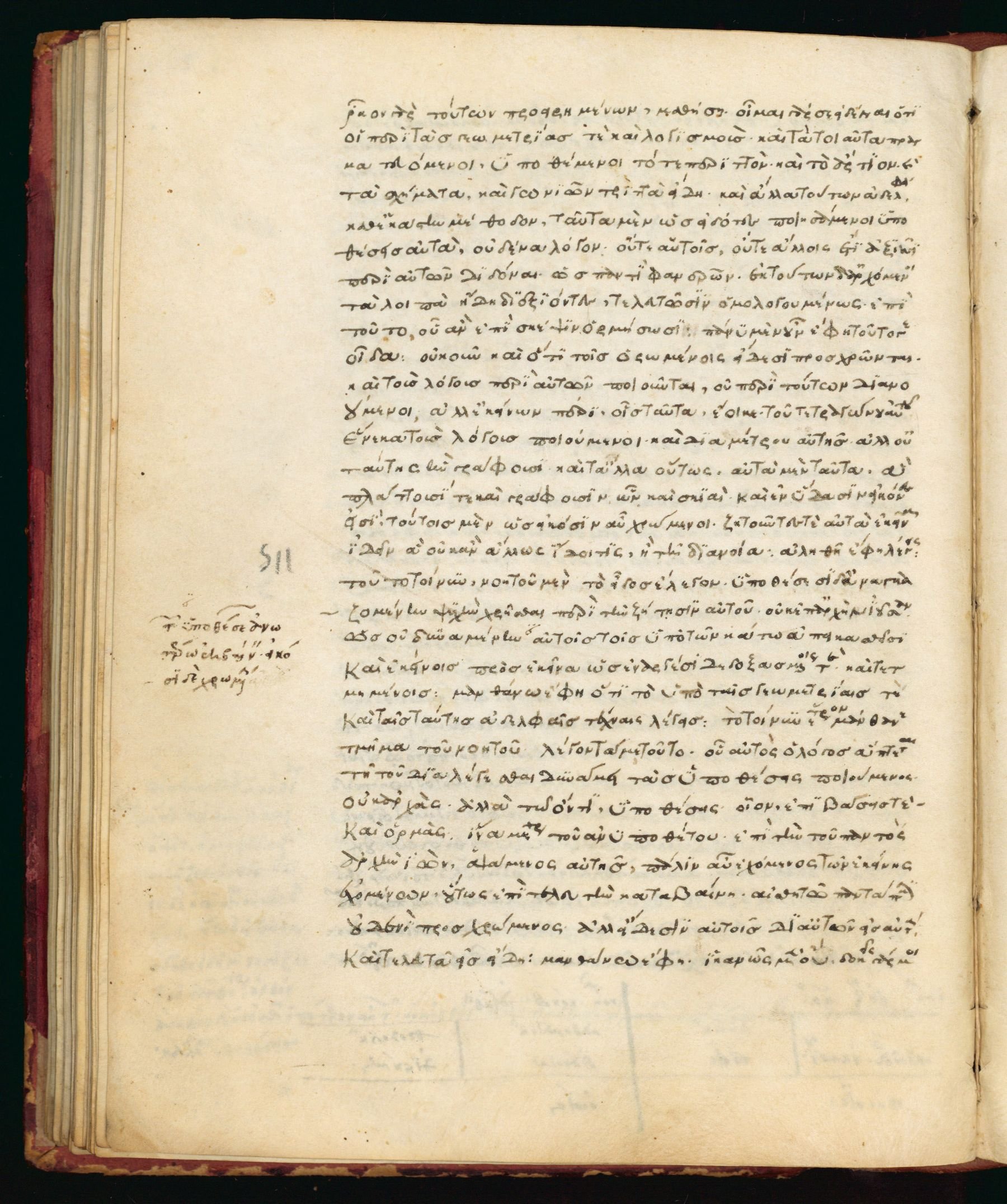
Where on the image
Starts on fol. 74r and continues on fol. 74v (page break inside this section). Laur. Plut. 80.19 fol. 74r begins 'καὶ τὴν οὐσίαν ὑπ' ἐκείνου αὐτοῖς προσεῖναι, οὐκ οὐσίας ὄντος' on its first line and ends 'ταῦτ', ἔφη, ἃ λέγεις, οὐχ ἱκανῶς ἔμαθον. ἀλλ' αὖθις, ἦν δ' ἐγώ' on its last line. Below the last line the scribe drew the divided line as a table: 'ὁρατόν' (visible) and 'νοητόν' (intelligible) over the four parts 'εἰκασία', 'πίστις', 'διάνοια' and 'νόησις'. The later marginal number 510 stands beside the middle of the page. Viewer: https://cdm21059.contentdm.oclc.org/digital/collection/plutei/id/950403 Laur. Plut. 80.19 fol. 74v begins 'ῥᾷον γὰρ τούτων προειρημένων μαθήσῃ. οἶμαι γάρ σε εἰδέναι ὅτι' on its first line and ends 'καὶ τελευτᾷ εἰς εἴδη. μανθάνω, ἔφη, ἱκανῶς μὲν οὔ· δοκεῖς γάρ μοι' on its last line. Viewer: https://cdm21059.contentdm.oclc.org/digital/collection/plutei/id/950404 Checked on the images. The Greek shown is Burnet's edition, not a transcription of this manuscript.
ἀλλʼ αὖθις, ἦν δʼ ἐγώ· ῥᾷον γὰρ τούτων προειρημένων μαθήσῃ. οἶμαι γάρ σε εἰδέναι ὅτι οἱ περὶ τὰς γεωμετρίας τε καὶ λογισμοὺς καὶ τὰ τοιαῦτα πραγματευόμενοι, ὑποθέμενοι τό τε περιττὸν καὶ τὸ ἄρτιον καὶ τὰ σχήματα καὶ γωνιῶν τριττὰ εἴδη καὶ ἄλλα τούτων ἀδελφὰ καθʼ ἑκάστην μέθοδον, ταῦτα μὲν ὡς εἰδότες, ποιησάμενοι ὑποθέσεις αὐτά, οὐδένα λόγον οὔτε αὑτοῖς οὔτε ἄλλοις ἔτι ἀξιοῦσι περὶ αὐτῶν διδόναι ὡς παντὶ φανερῶν, ἐκ τούτων δʼ ἀρχόμενοι τὰ λοιπὰ ἤδη διεξιόντες τελευτῶσιν ὁμολογουμένως ἐπὶ τοῦτο οὗ ἂν ἐπὶ σκέψιν ὁρμήσωσι.
“Well, I will try again,” said I, “for you will better understand after this preamble. For I think you are aware that students of geometry and reckoning and such subjects first postulate the odd and the even and the various figures and three kinds of angles and other things akin to these in each branch of science, regard them as known, and, treating them as absolute assumptions, do not deign to render any further account of them to themselves or others, taking it for granted that they are obvious to everybody. They take their start from these, and pursuing the inquiry from this point on consistently, conclude with that for the investigation of which they set out.”
Where on the image
On Laur. Plut. 80.19 fol. 74v. Laur. Plut. 80.19 fol. 74v begins 'ῥᾷον γὰρ τούτων προειρημένων μαθήσῃ. οἶμαι γάρ σε εἰδέναι ὅτι' on its first line and ends 'καὶ τελευτᾷ εἰς εἴδη. μανθάνω, ἔφη, ἱκανῶς μὲν οὔ· δοκεῖς γάρ μοι' on its last line. Viewer: https://cdm21059.contentdm.oclc.org/digital/collection/plutei/id/950404 Checked on the images. The Greek shown is Burnet's edition, not a transcription of this manuscript.
πάνυ μὲν οὖν, ἔφη, τοῦτό γε οἶδα. οὐκοῦν καὶ ὅτι τοῖς ὁρωμένοις εἴδεσι προσχρῶνται καὶ τοὺς λόγους περὶ αὐτῶν ποιοῦνται, οὐ περὶ τούτων διανοούμενοι, ἀλλʼ ἐκείνων πέρι οἷς ταῦτα ἔοικε, τοῦ τετραγώνου αὐτοῦ ἕνεκα τοὺς λόγους ποιούμενοι καὶ διαμέτρου αὐτῆς, ἀλλʼ οὐ ταύτης ἣν γράφουσιν, καὶ τἆλλα οὕτως, αὐτὰ μὲν ταῦτα ἃ πλάττουσίν τε καὶ γράφουσιν, ὧν καὶ σκιαὶ καὶ ἐν ὕδασιν εἰκόνες εἰσίν, τούτοις μὲν ὡς εἰκόσιν αὖ χρώμενοι, ζητοῦντες δὲ αὐτὰ ἐκεῖνα ἰδεῖν ἃ οὐκ ἂν ἄλλως ἴδοι τις ἢ τῇ διανοίᾳ.
“Certainly,” he said, “I know that.” “And do you not also know that they further make use of the visible forms and talk about them, though they are not thinking of them but of those things of which they are a likeness, pursuing their inquiry for the sake of the square as such and the diagonal as such, and not for the sake of the image of it which they draw? And so in all cases. The very things which they mould and draw, which have shadows and images of themselves in water, these things they treat in their turn as only images, but what they really seek is to get sight of those realities which can be seen only by the mind.”
Where on the image
On Laur. Plut. 80.19 fol. 74v. Laur. Plut. 80.19 fol. 74v begins 'ῥᾷον γὰρ τούτων προειρημένων μαθήσῃ. οἶμαι γάρ σε εἰδέναι ὅτι' on its first line and ends 'καὶ τελευτᾷ εἰς εἴδη. μανθάνω, ἔφη, ἱκανῶς μὲν οὔ· δοκεῖς γάρ μοι' on its last line. Viewer: https://cdm21059.contentdm.oclc.org/digital/collection/plutei/id/950404 Checked on the images. The Greek shown is Burnet's edition, not a transcription of this manuscript.
ἀληθῆ, ἔφη, λέγεις. τοῦτο τοίνυν νοητὸν μὲν τὸ εἶδος ἔλεγον, ὑποθέσεσι δʼ ἀναγκαζομένην ψυχὴν χρῆσθαι περὶ τὴν ζήτησιν αὐτοῦ, οὐκ ἐπʼ ἀρχὴν ἰοῦσαν, ὡς οὐ δυναμένην τῶν ὑποθέσεων ἀνωτέρω ἐκβαίνειν, εἰκόσι δὲ χρωμένην αὐτοῖς τοῖς ὑπὸ τῶν κάτω ἀπεικασθεῖσιν καὶ ἐκείνοις πρὸς ἐκεῖνα ὡς ἐναργέσι δεδοξασμένοις τε καὶ τετιμημένοις.
“True,” he said. “This then is the class that I described as intelligible, it is true, but with the reservation first that the soul is compelled to employ assumptions in the investigation of it, not proceeding to a first principle because of its inability to extricate itself from and rise above its assumptions, and second, that it uses as images or likenesses the very objects that are themselves copied and adumbrated by the class below them, and that in comparison with these latter are esteemed as clear and held in honour.”
Where on the image
On Laur. Plut. 80.19 fol. 74v. Laur. Plut. 80.19 fol. 74v begins 'ῥᾷον γὰρ τούτων προειρημένων μαθήσῃ. οἶμαι γάρ σε εἰδέναι ὅτι' on its first line and ends 'καὶ τελευτᾷ εἰς εἴδη. μανθάνω, ἔφη, ἱκανῶς μὲν οὔ· δοκεῖς γάρ μοι' on its last line. Viewer: https://cdm21059.contentdm.oclc.org/digital/collection/plutei/id/950404 Checked on the images. The Greek shown is Burnet's edition, not a transcription of this manuscript.
μανθάνω, ἔφη, ὅτι τὸ ὑπὸ ταῖς γεωμετρίαις τε καὶ ταῖς ταύτης ἀδελφαῖς τέχναις λέγεις. τὸ τοίνυν ἕτερον μάνθανε τμῆμα τοῦ νοητοῦ λέγοντά με τοῦτο οὗ αὐτὸς ὁ λόγος ἅπτεται τῇ τοῦ διαλέγεσθαι δυνάμει, τὰς ὑποθέσεις ποιούμενος οὐκ ἀρχὰς ἀλλὰ τῷ ὄντι ὑποθέσεις, οἷον ἐπιβάσεις τε καὶ ὁρμάς, ἵνα μέχρι τοῦ ἀνυποθέτου ἐπὶ τὴν τοῦ παντὸς ἀρχὴν ἰών, ἁψάμενος αὐτῆς, πάλιν αὖ ἐχόμενος τῶν ἐκείνης ἐχομένων, οὕτως ἐπὶ τελευτὴν καταβαίνῃ, αἰσθητῷ παντάπασιν οὐδενὶ προσχρώμενος, ἀλλʼ εἴδεσιν αὐτοῖς διʼ αὐτῶν εἰς αὐτά, καὶ τελευτᾷ εἰς εἴδη.
“I understand,” said he, “that you are speaking of what falls under geometry and the kindred arts.” “Understand then,” said I, “that by the other section of the intelligible I mean that which the reason itself lays hold of by the power of dialectics, treating its assumptions not as absolute beginnings but literally as hypotheses, underpinnings, footings, and springboards so to speak, to enable it to rise to that which requires no assumption and is the starting-point of all, and after attaining to that again taking hold of the first dependencies from it, so to proceed downward to the conclusion, making no use whatever of any object of sense but only of pure ideas moving on through ideas to ideas and ending with ideas.”
Where on the image
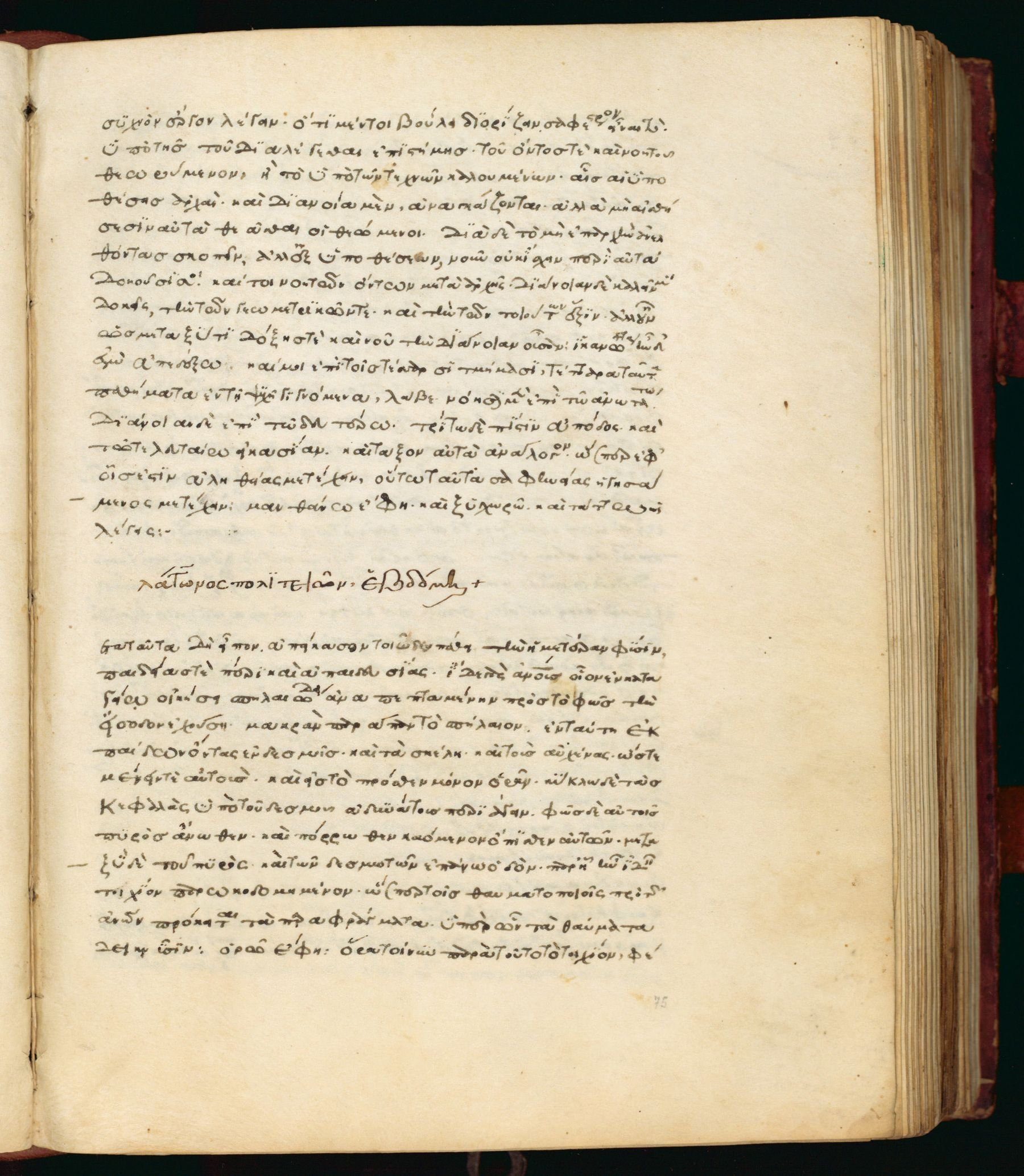
Starts on fol. 74v and continues on fol. 75r (page break inside this section). Laur. Plut. 80.19 fol. 74v begins 'ῥᾷον γὰρ τούτων προειρημένων μαθήσῃ. οἶμαι γάρ σε εἰδέναι ὅτι' on its first line and ends 'καὶ τελευτᾷ εἰς εἴδη. μανθάνω, ἔφη, ἱκανῶς μὲν οὔ· δοκεῖς γάρ μοι' on its last line. Viewer: https://cdm21059.contentdm.oclc.org/digital/collection/plutei/id/950404 Laur. Plut. 80.19 fol. 75r begins 'συχνὸν ἔργον λέγειν· ὅτι μέντοι βούλει διορίζειν σαφέστερον εἶναι' on its first line and ends 'ὁρῶ, ἔφη. ὅρα τοίνυν παρὰ τοῦτο τὸ τειχίον φέ-' on its last line. Book 6 ends in the middle of the page with 'μανθάνω, ἔφη, καὶ ξυγχωρῶ καὶ τάττω ὡς λέγεις'; below it stands the title '(Π)λάτωνος πολιτείας ἑβδόμη' and book 7 (514a) begins '(Μ)ετὰ ταῦτα δή, εἶπον, ἀπείκασον τοιούτῳ πάθει τὴν ἡμετέραν φύσιν', the initials left blank for a rubricator. Viewer: https://cdm21059.contentdm.oclc.org/digital/collection/plutei/id/950405 Checked on the images. The Greek shown is Burnet's edition, not a transcription of this manuscript.
μανθάνω, ἔφη, ἱκανῶς μὲν οὔ—δοκεῖς γάρ μοι συχνὸν ἔργον λέγειν—ὅτι μέντοι βούλει διορίζειν σαφέστερον εἶναι τὸ ὑπὸ τῆς τοῦ διαλέγεσθαι ἐπιστήμης τοῦ ὄντος τε καὶ νοητοῦ θεωρούμενον ἢ τὸ ὑπὸ τῶν τεχνῶν καλουμένων, αἷς αἱ ὑποθέσεις ἀρχαὶ καὶ διανοίᾳ μὲν ἀναγκάζονται ἀλλὰ μὴ αἰσθήσεσιν αὐτὰ θεᾶσθαι οἱ θεώμενοι, διὰ δὲ τὸ μὴ ἐπʼ ἀρχὴν ἀνελθόντες σκοπεῖν ἀλλʼ ἐξ ὑποθέσεων, νοῦν οὐκ ἴσχειν περὶ αὐτὰ δοκοῦσί σοι, καίτοι νοητῶν ὄντων μετὰ ἀρχῆς.
“I understand,” he said; “not fully, for it is no slight task that you appear to have in mind, but I do understand that you mean to distinguish the aspect of reality and the intelligible, which is contemplated by the power of dialectic, as something truer and more exact than the object of the so-called arts and sciences whose assumptions are arbitrary starting-points. And though it is true that those who contemplate them are compelled to use their understanding and not their senses, yet because they do not go back to the beginning in the study of them but start from assumptions you do not think they possess true intelligence about them although the things themselves are intelligibles when apprehended in conjunction with a first principle.
Where on the image
On Laur. Plut. 80.19 fol. 75r. Laur. Plut. 80.19 fol. 75r begins 'συχνὸν ἔργον λέγειν· ὅτι μέντοι βούλει διορίζειν σαφέστερον εἶναι' on its first line and ends 'ὁρῶ, ἔφη. ὅρα τοίνυν παρὰ τοῦτο τὸ τειχίον φέ-' on its last line. Book 6 ends in the middle of the page with 'μανθάνω, ἔφη, καὶ ξυγχωρῶ καὶ τάττω ὡς λέγεις'; below it stands the title '(Π)λάτωνος πολιτείας ἑβδόμη' and book 7 (514a) begins '(Μ)ετὰ ταῦτα δή, εἶπον, ἀπείκασον τοιούτῳ πάθει τὴν ἡμετέραν φύσιν', the initials left blank for a rubricator. Viewer: https://cdm21059.contentdm.oclc.org/digital/collection/plutei/id/950405 Checked on the images. The Greek shown is Burnet's edition, not a transcription of this manuscript.
διάνοιαν δὲ καλεῖν μοι δοκεῖς τὴν τῶν γεωμετρικῶν τε καὶ τὴν τῶν τοιούτων ἕξιν ἀλλʼ οὐ νοῦν, ὡς μεταξύ τι δόξης τε καὶ νοῦ τὴν διάνοιαν οὖσαν. ἱκανώτατα, ἦν δʼ ἐγώ, ἀπεδέξω. καί μοι ἐπὶ τοῖς τέτταρσι τμήμασι τέτταρα ταῦτα παθήματα ἐν τῇ ψυχῇ γιγνόμενα λαβέ, νόησιν μὲν ἐπὶ τῷ ἀνωτάτω, διάνοιαν δὲ ἐπὶ τῷ δευτέρῳ, τῷ τρίτῳ δὲ πίστιν ἀπόδος καὶ τῷ τελευταίῳ εἰκασίαν, καὶ τάξον αὐτὰ ἀνὰ λόγον, ὥσπερ ἐφʼ οἷς ἐστιν ἀληθείας μετέχει, οὕτω ταῦτα σαφηνείας ἡγησάμενος μετέχειν.
And I think you call the mental habit of geometers and their like mind or understanding and not reason because you regard understanding as something intermediate between opinion and reason.” “Your interpretation is quite sufficient,” I said; “and now, answering to these four sections, assume these four affections occurring in the soul: intellection or reason for the highest, understanding for the second; assign belief to the third, and to the last picture-thinking or conjecture, and arrange them in a proportion, considering that they participate in clearness and precision in the same degree as their objects partake of truth and reality.”
Where on the image
On Laur. Plut. 80.19 fol. 75r. Laur. Plut. 80.19 fol. 75r begins 'συχνὸν ἔργον λέγειν· ὅτι μέντοι βούλει διορίζειν σαφέστερον εἶναι' on its first line and ends 'ὁρῶ, ἔφη. ὅρα τοίνυν παρὰ τοῦτο τὸ τειχίον φέ-' on its last line. Book 6 ends in the middle of the page with 'μανθάνω, ἔφη, καὶ ξυγχωρῶ καὶ τάττω ὡς λέγεις'; below it stands the title '(Π)λάτωνος πολιτείας ἑβδόμη' and book 7 (514a) begins '(Μ)ετὰ ταῦτα δή, εἶπον, ἀπείκασον τοιούτῳ πάθει τὴν ἡμετέραν φύσιν', the initials left blank for a rubricator. Viewer: https://cdm21059.contentdm.oclc.org/digital/collection/plutei/id/950405 Checked on the images. The Greek shown is Burnet's edition, not a transcription of this manuscript.
μανθάνω, ἔφη, καὶ συγχωρῶ καὶ τάττω ὡς λέγεις.
“I understand,” he said; “I concur and arrange them as you bid.”
Notes
- Greek: John Burnet, Platonis Opera IV (Oxford 1902), Republic, digital text Perseus tlg0059.tlg030.perseus-grc2. Apparatus not shown.
- English: Paul Shorey, Plato, The Republic, vol. 2 (Loeb Classical Library, 1935), digital text Perseus tlg0059.tlg030.perseus-eng2, checked against the 1935 printing. Shorey's footnotes are not shown.
- Each section starts at the first sentence or speech that begins at or after Burnet's Stephanus letter; the English starts at the words that translate that sentence.
Cite
Sources
- Source: Florence, Biblioteca Medicea Laurenziana, Plut. 80.19 fol. 72v-75r (Biblioteca Medicea Laurenziana, Teca digitale (IIIF)) + Burnet's Greek (Perseus) + Paul Shorey's English (Loeb, 1935, Perseus) (holding institution)
- Critical edition: Burnet, Platonis Opera IV (1902), via Perseus
← previous · → next · v cycle view · l back to library