Pesher Habakkuk (1QpHab), columns I-V
Introduction
The Habakkuk Commentary (Pesher Habakkuk, 1QpHab) is one of the seven scrolls found in Qumran Cave 1 in 1947. It quotes the first two chapters of the book of Habakkuk a phrase at a time and explains each quotation with the word pesher ("its meaning"), applying the prophet's words to the community's own time: the Teacher of Righteousness, the Wicked Priest, the Man of the Lie, and the Kittim, a foreign power usually identified with Rome. The scroll is about 1.48 m long and is kept in the Shrine of the Book at the Israel Museum, Jerusalem (inv. 95.57/28). On the evidence of its handwriting it is usually dated to the late first century BCE.
This entry gives columns I to V of the 13 surviving columns (Habakkuk 1:1-16); columns VI to XIII (Habakkuk 1:16 to 2:20) follow in the next entry. Each section is one column. The Hebrew is the scroll's own text with its column and line numbers, from the transcription of Martin G. Abegg Jr. and colleagues in the ETCBC "dss" dataset. Square brackets mark letters lost from the leather and restored by the editors; a dot under a letter marks an uncertain reading; ⟨ ⟩ marks letters written above the line; an ellipsis marks lost letters that are not restored.
The English is the complete translation of the scroll by William H. Brownlee, published in December 1948. Brownlee kept the scroll's columns. In his notation a diagonal line (/) marks the start of a new line of the scroll, words in parentheses are his conjectural restorations, a row of dots (shown here as …) is a lacuna, ? marks traces of letters, # marks letters that can be read but not translated, and words between asterisks were moved across a line division. His quotations of Habakkuk are set in italics. Superscript numbers give the lines of the scroll. In columns I and II they stand where each line of the scroll begins in the English, checked against the Hebrew line by line; in columns III to V they are the numbers Brownlee printed in his margin, beside the printed line on which each line of the scroll begins.
The photographs are the Israel Museum's own images of the scroll from its Digital Dead Sea Scrolls site, one image per column. Columns I and II, and the lower lines of every column, are damaged on the scroll itself; column II runs across the crack between the two pieces into which the opening of the scroll is broken.
How was this verified? (Provenance)
Where on the image
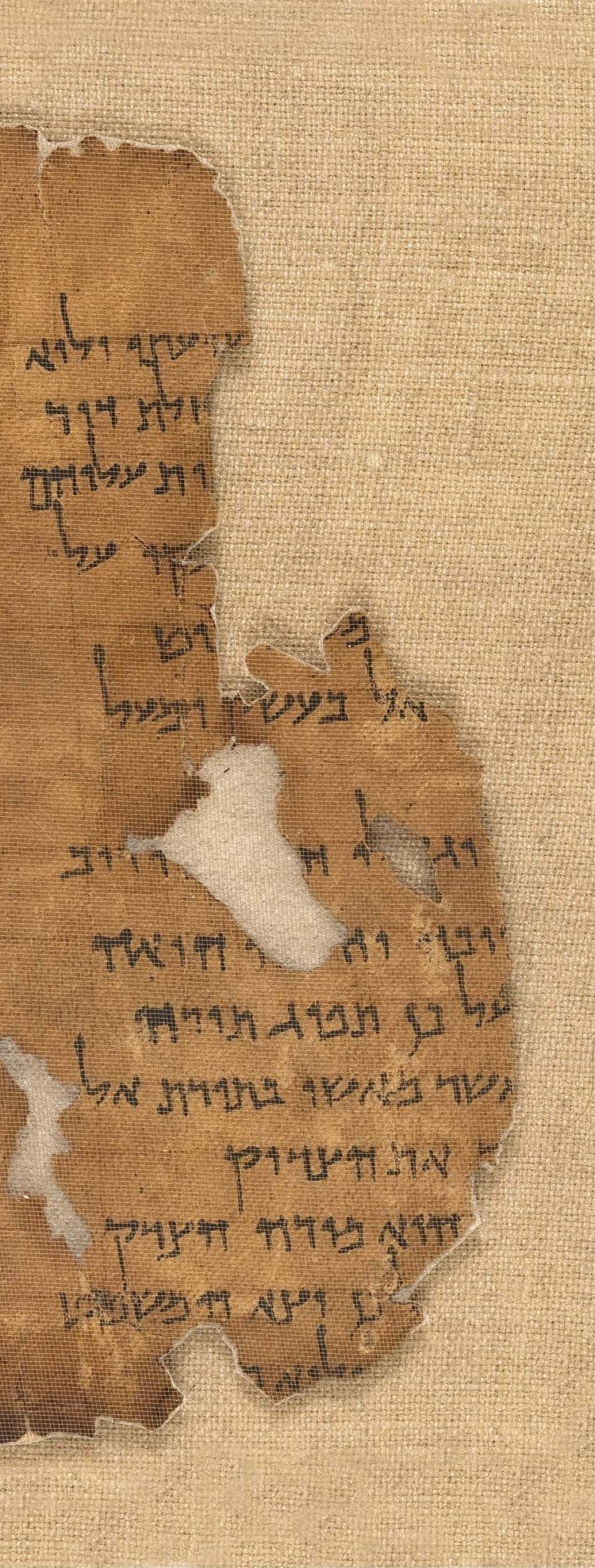
Image 1qphab-col-01.jpg (Israel Museum photograph, column I, the right end of the scroll). Only the left ends of the lines survive. Checked on the image: line 1 ends שועתי ולוא, line 2 ends חלת דור, line 3 ends ות עליהם, line 6 reads אל בעשק ומעל, line 7 is lost in a hole, line 10 reads על כן תפוג תורה, line 11 ends אשר מאשו בתורת אל, line 13 ends הוא מורה הצדק, line 14 ends ל כן יצא המשפט; only traces of line 15 remain (15 lines with text; lines 16-17 are restored). Column and line numbers of the Hebrew come from the ETCBC/Abegg transcription. The English line numbers mark the point where each line of the scroll begins in Brownlee's translation, at his / marks, and were checked against the Hebrew line by line, so both texts carry the same numbers. Line 13 starts at a new printed line after a quotation, with no / before it.
1[המשא אשר חזה חבקוק הנביא עד אנה יהוה]ש̣ועתי ולוא
2[תשמע אזעק אליך חמס ולוא תושיע פשרו על תו]חלת דור
3[אחרון … כול ה בא]ות עליהם
4[אזעק אליכה חמס ולוא תושיע … פשרו אשר יז]ע̣קו על
5[חמס למה תראני און וע]מל̣[ת]ב̣יט
6[פשרו על אשר הביט] אל בעשק ומעל
7[ושוד וחמס לנגדי
8[פשרו … יגז̣[ו]לו ה[ון וי]ה̣י ריב
9[ומדון ישא פשר מ]ר̣יבה̣ וח̣[שב]ה̣ הואה
10… על כן תפוג תורה
11[פשרו על מטיף הכזב ואנשי עדתו]א̣שר מאשו בתורת אל
12[ולוא יצא לנצח משפט כיא רשע מכתי]ר̣ את הצדיק
13[פשרו הרשע הוא הכוהן הרשע והצדיק] הוא מורה הצדק
14[אשר … ע]ל כן יצא המשפט
15[מעוקל פשרו ו]לוא ת̣[
16… ראו בגוים והביטו]
17[והתמהו תמהו כיא פעל פועל בימיכם לוא תאמינו כיא]
1(The oracle which Habakkuk the prophet envisaged:
How long, O Lord,) must I call,
And thou not / 2(hear—
Crying unto thee “Violence”
And thou not save?
Its meaning concerns) … ?## generation / 3… ## against them / 4… they “(cr)y out” against / 5… (And when it says:
Why dost thou show me vanity,
And) make me (s)ee (wr)ongdoing? /
6… God in oppression; and from / 7… / 8… they will re(com)pense the (“violence”) and “strife” / 9(upon) … ?### #?.? he / 10… (And when it says);
Therefore the Law is relaxed, /
11(And judgment never goes forth)!
(The meaning of the passage is t)hat they despise God’s Law / 12… (and when it says:
For the wicked circumve)nts the righteous!
13(its meaning is thus: The “wicked,” he is the Wicked Priest; and the “righteous”), he is the Teacher of Righteousness. / 14… (And when it says:
Th)erefore judgment goes forth / 15(perverted!
its meaning concerns) … and not # …
Where on the image
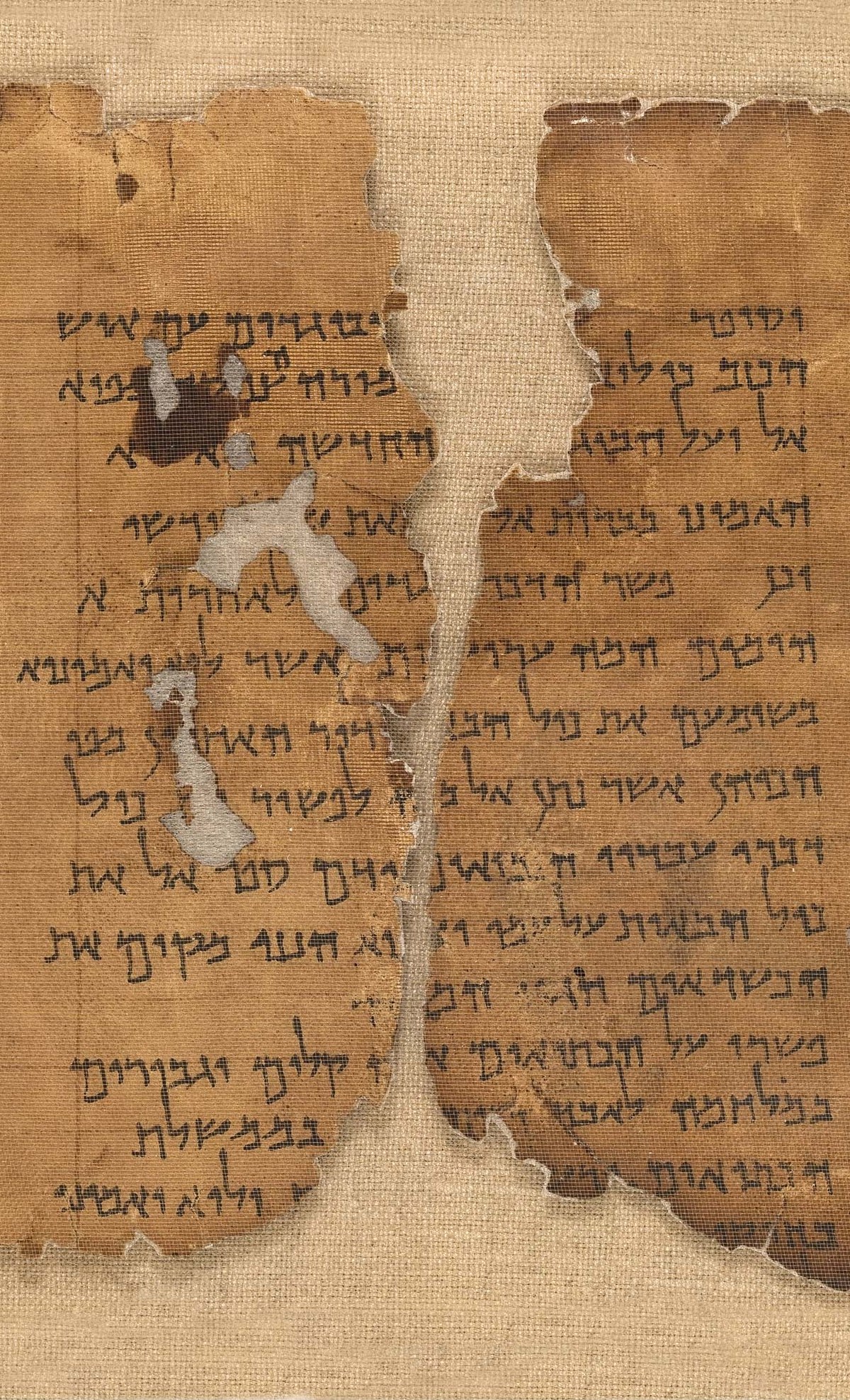
Image 1qphab-col-02.jpg (Israel Museum photograph, column II). The column runs across the vertical crack between the two pieces of the scroll: the right half of each line is right of the crack, the left half left of it. Checked on the image: line 1 begins יסופר and ends הבוגדים עם איש, line 2 ends מורה הצדקה מפיא, line 4 begins האמינו בברית אל, line 12 begins פשרו על הכתיאים and ends קלים וגבורים, line 13 ends בממשלת, line 14 ends ולוא יאמינו, line 15 begins בחוקי at the torn lower edge (15 lines with text). Column and line numbers of the Hebrew come from the ETCBC/Abegg transcription. The English line numbers mark the point where each line of the scroll begins in Brownlee's translation, at his / marks, and were checked against the Hebrew line by line, so both texts carry the same numbers. Line 12 starts at a new printed line after a quotation, with no / before it.
1יסופר פשר הדבר על]ה̣בוגדים עם איש
2הכזב כי לוא̣[האמינו בדברי] מורה ⟨ה⟩צד̣קה̣ מפיא
3אל ועל הבוג[דים בברית] החדשה כ̣[י]א [לו]א
4האמינו בברית אל [ויחללו] את ש[ם]ק̣ודשו
5וכן פשר הדבר[על הבו]גדים לאחרית א
6הימים המה עריצ̣[י הבר]ית אשר לוא יאמינוא
7בשומעם את כול הבא̣[ות ע]ל̣[…]הדור האחרון מפי
8הכוהן אשר נתן אל ב[לבו בינ]ה לפשור א̣ת̣ כול
9דברי עבדיו הנביאים[אשר]ב̣ידם ספר אל את
10כול הבאות על עמו וע̣[דתו]כ̣יא הנני מקים את
11הכשדאים הגוי המ[ר והנמ]ה̣ר
12פשרו על הכתיאים א[שר המ]ה̣ קלים וגבורים
13במלחמה לאבד רב̣ים̣ [והיתה הארץ] בממשלת
14הכתיאים ירש̣[ו ארצות רבו]ת̣ ולוא יאמינו
15בחוקי [א]ל̣[ההולך למרחבי ארץ לרשת משכנות לוא]
16ל[ו פשרו על הכתיאים אשר …
17…
1it be related.” (Its meaning concerns) … and being treacherous along with the Man of / 2the Lie, for (they do) not (“believe” in all that) the Teacher of Righteousness (has spoken) from the mouth of / 3God. And it concerns those trai(torous to the statutes of God and to) the New (Covenant), f(o)r they have not / 4believed in the Covenant of God … (they do ———) to the gates of the needy / 5and upright. The meaning of the passage … being treacherous. At the end of / 6time, they, (being) fierce, … ## who “will not believe” / 7when they hear all the Cov(enant which) the last generation (will hear) from the mouth of / 8the priest whom He has given unto the Ch(ildren of Israel for a teach)er to give the meaning of all / 9the words of His servants the prophets … by whom God has related / 10all that is to come upon His people and (upon) …
(F)or lo, I raise up / 11the Chaldeans—
The nation so bit(ter and ra)sh!
12Its meaning concerns the Chittiim w(ho … an arm)y of fleet and heroic / 13in the war to destroy many … in the kingdom of / 14the Chittiim; but the wic(ked …) # but “they will not believe” / 15in the statutes of (Go)d … / 16?? …
Where on the image
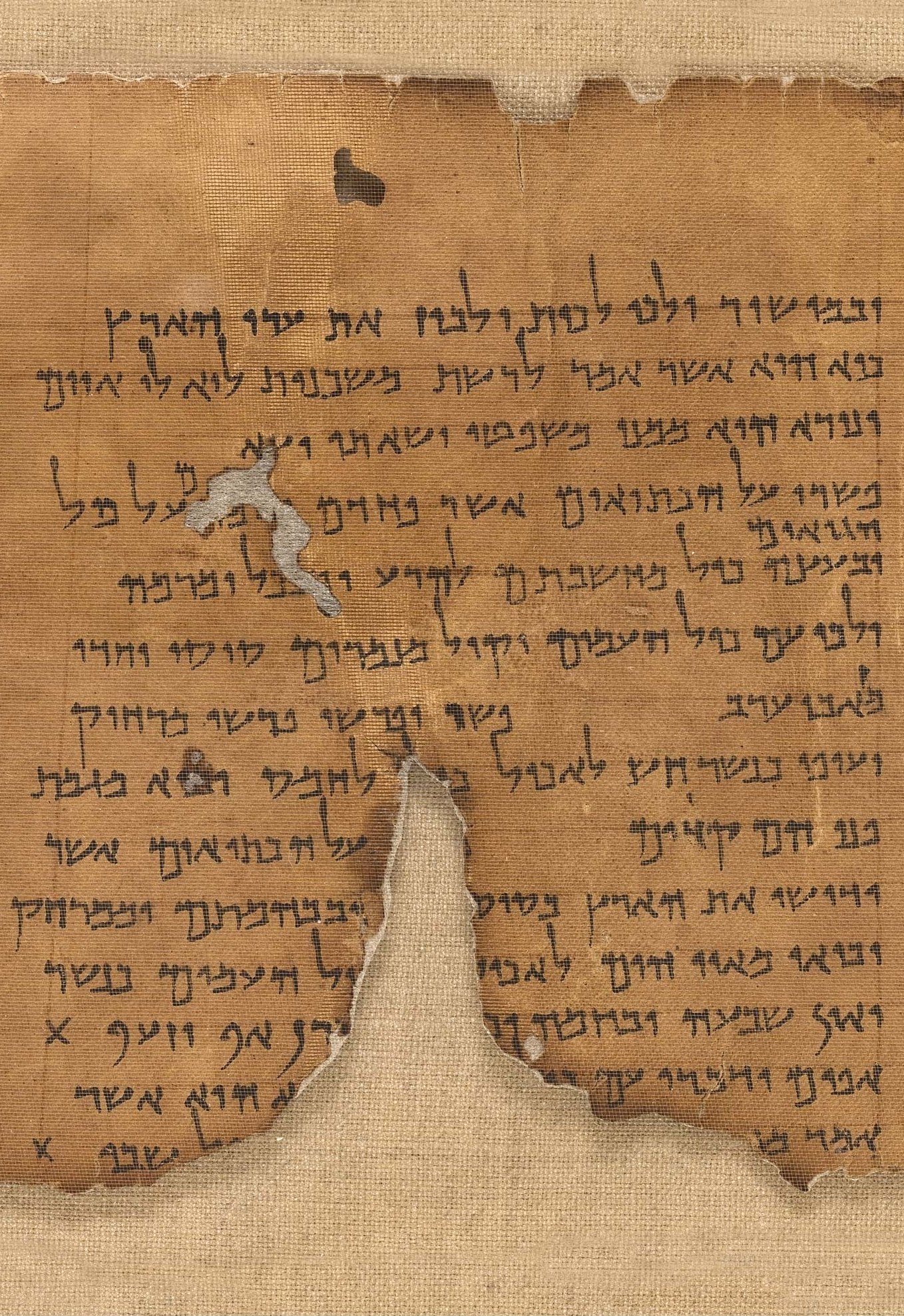
Image 1qphab-col-03.jpg (Israel Museum photograph, column III). Checked on the image: line 1 begins ובמישור and ends את ערי הארץ, line 2 ends משכנות לוא לו איום, line 4 begins פשרו על הכתיאים, line 8 begins יעופו כנשר, line 13 ends הוא אשר, line 14 ends שבי on the left side of the tear in the lower edge (14 lines with text). Column and line numbers of the Hebrew come from the ETCBC/Abegg transcription; the English line numbers are the numbers Brownlee (1948) printed in his margin, each at the start of the printed line on which that line of the scroll begins (the line itself may begin after a / later in that printed line).
1ובמישור ילכו לכות ולבוז את ערי הארץ
2כיא הוא אשר אמר לרשת משכנות לוא לו איום
3ונורא הוא ממנו משפטו ושאתו יצא
4פשרו על הכתיאים אשר פחדם ו̣א̣י̣מת̣⟨ם⟩ על כול
5⟨הגואים⟩ ובעצה כול מחשבתם להרע וב̣נ̣כל ומרמה
6ילכו עם כול העמים וקול מנמרים סוסו וחדו
7מ⟨ז⟩אבי ערב פשו ופרשו פרשו מרחוק
8יעופו כנשר חש לאכול כולו̣ לחמס יבוא מגמת
9פניהם קדים פ̣[שר]ו̣ על הכתיאים אשר
10ידושו את הארץ בסוס[יהם] ובבהמתם וממרחק
11יבואו מאיי הים לאכול̣[את]כ̣ול העמים כנשר
12ואין שבעה ובחמה וכ[עס וב]ח̣רן אף וזעף
13אפים ידברו עם כ̣ו̣ל[העמים כי]א הוא אשר
14אמר מג̣[מת פניהם קדים ויאסוף כח]ו̣ל שבי
15[פש]ר̣ו̣[על הכתיאים אשר …
16…
17… והוא במלכים]
1and in uprightness. They come to smite and to despoil the cities of 2the land; / for this is what it says:
To possess dwellings not his.
3Dreadful / and fearsome is he,
Whose judgment and destruction proceed from himself.
4Its meaning concerns the Chittiim who (are arrayed with) their 5terror against all nations. / And in counsel all their purposes are to 6do evil; and with cunning and deceit / they come with all peoples.
Swifter than panthers are his horses;
7And fiercer, / than evening wolves.
Stretching forth and spreading out,
His horsemen from afar /
8Fly as a vulture
Hastening to devour.
They come all of (them) for violence,
9With the set of / their faces eastward!
10(Its meaning) concerns the Chittiim who / trample the land with 11(their) horses, and with their beasts. And “from afar” / they come, from the isles of the sea, “to devour” all the peoples “as a vulture” /, 12but without being satisfied. For with wrath is he ve(xed and in the 13he)at of anger he fumes / through his nostrils and speaks with all 14… ; (fo)r he is the one of whom / it says:
With the s(et of their faces eastward;
And he heaps up as san)d his captives. /
15(Its meanin)g …
Where on the image
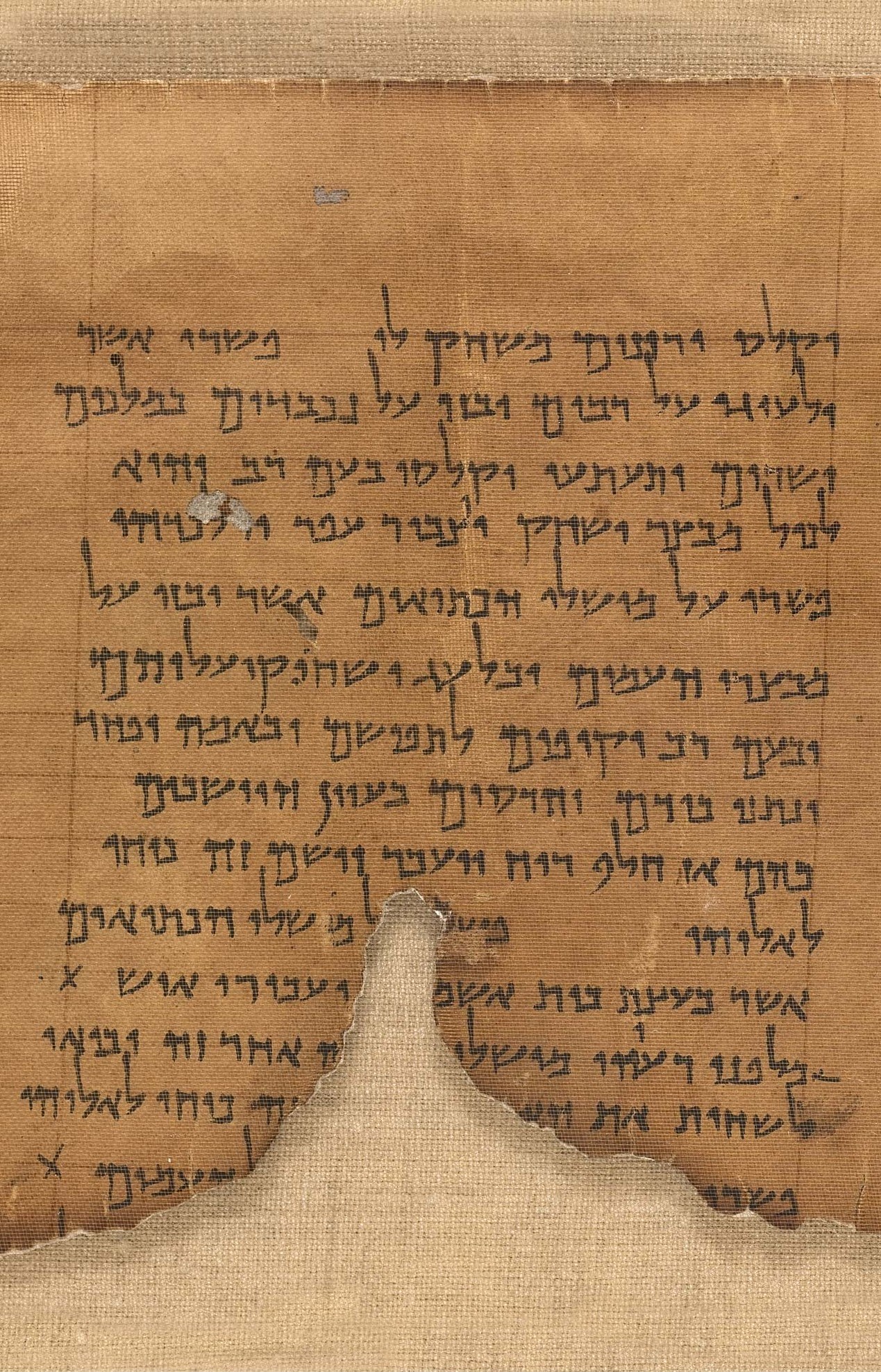
Image 1qphab-col-04.jpg (Israel Museum photograph, column IV). Checked on the image: line 1 reads יקלס ורזנים משחק לו פשרו אשר, line 2 ילעיגו על רבים ובזו על נכבדים במלכים, line 10 לאלוהו פשרו על מושלי הכתיאים, line 13 begins לשחית את; only the first word of line 14 (פשרו) survives above the torn lower edge. Column and line numbers of the Hebrew come from the ETCBC/Abegg transcription; the English line numbers are the numbers Brownlee (1948) printed in his margin, each at the start of the printed line on which that line of the scroll begins (the line itself may begin after a / later in that printed line).
1יקלס ורזנים משחק לו פשרו אשר
2ילעיגו על רבים ובזו על נכבדים במלכים
3ושרים יתעתעו וקלסו בעם רב והוא
4לכול מבצר ישחק ו⟨י⟩צבור עפר וי̣לכדהו
5פשרו על מושלי הכתיאים אשר יבזו על
6מבצרי העמים ובלעג ישח{{ו}}קו עליהם
7ובעם רב יקיפום לתפושם ובאמה ופחד
8ינתנו בידם והרסום בעוון היושבים
9בהם אז חלף רוח ויעבר וישם זה כוחו
10לאלוהו פשרו̣[ע]ל מו̣שלי הכתיאים
11אשר בעצת בית אשמ[תם יעבורו איש
12מלפני רע⟨י⟩הו מושלי[הם ז]ה אחר זה יבואו
13לשחית את הא[רץ וישם]ז̣ה כוחו לאלוהו
14פשרו [אשר ישימו כו]ל העמים
15ל̣[…]ל
16… הלוא אתה מקדם]
17[יהוה אלוהי קדשי לוא נמות יהוה]
1(At kings) he scoffs;
And princes are laughable to him.
2Its meaning is that / they laugh at the great; they are scornful 3of the esteemed. Of / righteous * kings * are they abusive. They scoff at a numerous people.
4Yea he / doth laugh at each fortress;
He heaps up the earth and takes it.
5(Its) meaning (con)cerns the rulers of the Chittiim, who scorn 6the fortresses of the peoples and with ridicule laugh at them. / With 7a numerous people they surround them to take them; and with terror 8and dread / are they given into their hands who reduce to ruins those 9dwelling / in them.
10Then the wind changes and removes;
Yet this man makes his strength / his god.
11(Its) meaning (con)cerns the rulers of the Chittiim / who, acting upon the advice of the house of “guil(t)” “remove” a man / from 13before his fellows ruli(ng) … ?. After this they proceed / to destroy the peo(ples).
(Yet) this man (makes) his strength his god.
14Its meaning (concerns) … (al)l the peoples 15… ?
Where on the image
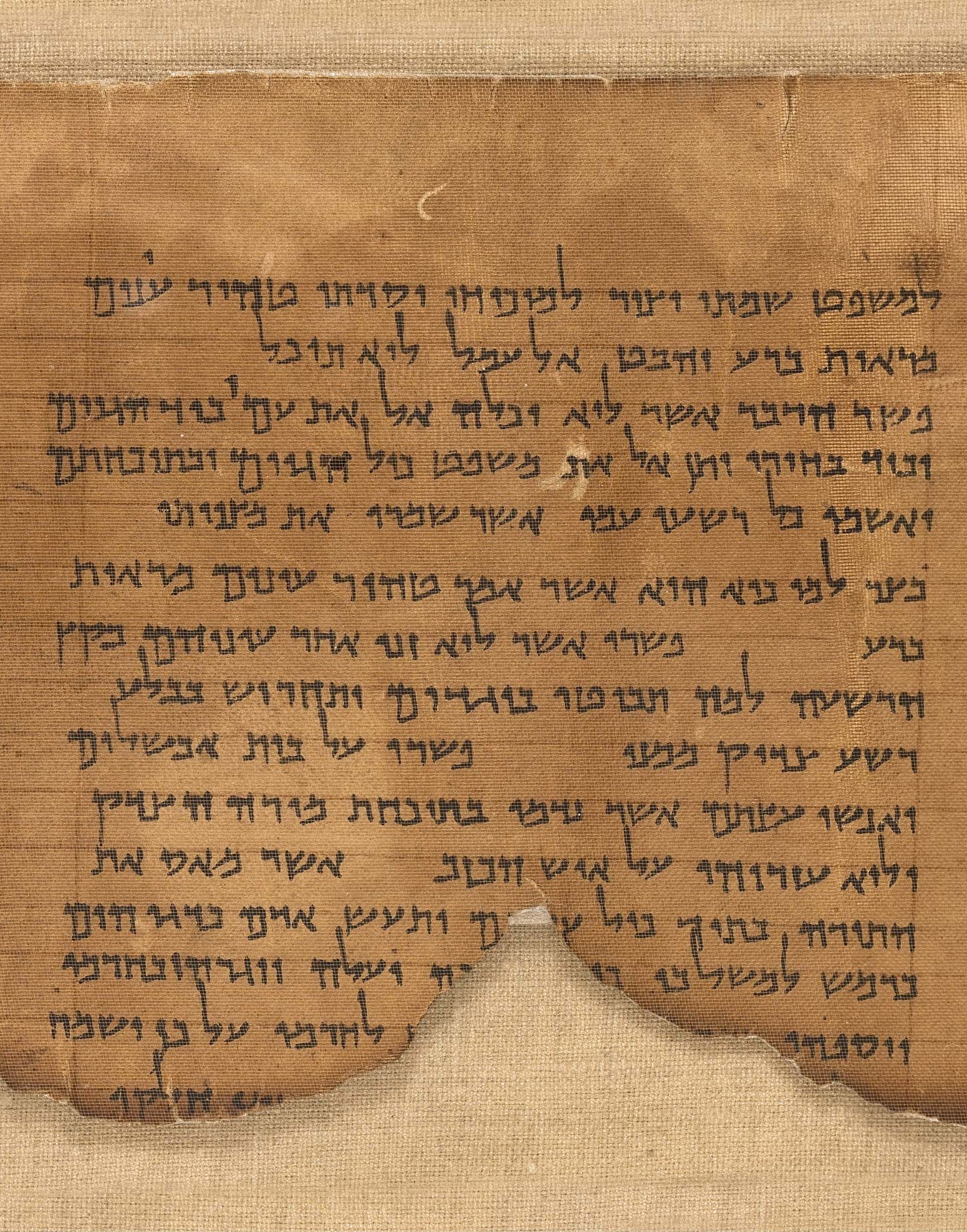
Image 1qphab-col-05.jpg (Israel Museum photograph, column V). Checked on the image: line 1 reads למשפט שמתו וצור למוכיחו יסדתו טהור עינים, line 10 ואנשי עצתם אשר נדמו בתוכחת מורה הצדק, line 11 ends אשר מאס את, line 14 ends לחרמו על כן ישמח; only parts of line 15 survive along the torn lower edge. Column and line numbers of the Hebrew come from the ETCBC/Abegg transcription; the English line numbers are the numbers Brownlee (1948) printed in his margin, each at the start of the printed line on which that line of the scroll begins (the line itself may begin after a / later in that printed line).
1למשפט שמתו וצור למוכיחו יסדתו טהור ע⟨י⟩נים
2מראות ברע והבט אל עמל לוא תוכל
3פשר הדבר אשר לוא יכלה אל את עם⟨ו⟩ ביד הגוים
4וביד בחירו יתן אל את משפט כול הגוים ובתוכחתם
5יאשמו כל רשעי עמו אשר שמרו את מצוותו
6בצר למו כיא הוא אשר אמר טהור עינים מראות
7ברע פשרו אשר לוא זנו אחר עיניהם בקץ
8הרשעה למה תביטו בוגדים ותחריש בבלע
9רשע צדיק ממנו פשרו על בית אבשלום
10ואנשי עצתם אשר נדמו בתוכחת מורה הצדק
11ולוא עזרוהו על איש הכזב אשר מאס את
12התורה בתוך כול עד̣ת̣ם ותעש אדם כדגי הים
13כרמש למשל בו כול̣[ו בח]כ̣ה יעלה ויגרהו בחרמו
14ויספהו ב̣מ̣כ̣[מרתו על כן יזב]ח̣ לחרמו על כן ישמח
15[ויגי]ל̣[ויקטר למכמרתו כיא בהם]ש̣מ̣ן̣ חלקו
16[ומאכלו ברי … פשרו על
1For judgment, hast thou appointed him;
O Rock, for his chastising hast thou ordained him.
2Too pure of eyes art thou / to look upon evil;
And to countenance wrong-doing thou art unable. /
3The meaning of the passage is that God will not destroy His people 4by the hand of the nations; / but by the hand of His elect, God will give the judgment of all the nations; and in their chastisement / 5shall suffer all the wicked from among His people who keep His 6commandments / in the time of their distress; for he of whom it 7speaks is “too pure of eyes to look / upon evil.” The meaning of this 8is that they do not lust after their eyes to the doom / of wickedness.
Why do ye countenance the treacherous and keep silence
9While / the wicked * doth swallow * one more righteous
than himself?
10Its meaning concerns the house of Absalom / and the men of their counsel who were silent at the reproof of the Teacher of 11Righteousness / and did not help him against the Man of the Lie, who 12had rejected / the Law among all peo(ple)s.
Thou hast made man as the fish of the sea, /
13As a crawling thing over which to rule.
He brings (them) all up (with a h)ook
And fishes them out with his net, /
14And gathers them (into his seine;
He sacrifices) to his net;
15Wherefore, he rejoices / (and exul)ts;
(Wherefore, he burns incense to his seine,
For thereby) his ration is (lib)eral, /
16(And his food is abundant!)
(Its meaning concerns) …
Notes
- Brownlee's translation of 1948 predates later work on the scroll; his restorations in parentheses sometimes differ from the restorations in square brackets in the Hebrew transcription.
- Footnote numbers in Brownlee's text are omitted. Each printed row of dots is shown as a single ellipsis.
Cite
Sources
- Source: Israel Museum photograph of scroll 1QpHab (Digital Dead Sea Scrolls) + ETCBC dss transcription (Abegg; CC BY-NC 4.0) + English of W. H. Brownlee, BASOR 112 (1948), public domain (holding institution)
- Critical edition: ETCBC dss Text-Fabric transcription (Abegg, Bowley, Cook)
← previous · → next · v cycle view · l back to library