Pesher Habakkuk (1QpHab), columns VI-XIII
Introduction
The Habakkuk Commentary (Pesher Habakkuk, 1QpHab) is one of the seven scrolls found in Qumran Cave 1 in 1947. It quotes the first two chapters of the book of Habakkuk a phrase at a time and explains each quotation with the word pesher ("its meaning"), applying the prophet's words to the community's own time: the Teacher of Righteousness, the Wicked Priest, the Man of the Lie, and the Kittim, a foreign power usually identified with Rome. The scroll is about 1.48 m long and is kept in the Shrine of the Book at the Israel Museum, Jerusalem (inv. 95.57/28). On the evidence of its handwriting it is usually dated to the late first century BCE.
This entry gives columns VI to XIII, the second half of the scroll (Habakkuk 1:16 to 2:20); columns I to V are in the previous entry. Column VII explains that God made known to the Teacher of Righteousness "all the mysteries of the words of His servants the prophets"; columns VIII to XII describe the Wicked Priest, his pursuit of the Teacher on the Day of Atonement and his punishment; column XIII, of four lines, ends the work, and the rest of the last sheet is ruled but left blank. Each section is one column. The Hebrew is the scroll's own text with its column and line numbers, from the transcription of Martin G. Abegg Jr. and colleagues in the ETCBC "dss" dataset. Square brackets mark letters lost from the leather and restored by the editors; a dot under a letter marks an uncertain reading; ⟨ ⟩ marks letters written above the line; an ellipsis marks lost letters that are not restored.
The English is the complete translation of the scroll by William H. Brownlee, published in December 1948. Brownlee kept the scroll's columns. In his notation a diagonal line (/) marks the start of a new line of the scroll, words in parentheses are his conjectural restorations, a row of dots (shown here as …) is a lacuna, ? marks traces of letters, # marks letters that can be read but not translated, and words between asterisks were moved across a line division. His quotations of Habakkuk are set in italics. Superscript numbers give the lines of the scroll: they stand where each line of the scroll begins in the English, at Brownlee's / marks, checked against the Hebrew line by line.
The photographs are the Israel Museum's own images of the scroll from its Digital Dead Sea Scrolls site, one image per column. The lowest lines of columns VI to XII are broken off along the torn lower edge of the scroll; the transcription restores some of them in square brackets, and Brownlee's English marks them as lacunae.
How was this verified? (Provenance)
Where on the image
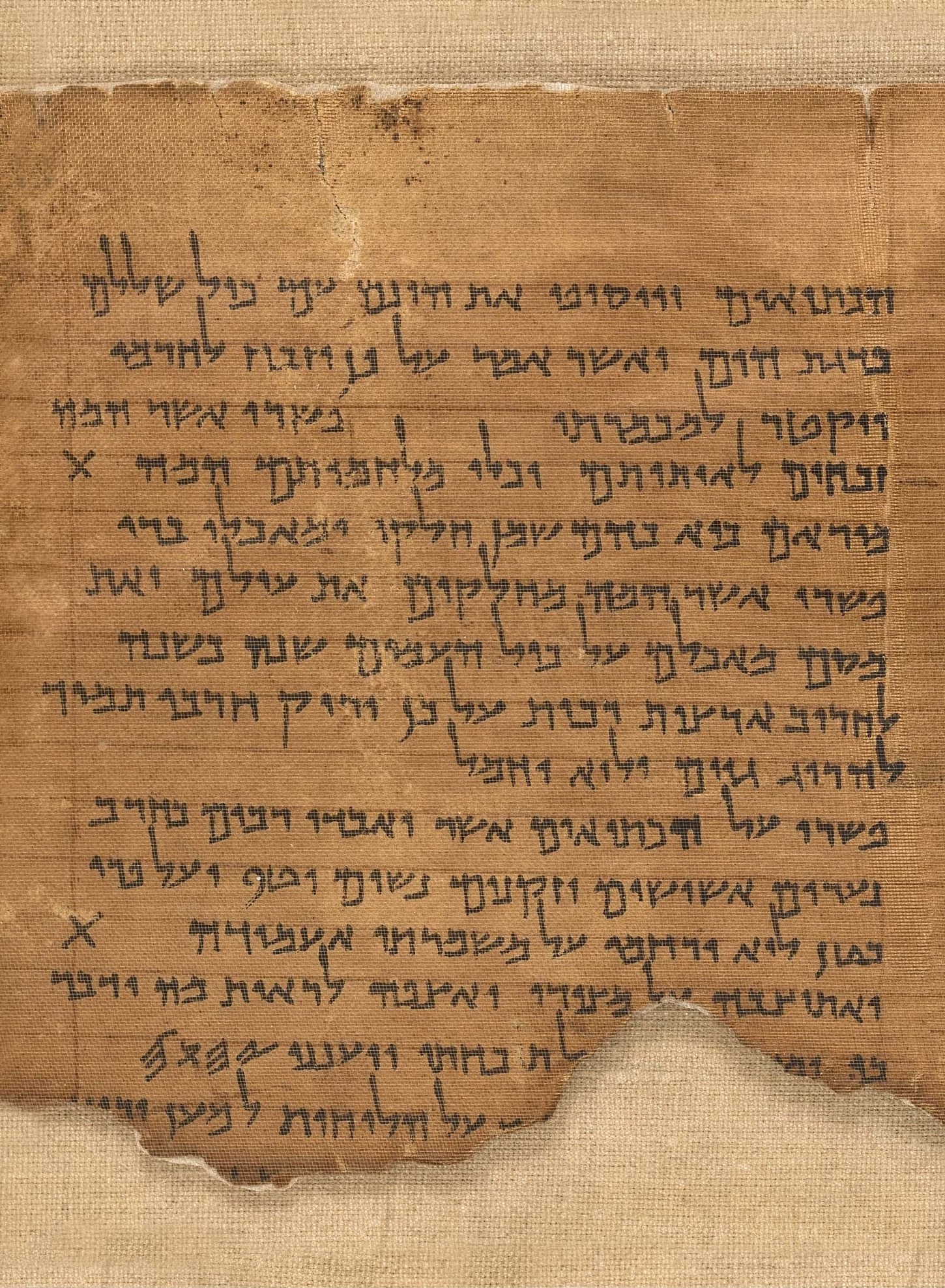
Image 1qphab-col-06.jpg (Israel Museum photograph, column VI). Checked on the image: line 1 reads הכתיאים ויוסיפו את הונם עם כול שללם, line 2 ends יזבח לחרמו, line 9 is the short line להרוג גוים ולוא יחמל, line 13 ends לראות מה ידבר, line 14 ends with the divine name written in Old Hebrew letters, line 15 ends על הלוחות למען ירוץ; of line 16 only the tops of a few letters survive at the torn lower edge (15 lines with text). Column and line numbers of the Hebrew come from the ETCBC/Abegg transcription. The English line numbers mark the point where each line of the scroll begins in Brownlee's translation, at his / marks, and were checked against the Hebrew line by line, so both texts carry the same numbers.
1הכתיאים ויוסיפו את הונם עם כול שללם
2כדגת הים ואשר אמר על כן יזבח לחרמו
3ויקטר למכמרתו פשרו אשר המה
4זבחים לאותותם וכלי מלחמותם המה
5מוראם כיא בהם שמן חלקו ומאכלו ברי
6פשרו אשר המה מחלקים את עולם ואת
7מסם מאכלם על כול העמים שנה בשנה
8לחריב ארצות רבות על כן יריק חרבו תמיד
9להרוג גוים ולוא יחמל
10פשרו על הכתיאים אשר יאבדו רבים בחרב
11נערים אשישים וזקנים נשים וטף ועל פרי
12בטן לוא ירחמו על משמרתי אעמודה
13ואתיצבה על מצורי ואצפה לראות מה ידבר
14בי ומה̣[אשיב ע]ל ת{{ו̣}}כחתי ויענני יהוה
15[ויומר כתוב חזון וב]א̣ר על הלוחות למען ירו̣ץ̣
16[הקורא בו … פשר הדב]ר̣ א̣[שר
1the Chittiim; for they gather their wealth with all their loot / 2as fish of the sea; and when it says, “Wherefore, he sacrifies to his net / 3and burns incense to his seine,” its meaning is that they / 4do sacrifice to their standards; and that their battle weapons—these are the / 5object of their reverence.
For thereby his ration is liberal,
And his food is abundant. /
6Its meaning is that they distribute their yoke and / 7their tax-burden—their “food”—upon all the peoples year by year / 8so as to empoverish many lands.
He shall therefore draw his sword continually /
9To slay nations without showing mercy! /
10Its meaning concerns the Chittiim who destroy many with the “sword”: / 11sturdy youths, also old men, women, and even children; for toward the fruit of / 12the womb they do not “show mercy.”
At my watch I stand, /
13And at my post I keep my station,
And stay alert to see what He will say / 14to me
And with what I may respond concerning my contention.
Then the Lord answers / 15(and says,
Write the vision and inscri)be it upon tablets,
That he may run / 16(who reads therefrom).
(Its meaning concerns) …
Where on the image
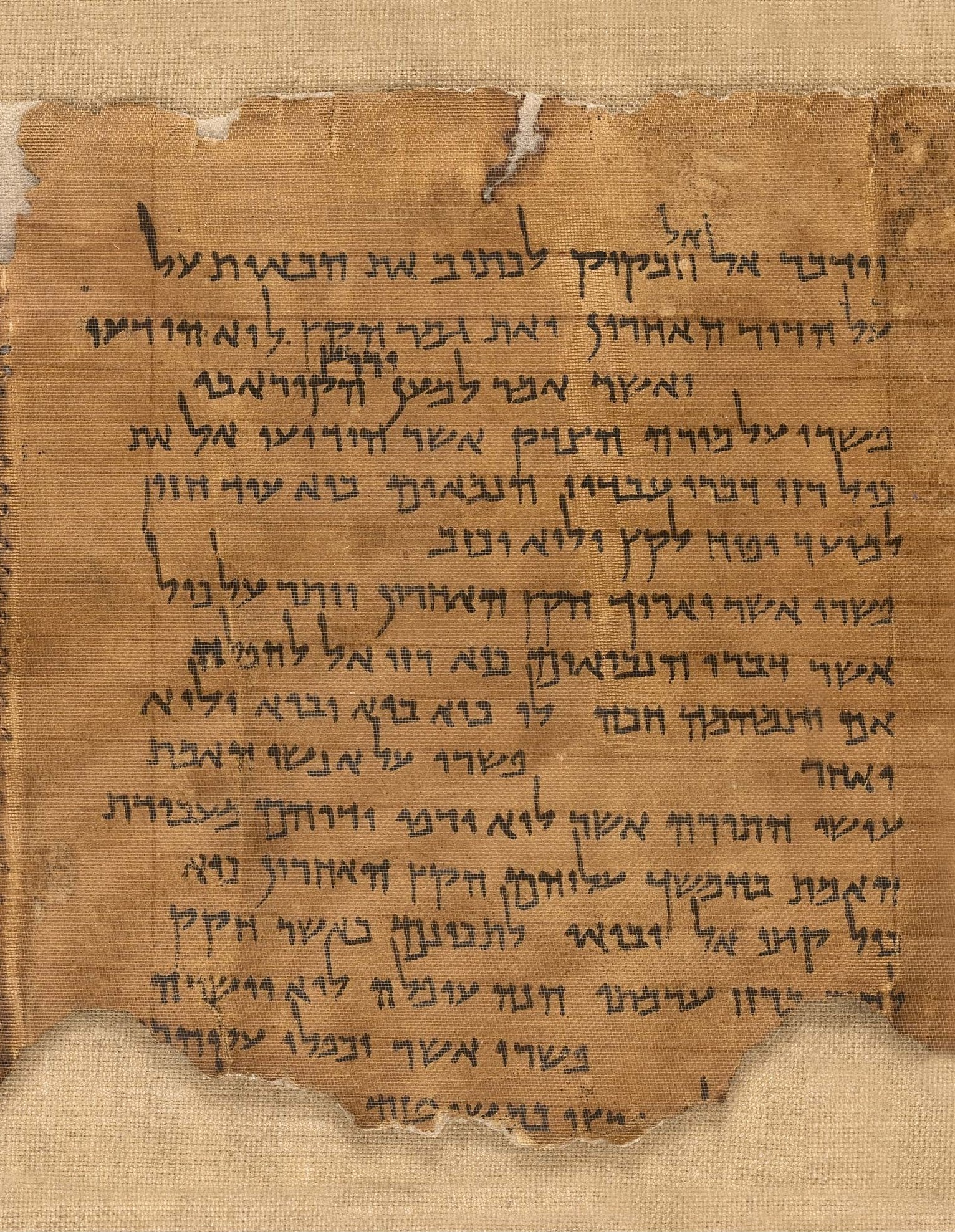
Image 1qphab-col-07.jpg (Israel Museum photograph, column VII). Checked on the image: line 1 reads וידבר אל חבקוק לכתוב את הבאות על with a second אל written above the line, line 3 ואשר אמר למען הקורא בו with ירוץ above the line, line 10 has יאחר, a blank space, then פשרו על אנשי האמת, line 14 ends הנה עופלה לוא יושרה, line 15 reads פשרו אשר יכפלו עליהם; line 16 survives in part on the torn lower edge (16 lines). Column and line numbers of the Hebrew come from the ETCBC/Abegg transcription. The English line numbers mark the point where each line of the scroll begins in Brownlee's translation, at his / marks, and were checked against the Hebrew line by line, so both texts carry the same numbers. Lines 7 and 9 start at new printed lines after quotations, with no / before them.
1וידבר אל ⟨אל⟩ חבקוק לכתוב את הבאות על
2{{על}} הדור האחרון ואת גמר הקץ לוא הודעו
3ואשר אמר למען ⟨ירוץ⟩ הקורא בו
4פשרו על מורה הצדק אשר הודיעו אל את
5כול רזי דברי עבדיו הנבאים כיא עוד חזון
6למועד יפיח לקץ ולוא יכזב
7פשרו אשר יארוך הקץ האחרון ויתר על כול
8אשר דברו הנביאים כיא רזי אל להפל{{א}}⟪ה⟫
9אם יתמהמה חכה לו כיא בוא יבוא ולוא
10יאחר פשרו על אנשי האמת
11עושי התורה אשר לוא ירפו ידיהם מעבודת
12האמת בהמשך עליהם הקץ האחרון כיא
13כול קיצי אל יבואו לתכונם כאשר חקק
14להם̣ ברזי ערמתו הנה עופלה לוא יושרה
15[נפשו בו] פשרו אשר יכפלו עליהם
16[חטאתיהם ו]ל[וא]י̣רצו במשפטם …]ל̣[…
17… וצדיק באמונתו יחיה]
1And God said to Habakkuk to write the things that were to come upon / 2upon the last generation; but the final phase of the end He did not make known to him. / 3And when it says, “That he may run who reads therefrom,” / 4its meaning concerns the Teacher of Righteousness to whom God has made known / 5all the mysteries of the words of His servants the prophets:
For the vision is still / 6for the appointed time;
It speaks of the end and does not lie.
7Its meaning is that the final end delays and is left for all / 8of which the prophets spoke; for the mysteries of God are to be marvellous.
9Though it lingers, wait for it;
For it surely comes and will not / 10be late.
Its meaning concerns the men of truth, / 11the doers of the Law, whose hands do not slack from the service of / 12the truth when for them the final end delays; for / 13all His summer fruits God will bring into their store-house, just as He decreed / 14for them through the mysteries of His wisdom.
Behold! /
15(His soul within him) * is puffed up—not made straight.*
Its meaning is that they double upon themselves / 16…?…?? ** in their judgment …
Where on the image
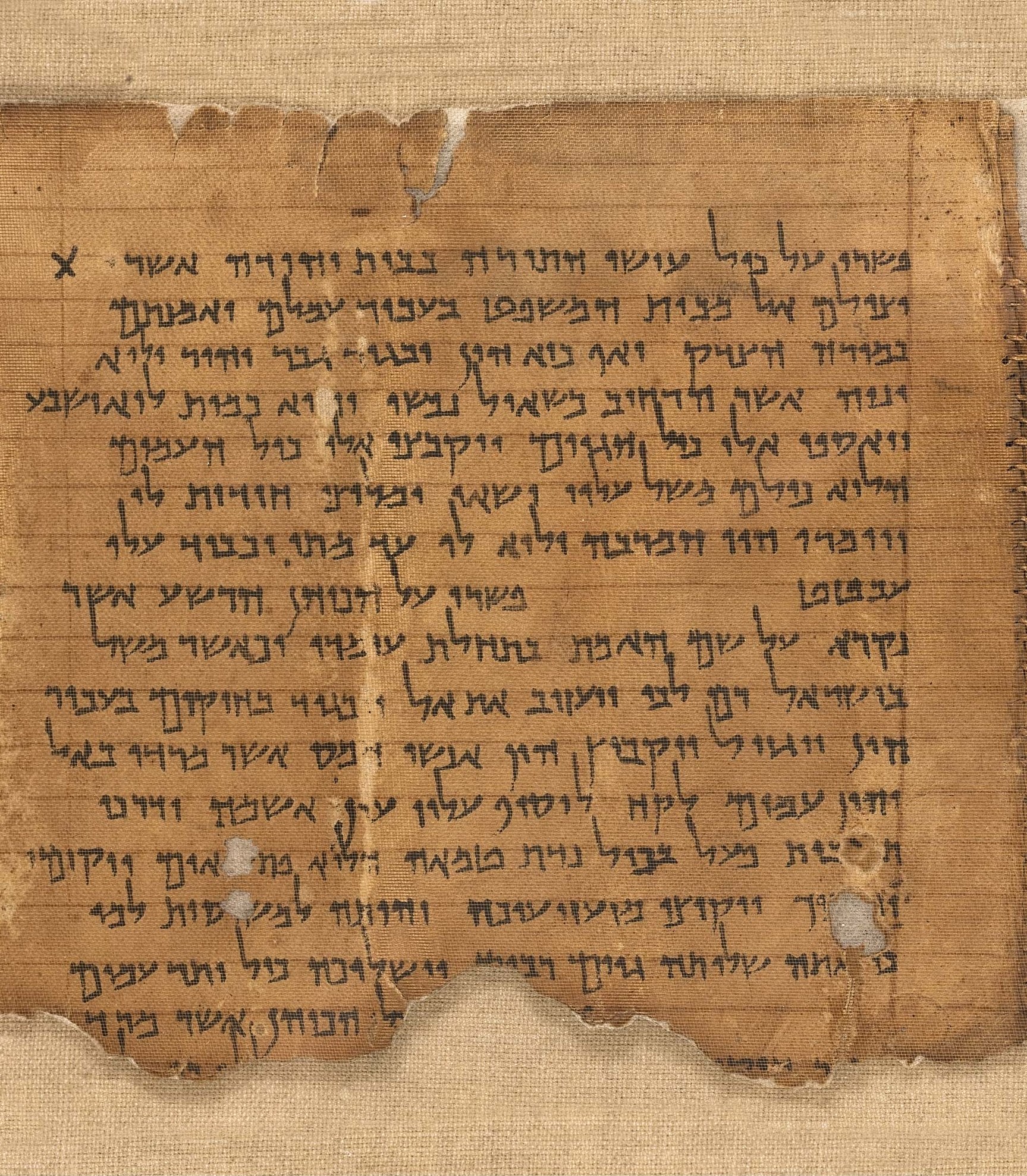
Image 1qphab-col-08.jpg (Israel Museum photograph, column VIII; the stitched seam between two sheets runs down its right edge). Checked on the image: line 1 reads פשרו על כול עושי התורה בבית יהודה אשר, line 8 begins עבטט, then a blank space and פשרו על הכוהן הרשע אשר, line 13 ends הלוא פתאום ויקומו, line 15 reads כי אתה שלותה גוים רבים וישלוכה כול יתר עמים, line 16 survives in part (הכוהן אשר מרד), and traces of line 17 remain at the torn lower edge. Column and line numbers of the Hebrew come from the ETCBC/Abegg transcription. The English line numbers mark the point where each line of the scroll begins in Brownlee's translation, at his / marks, and were checked against the Hebrew line by line, so both texts carry the same numbers.
1פשרו על כול עושי התורה בבית יהודה אשר
2יצילם אל מבית המשפט בעבור עמלם ואמנתם
3במורה הצדק ואף כיא הון יבגוד גבר יהיר ולוא
4ינוה אשר הרחיב כשאול נפשו ו[ה]וא כמות לוא ישבע
5ויאספו אלו כול הגוים ויקבצו אלו כול העמים
6הלוא כולם משל עליו ישאו ומליצי חידות לו
7ויומרו הוי המרבה ולוא לו עד מתי יכביד עלו
8עבטט פשרו על הכוהן הרשע אשר
9נקרא על שם האמת בתחלת עומדו וכאשר משל
10בישראל רם לבו ויעזוב את אל ו[י]בגוד בחוקים בעבור
11הון ויגזול ויקבוץ הון אנשי חמס אשר מרדו באל
12והון עמים לקח לוסיף עליו עון אשמה ודרכי
13ת[וע]בות פעל בכול נדת טמאה הלוא פתא̣אום ויקוםו
14{{ו}}נ̣[וש]כ̣יך ויקיצו מזעזיעיכה והיתה למשי̣סות למו
15כי אתה שלותה גוים רבים̣ וישלוכה כול יתר עמים
16פ̣[שר הדבר]ע̣ל הכוהן אשר מרד
17] […]ר חוקי̣ [אל …]ללו̣ ב̣ו̣ ל[
1Its meaning concerns all the doers of the Law in the house of Judah whom / 2God will deliver from the house of judgment for the sake of their labor and their “faith” / 3in the Teacher of Righteousness:
Yea wealth, indeed, is treacherous—
A haughty man who does not / 4rest,
Who enlargeth his desire as Sheol;
And he as death is never sated. /
5For gathered unto him are all the nations;
And amassed unto him are all the peoples. /
6Shall not they all take up a parable against him,
And the taunts of satire concerning him, /
7Saying, ‘Woe to him who amasses what is not his!
How long shall he lead himself / 8with extorted pledges?’
Its meaning concerns the wicked priest who / 9was summoned against the name of the truth in the beginning of his assumption of power; and as he ruled / 10in Israel, his heart became lofty, and he abandoned God and “moved treacherously” against the statutes for the sake of / 11“wealth.” He robbed and “amassed” “the wealth” of the men of violence who had rebelled against God! / 12He also took “the wealth” of “the peoples” so as to incur for himself the guilt of transgression; for the ways of / 13abominations he carried out with every impurity of defilement.
Shall not they suddenly arise / 14and exact from thee?
Shall not thy torturers awaken,
And thou become booty for them? /
15Since thou hast plundered many nations,
All the remnant of the peoples shall plunder thee! /
16(The meaning of the passage) concerns the priest who rebelled / 17(and transgressed) against the statutes of (God) … ?????
Where on the image
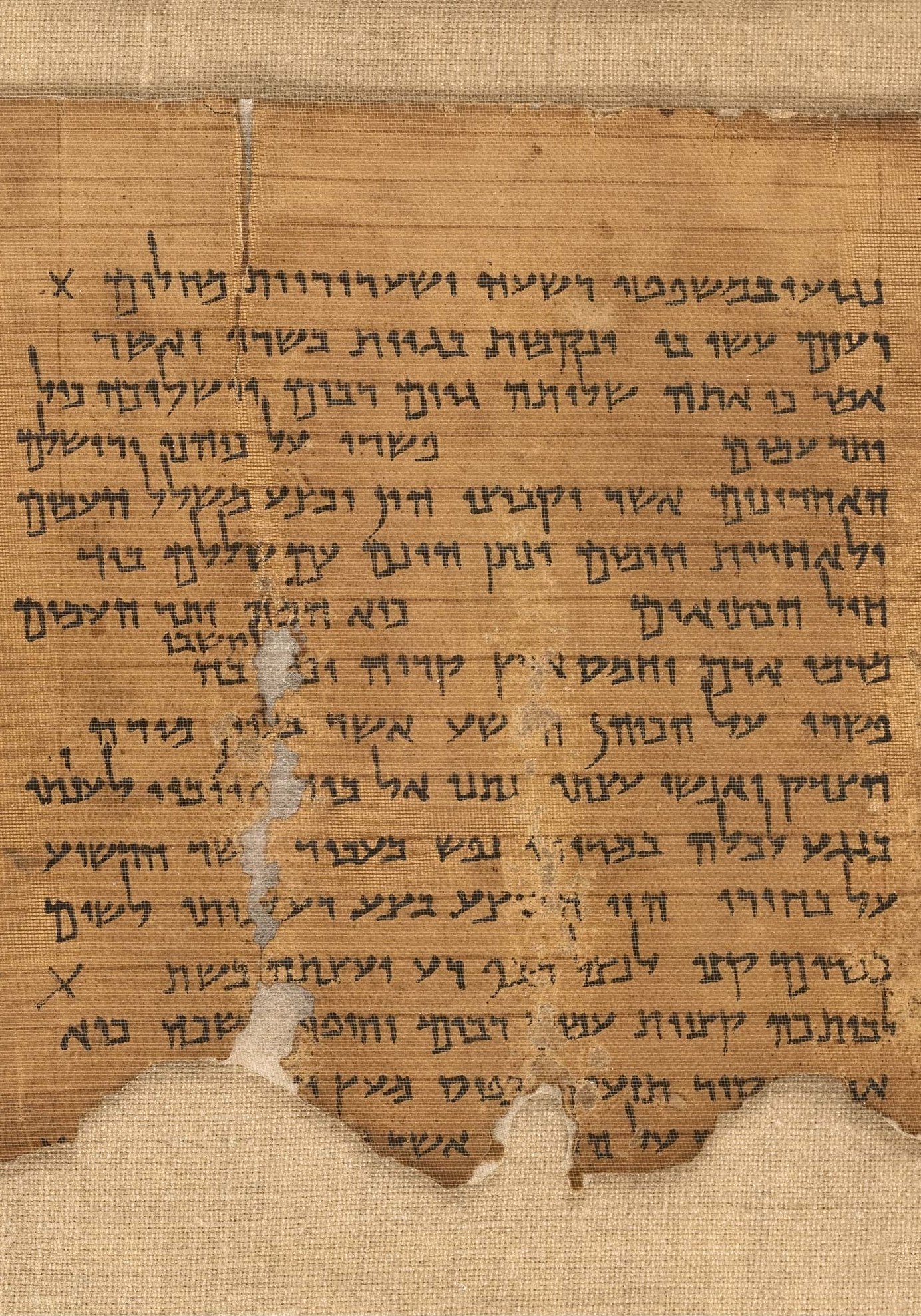
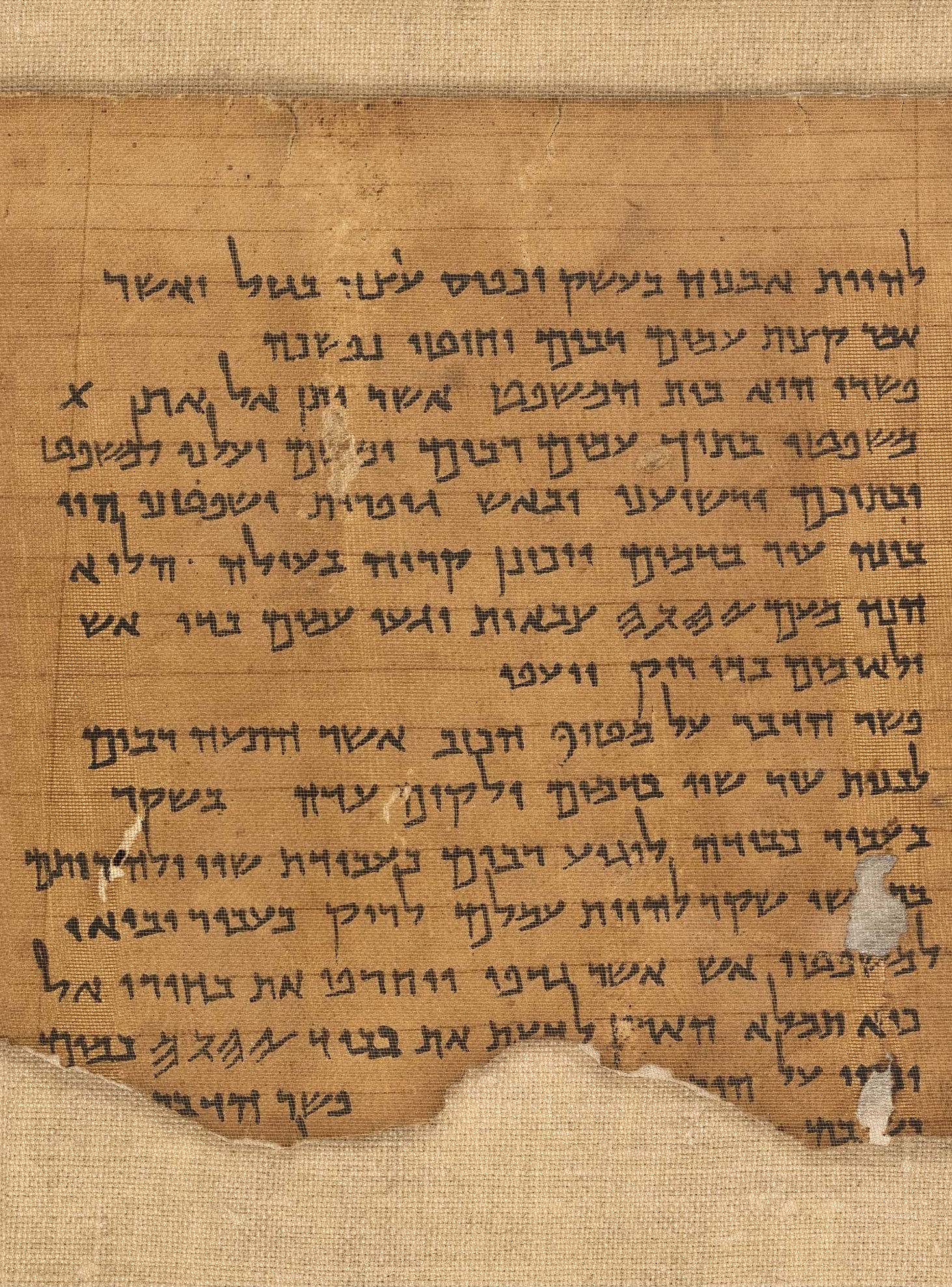
Image 1qphab-col-09.jpg (Israel Museum photograph, column IX). Checked on the image: line 1 reads נגועו במשפטי רשעה ושערוריות מחלים, line 4 יתר עמים, a blank space, פשרו על כוהני ירושלם, line 8 has יושבי written above the line, line 14 reads לביתכה קצוות עמים רבים וחוטא נפשכה כיא, line 15 begins אבן מקיר תזעק; line 16 survives in part on the torn lower edge. Column and line numbers of the Hebrew come from the ETCBC/Abegg transcription. The English line numbers mark the point where each line of the scroll begins in Brownlee's translation, at his / marks, and were checked against the Hebrew line by line, so both texts carry the same numbers.
1נגועו במשפטי רשעה שערוריות מחלים
2רעים עשו בו ונקמות בגוית בשרו ואשר
3אמר כי אתה שלותה גוים רבים וישלוכה כול
4יתר עמים פשרו על כוהני ירושלם
5האחרונים אשר יקבוצו הון ובצע משלל העמים
6ולאחרית הימים ינתן הונם עם שללם ביד
7חיל הכתיאים כיא המה יתר העמים
8מדמי אדם וחמס אר̣ץ קריה וכו̣ל̣ ⟨יושבי⟩ בה
9פשרו על הכוהן ה[ר]שע אשר בע̣וון̣ מורה
10הצדק ואנשי עצתו נתנו אל ביד[…]אויביו לענ⟨ו⟩תו
11בנגע לבלה במרורי נפש בעבור א̣שר הרשיע
12על בחירו הוי הב̣ו̣צע בצע רע ל̣ב̣יתו לשום
13ב̣מ̣רום קנו לנצל מ̣כ̣ף רע יעצתה בשת
14לביתכה קצוות עמים̣ רבים וחוט[א נפ]שכה כיא
15אב̣[ן מ]קיר תזעק̣[ו]כ̣פיס מעץ יע[ננה]
16[פשר הדב]ר̣ על ה[כוהן] אשר […]ץ̣
17…
1his smiting with the penalties of wickedness; while horrible things, diseases / 2and thirst they execute upon him, and acts of vengeance upon his body of flesh. And when / 3it says:
Since thou hast plundered many nations,
All / 4the remnant of the peoples * shall plunder thee *—
its meaning concerns the / 5latest * priests of Jerusalem * who will gather wealth and loot from the spoil of the peoples. / 6But in the last days they will give their wealth with their spoil into the hand of / 7the army of the Chittiim; for they are the “remnant of the peoples.” /
8Because of men’s blood,
And for the violence done to the land,
To the city and all that dwell therein. /
9Its meaning concerns the wi(ck)ed priest—whom, in the sight of the Teacher of / 10Righteousness and the men of his counsel, God gave into the hand of his enemies to abuse / 11with smiting that he might be consumed with bitterness of soul, because he had done evil / 12against His elect.
Alas!
For the grasper of evil gain for his (hou)se,
That he may put / 13his nest up high
To be safe from the reach of harm!
Thou hast schemed shame / 14for thy house,
To cut off so many peoples,
And hast sinned against thy (sou)l;
For / 15the st(one) cries (from) the wall,
(And) the rafter of timber ech(oes it). /
16(The meaning of the pas)sage concerns the (prie)st who ? …?
Where on the image
Image 1qphab-col-10.jpg (Israel Museum photograph, column X). Checked on the image: line 1 reads להיות אבניה בעשק וכפיס עצה בגזל ואשר, line 7 has the divine name in Old Hebrew letters before צבאות, line 8 is the short line ולאומים בדי ריק ייעפו, line 14 ends כבוד יהוה כמים (divine name in Old Hebrew letters), line 15 begins יכסו על הים; only the first word of line 16 (בשובם) survives at the right edge. Column and line numbers of the Hebrew come from the ETCBC/Abegg transcription. The English line numbers mark the point where each line of the scroll begins in Brownlee's translation, at his / marks, and were checked against the Hebrew line by line, so both texts carry the same numbers. Line 16 starts at a new printed line with no / before it.
1להיות אבניה בעשק וכפיס ע⟨י⟩צה בגזל ואשר
2אמר קצות עמים רבים וחוטי נפשכה
3פשרו הוא בית המשפט אשר יתן אל את
4משפטו בתוך עמים רבים ומשם יעלנו למשפט
5ובתוכם ירשיענו ובאש גופרית ישפטנו הוי
6בונה עיר בדמים ויכונן קריה בעולה הלוא
7הנה מעם יהוה צבאות יגעו עמים בדי אש
8ולאומים בדי ריק ייעפו
9פשר הדבר על מטיף הכזב אשר התעה רבים
10לבנות עיר שוו בדמים ולקים עדה בשקר
11בעבור כבודה לוגיע רבים בעבודת שוו ולהרותם
12במ̣[ע]שי שקר להיות עמלם לריק בעבור יבואו
13למשפטי אש אשר גדפו ויחרפו את בחירי אל
14כיא תמלא הארץ̣ לדעת את כבוד יהוה כמים
15יכסו על הים̣[… פשר הדבר [אשר]
16ב̣שו̣בם […]ל[…
17…
1that its stones should be laid through oppression, and its “rafter of timber” through robbery: And when / 2it says,
To cut off so many peoples,
Thou dost sin against thy soul— /
3it means thus: It is the house of judgment whose / 4judgment * God will give * among “so many peoples”; for from there He will bring it up for judgment, / 5and in their midst He will convict it—, judging it with a fire of brimstone!
Alas! /
6For him who builds a city through bloodshed
And founds a town through wrong-doing!
Can it be, / 7indeed, from the Lord of Hosts
That the peoples exert themselves for the fire, /
8And the nations weary themselves to no avail? /
9The meaning of the passage concerns the Oracle of Lies who misled many / 10into building through bloodshed his city of vanity, and into raising up a court through oppression, / 11for the sake of his glory to compel many to engage in his labor of vanity and to instruct them / 12in w(or)ks of falsehood that their labor might be to no avail and that they might enter / 13the judgment of fire because they have cursed and insulted the elect of God. /
14For the earth shall be filled
With the knowledge of the glory of the Lord,
As the waters / 15cover the sea!
The meaning of the passage (concerns) … 16when they re(pe)nt from … ? …
Where on the image
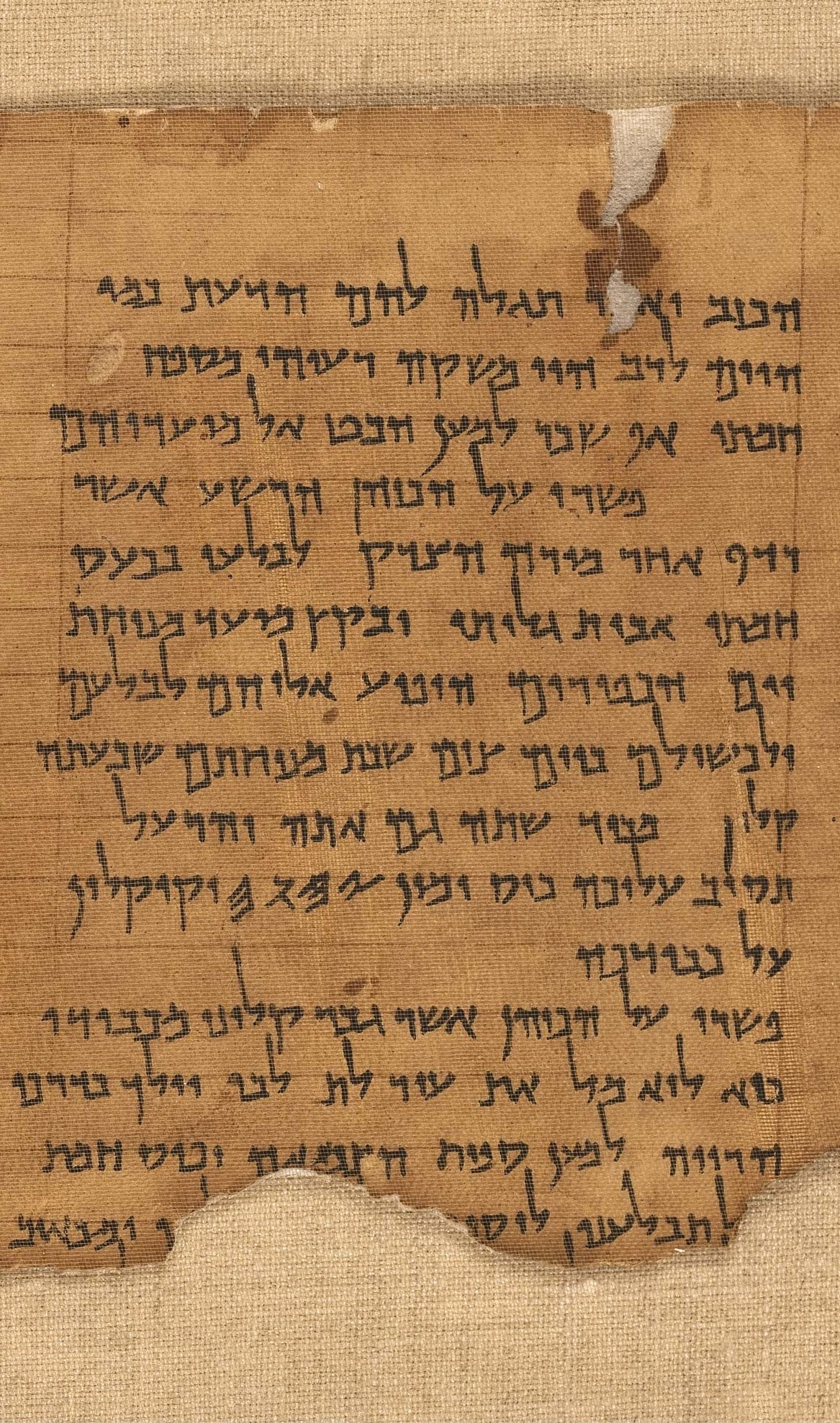
Image 1qphab-col-11.jpg (Israel Museum photograph, column XI). Checked on the image: line 1 reads הכזב ואחר תגלה להם הדעת כמי, line 4 is the short line פשרו על הכוהן הרשע אשר, line 7 begins יום הכפורים, line 11 is על כבודכה alone, line 14 reads הרויה למען ספות הצמאה וכוס חמת, line 15 begins אל תבלענו on the torn lower edge (15 lines with text). Column and line numbers of the Hebrew come from the ETCBC/Abegg transcription. The English line numbers mark the point where each line of the scroll begins in Brownlee's translation, at his / marks, and were checked against the Hebrew line by line, so both texts carry the same numbers.
1הכזב ואחר תגלה להם הדעת כמי
2היים לרב הוי משקה רעיהו מספח
3חמתו אף שכר למען הבט אל מועדיהם
4פשרו על הכוהן הרשע אשר
5רדף אחר מורה הצדק לבלעו בכעס
6חמתו אבית גלותו ובקץ מועד מנוחת
7יום הכפורים הופיע אליהם לבלעם
8ולכשילם ביום צום שבת מנוחתם שבעתה
9קלון מבוד שתה גם אתה והרעל
10תסוב עליכה כוס ימין יהוה וקיקלון
11על כבודכה
12פשרו על הכוהן אשר גבר קלונו מכבודו
13כיא לוא מל את עורלת לבו וילך בדרכי
14הרויה למען ספות הצמאה וכוס חמת
15[א]ל תבלענו לוסיף̣[ע]ל[יו את ק]ל[ו]נ̣ו ומכאוב
16…]ל[…]ל[…]ל[…
17… כיא חמס לבנון יכסכה ושוד בהמות]
1the Lie. And afterward “the knowledge” will be revealed to them as “the waters” of / 2“the sea” for abundance.
Woe to him that gives drink to his neighbor
Venting / 3his wrath to make him drunk too,
So as to gaze upon their festivals! /
4Its meaning concerns the wicked priest who / 5persecuted the Teacher of Righteousness in order to swallow him up in the vexation of / 6“his wrath,” intending him to go into exile. So at the end of the “festival,” on the resting of / 7the Day of Atonement, he appeared in splendor unto them for the purpose of swallowing them up / 8and that they might stumble on that fast day, the sabbath of their resting:
Thou art sated / 9with shame instead of glory;
Drink, thou too, and reel! /
10The cup of the Lord’s right hand comes round to thee,
That shame may be / 11upon thy glory! /
12Its meaning concerns the priest whose “shame” exceeded his “glory”; / 13for he did not circumcise the uncircumcision of his heart; but he walked in the ways of / 14hard drinking—only to add to his thirst! And the “cup” of the wrath of / 15(Go)d will swallow him up, to fur(ther upon him) his (sha)me; and causing pain / 16…?…?…?…
Where on the image
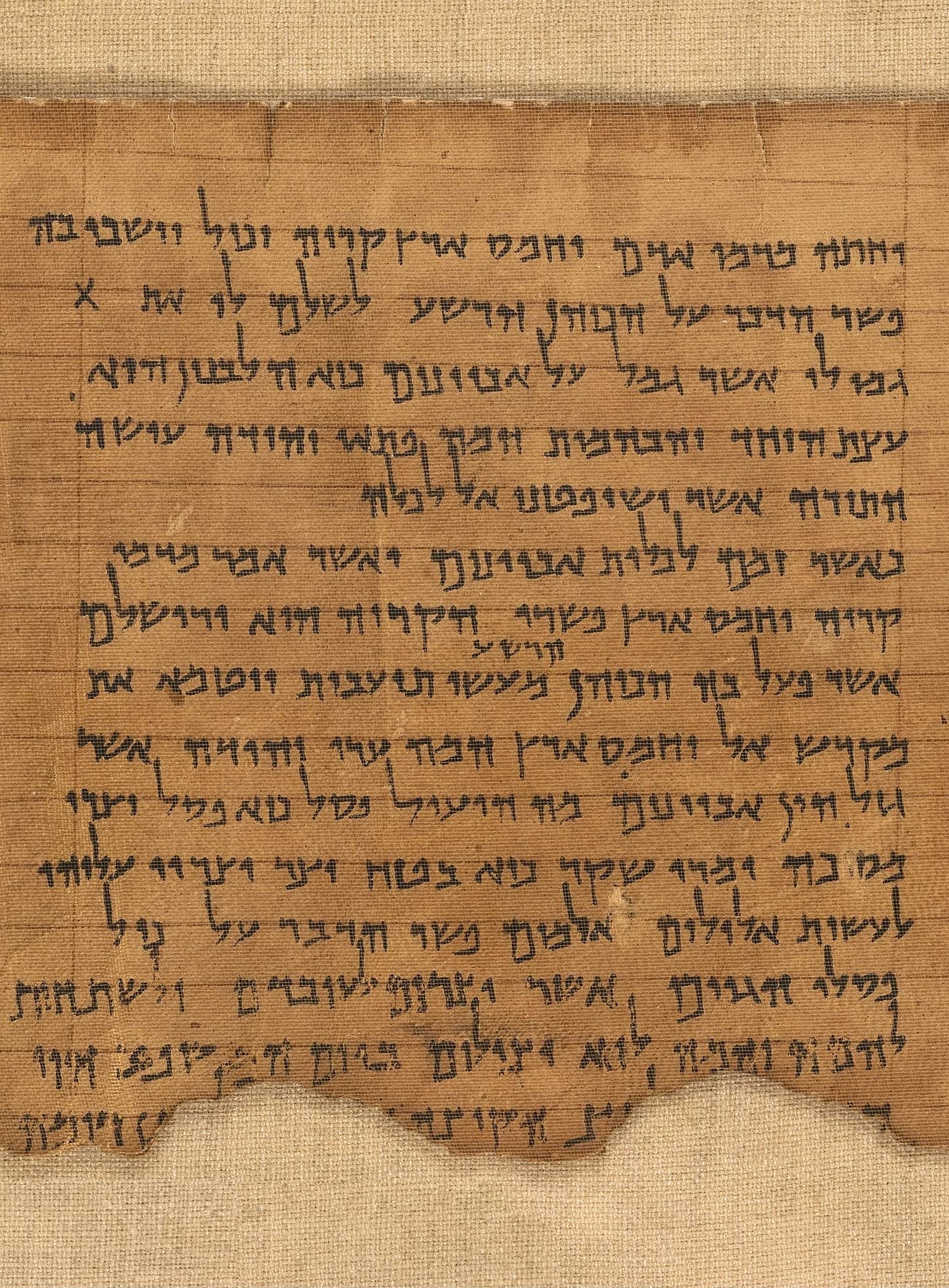
Image 1qphab-col-12.jpg (Israel Museum photograph, column XII). Checked on the image: line 1 reads יחתה מדמי אדם וחמס ארץ קריה וכול יושבי בה, line 5 is the short line התורה אשר ישופטנו אל לכלה, line 8 has הרשע written above the line, line 14 reads להםה והמה לוא יצילום ביום המשפט הוי, line 15 survives in part on the torn lower edge (15 lines with text). Column and line numbers of the Hebrew come from the ETCBC/Abegg transcription. The English line numbers mark the point where each line of the scroll begins in Brownlee's translation, at his / marks, and were checked against the Hebrew line by line, so both texts carry the same numbers. Line 11 has no / in Brownlee; its number is placed at “A molten image”, the rendering of מס[י]כה, the first word of line 11.
1יחתה מדמי אדם וחמס ארץ קריה וכול יושבי בה
2פשר הדבר על הכוהן הרשע לשלם לו את
3גמולו אשר גמל על אביונים כיא הלבנון הוא
4עצת היחד והבהמות המה פתאי יהודה עושה
5התורה אשר ישופטנו אל לכלה
6כאשר זמם לכלות אביונים ואשר אמר מדמי
7קריה וחמס ארץ פשרו הקריה היא ירושלם
8אשר פעל בה הכוהן ⟨הרשע⟩ מעשי תועבות ויטמא את
9מקדש אל וחמס ארץ המה ערי יהודה אשר
10גזל הון אביונים מה הועיל פסל כיא פסל יצרו
11מס[י]כה ומרי שקר כיא בטח יצר יצריו עליהו
12לעשות אלילים אלמים פשר הדבר על כול
13פסלי הגוים אשר יצרום לעובדם ולשתחות
14להםה והמה לוא יצילום ביום המשפט הוי
15ה[אומר ל]ע̣צ הקיצה [עורי לא]ב̣ן דומה
16[הוא יורה הנה הוא תפוש זהב וכסף]
17[וכול רוח אין בקרבו ויהוה בהיכל קודשו]
(The spoil of the beasts) / 1he seized.
Because of the blood of men,
And violence to the land,
To the city and all that dwell therein /
2The meaning of the passage concerns the wicked priest to recompense to him / 3the ill-treatment with which he ill-treated the poor; for “Lebanon,” it is / 4counsel of the community, and “the beasts,” they are the simple ones of Judah, the doers of / 5the Law—this priest shall God condemn to destruction / 6in as much as he plotted to destroy the poor. When it says, “Because of the blood / 7of the city, and violence to the land” its meaning is: “The city”—it is Jerusalem / 8wherein the wicked priest wrought works of abomination and defiled / 9the sanctuary of God; and “violence to the land,”—they are the cities of Judah which / 10robbed the wealth of the poor.
What profits a graven image,
When its maker has carved?
11A molten image and bitterness of falsehood,
When the fashioner of his images trusts therein /
12To make worthless dumb idols?
The meaning of the passage concerns all / 13the idols of the nations which they fashion so that they may worship them and bow down / 14to them; but they will not deliver them on the Day of Judgment!
Alas! /
15(For him who saith) to wood, “Awaken”;
To the lofty stone, “Arise!”
Where on the image
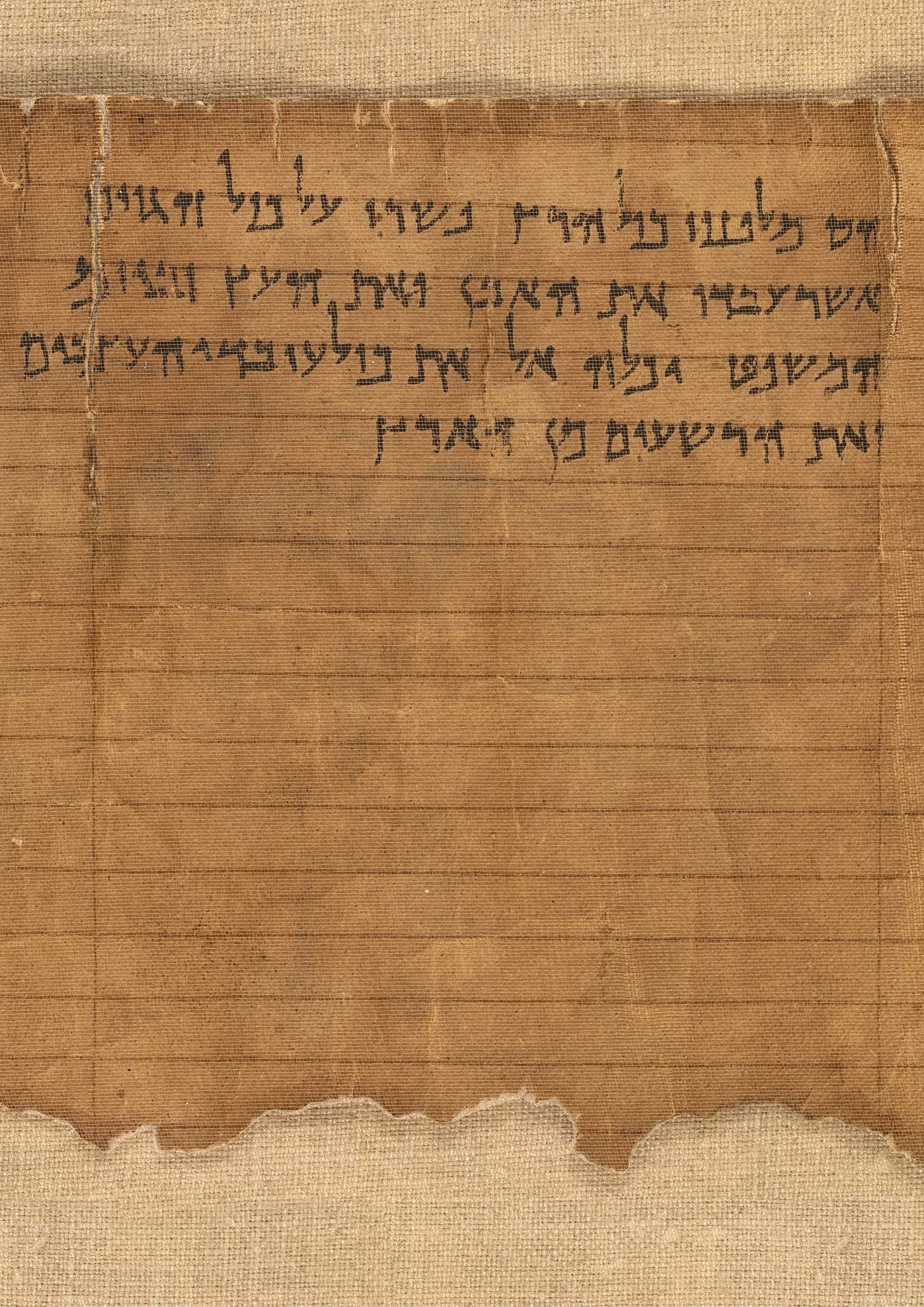
Image 1qphab-col-13.jpg (Israel Museum photograph, column XIII, the last column). Checked on the image: the column has four lines, the rest of the sheet is ruled but blank: line 1 reads הס מלפניו כול הרץ, a blank space, פשרו על כול הגוים, line 4 reads ואת הרשעים מן הארץ. Column and line numbers of the Hebrew come from the ETCBC/Abegg transcription. The English line numbers mark the point where each line of the scroll begins in Brownlee's translation, at his / marks, and were checked against the Hebrew line by line, so both texts carry the same numbers. Brownlee's / after “all the earth!” does not mark a line of the scroll (line 1 continues with פשרו על כול הגוים); line 2 begins after the / following “nations”.
1הס מלפניו כול הרץ פשרו על כול הגוים
2אשר עבדו את האבן ואת העץ וביומ
3המשפט יכלה אל את כול עובדי העצבים
4ואת הרשעים מן הארץ
1Keep silence before him, all the earth! /
Its meaning concerns all the nations / 2who worship “stone” and “wood.” For on the day of / 3judgment, God will destroy in the sea all the worshippers of “wood”; / 4and from off the earth, the wicked! /
Notes
- Brownlee's translation of 1948 predates later work on the scroll; his restorations in parentheses sometimes differ from the restorations in square brackets in the Hebrew transcription.
- Footnote numbers in Brownlee's text are omitted. Each printed row of dots is shown as a single ellipsis.
- In column XII Brownlee's "(The spoil of the beasts) /" before line 1 renders words he restored at the foot of column XI; line 1 of column XII begins at "he seized".
Cite
Sources
- Source: Israel Museum photograph of scroll 1QpHab (Digital Dead Sea Scrolls) + ETCBC dss transcription (Abegg; CC BY-NC 4.0) + English of W. H. Brownlee, BASOR 112 (1948), public domain (holding institution)
- Critical edition: ETCBC dss Text-Fabric transcription (Abegg, Bowley, Cook)
← previous · → next · v cycle view · l back to library