Rigveda 1.100: To Indra
Introduction
Rigveda 1.100 is a hymn of 19 verses addressed to Indra. It stands in book (maṇḍala) 1, a collection of hymns by many families of poets. The Rigveda is the oldest collection of Sanskrit hymns, composed in the second half of the second millennium BCE and handed down orally for many centuries before it was written down.
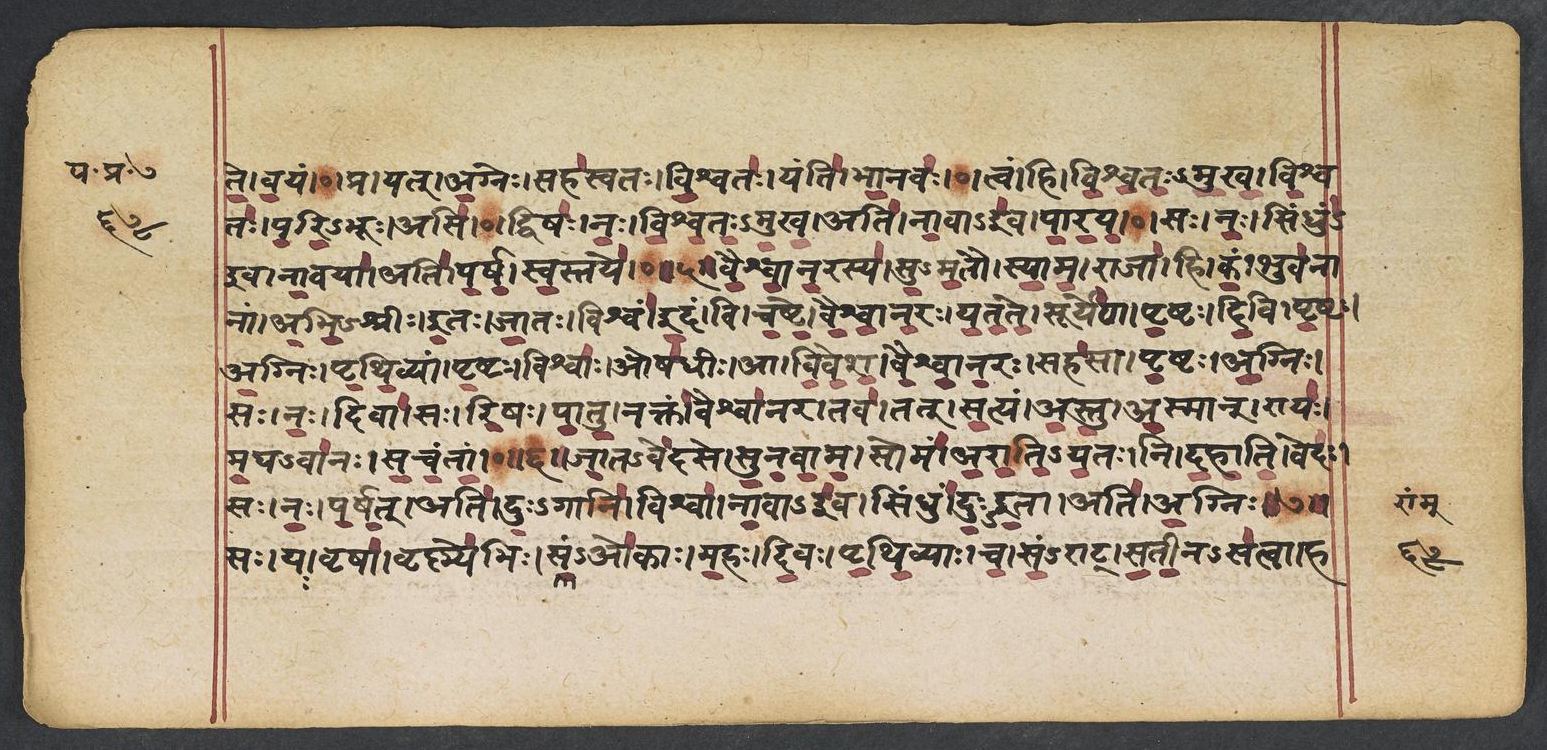
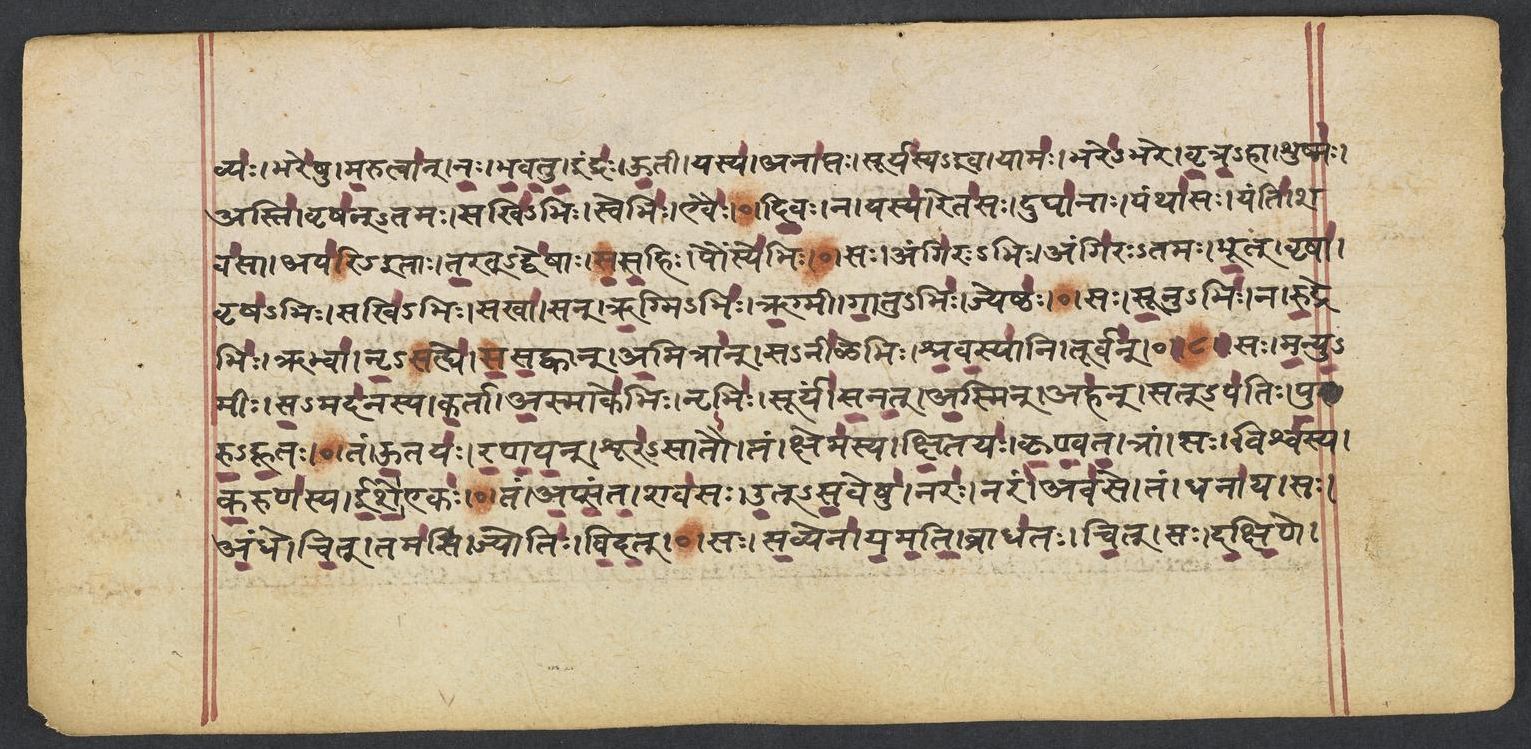
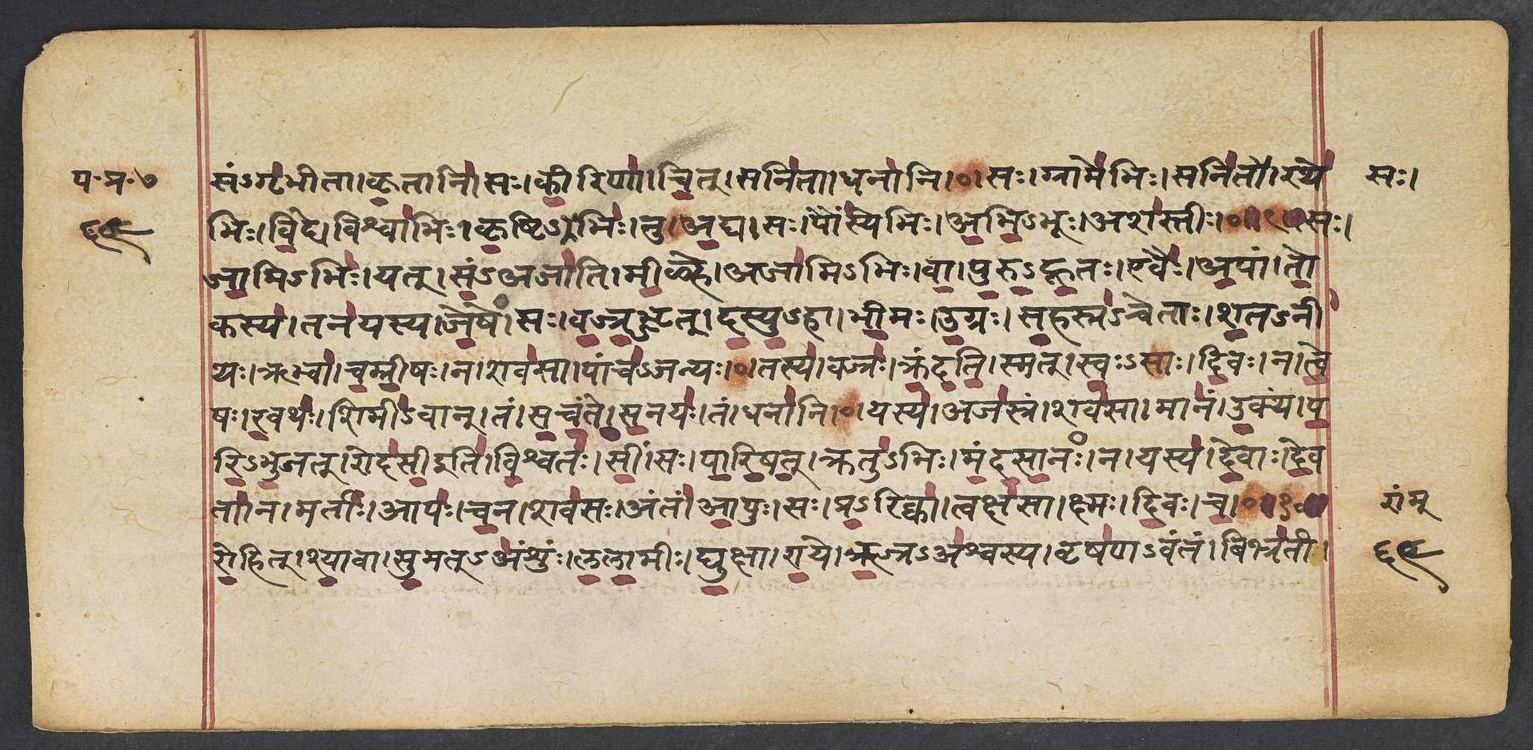
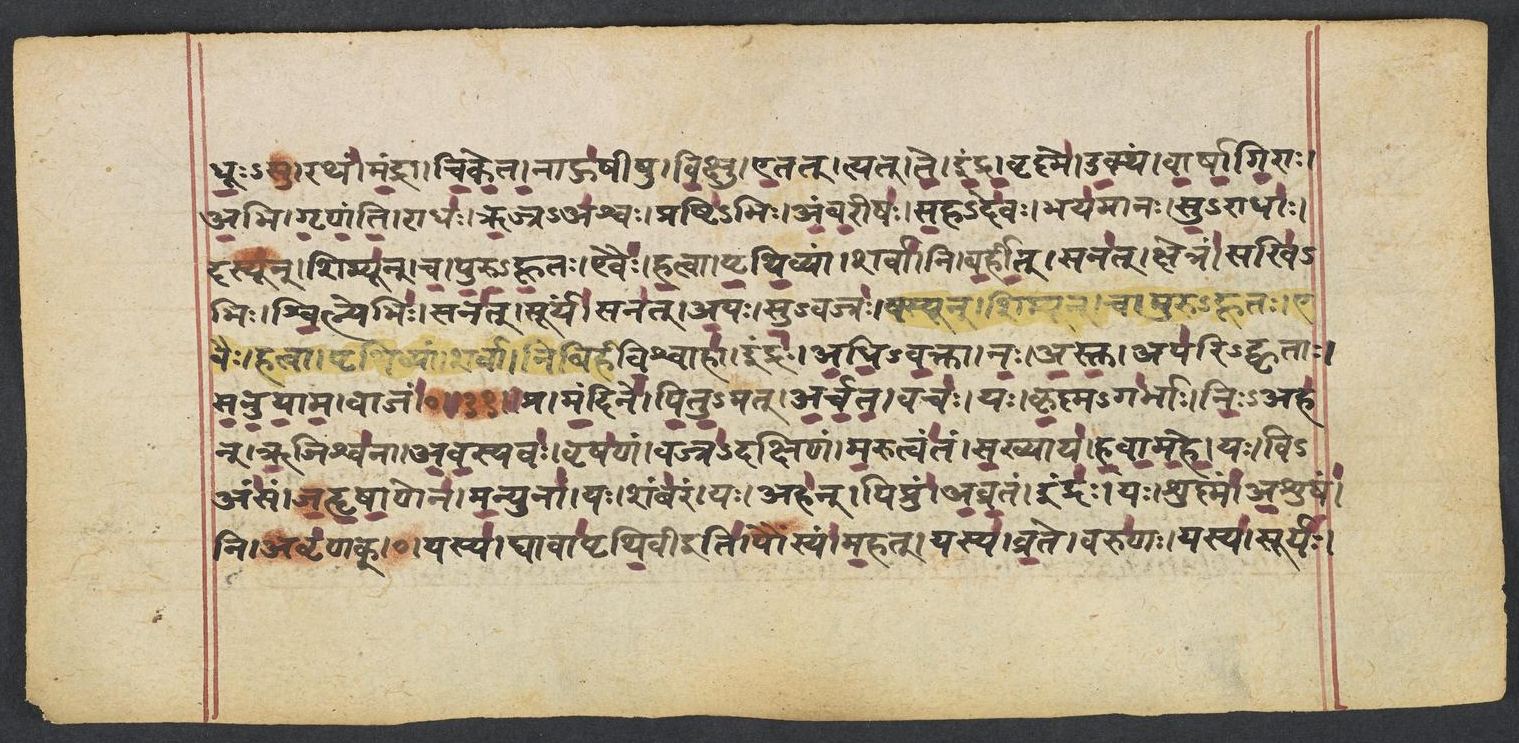
The manuscript shown is Penn Ms. Coll. 390 Item 41 (University of Pennsylvania), an undated paper manuscript of the padapāṭha (the word-by-word recitation text, in which every word is written separately and compounds are split) of the whole Ṛgveda in Devanāgarī, 884 leaves in fascicles, 7-9 lines to the page, accents in red; this hymn stands on fol. 68v-70r. Each section below gives the verses that end on one page; the page boundaries were read on the images (the opening words of every page), not counted out. Where the manuscript is a padapāṭha (the word-by-word recitation text), the section shows Aufrecht's continuous (saṃhitā) text first and, as the edition text, the padapāṭha of the same verses, which is the form written on the page.
How was this verified? (Provenance)
Where on the image
Penn Ms. Coll. 390 Item 41, fol. 69r (OPenn image 70, lower leaf). Checked on the image: the Rigveda text on this page begins in RV 1.100.1 ‹-havyaḥ bhareṣu marutvān naḥ›. The next page with Rigveda text, fol. 69v, begins in RV 1.100.9 ‹sam-gṛbhītā kṛtāni saḥ kīriṇā›. Verses 1.100.1-8 end on this page; 1.100.1 begins on fol. 68v.
1sa yo vṛṣā̱ vṛṣṇye̍bhi̱ḥ samo̍kā ma̱ho di̱vaḥ pṛ̍thi̱vyāś ca̍ sa̱mrāṭ | sa̱tī̱nasa̍tvā̱ havyo̱ bhare̍ṣu ma̱rutvā̍n no bhava̱tv indra̍ ū̱tī ||
2yasyānā̍pta̱ḥ sūrya̍syeva̱ yāmo̱ bhare̍-bhare vṛtra̱hā śuṣmo̱ asti̍ | vṛṣa̍ntama̱ḥ sakhi̍bhi̱ḥ svebhi̱r evai̍r ma̱rutvā̍n no bhava̱tv indra̍ ū̱tī ||
3di̱vo na yasya̱ reta̍so̱ dughā̍nā̱ḥ panthā̍so̱ yanti̱ śava̱sāpa̍rītāḥ | ta̱raddve̍ṣāḥ sāsa̱hiḥ pauṁsye̍bhir ma̱rutvā̍n no bhava̱tv indra̍ ū̱tī ||
4so aṅgi̍robhi̱r aṅgi̍rastamo bhū̱d vṛṣā̱ vṛṣa̍bhi̱ḥ sakhi̍bhi̱ḥ sakhā̱ san | ṛ̱gmibhi̍r ṛ̱gmī gā̱tubhi̱r jyeṣṭho̍ ma̱rutvā̍n no bhava̱tv indra̍ ū̱tī ||
5sa sū̱nubhi̱r na ru̱drebhi̱r ṛbhvā̍ nṛ̱ṣāhye̍ sāsa̱hvām̐ a̱mitrā̍n | sanī̍ḻebhiḥ śrava̱syā̍ni̱ tūrva̍n ma̱rutvā̍n no bhava̱tv indra̍ ū̱tī ||
6sa ma̍nyu̱mīḥ sa̱mada̍nasya ka̱rtāsmāke̍bhi̱r nṛbhi̱ḥ sūrya̍ṁ sanat | a̱sminn aha̱n satpa̍tiḥ puruhū̱to ma̱rutvā̍n no bhava̱tv indra̍ ū̱tī ||
7tam ū̱tayo̍ raṇaya̱ñ chūra̍sātau̱ taṁ kṣema̍sya kṣi̱taya̍ḥ kṛṇvata̱ trām | sa viśva̍sya ka̱ruṇa̍syeśa̱ eko̍ ma̱rutvā̍n no bhava̱tv indra̍ ū̱tī ||
8tam a̍psanta̱ śava̍sa utsa̱veṣu̱ naro̱ nara̱m ava̍se̱ taṁ dhanā̍ya | so a̱ndhe ci̱t tama̍si̱ jyoti̍r vidan ma̱rutvā̍n no bhava̱tv indra̍ ū̱tī ||
Compare: Padapāṭha (word-by-word text written in the manuscript; Sansknet e-text via GRETIL)
1saḥ | yaḥ | vṛṣā | vṛṣṇyebhiḥ | sam-okāḥ | mahaḥ | divaḥ | pṛthivyāḥ | ca | sam-rāṭ | satīna-satvā | havyaḥ | bhareṣu | marutvān | naḥ | bhavatu | indraḥ | ūtī
2yasya | anāptaḥ | sūryasya-iva | yāmaḥ | bhare--bhare | vṛtra-hā | śuṣmaḥ | asti | vṛṣan-tamaḥ | sakhi-bhiḥ | svebhiḥ | evaiḥ | marutvān | naḥ | bhavatu | indraḥ | ūtī
3divaḥ | na | yasya | retasaḥ | dughānāḥ | panthāsaḥ | yanti | śavasā | apari-itāḥ | tarat-dveṣāḥ | sasahiḥ | paiṃsyebhiḥ | marutvān | naḥ | bhavatu | indraḥ | ūtī
4saḥ | aṅgiraḥ-bhiḥ | aṅgiraḥ-tamaḥ | bhūt | vṛṣā | vṛṣa-bhiḥ | sakhi-bhiḥ | sakhā | san | ṛgmi-bhiḥ | ṛgmī | gātu-bhiḥ | jyeṣṭhaḥ | marutvān | naḥ | bhavatu | indraḥ | ūtī
5saḥ | sūnu-bhiḥ | na | rudrebhiḥ | ṛbhvā | nṛ-sahye | sasahvān | amitrān | sa-nīḷebhiḥ | śravasyāni | tūrvan | marutvān | naḥ | bhavatu | indraḥ | ūtī
6saḥ | manyu-mīḥ | sa-madanasya | kartā | asmākebhiḥ | nṛ-bhiḥ | sūryam | sanat | asmi n | ahan | sat-patiḥ | puru-hūtaḥ | marutvān | naḥ | bhavatu | indraḥ | ūtī
7tam | ūtayaḥ | raṇayat | śūra-sātau | tam | kṣemasya | kṣitayaḥ | kṛṇvata | trām | saḥ | viśvasya | karuṇasy a | īśe | ekaḥ | marutvān | naḥ | bhavatu | indraḥ | ūtī
8tam | apsanta | śavasaḥ | ut-saveṣu | naraḥ | naram | avase | tam | dhanāya | saḥ | andhe | cit | tamasi | jyotiḥ | vidat | marutvān | naḥ | bhavatu | indraḥ | ūtī
1MAY he who hath his home with strength, the Mighty, the King supreme of earth and spacious heaven, Lord of true power, to he invoked in battles,– may Indra, girt by Maruts, be our succour.
2Whose way is unattainable like Sûrya's: he in each fight is the strong Vr̥itra-slayer, Mightiest with his Friends in his own courses. May Indra, girt by Maruts, be our succour.
3Whose paths go forth in their great might resistless, forthmilking, as it were, heaven's genial moisture. With manly strength triumphant, foe-subduer,– may Indra, girt by Maruts, be our succour.
4Among Angirases he was the chiefest, a Friend with friends, mighty amid the mighty. Praiser mid praisers, honoured most of singers. May Indra, girt by Maruts, be our succour.
5Strong with the Rudras as with his own children, in manly battle conquering his foemen ' With his close comrades doing deeds of glory,– may Indra, girt by Maruts, be our succour.
6Humbler of pride, exciter of the conflict, the Lord of heroes, God invoked of many, May he this day gain with our men the sunlight. May Indra, girt by Maruts, be oursuccour.
7His help hath made him cheerer in the battle, the folk have made him guardian of their comfort. Sole Lord is he of every holy service. May Indra, girt by Maruts, be our succour.
8To him the Hero, on high days of prowess, heroes for help and booty shall betake them. He hath found light even in the blinding darkness. May Indra, girt by Maruts, be our succour.
Where on the image
Penn Ms. Coll. 390 Item 41, fol. 69v (OPenn image 71, upper leaf). Checked on the image: the Rigveda text on this page begins in RV 1.100.9 ‹sam-gṛbhītā kṛtāni saḥ kīriṇā›. The next page with Rigveda text, fol. 70r, begins in RV 1.100.16 ‹dhūḥ-su ratham mandrā ciketa›. Verses 1.100.9-15 end on this page; 1.100.9 begins on fol. 69r.
9sa sa̱vyena̍ yamati̱ vrādha̍taś ci̱t sa da̍kṣi̱ṇe saṁgṛ̍bhītā kṛ̱tāni̍ | sa kī̱riṇā̍ ci̱t sani̍tā̱ dhanā̍ni ma̱rutvā̍n no bhava̱tv indra̍ ū̱tī ||
10sa grāme̍bhi̱ḥ sani̍tā̱ sa rathe̍bhir vi̱de viśvā̍bhiḥ kṛ̱ṣṭibhi̱r nv a1̱̍dya | sa pauṁsye̍bhir abhi̱bhūr aśa̍stīr ma̱rutvā̍n no bhava̱tv indra̍ ū̱tī ||
11sa jā̱mibhi̱r yat sa̱majā̍ti mī̱ḻhe 'jā̍mibhir vā puruhū̱ta evai̍ḥ | a̱pāṁ to̱kasya̱ tana̍yasya je̱ṣe ma̱rutvā̍n no bhava̱tv indra̍ ū̱tī ||
12sa va̍jra̱bhṛd da̍syu̱hā bhī̱ma u̱graḥ sa̱hasra̍cetāḥ śa̱tanī̍tha̱ ṛbhvā̍ | ca̱mrī̱ṣo na śava̍sā̱ pāñca̍janyo ma̱rutvā̍n no bhava̱tv indra̍ ū̱tī ||
13tasya̱ vajra̍ḥ krandati̱ smat sva̱rṣā di̱vo na tve̱ṣo ra̱vatha̱ḥ śimī̍vān | taṁ sa̍cante sa̱naya̱s taṁ dhanā̍ni ma̱rutvā̍n no bhava̱tv indra̍ ū̱tī ||
14yasyāja̍sra̱ṁ śava̍sā̱ māna̍m u̱ktham pa̍ribhu̱jad roda̍sī vi̱śvata̍ḥ sīm | sa pā̍riṣa̱t kratu̍bhir mandasā̱no ma̱rutvā̍n no bhava̱tv indra̍ ū̱tī ||
15na yasya̍ de̱vā de̱vatā̱ na martā̱ āpa̍ś ca̱na śava̍so̱ anta̍m ā̱puḥ | sa pra̱rikvā̱ tvakṣa̍sā̱ kṣmo di̱vaś ca̍ ma̱rutvā̍n no bhava̱tv indra̍ ū̱tī ||
Compare: Padapāṭha (word-by-word text written in the manuscript; Sansknet e-text via GRETIL)
9saḥ | savyena | yamati | vrādhataḥ | cit | saḥ | dakṣiṇe | sam-gṛbhītā | kṛtāni | saḥ | kīriṇā | cit | sanitā | dhanāni | marutvān | naḥ | bhavatu | indraḥ | ūtī
10saḥ | grāmebhiḥ | sanitā | saḥ | rathebhiḥ | vide | viśvābhiḥ | kṛṣti-bhiḥ | nu | adya | saḥ | paiṃsyebhiḥ | abhi-bhūḥ | aśastīḥ | marutvān | naḥ | bhavatu | indraḥ | ūtī
11saḥ | jāmi-bhiḥ | yat | sam-ajāti | mīḷhe | ajāmi-bhiḥ | vā | puru-hūtaḥ | evaiḥ | apām | tokasya | tanayasya | jeṣe | marutvān | naḥ | bhavatu | indraḥ | ūtī
12saḥ | vajra-bhṛt | dasyu-hā | bhīmaḥ | ugraḥ | sahasra-cetāḥ | śata-nīthaḥ | ṛbhvā | camrīṣaḥ | na | śavasā | pāñca-janyaḥ | marutvān | naḥ | bhavatu | indraḥ | ūtī
13tasya | vajraḥ | krandati | smat | svaḥ-sāḥ | divaḥ | na | tveṣaḥ | ravathaḥ | śimī-vān | tam | sacante | sanayaḥ | tam | dhanāni | marutvān | naḥ | bhavatu | indraḥ | ūtī
14yasya | ajasram | śavasā | mānam | uktham | pari-bhujat | rodasī iti | viśvataḥ | sīm | saḥ | pāriṣat | kratu-bhiḥ | mandasānaḥ | marutvān | naḥ | bhavatu | indraḥ | ūtī
15na | yasya | devāḥ | devatā | na | martā | āpaḥ | cana | śavasaḥ | antam | āpuḥ | saḥ | pra-rikvā | tvakṣasā | kṣmaḥ | divaḥ | ca | marutvān | naḥ | bhavatu | indraḥ | ūtī
9He with his left hand checketh even the mighty, and with his righthand gathereth up the booty. Even with the humble he acquireth riches. May Indra, girt by Maruts, be our succour.
10With hosts on foot and cars he winneth treasures: well is he known this day by all the people. With manly might he conquereth those who hate him. May Indra, girt by Maruts, be our succour.
11When in his ways with kinsmen or with strangers he speedeth to the fight, invoked of many, For gain of waters, and of sons and grandsons, may Indra, girt by Maruts, be our succour.
12Awful and fierce, fiend-slayer, thunder-wielder, with boundless knowledge, hymned by hundreds, mighty, In strength like Soma, guard of the Five Peoples, may Indra, girt by Maruts, be our succour.
13Winning the light, hitherward roars his thunder like the terrific mighty voice of Heaven. Rich gifts and treasures evermore attend him. May Indra, girt by Maruts, be our succour.
14Whose home eternal through his strength surrounds him on every side, his laud, the earth and heaven, May he, delighted with our service, save us. May Indra, girt by Maruts, be our succour.
15The limit of whose power not Gods by Godhead, nor mortal men have reached, nor yet the Waters. Both Earth and Heaven in vigour he surpasseth. May Indra, girt by Maruts, he our succour.
Where on the image
Penn Ms. Coll. 390 Item 41, fol. 70r (OPenn image 71, lower leaf). Checked on the image: the Rigveda text on this page begins in RV 1.100.16 ‹dhūḥ-su ratham mandrā ciketa›. The next page with Rigveda text, fol. 70v, begins in RV 1.101.3 ‹yasya indrasya sindhavaḥ saścati›. Verses 1.100.16-19 end on this page; 1.100.16 begins on fol. 69v.
16ro̱hic chyā̱vā su̱mada̍ṁśur lalā̱mīr dyu̱kṣā rā̱ya ṛ̱jrāśva̍sya | vṛṣa̍ṇvanta̱m bibhra̍tī dhū̱rṣu ratha̍m ma̱ndrā ci̍keta̱ nāhu̍ṣīṣu vi̱kṣu ||
17e̱tat tyat ta̍ indra̱ vṛṣṇa̍ u̱kthaṁ vā̍rṣāgi̱rā a̱bhi gṛ̍ṇanti̱ rādha̍ḥ | ṛ̱jrāśva̱ḥ praṣṭi̍bhir amba̱rīṣa̍ḥ sa̱hade̍vo̱ bhaya̍mānaḥ su̱rādhā̍ḥ ||
18dasyū̱ñ chimyū̍m̐ś ca puruhū̱ta evai̍r ha̱tvā pṛ̍thi̱vyāṁ śarvā̱ ni ba̍rhīt | sana̱t kṣetra̱ṁ sakhi̍bhiḥ śvi̱tnyebhi̱ḥ sana̱t sūrya̱ṁ sana̍d a̱paḥ su̱vajra̍ḥ ||
19vi̱śvāhendro̍ adhiva̱ktā no̍ a̱stv apa̍rihvṛtāḥ sanuyāma̱ vāja̍m | tan no̍ mi̱tro varu̍ṇo māmahantā̱m adi̍ti̱ḥ sindhu̍ḥ pṛthi̱vī u̱ta dyauḥ ||
Compare: Padapāṭha (word-by-word text written in the manuscript; Sansknet e-text via GRETIL)
16rohit | śyāvā | sumat-aṃśuḥ | lalāmīḥ | dyukṣā | rāye | ṛjra-aśvasya | vṛṣaṇ-vantam | bibhratī | dhūḥ-su | ratham | mandrā | ciketa | nāhuṣīṣu | vikṣu
17etat | tyat | te | indra | vṛṣṇe | uktham | vārṣāgirāḥ | abhi | gṛṇanti | rādhaḥ | ṛjra-aśvaḥ | praṣṭi-bhiḥ | ambarīṣaḥ | saha-devaḥ | bhayamānaḥ | su-rādhāḥ
18dasyūn | śimyūn | ca | puru-hūtaḥ | evaiḥ | hatvā | pṛthivyām | śarvā | ni | barhīt | sanat | kṣetram | sakhi-bhiḥ | śvitnyebhiḥ | sanat | sūryam | sanat | apaḥ | su-vajraḥ
19viśvāhā | indraḥ | adhi-vaktā | naḥ | astu | apari-hvṛtāḥ | sanuyāma | vājam | tat | naḥ | mitraḥ | varuṇaḥ | mamahantām | aditiḥ | sindhuḥ | pṛthivī | uta | dyauḥ
16The red and tawny mare, blaze-marked, high standing, celestial who, to bring R̥ijrâṣva riches, Drew at the pole the chariot yoked with stallions, joyous, among the hosts of men was noted.
17The Vârshâgiras unto thee, O Indra, the Mighty One, sing forth this laud to please thee, R̥ijrâṣva with his fellows, Ambarîsha, Surâdhâs, Sahadeva, Bhayamâna.
18He, much invoked, hath slain Dasyus and Ṣimyus, after his wont, and laid them low with arrows. The mighty Thunderer with his fair-complexioned friends won the land, the sunlight, and the waters.
19May Indra evermore be our protector, and unimperilled may we win the booty. This prayer of ours may Varuṇa grant, and Mitra, and Aditi and Sindhu, Earth and Heaven.
Notes
- Sanskrit: Aufrecht's edition (1877) with the Vedic accents, as entered by van Nooten and Holland (GRETIL).
- English: Ralph T. H. Griffith, The Hymns of the Rigveda (1889-1892; 2nd ed. 1896-1897), from the VedaWeb digital text; OCR slips in that text were corrected against the printed 2nd edition (data/sources/rigveda/griffith_errata.json).
- Padapāṭha (edition text): Sansknet e-text via GRETIL (CC BY-NC-SA 4.0).
Cite
Sources
- Source: Penn Ms. Coll. 390 Item 41 (undated (catalogued with Penn's 18th-19th c. Vedic manuscripts)), OPenn, Public Domain Mark + Aufrecht's accented text (GRETIL) + Griffith's English (VedaWeb) (holding institution)
- Critical edition: Aufrecht (1877), accented e-text via GRETIL
← previous · → next · v cycle view · l back to library