Rigveda 1.101: To Indra
Introduction
Rigveda 1.101 is a hymn of 11 verses addressed to Indra. It stands in book (maṇḍala) 1, a collection of hymns by many families of poets. The Rigveda is the oldest collection of Sanskrit hymns, composed in the second half of the second millennium BCE and handed down orally for many centuries before it was written down.
The manuscript shown is Penn Ms. Coll. 390 Item 41 (University of Pennsylvania), an undated paper manuscript of the padapāṭha (the word-by-word recitation text, in which every word is written separately and compounds are split) of the whole Ṛgveda in Devanāgarī, 884 leaves in fascicles, 7-9 lines to the page, accents in red; this hymn stands on fol. 70r-71r. Each section below gives the verses that end on one page; the page boundaries were read on the images (the opening words of every page), not counted out. Where the manuscript is a padapāṭha (the word-by-word recitation text), the section shows Aufrecht's continuous (saṃhitā) text first and, as the edition text, the padapāṭha of the same verses, which is the form written on the page.
How was this verified? (Provenance)
Where on the image
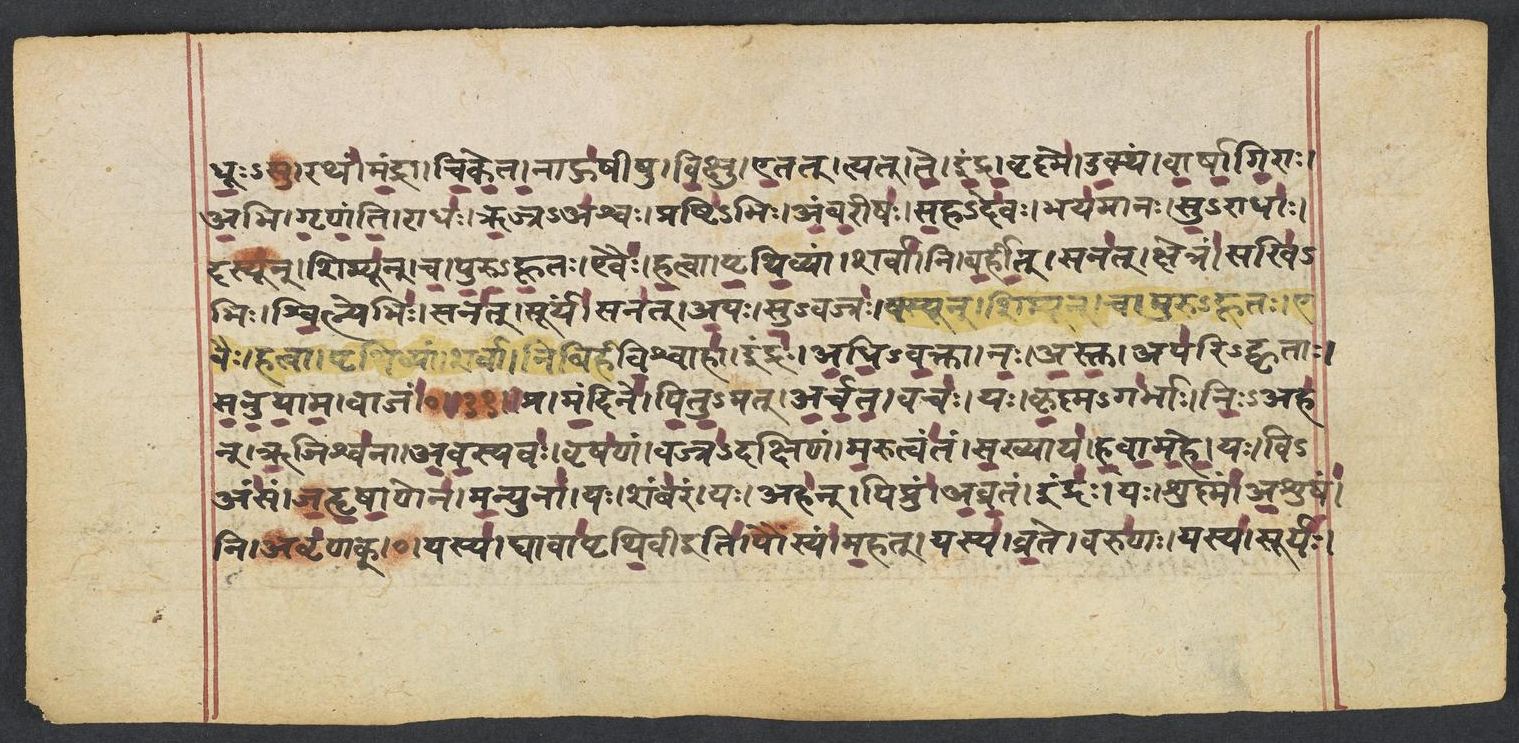
Penn Ms. Coll. 390 Item 41, fol. 70r (OPenn image 71, lower leaf). Checked on the image: the Rigveda text on this page begins in RV 1.100.16 ‹dhūḥ-su ratham mandrā ciketa›. The next page with Rigveda text, fol. 70v, begins in RV 1.101.3 ‹yasya indrasya sindhavaḥ saścati›. Verses 1.101.1-2 end on this page.
1pra ma̱ndine̍ pitu̱mad a̍rcatā̱ vaco̱ yaḥ kṛ̱ṣṇaga̍rbhā ni̱raha̍nn ṛ̱jiśva̍nā | a̱va̱syavo̱ vṛṣa̍ṇa̱ṁ vajra̍dakṣiṇam ma̱rutva̍ntaṁ sa̱khyāya̍ havāmahe ||
2yo vya̍ṁsaṁ jāhṛṣā̱ṇena̍ ma̱nyunā̱ yaḥ śamba̍ra̱ṁ yo aha̱n pipru̍m avra̱tam | indro̱ yaḥ śuṣṇa̍m a̱śuṣa̱ṁ ny āvṛ̍ṇaṅ ma̱rutva̍ntaṁ sa̱khyāya̍ havāmahe ||
Compare: Padapāṭha (word-by-word text written in the manuscript; Sansknet e-text via GRETIL)
1pra | mandine | pitu-mat | arcata | vacaḥ | yaḥ | kṛṣṇa-garbhāḥ | niḥ-ahan | ṛjiśvanā | avasyavaḥ | vṛṣaṇam | vajra-dakṣiṇam | marutvantam | sakhyāya | havāmahe
2yaḥ | vi-aṃsam | jahṛṣāṇena | manyunā | yaḥ | śambaram | yaḥ | ahan | piprum | avratam | indraḥ | yaḥ | śuṣṇam | aśuṣam | ni | avṛṇak | marutvantam | sakhyāya | havāmahe
1SING, with oblation, praise to him who maketh glad, who with R̥ijiṣvan drove the dusky brood away. Fain for help, him the strong whose right hand wields the bolt, him girt by Maruts we invoke to be our Friend.
2Indra, who with triumphant wrath smote Vyansa down, and Ṣambara, and Pipru the unrighteous one; Who extirpated Ṣushṇa the insatiate, him girt by Maruts we invoke to be our Friend.
Where on the image
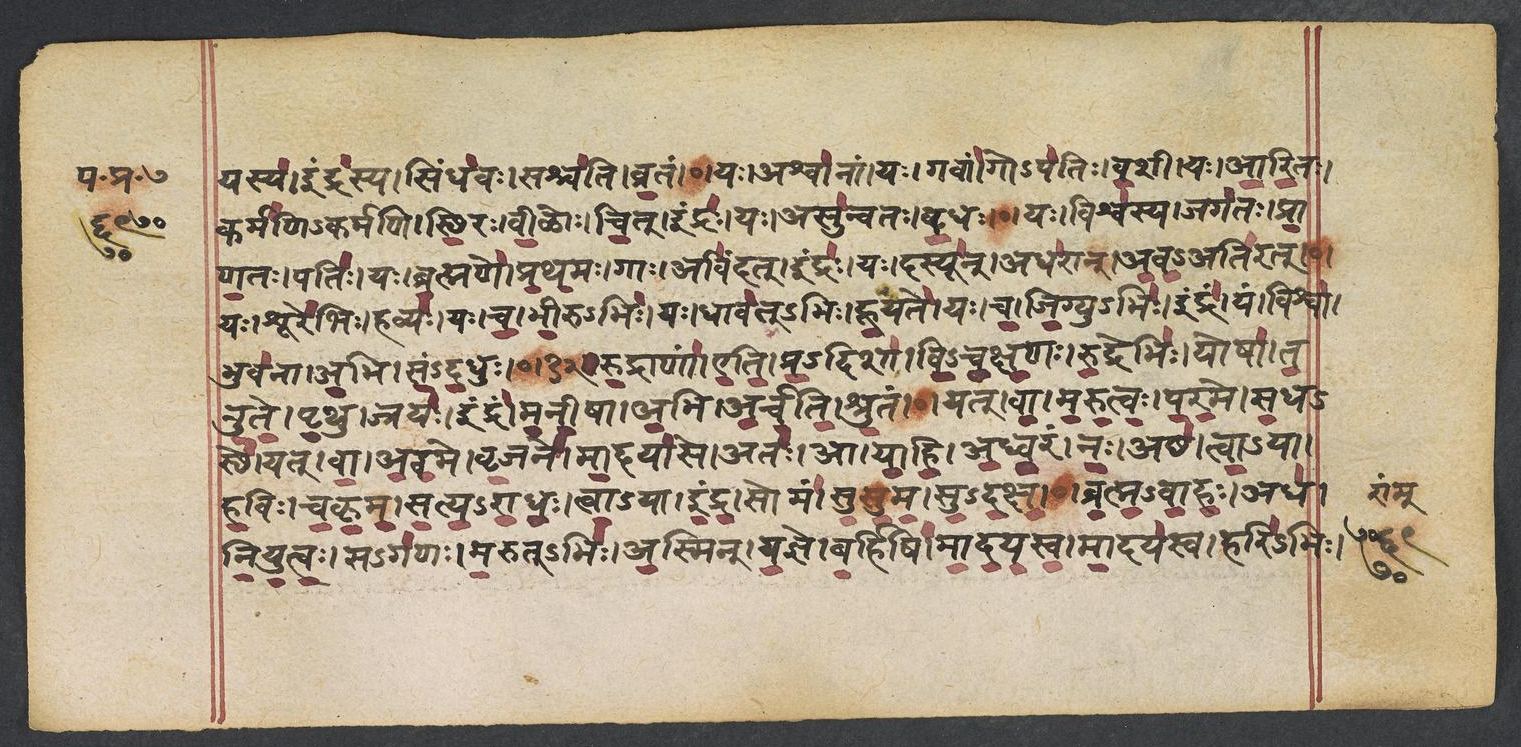
Penn Ms. Coll. 390 Item 41, fol. 70v (OPenn image 72, upper leaf). Checked on the image: the Rigveda text on this page begins in RV 1.101.3 ‹yasya indrasya sindhavaḥ saścati›. The next page with Rigveda text, fol. 71r, begins in RV 1.101.10 ‹ye te indra vi›. Verses 1.101.3-9 end on this page; 1.101.3 begins on fol. 70r.
3yasya̱ dyāvā̍pṛthi̱vī pauṁsya̍m ma̱had yasya̍ vra̱te varu̍ṇo̱ yasya̱ sūrya̍ḥ | yasyendra̍sya̱ sindha̍va̱ḥ saśca̍ti vra̱tam ma̱rutva̍ntaṁ sa̱khyāya̍ havāmahe ||
4yo aśvā̍nā̱ṁ yo gavā̱ṁ gopa̍tir va̱śī ya ā̍ri̱taḥ karma̍ṇi-karmaṇi sthi̱raḥ | vī̱ḻoś ci̱d indro̱ yo asu̍nvato va̱dho ma̱rutva̍ntaṁ sa̱khyāya̍ havāmahe ||
5yo viśva̍sya̱ jaga̍taḥ prāṇa̱tas pati̱r yo bra̱hmaṇe̍ pratha̱mo gā avi̍ndat | indro̱ yo dasyū̱m̐r adha̍rām̐ a̱vāti̍ran ma̱rutva̍ntaṁ sa̱khyāya̍ havāmahe ||
6yaḥ śūre̍bhi̱r havyo̱ yaś ca̍ bhī̱rubhi̱r yo dhāva̍dbhir hū̱yate̱ yaś ca̍ ji̱gyubhi̍ḥ | indra̱ṁ yaṁ viśvā̱ bhuva̍nā̱bhi sa̍ṁda̱dhur ma̱rutva̍ntaṁ sa̱khyāya̍ havāmahe ||
7ru̱drāṇā̍m eti pra̱diśā̍ vicakṣa̱ṇo ru̱drebhi̱r yoṣā̍ tanute pṛ̱thu jraya̍ḥ | indra̍m manī̱ṣā a̱bhy a̍rcati śru̱tam ma̱rutva̍ntaṁ sa̱khyāya̍ havāmahe ||
8yad vā̍ marutvaḥ para̱me sa̱dhasthe̱ yad vā̍va̱me vṛ̱jane̍ mā̱dayā̍se | ata̱ ā yā̍hy adhva̱raṁ no̱ acchā̍ tvā̱yā ha̱viś ca̍kṛmā satyarādhaḥ ||
9tvā̱yendra̱ soma̍ṁ suṣumā sudakṣa tvā̱yā ha̱viś ca̍kṛmā brahmavāhaḥ | adhā̍ niyutva̱ḥ saga̍ṇo ma̱rudbhi̍r a̱smin ya̱jñe ba̱rhiṣi̍ mādayasva ||
Compare: Padapāṭha (word-by-word text written in the manuscript; Sansknet e-text via GRETIL)
3yasya | dyāvāpṛthivī iti | paiṃsyam | mahat | yasya | vrate | varuṇaḥ | yasya | sūryaḥ | yasya | indrasya | sindhavaḥ | saścati | vratam | marutvantam | sakhyāya | havāmahe
4yaḥ | aśvānām | yaḥ | gavām | go--patiḥ | vaśī | yaḥ | āritaḥ | karmaṇi-karmaṇi | sthiraḥ | vīḷoḥ | cit | indraḥ | yaḥ | asunvataḥ | vadhaḥ | marutvantam | sakhyāya | havāmahe
5yaḥ | viśvasya | jagataḥ | prāṇataḥ | patiḥ | yaḥ | brahmaṇe | prathamaḥ | gāḥ | avi ndat | indraḥ | yaḥ | dasyūn | adharān | ava-atirat | marutvantam | sakhyāya | havāmahe
6yaḥ | śūrebhiḥ | havyaḥ | yaḥ | ca | bhīru-bhiḥ | yaḥ | dhāvat-bhiḥ | hūyate | yaḥ | ca | jigyubhiḥ | indram | yam | viśvā | bhuvanā | abhi | sam-dadhuḥ | marutvantam | sakhyāya | havāmahe
7rudrāṇām | eti | pra-diśā | vi-cakṣaṇaḥ | rudrebhiḥ | yoṣā | tanute | pṛthu | jrayaḥ | indram | manīṣā | abhi | arcati | śrutam | marutvantam | sakhyāya | havāmahe
8yat | vā | marutvaḥ | parame | sadha-sthe | yat | vā | avame | vṛjane | mādayāse | ataḥ | ā | yāhi | adhvaram | naḥ | accha | tvāyā | haviḥ | cakṛma | satya-rādhaḥ
9tvāyā | indra | somam | susuma | su-dakṣa | tvāyā | haviḥ | cakṛma | brahma-vāhaḥ | adha | ni-yutvaḥ | sa-gaṇaḥ | marut-bhiḥ | asmin | yajñe | barhiṣi | mādayasva
3He whose great work of manly might is heaven and earth, and Varuṇa and Sûrya keep his holy law; Indra, whose law the rivers follow as they flow,– him girt by Maruts we invoke to be our Friend.
4He who is Lord and Master of the steeds and kine, honoured -the firm and sure- at every holy act; Stayer even of the strong who pours no offering out, -him girt by Maruts we invoke to be our Friend.
5He who is Lord of all the world that moves and breathes, who for the Brahman first before all found the Cows; Indra who cast the Dasyus down beneath his feet,– him girt by Maruts we invoke to be our Friend.
6Whom cowards must invoke and valiant men of war, invoked by those who conquer and by those who flee; Indra, to whom all beings turn their constant thought,– him girt by Maruts we invoke to be our Friend.
7Refulgent in the Rudras' region he proceeds, and with the Rudras through the wide space speeds the Dame. The hymn of praise extols Indra the far-renowned: him girt by Maruts we invoke to be our Friend.
8O girt by Maruts, whether thou delight thee in loftiest gathering-place or lowly dwelling, Come thence unto our rite, true boon-best-ower: through love of thee have we prepared oblations.
9We, fain for thee, strong Indra, have pressed Soma, and, O thou sought with prayer, have made oblations. Now at this sacrifice, with all thy Maruts, on sacred grass, O team-borne God, rejoice thee.
Where on the image
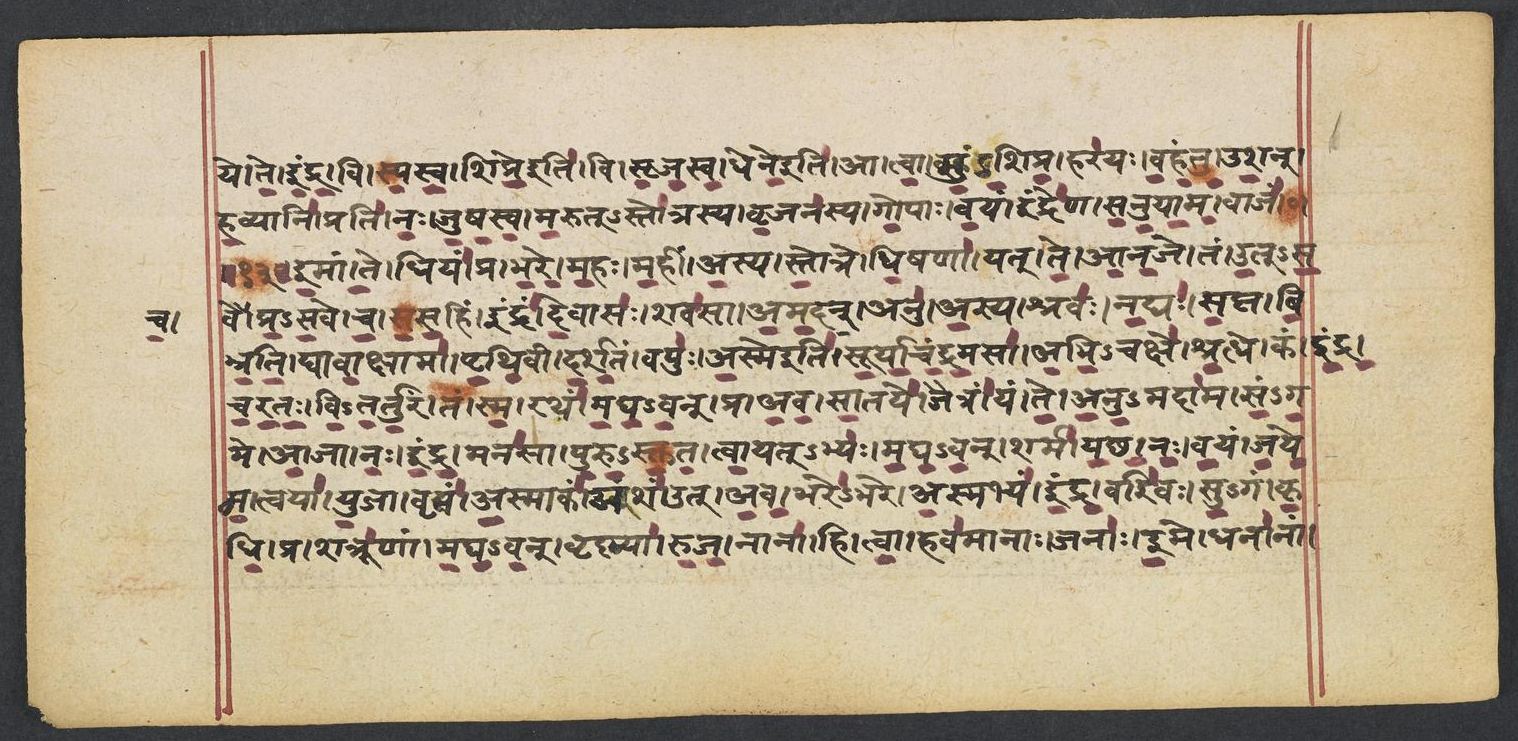
Penn Ms. Coll. 390 Item 41, fol. 71r (OPenn image 72, lower leaf). Checked on the image: the Rigveda text on this page begins in RV 1.101.10 ‹ye te indra vi›. The next page with Rigveda text, fol. 71v, begins in RV 1.102.5 ‹avasā vipanyavaḥ asmākam sma›. Verses 1.101.10-11 end on this page; 1.101.10 begins on fol. 70v.
10mā̱daya̍sva̱ hari̍bhi̱r ye ta̍ indra̱ vi ṣya̍sva̱ śipre̱ vi sṛ̍jasva̱ dhene̍ | ā tvā̍ suśipra̱ hara̍yo vahantū̱śan ha̱vyāni̱ prati̍ no juṣasva ||
11ma̱rutsto̍trasya vṛ̱jana̍sya go̱pā va̱yam indre̍ṇa sanuyāma̱ vāja̍m | tan no̍ mi̱tro varu̍ṇo māmahantā̱m adi̍ti̱ḥ sindhu̍ḥ pṛthi̱vī u̱ta dyauḥ ||
Compare: Padapāṭha (word-by-word text written in the manuscript; Sansknet e-text via GRETIL)
10mādyasva | hari-bhiḥ | ye | te | indra | vi | syasva | śipre | vi | sṛjasva | dheneiti | ā | tvā | su-śipra | harayaḥ | vahantu | uśan | havyāni | prati | naḥ | juṣasva
11marut-stotrasya | vṛjanasya | gopāḥ | vayam | indreṇa | sanuyāma | vājam | tat | naḥ | mitraḥ | varuṇaḥ | mamahantām | aditiḥ | sindhuḥ | pṛthivī | uta | dyauḥ
10Rejoice thee with thine own Bay Steeds, O Indra, unclose thy jaws and let thy lips be open. Thou with the fair cheek, let thy Bay Steeds bring thee: gracious to us, he pleased with our oblation.
11Guards of the camp whose praisers are the Maruts, may we through Indra, get ourselves the booty. This prayer of ours may Varuṇa grant, and Mitra, and Aditi and Sindhu, Earth and Heaven.
Notes
- Sanskrit: Aufrecht's edition (1877) with the Vedic accents, as entered by van Nooten and Holland (GRETIL).
- English: Ralph T. H. Griffith, The Hymns of the Rigveda (1889-1892; 2nd ed. 1896-1897), from the VedaWeb digital text; OCR slips in that text were corrected against the printed 2nd edition (data/sources/rigveda/griffith_errata.json).
- Padapāṭha (edition text): Sansknet e-text via GRETIL (CC BY-NC-SA 4.0).
Cite
Sources
- Source: Penn Ms. Coll. 390 Item 41 (undated (catalogued with Penn's 18th-19th c. Vedic manuscripts)), OPenn, Public Domain Mark + Aufrecht's accented text (GRETIL) + Griffith's English (VedaWeb) (holding institution)
- Critical edition: Aufrecht (1877), accented e-text via GRETIL
← previous · → next · v cycle view · l back to library