Rigveda 1.108: To Indra and Agni
Introduction
Rigveda 1.108 is a hymn of 13 verses addressed to Indra and Agni. It stands in book (maṇḍala) 1, a collection of hymns by many families of poets. The Rigveda is the oldest collection of Sanskrit hymns, composed in the second half of the second millennium BCE and handed down orally for many centuries before it was written down.
The manuscript shown is Penn Ms. Coll. 390 Item 41 (University of Pennsylvania), an undated paper manuscript of the padapāṭha (the word-by-word recitation text, in which every word is written separately and compounds are split) of the whole Ṛgveda in Devanāgarī, 884 leaves in fascicles, 7-9 lines to the page, accents in red; this hymn stands on fol. 75r-76r. Each section below gives the verses that end on one page; the page boundaries were read on the images (the opening words of every page), not counted out. Where the manuscript is a padapāṭha (the word-by-word recitation text), the section shows Aufrecht's continuous (saṃhitā) text first and, as the edition text, the padapāṭha of the same verses, which is the form written on the page.
How was this verified? (Provenance)
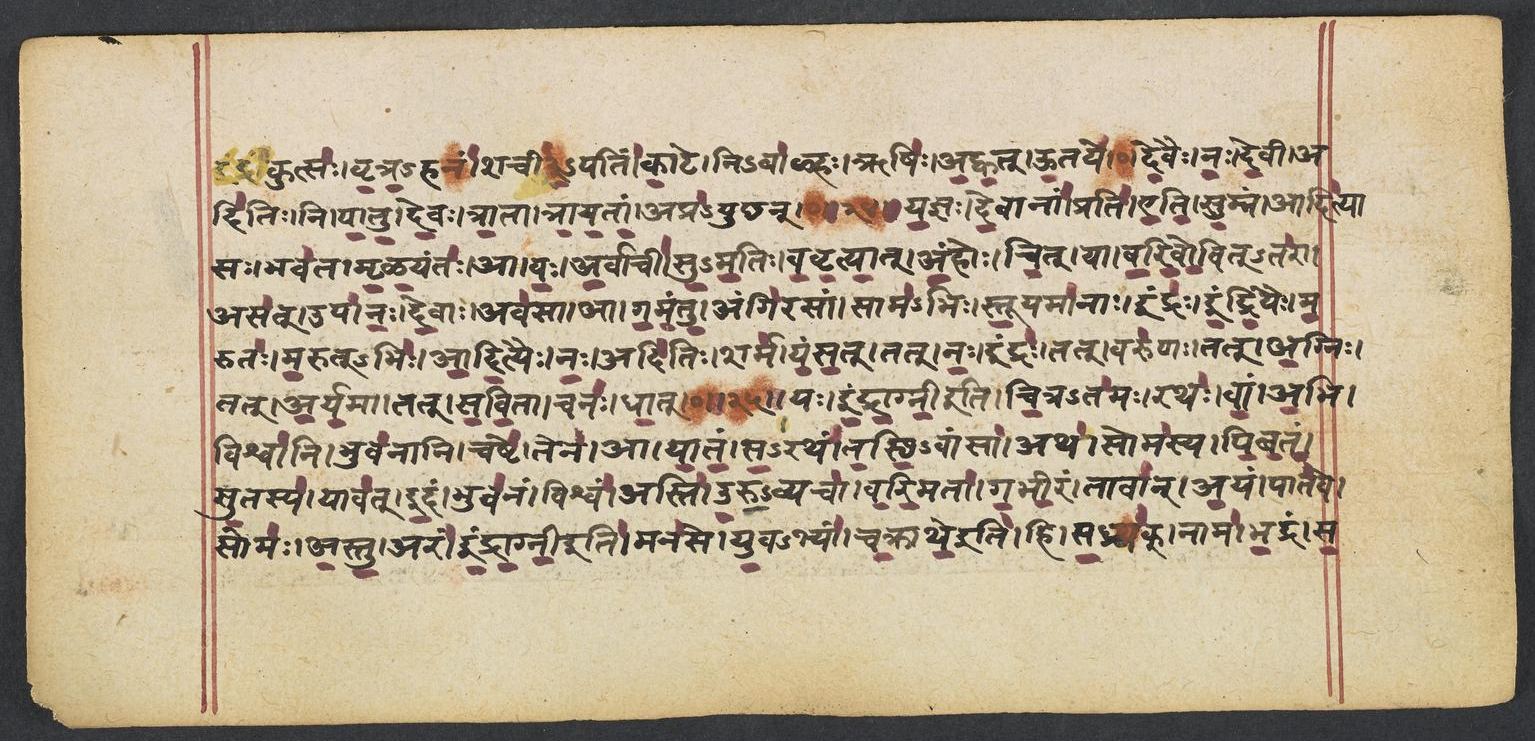
Where on the image
Penn Ms. Coll. 390 Item 41, fol. 75r (OPenn image 76, lower leaf). Checked on the image: the Rigveda text on this page begins in RV 1.106.6 ‹kutsaḥ vṛtra-hanam śacī-patim kāṭe›. The next page with Rigveda text, fol. 75v, begins in RV 1.108.3 ‹-sadhrīcīnā vṛtra-haṇau uta sthaḥ›. Verses 1.108.1-2 end on this page.
1ya i̍ndrāgnī ci̱trata̍mo̱ ratho̍ vām a̱bhi viśvā̍ni̱ bhuva̍nāni̱ caṣṭe̍ | tenā yā̍taṁ sa̱ratha̍ṁ tasthi̱vāṁsāthā̱ soma̍sya pibataṁ su̱tasya̍ ||
2yāva̍d i̱dam bhuva̍na̱ṁ viśva̱m asty u̍ru̱vyacā̍ vari̱matā̍ gabhī̱ram | tāvā̍m̐ a̱yam pāta̍ve̱ somo̍ a̱stv ara̍m indrāgnī̱ mana̍se yu̱vabhyā̍m ||
Compare: Padapāṭha (word-by-word text written in the manuscript; Sansknet e-text via GRETIL)
1yaḥ | indrāgnī iti | citra-tamaḥ | rathaḥ | vām | abhi | viśvāni | bhuvanāni | caṣṭe | tena | ā | yātam | sa-ratham | tasthivāṃsā | atha | somasya | pibatam | sutasya
2yāvat | idam | bhuvanam | viśvam | asti | uru-vyacā | varimatā | gabhīram | tāvān | ayam | pātave | somaḥ | astu | aram | indrāgnī iti | manase | yuva-bhyām
1ON that most wondrous car of yours, O Indra and Agni, which looks round on all things living, Take ye your stand and come to us together, and drink libations of the flowing Soma.
2As vast as all this world is in its compass, deep as it is, with its far-stretching surface, So let this Soma be, Indra and Agni, made for your drinking till your soul be sated.
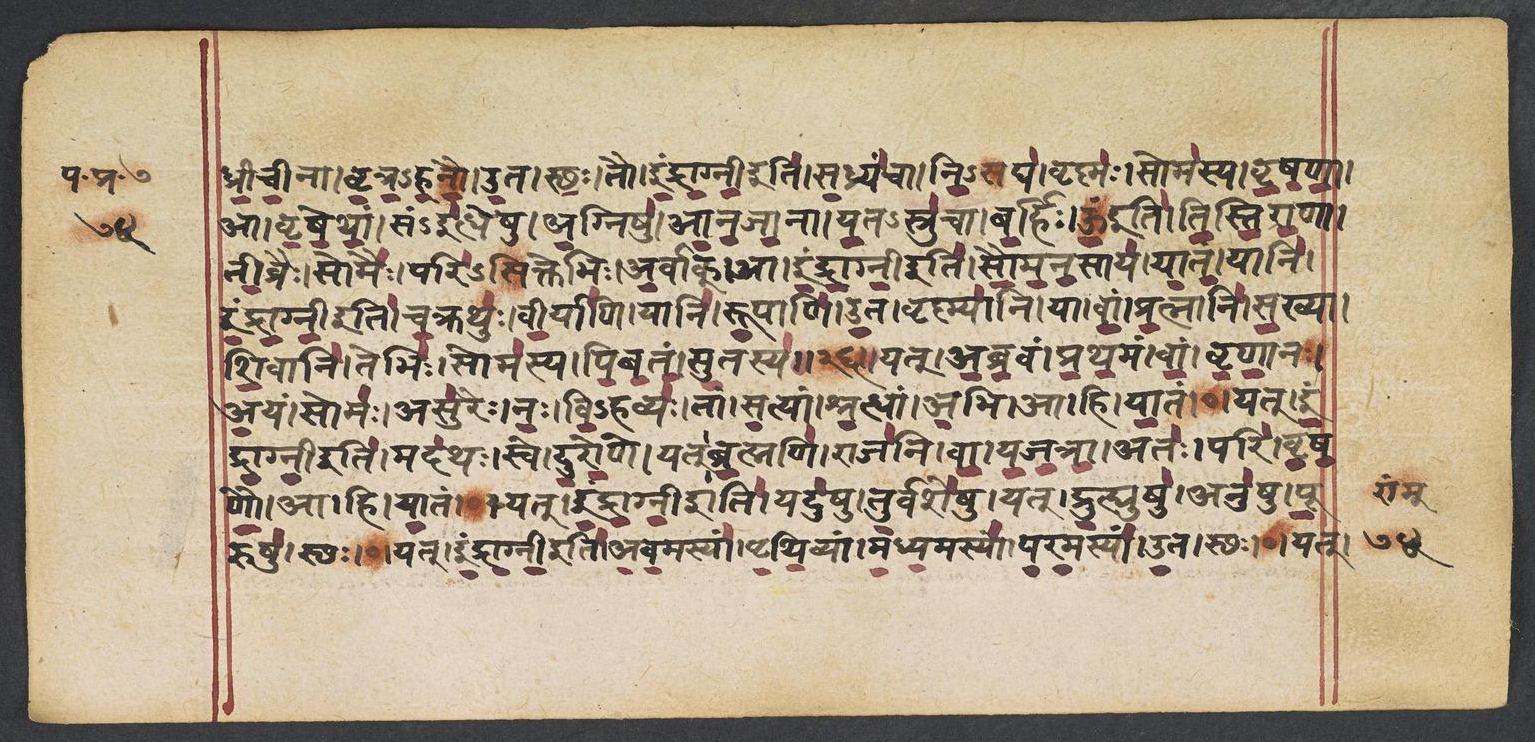
Where on the image
Penn Ms. Coll. 390 Item 41, fol. 75v (OPenn image 77, upper leaf). Checked on the image: the Rigveda text on this page begins in RV 1.108.3 ‹-sadhrīcīnā vṛtra-haṇau uta sthaḥ›. The next page with Rigveda text, fol. 76r, begins in RV 1.108.11 ‹indrāgnī iti divi sthaḥ›. Verses 1.108.3-10 end on this page; 1.108.3 begins on fol. 75r.
3ca̱krāthe̱ hi sa̱dhrya1̱̍ṅ nāma̍ bha̱draṁ sa̍dhrīcī̱nā vṛ̍trahaṇā u̱ta stha̍ḥ | tāv i̍ndrāgnī sa̱dhrya̍ñcā ni̱ṣadyā̱ vṛṣṇa̱ḥ soma̍sya vṛṣa̱ṇā vṛ̍ṣethām ||
4sami̍ddheṣv a̱gniṣv ā̍najā̱nā ya̱tasru̍cā ba̱rhir u̍ tistirā̱ṇā | tī̱vraiḥ somai̱ḥ pari̍ṣiktebhir a̱rvāg endrā̍gnī saumana̱sāya̍ yātam ||
5yānī̍ndrāgnī ca̱krathu̍r vī̱ryā̍ṇi̱ yāni̍ rū̱pāṇy u̱ta vṛṣṇyā̍ni | yā vā̍m pra̱tnāni̍ sa̱khyā śi̱vāni̱ tebhi̱ḥ soma̍sya pibataṁ su̱tasya̍ ||
6yad abra̍vam pratha̱maṁ vā̍ṁ vṛṇā̱no̱3̱̍ 'yaṁ somo̱ asu̍rair no vi̱havya̍ḥ | tāṁ sa̱tyāṁ śra̱ddhām a̱bhy ā hi yā̱tam athā̱ soma̍sya pibataṁ su̱tasya̍ ||
7yad i̍ndrāgnī̱ mada̍tha̱ḥ sve du̍ro̱ṇe yad bra̱hmaṇi̱ rāja̍ni vā yajatrā | ata̱ḥ pari̍ vṛṣaṇā̱v ā hi yā̱tam athā̱ soma̍sya pibataṁ su̱tasya̍ ||
8yad i̍ndrāgnī̱ yadu̍ṣu tu̱rvaśe̍ṣu̱ yad dru̱hyuṣv anu̍ṣu pū̱ruṣu̱ sthaḥ | ata̱ḥ pari̍ vṛṣaṇā̱v ā hi yā̱tam athā̱ soma̍sya pibataṁ su̱tasya̍ ||
9yad i̍ndrāgnī ava̱masyā̍m pṛthi̱vyām ma̍dhya̱masyā̍m para̱masyā̍m u̱ta sthaḥ | ata̱ḥ pari̍ vṛṣaṇā̱v ā hi yā̱tam athā̱ soma̍sya pibataṁ su̱tasya̍ ||
10yad i̍ndrāgnī para̱masyā̍m pṛthi̱vyām ma̍dhya̱masyā̍m ava̱masyā̍m u̱ta sthaḥ | ata̱ḥ pari̍ vṛṣaṇā̱v ā hi yā̱tam athā̱ soma̍sya pibataṁ su̱tasya̍ ||
Compare: Padapāṭha (word-by-word text written in the manuscript; Sansknet e-text via GRETIL)
3cakrāthe | hi | sadhryak | nāma | bhadram | sadhrīcīnā | vṛtra-haṇau | uta | sthaḥ | tau | indrāgnī iti | sadhryañcā | ni-sadya | vṛṣṇaḥ | somasya | vṛṣaṇā | ā | vṛṣethām
4sam-iddheṣu | agniṣu | ānajānā | yata-srucā | barhiḥ | oṃ iti | tistirāṇā | tīvraiḥ | somaiḥ | pari-siktebhiḥ | arvāk | ā | indrāgnī iti | saumanasāya | yātam
5yāni | indrāgnī iti | cakrathuḥ | vīryāṇi | yāni | rūpāṇi | uta | vṛṣṇyāni | yā | vām | pratnāni | sakhyā | śivāni | tebhiḥ | somasya | pibatam | sutasya
6yat | abravam | prathamam | vām | vṛṇānaḥ | ayam | somaḥ | asuraiḥ | naḥ | vi-havyaḥ | tām | satyām | śraddhām | abhi | ā | hi | yātam | atha | somasya | pibatam | sutasya
7yat | indrāgnī iti | madathaḥ | sve | duroṇe | yat | brahmaṇi | rājani | vā | yajatrā | ataḥ | pari | vṛṣaṇau | ā | hi | yātam | atha | somasya | pibatam | sutasya
8yat | indrāgnī iti | yaduṣu | turvaśeṣu | yat | druhyuṣu | anuṣu | pūruṣu | sthaḥ | ataḥ | pari | vṛṣaṇau | ā | h i | yātam | atha | somasya | pibatam | sutasya
9yat | indrāgnī iti | avamasyām | pṛthivyām | madhyamasyām | paramasyām | uta | sthaḥ | ataḥ | pari | vṛṣaṇau | ā | hi | yātam | atha | somasya | pibatam | sutasya
10yat | indrāgnī iti | paramasyām | pṛthivyām | madhyamasyām | avamasyām | uta | sthaḥ | ataḥ | pari | vṛṣaṇau | ā | hi | yātam | atha | somasya | pibatam | sutasya
3For ye have won a blessed name together: yea, with one aim ye strove, O Vr̥itra-slayers. So Indra-Agni, seated here together, pour in, ye Mighty Ones, the mighty Soma.
4Both stand adorned, when fires are duly kindled, spreading the sacred grass, with lifted ladles. Drawn by strong Soma juice poured forth around us, come, Indra-Agni, and display your favour.
5The brave deeds ye have done, Indra and Agni, the forms ye have displayed and mighty exploits, The ancient and auspicious bonds of friendship,– for sake of these drink of the flowing Soma.
6As first I said when choosing you, in battle we must contend with Asuras for this Soma. So came ye unto this my true conviction, and drank libations of the flowing Soma.
7If in your dwelling, or with prince or Brahman, ye, Indra-Agni, Holy Ones, rejoice you, Even from thence, ye mighty Lords, come hither, and drink libation of the flowing Soma.
8If with, the Yadus, Turvaṣas, ye sojourn, with Druhyus, Anus, Pûrus, Indra-Agni! Even from thence, ye mighty Lords, come hither, and drink libations of the flowing Soma.
9Whether, O Indra-Agni, ye be dwelling in lowest earth, in central, or in highest. Even from thence, ye mighty Lords, come hither, and drink libations of the flowing Soma.
10Whether, O Indra-Agni, ye be dwelling in highest earth, in central, or in lowest, Even from thence, ye mighty Lords, come hither, and drink libations of the flowing Soma.
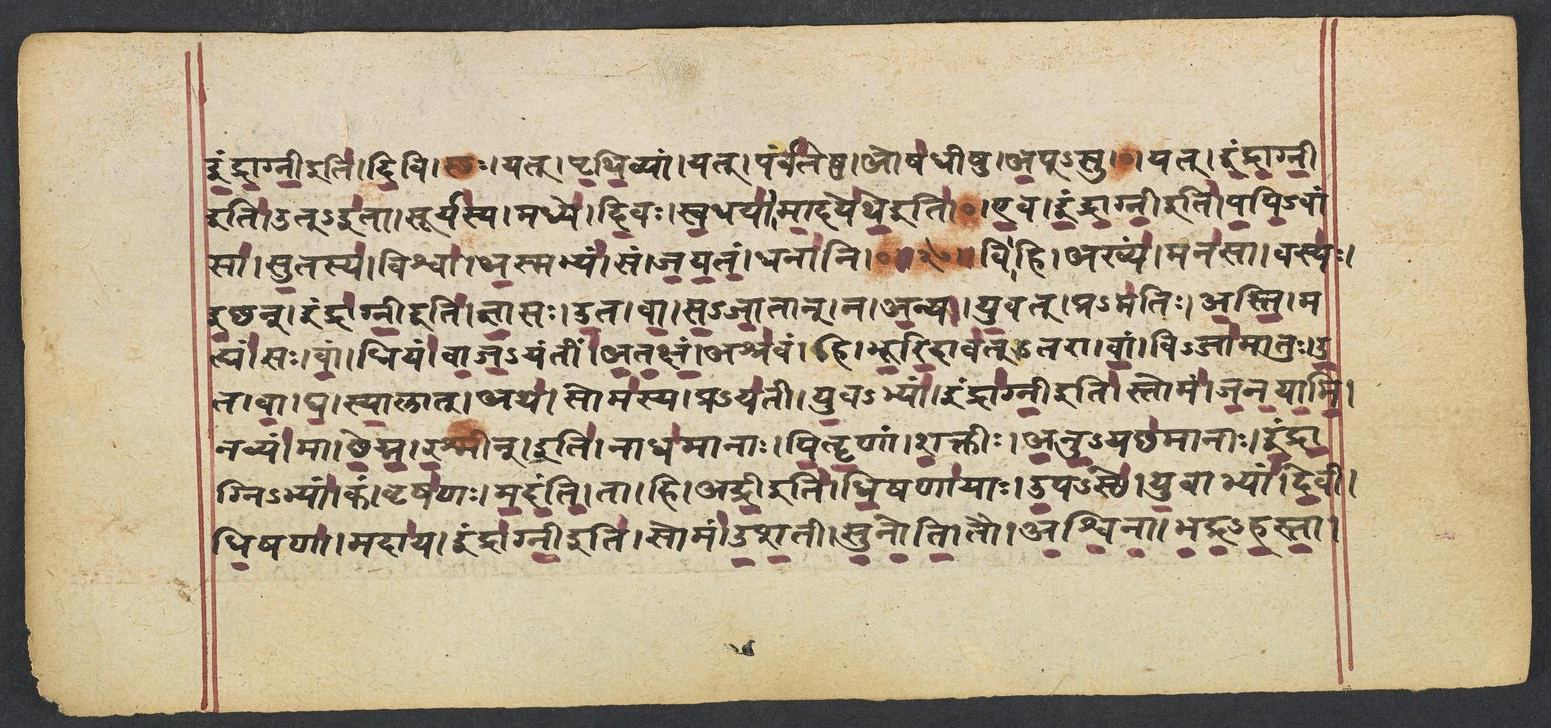
Where on the image
Penn Ms. Coll. 390 Item 41, fol. 76r (OPenn image 77, lower leaf). Checked on the image: the Rigveda text on this page begins in RV 1.108.11 ‹indrāgnī iti divi sthaḥ›. The next page with Rigveda text, fol. 76v, begins in RV 1.109.4 ‹supāṇī itisu-pāṇī ā dhāvatam›. Verses 1.108.11-13 end on this page; 1.108.11 begins on fol. 75v.
11yad i̍ndrāgnī di̱vi ṣṭho yat pṛ̍thi̱vyāṁ yat parva̍te̱ṣv oṣa̍dhīṣv a̱psu | ata̱ḥ pari̍ vṛṣaṇā̱v ā hi yā̱tam athā̱ soma̍sya pibataṁ su̱tasya̍ ||
12yad i̍ndrāgnī̱ udi̍tā̱ sūrya̍sya̱ madhye̍ di̱vaḥ sva̱dhayā̍ mā̱daye̍the | ata̱ḥ pari̍ vṛṣaṇā̱v ā hi yā̱tam athā̱ soma̍sya pibataṁ su̱tasya̍ ||
13e̱vendrā̍gnī papi̱vāṁsā̍ su̱tasya̱ viśvā̱smabhya̱ṁ saṁ ja̍yata̱ṁ dhanā̍ni | tan no̍ mi̱tro varu̍ṇo māmahantā̱m adi̍ti̱ḥ sindhu̍ḥ pṛthi̱vī u̱ta dyauḥ ||
Compare: Padapāṭha (word-by-word text written in the manuscript; Sansknet e-text via GRETIL)
11yat | indrāgnī iti | divi | sthaḥ | yat | pṛthivyām | yat | parvateṣu | oṣadhīṣu | ap-su | ataḥ | pari | vṛṣaṇau | ā | hi | yātam | atha | somasya | pibatam | sutasya
12yat | indrāgnī iti | ut-itā | sūryasya | madhye | divaḥ | svadhayā | mādayetheiti | ataḥ | pari | vṛṣaṇau | ā | hi | yātam | atha | somasya | pibatam | sutasya
13eva | indrāgnī iti | papi-vāṃsā | sutasya | viśvā | asmabhyam | sam | jayatam | dhanāni | tat | naḥ | mi traḥ | varuṇaḥ | mamahantām | aditiḥ | sindhuḥ | pṛthivī | uta | dyauḥ
11Whether ye be in heaven, O Indra-Agni, on earth, on mountains, in the herbs, or waters, Even from thence, ye mighty Lords, come hither, and drink libations of the flowing Soma.
12If, when the Sun to the mid-heaven hath mounted, ye take delight in food, O Indra-Agni, Even from thence, ye mighty Lords, come hither, and drink libations of the flowing Soma.
13Thus having drunk your fill of our libation, win us all kinds of wealth, Indra and Agni. This prayer of ours may Varuṇa grant, and Mitra, and Aditi and Sindhu, Earth and Heaven.
Notes
- Sanskrit: Aufrecht's edition (1877) with the Vedic accents, as entered by van Nooten and Holland (GRETIL).
- English: Ralph T. H. Griffith, The Hymns of the Rigveda (1889-1892; 2nd ed. 1896-1897), from the VedaWeb digital text; OCR slips in that text were corrected against the printed 2nd edition (data/sources/rigveda/griffith_errata.json).
- Padapāṭha (edition text): Sansknet e-text via GRETIL (CC BY-NC-SA 4.0).
Cite
Sources
- Source: Penn Ms. Coll. 390 Item 41 (undated (catalogued with Penn's 18th-19th c. Vedic manuscripts)), OPenn, Public Domain Mark + Aufrecht's accented text (GRETIL) + Griffith's English (VedaWeb) (holding institution)
- Critical edition: Aufrecht (1877), accented e-text via GRETIL
← previous · → next · v cycle view · l back to library