Rigveda 1.109: To Indra and Agni
Introduction
Rigveda 1.109 is a hymn of 8 verses addressed to Indra and Agni. It stands in book (maṇḍala) 1, a collection of hymns by many families of poets. The Rigveda is the oldest collection of Sanskrit hymns, composed in the second half of the second millennium BCE and handed down orally for many centuries before it was written down.
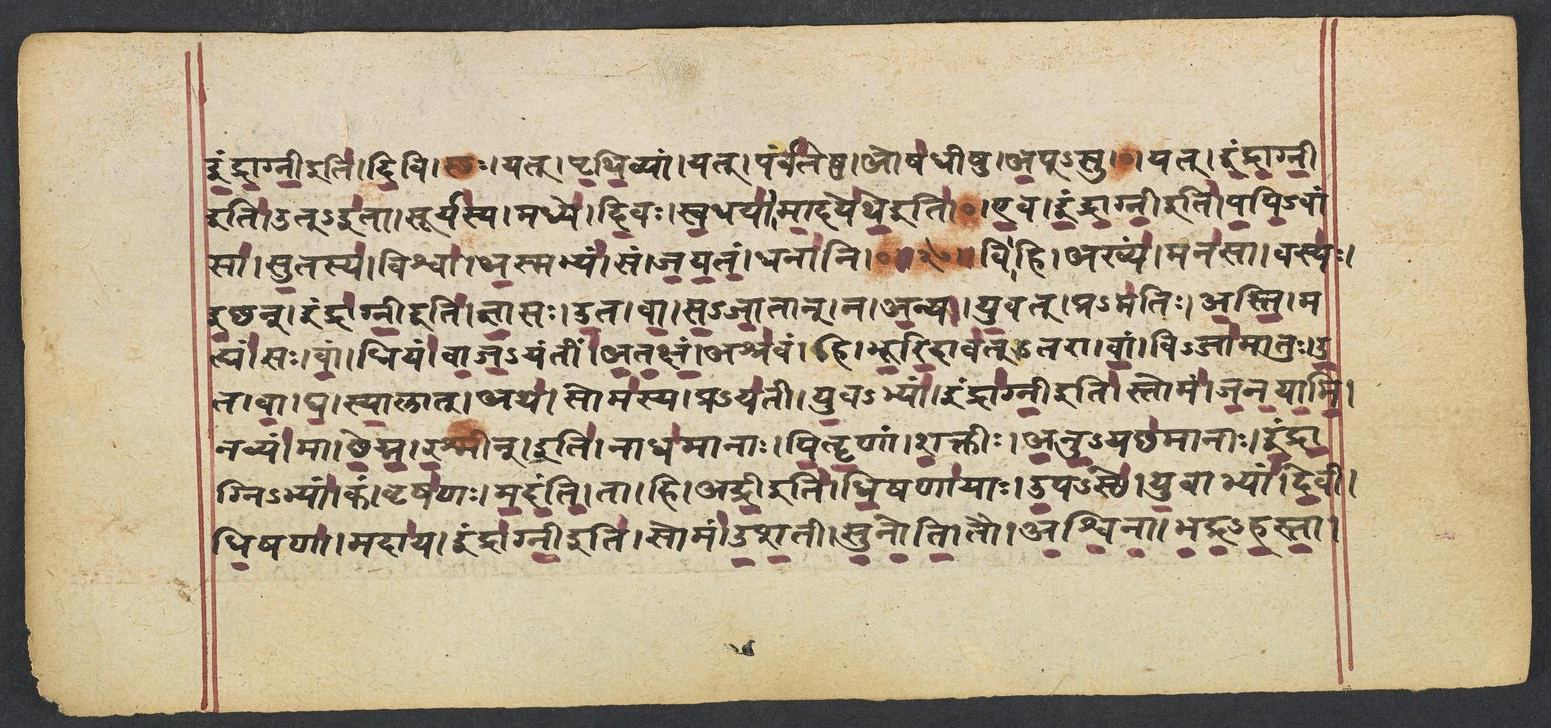
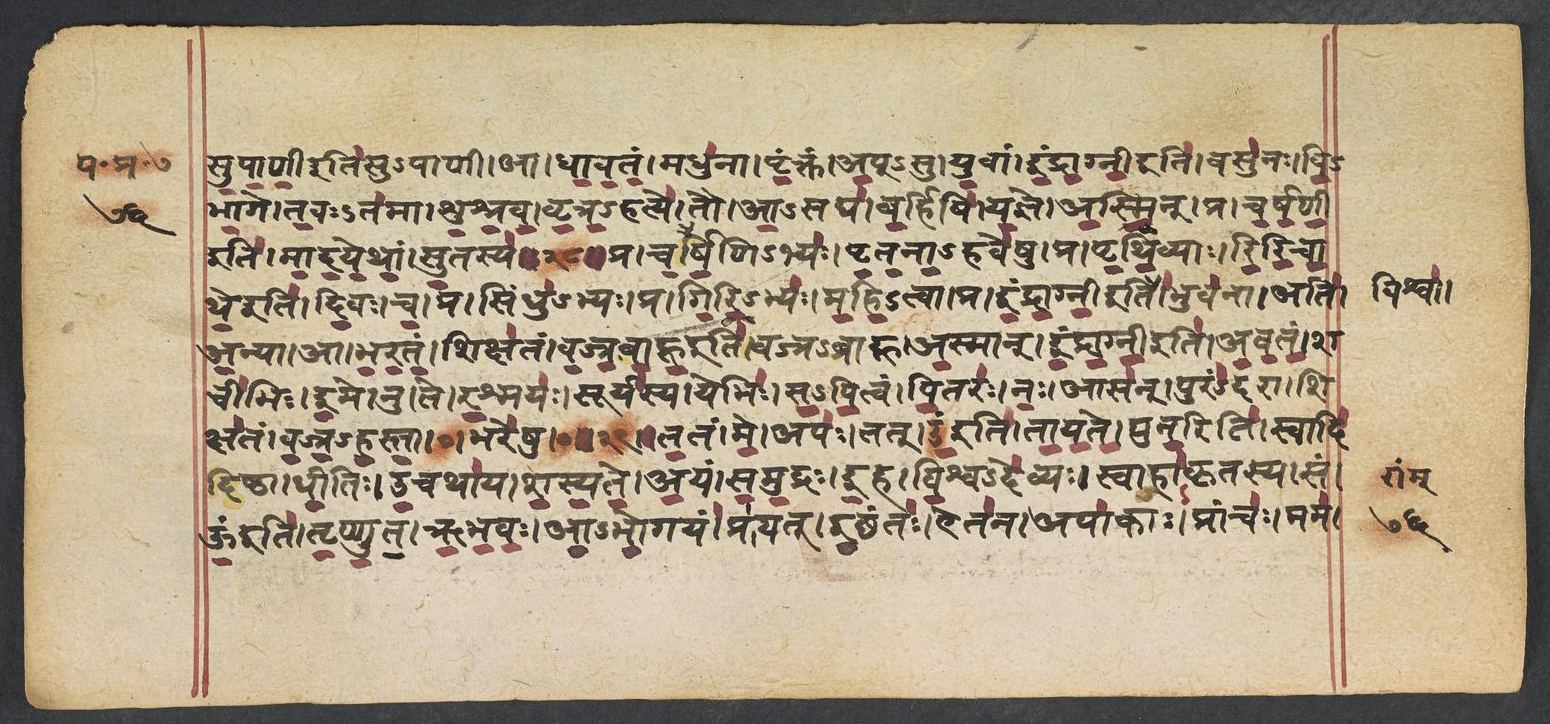
The manuscript shown is Penn Ms. Coll. 390 Item 41 (University of Pennsylvania), an undated paper manuscript of the padapāṭha (the word-by-word recitation text, in which every word is written separately and compounds are split) of the whole Ṛgveda in Devanāgarī, 884 leaves in fascicles, 7-9 lines to the page, accents in red; this hymn stands on fol. 76r-76v. Each section below gives the verses that end on one page; the page boundaries were read on the images (the opening words of every page), not counted out. Where the manuscript is a padapāṭha (the word-by-word recitation text), the section shows Aufrecht's continuous (saṃhitā) text first and, as the edition text, the padapāṭha of the same verses, which is the form written on the page.
How was this verified? (Provenance)
Where on the image
Penn Ms. Coll. 390 Item 41, fol. 76r (OPenn image 77, lower leaf). Checked on the image: the Rigveda text on this page begins in RV 1.108.11 ‹indrāgnī iti divi sthaḥ›. The next page with Rigveda text, fol. 76v, begins in RV 1.109.4 ‹supāṇī itisu-pāṇī ā dhāvatam›. Verses 1.109.1-3 end on this page.
1vi hy akhya̱m mana̍sā̱ vasya̍ i̱cchann indrā̍gnī jñā̱sa u̱ta vā̍ sajā̱tān | nānyā yu̱vat prama̍tir asti̱ mahya̱ṁ sa vā̱ṁ dhiya̍ṁ vāja̱yantī̍m atakṣam ||
2aśra̍va̱ṁ hi bhū̍ri̱dāva̍ttarā vā̱ṁ vijā̍mātur u̱ta vā̍ ghā syā̱lāt | athā̱ soma̍sya̱ praya̍tī yu̱vabhyā̱m indrā̍gnī̱ stoma̍ṁ janayāmi̱ navya̍m ||
3mā cche̍dma ra̱śmīm̐r iti̱ nādha̍mānāḥ pitṝ̱ṇāṁ śa̱ktīr a̍nu̱yaccha̍mānāḥ | i̱ndrā̱gnibhyā̱ṁ kaṁ vṛṣa̍ṇo madanti̱ tā hy adrī̍ dhi̱ṣaṇā̍yā u̱pasthe̍ ||
Compare: Padapāṭha (word-by-word text written in the manuscript; Sansknet e-text via GRETIL)
1vi | hi | akhyam | manasā | vasyaḥ | icchan | indrāgnī iti | jñāsaḥ | uta | vā | sa-jātān | na | anyā | yuvat | pra-matiḥ | asti | mahyam | saḥ | vām | dhiyam | vāja-yantīm | atakṣam
2aśravam | hi | bhūridāvat-tarā | vām | vi-jāmātuḥ | uta | vā | gha | syālāt | atha | somasya | pra-yatī | yuva-bhyām | indrāgnī iti | stomam | janayāmi | navyam
3mā | chedma | raśmīn | iti | nādhamānāḥ | pitṝṇām | śaktīḥ | anu-yacchamānāḥ | indrāgni-bhyām | kam | vṛṣaṇaḥ | madanti | tā | hi | adrī iti | dhiṣaṇāyāḥ | upa-sthe
1LONGING for weal I looked around, in spirit, for kinsmen, Indra-Agni, or for brothers. No providence but yours alone is with me so have I wrought for you this hymn for succour.
2For I have heard that ye give wealth more freely than worthless son-in-law or spouse's brother. So offering to you this draught of Soma, I make you this new hymn, Indra and Agni,
3Let us not break the cords: with this petition we strive to gain the powers of our forefathers. For Indra-Agni the strong drops are joyful-, for here in the bowl's lap are both the press-stones.
Where on the image
Penn Ms. Coll. 390 Item 41, fol. 76v (OPenn image 78, upper leaf). Checked on the image: the Rigveda text on this page begins in RV 1.109.4 ‹supāṇī itisu-pāṇī ā dhāvatam›. The next page with Rigveda text, fol. 77r, begins in RV 1.110.2 ‹ke cit āpayaḥ saudhanvanāsaḥ›. Verses 1.109.4-8 end on this page; 1.109.4 begins on fol. 76r.
4yu̱vābhyā̍ṁ de̱vī dhi̱ṣaṇā̱ madā̱yendrā̍gnī̱ soma̍m uśa̱tī su̍noti | tāv a̍śvinā bhadrahastā supāṇī̱ ā dhā̍vata̱m madhu̍nā pṛ̱ṅktam a̱psu ||
5yu̱vām i̍ndrāgnī̱ vasu̍no vibhā̱ge ta̱vasta̍mā śuśrava vṛtra̱hatye̍ | tāv ā̱sadyā̍ ba̱rhiṣi̍ ya̱jñe a̱smin pra ca̍rṣaṇī mādayethāṁ su̱tasya̍ ||
6pra ca̍rṣa̱ṇibhya̍ḥ pṛtanā̱have̍ṣu̱ pra pṛ̍thi̱vyā ri̍ricāthe di̱vaś ca̍ | pra sindhu̍bhya̱ḥ pra gi̱ribhyo̍ mahi̱tvā prendrā̍gnī̱ viśvā̱ bhuva̱nāty a̱nyā ||
7ā bha̍rata̱ṁ śikṣa̍taṁ vajrabāhū a̱smām̐ i̍ndrāgnī avata̱ṁ śacī̍bhiḥ | i̱me nu te ra̱śmaya̱ḥ sūrya̍sya̱ yebhi̍ḥ sapi̱tvam pi̱taro̍ na̱ āsa̍n ||
8pura̍ṁdarā̱ śikṣa̍taṁ vajrahastā̱smām̐ i̍ndrāgnī avata̱m bhare̍ṣu | tan no̍ mi̱tro varu̍ṇo māmahantā̱m adi̍ti̱ḥ sindhu̍ḥ pṛthi̱vī u̱ta dyauḥ ||
Compare: Padapāṭha (word-by-word text written in the manuscript; Sansknet e-text via GRETIL)
4yuvābhyām | devī | dhiṣaṇā | madāya | indrāgnī iti | somam | uśatī | sunoti | tau | aśvinā | bhadra-hastā | supāṇī itisu-pāṇī | ā | dhāvatam | madhunā | pṛṅktam | ap-su
5yuvām | indrāgnī iti | vasunaḥ | vi-bhāge | tavaḥ-tamā | śuśrava | vṛtra-hatye | tau | āsadya | barhiṣi | yajñe | asmin | pra | carṣaṇī iti | mādayethām | sutasya
6pra | carṣaṇi-bhyaḥ | pṛtanāhaveṣu | pra | pṛthivyāḥ | riricātheiti | divaḥ | ca | pra | sindhu-bhyaḥ | pra | giri-bhyaḥ | mahi-tvā | pra | indrāgnī iti | viśvā | bhuvanā ati | anyā
7ā | bharatam | śikṣatam | vajrabāhū itivajra-bāhū | asmān | indrāgnī | avatam | śacībhiḥ | ime | nu | te | raśmayaḥ | sūryasya | yebhiḥ | sa-pitvam | pitaraḥ | naḥ | āsan
8puram-darā | śikṣatam | vajra-hastā | asmān | indrāgnī iti | avatam | bhareṣu | tat | naḥ | mitraḥ | varuṇaḥ | mamahantām | aditiḥ | sindhuḥ | pṛth ivī | uta | dyauḥ
4For you the bowl divine, Indra and Agni, presses the Soma gladly to delight you. With hands auspicious and fair arms, ye Aṣvins, haste, sprinkle it with sweetness in the waters.
5You, I have heard, were mightiest, Indra-Agni, when Vr̥itra fell and when the spoil was parted. Sit at this sacrifice, ye ever active, on the strewn grass, and with the juice delight you.
6Surpassing all men where they shout for battle, ye Twain exceed the earth and heaven in greatness. Greater are ye than rivers and than mountains, O Indra-Agni, and all things beside them.
7Bring wealth and give it, ye whose arms wield thunder: Indra and Agni, with your powers protect us. Now of a truth these be the very sunbeams wherewith our fathers were of old united.
8Give, ye who shatter forts, whose hands wield thunder: Indra and Agni, save us in our battles. This prayer of ours may Varuṇa grant, and Mitra, and Aditi and Sindhu, Earth and Heaven.
Notes
- Sanskrit: Aufrecht's edition (1877) with the Vedic accents, as entered by van Nooten and Holland (GRETIL).
- English: Ralph T. H. Griffith, The Hymns of the Rigveda (1889-1892; 2nd ed. 1896-1897), from the VedaWeb digital text; OCR slips in that text were corrected against the printed 2nd edition (data/sources/rigveda/griffith_errata.json).
- Padapāṭha (edition text): Sansknet e-text via GRETIL (CC BY-NC-SA 4.0).
Cite
Sources
- Source: Penn Ms. Coll. 390 Item 41 (undated (catalogued with Penn's 18th-19th c. Vedic manuscripts)), OPenn, Public Domain Mark + Aufrecht's accented text (GRETIL) + Griffith's English (VedaWeb) (holding institution)
- Critical edition: Aufrecht (1877), accented e-text via GRETIL
← previous · → next · v cycle view · l back to library