Rigveda 1.136: To Mitra and Varuna
Introduction
Rigveda 1.136 is a hymn of 7 verses addressed to Mitra and Varuna. It stands in book (maṇḍala) 1, a collection of hymns by many families of poets. The Rigveda is the oldest collection of Sanskrit hymns, composed in the second half of the second millennium BCE and handed down orally for many centuries before it was written down.
The manuscript shown is Penn Ms. Coll. 390 Item 41 (University of Pennsylvania), an undated paper manuscript of the padapāṭha (the word-by-word recitation text, in which every word is written separately and compounds are split) of the whole Ṛgveda in Devanāgarī, 884 leaves in fascicles, 7-9 lines to the page, accents in red; this hymn stands on fol. 106r-106v. Each section below gives the verses that end on one page; the page boundaries were read on the images (the opening words of every page), not counted out. Where the manuscript is a padapāṭha (the word-by-word recitation text), the section shows Aufrecht's continuous (saṃhitā) text first and, as the edition text, the padapāṭha of the same verses, which is the form written on the page.
How was this verified? (Provenance)
Where on the image
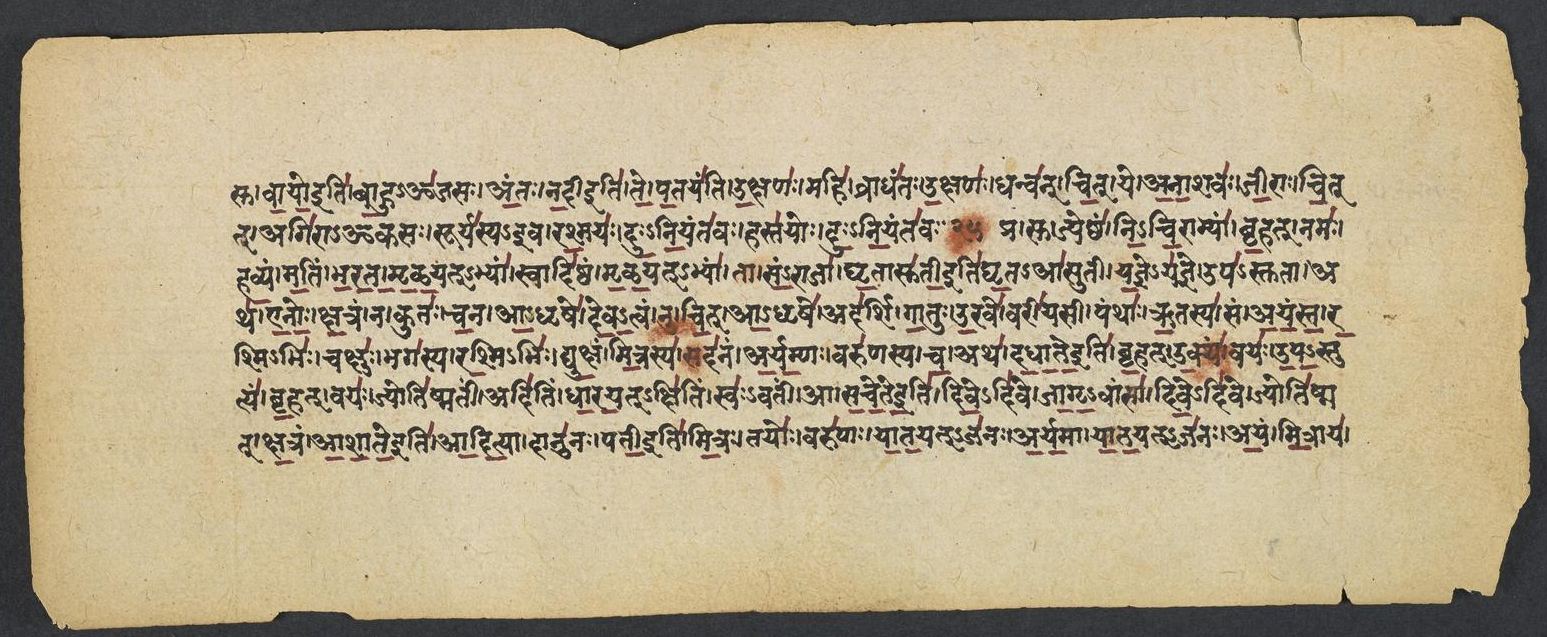
Penn Ms. Coll. 390 Item 41, fol. 106r (numbered 15r by the scribe) (OPenn image 107, lower leaf). Checked on the image: the Rigveda text on this page begins in RV 1.135.9 ‹su vāyo iti bāhu-ojasaḥ›. The next page with Rigveda text, fol. 106v (numbered 15v by the scribe), begins in RV 1.136.4 ‹varuṇāya śam-tamaḥ somaḥ bhūtu›. Verses 1.136.1-3 end on this page.
1pra su jyeṣṭha̍ṁ nici̱rābhyā̍m bṛ̱han namo̍ ha̱vyam ma̱tim bha̍ratā mṛḻa̱yadbhyā̱ṁ svādi̍ṣṭham mṛḻa̱yadbhyā̍m | tā sa̱mrājā̍ ghṛ̱tāsu̍tī ya̱jñe-ya̍jña̱ upa̍stutā | athai̍noḥ kṣa̱traṁ na kuta̍ś ca̱nādhṛṣe̍ deva̱tvaṁ nū ci̍d ā̱dhṛṣe̍ ||
2ada̍rśi gā̱tur u̱rave̱ varī̍yasī̱ panthā̍ ṛ̱tasya̱ sam a̍yaṁsta ra̱śmibhi̱ś cakṣu̱r bhaga̍sya ra̱śmibhi̍ḥ | dyu̱kṣam mi̱trasya̱ sāda̍nam arya̱mṇo varu̍ṇasya ca | athā̍ dadhāte bṛ̱had u̱kthya1̱̍ṁ vaya̍ upa̱stutya̍m bṛ̱had vaya̍ḥ ||
3jyoti̍ṣmatī̱m adi̍tiṁ dhāra̱yatkṣi̍ti̱ṁ sva̍rvatī̱m ā sa̍cete di̱ve-di̍ve jāgṛ̱vāṁsā̍ di̱ve-di̍ve | jyoti̍ṣmat kṣa̱tram ā̍śāte ādi̱tyā dānu̍na̱s patī̍ | mi̱tras tayo̱r varu̍ṇo yāta̱yajja̍no 'rya̱mā yā̍ta̱yajja̍naḥ ||
Compare: Padapāṭha (word-by-word text written in the manuscript; Sansknet e-text via GRETIL)
1pra | su | jyeṣṭham | ni-cirābhyām | bṛhat | namaḥ | havyam | matim | bharata | mṛḷayat-bhyām | svādiṣṭham | mṛḷayat-bhyām | tā | sam-rājā | ghṛtāsutī itighṛta-āsutī | yajñe--yajñe | upa-stutā | atha | enoḥ | kṣatram | na | kutaḥ | cana | ādhṛṣe | deva-tvam | nu | cit | ādhṛṣe
2adarśi | gātuḥ | urave | varīyasī | panthāḥ | ṛtasya | sam | ayaṃsta | raśmi-bhiḥ | cakṣuḥ | bhagasya | raśmi-bhiḥ | dyukṣam | mitrasya | sādanam | aryamṇaḥ | varuṇasya | ca | atha | dadhāteiti | bṛhat | ukthyam | vayaḥ | upa-stutyam | bṛhat | vayaḥ
3jyotiṣmatīm | aditim | dhārayat--kṣitim | svaḥ-vatīm | ā | saceteiti | dive--dive | jāgṛ-vāṃsā | dive--dive | jyotiśmat | kṣatram | āśāteiti | ādityā | dānunaḥ | patī | mitraḥ | tayoḥ | varuṇaḥ | yātayat-janaḥ | aryamā | yātayat-janaḥ
1BRING adoration ample and most excellent, hymn, offerings, to the watchful Twain, the bountiful, your sweetest to the bounteous Ones. Sovrans adored with streams of oil and praised at every sacrifice. Their high imperial might may nowhere be assailed, ne'er may their Godhead be assailed.
2For the broad Sun was seen a path more widely laid, the path of holy law hath been maintained with rays, the eye with Bhaga's rays of light. Firm-set in heaven is Mitra's home, and Aryaman's and Varuṇa's. Thence they give forth great vital strength which merits praise, high power of life that men shall praise.
3With Aditi the luminous, the celestial, upholder of the people, come ye day by day, ye who watch sleepless, day by day. Resplendent might have ye obtained, Âdityas, Lords of liberal gifts. Movers of men, mild both, are Mitra, Varuṇa, mover of men is Aryaman.
Where on the image
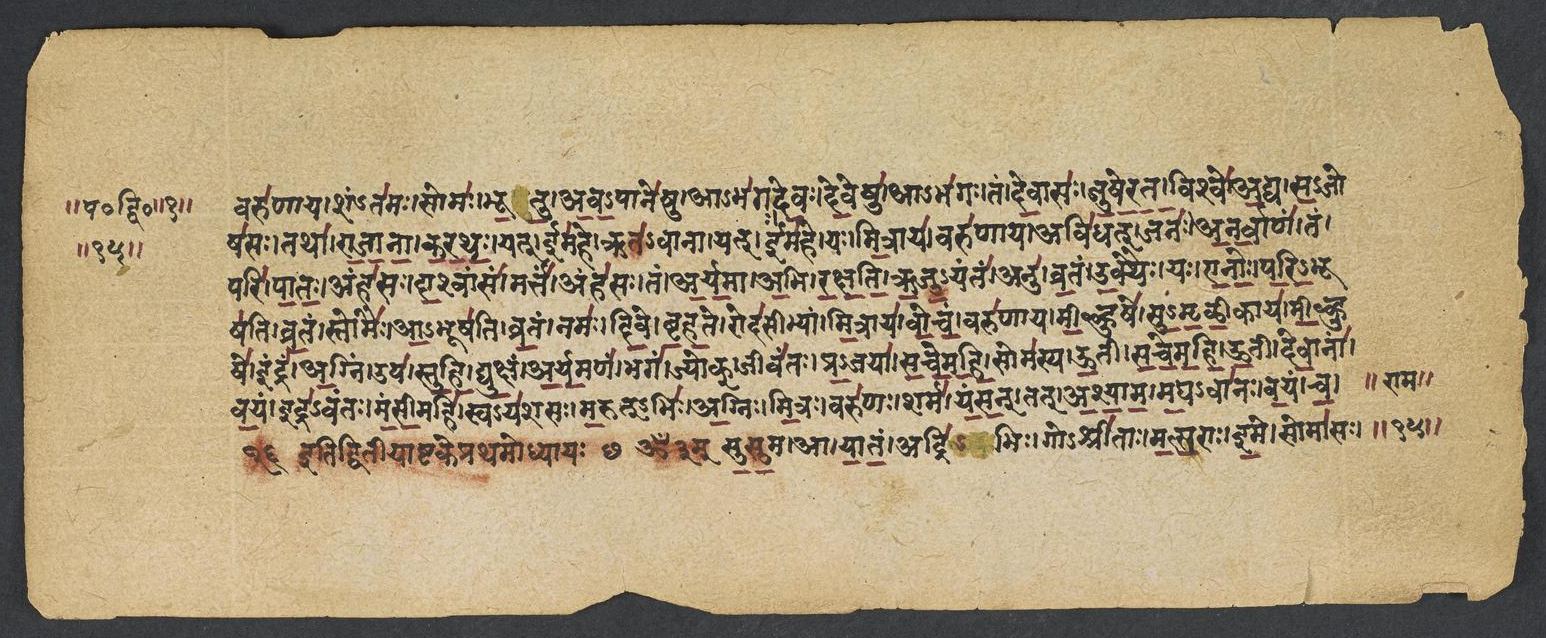
Penn Ms. Coll. 390 Item 41, fol. 106v (numbered 15v by the scribe) (OPenn image 108, upper leaf). Checked on the image: the Rigveda text on this page begins in RV 1.136.4 ‹varuṇāya śam-tamaḥ somaḥ bhūtu›. The next page with Rigveda text, fol. 107r (numbered 1r by the scribe), begins in RV 1.137.1 ‹suṣuma ā yātam adri-bhiḥ›. Verses 1.136.4-7 end on this page; 1.136.4 begins on fol. 106r (numbered 15r by the scribe).
4a̱yam mi̱trāya̱ varu̍ṇāya̱ śaṁta̍ma̱ḥ somo̍ bhūtv ava̱pāne̱ṣv ābha̍go de̱vo de̱veṣv ābha̍gaḥ | taṁ de̱vāso̍ juṣerata̱ viśve̍ a̱dya sa̱joṣa̍saḥ | tathā̍ rājānā karatho̱ yad īma̍ha̱ ṛtā̍vānā̱ yad īma̍he ||
5yo mi̱trāya̱ varu̍ṇā̱yāvi̍dha̱j jano̍ 'na̱rvāṇa̱ṁ tam pari̍ pāto̱ aṁha̍so dā̱śvāṁsa̱m marta̱m aṁha̍saḥ | tam a̍rya̱mābhi ra̍kṣaty ṛjū̱yanta̱m anu̍ vra̱tam | u̱kthair ya e̍noḥ pari̱bhūṣa̍ti vra̱taṁ stomai̍r ā̱bhūṣa̍ti vra̱tam ||
6namo̍ di̱ve bṛ̍ha̱te roda̍sībhyām mi̱trāya̍ voca̱ṁ varu̍ṇāya mī̱ḻhuṣe̍ sumṛḻī̱kāya̍ mī̱ḻhuṣe̍ | indra̍m a̱gnim upa̍ stuhi dyu̱kṣam a̍rya̱maṇa̱m bhaga̍m | jyog jīva̍ntaḥ pra̱jayā̍ sacemahi̱ soma̍syo̱tī sa̍cemahi ||
7ū̱tī de̱vānā̍ṁ va̱yam indra̍vanto maṁsī̱mahi̱ svaya̍śaso ma̱rudbhi̍ḥ | a̱gnir mi̱tro varu̍ṇa̱ḥ śarma̍ yaṁsa̱n tad a̍śyāma ma̱ghavā̍no va̱yaṁ ca̍ ||
Compare: Padapāṭha (word-by-word text written in the manuscript; Sansknet e-text via GRETIL)
4ayam | mitrāya | varuṇāya | śam-tamaḥ | somaḥ | bhūtu | ava-pāneṣu | ābhagaḥ | devaḥ | deveṣu | ābhagaḥ | tam | devāsaḥ | juṣerata | viśve | adya | sa-joṣasaḥ | tathā | rājānā | karathaḥ | yat | īmahe | ṛta-vānā | yat | īmahe
5yaḥ | mitrāya | varuṇāya | avidhat | janaḥ | anarvāṇam | tam | pari | pātaḥ | aṃhasaḥ | dāśvāṃsam | martam | aṃhasaḥ | tam | aryamā | abhi | rakṣati | ṛju-yantam | anu | vratam | ukthaiḥ | yaḥ | enoḥ | pari-bhūṣati | vratam | stomaiḥ | ābhūṣati | vrtam
6namaḥ | dive | bṛhate | rodasībhyām | mitrāya | vocam | varuṇāya | mīḷhuṣe | su-mṛḷīkāya | mīḷhuṣe | indram | agnim | upa | stuhi | dyukṣam | aryamaṇam | bhagam | jyok | jīvantaḥ | pra-jayā | sacemahi | somasya | ūtī | sacemahi
7ūtī | devānām | viyam | indra-vantaḥ | maṃsīmahi | sva-yaśasaḥ | marut-bhiḥ | agniḥ | mitraḥ | varuṇaḥ | śarma | yaṃsan | tat | aśyāma | magha-vānaḥ | vayam | ca
4This Soma be most sweet to Mitra, Varuṇa: he in the drinking-feasts, shall have a share thereof, sharing, a God, among the Gods. May all the Gods of one accord accept it joyfully to-day. Therefore do ye, O Kings, accomplish what we ask, ye Righteous Ones, whate'er we ask.
5Whoso, with worship serves Mitra and VaruiIa, him guard ye carefully, uninjured, from distress, guard from distress the liberal man. Aryaman guards him well who acts uprightly following his law, Who beautifies their service with his lauds, who makes it beautiful with songs of praise.
6Worship will I profess to lofty Dyaus, to Heaven and Earth, to Mitra and to bounteous Varuṇa, the Bounteous, the Compassionate. Praise Indra, praise thou Agni, praise Bhaga and heavenly Aryaman. Long may we live and have attendant progeny, have progeny with Soma's help.
7With the Gods' help, with Indra still beside us, may we be held self-splendid with the Maruts. May Agni, Mitra, Varuṇa give us shelter this may we gain, we and our wealthy princes.
Notes
- Sanskrit: Aufrecht's edition (1877) with the Vedic accents, as entered by van Nooten and Holland (GRETIL).
- English: Ralph T. H. Griffith, The Hymns of the Rigveda (1889-1892; 2nd ed. 1896-1897), from the VedaWeb digital text; OCR slips in that text were corrected against the printed 2nd edition (data/sources/rigveda/griffith_errata.json).
- Padapāṭha (edition text): Sansknet e-text via GRETIL (CC BY-NC-SA 4.0).
Cite
Sources
- Source: Penn Ms. Coll. 390 Item 41 (undated (catalogued with Penn's 18th-19th c. Vedic manuscripts)), OPenn, Public Domain Mark + Aufrecht's accented text (GRETIL) + Griffith's English (VedaWeb) (holding institution)
- Critical edition: Aufrecht (1877), accented e-text via GRETIL
← previous · → next · v cycle view · l back to library