Rigveda 1.135: To Vayu or Indra and Vayu
Introduction
Rigveda 1.135 is a hymn of 9 verses addressed to Vayu or Indra and Vayu. It stands in book (maṇḍala) 1, a collection of hymns by many families of poets. The Rigveda is the oldest collection of Sanskrit hymns, composed in the second half of the second millennium BCE and handed down orally for many centuries before it was written down.
The manuscript shown is Penn Ms. Coll. 390 Item 41 (University of Pennsylvania), an undated paper manuscript of the padapāṭha (the word-by-word recitation text, in which every word is written separately and compounds are split) of the whole Ṛgveda in Devanāgarī, 884 leaves in fascicles, 7-9 lines to the page, accents in red; this hymn stands on fol. 105r-106r. Each section below gives the verses that end on one page; the page boundaries were read on the images (the opening words of every page), not counted out. Where the manuscript is a padapāṭha (the word-by-word recitation text), the section shows Aufrecht's continuous (saṃhitā) text first and, as the edition text, the padapāṭha of the same verses, which is the form written on the page.
How was this verified? (Provenance)
Where on the image
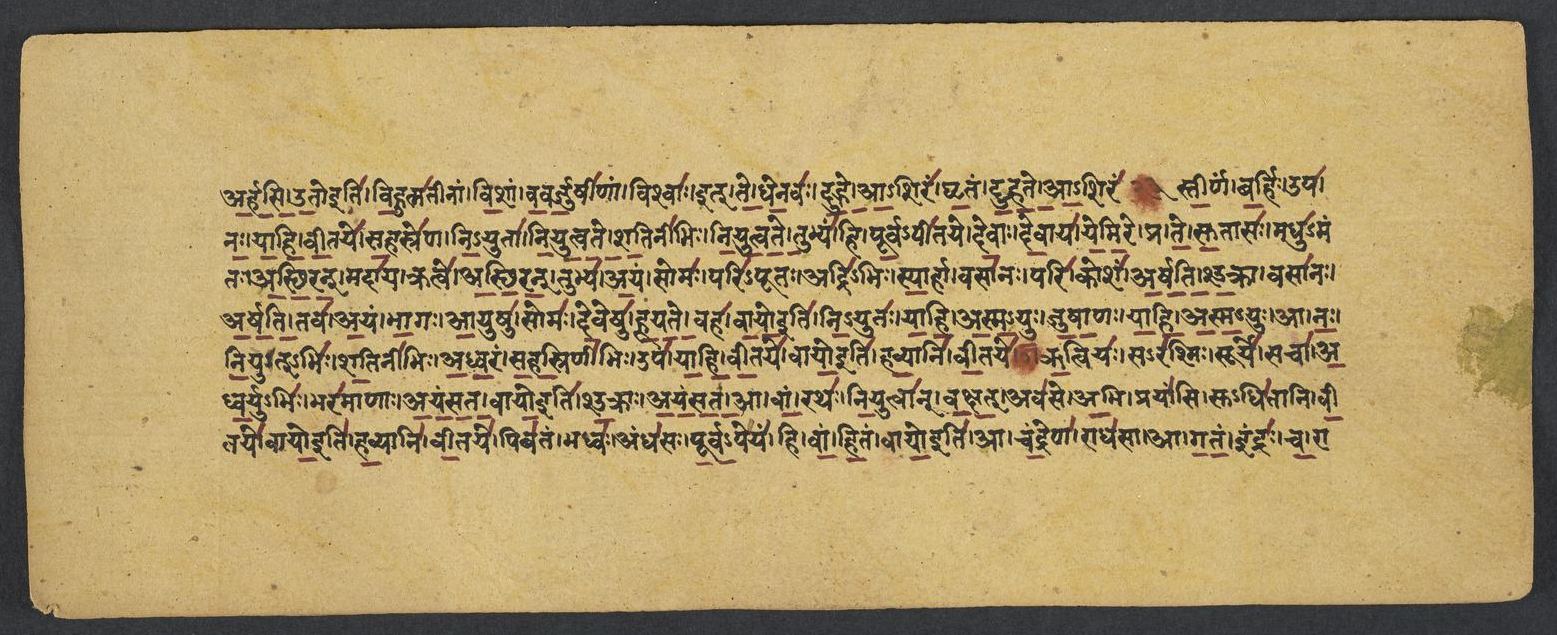
Penn Ms. Coll. 390 Item 41, fol. 105r (numbered 14r by the scribe) (OPenn image 106, lower leaf). Checked on the image: the Rigveda text on this page begins in RV 1.134.6 ‹arhasi uto iti vihutmatīnām›. The next page with Rigveda text, fol. 105v (numbered 14v by the scribe), begins in RV 1.135.4 ‹-rādhasā ā gatam›. Verses 1.135.1-3 end on this page.
1stī̱rṇam ba̱rhir upa̍ no yāhi vī̱taye̍ sa̱hasre̍ṇa ni̱yutā̍ niyutvate śa̱tinī̍bhir niyutvate | tubhya̱ṁ hi pū̱rvapī̍taye de̱vā de̱vāya̍ yemi̱re | pra te̍ su̱tāso̱ madhu̍manto asthira̱n madā̍ya̱ kratve̍ asthiran ||
2tubhyā̱yaṁ soma̱ḥ pari̍pūto̱ adri̍bhiḥ spā̱rhā vasā̍na̱ḥ pari̱ kośa̍m arṣati śu̱krā vasā̍no arṣati | tavā̱yam bhā̱ga ā̱yuṣu̱ somo̍ de̱veṣu̍ hūyate | vaha̍ vāyo ni̱yuto̍ yāhy asma̱yur ju̍ṣā̱ṇo yā̍hy asma̱yuḥ ||
3ā no̍ ni̱yudbhi̍ḥ śa̱tinī̍bhir adhva̱raṁ sa̍ha̱sriṇī̍bhi̱r upa̍ yāhi vī̱taye̱ vāyo̍ ha̱vyāni̍ vī̱taye̍ | tavā̱yam bhā̱ga ṛ̱tviya̱ḥ sara̍śmi̱ḥ sūrye̱ sacā̍ | a̱dhva̱ryubhi̱r bhara̍māṇā ayaṁsata̱ vāyo̍ śu̱krā a̍yaṁsata ||
Compare: Padapāṭha (word-by-word text written in the manuscript; Sansknet e-text via GRETIL)
1stīrṇam | barhiḥ | upa | naḥ | yāhi | vītaye | sahasreṇa | ni-yutā | niyutvate | śatinībhiḥ | niyutvate | tubhyam | hi | pūrva-pītaye | devāḥ | devāya | yemire | pra | te | sutāsaḥ | madhu-mantaḥ | asthiran | madāya | kratve | asthiran
2tubhya | ayam | somaḥ | pari-pūtaḥ | adri-bhiḥ | spārhā | vasānaḥ | pari | kośam | arṣati | śukrā | vasānaḥ | arṣati | tava | ayam | bhāgaḥ | āyuṣu | somaḥ | deveṣu | hūyate | vaha | vāyo iti | ni-yutaḥ | yāhi | asma-yuḥ | juṣāṇaḥ | yāhi | asma-yuḥ
3ā | naḥ | niyut-bhiḥ | śatinībhiḥ | adhvaram | sahasriṇībhiḥ | upa | yāhi | vītaye | vāyo iti | havyāni | vītaye | tava | ayam | bhāgaḥ | ṛtviyaḥ | sa-raśmiḥ | sūrye | sacā | adhvaryu-bhiḥ | bharamāṇāḥ | ayaṃsata | vāyo iti | śukrāḥ | ayaṃsata
1STREWN is the sacred grass; come Vâyu, to our feast, with team of thousands, come, Lord of the harnessed team, with hundreds, Lord of harnessed steeds! The drops divine are lifted up for thee, the God, to drink them first. The juices rich in sweets have raised them for thy joy, have raised themselves to give thee strength.
2Purified by the stones the Soma flows for thee, clothed with its lovely splendours, to the reservoir, flows clad in its refulgent light. For thee the Soma is poured forth, thy portioned share mid. Gods and men. Drive thou thy horses, Vâyu, come to us with love, come well-inclined and loving us.
3Come thou with hundreds, come with thousands in thy team to this our solemn rite, to taste the sacred food, Vâyu, to taste the offerings. This is thy seasonable share, that comes co-radiant with the Sun. Brought by attendant priests pure juice is offered up, Vâyu, pure juice is offered up.
Where on the image
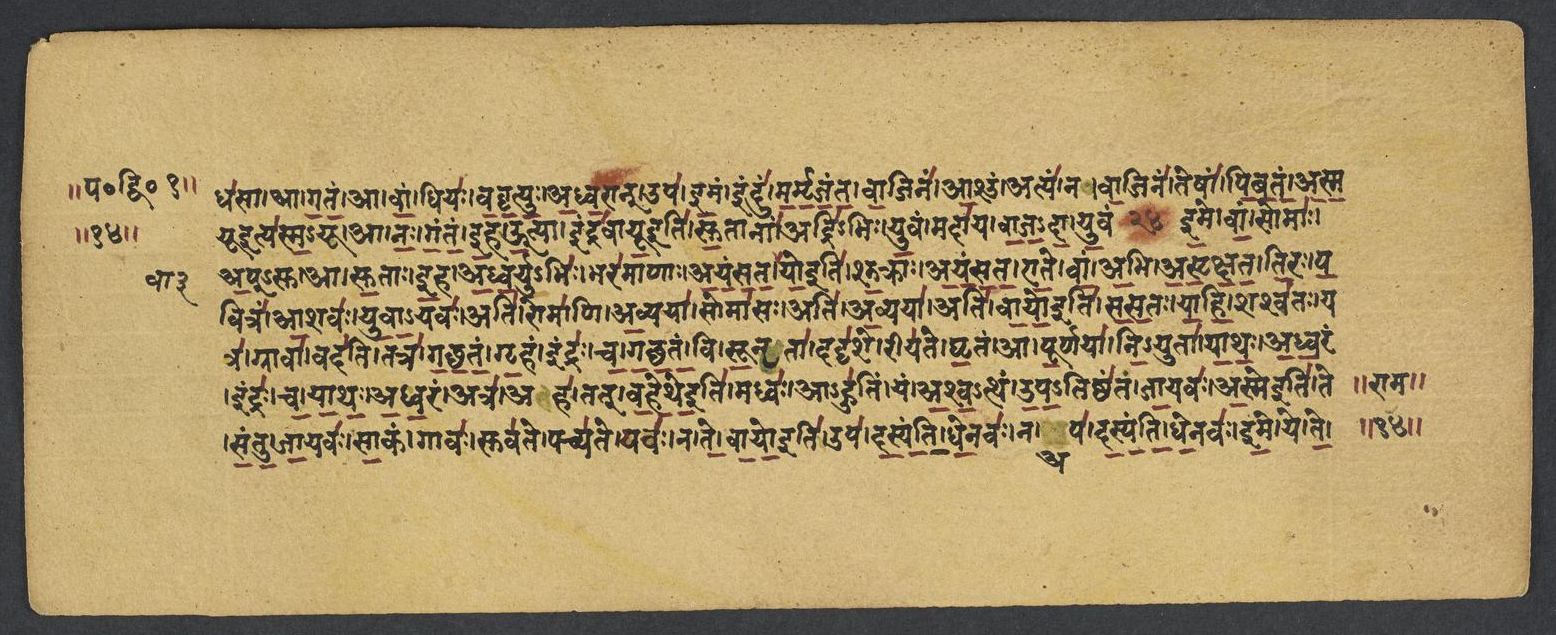
Penn Ms. Coll. 390 Item 41, fol. 105v (numbered 14v by the scribe) (OPenn image 107, upper leaf). Checked on the image: the Rigveda text on this page begins in RV 1.135.4 ‹-rādhasā ā gatam›. The next page with Rigveda text, fol. 106r (numbered 15r by the scribe), begins in RV 1.135.9 ‹su vāyo iti bāhu-ojasaḥ›. Verses 1.135.4-8 end on this page; 1.135.4 begins on fol. 105r (numbered 14r by the scribe).
4ā vā̱ṁ ratho̍ ni̱yutvā̍n vakṣa̱d ava̍se̱ 'bhi prayā̍ṁsi̱ sudhi̍tāni vī̱taye̱ vāyo̍ ha̱vyāni̍ vī̱taye̍ | piba̍ta̱m madhvo̱ andha̍saḥ pūrva̱peya̱ṁ hi vā̍ṁ hi̱tam | vāya̱v ā ca̱ndreṇa̱ rādha̱sā ga̍ta̱m indra̍ś ca̱ rādha̱sā ga̍tam ||
5ā vā̱ṁ dhiyo̍ vavṛtyur adhva̱rām̐ upe̱mam indu̍m marmṛjanta vā̱jina̍m ā̱śum atya̱ṁ na vā̱jina̍m | teṣā̍m pibatam asma̱yū ā no̍ gantam i̱hotyā | indra̍vāyū su̱tānā̱m adri̍bhir yu̱vam madā̍ya vājadā yu̱vam ||
6i̱me vā̱ṁ somā̍ a̱psv ā su̱tā i̱hādhva̱ryubhi̱r bhara̍māṇā ayaṁsata̱ vāyo̍ śu̱krā a̍yaṁsata | e̱te vā̍m a̱bhy a̍sṛkṣata ti̱raḥ pa̱vitra̍m ā̱śava̍ḥ | yu̱vā̱yavo 'ti̱ romā̍ṇy a̱vyayā̱ somā̍so̱ aty a̱vyayā̍ ||
7ati̍ vāyo sasa̱to yā̍hi̱ śaśva̍to̱ yatra̱ grāvā̱ vada̍ti̱ tatra̍ gacchataṁ gṛ̱ham indra̍ś ca gacchatam | vi sū̱nṛtā̱ dadṛ̍śe̱ rīya̍te ghṛ̱tam ā pū̱rṇayā̍ ni̱yutā̍ yātho adhva̱ram indra̍ś ca yātho adhva̱ram ||
8atrāha̱ tad va̍hethe̱ madhva̱ āhu̍ti̱ṁ yam a̍śva̱ttham u̍pa̱tiṣṭha̍nta jā̱yavo̱ 'sme te sa̍ntu jā̱yava̍ḥ | sā̱kaṁ gāva̱ḥ suva̍te̱ pacya̍te̱ yavo̱ na te̍ vāya̱ upa̍ dasyanti dhe̱navo̱ nāpa̍ dasyanti dhe̱nava̍ḥ ||
Compare: Padapāṭha (word-by-word text written in the manuscript; Sansknet e-text via GRETIL)
4ā | vām | rathaḥ | niyutvān | vakṣat | avase | abhi | prayāṃsi | su-dhitāni | vītaye | vāyo iti | havyāni | vītaye | pibatam | madhvaḥ | andhasaḥ | pūrva-peyam | hi | vām | hitam | vāyo iti | ā | candreṇa | rādhasā | ā | gatam | indraḥ | ca | rādhasā | ā | gatam
5ā | vām | dhiyaḥ | vavṛtyuḥ | adhvarān | upa | imam | indum | marmṛjanta | vājinam | āśum | atyam | na | vājinam | teṣām | pibatam | asmayū ity asma-yū | ā | naḥ | gantam | iha | ūtyā | indravāyūiti | sutānām | adri-bhiḥ | yuvam | madāya | vāja-dā | yuvam
6ime | vām | somāḥ | ap-su | ā | sutāḥ | iha | adhvaryu-bhiḥ | bharamāṇāḥ | ayaṃsata | vāyo iti | śukrāḥ | ayaṃsata | ete | vām | abhi | asṛkṣata | tiraḥ | pavitram | āśavaḥ | yuvāyavaḥ | ati | romāṇi | avyayā | somāsaḥ | ati | avyayā
7ati | vāyo iti | sasataḥ | yāhi | śaśvataḥ | yatra | grāvā | vadati | tatra | gacchatam | gṛham | indraḥ | ca | gacchatam | vi | sūnṛtā | dadṛśe | rīyate | ghṛtam | ā | pūrṇayā | ni-yutā | yāthaḥ | adhvaram | indraḥ | ca | yāthaḥ | adhvaram
8atra | aha | tat | vahetheiti | madhvaḥ | āhutim | yam | aśvattham | upa-tiṣṭhanta | jāyavaḥ | asme iti | te | santu | jāyavaḥ | sākam | gāvaḥ | suvate | pacyate | yavaḥ | na | te | vāyo iti | upa | dasyanti | dhenavaḥ | na | apa | dasyanti | dhenavaḥ
4The chariot with its team of horses bring you both, to guard us and to taste the well-appointed food, Vâyu, to taste the offerings! Drink of the pleasant -flavoured juice the first draught is assigned to you. O Vâyu, with your splendid bounty come ye both, Indra, with bounty come ye both.
5May our songs bring you hither to our solemn rites: these drops of mighty vigour have they beauti fied, like a swift veed of mighty strength. Drink of them well-inclined to us, come hitherward to be our help. Drink, Indra-Vâyu, of these Juices pressed with stones, Strength-givers! till they gladden you.
6These Soma juices pressed for you in waters here, borne by attendant priests, are oficredup to you: bright, Vâyu, are they offered up. Swift through the strainer have they flowed, and here are shed for both ofyou, Soma-drops, fain for you, over the wether's fleece, Somas over the wether's fleece.
7O Vâyu, pass thou over all the,slumberers, and where the press-stone rings enter ye both that house, yea, Indra, go ye both within. The joyous Maiden is beheld, the butter flows. With richly laden team come to our solemn rite, yea, Indra, come ye to the rite.
8Ride hither to the offering of the pleasant juice, the holy Fig-tree which victorious priests surround: victorious be they still for us. At once the cows yield milk, the barleymeal is dressed. For thee, O Vâyu, never shall the cows grow thin, never for thee shall they be dry.
Where on the image
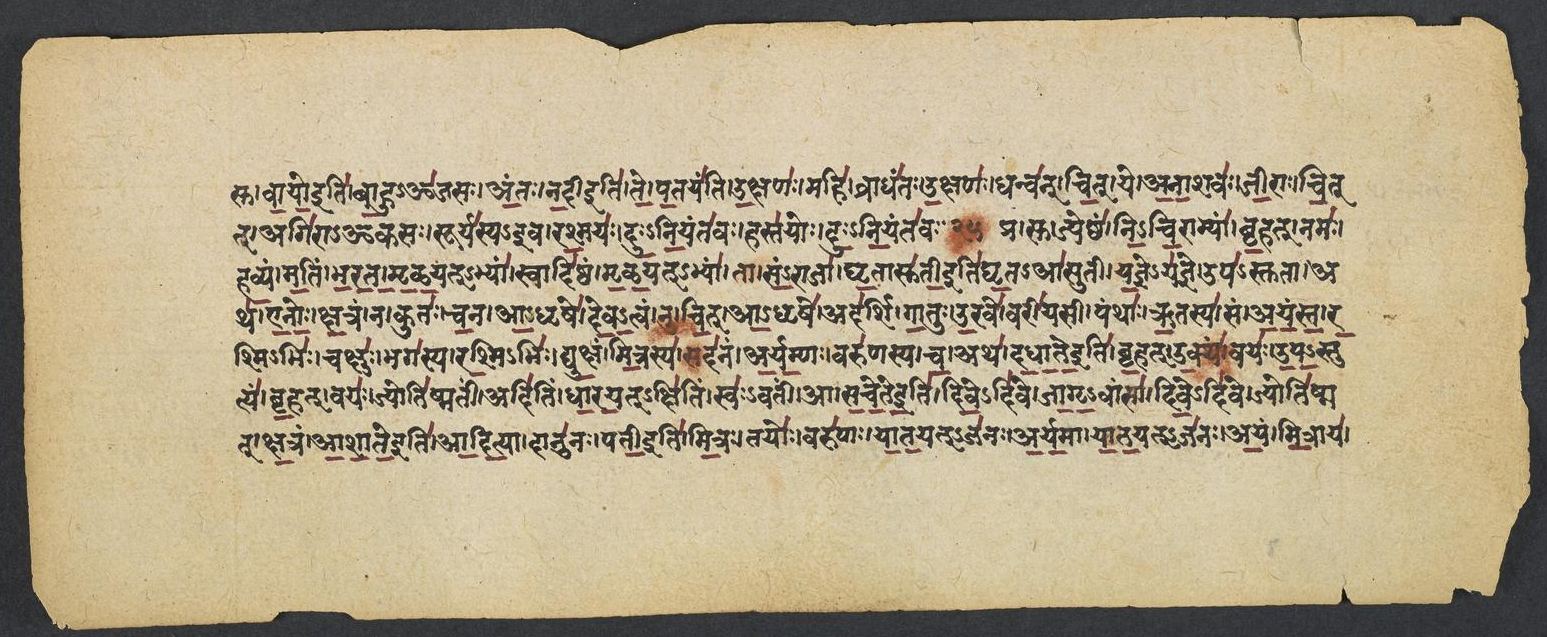
Penn Ms. Coll. 390 Item 41, fol. 106r (numbered 15r by the scribe) (OPenn image 107, lower leaf). Checked on the image: the Rigveda text on this page begins in RV 1.135.9 ‹su vāyo iti bāhu-ojasaḥ›. The next page with Rigveda text, fol. 106v (numbered 15v by the scribe), begins in RV 1.136.4 ‹varuṇāya śam-tamaḥ somaḥ bhūtu›. Verse 1.135.9 ends on this page; 1.135.9 begins on fol. 105v (numbered 14v by the scribe).
9i̱me ye te̱ su vā̍yo bā̱hvo̍jaso̱ 'ntar na̱dī te̍ pa̱taya̍nty u̱kṣaṇo̱ mahi̱ vrādha̍nta u̱kṣaṇa̍ḥ | dhanva̍ñ ci̱d ye a̍nā̱śavo̍ jī̱rāś ci̱d agi̍raukasaḥ | sūrya̍syeva ra̱śmayo̍ durni̱yanta̍vo̱ hasta̍yor durni̱yanta̍vaḥ ||
Compare: Padapāṭha (word-by-word text written in the manuscript; Sansknet e-text via GRETIL)
9ime | ye | te | su | vāyo iti | bāhu-ojasaḥ | antaḥ | nadī iti | te | patayanti | ukṣaṇaḥ | mahi | vrādhantaḥ | ukṣaṇaḥ | dhanvan | cit | ye | anāśavaḥ | jīrāḥ | cit | agirāokasaḥ | sūryasya-iva | raśmayaḥ | duḥ-niyantavaḥ | hastayoḥ | duḥ-niyantavaḥ
9These Bulls of thine, O Vâyu with the arm of strength, who swiftly fly within the current of thy stream, the Bulls increasing in their might, Horseless, yet even through the waste swift-moving, whom no shout can stay, Hard to be checked are they, like sunbeams, in their course. hard to be checked by both the hands.
Notes
- Sanskrit: Aufrecht's edition (1877) with the Vedic accents, as entered by van Nooten and Holland (GRETIL).
- English: Ralph T. H. Griffith, The Hymns of the Rigveda (1889-1892; 2nd ed. 1896-1897), from the VedaWeb digital text; OCR slips in that text were corrected against the printed 2nd edition (data/sources/rigveda/griffith_errata.json).
- Padapāṭha (edition text): Sansknet e-text via GRETIL (CC BY-NC-SA 4.0).
Cite
Sources
- Source: Penn Ms. Coll. 390 Item 41 (undated (catalogued with Penn's 18th-19th c. Vedic manuscripts)), OPenn, Public Domain Mark + Aufrecht's accented text (GRETIL) + Griffith's English (VedaWeb) (holding institution)
- Critical edition: Aufrecht (1877), accented e-text via GRETIL
← previous · → next · v cycle view · l back to library