Rigveda 1.152: To Mitra and Varuna
Introduction
Rigveda 1.152 is a hymn of 7 verses addressed to Mitra and Varuna. It stands in book (maṇḍala) 1, a collection of hymns by many families of poets. The Rigveda is the oldest collection of Sanskrit hymns, composed in the second half of the second millennium BCE and handed down orally for many centuries before it was written down.
The manuscript shown is Penn Ms. Coll. 390 Item 41 (University of Pennsylvania), an undated paper manuscript of the padapāṭha (the word-by-word recitation text, in which every word is written separately and compounds are split) of the whole Ṛgveda in Devanāgarī, 884 leaves in fascicles, 7-9 lines to the page, accents in red; this hymn stands on fol. 116v-117v. Each section below gives the verses that end on one page; the page boundaries were read on the images (the opening words of every page), not counted out. Where the manuscript is a padapāṭha (the word-by-word recitation text), the section shows Aufrecht's continuous (saṃhitā) text first and, as the edition text, the padapāṭha of the same verses, which is the form written on the page.
How was this verified? (Provenance)
Where on the image
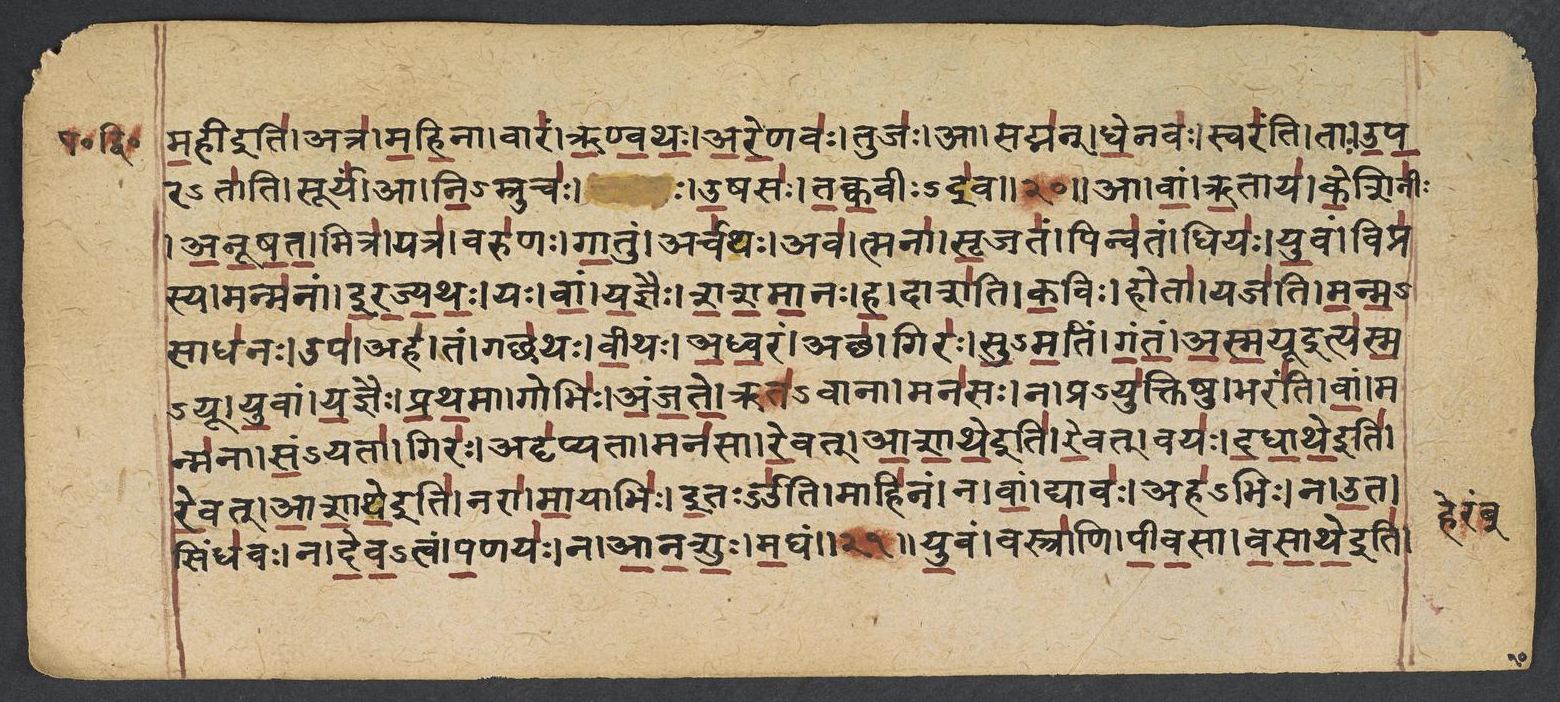
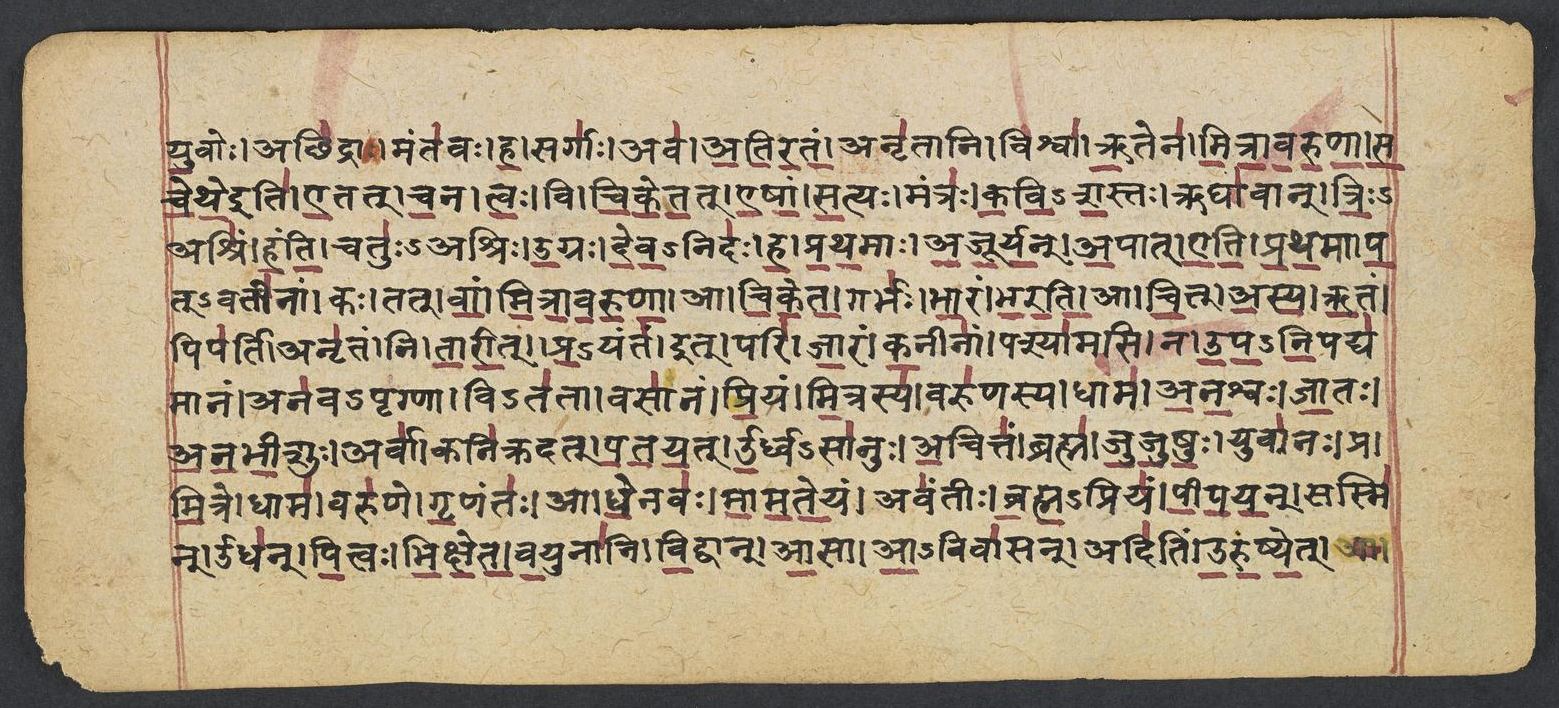
Penn Ms. Coll. 390 Item 41, fol. 117r (numbered 11r by the scribe) (OPenn image 118, lower leaf). Checked on the image: the Rigveda text on this page begins in RV 1.152.1 ‹yuvoḥ acchidrāḥ mantavaḥ ha›. The next page with Rigveda text, fol. 117v (numbered 11v by the scribe), begins in RV 1.152.7 ‹ā vām mitrāvaruṇā havya-juṣṭim›. Verses 1.152.1-6 end on this page; 1.152.1 begins on fol. 116v (numbered 10v by the scribe).
1yu̱vaṁ vastrā̍ṇi pīva̱sā va̍sāthe yu̱vor acchi̍drā̱ manta̍vo ha̱ sargā̍ḥ | avā̍tirata̱m anṛ̍tāni̱ viśva̍ ṛ̱tena̍ mitrāvaruṇā sacethe ||
2e̱tac ca̱na tvo̱ vi ci̍ketad eṣāṁ sa̱tyo mantra̍ḥ kaviśa̱sta ṛghā̍vān | tri̱raśri̍ṁ hanti̱ catu̍raśrir u̱gro de̍va̱nido̱ ha pra̍tha̱mā a̍jūryan ||
3a̱pād e̍ti pratha̱mā pa̱dvatī̍nā̱ṁ kas tad vā̍m mitrāvaru̱ṇā ci̍keta | garbho̍ bhā̱ram bha̍ra̱ty ā ci̍d asya ṛ̱tam pipa̱rty anṛ̍ta̱ṁ ni tā̍rīt ||
4pra̱yanta̱m it pari̍ jā̱raṁ ka̱nīnā̱m paśyā̍masi̱ nopa̍ni̱padya̍mānam | ana̍vapṛgṇā̱ vita̍tā̱ vasā̍nam pri̱yam mi̱trasya̱ varu̍ṇasya̱ dhāma̍ ||
5a̱na̱śvo jā̱to a̍nabhī̱śur arvā̱ kani̍kradat patayad ū̱rdhvasā̍nuḥ | a̱citta̱m brahma̍ jujuṣu̱r yuvā̍na̱ḥ pra mi̱tre dhāma̱ varu̍ṇe gṛ̱ṇanta̍ḥ ||
6ā dhe̱navo̍ māmate̱yam ava̍ntīr brahma̱priya̍m pīpaya̱n sasmi̱nn ūdha̍n | pi̱tvo bhi̍kṣeta va̱yunā̍ni vi̱dvān ā̱sāvivā̍sa̱nn adi̍tim uruṣyet ||
Compare: Padapāṭha (word-by-word text written in the manuscript; Sansknet e-text via GRETIL)
1yuvam | vastrāṇi | pīvasā | vasātheiti | yuvoḥ | acchidrāḥ | mantavaḥ | ha | sargāḥ | ava | atiratam | anṛtāni | viśvā | ṛtena | mitrāvaruṇā | sacetheiti
2etat | cana | tvaḥ | vi | ciketat | eṣām | satyaḥ | mantraḥ | kavi-śastaḥ | ṛghāvān | triḥ-aśrim | hanti | catuḥ-aśriḥ | ugraḥ | deva-nidaḥ | ha | prathamāḥ | ajūryan
3apāt | eti | prathamā | pat-vatīnām | kaḥ | tat | vām | mitrāvaruṇā | ā | ciketa | garbhaḥ | bhāram | bharati | ā | cit | asya | ṛtam | piparti | anṛtam | ni | tārīt
4pra-yantam | it | pari | jāram | kanīnām | paśyāmasi | na | upa-nipadyamānam | anava-pṛgṇā | vi-tatā | vasānam | priyam | mitrasya | varuṇasya | dhāma
5anaśvaḥ | jataḥ | anabhīśuḥ | arvā | kanikradat | patayat | ūrdhva-sānuḥ | ac ittam | brahma | jujuṣuḥ | yuvānaḥ | pra | mitre | dhāma | varuṇe | gṛṇantaḥ
6ā | dhenavaḥ | māmateyam | avantīḥ | brahma-priyam | pīpayan | sasmin | ūdhan | pitvaḥ | bhikṣeta | vayunāni | vidvān | āsā | āvivāsan | aditim | uruṣyet
1THE robes which ye put on abound with fatness: uninterrupted courses are your counsels. All falsehood, Mitra-Varuṇa! ye conquer, and closely cleave unto the Law Eternal.
2This might of theirs hath no one comprehended. True is the crushing word the sage hath uttered, The fearful four-edged bolt smites down the three-edged, and those who hate the Gods first fall and perish.
3The Footless Maid precedeth footed creatures. Who marketh, Mitra-Varuṇa, this your doing? The Babe Unborn supporteth this world's burthen, fuIfilleth Law and overcometh falsehood.
4We look on him the darling of the Maidens, always advancing, never falling downward, Wearing inseparable, wide-spread raiment, Mitra's and Varuṇa's delightful glory.
5Unbridled Courser, born but not of horses, neighing he flieth on with back uplifted. The youthful love mystery thought-surpassing, praising in Mitra-Varuṇa, its glory.
6May the milch-kine who favour Mâmateya prosper in this world him who loves devotion. May he, well skilled in rites, be food, and calling Aditi with his lips give us assistance.
Where on the image
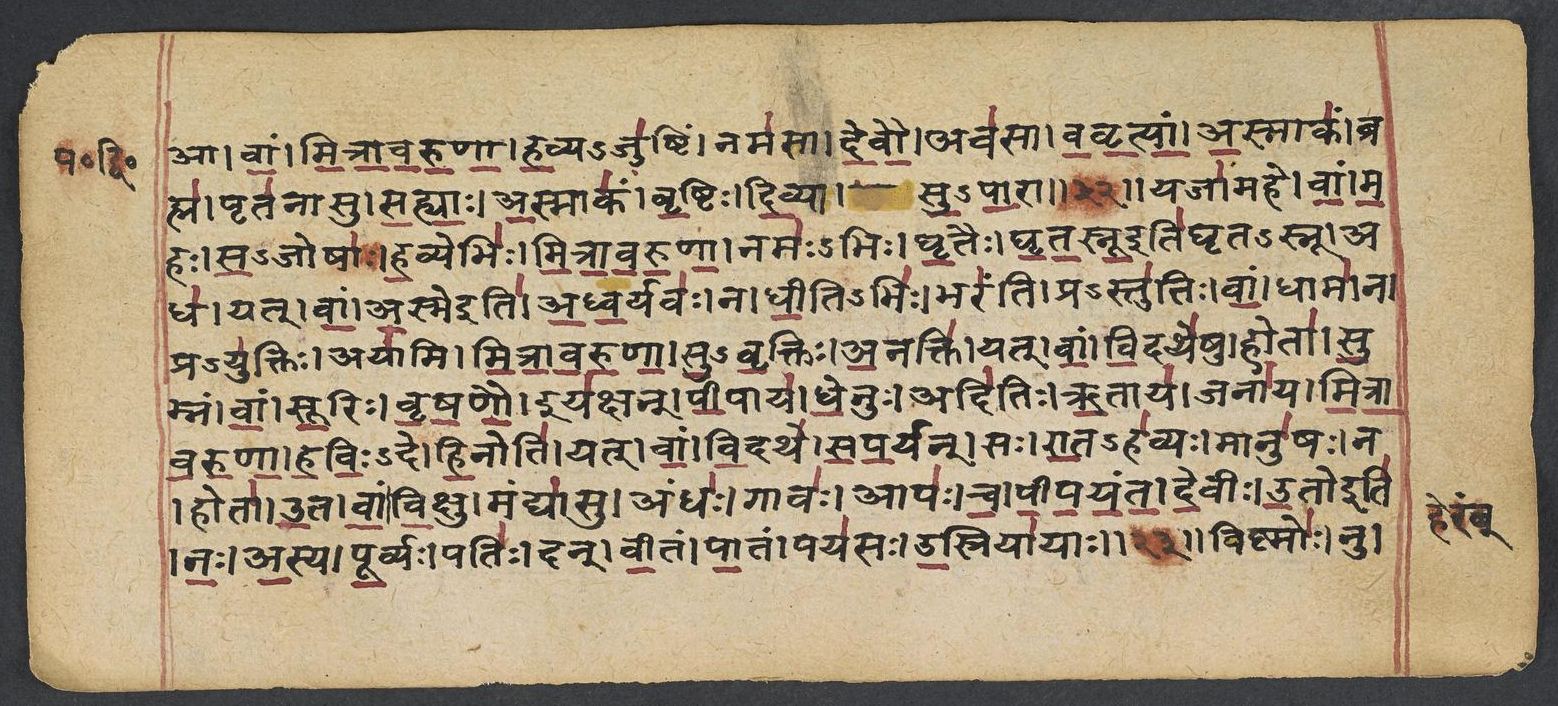
Penn Ms. Coll. 390 Item 41, fol. 117v (numbered 11v by the scribe) (OPenn image 119, upper leaf). Checked on the image: the Rigveda text on this page begins in RV 1.152.7 ‹ā vām mitrāvaruṇā havya-juṣṭim›. The next page with Rigveda text, fol. 118r (numbered 12r by the scribe), begins in RV 1.154.1 ‹kam vīryāṇi pra vocam›. Verse 1.152.7 ends on this page.
7ā vā̍m mitrāvaruṇā ha̱vyaju̍ṣṭi̱ṁ nama̍sā devā̱v ava̍sā vavṛtyām | a̱smāka̱m brahma̱ pṛta̍nāsu sahyā a̱smāka̍ṁ vṛ̱ṣṭir di̱vyā su̍pā̱rā ||
Compare: Padapāṭha (word-by-word text written in the manuscript; Sansknet e-text via GRETIL)
7ā | vām | mitrāvaruṇā | havya-juṣṭim | namasā | devau | avasā | vavṛtyām | asmākam | brahma | pṛtanāsu | sahyāḥ | asmākam | vṛṣṭiḥ | divyā | su-pārā
7Gods, Mitra-Varuṇa, with love and worship, let me make you delight in this oblation. May our prayer be victorious in battles, may we have rain from heaven to make us prosper.
Notes
- Sanskrit: Aufrecht's edition (1877) with the Vedic accents, as entered by van Nooten and Holland (GRETIL).
- English: Ralph T. H. Griffith, The Hymns of the Rigveda (1889-1892; 2nd ed. 1896-1897), from the VedaWeb digital text; OCR slips in that text were corrected against the printed 2nd edition (data/sources/rigveda/griffith_errata.json).
- Padapāṭha (edition text): Sansknet e-text via GRETIL (CC BY-NC-SA 4.0).
Cite
Sources
- Source: Penn Ms. Coll. 390 Item 41 (undated (catalogued with Penn's 18th-19th c. Vedic manuscripts)), OPenn, Public Domain Mark + Aufrecht's accented text (GRETIL) + Griffith's English (VedaWeb) (holding institution)
- Critical edition: Aufrecht (1877), accented e-text via GRETIL
← previous · → next · v cycle view · l back to library