Rigveda 1.151: To Mitra and Varuna
Introduction
Rigveda 1.151 is a hymn of 9 verses addressed to Mitra and Varuna. It stands in book (maṇḍala) 1, a collection of hymns by many families of poets. The Rigveda is the oldest collection of Sanskrit hymns, composed in the second half of the second millennium BCE and handed down orally for many centuries before it was written down.
The manuscript shown is Penn Ms. Coll. 390 Item 41 (University of Pennsylvania), an undated paper manuscript of the padapāṭha (the word-by-word recitation text, in which every word is written separately and compounds are split) of the whole Ṛgveda in Devanāgarī, 884 leaves in fascicles, 7-9 lines to the page, accents in red; this hymn stands on fol. 116r-116v. Each section below gives the verses that end on one page; the page boundaries were read on the images (the opening words of every page), not counted out. Where the manuscript is a padapāṭha (the word-by-word recitation text), the section shows Aufrecht's continuous (saṃhitā) text first and, as the edition text, the padapāṭha of the same verses, which is the form written on the page.
How was this verified? (Provenance)
Where on the image
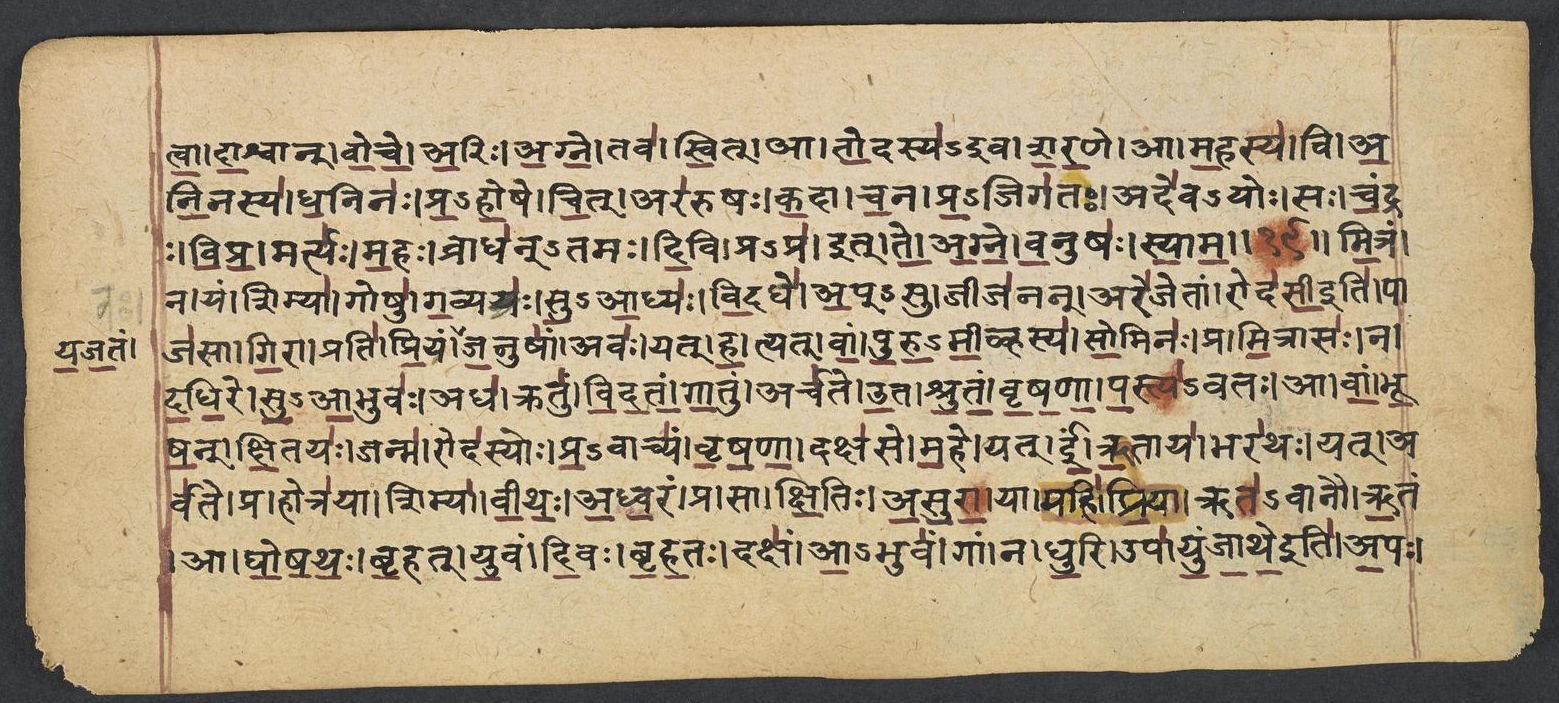
Penn Ms. Coll. 390 Item 41, fol. 116r (numbered 10r by the scribe) (OPenn image 117, lower leaf). Checked on the image: the Rigveda text on this page begins in RV 1.150.1 ‹tvā dāsvān voce ariḥ›. The next page with Rigveda text, fol. 116v (numbered 10v by the scribe), begins in RV 1.151.4 ‹-apaḥ›. Verses 1.151.1-3 end on this page.
1mi̱traṁ na yaṁ śimyā̱ goṣu̍ ga̱vyava̍ḥ svā̱dhyo̍ vi̱dathe̍ a̱psu jīja̍nan | are̍jetā̱ṁ roda̍sī̱ pāja̍sā gi̱rā prati̍ pri̱yaṁ ya̍ja̱taṁ ja̱nuṣā̱m ava̍ḥ ||
2yad dha̱ tyad vā̍m purumī̱ḻhasya̍ so̱mina̱ḥ pra mi̱trāso̱ na da̍dhi̱re svā̱bhuva̍ḥ | adha̱ kratu̍ṁ vidataṁ gā̱tum arca̍ta u̱ta śru̍taṁ vṛṣaṇā pa̱styā̍vataḥ ||
3ā vā̍m bhūṣan kṣi̱tayo̱ janma̱ roda̍syoḥ pra̱vācya̍ṁ vṛṣaṇā̱ dakṣa̍se ma̱he | yad ī̍m ṛ̱tāya̱ bhara̍tho̱ yad arva̍te̱ pra hotra̍yā̱ śimyā̍ vītho adhva̱ram ||
Compare: Padapāṭha (word-by-word text written in the manuscript; Sansknet e-text via GRETIL)
1mitram | na | yam | śimyā | goṣu | gavyavaḥ | su-ādhyaḥ | vidathe | ap-su | jījanan | arejetām | rodasī iti | pājasā | girā | prati | priyam | yajatam | januṣām | avaḥ
2yat | ha | tyat | vām | puru-mīḷhasya | sominaḥ | pra | mitrāsaḥ | na | dadhire | su-ābhuvaḥ | adha | kratum | vidatam | gātum | arcate | uta | śrutam | vṛṣaṇā | pastya-vataḥ
3ā | vām | bhūṣan | kṣitayaḥ | janma | rodasyoḥ | pra-vācyam | vṛṣaṇā | dakṣase | mahe | yat | īm | ṛtāya | bharathaḥ | yat | arvate | pra | hotrayā | śimyā | vīthaḥ | adhvaram
1HEAVEN and earth trembled at the might and voice of him, whom, loved and Holy One, helper of all mankind, The wise who longed for spoil in fight for kine brought forth with power, a Friend, mid waters, at the sacrifice.
2As these, like friends, have done this work for you, these prompt servants of Purumîḷha Somaofferer, Give mental power to him who sings the sacred song, and hearken, Strong Ones, to the master ofthe house.
3The folk have glorified your birth from Earth and Heaven, to be extolled, ye Strong Ones, for your mighty power. Ye, when ye bring to singer and the rite, enjoy the sacrifice performed with holy praise and strength.
Where on the image
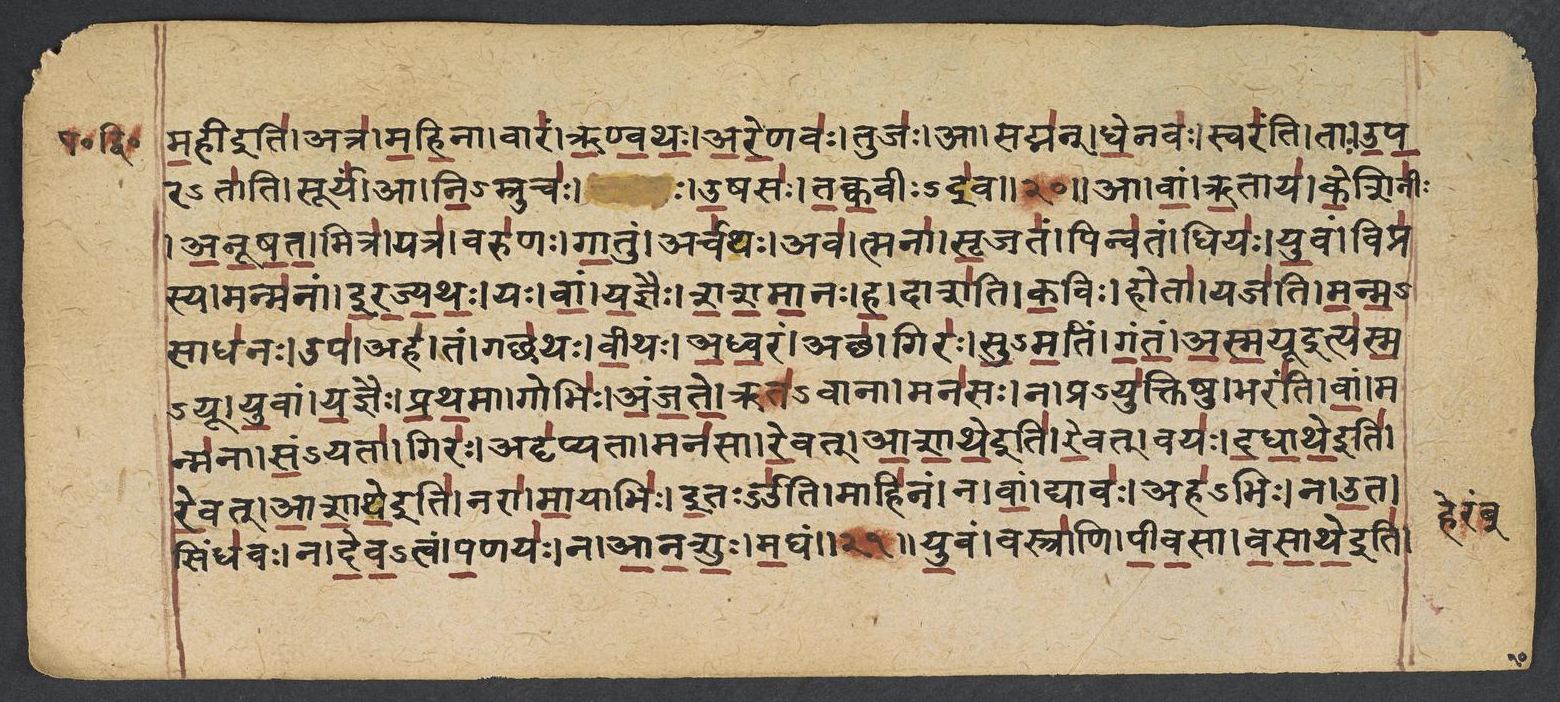
Penn Ms. Coll. 390 Item 41, fol. 116v (numbered 10v by the scribe) (OPenn image 118, upper leaf). Checked on the image: the Rigveda text on this page begins in RV 1.151.4 ‹-apaḥ›. The next page with Rigveda text, fol. 117r (numbered 11r by the scribe), begins in RV 1.152.1 ‹yuvoḥ acchidrāḥ mantavaḥ ha›. Verses 1.151.4-9 end on this page; 1.151.4 begins on fol. 116r (numbered 10r by the scribe).
4pra sā kṣi̱tir a̍sura̱ yā mahi̍ pri̱ya ṛtā̍vānāv ṛ̱tam ā gho̍ṣatho bṛ̱hat | yu̱vaṁ di̱vo bṛ̍ha̱to dakṣa̍m ā̱bhuva̱ṁ gāṁ na dhu̱ry upa̍ yuñjāthe a̱paḥ ||
5ma̱hī atra̍ mahi̱nā vāra̍m ṛṇvatho 're̱ṇava̱s tuja̱ ā sadma̍n dhe̱nava̍ḥ | svara̍nti̱ tā u̍pa̱ratā̍ti̱ sūrya̱m ā ni̱mruca̍ u̱ṣasa̍s takva̱vīr i̍va ||
6ā vā̍m ṛ̱tāya̍ ke̱śinī̍r anūṣata̱ mitra̱ yatra̱ varu̍ṇa gā̱tum arca̍thaḥ | ava̱ tmanā̍ sṛ̱jata̱m pinva̍ta̱ṁ dhiyo̍ yu̱vaṁ vipra̍sya̱ manma̍nām irajyathaḥ ||
7yo vā̍ṁ ya̱jñaiḥ śa̍śamā̱no ha̱ dāśa̍ti ka̱vir hotā̱ yaja̍ti manma̱sādha̍naḥ | upāha̱ taṁ gaccha̍tho vī̱tho a̍dhva̱ram acchā̱ gira̍ḥ suma̱tiṁ ga̍ntam asma̱yū ||
8yu̱vāṁ ya̱jñaiḥ pra̍tha̱mā gobhi̍r añjata̱ ṛtā̍vānā̱ mana̍so̱ na prayu̍ktiṣu | bhara̍nti vā̱m manma̍nā sa̱ṁyatā̱ giro 'dṛ̍pyatā̱ mana̍sā re̱vad ā̍śāthe ||
9re̱vad vayo̍ dadhāthe re̱vad ā̍śāthe̱ narā̍ mā̱yābhi̍r i̱taū̍ti̱ māhi̍nam | na vā̱ṁ dyāvo 'ha̍bhi̱r nota sindha̍vo̱ na de̍va̱tvam pa̱ṇayo̱ nāna̍śur ma̱gham ||
Compare: Padapāṭha (word-by-word text written in the manuscript; Sansknet e-text via GRETIL)
4pra | sā | kṣitiḥ | asura | yā | mahi | priyā | ṛta-vānau | ṛtam | ā | ghoṣathaḥ | bṛhat | yuvam | divaḥ | bṛhataḥ | dakṣam | ābhuvam | gām | na | dhuri | upa | yuñjātheiti | apaḥ
5mahī | atra | mahinā | vāram | ṛṇvathaḥ | areṇavaḥ | tujaḥ | ā | sadman | dhenavaḥ | svaranti | tāḥ | upara-tāti | sūryam | ā | ni-mrucaḥ | uṣasaḥ | takvavīḥ-iva
6ā | vām | ṛtāya | keśinīḥ | anūṣata | mitra | yatra | varuṇa | gātum | arcathaḥ | ava | tmanā | sṛjatam | pinvatam | dhiyaḥ | yuvam | viprasya | manmanām | irajyathaḥ
7yaḥ | vām | yajñaiḥ | śaśamānaḥ | ha | dāśati | kaviḥ | hotā | yajati | manma-sādhanaḥ | upa | aha | tam | gacchathaḥ | vīthaḥ | adhvaram accha | giraḥ | su-matim | gantam | asmayū ity asma-yū
8yuvām | yajñaiḥ | prathamā | gobhiḥ | añjate | ṛta-vānā | manasaḥ | na | pra-yuktiṣu | bharanti | vām | manmanā | sam-yatā | giraḥ | adṛpyatā | manasā | revat | āśātheiti
9revat | vayaḥ | dadhāthe | revat | āśātheiti | narā | māyābhiḥ | itaḥ-ūti | māhinam | na | vām | dyāvaḥ | aha-bhiḥ | na | uta | sindhavaḥ | na | deva-tvam | paṇayaḥ | na | ānaśuḥ | magham
4The people prospers, Asuras! whom ye dearly love: ye, Righteous Ones, proclaim aloud the Holy Law. That efficacious power that comes from lofty heaven, ye bind unto the work, as to the pole an ox.
5On this great earth ye send your treasure down with might: unstained by dust, the crowding kine are in the stalls. Here in the neighbourhood they cry unto the Sun at morning and at evening, like swift birds of prey.
6The flames with curling tresses serve your sacrifice, whereto ye sing the song, Mitra and Varuṇa. Send down of your free will, prosper our holy songs: ye are sole Masters of the singer's hymn of praise.
7Whoso with sacrifices toiling brings you gifts, and worships, sage and priest, fulfilling your desire,– To him do ye draw nigh and taste his sacrifice. Come well-inclined to us unto our songs and prayer.
8With sacrifices and with milk they deck you first, ye Righteous Ones, as if through stirrings of the mind. To you they bring their hymns with their collected thought, while ye with earnest soul come to us gloriously.
9Rich strength of life is yours: ye, Heroes, have obtained through your surpassing powers rich farextending might. Not the past days conjoined with nights, not rivers, not the Paṇis have attained your Godhead and your wealth.
Notes
- Sanskrit: Aufrecht's edition (1877) with the Vedic accents, as entered by van Nooten and Holland (GRETIL).
- English: Ralph T. H. Griffith, The Hymns of the Rigveda (1889-1892; 2nd ed. 1896-1897), from the VedaWeb digital text; OCR slips in that text were corrected against the printed 2nd edition (data/sources/rigveda/griffith_errata.json).
- Padapāṭha (edition text): Sansknet e-text via GRETIL (CC BY-NC-SA 4.0).
Cite
Sources
- Source: Penn Ms. Coll. 390 Item 41 (undated (catalogued with Penn's 18th-19th c. Vedic manuscripts)), OPenn, Public Domain Mark + Aufrecht's accented text (GRETIL) + Griffith's English (VedaWeb) (holding institution)
- Critical edition: Aufrecht (1877), accented e-text via GRETIL
← previous · → next · v cycle view · l back to library