Rigveda 1.165: Dialogue between Indra, the Maruts and Agastya
Introduction
Rigveda 1.165 is a hymn of 15 verses addressed to dialogue between Indra, the Maruts and Agastya. It stands in book (maṇḍala) 1, a collection of hymns by many families of poets. The Rigveda is the oldest collection of Sanskrit hymns, composed in the second half of the second millennium BCE and handed down orally for many centuries before it was written down.
The manuscript shown is Penn Ms. Coll. 390 Item 41 (University of Pennsylvania), an undated paper manuscript of the padapāṭha (the word-by-word recitation text, in which every word is written separately and compounds are split) of the whole Ṛgveda in Devanāgarī, 884 leaves in fascicles, 7-9 lines to the page, accents in red; this hymn stands on fol. 131r-131v. Each section below gives the verses that end on one page; the page boundaries were read on the images (the opening words of every page), not counted out. Where the manuscript is a padapāṭha (the word-by-word recitation text), the section shows Aufrecht's continuous (saṃhitā) text first and, as the edition text, the padapāṭha of the same verses, which is the form written on the page.
How was this verified? (Provenance)
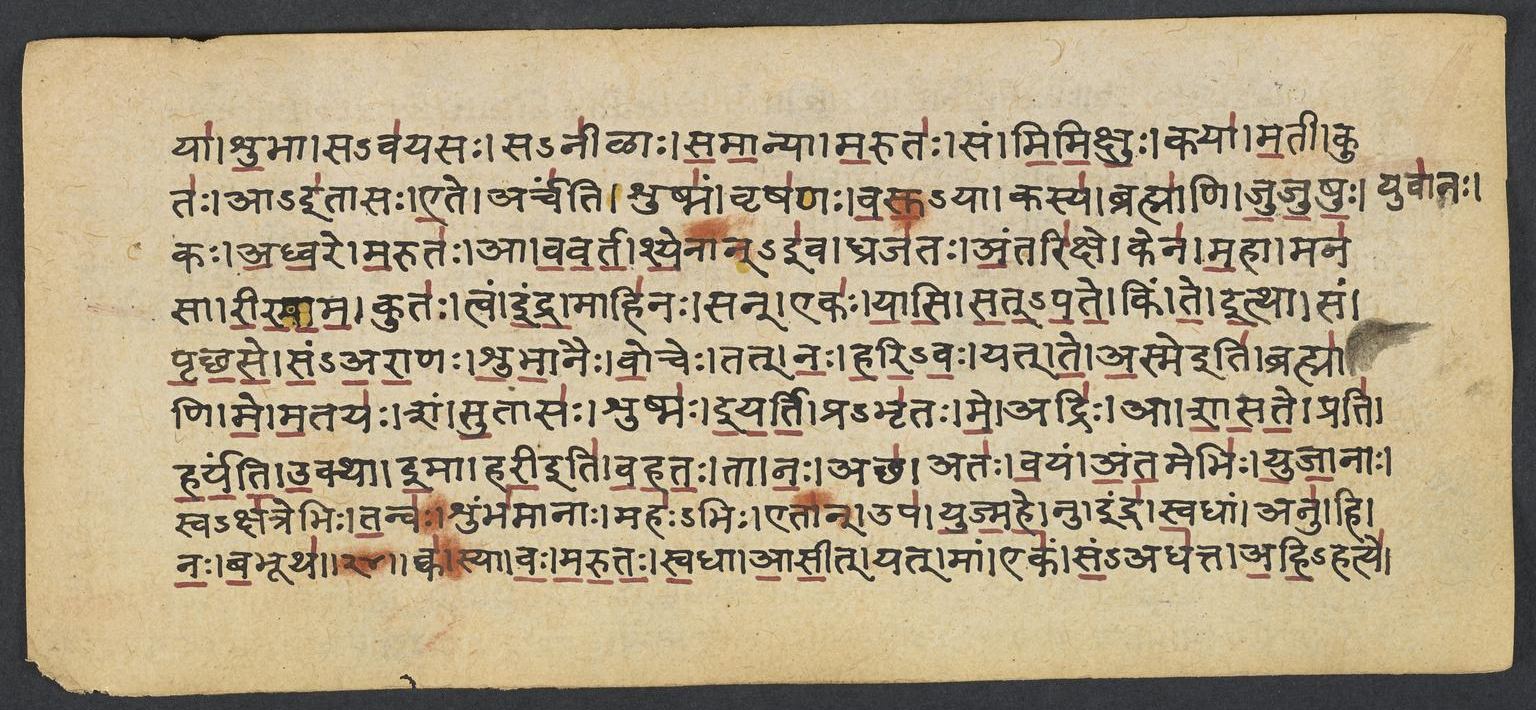
Where on the image
Penn Ms. Coll. 390 Item 41, fol. 131r (numbered 12r by the scribe) (OPenn image 132, lower leaf). Checked on the image: the Rigveda text on this page begins in RV 1.165.1 ‹kayā śubhā sa-vayasaḥ sa-nīḷāḥ›. The next page with Rigveda text, fol. 131v (numbered 12v by the scribe), begins in RV 1.165.6 ‹aham hi ugraḥ taviṣaḥ›. Verses 1.165.1-5 end on this page.
1kayā̍ śu̱bhā sava̍yasa̱ḥ sanī̍ḻāḥ samā̱nyā ma̱ruta̱ḥ sam mi̍mikṣuḥ | kayā̍ ma̱tī kuta̱ etā̍sa e̱te 'rca̍nti̱ śuṣma̱ṁ vṛṣa̍ṇo vasū̱yā ||
2kasya̱ brahmā̍ṇi jujuṣu̱r yuvā̍na̱ḥ ko a̍dhva̱re ma̱ruta̱ ā va̍varta | śye̱nām̐ i̍va̱ dhraja̍to a̱ntari̍kṣe̱ kena̍ ma̱hā mana̍sā rīramāma ||
3kuta̱s tvam i̍ndra̱ māhi̍na̱ḥ sann eko̍ yāsi satpate̱ kiṁ ta̍ i̱tthā | sam pṛ̍cchase samarā̱ṇaḥ śu̍bhā̱nair vo̱ces tan no̍ harivo̱ yat te̍ a̱sme ||
4brahmā̍ṇi me ma̱taya̱ḥ śaṁ su̱tāsa̱ḥ śuṣma̍ iyarti̱ prabhṛ̍to me̱ adri̍ḥ | ā śā̍sate̱ prati̍ haryanty u̱kthemā harī̍ vahata̱s tā no̱ accha̍ ||
5ato̍ va̱yam a̍nta̱mebhi̍r yujā̱nāḥ svakṣa̍trebhis ta̱nva1̱̍ḥ śumbha̍mānāḥ | maho̍bhi̱r etā̱m̐ upa̍ yujmahe̱ nv indra̍ sva̱dhām anu̱ hi no̍ ba̱bhūtha̍ ||
Compare: Padapāṭha (word-by-word text written in the manuscript; Sansknet e-text via GRETIL)
1kayā | śubhā | sa-vayasaḥ | sa-nīḷāḥ | samānyā | marutaḥ | sam | mimikṣuḥ | kayā | matī | kutaḥ | āitāsaḥ | ete | arcanti | śuṣmam | vṛṣaṇaḥ | vasu-yā
2kasya | brahmāṇi | jujuṣuḥ | yuvānaḥ | kaḥ | adhvare | marutaḥ | ā | vavarta | śyenān-iva | dhrajataḥ | antarikṣe | kena | mahā | manasā | rīramāma
3kutaḥ | tvam | indra | māhinaḥ | san | ekaḥ | yāsi | sat-pate | kim | te | itthā | sam | pṛcchase | sam-arāṇaḥ | śubhānaiḥ | voceḥ | tat | naḥ | hari-vaḥ | yat | te | asme iti
4brahmāṇi | me | matayaḥ | śam | sutāsaḥ | śuṣmaḥ | iyarti | pra-bhṛtaḥ | me | adriḥ | ā | śāsate | prati | haryanti | ukthā | imā | harī iti | vahataḥ | tā | naḥ | accha
5ataḥ | vayam | antamebhiḥ | yujānāḥ | sva-kṣatrebhiḥ | tanvaḥ | śumbhamānāḥ | mahaḥ-bhiḥ | etān | upa | yujmahe | nu | indra | svadhām | anu | hi | naḥ | babhūtha
1WITH what bright beauty are the Maruts jointly invested, peers in age, who dwell together? From what place have they come? With what intention? Sing they their strength through love of wealth, these Heroes?
2Whose prayers have they, the Youthful Ones, accepted? Who to his sacrifice hath turned the Maruts? We will delay them on their journey sweeping-with what high spirit!-through the air like eagles.
3Whence comest thou alone, thou who art mighty, Indra, Lord of the Brave? What is thy purpose? Thou greetest us when meeting us the Bright Ones. Lord of Bay Steeds, say what thou hast against us.
4Mine are devotions, hymns; sweet are libations. Strength stirs, and hurled forth is my bolt of thunder. They call for me, their lauds are longing for me. These my Bay Steeds bear me to these oblations.
5Therefore together with our strong companions, having adorned our bodies, now we harness, Our spotted deer with might, for thou, O Indra, hast learnt and understood our Godlike nature.
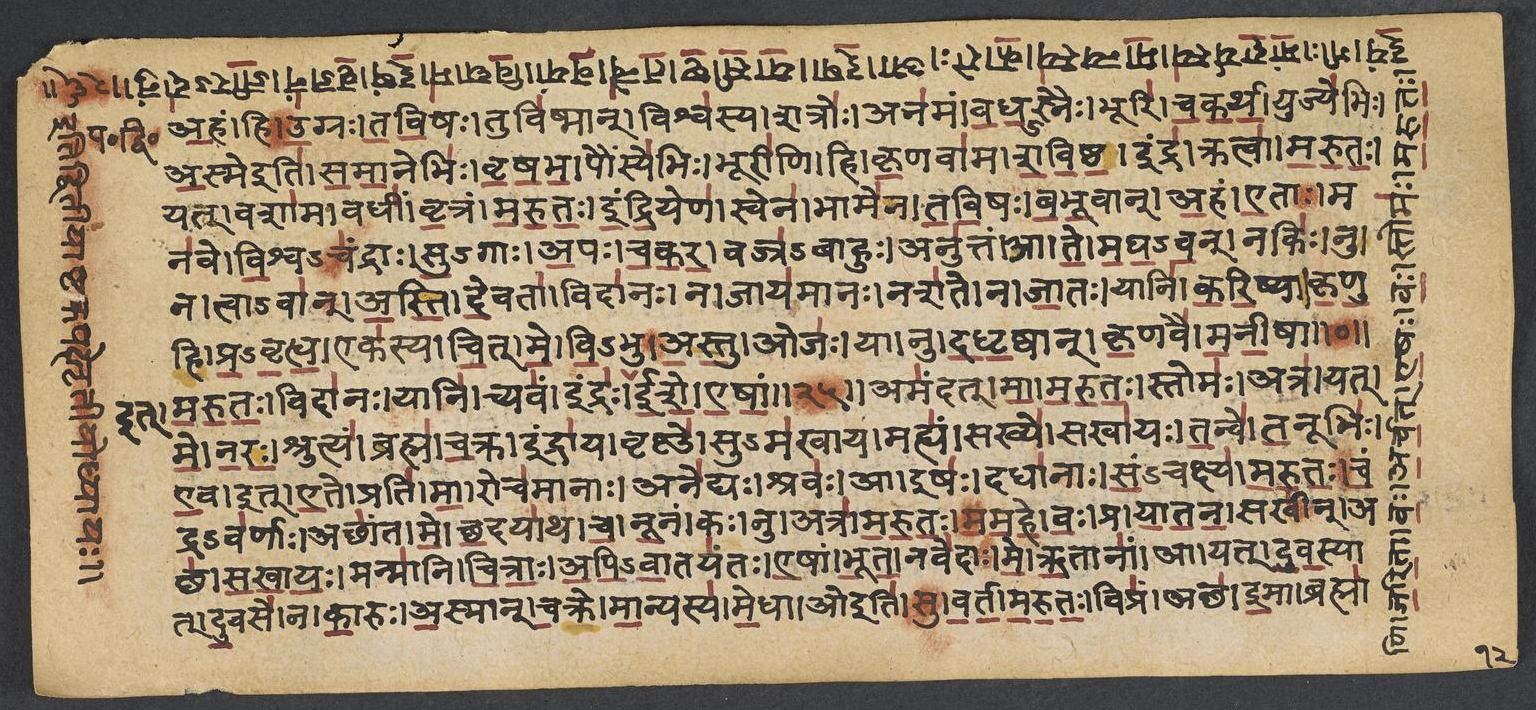
Where on the image
Penn Ms. Coll. 390 Item 41, fol. 131v (numbered 12v by the scribe) (OPenn image 133, upper leaf). Checked on the image: the Rigveda text on this page begins in RV 1.165.6 ‹aham hi ugraḥ taviṣaḥ›. The next page with Rigveda text, fol. 132r (numbered 1r by the scribe), begins in RV 1.166.1 ‹tat nu vocāma rabhasāya›. Verses 1.165.6-15 end on this page; 1.165.6 begins on fol. 131r (numbered 12r by the scribe).
6kva1̱̍ syā vo̍ marutaḥ sva̱dhāsī̱d yan mām eka̍ṁ sa̱madha̍ttāhi̱hatye̍ | a̱haṁ hy u1̱̍gras ta̍vi̱ṣas tuvi̍ṣmā̱n viśva̍sya̱ śatro̱r ana̍maṁ vadha̱snaiḥ ||
7bhūri̍ cakartha̱ yujye̍bhir a̱sme sa̍mā̱nebhi̍r vṛṣabha̱ pauṁsye̍bhiḥ | bhūrī̍ṇi̱ hi kṛ̱ṇavā̍mā śavi̱ṣṭhendra̱ kratvā̍ maruto̱ yad vaśā̍ma ||
8vadhī̍ṁ vṛ̱tram ma̍ruta indri̱yeṇa̱ svena̱ bhāme̍na tavi̱ṣo ba̍bhū̱vān | a̱ham e̱tā mana̍ve vi̱śvaśca̍ndrāḥ su̱gā a̱paś ca̍kara̱ vajra̍bāhuḥ ||
9anu̍tta̱m ā te̍ maghava̱n naki̱r nu na tvāvā̍m̐ asti de̱vatā̱ vidā̍naḥ | na jāya̍māno̱ naśa̍te̱ na jā̱to yāni̍ kari̱ṣyā kṛ̍ṇu̱hi pra̍vṛddha ||
10eka̍sya cin me vi̱bhv a1̱̍stv ojo̱ yā nu da̍dhṛ̱ṣvān kṛ̱ṇavai̍ manī̱ṣā | a̱haṁ hy u1̱̍gro ma̍ruto̱ vidā̍no̱ yāni̱ cyava̱m indra̱ id ī̍śa eṣām ||
11ama̍ndan mā maruta̱ḥ stomo̱ atra̱ yan me̍ nara̱ḥ śrutya̱m brahma̍ ca̱kra | indrā̍ya̱ vṛṣṇe̱ suma̍khāya̱ mahya̱ṁ sakhye̱ sakhā̍yas ta̱nve̍ ta̱nūbhi̍ḥ ||
12e̱ved e̱te prati̍ mā̱ roca̍mānā̱ ane̍dya̱ḥ śrava̱ eṣo̱ dadhā̍nāḥ | sa̱ṁcakṣyā̍ marutaś ca̱ndrava̍rṇā̱ acchā̍nta me cha̱dayā̍thā ca nū̱nam ||
13ko nv atra̍ maruto māmahe va̱ḥ pra yā̍tana̱ sakhī̱m̐r acchā̍ sakhāyaḥ | manmā̍ni citrā apivā̱taya̍nta e̱ṣām bhū̍ta̱ nave̍dā ma ṛ̱tānā̍m ||
14ā yad du̍va̱syād du̱vase̱ na kā̱rur a̱smāñ ca̱kre mā̱nyasya̍ me̱dhā | o ṣu va̍rtta maruto̱ vipra̱m acche̱mā brahmā̍ṇi jari̱tā vo̍ arcat ||
15e̱ṣa va̱ḥ stomo̍ maruta i̱yaṁ gīr mā̍ndā̱ryasya̍ mā̱nyasya̍ kā̱roḥ | eṣā yā̍sīṣṭa ta̱nve̍ va̱yāṁ vi̱dyāme̱ṣaṁ vṛ̱jana̍ṁ jī̱radā̍num ||
Compare: Padapāṭha (word-by-word text written in the manuscript; Sansknet e-text via GRETIL)
6kva | syā | vaḥ | marutaḥ | svadhā | āsīt | yat | mām | ekam | sam-adhatta | ahi-hatye | aham | hi | ugraḥ | taviṣaḥ | tuviṣmān | viśvasya | śatroḥ | anamam | vadha-snaiḥ
7bhūri | cakartha | yujyebhiḥ | asme iti | samānebhiḥ | vṛṣabha | paiṃsyebhiḥ | bhūrīṇi | hi | kṛṇavāma | śaviṣṭha | indra | kratvā | marutaḥ | yat | vaśāma
8vadhīm | vṛtram | marutaḥ | indriyeṇa | svena | bhāmena | taviṣaḥ | babhūvān | aham | etāḥ | manave | viśva-candrāḥ | su-gāḥ | apaḥ | cakara | vajra-bāhuḥ
9anuttam | ā | te | maghavan | nakiḥ | nu | na | tvāvān | asti | devatā | vidānaḥ | na | jāyamānaḥ | naśate | na | jātaḥ | yāni | kariṣyā | kṛṇuhi | pra-vṛddhaḥ
10ekasya | cit | me | vi-bhu | astu | ojaḥ | yā | nu | dadhṛṣvān | kṛṇavai | manīṣā | aham | hi | ugraḥ | marutaḥ | vidānaḥ | yāni | cyavam | indraḥ | it | īśe | eṣām
11amandat | mā | marutaḥ | stomaḥ | atra | yat | me | naraḥ | śrutyam | brahma | cakra | indrāya | vṛṣṇe | su-makhāya | mahyam | sakhye | sakhāyaḥ | tanve | tanūbhiḥ
12eva | it | ete | prati | mā | rocamānāḥ | anedyaḥ | śravaḥ | ā | iṣaḥ | dadhānāḥ | sam-cakṣya | marutaḥ | candra-varṇāḥ | acchānta | me | chadayātha | ca | nūnanm
13kaḥ | nu | atra | marutaḥ | mamahe | vaḥ | pra | yātana | sakhīn | accha | sakhāyaḥ | manmāni | citrāḥ | api-vātayantaḥ | eṣām | bhūta | navedāḥ | me | ṛtānām
14ā | yat | duvasyāt | duvase | na | kāruḥ | asmān | cakre | mānyasya | medhā | o iti | su | vartta | marutaḥ | vipram | accha | imā | brahmāṇi | jaritā | vaḥ | arcat
15eṣaḥ | vaḥ | stomaḥ | marutaḥ | iyam | gīḥ | māndāryasya | mānyasya | kāroḥ | ā | iṣā | yāsīṣṭa | tanve | vayām | vidyāma | iṣam | vṛjanam | jīra-dānum
6Where was that nature then of yours, O Maruts, that ye charged me alone to slay the Dragon? For I in truth am fierce and strong and mighty. I bent away from every foeman's weapons.
7Yea, much hast thou achieved with us for comrades, with manly valour like thine own, thou Hero. Much may we too achieve, O mightiest Indra, with our great power, we Maruts, when we will it.
8Vr̥itra I slew by mine own strength, O Maruts, having waxed mighty in mine indignation. I with the thunder in my hand created for man these lucid softly flowing waters.
9Nothing, O Maghavan, stands firm before thee; among the Gods not one is found thine equal. None born or springing into life comes nigh thee. Do what thou hast to do, exceeding mighty?
10Mine only be transcendent power, whatever I, daring in my spirit, may accomplish. For I am known as terrible, O Maruts I, Indra, am the Lord of what I ruined.
11Now, O ye Maruts, hath your praise rejoiced me, the glorious hymn which ye have made me, Heroes! For me, for Indra, champion strong in battle, for me, yourselves, as lovers for a lover.
12Here, truly, they send forth their sheen to meet me, wearing their blameless glory and their vigour. When I have seen you, Maruts, in gay splendour, ye have delighted me, so now delight me.
13Who here hath magnified you, O ye Maruts? speed forward, O ye lovers, to your lovers. Ye Radiant Ones, assisting their devotions, of these my holy rites he ye regardful.
14To this hath Mânya's wisdom brought us, so as to aid, as aids the poet him who worships. Bring hither quick! On to the sage, ye Maruts! These prayers for you the singer hath recited.
15May this your praise, may this your song, O Maruts, sung by the poet, Mâna's son, Mândârya, Bring offspring for ourselves with food to feed us. May we find strengthening food in full abundance!
Notes
- Sanskrit: Aufrecht's edition (1877) with the Vedic accents, as entered by van Nooten and Holland (GRETIL).
- English: Ralph T. H. Griffith, The Hymns of the Rigveda (1889-1892; 2nd ed. 1896-1897), from the VedaWeb digital text; OCR slips in that text were corrected against the printed 2nd edition (data/sources/rigveda/griffith_errata.json).
- Padapāṭha (edition text): Sansknet e-text via GRETIL (CC BY-NC-SA 4.0).
Cite
Sources
- Source: Penn Ms. Coll. 390 Item 41 (undated (catalogued with Penn's 18th-19th c. Vedic manuscripts)), OPenn, Public Domain Mark + Aufrecht's accented text (GRETIL) + Griffith's English (VedaWeb) (holding institution)
- Critical edition: Aufrecht (1877), accented e-text via GRETIL
← previous · → next · v cycle view · l back to library