Rigveda 1.164: Asya Vamasya, the riddle hymn of Dirghatamas
Introduction
Rigveda 1.164 is a hymn of 52 verses addressed to all the gods (riddle song). It stands in book (maṇḍala) 1, a collection of hymns by many families of poets. The Rigveda is the oldest collection of Sanskrit hymns, composed in the second half of the second millennium BCE and handed down orally for many centuries before it was written down.
The manuscript shown is Penn Ms. Coll. 390 Item 41 (University of Pennsylvania), an undated paper manuscript of the padapāṭha (the word-by-word recitation text, in which every word is written separately and compounds are split) of the whole Ṛgveda in Devanāgarī, 884 leaves in fascicles, 7-9 lines to the page, accents in red; this hymn stands on fol. 126r-130v. Each section below gives the verses that end on one page; the page boundaries were read on the images (the opening words of every page), not counted out. Where the manuscript is a padapāṭha (the word-by-word recitation text), the section shows Aufrecht's continuous (saṃhitā) text first and, as the edition text, the padapāṭha of the same verses, which is the form written on the page.
How was this verified? (Provenance)
Where on the image
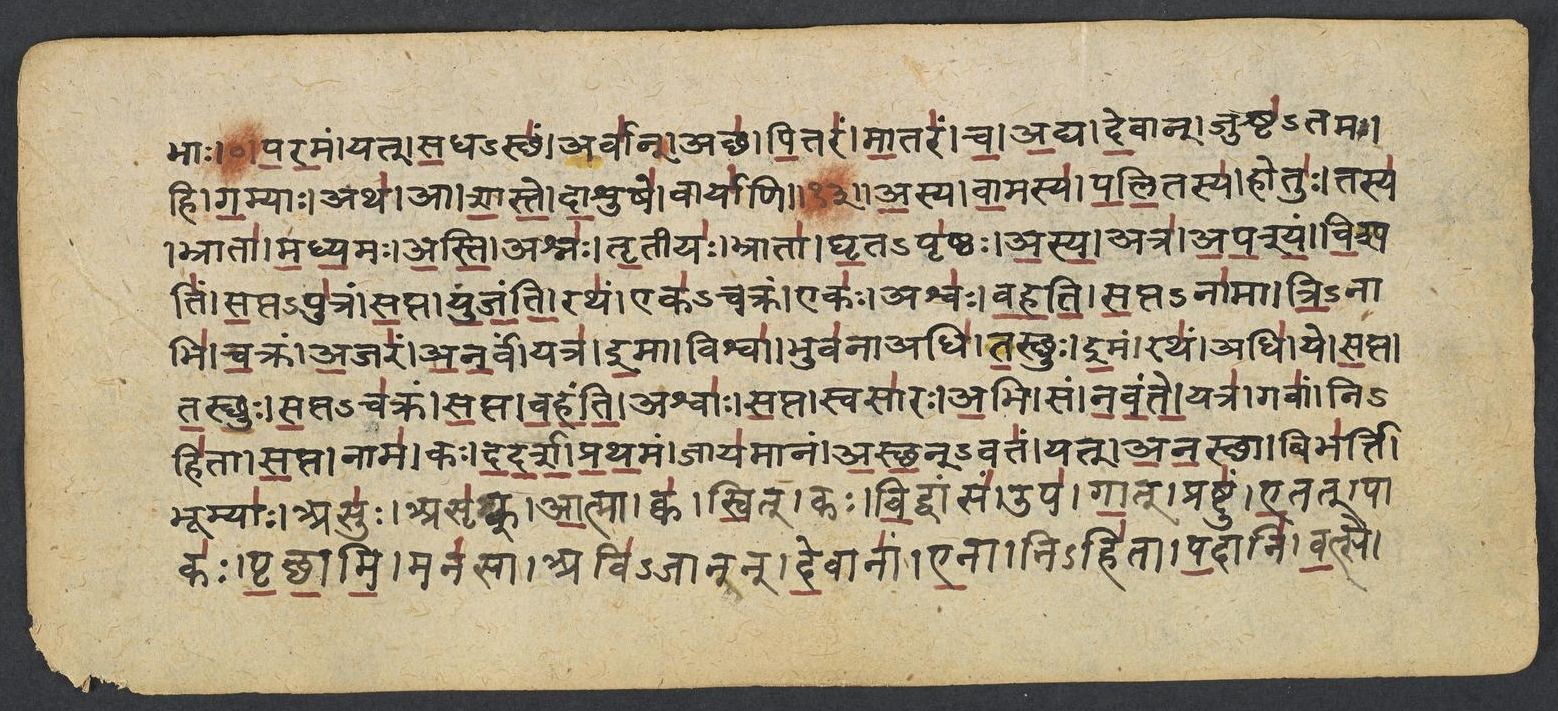
Penn Ms. Coll. 390 Item 41, fol. 126r (numbered 7r by the scribe) (OPenn image 127, lower leaf). Checked on the image: the Rigveda text on this page begins in RV 1.163.12 ‹-rebhāḥ›. 1.163.13 ends in line 2 with the varga number 13; 1.164.1 (asya vāmasya palitasya hotuḥ) begins in line 2. The next page with Rigveda text, fol. 126v (numbered 7v by the scribe), begins in RV 1.164.5 ‹baṣkaye adhi sapta tantūn›. Verses 1.164.1-4 end on this page.
1a̱sya vā̱masya̍ pali̱tasya̱ hotu̱s tasya̱ bhrātā̍ madhya̱mo a̱sty aśna̍ḥ | tṛ̱tīyo̱ bhrātā̍ ghṛ̱tapṛ̍ṣṭho a̱syātrā̍paśyaṁ vi̱śpati̍ṁ sa̱ptapu̍tram ||
2sa̱pta yu̍ñjanti̱ ratha̱m eka̍cakra̱m eko̱ aśvo̍ vahati sa̱ptanā̍mā | tri̱nābhi̍ ca̱kram a̱jara̍m ana̱rvaṁ yatre̱mā viśvā̱ bhuva̱nādhi̍ ta̱sthuḥ ||
3i̱maṁ ratha̱m adhi̱ ye sa̱pta ta̱sthuḥ sa̱ptaca̍kraṁ sa̱pta va̍ha̱nty aśvā̍ḥ | sa̱pta svasā̍ro a̱bhi saṁ na̍vante̱ yatra̱ gavā̱ṁ nihi̍tā sa̱pta nāma̍ ||
4ko da̍darśa pratha̱maṁ jāya̍mānam astha̱nvanta̱ṁ yad a̍na̱sthā bibha̍rti | bhūmyā̱ asu̱r asṛ̍g ā̱tmā kva̍ svi̱t ko vi̱dvāṁsa̱m upa̍ gā̱t praṣṭu̍m e̱tat ||
Compare: Padapāṭha (word-by-word text written in the manuscript; Sansknet e-text via GRETIL)
1asya | vāmasya | palitasya | hotuḥ | tasya | bhrātā | madhyamaḥ | asti | aśnaḥ | tṛtīyaḥ | bhrātā | ghṛta-pṛṣṭhaḥ | asya | atra | apasyam | viśpatim | sapta-putram
2sapta | yuñjanti | ratham | eka-cakram | ekaḥ | aśvaḥ | vahati | sapta-nāmā | tr i-nābhi | cakram | ajaram | anarvam | yatra | imā | viśvā | bhuvanā | adhi | tasthuḥ
3imam | ratham | adhi | ye | sapta | tasthuḥ | sapta-cakram | sapta | vahanti | aśvāḥ | sapta | svasāraḥ | abhi | sam | navante | yatra | gavām | ni-hitā | sapta | nāma
4kaḥ | dadarśa | prathamam | jāyamānam | asthan-vantam | yat | anasthā | bibharti | bhūmyāḥ | asuḥ | asṛk | ātmā | kva | svit | kaḥ | vidvāṃsam | upa | gāt | praṣṭum | etat
1OF this benignant Priest, with eld grey-coloured, the brother midmost of the three is lightning. The third is he whose back with oil is sprinkled. Here I behold the Chief with seven male children.
2Seven to the one-wheeled chariot yoke the Courser; bearing seven names the single Courser draws it. Three-naved the wheel is, sound and undecaying, whereon are resting all these worlds of being.
3The seven who on the seven-wheeled car are mounted have horses, seven in tale, who draw them onward. Seven Sisters utter songs of praise together, in whom the names of the seven Cows are treasured.
4Who hath beheld him as he sprang to being, seen how the boneless One supports the bony? Where is the blood of earth, the life, the spirit? Who may approach the man who knows, to ask it?
Where on the image
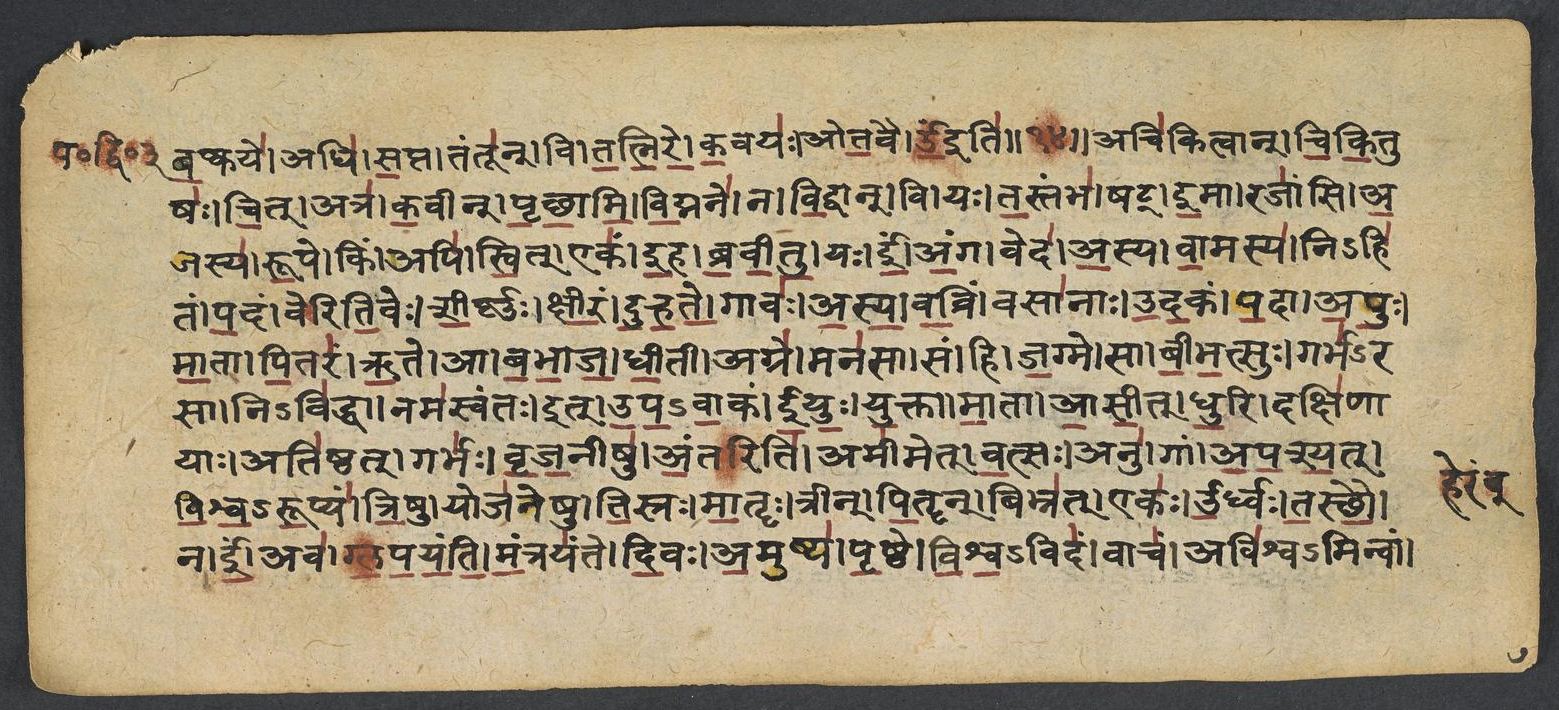
Penn Ms. Coll. 390 Item 41, fol. 126v (numbered 7v by the scribe) (OPenn image 128, upper leaf). Checked on the image: the Rigveda text on this page begins in RV 1.164.5 ‹baṣkaye adhi sapta tantūn›. The next page with Rigveda text, fol. 127r (numbered 8r by the scribe), begins in RV 1.164.11 ‹dvādaśa-aram nahi tat jarāya›. Verses 1.164.5-10 end on this page; 1.164.5 begins on fol. 126r (numbered 7r by the scribe).
5pāka̍ḥ pṛcchāmi̱ mana̱sāvi̍jānan de̱vānā̍m e̱nā nihi̍tā pa̱dāni̍ | va̱tse ba̱ṣkaye 'dhi̍ sa̱pta tantū̱n vi ta̍tnire ka̱vaya̱ ota̱vā u̍ ||
6aci̍kitvāñ ciki̱tuṣa̍ś ci̱d atra̍ ka̱vīn pṛ̍cchāmi vi̱dmane̱ na vi̱dvān | vi yas ta̱stambha̱ ṣaḻ i̱mā rajā̍ṁsy a̱jasya̍ rū̱pe kim api̍ svi̱d eka̍m ||
7i̱ha bra̍vītu̱ ya ī̍m a̱ṅga vedā̱sya vā̱masya̱ nihi̍tam pa̱daṁ veḥ | śī̱rṣṇaḥ kṣī̱raṁ du̍hrate̱ gāvo̍ asya va̱vriṁ vasā̍nā uda̱kam pa̱dāpu̍ḥ ||
8mā̱tā pi̱tara̍m ṛ̱ta ā ba̍bhāja dhī̱ty agre̱ mana̍sā̱ saṁ hi ja̱gme | sā bī̍bha̱tsur garbha̍rasā̱ nivi̍ddhā̱ nama̍svanta̱ id u̍pavā̱kam ī̍yuḥ ||
9yu̱ktā mā̱tāsī̍d dhu̱ri dakṣi̍ṇāyā̱ ati̍ṣṭha̱d garbho̍ vṛja̱nīṣv a̱ntaḥ | amī̍med va̱tso anu̱ gām a̍paśyad viśvarū̱pya̍ṁ tri̱ṣu yoja̍neṣu ||
10ti̱sro mā̱tṝs trīn pi̱tṝn bibhra̱d eka̍ ū̱rdhvas ta̍sthau̱ nem ava̍ glāpayanti | ma̱ntraya̍nte di̱vo a̱muṣya̍ pṛ̱ṣṭhe vi̍śva̱vida̱ṁ vāca̱m avi̍śvaminvām ||
Compare: Padapāṭha (word-by-word text written in the manuscript; Sansknet e-text via GRETIL)
5pākaḥ | pṛcchāmi | manasā | avi-jānan | devānām | enā | ni-hitā | padāni | vatse | baṣkaye | adhi | sapta | tantūn | vi | tatnire | kavayaḥ | otavai | oṃ iti
6acikitvān | cikituṣaḥ | cit | atra | kavīn | pṛcchāmi | vidmane | na | vidvān | vi | yaḥ | tastambha | ṣaṭ | imā | rajāṃsi | ajasya | rūpe | kim | api | svit | ekam
7iha | bravītu | yaḥ | īm | aṅga | veda | asya | vāmasya | ni-hitam | padam | veri tiveḥ | śīrṣṇaḥ | kṣīram | duhrate | gāvaḥ | asya | vavrim | vasānāḥ | udakam | padā | apuḥ
8mātā | pitaram | ṛte | ā | babhāja | dhītī | agre | manasā | sam | hi | jagme | sā | bībhatsuḥ | garbha-rasā | ni-viddhā | namasvantaḥ | it | upa-vākam | īyuḥ
9yuktā | mātā | āsīt | dhuri | dakṣiṇāyāḥ | atiṣṭhat | garbhaḥ | vṛjanīṣu | antariti | amīmet | vatsaḥ | anu | gām | apaśyat | viśva-rūpyam | triṣu | yojaneṣu
10tisraḥ | mātṝḥ | trīn | pitṝn | bibhrat | ekaḥ | ūrdhvaḥ | tasthau | na | īm | ava | glapayanti | mantrayante | divaḥ | amuṣya | pṛṣṭhe | viśva-vidam | vācam | aviśva-minvām
5Unripe in mind, in spirit undiscerning, I ask of these the Gods' established places; For up above the yearling Calf the sages, to form a web, their own seven threads have woven.
6I ask, unknowing, those who know, the sages, as one all ignorant for sake of knowledge, What was that ONE who in the Unborn's image hath stablished and fixed firm these worlds' six regions.
7Let him who knoweth presently declare it , this lovely Bird's securely founded station. Forth from his head the Cows draw milk, and, wearing his vesture, with their foot have drunk the water.
8The Mother gave the Sire his share of Order: with thought, at first, she wedded him in spirit. She, the coy Dame, was filled with dew prolific: with adoration men approached to praise her.
9Yoked was the Mother to the boon Cow's car-pole: in the dank rows of cloud the Infant rested. Then the Calf lowed, and looked upon the Mother, the Cow who wears all shapes in three directions.
10Bearing three Mothers and three Fathers, single he stood erect: they never make him weary. There on the pitch of heaven they speak together in speech all-knowing but not all-impelling.
Where on the image
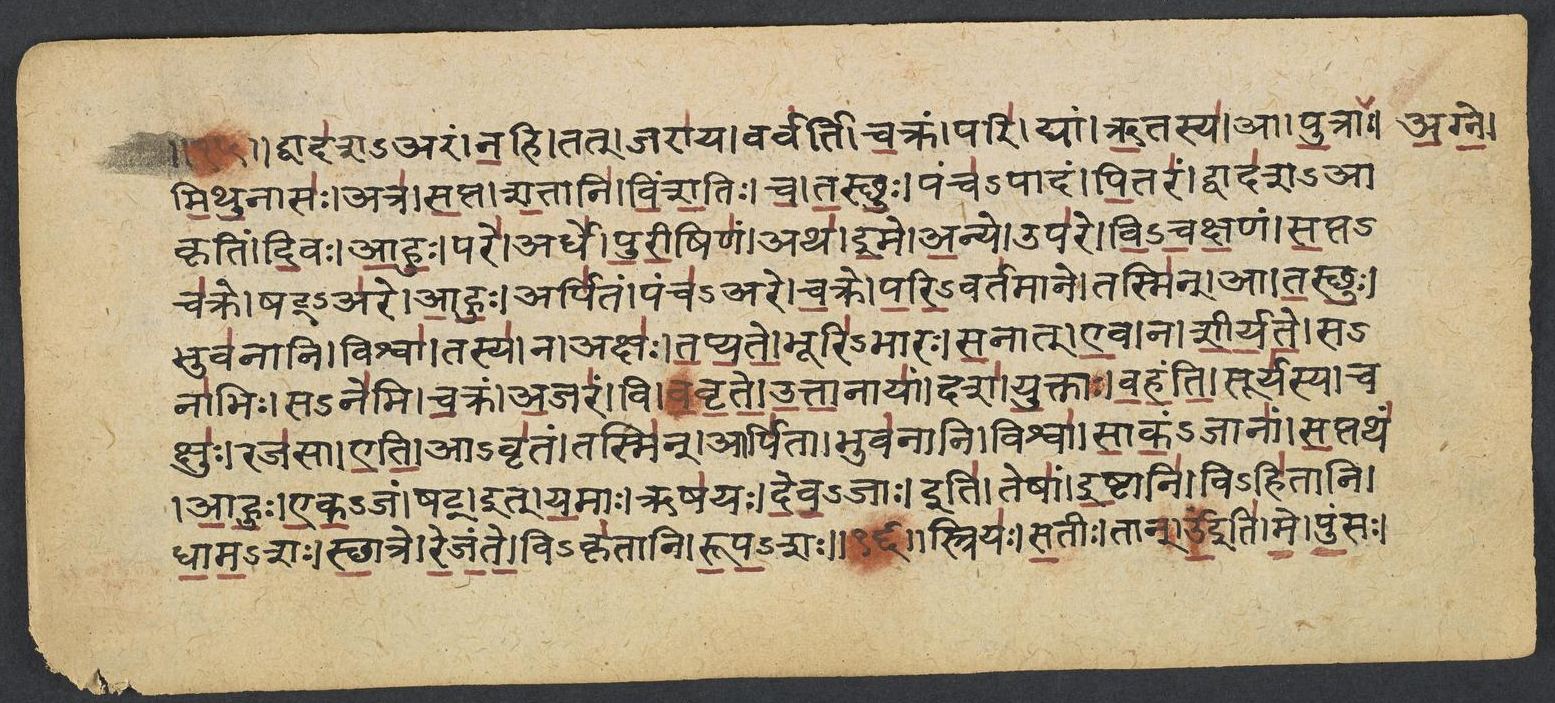
Penn Ms. Coll. 390 Item 41, fol. 127r (numbered 8r by the scribe) (OPenn image 128, lower leaf). Checked on the image: the Rigveda text on this page begins in RV 1.164.11 ‹dvādaśa-aram nahi tat jarāya›. Line 1 opens with a varga number (partly covered by a stain), then 1.164.11. The next page with Rigveda text, fol. 127v (numbered 8v by the scribe), begins in RV 1.164.16 ‹-āāhuḥ paśyat akṣaṇ-vān na›. Verses 1.164.11-15 end on this page.
11dvāda̍śāraṁ na̱hi taj jarā̍ya̱ varva̍rti ca̱kram pari̱ dyām ṛ̱tasya̍ | ā pu̱trā a̍gne mithu̱nāso̱ atra̍ sa̱pta śa̱tāni̍ viṁśa̱tiś ca̍ tasthuḥ ||
12pañca̍pādam pi̱tara̱ṁ dvāda̍śākṛtiṁ di̱va ā̍hu̱ḥ pare̱ ardhe̍ purī̱ṣiṇa̍m | athe̱me a̱nya upa̍re vicakṣa̱ṇaṁ sa̱ptaca̍kre̱ ṣaḻa̍ra āhu̱r arpi̍tam ||
13pañcā̍re ca̱kre pa̍ri̱varta̍māne̱ tasmi̱nn ā ta̍sthu̱r bhuva̍nāni̱ viśvā̍ | tasya̱ nākṣa̍s tapyate̱ bhūri̍bhāraḥ sa̱nād e̱va na śī̍ryate̱ sanā̍bhiḥ ||
14sane̍mi ca̱kram a̱jara̱ṁ vi vā̍vṛta uttā̱nāyā̱ṁ daśa̍ yu̱ktā va̍hanti | sūrya̍sya̱ cakṣū̱ raja̍sai̱ty āvṛ̍ta̱ṁ tasmi̱nn ārpi̍tā̱ bhuva̍nāni̱ viśvā̍ ||
15sā̱ka̱ṁjānā̍ṁ sa̱ptatha̍m āhur eka̱jaṁ ṣaḻ id ya̱mā ṛṣa̍yo deva̱jā iti̍ | teṣā̍m i̱ṣṭāni̱ vihi̍tāni dhāma̱śaḥ sthā̱tre re̍jante̱ vikṛ̍tāni rūpa̱śaḥ ||
Compare: Padapāṭha (word-by-word text written in the manuscript; Sansknet e-text via GRETIL)
11dvādaśa-aram | nahi | tat | jarāya | varvarti | cakram | pari | dyām | ṛtasya | ā | putrāḥ | agne | mithunāsaḥ | atra | sapta | śatāni | viṃśatiḥ | ca | tasthuḥ
12pañca-pādam | pitaram | dvādaśa-ākṛtim | divaḥ | āhuḥ | pare | ardhe | purīṣiṇam | atha | ime | anye | upare | vi-cakṣaṇam | sapta-cakre | ṣaṭ-are | āhuḥ | arpitam
13pañca-are | cakre | pari-vartamāne | tasmin | ā | tasthuḥ | bhuvanāni | viśvā | tasya | na | akṣaḥ | tapyate | bhūri-bhāraḥ | sanāt | eva | na | śīryate | sa-nābhiḥ
14sa-nemi | cakram | ajaram | vi | vavṛte | uttānāyām | daśa | yuktāḥ | vahanti | sūryasya | cakṣiḥ | rajasā | eti | āvṛtam | tasmin | ārpitā | bhuvanāni | viśvā
15sākam-jānām | saptatham | āhuḥ | eka-jam | ṣaṭ | it | yamāḥ | ṛṣayaḥ | deva-jāḥ | iti | teṣām | iṣṭāni | vi-hitāni | dhāma-śaḥ sthātre | rejante | vi-kṛtāni | rūpa-śaḥ
11Formed with twelve spokes, by length of time, unweakened, rolls round the heaven this wheel of during Order. Herein established, joined in pairs together, seven hundred Sons and twenty stand, O Agni.
12They call him in the farther half of heaven the Sire five-footed, of twelve forms, wealthy in watery store. These others say that he, God with far-seeing eyes, is mounted on the lower seven-wheeled, sixspoked car.
13Upon this five-spoked wheel revolving ever all living creatures rest and are dependent. Its axle, heavy-laden, is not heated: the nave from ancient time remains unbroken.
14The wheel revolves, unwasting, with its felly: ten draw it, yoked to the far-stretching car-pole. The Sun's eye moves encompassed by the region: on him dependent rest all living creatures.
15Of the co-born they call the seventh single-born; the six twin pairs are called R̥ishis, Children of Gods. Their good gifts sought of men are ranged in order due, and various in their form move for the Lord who guides.
Where on the image
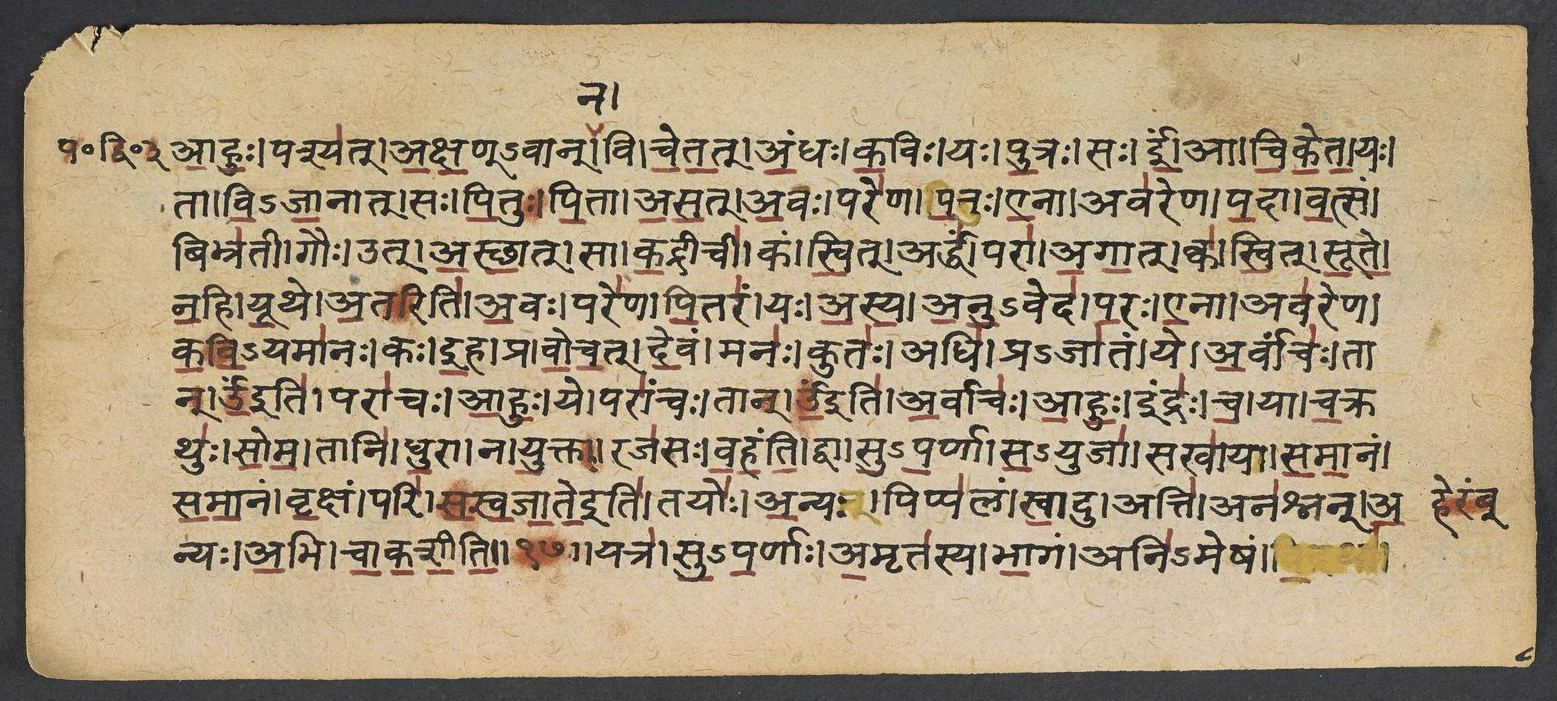
Penn Ms. Coll. 390 Item 41, fol. 127v (numbered 8v by the scribe) (OPenn image 129, upper leaf). Checked on the image: the Rigveda text on this page begins in RV 1.164.16 ‹-āāhuḥ paśyat akṣaṇ-vān na›. The next page with Rigveda text, fol. 128r (numbered 9r by the scribe), begins in RV 1.164.21 ‹vidathā abhi-svaranti inaḥ viśvasya›. Verses 1.164.16-20 end on this page; 1.164.16 begins on fol. 127r (numbered 8r by the scribe).
16striya̍ḥ sa̱tīs tām̐ u̍ me pu̱ṁsa ā̍hu̱ḥ paśya̍d akṣa̱ṇvān na vi ce̍tad a̱ndhaḥ | ka̱vir yaḥ pu̱traḥ sa ī̱m ā ci̍keta̱ yas tā vi̍jā̱nāt sa pi̱tuṣ pi̱tāsa̍t ||
17a̱vaḥ pare̍ṇa pa̱ra e̱nāva̍reṇa pa̱dā va̱tsam bibhra̍tī̱ gaur ud a̍sthāt | sā ka̱drīcī̱ kaṁ svi̱d ardha̱m parā̍gā̱t kva̍ svit sūte na̱hi yū̱the a̱ntaḥ ||
18a̱vaḥ pare̍ṇa pi̱tara̱ṁ yo a̍syānu̱veda̍ pa̱ra e̱nāva̍reṇa | ka̱vī̱yamā̍na̱ḥ ka i̱ha pra vo̍cad de̱vam mana̱ḥ kuto̱ adhi̱ prajā̍tam ||
19ye a̱rvāñca̱s tām̐ u̱ parā̍ca āhu̱r ye parā̍ñca̱s tām̐ u̍ a̱rvāca̍ āhuḥ | indra̍ś ca̱ yā ca̱krathu̍ḥ soma̱ tāni̍ dhu̱rā na yu̱ktā raja̍so vahanti ||
20dvā su̍pa̱rṇā sa̱yujā̱ sakhā̍yā samā̱naṁ vṛ̱kṣam pari̍ ṣasvajāte | tayo̍r a̱nyaḥ pippa̍laṁ svā̱dv atty ana̍śnann a̱nyo a̱bhi cā̍kaśīti ||
Compare: Padapāṭha (word-by-word text written in the manuscript; Sansknet e-text via GRETIL)
16striyaḥ | satīḥ | tān | oṃ iti | me | puṃsaḥ | āāhuḥ | paśyat | akṣaṇ-vān | na | vi | cetat | andhaḥ | kaviḥ | yaḥ | putraḥ | saḥ | īm | ā | ciketa | yaḥ | tā | vi-jānāt | saḥ | pituḥ | pitā | asat
17avaḥ | pareṇa | paraḥ | enā | avareṇa | padā | vatsam | bibhratī | gauḥ | ut | asthāt | sā | kadrīcī | kam | svit | ardham | parā | agāt | kva | svit | sūte | nahi | yūthe | antari ti
18avaḥ | pareṇa | pitaram | yaḥ | asya | anu-veda | paraḥ | enā | avareṇa | kavi-yamānaḥ | kaḥ | iha | pra | vocat | devam | manaḥ | kutaḥ | adhi | pra-jātam
19ye | arvāñcaḥ | tān | oṃ iti | parācaḥ | āhuḥ | ye | parāñcaḥ | tān | oṃ iti | arvācaḥ | āhuḥ | indraḥ | ca | yā | cakrathuḥ | soma | tāni | dhurā | na | yuktāḥ | rajasaḥ | vahanti
20dvā | su-parṇā | sa-yujā | sakhāyā | samanam | vṛkṣam | pari | sasvajāteiti | tayoḥ | anyaḥ | pippalam | svādu | atti | anaśnan | anyaḥ | abhi | cākaśīti
16They told me these were males, though truly females: he who hath eyes sees this, the blind discerns not. The son who is a sage hath comprehended: who knows this rightly is his father's father.
17Beneath the upper realm, above this lower, bearing her calf at foot the Cow hath risen. Whitherward, to what place hath she departed? Where calves she? Not amid this herd of cattle.
18Who, that the father of this Calf discerneth beneath the upper realm, above the lower, Showing himself a sage, may here declare it? Whence hath the Godlike spirit had its rising?
19Those that come hitherward they call departing, those that depart they call directed hither. And what so ye have made, Indra and Soma, steeds bear as 'twere yoked to the region's car-pole.
20Two Birds with fair wings, knit with bonds of friendship, in the same sheltering tree have found a refuge. One of the twain eats the sweet Fig-tree's fruitage; the other eating not regardeth only.
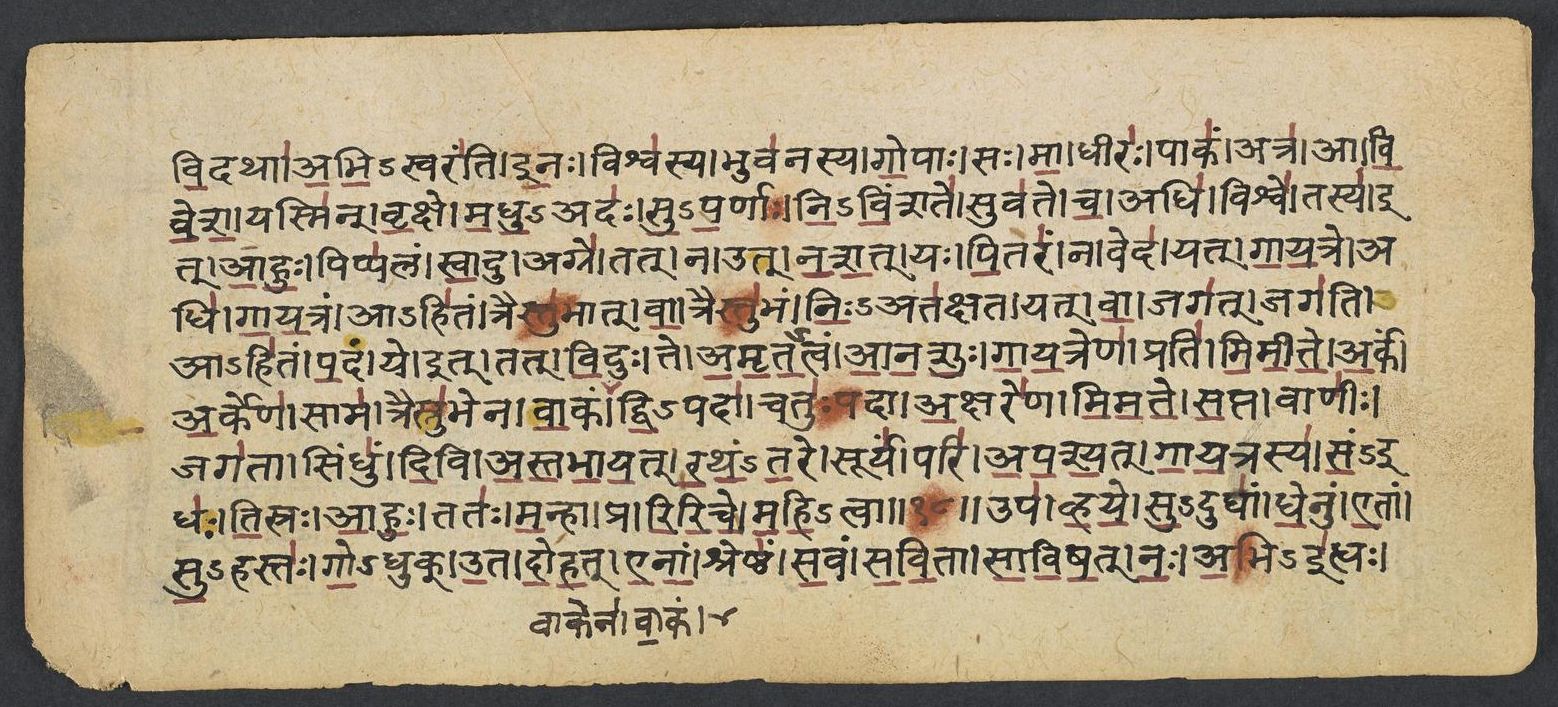
Where on the image
Penn Ms. Coll. 390 Item 41, fol. 128r (numbered 9r by the scribe) (OPenn image 129, lower leaf). Checked on the image: the Rigveda text on this page begins in RV 1.164.21 ‹vidathā abhi-svaranti inaḥ viśvasya›. The next page with Rigveda text, fol. 128v (numbered 9v by the scribe), begins in RV 1.164.26 ‹gharmaḥ tat oṃ iti›. Verses 1.164.21-25 end on this page; 1.164.21 begins on fol. 127v (numbered 8v by the scribe).
21yatrā̍ supa̱rṇā a̱mṛta̍sya bhā̱gam ani̍meṣaṁ vi̱dathā̍bhi̱svara̍nti | i̱no viśva̍sya̱ bhuva̍nasya go̱pāḥ sa mā̱ dhīra̱ḥ pāka̱m atrā vi̍veśa ||
22yasmi̍n vṛ̱kṣe ma̱dhvada̍ḥ supa̱rṇā ni̍vi̱śante̱ suva̍te̱ cādhi̱ viśve̍ | tasyed ā̍hu̱ḥ pippa̍laṁ svā̱dv agre̱ tan non na̍śa̱d yaḥ pi̱tara̱ṁ na veda̍ ||
23yad gā̍ya̱tre adhi̍ gāya̱tram āhi̍ta̱ṁ traiṣṭu̍bhād vā̱ traiṣṭu̍bhaṁ ni̱rata̍kṣata | yad vā̱ jaga̱j jaga̱ty āhi̍tam pa̱daṁ ya it tad vi̱dus te a̍mṛta̱tvam ā̍naśuḥ ||
24gā̱ya̱treṇa̱ prati̍ mimīte a̱rkam a̱rkeṇa̱ sāma̱ traiṣṭu̍bhena vā̱kam | vā̱kena̍ vā̱kaṁ dvi̱padā̱ catu̍ṣpadā̱kṣare̍ṇa mimate sa̱pta vāṇī̍ḥ ||
25jaga̍tā̱ sindhu̍ṁ di̱vy a̍stabhāyad rathaṁta̱re sūrya̱m pary a̍paśyat | gā̱ya̱trasya̍ sa̱midha̍s ti̱sra ā̍hu̱s tato̍ ma̱hnā pra ri̍rice mahi̱tvā ||
Compare: Padapāṭha (word-by-word text written in the manuscript; Sansknet e-text via GRETIL)
21yatra | su-parṇā | amṛtasya | bhāgam | animeṣam | vidathā | abhi-svaranti | inaḥ | viśvasya | bhuvanasya | gopāḥ | saḥ | mā | dhīraḥ | pākam | atra | ā | viveśa
22yasmin | vṛkṣe | madhu-adaḥ | su-parṇāḥ | ni-viśante | suvate | ca | adhi | viśve | tasya | it | āhuḥ | pippalam | svādu | agre | tat | na | ut | naśat | yaḥ | pitaram | na | veda
23yat | gāyatre | adhi | gāyatram | āhitam | traistubhāt | vā | traistubham | niḥ-atakṣata | yat | vā | jagat | jagati | āhitam | padam | ye | it | tat | viduḥ | te | amṛta-tvam | ānaśuḥ
24gāyatreṇa | prati | mimīte | arkam | arkeṇa | sāma | traistubhena | vākam | vākena | vākam | dvi-padā | catuḥ-padā | akṣareṇa | mimate | sapta | vāṇīḥ
25jagatā | sindhum | divi | astabhāyat | ratham-tare | sūryam | pari | apaśyat | gāyatrasya | sam-idhaḥ | tisraḥ | āhuḥ | tataḥ | mahrā | pra | ririce | mahi-tvā
21Where those fine Birds hymn ceaselessly their portion of life eternal, and the sacred synods, There is the Universe's mighty Keeper, who, wise, hath entered into me the simple.
22The, tree whereon the fine Birds eat the sweetness, where they all rest and procreate their offspring,– Upon its top they say the fig is luscious none gaineth it who knoweth not the Father.
23How on the Gâyatrî. the Gâyatrî was based, how from the Trishṭup they fashioned the Trishṭup forth, How on the Jagatî was based the Jagatî,– they who know this have won themselves immortal life.
24With Gâyatrî he measures out the praise-song, Sâma with praise-song, triplet with the Trishṭup. The triplet with the two or four-foot measure, and with the syllable they form seven metres.
25With Jagatî the flood in heaven he stablished, and saw the Sun in the Rathantara Sâman. Gâyatrî hath, they say, three brands for kindling: hence it excels in majesty and vigour.
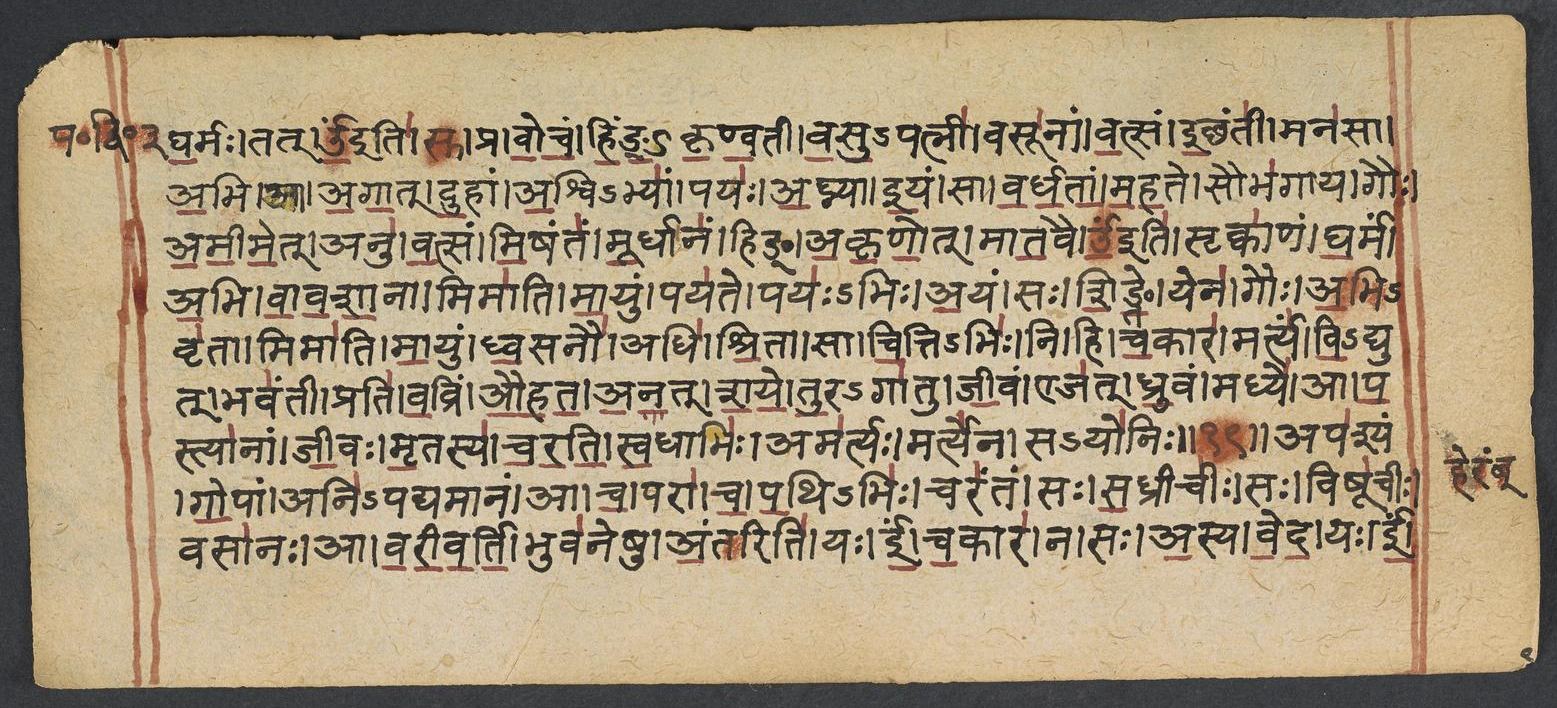
Where on the image
Penn Ms. Coll. 390 Item 41, fol. 128v (numbered 9v by the scribe) (OPenn image 130, upper leaf). Checked on the image: the Rigveda text on this page begins in RV 1.164.26 ‹gharmaḥ tat oṃ iti›. The next page with Rigveda text, fol. 129r (numbered 10r by the scribe), begins in RV 1.164.32 ‹dadarśa hiruk it nu›. Verses 1.164.26-31 end on this page; 1.164.26 begins on fol. 128r (numbered 9r by the scribe).
26upa̍ hvaye su̱dughā̍ṁ dhe̱num e̱tāṁ su̱hasto̍ go̱dhug u̱ta do̍had enām | śreṣṭha̍ṁ sa̱vaṁ sa̍vi̱tā sā̍viṣan no̱ 'bhī̍ddho gha̱rmas tad u̱ ṣu pra vo̍cam ||
27hi̱ṅkṛ̱ṇva̱tī va̍su̱patnī̱ vasū̍nāṁ va̱tsam i̱cchantī̱ mana̍sā̱bhy āgā̍t | du̱hām a̱śvibhyā̱m payo̍ a̱ghnyeyaṁ sā va̍rdhatām maha̱te saubha̍gāya ||
28gaur a̍mīme̱d anu̍ va̱tsam mi̱ṣanta̍m mū̱rdhāna̱ṁ hiṅṅ a̍kṛṇo̱n māta̱vā u̍ | sṛkvā̍ṇaṁ gha̱rmam a̱bhi vā̍vaśā̱nā mimā̍ti mā̱yum paya̍te̱ payo̍bhiḥ ||
29a̱yaṁ sa śi̍ṅkte̱ yena̱ gaur a̱bhīvṛ̍tā̱ mimā̍ti mā̱yuṁ dhva̱sanā̱v adhi̍ śri̱tā | sā ci̱ttibhi̱r ni hi ca̱kāra̱ martya̍ṁ vi̱dyud bhava̍ntī̱ prati̍ va̱vrim au̍hata ||
30a̱nac cha̍ye tu̱ragā̍tu jī̱vam eja̍d dhru̱vam madhya̱ ā pa̱styā̍nām | jī̱vo mṛ̱tasya̍ carati sva̱dhābhi̱r ama̍rtyo̱ martye̍nā̱ sayo̍niḥ ||
31apa̍śyaṁ go̱pām ani̍padyamāna̱m ā ca̱ parā̍ ca pa̱thibhi̱ś cara̍ntam | sa sa̱dhrīcī̱ḥ sa viṣū̍cī̱r vasā̍na̱ ā va̍rīvarti̱ bhuva̍neṣv a̱ntaḥ ||
Compare: Padapāṭha (word-by-word text written in the manuscript; Sansknet e-text via GRETIL)
26upa | hvaye | su-dughām | dhenum | etām | su-hastaḥ | go--dhuk | uta | dohat | enām | śreṣṭham | savam | savitā | sāviṣat | naḥ | abhi-iddhaḥ | gharmaḥ | tat | oṃ iti | su | pra | vocam
27hiṅ-kṛṇvatī | vasu-patnī | vasūnām | vatsam | icchantī | manasā | abhi | ā | agāt | duhām | aśvi-bhyām | payaḥ | aghnyā | iyam | sā | vardhatām | mahate | saubhagāya
28gauḥ | amīmet | anu | vatsam | miṣantam | mūrdhānam | hiṅ | akṛṇot | mātavai | oṃ iti | sṛkvaaṇam | gharmam | abhi | vāvaśānā | mimāti | māyum | payate | payaḥ-bhiḥ
29ayam | saḥ | śiṅkte | yena | gauḥ | abhi-vṛṭā | mimāti | māyum | dhvasanau | adhi | śritā | sā | citti-bhiḥ | ni | hi | cakāra | martyam | vi-dyut | bhavantī | prati | vavrim | auhata
30anat | śaye | tura-gātu | jīvam | ejat | dhruvam | madhye | ā | pastyānām | jīvaḥ | mṛtasya | carati | svadhābhiḥ | amartyaḥ | martyena | sa-yoniḥ
31apaśyam | gopām | ani-padyamānam | ā | ca | parā | ca | pathi-bhiḥ | carantam | saḥ | sadhrīcīḥ | saḥ | viṣūcīḥ | vasānaḥ | ā | varīvarti | bhuvaneṣu | antariti
26I invocate the milch-cow good for milking so that the milker, deft of hand, may drain her. May Savitar give goodliest stimulation. The caldron is made hot; I will proclaim it.
27She, lady of all treasure, is come hither yearning in spirit for her calf and lowing. May this cow yield her milk for both the Aṣvins, and may she prosper to our high advantage.
28The cow hath lowed after her blinking youngling; she licks his forehead, as she lows, to form it. His mouth she fondly calls to her warm udder, and suckles him with milk while gently lowing.
29He also snorts, by whom encompassed round the Cow lows as she clings unto the shedder of the rain. She with her shrilling cries hath humbled mortal man, and, turned to lightning, hath stripped off her covering robe.
30That which hath breath and speed and life and motion lies firmly stablished in the midst of houses. Living, by offerings to the Dead he moveth Immortal One, the brother of the mortal.
31I saw the Herdsman, him who never stumbles, approaching by his pathways and departing. He, clothed with gathered and diffusive splendour, within the worlds continually travels.
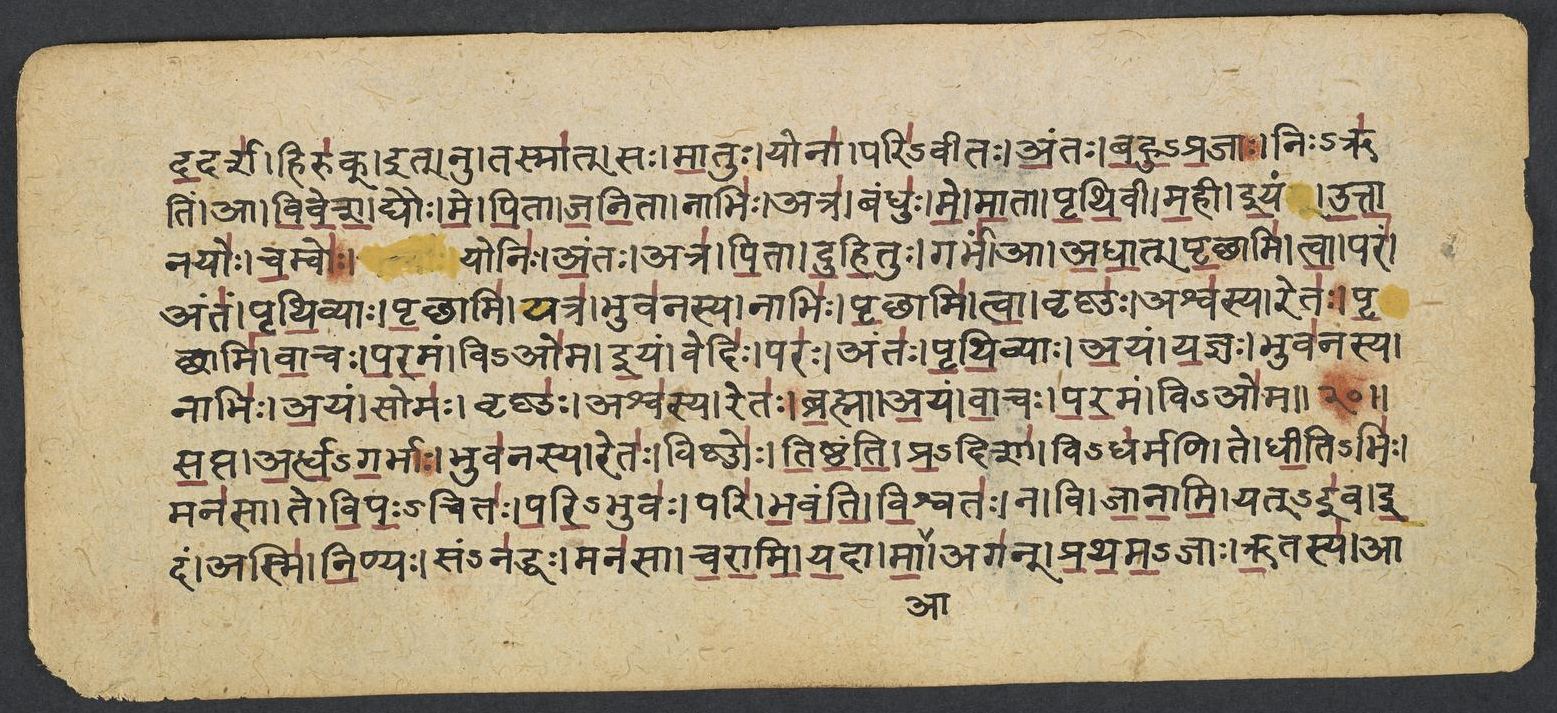
Where on the image
Penn Ms. Coll. 390 Item 41, fol. 129r (numbered 10r by the scribe) (OPenn image 130, lower leaf). Checked on the image: the Rigveda text on this page begins in RV 1.164.32 ‹dadarśa hiruk it nu›. The next page with Rigveda text, fol. 129v (numbered 10v by the scribe), begins in RV 1.164.37 ‹-āt it vācaḥ aśnuve›. Verses 1.164.32-36 end on this page; 1.164.32 begins on fol. 128v (numbered 9v by the scribe).
32ya ī̍ṁ ca̱kāra̱ na so a̱sya ve̍da̱ ya ī̍ṁ da̱darśa̱ hiru̱g in nu tasmā̍t | sa mā̱tur yonā̱ pari̍vīto a̱ntar ba̍hupra̱jā nirṛ̍ti̱m ā vi̍veśa ||
33dyaur me̍ pi̱tā ja̍ni̱tā nābhi̱r atra̱ bandhu̍r me mā̱tā pṛ̍thi̱vī ma̱hīyam | u̱ttā̱nayo̍ś ca̱mvo̱3̱̍r yoni̍r a̱ntar atrā̍ pi̱tā du̍hi̱tur garbha̱m ādhā̍t ||
34pṛ̱cchāmi̍ tvā̱ para̱m anta̍m pṛthi̱vyāḥ pṛ̱cchāmi̱ yatra̱ bhuva̍nasya̱ nābhi̍ḥ | pṛ̱cchāmi̍ tvā̱ vṛṣṇo̱ aśva̍sya̱ reta̍ḥ pṛ̱cchāmi̍ vā̱caḥ pa̍ra̱maṁ vyo̍ma ||
35i̱yaṁ vedi̱ḥ paro̱ anta̍ḥ pṛthi̱vyā a̱yaṁ ya̱jño bhuva̍nasya̱ nābhi̍ḥ | a̱yaṁ somo̱ vṛṣṇo̱ aśva̍sya̱ reto̍ bra̱hmāyaṁ vā̱caḥ pa̍ra̱maṁ vyo̍ma ||
36sa̱ptārdha̍ga̱rbhā bhuva̍nasya̱ reto̱ viṣṇo̍s tiṣṭhanti pra̱diśā̱ vidha̍rmaṇi | te dhī̱tibhi̱r mana̍sā̱ te vi̍pa̱ścita̍ḥ pari̱bhuva̱ḥ pari̍ bhavanti vi̱śvata̍ḥ ||
Compare: Padapāṭha (word-by-word text written in the manuscript; Sansknet e-text via GRETIL)
32yaḥ | īm | cakāra | na | saḥ | asya | veda | yaḥ | īm | dadarśa | hiruk | it | nu | tasmāt | saḥ | mātuḥ | yonā | pari-vītaḥ | antaḥ | bahu-prajāḥ | niḥ-ṛtim | ā | viveśa
33dyauḥ | me | pitā | janitā | nābhiḥ | atra | bandhuḥ | me | mātā | pṛthivī | mahī | iyam | uttānayoḥ | camvoḥ | yoniḥ | antaḥ | atra | pitā | duhituḥ | garbham | ā | adhāt
34pṛcchāmi | tvā | param | antam | pṛthivyāḥ | pṛcchāmi | yatra | bhuvanasya | nābhiḥ | pṛcchāmi | tvā | vṛṣṇaḥ | aśvasya | retaḥ | pṛcchāmi | vācaḥ | paramam | vi-oma
35iyam | vediḥ | paraḥ | antaḥ | pṛthivyāḥ | ayam | yajñaḥ | bhuvanasya | nābhiḥ | ayam | somaḥ | vṛṣṇaḥ | aśvasya | retaḥ | brahmā | ayam | vācaḥ | paramam | v i-oma
36sapta | ardha-garbhāḥ | bhuvanasya | retaḥ | viṣṇoḥ | tiṣṭhanti | pra-diśā | vi-dharmaṇi | te | dhīti-bhiḥ | manasā | te | vipaḥ-citaḥ | pari-bhuvaḥ | pari | bhavanti | viśvataḥ
32He who hath made him cloth not comprehend him: from him who saw him surely is he hidden. He, yet enveloped in his Mother's bosom, source of much life, hath sunk into destruction.
33Dyaus is my Father, my begetter: kinship is here. This great earth is my kin and Mother. Between the wide-spread world-halves is the birthb-place: the Father laid the Daughter's germ within it.
34ask thee of the earth's extremest limit, where is the centre of the world, I ask thee.
35This altar is the earth's extremest limit; this sacrifice of ours is the world's centre. The Stallion's seed prolific is the Soma; this Brahman highest heaven where Speech abideth.
36Seven germs unripened yet are heaven's prolific, seed: their functions they maintain by Vishṇu's ordinance. Endued with wisdom through intelligence and thought, they compass us about present on every side.
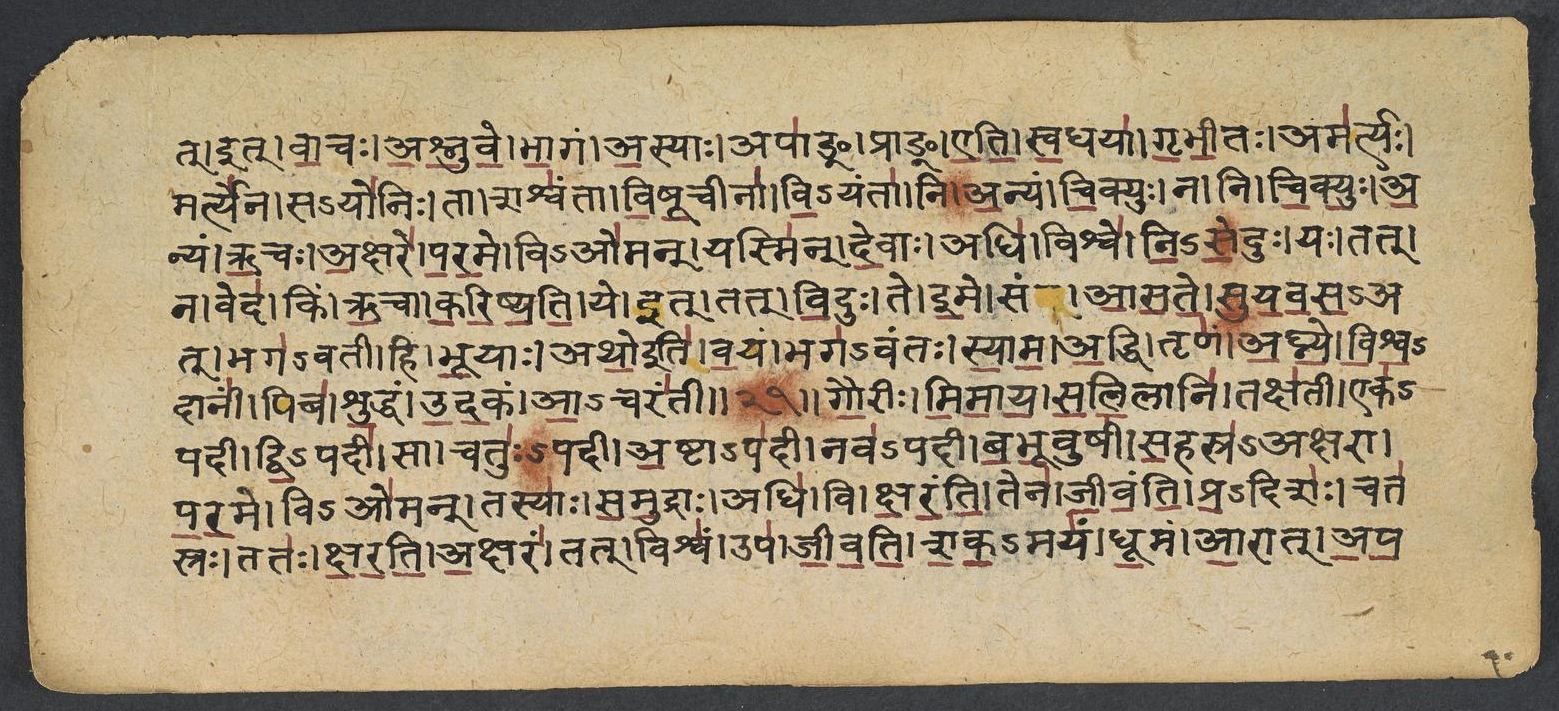
Where on the image
Penn Ms. Coll. 390 Item 41, fol. 129v (numbered 10v by the scribe) (OPenn image 131, upper leaf). Checked on the image: the Rigveda text on this page begins in RV 1.164.37 ‹-āt it vācaḥ aśnuve›. The next page with Rigveda text, fol. 130r (numbered 11r by the scribe), begins in RV 1.164.43 ‹-apaśyam viṣu-vatā paraḥ enā›. Verses 1.164.37-42 end on this page; 1.164.37 begins on fol. 129r (numbered 10r by the scribe).
37na vi jā̍nāmi̱ yad i̍ve̱dam asmi̍ ni̱ṇyaḥ saṁna̍ddho̱ mana̍sā carāmi | ya̱dā māga̍n prathama̱jā ṛ̱tasyād id vā̱co a̍śnuve bhā̱gam a̱syāḥ ||
38apā̱ṅ prāṅ e̍ti sva̱dhayā̍ gṛbhī̱to 'ma̍rtyo̱ martye̍nā̱ sayo̍niḥ | tā śaśva̍ntā viṣū̱cīnā̍ vi̱yantā̱ ny a1̱̍nyaṁ ci̱kyur na ni ci̍kyur a̱nyam ||
39ṛ̱co a̱kṣare̍ para̱me vyo̍ma̱n yasmi̍n de̱vā adhi̱ viśve̍ niṣe̱duḥ | yas tan na veda̱ kim ṛ̱cā ka̍riṣyati̱ ya it tad vi̱dus ta i̱me sam ā̍sate ||
40sū̱ya̱va̱sād bhaga̍vatī̱ hi bhū̱yā atho̍ va̱yam bhaga̍vantaḥ syāma | a̱ddhi tṛṇa̍m aghnye viśva̱dānī̱m piba̍ śu̱ddham u̍da̱kam ā̱cara̍ntī ||
41gau̱rīr mi̍māya sali̱lāni̱ takṣa̱ty eka̍padī dvi̱padī̱ sā catu̍ṣpadī | a̱ṣṭāpa̍dī̱ nava̍padī babhū̱vuṣī̍ sa̱hasrā̍kṣarā para̱me vyo̍man ||
42tasyā̍ḥ samu̱drā adhi̱ vi kṣa̍ranti̱ tena̍ jīvanti pra̱diśa̱ś cata̍sraḥ | tata̍ḥ kṣaraty a̱kṣara̱ṁ tad viśva̱m upa̍ jīvati ||
Compare: Padapāṭha (word-by-word text written in the manuscript; Sansknet e-text via GRETIL)
37na | vi | jānāmi | yat-iva | idam | asmi | niṇyaḥ | sam-naddhaḥ | manasā | carāmi | yadā | mā | ā | agan | prathama-jāḥ | ṛtasya | āt | it | vācaḥ | aśnuve | bhāgam | asyāḥ
38apāṅ | prāṅ | eti | svadhayā | gṛbhītaḥ | amartyaḥ | martyena | sa-yoniḥ | tā | śaśvantā | viṣūcīnā | vi-yantā | ni | anyam | cikyuḥ | na | ni | cikyuḥ | anyam
39ṛcaḥ | akṣare | parame | vi-oman | yasmin | devāḥ | adhi | viśve | ni-seduḥ | yaḥ | tat | na | veda | kim | ṛcā | kariṣyati | ye | it | tat | viduḥ | te | ime | sam | āsate
40suyavasa-at | bhaga-vatī | hi | bhūyāḥ | atho iti | vayam | bhaga-vantaḥ | syāma | addhi | tṛṇam | aghnye | viśva-dānīm | piba | śuddham | udakam | ācarantī
41gaurīḥ | mimāya | salilāni | takṣatī | eka-padī | dvi-padī | sā | catuḥ-padī | aṣṭāpadī | nava-padī | babhūvuṣī | sahasra-akṣarā | parame | vi-oman
42tasyāḥ | samudrāḥ | adhi | vi | kṣaranti | tena | jīvanti | pra-diśaḥ | catasraḥ | tataḥ | kṣarati | akṣaram | tat | viśvam | upa | jīvati
37What thing I truly am I know not clearly: mysterious, fettered in my mind I wander. When the first-born of holy Law approached me, then of this speech I first obtain a portion.
38Back, forward goes he, grasped by strength inherent, the Immortal born the brother of the mortal Ceaseless they movelnopposite directions: men mark the one, and fail to mark the other.
39Upon what syllable of holy praise-song, as twere their highest heaven, the Gods repose them,– Who knows not this, what will he do with praise-song? But they who know it well sit here assembled.
40Forunate mayst thou be with goodly pasture, and may we also be exceeding wealthy. Feed on the grass, O Cow, at every season, and coming hitherward drink limpid water.
41Forming the water-floods, the buffalo hath lowed, one-footed or two-footed or fourfooted, she, Who hath become eight-footed or hath got nine feet, the thou sand-syllabled in the sublimest heaven.
42From her descend in streams the seas of water; thereby the world's four regions have their being, Thence flows the imperishable flood and thence the universe hath life.
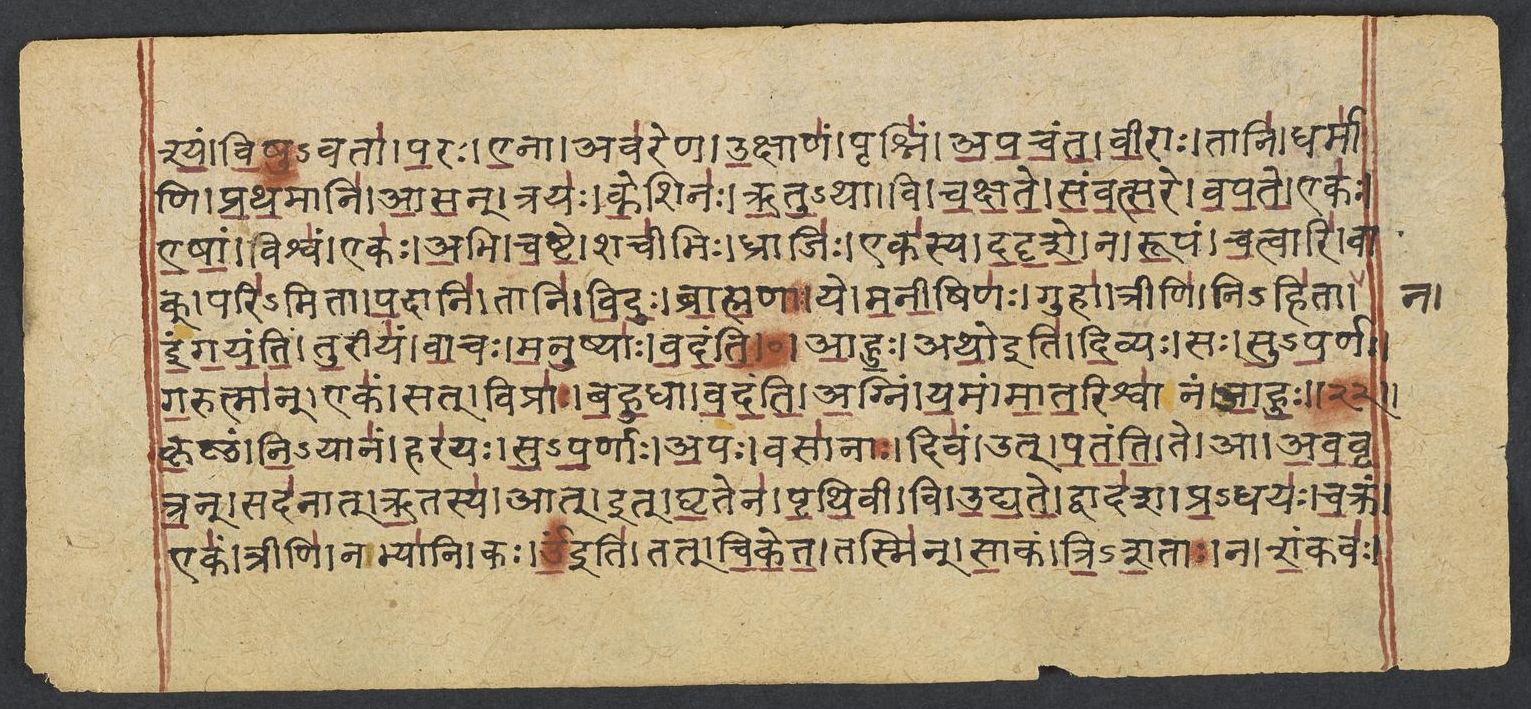
Where on the image
Penn Ms. Coll. 390 Item 41, fol. 130r (numbered 11r by the scribe) (OPenn image 131, lower leaf). Checked on the image: the Rigveda text on this page begins in RV 1.164.43 ‹-apaśyam viṣu-vatā paraḥ enā›. The next page with Rigveda text, fol. 130v (numbered 11v by the scribe), begins in RV 1.164.48 ‹arpitāḥ ṣaṣṭiḥ na calācalāsaḥ›. Verses 1.164.43-47 end on this page; 1.164.43 begins on fol. 129v (numbered 10v by the scribe).
43śa̱ka̱maya̍ṁ dhū̱mam ā̱rād a̍paśyaṁ viṣū̱vatā̍ pa̱ra e̱nāva̍reṇa | u̱kṣāṇa̱m pṛśni̍m apacanta vī̱rās tāni̱ dharmā̍ṇi pratha̱māny ā̍san ||
44traya̍ḥ ke̱śina̍ ṛtu̱thā vi ca̍kṣate saṁvatsa̱re va̍pata̱ eka̍ eṣām | viśva̱m eko̍ a̱bhi ca̍ṣṭe̱ śacī̍bhi̱r dhrāji̱r eka̍sya dadṛśe̱ na rū̱pam ||
45ca̱tvāri̱ vāk pari̍mitā pa̱dāni̱ tāni̍ vidur brāhma̱ṇā ye ma̍nī̱ṣiṇa̍ḥ | guhā̱ trīṇi̱ nihi̍tā̱ neṅga̍yanti tu̱rīya̍ṁ vā̱co ma̍nu̱ṣyā̍ vadanti ||
46indra̍m mi̱traṁ varu̍ṇam a̱gnim ā̍hu̱r atho̍ di̱vyaḥ sa su̍pa̱rṇo ga̱rutmā̍n | eka̱ṁ sad viprā̍ bahu̱dhā va̍danty a̱gniṁ ya̱mam mā̍ta̱riśvā̍nam āhuḥ ||
47kṛ̱ṣṇaṁ ni̱yāna̱ṁ hara̍yaḥ supa̱rṇā a̱po vasā̍nā̱ diva̱m ut pa̍tanti | ta āva̍vṛtra̱n sada̍nād ṛ̱tasyād id ghṛ̱tena̍ pṛthi̱vī vy u̍dyate ||
Compare: Padapāṭha (word-by-word text written in the manuscript; Sansknet e-text via GRETIL)
43śaka-mayam | dhūmam | ārāt | apaśyam | viṣu-vatā | paraḥ | enā | avareṇa | ukṣāṇam | pṛśnim | apacanta | vīrāḥ | tāni | dharmāṇi | prathamāni | āsan
44trayaḥ | keśinaḥ | ṛtu-thā | vi | cakṣate | saṃvatsare | vapate | ekaḥ | eṣām | viśvam | ekaḥ | abhi | caṣṭe | śacībhiḥ | dhrājiḥ | ekasya | dadṛśe | na | rūpam
45catvāri | vāk | pari-mitā | padāni | tāni | viduḥ | brāhmaṇāḥ | ye | manīṣiṇaḥ | guhā | trīṇi | ni-hitā | na | iṅgayanti | turīyam | vācaḥ | manuṣyāḥ | vadanti
46indram | mitram | varuṇam | agnim | āhuḥ | atho iti | divyaḥ | saḥ | su-parṇaḥ | garutmān | ekam | sat | viprāḥ | bahu-dhā | vadanti | agnim | yamam | mātariśvānam | āhuḥ
47kṛṣṇam | ni-yānam | harayaḥ | su-parṇāḥ | apaḥ | vasānāḥ | divam | ut | patanti | te | ā | avavṛtran | sadanāt | ṛtasya | āt | it | ghṛtena | pṛthivī | vi | udyate
43I saw from far away the smoke of fuel with spires that rose on high o'er that beneath it. The Mighty Men have dressed the spotted bullock. These were the customs in the days aforetime,
44Three with long tresses show in ordered season. One of them sheareth when the year is ended. One with his powers the universe regardeth: Of one, the sweep is seen, but his figure.
45Speech hath been measured out in four divisions, the Brahmans who have understanding know them. Three kept in close concealment cause no motion; of speech, men speak only the fourth division.
46They call him Indra, Mitra, Varuṇa, Agni, and he is heavenly nobly-winged Garutman. To what is One, sages give many a title they call it Agni, Yama, Mâtariṣvan.
47Dark the descent: the birds are golden-coloured; up to the heaven they fly robed in the waters. Again descend they from the seat of Order, and all the earth is moistened with their fatness.
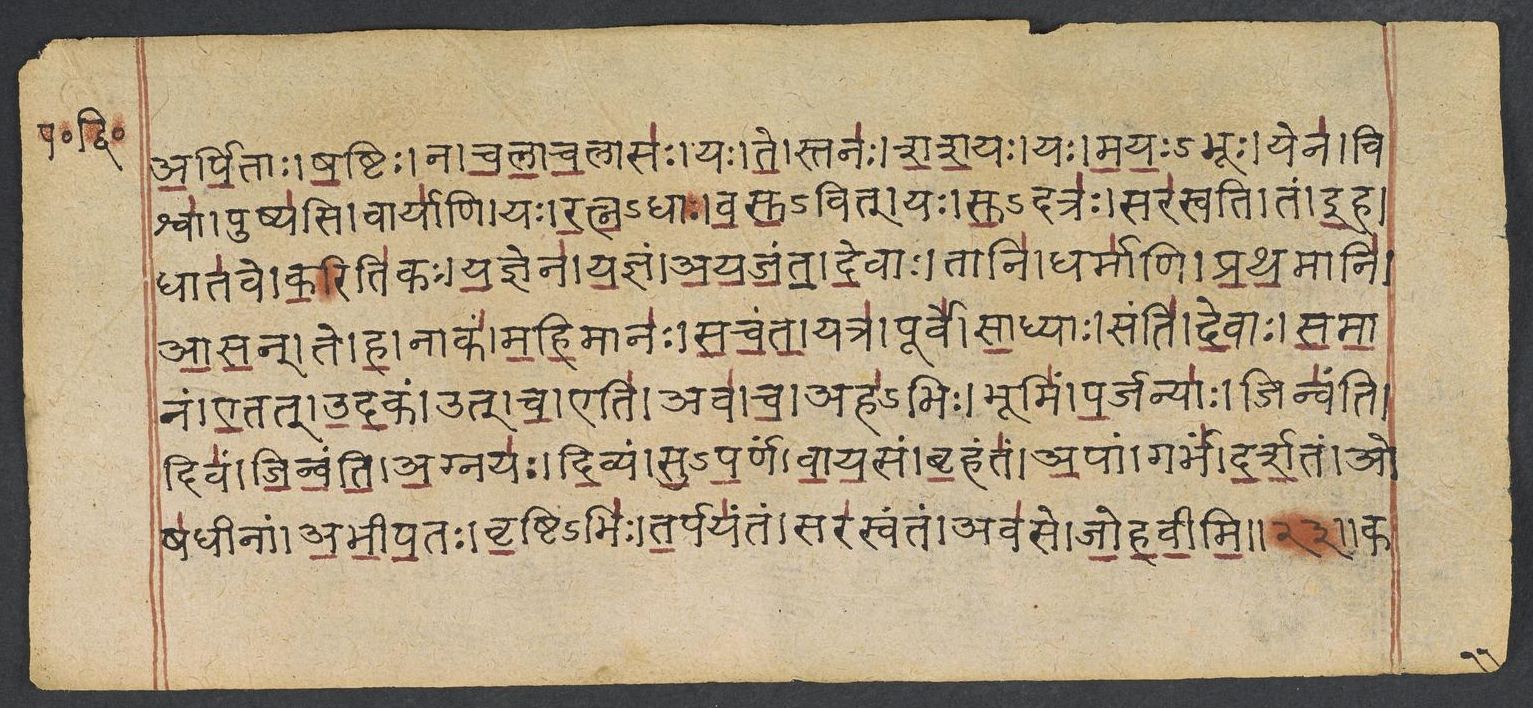
Where on the image
Penn Ms. Coll. 390 Item 41, fol. 130v (numbered 11v by the scribe) (OPenn image 132, upper leaf). Checked on the image: the Rigveda text on this page begins in RV 1.164.48 ‹arpitāḥ ṣaṣṭiḥ na calācalāsaḥ›. The next page with Rigveda text, fol. 131r (numbered 12r by the scribe), begins in RV 1.165.1 ‹kayā śubhā sa-vayasaḥ sa-nīḷāḥ›. Verses 1.164.48-52 end on this page; 1.164.48 begins on fol. 130r (numbered 11r by the scribe).
48dvāda̍śa pra̱dhaya̍ś ca̱kram eka̱ṁ trīṇi̱ nabhyā̍ni̱ ka u̱ tac ci̍keta | tasmi̍n sā̱kaṁ tri̍śa̱tā na śa̱ṅkavo̍ 'rpi̱tāḥ ṣa̱ṣṭir na ca̍lāca̱lāsa̍ḥ ||
49yas te̱ stana̍ḥ śaśa̱yo yo ma̍yo̱bhūr yena̱ viśvā̱ puṣya̍si̱ vāryā̍ṇi | yo ra̍tna̱dhā va̍su̱vid yaḥ su̱datra̱ḥ sara̍svati̱ tam i̱ha dhāta̍ve kaḥ ||
50ya̱jñena̍ ya̱jñam a̍yajanta de̱vās tāni̱ dharmā̍ṇi pratha̱māny ā̍san | te ha̱ nāka̍m mahi̱māna̍ḥ sacanta̱ yatra̱ pūrve̍ sā̱dhyāḥ santi̍ de̱vāḥ ||
51sa̱mā̱nam e̱tad u̍da̱kam uc caity ava̱ cāha̍bhiḥ | bhūmi̍m pa̱rjanyā̱ jinva̍nti̱ diva̍ṁ jinvanty a̱gnaya̍ḥ ||
52di̱vyaṁ su̍pa̱rṇaṁ vā̍ya̱sam bṛ̱hanta̍m a̱pāṁ garbha̍ṁ darśa̱tam oṣa̍dhīnām | a̱bhī̱pa̱to vṛ̱ṣṭibhi̍s ta̱rpaya̍nta̱ṁ sara̍svanta̱m ava̍se johavīmi ||
Compare: Padapāṭha (word-by-word text written in the manuscript; Sansknet e-text via GRETIL)
48dvādaśa | pra-dhayaḥ | cakram | ekam | trīṇi | nabhyāni | kaḥ | oṃ iti | tat | ciketa | tasmin | sākam | tri-śatāḥ | na | śaṅkavaḥ | arpitāḥ | ṣaṣṭiḥ | na | calācalāsaḥ
49yaḥ | te | stanaḥ ḥ śaśayaḥ | yaḥ | mayaḥ-bhūḥ | yena | viśvā | puṣyasi | vāryāṇi | yaḥ | ratna-dhāḥ | vasu-vit | yaḥ | su-datraḥ | sarasvati | tam | iha | dhātave | karitikaḥ
50yajñena | yajñam | ayajanta | devāḥ | tāni | dharmāṇi | prathamāni | āsan | te | ha | nākam | mahimānaḥ | sacanta | yatra | pūrve | sādhyāḥ | santi | devāḥ
51samānam | etat | udakam | ut | ca | eti | ava | ca | aha-bhiḥ | bhūmim | parjanyāḥ | j invanti | divam | jinvanti | agnayaḥ
52divyam | su-parṇam | vāyasam | bṛhantam | apām | garbham | darśatam | oṣadhīnām | abhīpataḥ | vṛṣṭi-bhiḥ | tarpayantam | sarasvantam | avase | johavīm i
48Twelve are the fellies, and the wheel is single; three are the naves. What man hath understood it? Therein are set together spokes three hundred and sixty, which in nowise can be loosened.
49That breast of thine exhaustless, spring of pleasure, wherewith thou feedest all things that are choicest, Wealth-giver, treasure. finder, free bestower,– bring that, Sarasvatî, that we may drain it.
50By means of sacrifice the Gods accomplished their sacrifice: these were the earliest ordinances. These Mighty Ones attained the height of heaven, there where the Sâdhyas, Gods of old, are dwelling.
51Uniform, with the passing days, this water mounts and falls again. The tempest-clouds give life to earth, and fires re-animate the heaven.
52The Bird Celestial, vast with noble pinion, the lovely germ of plants, the germ of waters, Him who delighteth us with rain in season, Sarasvan I invoke that he may help us.
Notes
- Sanskrit: Aufrecht's edition (1877) with the Vedic accents, as entered by van Nooten and Holland (GRETIL).
- English: Ralph T. H. Griffith, The Hymns of the Rigveda (1889-1892; 2nd ed. 1896-1897), from the VedaWeb digital text; OCR slips in that text were corrected against the printed 2nd edition (data/sources/rigveda/griffith_errata.json).
- Padapāṭha (edition text): Sansknet e-text via GRETIL (CC BY-NC-SA 4.0).
Cite
Sources
- Source: Penn Ms. Coll. 390 Item 41 (undated (catalogued with Penn's 18th-19th c. Vedic manuscripts)), OPenn, Public Domain Mark + Aufrecht's accented text (GRETIL) + Griffith's English (VedaWeb) (holding institution)
- Critical edition: Aufrecht (1877), accented e-text via GRETIL
← previous · → next · v cycle view · l back to library