Rigveda 1.167: To the Maruts
Introduction
Rigveda 1.167 is a hymn of 11 verses addressed to the Maruts. It stands in book (maṇḍala) 1, a collection of hymns by many families of poets. The Rigveda is the oldest collection of Sanskrit hymns, composed in the second half of the second millennium BCE and handed down orally for many centuries before it was written down.
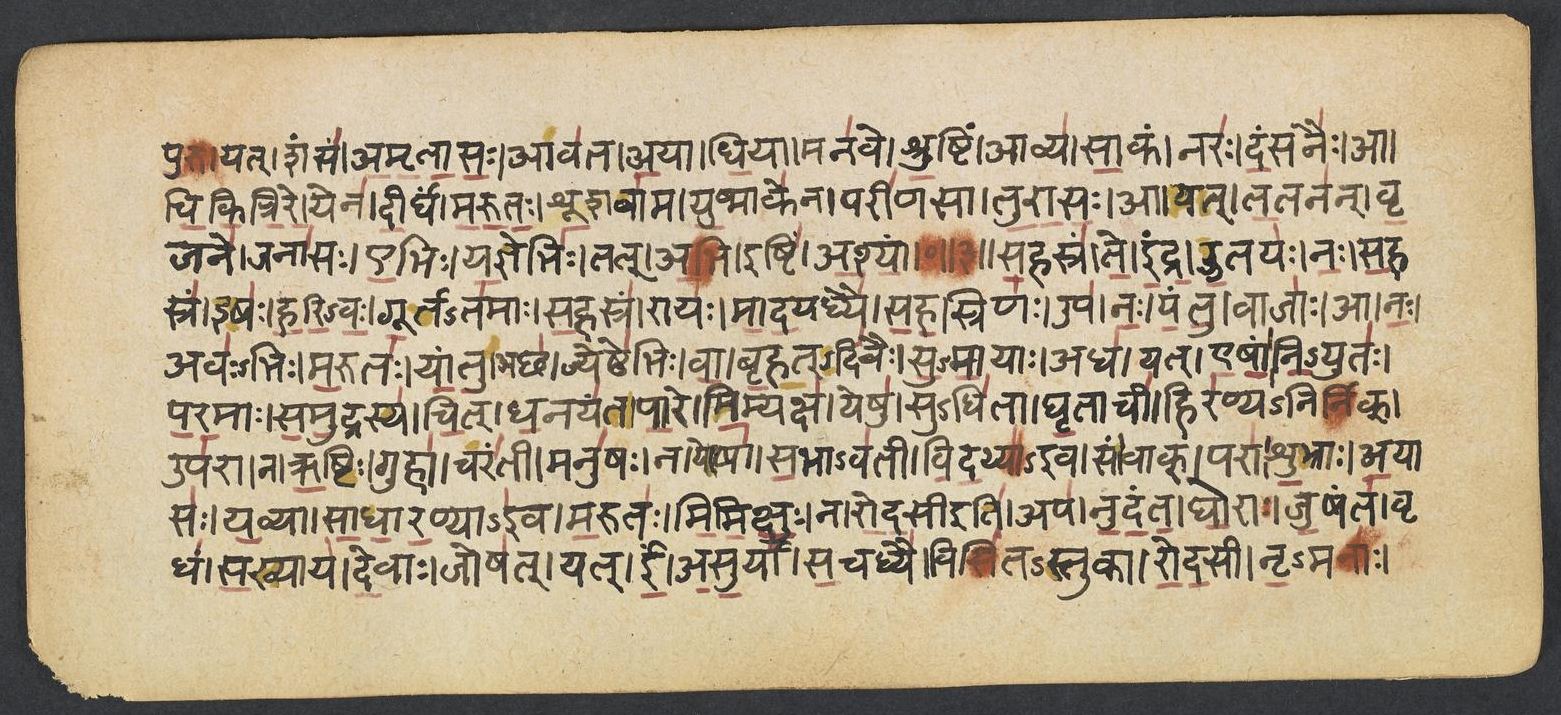
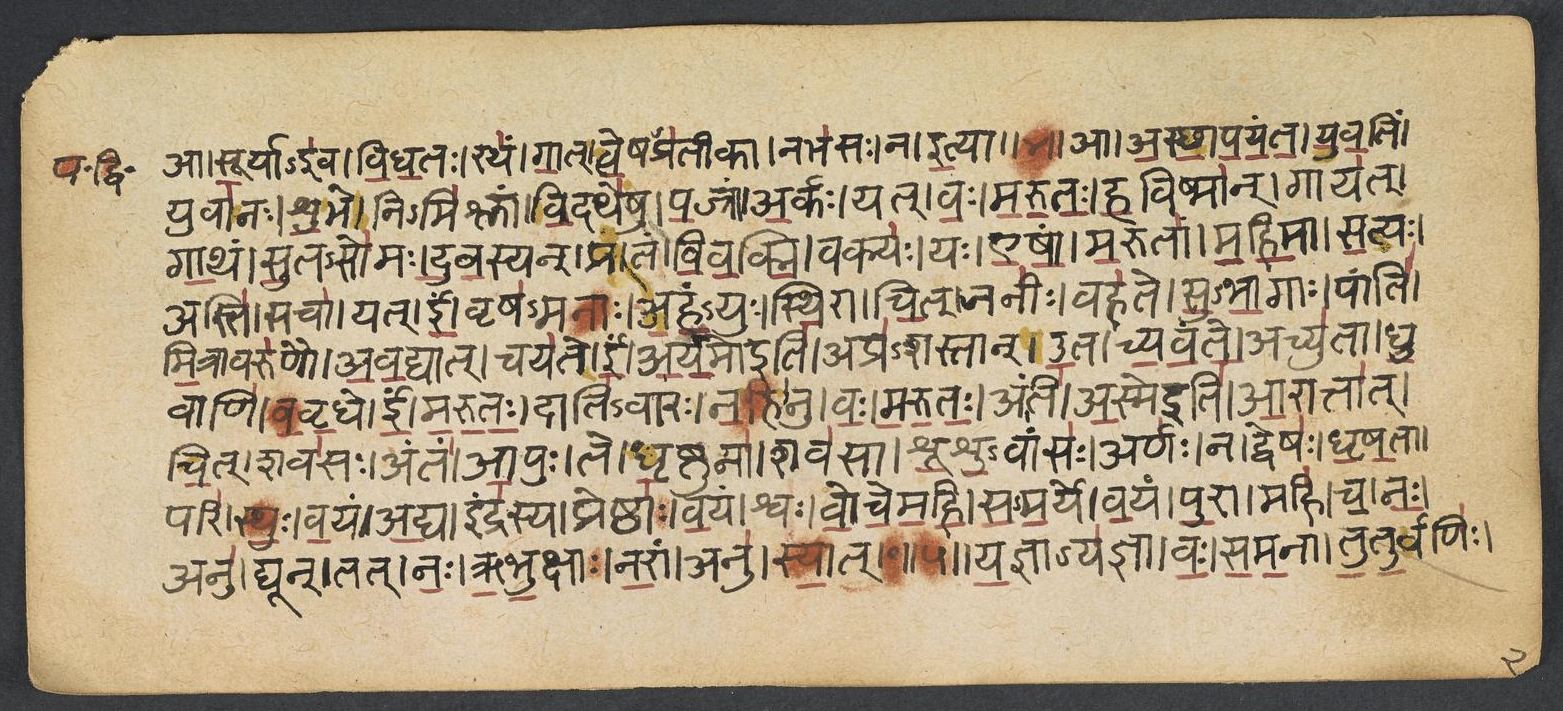
The manuscript shown is Penn Ms. Coll. 390 Item 41 (University of Pennsylvania), an undated paper manuscript of the padapāṭha (the word-by-word recitation text, in which every word is written separately and compounds are split) of the whole Ṛgveda in Devanāgarī, 884 leaves in fascicles, 7-9 lines to the page, accents in red; this hymn stands on fol. 133r-133v. Each section below gives the verses that end on one page; the page boundaries were read on the images (the opening words of every page), not counted out. Where the manuscript is a padapāṭha (the word-by-word recitation text), the section shows Aufrecht's continuous (saṃhitā) text first and, as the edition text, the padapāṭha of the same verses, which is the form written on the page.
How was this verified? (Provenance)
Where on the image
Penn Ms. Coll. 390 Item 41, fol. 133r (numbered 2r by the scribe) (OPenn image 134, lower leaf). Checked on the image: the Rigveda text on this page begins in RV 1.166.13 ‹yat śaṃsam amṛtāsaḥ āvata›. The next page with Rigveda text, fol. 133v (numbered 2v by the scribe), begins in RV 1.167.5 ‹ā sūryāiva vidhataḥ ratham›. Verses 1.167.1-4 end on this page.
1sa̱hasra̍ṁ ta indro̱tayo̍ naḥ sa̱hasra̱m iṣo̍ harivo gū̱rtata̍māḥ | sa̱hasra̱ṁ rāyo̍ māda̱yadhyai̍ saha̱sriṇa̱ upa̍ no yantu̱ vājā̍ḥ ||
2ā no 'vo̍bhir ma̱ruto̍ yā̱ntv acchā̱ jyeṣṭhe̍bhir vā bṛ̱haddi̍vaiḥ sumā̱yāḥ | adha̱ yad e̍ṣāṁ ni̱yuta̍ḥ para̱māḥ sa̍mu̱drasya̍ cid dha̱naya̍nta pā̱re ||
3mi̱myakṣa̱ yeṣu̱ sudhi̍tā ghṛ̱tācī̱ hira̍ṇyanirṇi̱g upa̍rā̱ na ṛ̱ṣṭiḥ | guhā̱ cara̍ntī̱ manu̍ṣo̱ na yoṣā̍ sa̱bhāva̍tī vida̱thye̍va̱ saṁ vāk ||
4parā̍ śu̱bhrā a̱yāso̍ ya̱vyā sā̍dhāra̱ṇyeva̍ ma̱ruto̍ mimikṣuḥ | na ro̍da̱sī apa̍ nudanta gho̱rā ju̱ṣanta̱ vṛdha̍ṁ sa̱khyāya̍ de̱vāḥ ||
Compare: Padapāṭha (word-by-word text written in the manuscript; Sansknet e-text via GRETIL)
1sahasram | te | indra | ūtayaḥ | naḥ | sahasram | iṣaḥ | hari-vaḥ | gūrta-tamāḥ | sahasram | rāyaḥ | mādayadhyai | sahasriṇaḥ | upa | naḥ | yantu | vājāḥ
2ā | naḥ | avaḥ-bhiḥ | marutaḥ | yāntu | accha | jyeṣṭhebhiḥ | vā | bṛhat-divaiḥ | su-māyāḥ | adha | yat | eṣām | ni-yutaḥ | paramāḥ | samudrasya | cit | dhanayanta | pāre
3mimyakṣa | yeṣu | su-dhitā | ghṛtācī | hiraṇya-nirnik | uparā | na | ṛṣṭiḥ | guhā | carantī | manuṣaḥ | na | yoṣā | sabhāvatī | vidathyāiva | sam | vāk
4parā | śubhrāḥ | ayāsaḥ | yavyā | sādhāraṇyāiva | maruto | mimikṣuḥ | na | rodasī iti | apa | nudanta | ghorāḥ | juṣanta | vṛdham | sakhyāya | devāḥ
1A THOUSAND are thy helps for us, O Indra: a thousand, Lord of Bays, thy choice refreshments. Wealth of a thousand sorts hast thou to cheer us: may precious goods come nigh to us in thousands.
2May the most sapient Maruts, with protection, with best boons brought from lofty heaven, approach us, Now when their team of the most noble horses speeds even on the sea's extremest limit.
3Close to them clings one moving in seclusion, like a man's wife, like a spear carried rearward, Well grasped, bright, decked with gold there is Vâk also, like to a courtly, eloquent dame, among them.
4Far off the brilliant, never-weary Maruts cling to the young Maid as a joint possession. The fierce Gods drave not Rodasî before them, but wished for her to grow their friend and fellow.
Where on the image
Penn Ms. Coll. 390 Item 41, fol. 133v (numbered 2v by the scribe) (OPenn image 135, upper leaf). Checked on the image: the Rigveda text on this page begins in RV 1.167.5 ‹ā sūryāiva vidhataḥ ratham›. The next page with Rigveda text, fol. 134r (numbered 3r by the scribe), begins in RV 1.168.1 ‹dhiyam-dhiyam vaḥ deva-yāḥ oṃ›. Verses 1.167.5-11 end on this page; 1.167.5 begins on fol. 133r (numbered 2r by the scribe).
5joṣa̱d yad ī̍m asu̱ryā̍ sa̱cadhyai̱ viṣi̍tastukā roda̱sī nṛ̱maṇā̍ḥ | ā sū̱ryeva̍ vidha̱to ratha̍ṁ gāt tve̱ṣapra̍tīkā̱ nabha̍so̱ netyā ||
6āsthā̍payanta yuva̱tiṁ yuvā̍naḥ śu̱bhe nimi̍ślāṁ vi̱dathe̍ṣu pa̱jrām | a̱rko yad vo̍ maruto ha̱viṣmā̱n gāya̍d gā̱thaṁ su̱taso̍mo duva̱syan ||
7pra taṁ vi̍vakmi̱ vakmyo̱ ya e̍ṣām ma̱rutā̍m mahi̱mā sa̱tyo asti̍ | sacā̱ yad ī̱ṁ vṛṣa̍maṇā aha̱ṁyuḥ sthi̱rā ci̱j janī̱r vaha̍te subhā̱gāḥ ||
8pānti̍ mi̱trāvaru̍ṇāv ava̱dyāc caya̍ta īm arya̱mo apra̍śastān | u̱ta cya̍vante̱ acyu̍tā dhru̱vāṇi̍ vāvṛ̱dha ī̍m maruto̱ dāti̍vāraḥ ||
9na̱hī nu vo̍ maruto̱ anty a̱sme ā̱rāttā̍c ci̱c chava̍so̱ anta̍m ā̱puḥ | te dhṛ̱ṣṇunā̱ śava̍sā śūśu̱vāṁso 'rṇo̱ na dveṣo̍ dhṛṣa̱tā pari̍ ṣṭhuḥ ||
10va̱yam a̱dyendra̍sya̱ preṣṭhā̍ va̱yaṁ śvo vo̍cemahi sama̱rye | va̱yam pu̱rā mahi̍ ca no̱ anu̱ dyūn tan na̍ ṛbhu̱kṣā na̱rām anu̍ ṣyāt ||
11e̱ṣa va̱ḥ stomo̍ maruta i̱yaṁ gīr mā̍ndā̱ryasya̍ mā̱nyasya̍ kā̱roḥ | eṣā yā̍sīṣṭa ta̱nve̍ va̱yāṁ vi̱dyāme̱ṣaṁ vṛ̱jana̍ṁ jī̱radā̍num ||
Compare: Padapāṭha (word-by-word text written in the manuscript; Sansknet e-text via GRETIL)
5joṣat | yat | īm | asuryā | sacadhyai | visita-stukā | rodasī | nṛ-manāḥ | / ā | sūryāiva | vidhataḥ | ratham | gāt | tveṣa-pratīkā | nabhasaḥ | na | ityā
6ā | asthāpayanta | yuvatim | yuvānaḥ | śubhe | ni-miślām | vidatheṣu | pajrām | arkaḥ | yat | vaḥ | marutaḥ | haviṣmān | gāyat | gātham | suta-somaḥ | duvasyan
7pra | tam | vivakmi | vakmyaḥ | yaḥ | eṣām | marutām | mahimā | satyaḥ | asti | sacā | yat | īm | vṛṣa-manāḥ | aham-yuḥ | sthirā | cit | janīḥ | vahate | su-bhāgāḥ
8pānti | mitrāvaruṇau | avadyāt | cayate | īm | aryamo iti | apra-śastān | uta | cyavante | acyutā | dhruvāṇi | vavṛdhe | īm | marutaḥ | dāti--vāraḥ
9nahi | nu | vaḥ | marutaḥ | anti | asme iti | ārāttāt | cit | śavasaḥ | antam | āpuḥ | te | dhṛṣṇunāśavasā | śūśu-vāṃsaḥ | arṇaḥ | na | dveṣaḥ | dhṛṣatā | pari | sthuḥ
10vayam | adya | indrasya | preṣṭhāḥ | vayam | śvaḥ | vocemahi | sa-marye | vayam | purā | mahi | ca | naḥ | anu | dyūn | tat | naḥ | ṛbhukṣāḥ | narām | anu | syāt
11eṣaḥ | vaḥ | stomaḥ | marutaḥ | iyam | gīḥ | māndāryasya | mānyasya | kāroḥ | ā | iṣā | yāsīṣṭa | tanve | vayām | vidyāma | iṣam | vṛjanam | jīra-dānum
5When chose immortal Rodasî to follow- she with loose tresses and heroic spirit- She climbed her servant's chariot, she like Sûryâ with cloud-like motion and refulgent aspect.
6Upon their car the young men set the Maiden wedded to glory, mighty in assemblies, When your song, Maruts, rose, and, with oblation, the Soma-pourer sang his hymn in worship.
7I will declare the greatness of these Maruts, their real greatness, worthy to be lauded, How, with them, she though firm, strong-minded, haughty, travels to women happy in their fortune.
8Mitra and Varuṇa they guard from censure: Aryaman too, discovers worthless sinners Firm things are overthrown that ne'er were shaken: he prospers, Maruts, who gives choice oblations.
9None of us, Maruts, near or at a distance, hath ever reached the limit of your vigour. They in courageous might still waxing boldly have compassed round their foemen like an ocean.
10May we this day be dearest friends of Indra, and let us call on him in fight to-morrow. So were we erst. New might attend us daily! So be with us! R̥ibhukshan of the Heroes!
11May this your laud, may this your song, O Maruts, sung by the poet, Mâna's son, Mândârya, Bring offspring for ourselves with. food to feed us. May we find strengthening food in full abundance.
Notes
- Sanskrit: Aufrecht's edition (1877) with the Vedic accents, as entered by van Nooten and Holland (GRETIL).
- English: Ralph T. H. Griffith, The Hymns of the Rigveda (1889-1892; 2nd ed. 1896-1897), from the VedaWeb digital text; OCR slips in that text were corrected against the printed 2nd edition (data/sources/rigveda/griffith_errata.json).
- Padapāṭha (edition text): Sansknet e-text via GRETIL (CC BY-NC-SA 4.0).
Cite
Sources
- Source: Penn Ms. Coll. 390 Item 41 (undated (catalogued with Penn's 18th-19th c. Vedic manuscripts)), OPenn, Public Domain Mark + Aufrecht's accented text (GRETIL) + Griffith's English (VedaWeb) (holding institution)
- Critical edition: Aufrecht (1877), accented e-text via GRETIL
← previous · → next · v cycle view · l back to library