Rigveda 1.168: To the Maruts
Introduction
Rigveda 1.168 is a hymn of 10 verses addressed to the Maruts. It stands in book (maṇḍala) 1, a collection of hymns by many families of poets. The Rigveda is the oldest collection of Sanskrit hymns, composed in the second half of the second millennium BCE and handed down orally for many centuries before it was written down.
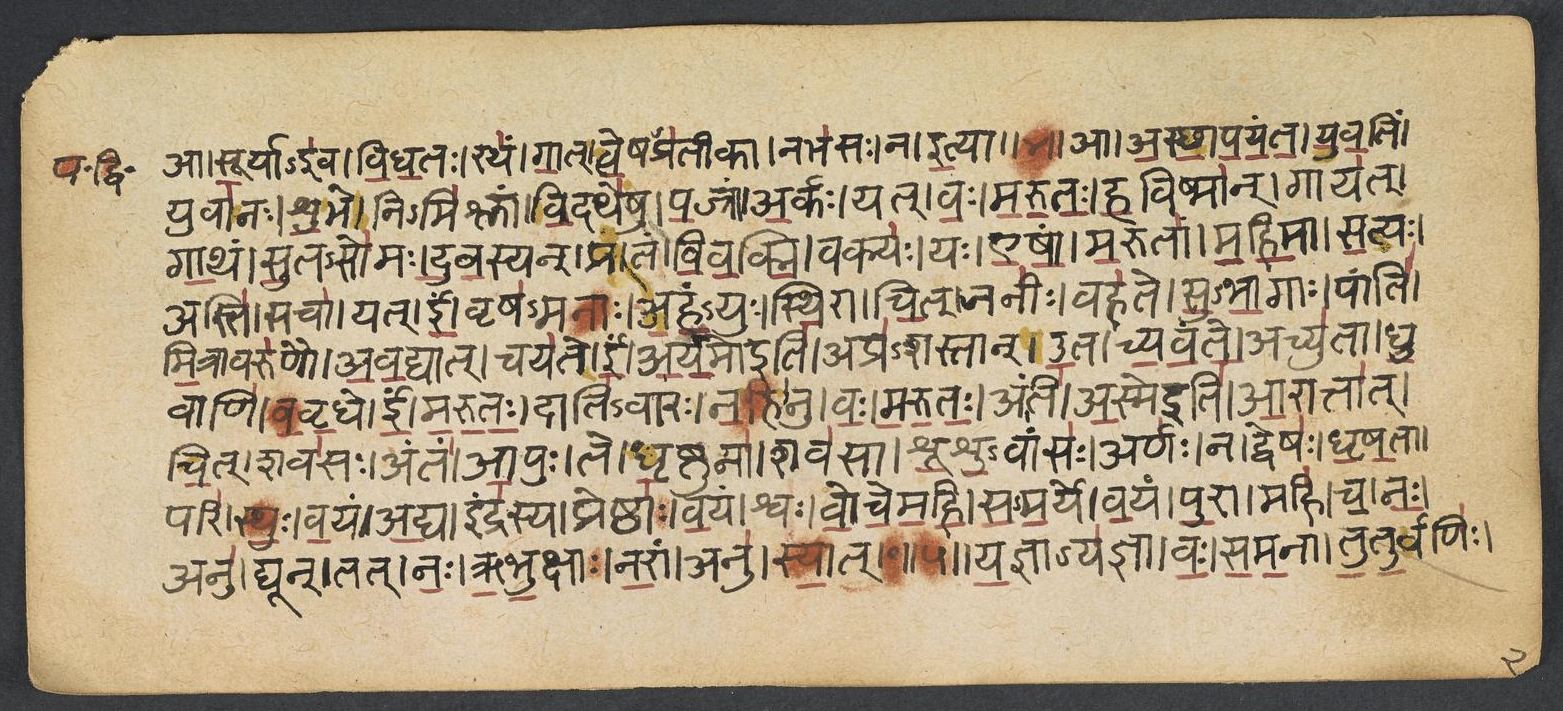
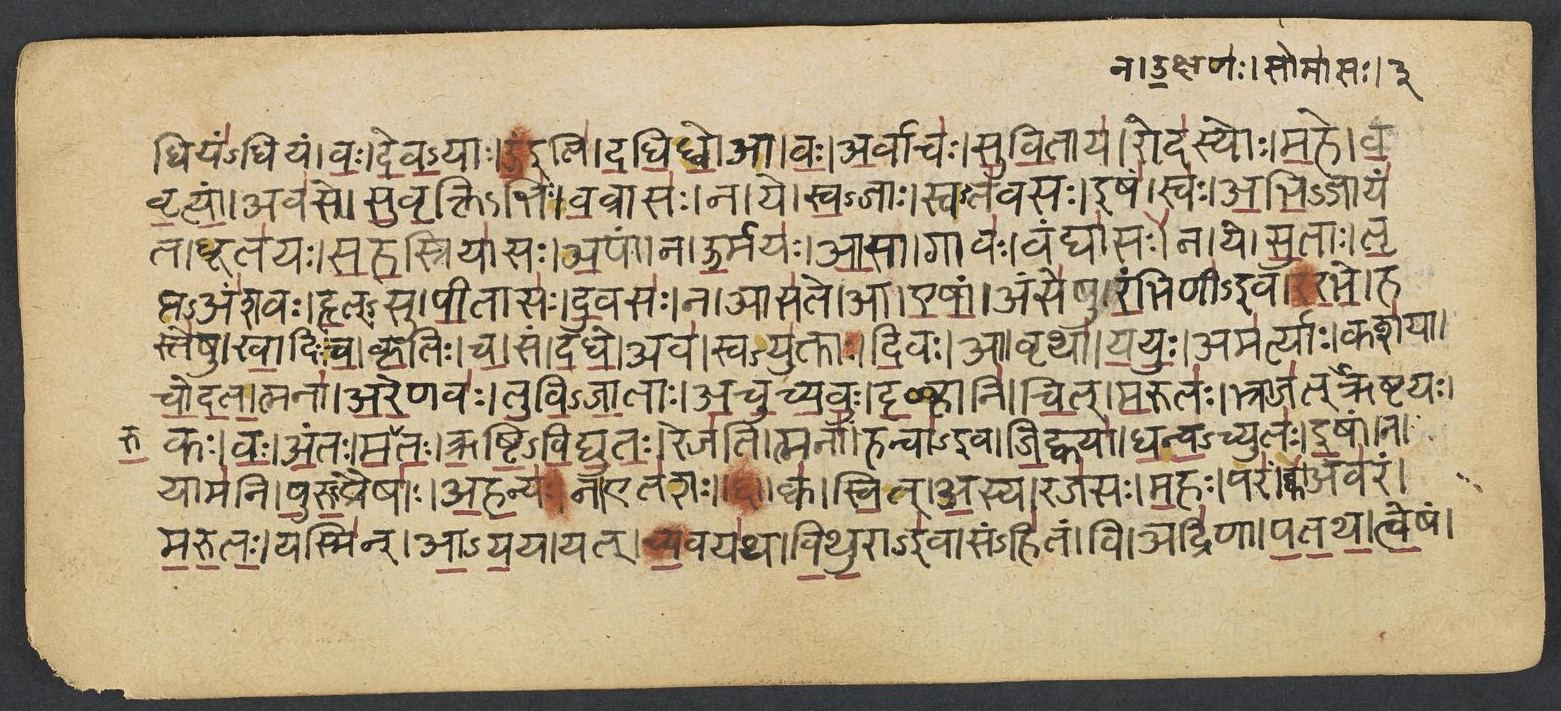
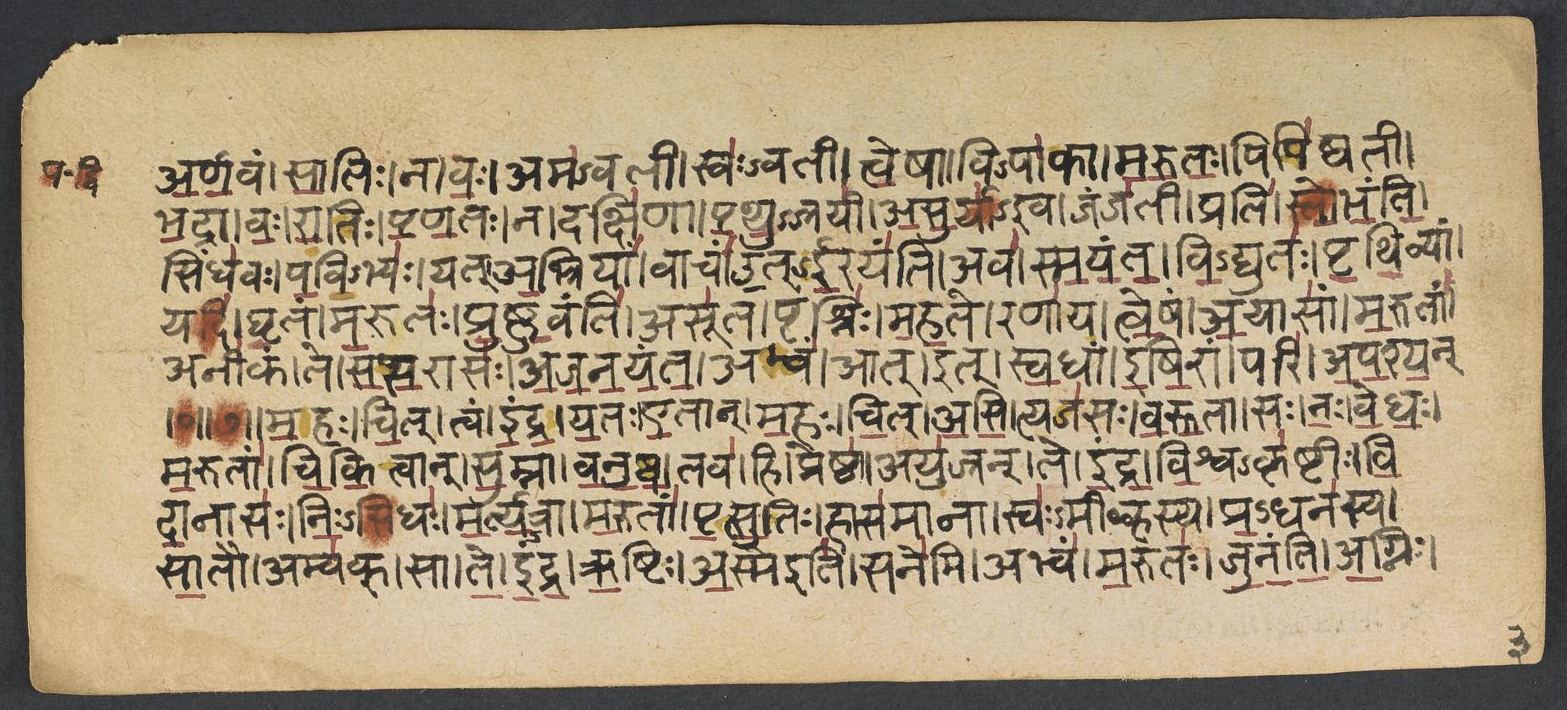
The manuscript shown is Penn Ms. Coll. 390 Item 41 (University of Pennsylvania), an undated paper manuscript of the padapāṭha (the word-by-word recitation text, in which every word is written separately and compounds are split) of the whole Ṛgveda in Devanāgarī, 884 leaves in fascicles, 7-9 lines to the page, accents in red; this hymn stands on fol. 133v-134v. Each section below gives the verses that end on one page; the page boundaries were read on the images (the opening words of every page), not counted out. Where the manuscript is a padapāṭha (the word-by-word recitation text), the section shows Aufrecht's continuous (saṃhitā) text first and, as the edition text, the padapāṭha of the same verses, which is the form written on the page.
How was this verified? (Provenance)
Where on the image
Penn Ms. Coll. 390 Item 41, fol. 134r (numbered 3r by the scribe) (OPenn image 135, lower leaf). Checked on the image: the Rigveda text on this page begins in RV 1.168.1 ‹dhiyam-dhiyam vaḥ deva-yāḥ oṃ›. The next page with Rigveda text, fol. 134v (numbered 3v by the scribe), begins in RV 1.168.6 ‹arṇavam›. Verses 1.168.1-5 end on this page; 1.168.1 begins on fol. 133v (numbered 2v by the scribe).
1ya̱jñā-ya̍jñā vaḥ sama̱nā tu̍tu̱rvaṇi̱r dhiya̍ṁ-dhiyaṁ vo deva̱yā u̍ dadhidhve | ā vo̱ 'rvāca̍ḥ suvi̱tāya̱ roda̍syor ma̱he va̍vṛtyā̱m ava̍se suvṛ̱ktibhi̍ḥ ||
2va̱vrāso̱ na ye sva̱jāḥ svata̍vasa̱ iṣa̱ṁ sva̍r abhi̱jāya̍nta̱ dhūta̍yaḥ | sa̱ha̱sriyā̍so a̱pāṁ normaya̍ ā̱sā gāvo̱ vandyā̍so̱ nokṣaṇa̍ḥ ||
3somā̍so̱ na ye su̱tās tṛ̱ptāṁśa̍vo hṛ̱tsu pī̱tāso̍ du̱vaso̱ nāsa̍te | aiṣā̱m aṁse̍ṣu ra̱mbhiṇī̍va rārabhe̱ haste̍ṣu khā̱diś ca̍ kṛ̱tiś ca̱ saṁ da̍dhe ||
4ava̱ svayu̍ktā di̱va ā vṛthā̍ yayu̱r ama̍rtyā̱ḥ kaśa̍yā codata̱ tmanā̍ | a̱re̱ṇava̍s tuvijā̱tā a̍cucyavur dṛ̱ḻhāni̍ cin ma̱ruto̱ bhrāja̍dṛṣṭayaḥ ||
5ko vo̱ 'ntar ma̍ruta ṛṣṭividyuto̱ reja̍ti̱ tmanā̱ hanve̍va ji̱hvayā̍ | dha̱nva̱cyuta̍ i̱ṣāṁ na yāma̍ni puru̱praiṣā̍ aha̱nyo̱3̱̍ naita̍śaḥ ||
Compare: Padapāṭha (word-by-word text written in the manuscript; Sansknet e-text via GRETIL)
1yajñāyajñā | vaḥ | samanā | tuturvaṇiḥ | dhiyam-dhiyam | vaḥ | deva-yāḥ | oṃ iti | dadhidhve | ā | vaḥ | arvācaḥ | suvitāya | rodasyoḥ | mahe | vavṛtyām | avase | suvṛkti-bhiḥ
2vavrāsaḥ | na | ye | sva-jāḥ | sva-tavasaḥ | iṣam | svaḥ | abhi-jāyanta | dhūtayaḥ | sahasriyāsaḥ | apām | na | ūrmayaḥ | āsā | gāvaḥ | vandyāsaḥ | na | ukṣaṇaḥ
3somāsaḥ | na | ye | sutāḥ | tṛpta-aṃśavaḥ | hṛt-su | pītāsaḥ | duvasaḥ | na | āsate | ā | eṣām | aṃseṣu | rambhiṇī-iva | rarabhe | hasteṣu | khādiḥ | ca | kṛtiḥ | ca | sam | dadhe
4ava | sva-yuktāḥ | divaḥ | ā | vṛthā | yayuḥ | amartyāḥ | kaśayā | codata | tmanā | areṇavaḥ | tuvi-jātāḥ | acucyavuḥ | dṛḷhāni | cit | marutaḥ | bhrājad-ṛṣṭayaḥ
5kaḥ | vaḥ | antaḥ | marutaḥ | ṛṣṭi-vidyutaḥ | rejati | tmanā | hanvāiva | jihvayā | dhanva-cyutaḥ | iṣām | na | yāmani | puru-praiṣāḥ | ahanyaḥ | na | etaśaḥ
1SWIFT gain is his who hath you near at every rite: ye welcome every song of himwho serves the Gods. So may I turn you hither with fair hymns of praise to give great succour for the weal of both the worlds.
2Surrounding, as it were, self-born, self-powerful, they spring to life the shakers-down of food and light; Like as the countess undulations of the floods, worthy of praise when near, like bullocks and like kine.
3They who, like Somas with their well-grown stalks pressed out, imbibed within the heart, dwell there in friendly wise. Upon their shoulders rests as 'twere a warrior's spear and in their hand they hold a dagger and a ring.
4Self-yoked they have descended lightly from the sky. With your own lash, Immortals, urge yourselve's to speed. Unstained by dust the Maruts, mighty in their strength, have cast down e'en firm things, armed with their shining spears.
5Who among you, O Maruts armed with lightning-spears, moveth you by himself, as with the tongue his jaws? Ye rush from heaven's floor as though ye sought for food, on many errands like the Sun's diurnal Steed.
Where on the image
Penn Ms. Coll. 390 Item 41, fol. 134v (numbered 3v by the scribe) (OPenn image 136, upper leaf). Checked on the image: the Rigveda text on this page begins in RV 1.168.6 ‹arṇavam›. The next page with Rigveda text, fol. 135r (numbered 4r by the scribe), begins in RV 1.169.3 ‹cit hi sma atase›. Verses 1.168.6-10 end on this page; 1.168.6 begins on fol. 134r (numbered 3r by the scribe).
6kva̍ svid a̱sya raja̍so ma̱has para̱ṁ kvāva̍ram maruto̱ yasmi̍nn āya̱ya | yac cyā̱vaya̍tha vithu̱reva̱ saṁhi̍ta̱ṁ vy adri̍ṇā patatha tve̱ṣam a̍rṇa̱vam ||
7sā̱tir na vo 'ma̍vatī̱ sva̍rvatī tve̱ṣā vipā̍kā maruta̱ḥ pipi̍ṣvatī | bha̱drā vo̍ rā̱tiḥ pṛ̍ṇa̱to na dakṣi̍ṇā pṛthu̱jrayī̍ asu̱rye̍va̱ jañja̍tī ||
8prati̍ ṣṭobhanti̱ sindha̍vaḥ pa̱vibhyo̱ yad a̱bhriyā̱ṁ vāca̍m udī̱raya̍nti | ava̍ smayanta vi̱dyuta̍ḥ pṛthi̱vyāṁ yadī̍ ghṛ̱tam ma̱ruta̍ḥ pruṣṇu̱vanti̍ ||
9asū̍ta̱ pṛśni̍r maha̱te raṇā̍ya tve̱ṣam a̱yāsā̍m ma̱rutā̱m anī̍kam | te sa̍psa̱rāso̍ 'janaya̱ntābhva̱m ād it sva̱dhām i̍ṣi̱rām pary a̍paśyan ||
10e̱ṣa va̱ḥ stomo̍ maruta i̱yaṁ gīr mā̍ndā̱ryasya̍ mā̱nyasya̍ kā̱roḥ | eṣā yā̍sīṣṭa ta̱nve̍ va̱yāṁ vi̱dyāme̱ṣaṁ vṛ̱jana̍ṁ jī̱radā̍num ||
Compare: Padapāṭha (word-by-word text written in the manuscript; Sansknet e-text via GRETIL)
6kva | svit | asya | rajasaḥ | mahaḥ | param | kva | avaram | marutaḥ | yasmin | āyaya | yat | cyavayatha | vithurāiva | sam-hitam | vi | adriṇā | patatha | tveṣam | arṇavam
7sātiḥ | na | vaḥ | ama-vatī | svaḥ-vatī | tveṣā | vi-pākā | marutaḥ | pipiṣvatī | bhadrā | vaḥ | rātiḥ | pṛṇataḥ | na | dakṣiṇā | pṛthu-jrayī | asuryāiva | jañjatī
8prati | stobhanti | sindhavaḥ | pavi-bhyaḥ | yat | abhriyām | vācam | ut-īrayant i | ava | smayanta | vi-dyutaḥ | pṛthivyām | yadi | ghṛtam | marutaḥ | pruṣṇuvanti
9asūta | pṛśniḥ | mahate | raṇāya | tveṣam | ayāsām | marutām | anīkam | te | sapsarāsaḥ | ajanayanta | abhvam | āt | it | svadhām | iṣirām | pari | apaśyan
10eṣaḥ | vaḥ | stomaḥ | marutaḥ | iyam | gīḥ | māndāryasya | mānyasya | kāroḥ | ā | iṣā | yāsīṣṭa | tanve | vayām | vidyāma | iṣam | vṛjanam | jīra-dānum
6Say where, then, is this mighty region's farthest bound, where, Maruts, is the lowest depth that ye have reached, When ye cast down like chaff the firmly stablished pile, and from the mountain send the glittering water-flood?
7Your winning is with strength, dazzling, with heavenly light, with fruit mature, O Maruts, fall of plenteousness. Auspicious is your gift like a free giver's meed, victorious, spreading far, as of immortal Gods.
8The rivers roar before your chariot fellies when they are uttering the voice of rain-clouds. The lightnings laugh upon the earth beneath them, what time the Maruts scatter forth their fatness.
9Prani brought forth, to fight the mighty battle, the glittering army of the restless Maruts. Nurtured together they begat the monster, and then looked round them for the food that strengthens.
10May this your laud, may this your song O Maruts, sung by the poet Mâna's son, Mândârya, Bring offspring for ourselves with food to feed us. May we find strengthening food in full abundance.
Notes
- Sanskrit: Aufrecht's edition (1877) with the Vedic accents, as entered by van Nooten and Holland (GRETIL).
- English: Ralph T. H. Griffith, The Hymns of the Rigveda (1889-1892; 2nd ed. 1896-1897), from the VedaWeb digital text; OCR slips in that text were corrected against the printed 2nd edition (data/sources/rigveda/griffith_errata.json).
- Padapāṭha (edition text): Sansknet e-text via GRETIL (CC BY-NC-SA 4.0).
Cite
Sources
- Source: Penn Ms. Coll. 390 Item 41 (undated (catalogued with Penn's 18th-19th c. Vedic manuscripts)), OPenn, Public Domain Mark + Aufrecht's accented text (GRETIL) + Griffith's English (VedaWeb) (holding institution)
- Critical edition: Aufrecht (1877), accented e-text via GRETIL
← previous · → next · v cycle view · l back to library