Rigveda 1.17: To Indra and Varuna
Introduction
Rigveda 1.17 is a hymn of 9 verses addressed to Indra and Varuna. It stands in book (maṇḍala) 1, a collection of hymns by many families of poets. The Rigveda is the oldest collection of Sanskrit hymns, composed in the second half of the second millennium BCE and handed down orally for many centuries before it was written down.
The manuscript shown is Penn Ms. Coll. 390 Item 41 (University of Pennsylvania), an undated paper manuscript of the padapāṭha (the word-by-word recitation text, in which every word is written separately and compounds are split) of the whole Ṛgveda in Devanāgarī, 884 leaves in fascicles, 7-9 lines to the page, accents in red; this hymn stands on fol. 9r-9v. Each section below gives the verses that end on one page; the page boundaries were read on the images (the opening words of every page), not counted out. Where the manuscript is a padapāṭha (the word-by-word recitation text), the section shows Aufrecht's continuous (saṃhitā) text first and, as the edition text, the padapāṭha of the same verses, which is the form written on the page.
How was this verified? (Provenance)
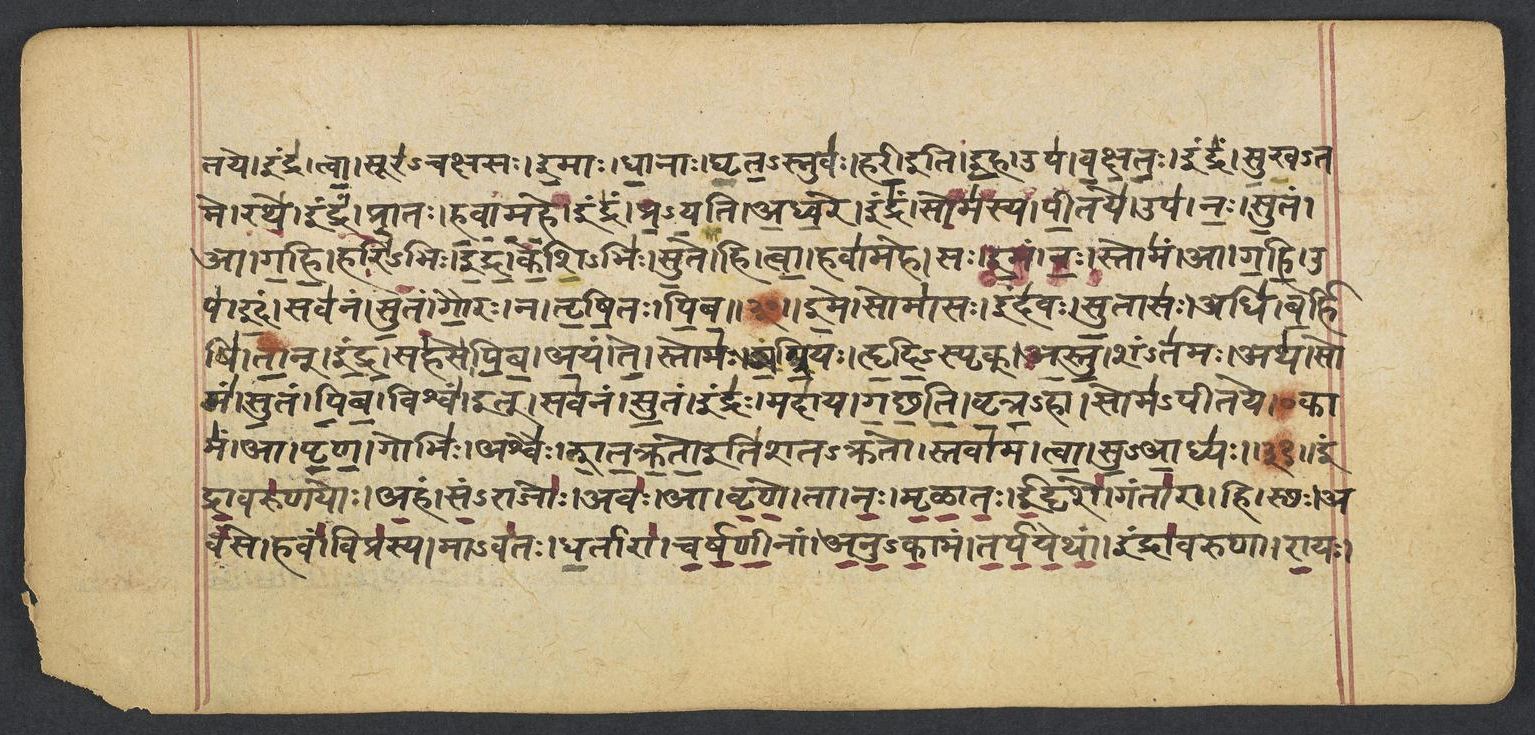
Where on the image
Penn Ms. Coll. 390 Item 41, fol. 9r (OPenn image 10, lower leaf). Checked on the image: the Rigveda text on this page begins in RV 1.16.1 ‹-soma-pītaye indra tvā sūra-cakṣasaḥ›. The next page with Rigveda text, fol. 9v, begins in RV 1.17.3 ‹ā tā vām nediṣṭham›. Verses 1.17.1-2 end on this page.
1indrā̱varu̍ṇayor a̱haṁ sa̱mrājo̱r ava̱ ā vṛ̍ṇe | tā no̍ mṛḻāta ī̱dṛśe̍ ||
2gantā̍rā̱ hi stho 'va̍se̱ hava̱ṁ vipra̍sya̱ māva̍taḥ | dha̱rtārā̍ carṣaṇī̱nām ||
Compare: Padapāṭha (word-by-word text written in the manuscript; Sansknet e-text via GRETIL)
1indrāvaruṇayoḥ | aham | sam-rājoḥ | avaḥ | ā | vṛṇe | tā | naḥ | mṛḷātaḥ | īdṛśe
2gantārāḥ | hi | sthaḥ | avase | havam | viprasya | māvataḥ | dhartārācarṣaṇīnām
1I CRAVE help from the Imperial Lords, from Indra-Varuṇa; may they Both favour one of us like me.
2Guardians of men, ye ever come with ready succour at the call Of every singer such as I.
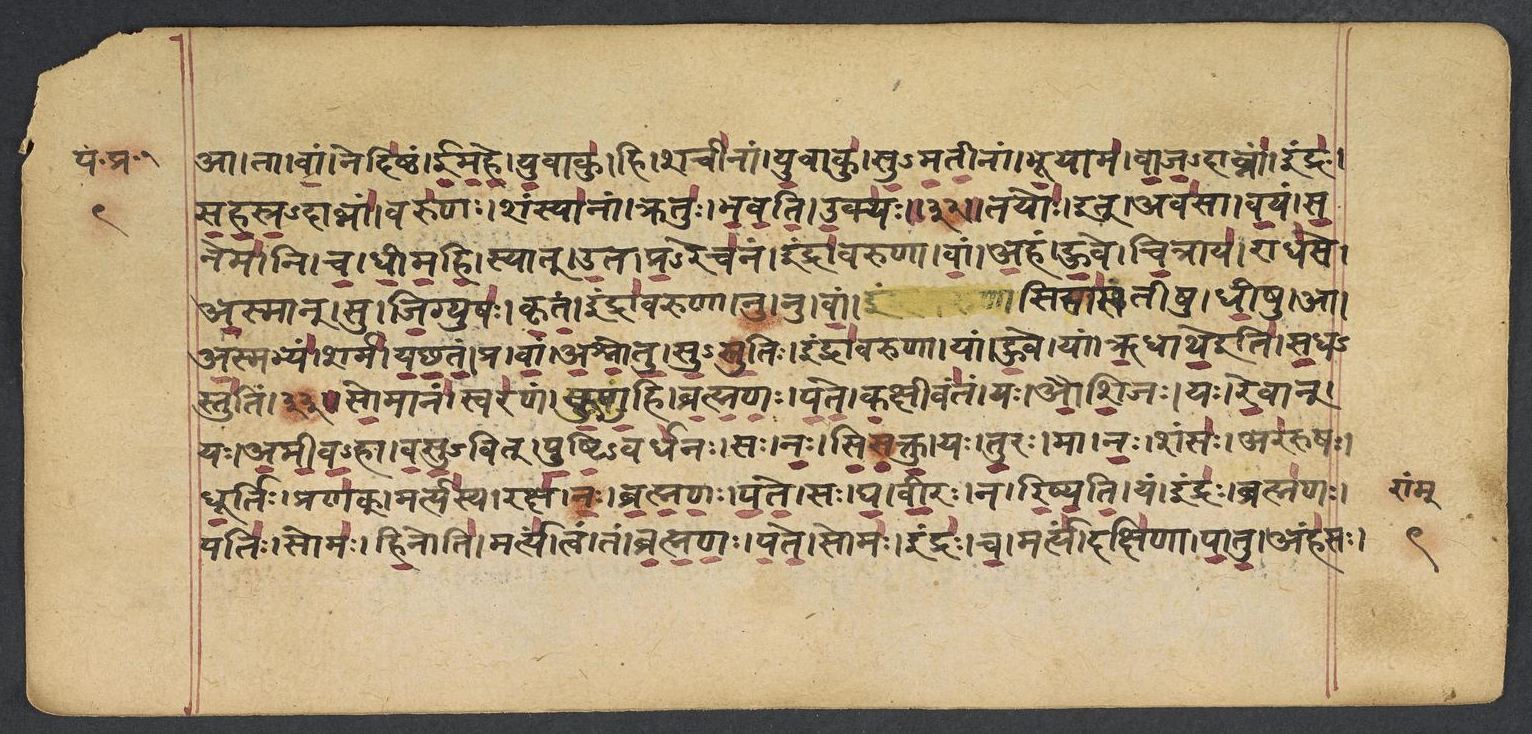
Where on the image
Penn Ms. Coll. 390 Item 41, fol. 9v (OPenn image 11, upper leaf). Checked on the image: the Rigveda text on this page begins in RV 1.17.3 ‹ā tā vām nediṣṭham›. The next page with Rigveda text, fol. 10r, begins in RV 1.18.6 ‹sadasaḥ patim adbhutam priyam›. Verses 1.17.3-9 end on this page; 1.17.3 begins on fol. 9r.
3a̱nu̱kā̱maṁ ta̍rpayethā̱m indrā̍varuṇa rā̱ya ā | tā vā̱ṁ nedi̍ṣṭham īmahe ||
4yu̱vāku̱ hi śacī̍nāṁ yu̱vāku̍ sumatī̱nām | bhū̱yāma̍ vāja̱dāvnā̍m ||
5indra̍ḥ sahasra̱dāvnā̱ṁ varu̍ṇa̱ḥ śaṁsyā̍nām | kratu̍r bhavaty u̱kthya̍ḥ ||
6tayo̱r id ava̍sā va̱yaṁ sa̱nema̱ ni ca̍ dhīmahi | syād u̱ta pra̱reca̍nam ||
7indrā̍varuṇa vām a̱haṁ hu̱ve ci̱trāya̱ rādha̍se | a̱smān su ji̱gyuṣa̍s kṛtam ||
8indrā̍varuṇa̱ nū nu vā̱ṁ siṣā̍santīṣu dhī̱ṣv ā | a̱smabhya̱ṁ śarma̍ yacchatam ||
9pra vā̍m aśnotu suṣṭu̱tir indrā̍varuṇa̱ yāṁ hu̱ve | yām ṛ̱dhāthe̍ sa̱dhastu̍tim ||
Compare: Padapāṭha (word-by-word text written in the manuscript; Sansknet e-text via GRETIL)
3anukāmam | tarpayethām | indrāvaruṇā | rāyaḥ | ā | tā | vām | nediṣṭham | īmahe
4yuvāku | hi | śacīnām | yuvāku | su-matīnām | bhūyāma | vājadāvnām
5indraḥ | sahasra-dāvnām | varuṇaḥ | śaṃsyānām | kratuḥ | bhavati | ukthyaḥ
6tayoḥ | it | avasā | vayam | sanema | ni | ca | dhīmahi | syāt | uta | pra-recanam
7indrāvaruṇā | vām | aham | huve | citrāya | rādhase | asmān | su | jigyuṣaḥ | kṛtam
8indrāvaruṇā | nu | nu | vām | siṣāsantīṣu | dhīṣu | ā | asmabhyam | śarma | yacchatam
9pra | vām | aśnotu | su-stutiḥ | indrāvaruṇā | yām | huve | yām | ṛdhātheiti | sadha-stutim
3Sate you, according to your wish, O Indra-Varuṇa, with wealth: Fain would we have you nearest us.
4May we be sharers of the powers, sharers of the benevolence Of you who give strength bounteously.
5Indra and Varuṇa, among givers of thousands, meet for praise, Are Powers who merit highest laud.
6Through their protection may we gain great store of wealth, and heap it up Enough and still to spare, be ours.
7O Indra-Varuṇa, on you for wealth in many a form I call: Still keep ye us victorious.
8O Indra-Varuṇa, – through our songs that seek to win you to ourselves, Give us at once your sheltering help.
9O Indra-Varuṇa, to you may fair praise which I offer come, joint eulogy which ye dignify.
Notes
- Sanskrit: Aufrecht's edition (1877) with the Vedic accents, as entered by van Nooten and Holland (GRETIL).
- English: Ralph T. H. Griffith, The Hymns of the Rigveda (1889-1892; 2nd ed. 1896-1897), from the VedaWeb digital text; OCR slips in that text were corrected against the printed 2nd edition (data/sources/rigveda/griffith_errata.json).
- Padapāṭha (edition text): Sansknet e-text via GRETIL (CC BY-NC-SA 4.0).
Cite
Sources
- Source: Penn Ms. Coll. 390 Item 41 (undated (catalogued with Penn's 18th-19th c. Vedic manuscripts)), OPenn, Public Domain Mark + Aufrecht's accented text (GRETIL) + Griffith's English (VedaWeb) (holding institution)
- Critical edition: Aufrecht (1877), accented e-text via GRETIL
← previous · → next · v cycle view · l back to library