Rigveda 1.171: To the Maruts and Indra
Introduction
Rigveda 1.171 is a hymn of 6 verses addressed to the Maruts and Indra. It stands in book (maṇḍala) 1, a collection of hymns by many families of poets. The Rigveda is the oldest collection of Sanskrit hymns, composed in the second half of the second millennium BCE and handed down orally for many centuries before it was written down.
The manuscript shown is Penn Ms. Coll. 390 Item 41 (University of Pennsylvania), an undated paper manuscript of the padapāṭha (the word-by-word recitation text, in which every word is written separately and compounds are split) of the whole Ṛgveda in Devanāgarī, 884 leaves in fascicles, 7-9 lines to the page, accents in red; this hymn stands on fol. 135v-136r. Each section below gives the verses that end on one page; the page boundaries were read on the images (the opening words of every page), not counted out. Where the manuscript is a padapāṭha (the word-by-word recitation text), the section shows Aufrecht's continuous (saṃhitā) text first and, as the edition text, the padapāṭha of the same verses, which is the form written on the page.
How was this verified? (Provenance)
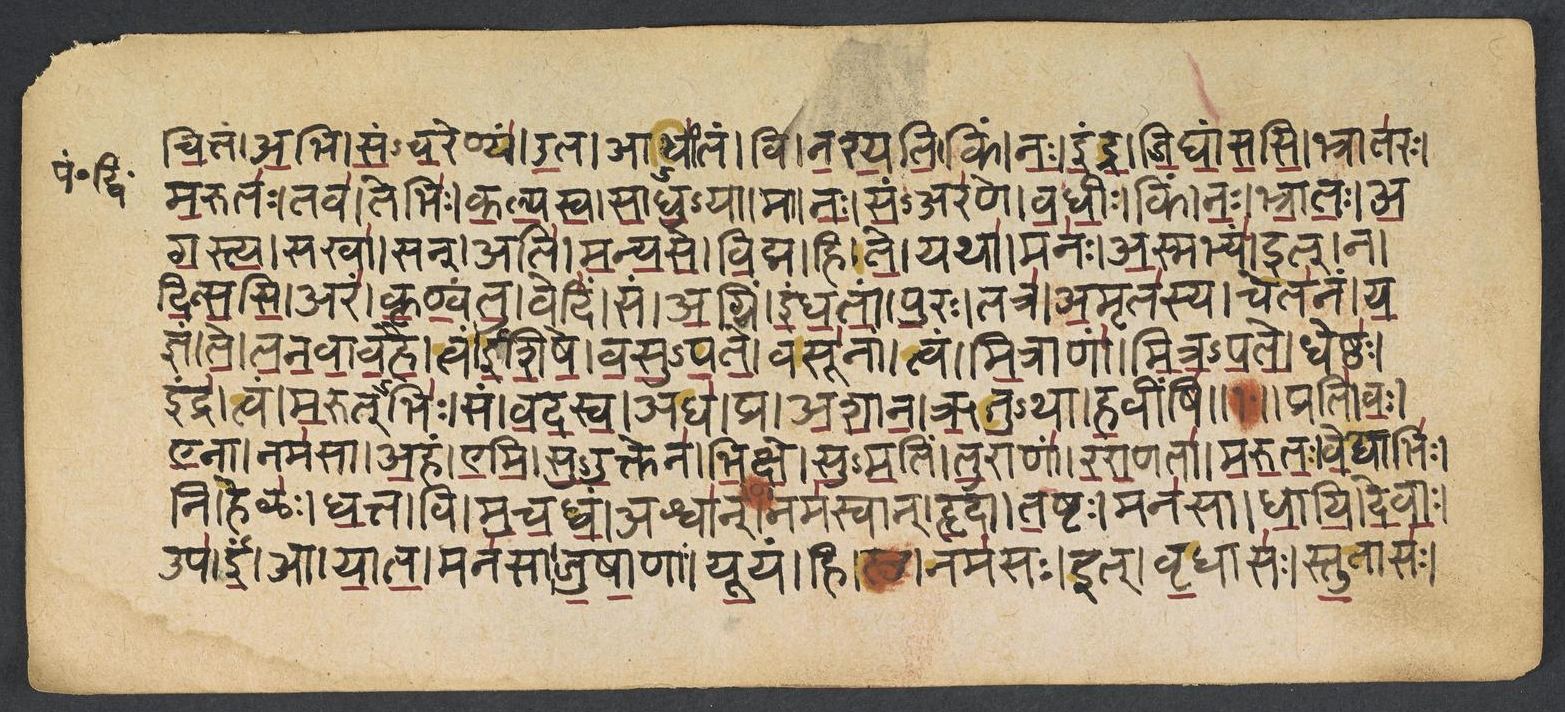
Where on the image
Penn Ms. Coll. 390 Item 41, fol. 135v (numbered 4v by the scribe) (OPenn image 137, upper leaf). Checked on the image: the Rigveda text on this page begins in RV 1.170.1 ‹cittam abhi sam-careṇyam uta›. The next page with Rigveda text, fol. 136r (numbered 5r by the scribe), begins in RV 1.171.3 ‹naḥ marutaḥ mṛḷayantu uta›. Verses 1.171.1-2 end on this page.
1prati̍ va e̱nā nama̍sā̱ham e̍mi sū̱ktena̍ bhikṣe suma̱tiṁ tu̱rāṇā̍m | ra̱rā̱ṇatā̍ maruto ve̱dyābhi̱r ni heḻo̍ dha̱tta vi mu̍cadhva̱m aśvā̍n ||
2e̱ṣa va̱ḥ stomo̍ maruto̱ nama̍svān hṛ̱dā ta̱ṣṭo mana̍sā dhāyi devāḥ | upe̱m ā yā̍ta̱ mana̍sā juṣā̱ṇā yū̱yaṁ hi ṣṭhā nama̍sa̱ id vṛ̱dhāsa̍ḥ ||
Compare: Padapāṭha (word-by-word text written in the manuscript; Sansknet e-text via GRETIL)
1prati | vaḥ | enā | namasā | aham | emi | su-uktena | bhikṣe | su-matim | turāṇām | rarāṇatā | marutaḥ | vedyābhiḥ | ni | heḷaḥ | dhatta | vi | mucadhvam | aśvān
2eṣaḥ | vaḥ | stomaḥ | marutaḥ | namasvān | hṛdā | taṣṭaḥ | manasā | dhāyi | devāḥ | upa | īm | ā | yāta | manasā | juṣāṇāḥ | yūyam | hi | stha | namasaḥ | it | vṛdhāsaḥ
1To you I come with this mine adoration, and with a hymn I crave the Strong Ones' favour A hymn that truly makes you joyful, Maruts. Suppress your anger and unyoke your horses.
2Maruts, to you this laud with prayer and worship, formed in the mind and heart, ye Gods, is offered. Come ye to us, rejoicing in your spirit, for ye are they who make our prayer effective.
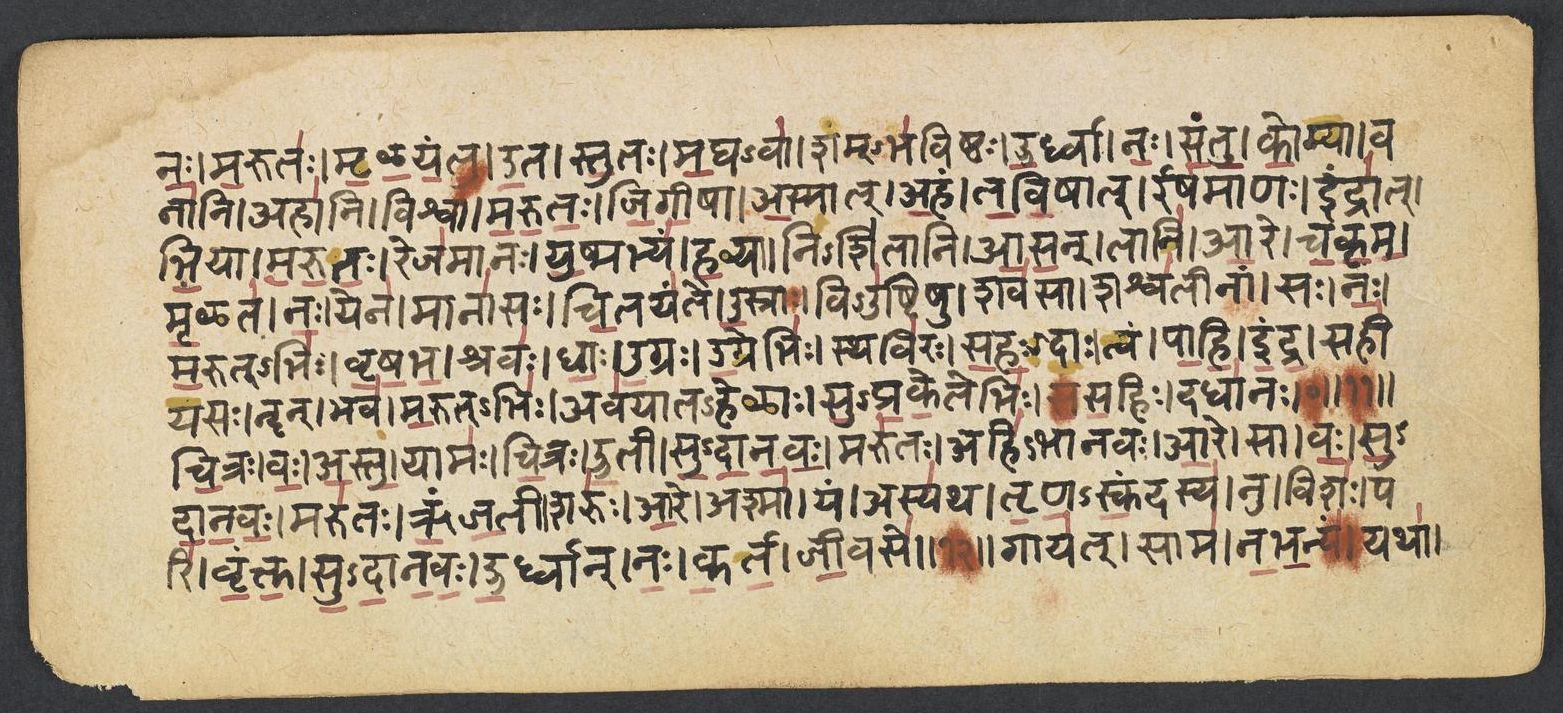
Where on the image
Penn Ms. Coll. 390 Item 41, fol. 136r (numbered 5r by the scribe) (OPenn image 137, lower leaf). Checked on the image: the Rigveda text on this page begins in RV 1.171.3 ‹naḥ marutaḥ mṛḷayantu uta›. The next page with Rigveda text, fol. 136v (numbered 5v by the scribe), begins in RV 1.173.1 ‹veḥ arcāma tat vavṛdhānam›. Verses 1.171.3-6 end on this page; 1.171.3 begins on fol. 135v (numbered 4v by the scribe).
3stu̱tāso̍ no ma̱ruto̍ mṛḻayantū̱ta stu̱to ma̱ghavā̱ śambha̍viṣṭhaḥ | ū̱rdhvā na̍ḥ santu ko̱myā vanā̱ny ahā̍ni̱ viśvā̍ maruto jigī̱ṣā ||
4a̱smād a̱haṁ ta̍vi̱ṣād īṣa̍māṇa̱ indrā̍d bhi̱yā ma̍ruto̱ reja̍mānaḥ | yu̱ṣmabhya̍ṁ ha̱vyā niśi̍tāny āsa̱n tāny ā̱re ca̍kṛmā mṛ̱ḻatā̍ naḥ ||
5yena̱ mānā̍saś ci̱taya̍nta u̱srā vyu̍ṣṭiṣu̱ śava̍sā̱ śaśva̍tīnām | sa no̍ ma̱rudbhi̍r vṛṣabha̱ śravo̍ dhā u̱gra u̱grebhi̱ḥ sthavi̍raḥ saho̱dāḥ ||
6tvam pā̍hīndra̱ sahī̍yaso̱ nṝn bhavā̍ ma̱rudbhi̱r ava̍yātaheḻāḥ | su̱pra̱ke̱tebhi̍ḥ sāsa̱hir dadhā̍no vi̱dyāme̱ṣaṁ vṛ̱jana̍ṁ jī̱radā̍num ||
Compare: Padapāṭha (word-by-word text written in the manuscript; Sansknet e-text via GRETIL)
3stutāsaḥ | naḥ | marutaḥ | mṛḷayantu | uta | stutaḥ | magha-vā | śam-bhaviṣṭhaḥ | ūrdhvā | naḥ | santu | komyā | vanāni | ahāni | viśvā | marutaḥ | jigīṣā
4asmāt | aham | taviṣāt | īṣamāṇaḥ | indrāt | bhiyā | marutaḥ | rejamānaḥ | yuṣmabhyam | havyā | ni-śitāni | āsan | tāni | āre | cakṛma | mṛḷata | naḥ
5yena | mānāsaḥ | citayante | usrāḥ | vi-uṣṭiṣu | śavasā | śaśvatīnām | saḥ | naḥ | marut-bhiḥ | vṛṣabha | śravaḥ | dhāḥ | ugraḥ | ugrebhiḥ | sthaviraḥ | sahaḥ-dāḥ
6tvam | pāhi | indra | sahīyasaḥ | nṝn | bhava | marut-bhiḥ | avayāta-heḷāḥ | su-praketebhiḥ | sasahiḥ | dadhānaḥ | vidyāma | iṣam | vṛjanam | jīra-dānum
3The Maruts, praised by us, shall show us favour; Maghavan, lauded, shall be most propitious. Maruts,, may all our days that are to follow be very pleasant, lovely and triumphant.
4I fled in terrror from this mighty Indra, my body trembling in alarm, O Maruts. Oblations meant for you had been made ready; these have we set aside: for this forgive us.
5By whom the Mânas recognize the day-springs, by whose strength at the dawn of endless mornings, Give us, thou Mighty, glory with Maruts. fierce with the fierce, the Strong who givest triumph.
6Do thou, O Indra, guard the conquering Heroes, and rid thee of thy wrath against the Maruts, With them, the wise, victorious and bestowing. May we find strengthening food in full abundance.
Notes
- Sanskrit: Aufrecht's edition (1877) with the Vedic accents, as entered by van Nooten and Holland (GRETIL).
- English: Ralph T. H. Griffith, The Hymns of the Rigveda (1889-1892; 2nd ed. 1896-1897), from the VedaWeb digital text; OCR slips in that text were corrected against the printed 2nd edition (data/sources/rigveda/griffith_errata.json).
- Padapāṭha (edition text): Sansknet e-text via GRETIL (CC BY-NC-SA 4.0).
Cite
Sources
- Source: Penn Ms. Coll. 390 Item 41 (undated (catalogued with Penn's 18th-19th c. Vedic manuscripts)), OPenn, Public Domain Mark + Aufrecht's accented text (GRETIL) + Griffith's English (VedaWeb) (holding institution)
- Critical edition: Aufrecht (1877), accented e-text via GRETIL
← previous · → next · v cycle view · l back to library