Rigveda 1.170: Dialogue between Agastya, Indra and the Maruts
Introduction
Rigveda 1.170 is a hymn of 5 verses addressed to dialogue between Agastya, Indra and the Maruts. It stands in book (maṇḍala) 1, a collection of hymns by many families of poets. The Rigveda is the oldest collection of Sanskrit hymns, composed in the second half of the second millennium BCE and handed down orally for many centuries before it was written down.
The manuscript shown is Penn Ms. Coll. 390 Item 41 (University of Pennsylvania), an undated paper manuscript of the padapāṭha (the word-by-word recitation text, in which every word is written separately and compounds are split) of the whole Ṛgveda in Devanāgarī, 884 leaves in fascicles, 7-9 lines to the page, accents in red; this hymn stands on fol. 135r-135v. Each section below gives the verses that end on one page; the page boundaries were read on the images (the opening words of every page), not counted out. Where the manuscript is a padapāṭha (the word-by-word recitation text), the section shows Aufrecht's continuous (saṃhitā) text first and, as the edition text, the padapāṭha of the same verses, which is the form written on the page.
How was this verified? (Provenance)
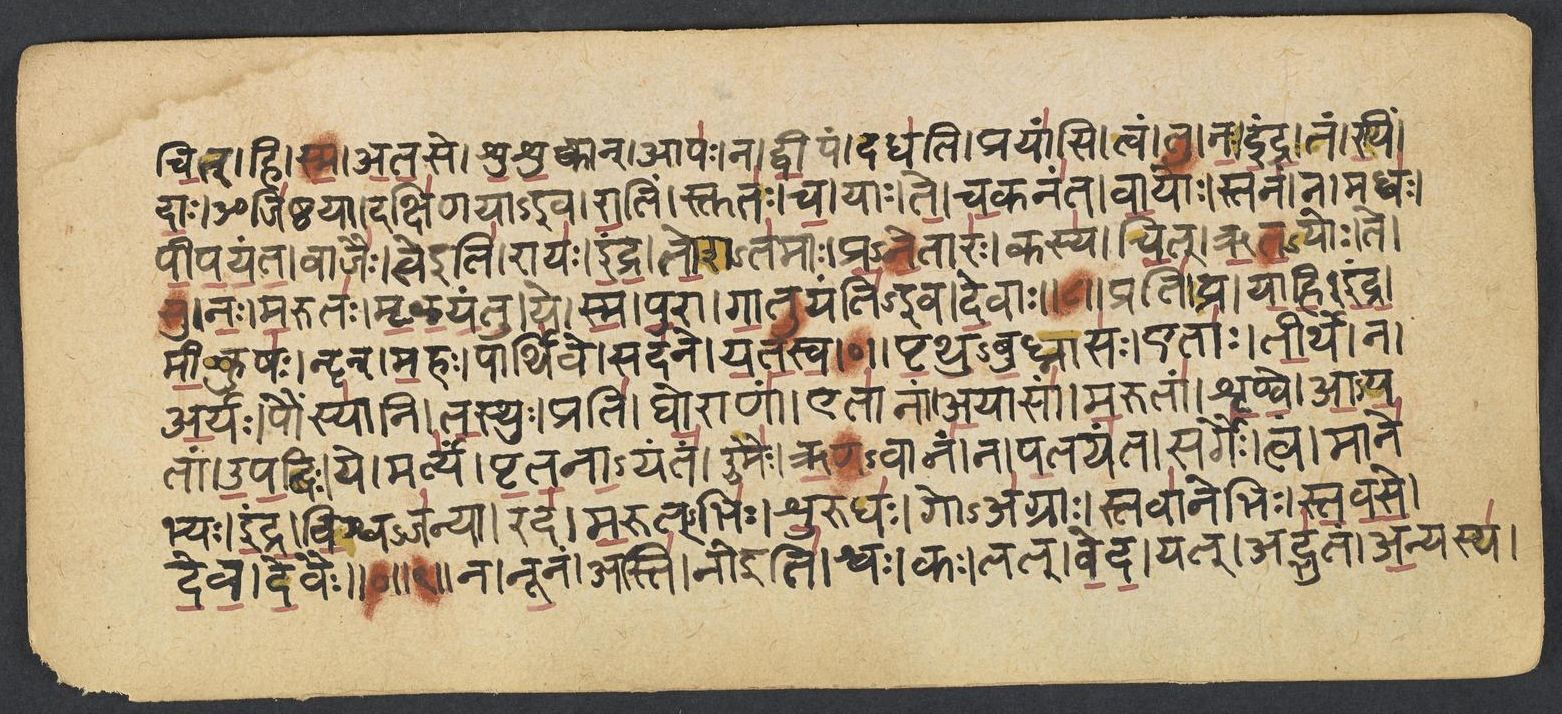
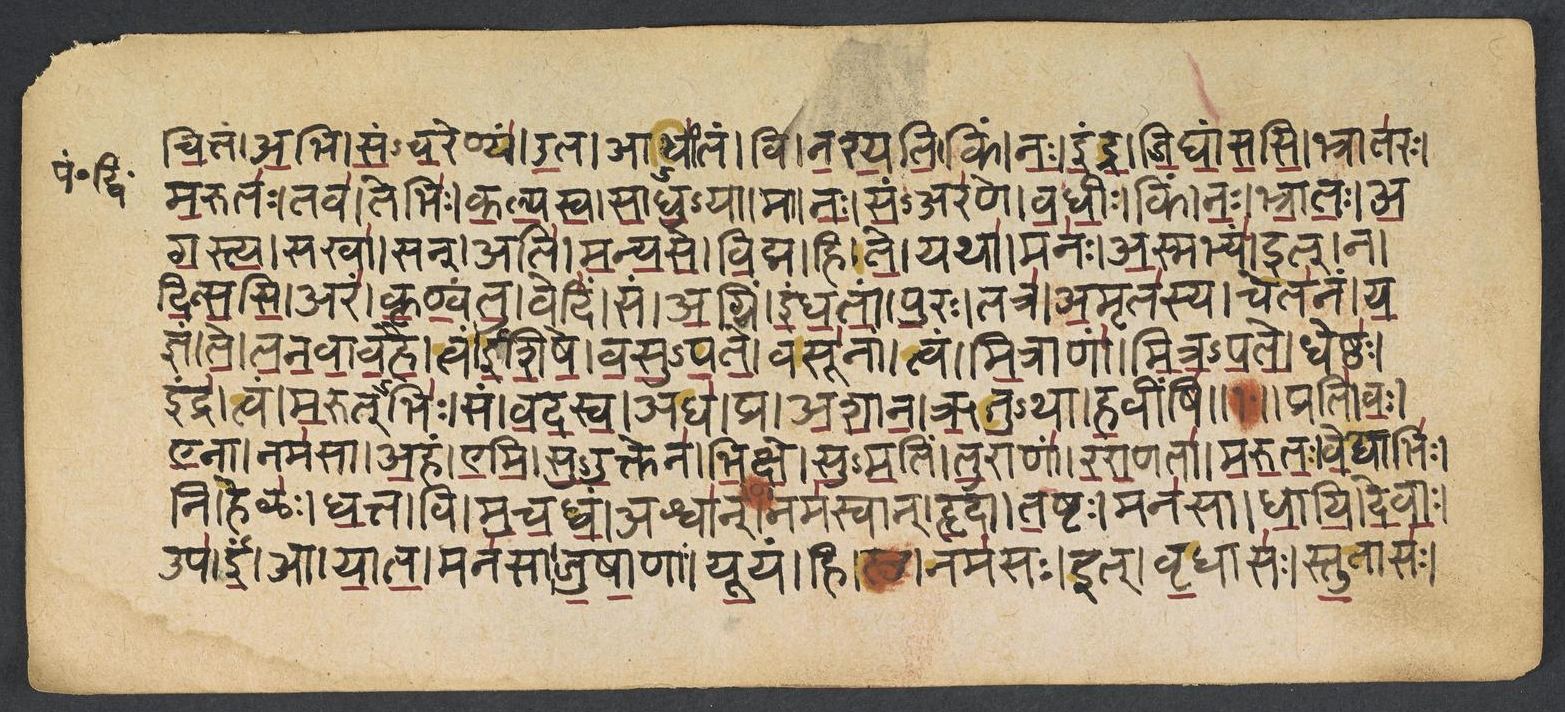
Where on the image
Penn Ms. Coll. 390 Item 41, fol. 135v (numbered 4v by the scribe) (OPenn image 137, upper leaf). Checked on the image: the Rigveda text on this page begins in RV 1.170.1 ‹cittam abhi sam-careṇyam uta›. The next page with Rigveda text, fol. 136r (numbered 5r by the scribe), begins in RV 1.171.3 ‹naḥ marutaḥ mṛḷayantu uta›. Verses 1.170.1-5 end on this page; 1.170.1 begins on fol. 135r (numbered 4r by the scribe).
1na nū̱nam asti̱ no śvaḥ kas tad ve̍da̱ yad adbhu̍tam | a̱nyasya̍ ci̱ttam a̱bhi sa̍ṁca̱reṇya̍m u̱tādhī̍ta̱ṁ vi na̍śyati ||
2kiṁ na̍ indra jighāṁsasi̱ bhrāta̍ro ma̱ruta̱s tava̍ | tebhi̍ḥ kalpasva sādhu̱yā mā na̍ḥ sa̱mara̍ṇe vadhīḥ ||
3kiṁ no̍ bhrātar agastya̱ sakhā̱ sann ati̍ manyase | vi̱dmā hi te̱ yathā̱ mano̱ 'smabhya̱m in na di̍tsasi ||
4ara̍ṁ kṛṇvantu̱ vedi̱ṁ sam a̱gnim i̍ndhatām pu̱raḥ | tatrā̱mṛta̍sya̱ ceta̍naṁ ya̱jñaṁ te̍ tanavāvahai ||
5tvam ī̍śiṣe vasupate̱ vasū̍nā̱ṁ tvam mi̱trāṇā̍m mitrapate̱ dheṣṭha̍ḥ | indra̱ tvam ma̱rudbhi̱ḥ saṁ va̍da̱svādha̱ prāśā̍na ṛtu̱thā ha̱vīṁṣi̍ ||
Compare: Padapāṭha (word-by-word text written in the manuscript; Sansknet e-text via GRETIL)
1na | nūnam | asti | no iti | śvaḥ | kaḥ | tat | veda | yat | adbhutam | anyasya | cittam | abhi | sam-careṇyam | uta | ādhītam | vi | naśyati
2kim | naḥ | indra | jighāṃsasi | bhrātaraḥ | marutaḥ | tava | tebhiḥ | kalpasva | sādhu-yā | mā | naḥ | sam-araṇe | vadhīḥ
3kim | na | bhrātaḥ | agastya | sakhā | san | ati | manyase | vidma | hi | te | yathā | manaḥ | asmabhyam | it | na | ditsasi
4aram | kṛṇvantu | vedim | sam | agnim | indhatām | puraḥ | tatra | amṛtasya | cetanam | yajñam | te | tanavāvahai
5tvam | īśiṣe | vasu-pate | vasūnām | tvam | mitrāṇām | mitra-pate | dheṣṭhaḥ | indra | tvam | marut-bhiḥ | sam | vadasva | adha | pra | aśāna | ṛtu-thā | havīṃṣi
1NAUGHT is to-day, to-morrow naught. Who comprehends the mystery? We must address ourselves unto another's thought, and lost is then the hope we formed.
2The Maruts are thy brothers. Why, O Indra, wouldst thou take our lives? Agree with them in friendly wise, and do not slay us in the fight.
3Agastya, brother, why dost thou neglect us, thou who art our friend? We know the nature of thy mind. Verily thou wilt give us naught.
4Let them prepare the altar, let them kindle fire in front: we two Here will spread sacrifice for thee, that the Immortal may observe.
5Thou, Lord of Wealth, art Master of all treasures, thou, Lord of friends, art thy friends' best supporter. O Indra, speak thou kindly with the Maruts, and taste oblations in their proper season.
Notes
- Sanskrit: Aufrecht's edition (1877) with the Vedic accents, as entered by van Nooten and Holland (GRETIL).
- English: Ralph T. H. Griffith, The Hymns of the Rigveda (1889-1892; 2nd ed. 1896-1897), from the VedaWeb digital text; OCR slips in that text were corrected against the printed 2nd edition (data/sources/rigveda/griffith_errata.json).
- Padapāṭha (edition text): Sansknet e-text via GRETIL (CC BY-NC-SA 4.0).
Cite
Sources
- Source: Penn Ms. Coll. 390 Item 41 (undated (catalogued with Penn's 18th-19th c. Vedic manuscripts)), OPenn, Public Domain Mark + Aufrecht's accented text (GRETIL) + Griffith's English (VedaWeb) (holding institution)
- Critical edition: Aufrecht (1877), accented e-text via GRETIL
← previous · → next · v cycle view · l back to library