Rigveda 1.173: To Indra
Introduction
Rigveda 1.173 is a hymn of 13 verses addressed to Indra. It stands in book (maṇḍala) 1, a collection of hymns by many families of poets. The Rigveda is the oldest collection of Sanskrit hymns, composed in the second half of the second millennium BCE and handed down orally for many centuries before it was written down.
The manuscript shown is Penn Ms. Coll. 390 Item 41 (University of Pennsylvania), an undated paper manuscript of the padapāṭha (the word-by-word recitation text, in which every word is written separately and compounds are split) of the whole Ṛgveda in Devanāgarī, 884 leaves in fascicles, 7-9 lines to the page, accents in red; this hymn stands on fol. 136r-137v. Each section below gives the verses that end on one page; the page boundaries were read on the images (the opening words of every page), not counted out. Where the manuscript is a padapāṭha (the word-by-word recitation text), the section shows Aufrecht's continuous (saṃhitā) text first and, as the edition text, the padapāṭha of the same verses, which is the form written on the page.
How was this verified? (Provenance)
Where on the image
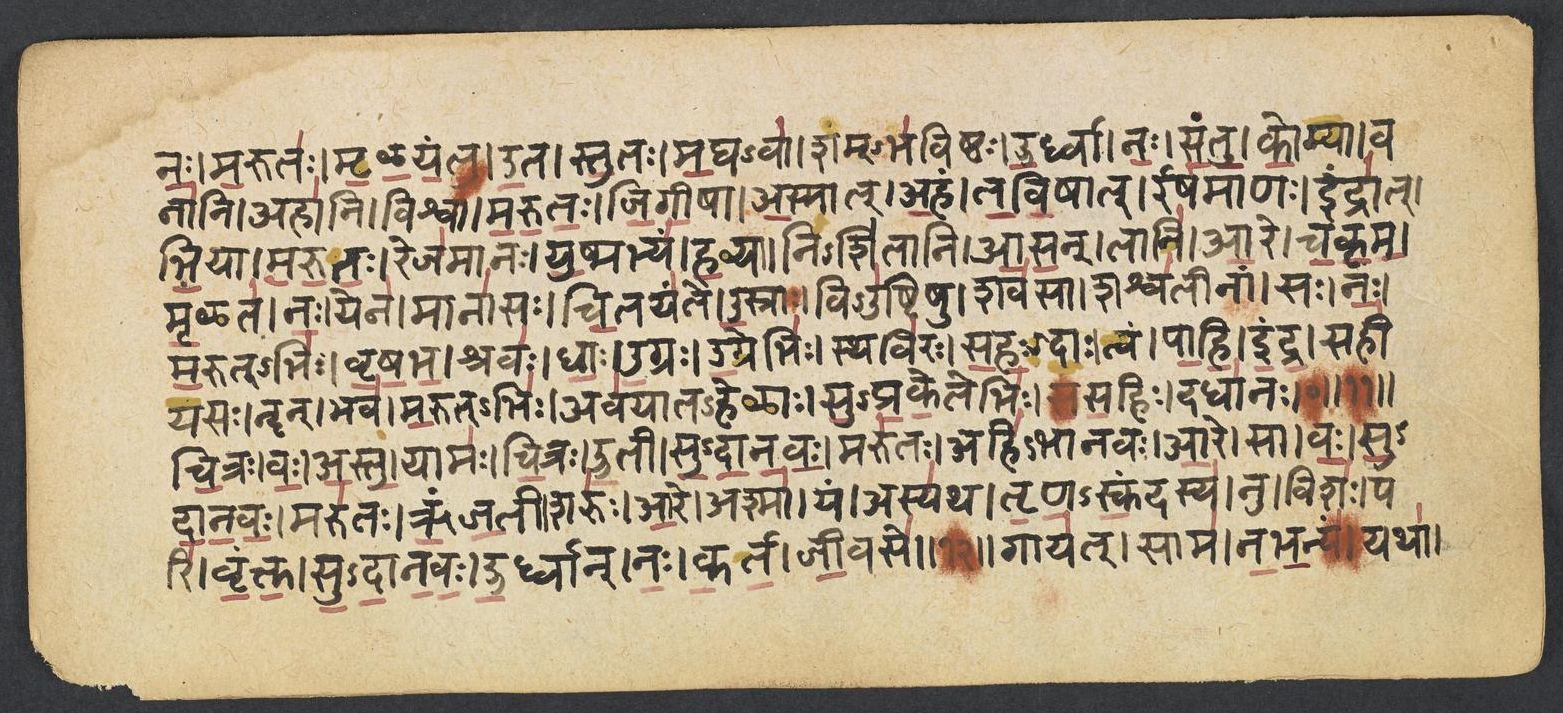
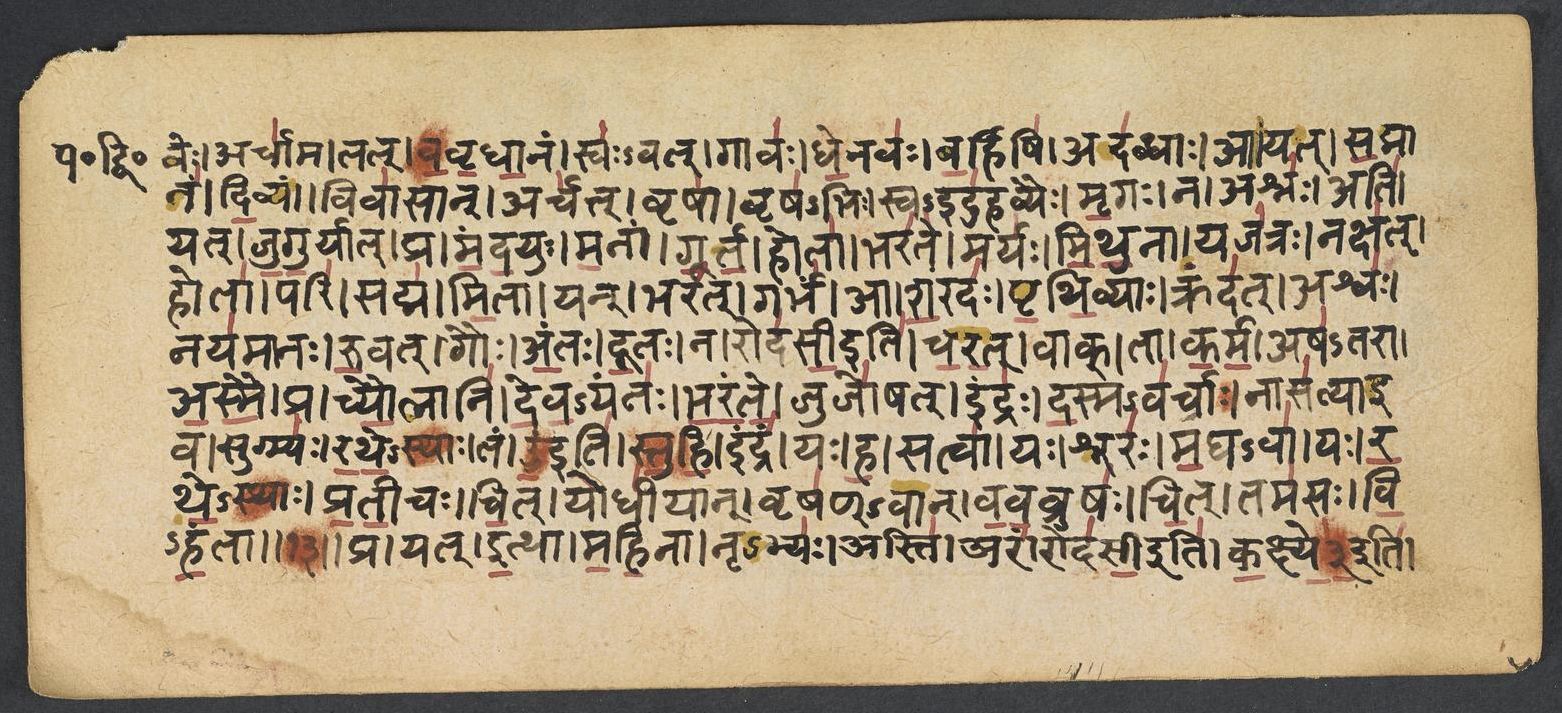
Penn Ms. Coll. 390 Item 41, fol. 136v (numbered 5v by the scribe) (OPenn image 138, upper leaf). Checked on the image: the Rigveda text on this page begins in RV 1.173.1 ‹veḥ arcāma tat vavṛdhānam›. The next page with Rigveda text, fol. 137r (numbered 6r by the scribe), begins in RV 1.173.9 ‹asat yathā naḥ indraḥ›. Verses 1.173.1-8 end on this page; 1.173.1 begins on fol. 136r (numbered 5r by the scribe).
1gāya̱t sāma̍ nabha̱nya1̱̍ṁ yathā̱ ver arcā̍ma̱ tad vā̍vṛdhā̱naṁ sva̍rvat | gāvo̍ dhe̱navo̍ ba̱rhiṣy ada̍bdhā̱ ā yat sa̱dmāna̍ṁ di̱vyaṁ vivā̍sān ||
2arca̱d vṛṣā̱ vṛṣa̍bhi̱ḥ svedu̍havyair mṛ̱go nāśno̱ ati̱ yaj ju̍gu̱ryāt | pra ma̍nda̱yur ma̱nāṁ gū̍rta̱ hotā̱ bhara̍te̱ maryo̍ mithu̱nā yaja̍traḥ ||
3nakṣa̱d dhotā̱ pari̱ sadma̍ mi̱tā yan bhara̱d garbha̱m ā śa̱rada̍ḥ pṛthi̱vyāḥ | kranda̱d aśvo̱ naya̍māno ru̱vad gaur a̱ntar dū̱to na roda̍sī cara̱d vāk ||
4tā ka̱rmāṣa̍tarāsmai̱ pra cyau̱tnāni̍ deva̱yanto̍ bharante | jujo̍ṣa̱d indro̍ da̱smava̍rcā̱ nāsa̍tyeva̱ sugmyo̍ rathe̱ṣṭhāḥ ||
5tam u̍ ṣṭu̱hīndra̱ṁ yo ha̱ satvā̱ yaḥ śūro̍ ma̱ghavā̱ yo ra̍the̱ṣṭhāḥ | pra̱tī̱caś ci̱d yodhī̍yā̱n vṛṣa̍ṇvān vava̱vruṣa̍ś ci̱t tama̍so viha̱ntā ||
6pra yad i̱tthā ma̍hi̱nā nṛbhyo̱ asty ara̱ṁ roda̍sī ka̱kṣye̱3̱̍ nāsmai̍ | saṁ vi̍vya̱ indro̍ vṛ̱jana̱ṁ na bhūmā̱ bharti̍ sva̱dhāvā̍m̐ opa̱śam i̍va̱ dyām ||
7sa̱matsu̍ tvā śūra sa̱tām u̍rā̱ṇam pra̍pa̱thinta̍mam paritaṁsa̱yadhyai̍ | sa̱joṣa̍sa̱ indra̱m made̍ kṣo̱ṇīḥ sū̱riṁ ci̱d ye a̍nu̱mada̍nti̱ vājai̍ḥ ||
8e̱vā hi te̱ śaṁ sava̍nā samu̱dra āpo̱ yat ta̍ ā̱su mada̍nti de̱vīḥ | viśvā̍ te̱ anu̱ joṣyā̍ bhū̱d gauḥ sū̱rīm̐ś ci̱d yadi̍ dhi̱ṣā veṣi̱ janā̍n ||
Compare: Padapāṭha (word-by-word text written in the manuscript; Sansknet e-text via GRETIL)
1gāyat | sāma | nabhanyam | yathā | veḥ | arcāma | tat | vavṛdhānam | svaḥ-vat | gāvaḥ | dhenavaḥ | barhiṣi | adabdhāḥ | ā | yat | sadmānam | divyam | vivāsān
2arcat | vṛṣā | vṛṣa-bhiḥ | sva-iduhavyaiḥ | mṛgaḥ | na | aśnaḥ | ati | yat | juguyārt | pra | mandayuḥ | manām | gūrta | hotā | bharate | maryaḥ | mithunā | yajatraḥ
3nakṣat | hotā | pari | sadma | mitā | yan | bharat | garbham | ā | śaradaḥ | pṛthivyāḥ | krandat | aśvaḥ | nayamānaḥ | ruvat | gauḥ | antaḥ | dūtaḥ | na | rodasī iti | carat | vāk
4tā | karma | aṣa-tarā | asmai | pra | cyautnāni | deva-yantaḥ | bharante | jujoṣat | indraḥ | dasma-varcāḥ | nāsatyāiva | sugmyaḥ | rathe--sthāḥ
5tam | uṃm iti | stuhi | indram | yaḥ | ha | satvā | yaḥ | śūraḥ | maghavā | yaḥ | rathe--sthāḥ | pratīcaḥ | cit | yodhīyān | vṛṣaṇ-vān | vavavruṣaḥ | cit | tamasaḥ | vi-hantā
6pra | yat | itthā | mahinā | nṛ-bhyaḥ | asti | aram | rodasī iti | kakṣye iti | na | asmai | sam | vivye | indraḥ | vṛjanam | na | bhūma | bharti | svadhāvān | opaśam-iva | dyām
7samat-su | tvā | śūra | satām | urāṇam | prapathin-tamam | pari-taṃsayadhyai | sajoṣasaḥ | indram | made | kṣoṇīḥ | sūrim | cit | ye | anu-madanti | vājaiḥ
8eva | hi | te | śam | savanā | samudre | āpaḥ | yat | te | āsu | madanti | devīḥ | viśvā | te | anu | joṣyā | bhūt | gauḥ | sūrīn | cit | yadi | dhiṣā | veṣi | janān
1THE praise-song let him sing forth bursting bird-like: sing we that hymn which like heaven's light expandeth, That the milk-giving cows may, unimpeded call to the sacred grass the Gods' assembly.
2Let the Bull sing with Bulls whose toil is worship, with a loud roar like some wild beast that hungers. Praised God! the glad priest brings his heart's devotion; the holy youth presents twofold oblation.
3May the Priest come circling the measured stations, and with him bring the earth's autumnal fruitage. Let the Horse neigh led near, let the Steer bellow: let the Voice go between both worlds as herald,
4To him we offer welcomest oblations, the pious bring their strength-inspiring praises. May Indra, wondrous in his might, accept them, car-borne and swift to move like the Nâsatyas.
5Praise thou that Indra who is truly mighty, the car-borne Warrior, Maghavan the Hero; Stronger in war than those who fight against him, borne by strong steeds, who kills enclosing darkness;
6Him who surpasses heroes in his greatness: the earth and heavens suffice not for his girdles. Indra endues the earth to be his garment, and, God-like, wears the heaven as 'twere a frontlet,
7Thee, Hero, guardian of the brave in battles, who roamest in the van,– to draw thee hither, Indra, the hosts agree beside the Soma, and joy, for his great actions, in the Chieftain.
8Libations in the sea to thee are pleasant, when thy divine Floods come to cheer these people. To thee the Cow is sum of all things grateful when with the wish thou seekest men and princes.
Where on the image
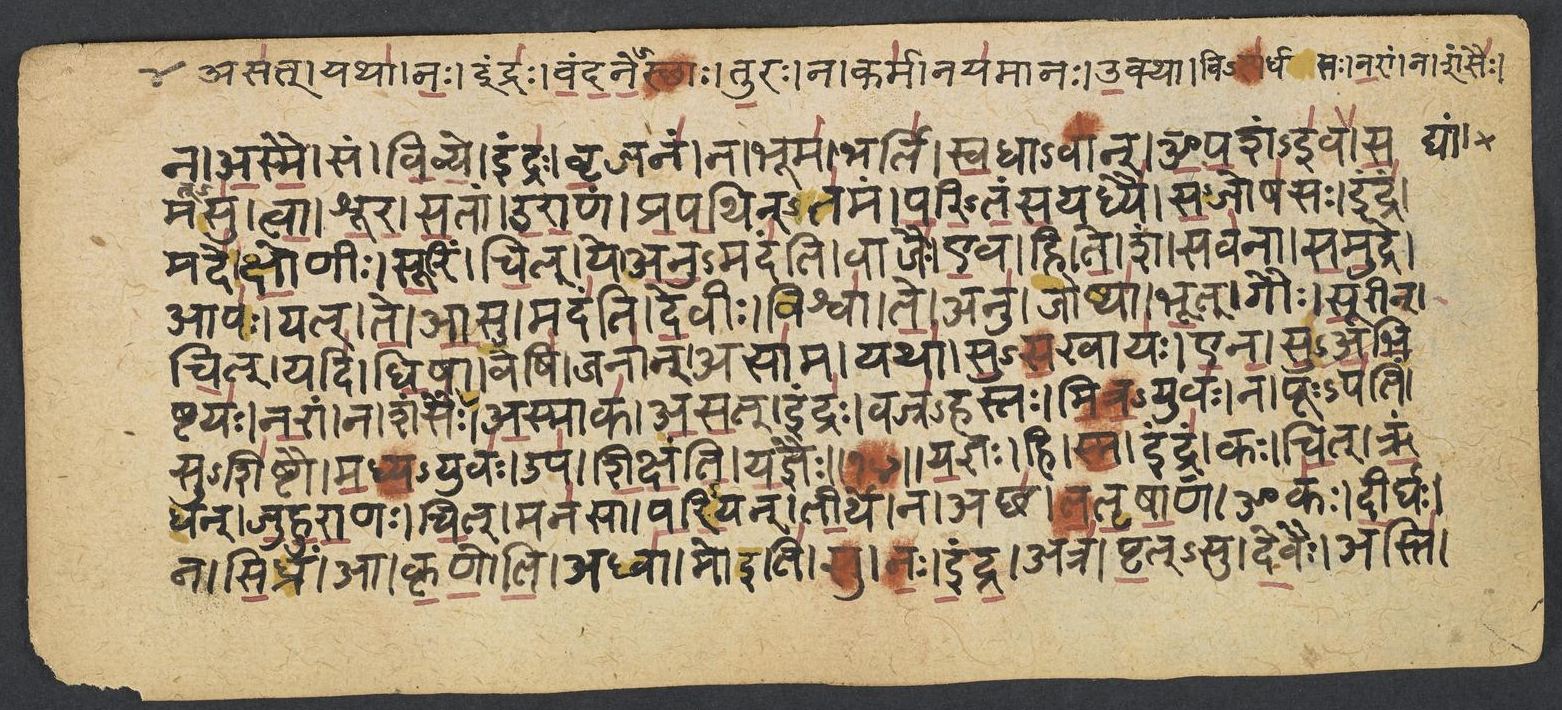
Penn Ms. Coll. 390 Item 41, fol. 137r (numbered 6r by the scribe) (OPenn image 138, lower leaf). Checked on the image: the Rigveda text on this page begins in RV 1.173.9 ‹asat yathā naḥ indraḥ›. The next page with Rigveda text, fol. 137v (numbered 6v by the scribe), begins in RV 1.173.12 ‹hi sma te śuṣmin›. Verses 1.173.9-11 end on this page; 1.173.9 begins on fol. 136v (numbered 5v by the scribe).
9asā̍ma̱ yathā̍ suṣa̱khāya̍ ena svabhi̱ṣṭayo̍ na̱rāṁ na śaṁsai̍ḥ | asa̱d yathā̍ na̱ indro̍ vandane̱ṣṭhās tu̱ro na karma̱ naya̍māna u̱kthā ||
10viṣpa̍rdhaso na̱rāṁ na śaṁsai̍r a̱smākā̍sa̱d indro̱ vajra̍hastaḥ | mi̱trā̱yuvo̱ na pūrpa̍ti̱ṁ suśi̍ṣṭau madhyā̱yuva̱ upa̍ śikṣanti ya̱jñaiḥ ||
11ya̱jño hi ṣmendra̱ṁ kaś ci̍d ṛ̱ndhañ ju̍hurā̱ṇaś ci̱n mana̍sā pari̱yan | tī̱rthe nācchā̍ tātṛṣā̱ṇam oko̍ dī̱rgho na si̱dhram ā kṛ̍ṇo̱ty adhvā̍ ||
Compare: Padapāṭha (word-by-word text written in the manuscript; Sansknet e-text via GRETIL)
9asāma | yathā | su-sakhāyaḥ | ena | su-abhiṣṭayaḥ | narām | na | śaṃsaiḥ | asat | yathā | naḥ | indraḥ | vandane--sthāḥ | turaḥ | na | karma | nayamānaḥ | ukthā
10vi-spardhasaḥ | narām | na | śaṃsaiḥ | asmāka | asat | indraḥ | vajra-hastaḥ | mitra-yuvaḥ | na | pūḥ-patim | su-śiśṭau | madhya-yuvaḥ | upa | śikṣanti | yajñaiḥ
11yajñaḥ | hi | sma | indram | kaḥ | cit | ṛndhan | juhurtāṇaḥ | cit | manasā | pari-yan | tīrthe | na | accha | tatṛṣāṇam | okaḥ | dīrghaḥ | na | sidhram | ā | kṛṇoti | adhvā
9So may we in this One be well befriended, well aided as it were through praise of chieftains, That Indra still may linger at our worship, as one led swift to work, to hear our praises.
10Like men in rivalry extolling princes, our Friend be Indra, wielder of the thunder. Like true friends of some city's lord within them held in good rule with sacrifice they help him.
11For every sacrifice makes Indra stronger, yea, when he goes around angry in spirit; As pleasure at the ford invites the thirsty, as the long way brings him who gains his object.
Where on the image
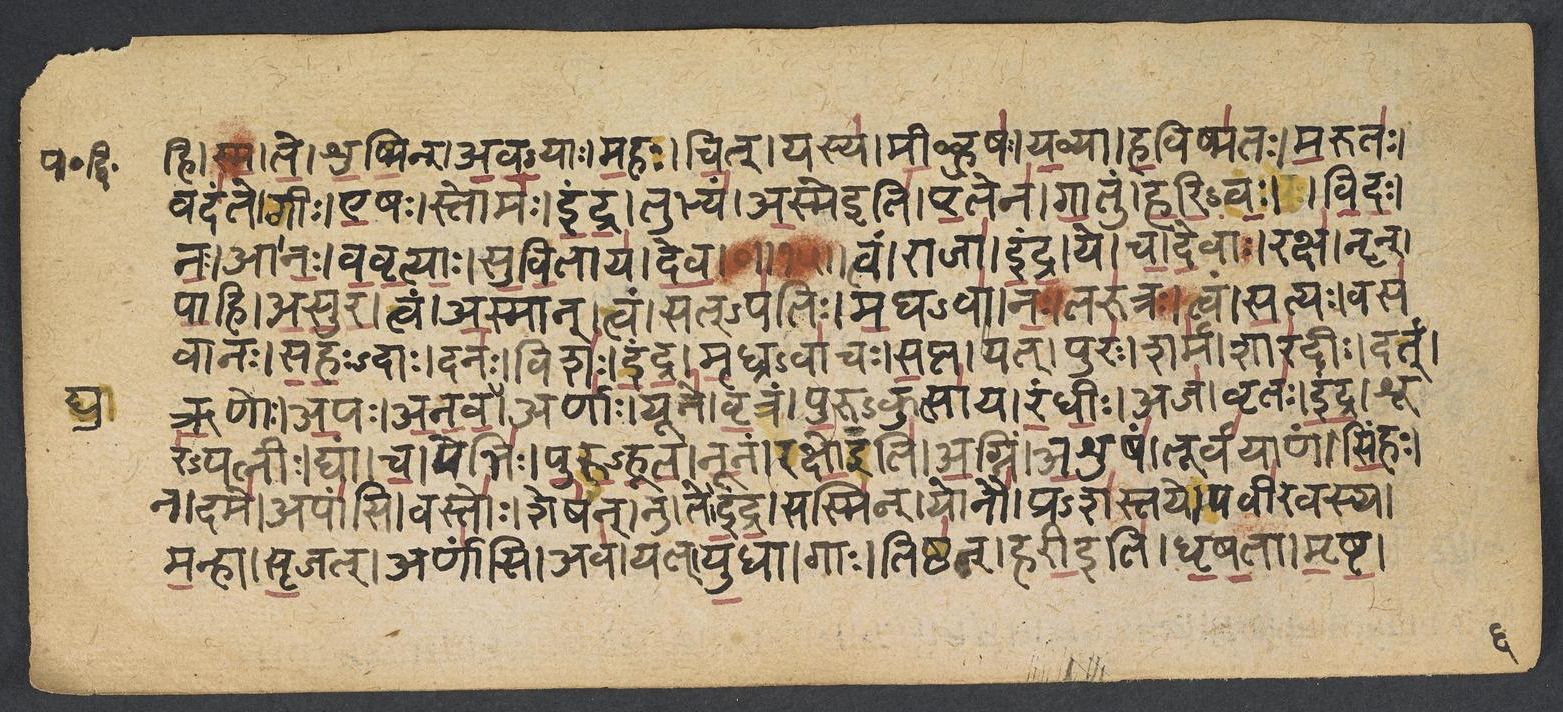
Penn Ms. Coll. 390 Item 41, fol. 137v (numbered 6v by the scribe) (OPenn image 139, upper leaf). Checked on the image: the Rigveda text on this page begins in RV 1.173.12 ‹hi sma te śuṣmin›. The next page with Rigveda text, fol. 138r (numbered 7r by the scribe), begins in RV 1.174.4 ‹vājān›. Verses 1.173.12-13 end on this page; 1.173.12 begins on fol. 137r (numbered 6r by the scribe).
12mo ṣū ṇa̍ i̱ndrātra̍ pṛ̱tsu de̱vair asti̱ hi ṣmā̍ te śuṣminn ava̱yāḥ | ma̱haś ci̱d yasya̍ mī̱ḻhuṣo̍ ya̱vyā ha̱viṣma̍to ma̱ruto̱ vanda̍te̱ gīḥ ||
13e̱ṣa stoma̍ indra̱ tubhya̍m a̱sme e̱tena̍ gā̱tuṁ ha̍rivo vido naḥ | ā no̍ vavṛtyāḥ suvi̱tāya̍ deva vi̱dyāme̱ṣaṁ vṛ̱jana̍ṁ jī̱radā̍num ||
Compare: Padapāṭha (word-by-word text written in the manuscript; Sansknet e-text via GRETIL)
12mo iti | su | ṇaḥ | indra | atra | pṛt-su | devaiḥ | asti | hi | sma | te | śuṣmin | ava-yāḥ | mahaḥ | cit | yasya | mīḷhuṣaḥ | yavyā | haviṣmataḥ | marutaḥ | vandate | gīḥ
13eṣaḥ | stomaḥ | indra | tubhyam | asme iti | etena | gātum | hari-vaḥ | vidaḥ | naḥ | ā | naḥ | vavṛtyāḥ | suvitāya | deva | vidyāma | iṣam | vṛjanam | jīra-dānum
12Let us not here contend with Gods, O Indra, for here, O Mighty One, is thine own portion, The Great, whose Friends the bounteous Maruts honour, as with a stream, his song who pours oblations.
13Addressed to thee is this our praise, O Indra: Lord of Bay Steeds, find us hereby advancement. So mayst thou lead us on, O God, to comfort. May we find strengthening food in full abundance.
Notes
- Sanskrit: Aufrecht's edition (1877) with the Vedic accents, as entered by van Nooten and Holland (GRETIL).
- English: Ralph T. H. Griffith, The Hymns of the Rigveda (1889-1892; 2nd ed. 1896-1897), from the VedaWeb digital text; OCR slips in that text were corrected against the printed 2nd edition (data/sources/rigveda/griffith_errata.json).
- Padapāṭha (edition text): Sansknet e-text via GRETIL (CC BY-NC-SA 4.0).
Cite
Sources
- Source: Penn Ms. Coll. 390 Item 41 (undated (catalogued with Penn's 18th-19th c. Vedic manuscripts)), OPenn, Public Domain Mark + Aufrecht's accented text (GRETIL) + Griffith's English (VedaWeb) (holding institution)
- Critical edition: Aufrecht (1877), accented e-text via GRETIL
← previous · → next · v cycle view · l back to library