Rigveda 1.174: To Indra
Introduction
Rigveda 1.174 is a hymn of 10 verses addressed to Indra. It stands in book (maṇḍala) 1, a collection of hymns by many families of poets. The Rigveda is the oldest collection of Sanskrit hymns, composed in the second half of the second millennium BCE and handed down orally for many centuries before it was written down.
The manuscript shown is Penn Ms. Coll. 390 Item 41 (University of Pennsylvania), an undated paper manuscript of the padapāṭha (the word-by-word recitation text, in which every word is written separately and compounds are split) of the whole Ṛgveda in Devanāgarī, 884 leaves in fascicles, 7-9 lines to the page, accents in red; this hymn stands on fol. 137v-138v. Each section below gives the verses that end on one page; the page boundaries were read on the images (the opening words of every page), not counted out. Where the manuscript is a padapāṭha (the word-by-word recitation text), the section shows Aufrecht's continuous (saṃhitā) text first and, as the edition text, the padapāṭha of the same verses, which is the form written on the page.
How was this verified? (Provenance)
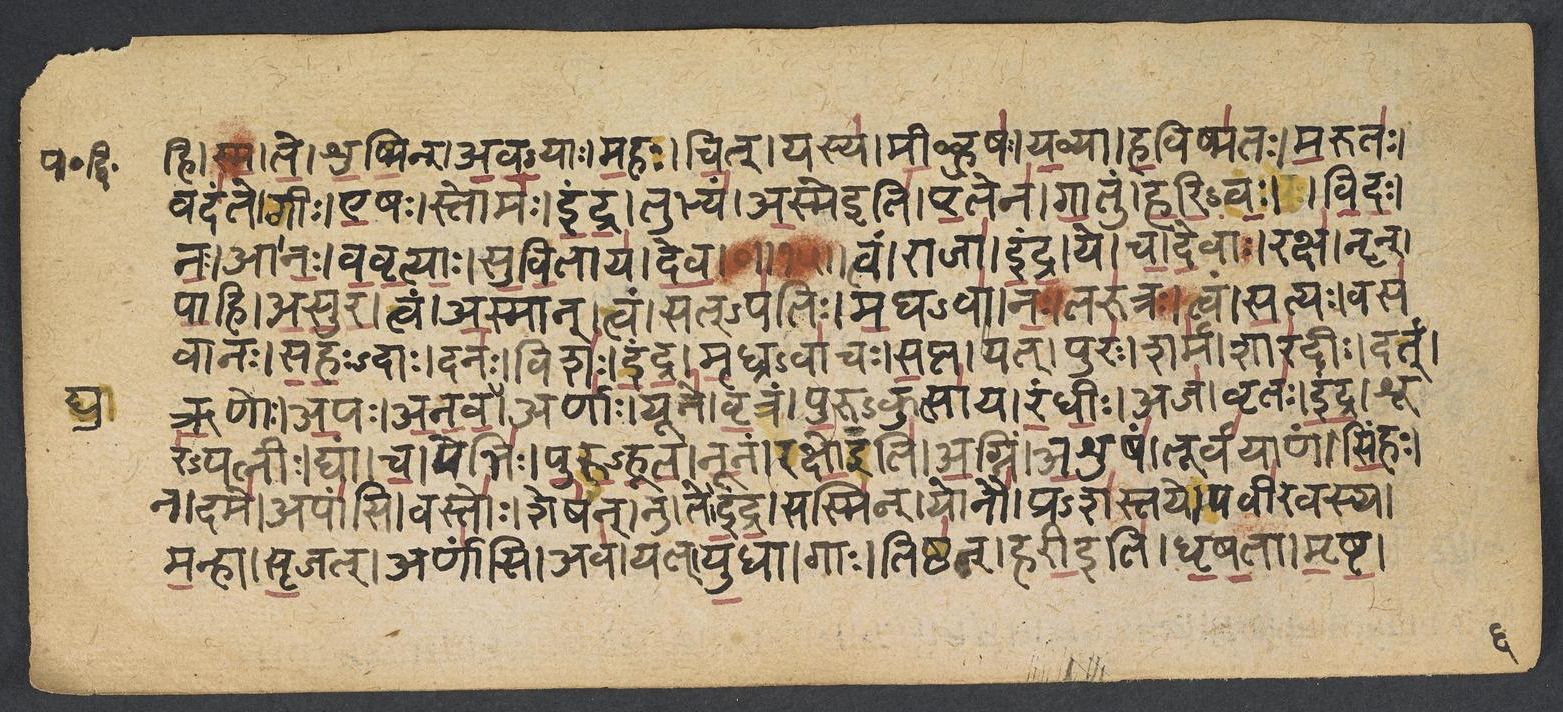
Where on the image
Penn Ms. Coll. 390 Item 41, fol. 137v (numbered 6v by the scribe) (OPenn image 139, upper leaf). Checked on the image: the Rigveda text on this page begins in RV 1.173.12 ‹hi sma te śuṣmin›. The next page with Rigveda text, fol. 138r (numbered 7r by the scribe), begins in RV 1.174.4 ‹vājān›. Verses 1.174.1-3 end on this page.
1tvaṁ rāje̍ndra̱ ye ca̍ de̱vā rakṣā̱ nṝn pā̱hy a̍sura̱ tvam a̱smān | tvaṁ satpa̍tir ma̱ghavā̍ na̱s taru̍tra̱s tvaṁ sa̱tyo vasa̍vānaḥ saho̱dāḥ ||
2dano̱ viśa̍ indra mṛ̱dhravā̍caḥ sa̱pta yat pura̱ḥ śarma̱ śāra̍dī̱r dart | ṛ̱ṇor a̱po a̍nava̱dyārṇā̱ yūne̍ vṛ̱tram pu̍ru̱kutsā̍ya randhīḥ ||
3ajā̱ vṛta̍ indra̱ śūra̍patnī̱r dyāṁ ca̱ yebhi̍ḥ puruhūta nū̱nam | rakṣo̍ a̱gnim a̱śuṣa̱ṁ tūrva̍yāṇaṁ si̱ṁho na dame̱ apā̍ṁsi̱ vasto̍ḥ ||
Compare: Padapāṭha (word-by-word text written in the manuscript; Sansknet e-text via GRETIL)
1tvam | rājā | indra | ye | ca | devāḥ | rakṣa | nṝn | pāhi | asura | tvam | asmān | tvam | sat-patiḥ | magha-vā | naḥ | tarutraḥ | tvam | satyaḥ | vasavānaḥ | sahaḥ-dāḥ
2danaḥ | viśaḥ | indra | mṛdhra-vācaḥ | sapta | yat | puraḥ | śarma | śāradīḥ | darta | ṛṇoḥ | apaḥ | anavadya | arṇāḥ | yūne | vṛtram | puru-kutsāya | randhīḥ
3aja | vṛtaḥ | indra | śūra-patnīḥ | dyām | ca | yebhiḥ | puru-hūta | nūnam | rakṣaḥ | agnim | aśuṣam | tūrvayāṇam | siṃhaḥ | na | dame | apāṃsi | vastoḥ
1THOU art the King of all the Gods, O Indra: protect the men, O Asura, preserve us. Thou Lord of Heroes, Maghavan, our saver, art faithful, very rich, the victory-giver.
2Indra, thou humbledst tribes that spake with insult by breaking down seven autumn forts, their refuge. Thou stirredst, Blameless! billowy floods, and gavest his foe a prey to youthful Purukutsa.
3With whom thou drivest troops whose lords are heroes, and bringest daylight now, much worshipped Indra, With them guard lion-like wasting active Agni to dwell in our tilled fields and in our homestead.
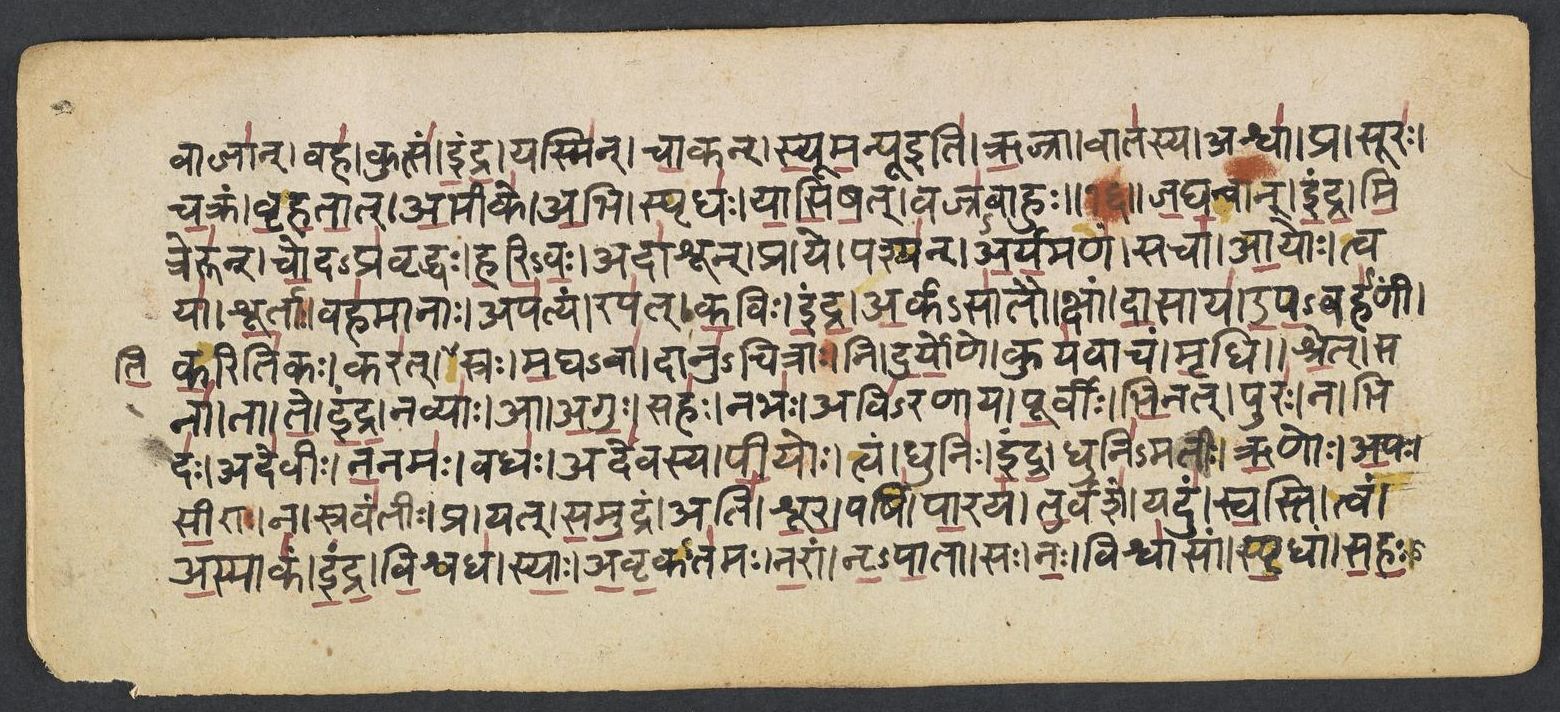
Where on the image
Penn Ms. Coll. 390 Item 41, fol. 138r (numbered 7r by the scribe) (OPenn image 139, lower leaf). Checked on the image: the Rigveda text on this page begins in RV 1.174.4 ‹vājān›. The next page with Rigveda text, fol. 138v (numbered 7v by the scribe), begins in RV 1.174.10 ‹-jīra-dānum›. Verses 1.174.4-9 end on this page; 1.174.4 begins on fol. 137v (numbered 6v by the scribe).
4śeṣa̱n nu ta i̍ndra̱ sasmi̱n yonau̱ praśa̍staye̱ pavī̍ravasya ma̱hnā | sṛ̱jad arṇā̱ṁsy ava̱ yad yu̱dhā gās tiṣṭha̱d dharī̍ dhṛṣa̱tā mṛ̍ṣṭa̱ vājā̍n ||
5vaha̱ kutsa̍m indra̱ yasmi̍ñ cā̱kan syū̍ma̱nyū ṛ̱jrā vāta̱syāśvā̍ | pra sūra̍ś ca̱kraṁ vṛ̍hatād a̱bhīke̱ 'bhi spṛdho̍ yāsiṣa̱d vajra̍bāhuḥ ||
6ja̱gha̱nvām̐ i̍ndra mi̱trerū̍ñ co̱dapra̍vṛddho harivo̱ adā̍śūn | pra ye paśya̍nn arya̱maṇa̱ṁ sacā̱yos tvayā̍ śū̱rtā vaha̍mānā̱ apa̍tyam ||
7rapa̍t ka̱vir i̍ndrā̱rkasā̍tau̱ kṣāṁ dā̱sāyo̍pa̱barha̍ṇīṁ kaḥ | kara̍t ti̱sro ma̱ghavā̱ dānu̍citrā̱ ni du̍ryo̱ṇe kuya̍vācam mṛ̱dhi śre̍t ||
8sanā̱ tā ta̍ indra̱ navyā̱ āgu̱ḥ saho̱ nabho 'vi̍raṇāya pū̱rvīḥ | bhi̱nat puro̱ na bhido̱ ade̍vīr na̱namo̱ vadha̱r ade̍vasya pī̱yoḥ ||
9tvaṁ dhuni̍r indra̱ dhuni̍matīr ṛ̱ṇor a̱paḥ sī̱rā na srava̍ntīḥ | pra yat sa̍mu̱dram ati̍ śūra̱ parṣi̍ pā̱rayā̍ tu̱rvaśa̱ṁ yadu̍ṁ sva̱sti ||
Compare: Padapāṭha (word-by-word text written in the manuscript; Sansknet e-text via GRETIL)
4śeṣan | nu | te | indra | sasmin | yonau | pra-śastaye | pavīravasya | mahnā | sṛjat | arṇāṃsi | ava | yat | yudhā | gāḥ | tiṣṭhat | harī iti | dhṛṣatā | mṛṣṭa | vājān
5vaha | kutsam | indra | yasmin | cākan | syūmanyū iti | ṛjrā | vātasya | asvā | pra | sūraḥ | cakram | vṛhatāt | abhīke | abhi | spṛdhaḥ | yāsiṣat | vajra-bāhuḥ
6jaghanvān | indra | mitrerūn | coda-pravṛddhaḥ | hari-vaḥ | adāśūn | pra | ye | paśyan | aryamaṇam | sacā | āyoḥ | tvayā | śūrtāḥ | vahamānāḥ | apatyam
7rapat | kaviḥ | indra | arka-sātau | kṣām | dāsāya | upa-barhaṇīm | karitikaḥ | karat | tisraḥ | magha-vā | dānu-citrāḥ | ni | duryoṇe | kuyavācam | mṛdhi | śret
8sanā | tā | te | indra | navyāḥ | ā | aguḥ | sahaḥ | nabhaḥ | avi-raṇāya | pūrvīḥ | bhinat | puraḥ | na | bhidaḥ | adevīḥ | nanamaḥ | vadhaḥ | adevasya | pīyoḥ
9tvam | dhuniḥ | indra | dhuni-matīḥ | ṛṇoḥ | apaḥ | sīrāḥ | na | sravantīḥ | pra | yat | samudram | ati | śūra | parṣi | pāraya | turvaśam | yadum | svasti
4They through the greatness of thy spear, O Indra, shall, to thy praise, rest in this earthly station. To loose the floods, to seek, for kine, the battle, his Bays he mounted boldly seized the booty.
5Indra, bear Kutsa, him in whom thou joyest: the dark-red horses of the Wind are docile. Let the Sun roll his chariot wheel anear us, and let the Thunderer go to meet the foemen.
6Thou Indra, Lord of Bays, made strong by impulse, hast slain the vexers of thy friends, who give not. They who beheld the Friend beside the living were cast aside by thee as they rode onward.
7Indra, the bard sang forth in inspiration: thou madest earth a covering for the Dâsa. Maghavan made the three that gleam with moisture, and to his home brought Kuyavâch to slay him.
8These thine old deeds new bards have sung, O Indra. Thou conqueredst, boundest many tribes for ever. Like castles thou hast crushed the godless races, and bowed the godless scorner's deadly weapon.
9A Stormer thou hast made the stormy waters flow down, O Indra, like the running rivers. When o'er the flood thou broughtest them, O Hero, thou keptest Turvaga and Yadu safely.
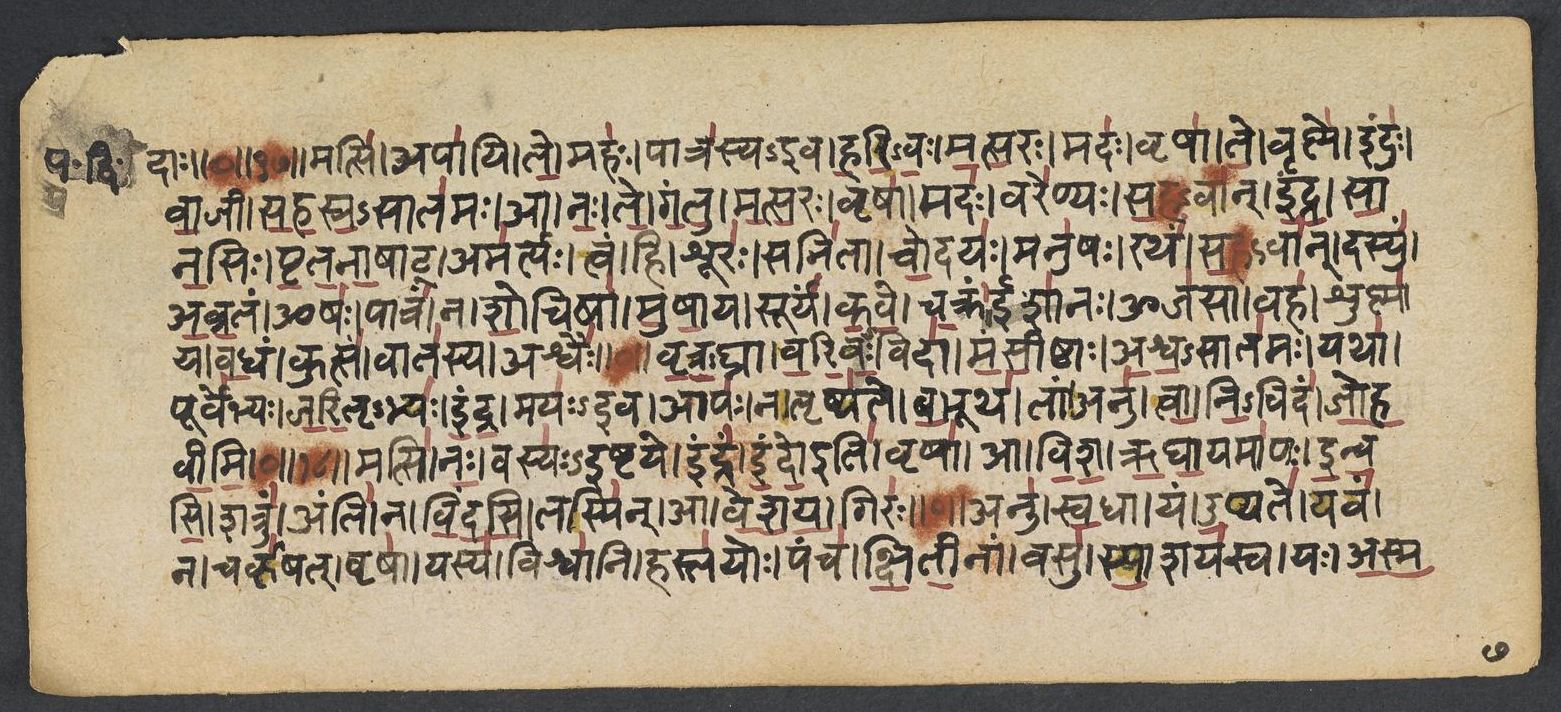
Where on the image
Penn Ms. Coll. 390 Item 41, fol. 138v (numbered 7v by the scribe) (OPenn image 140, upper leaf). Checked on the image: the Rigveda text on this page begins in RV 1.174.10 ‹-jīra-dānum›. The next page with Rigveda text, fol. 139r (numbered 8r by the scribe), begins in RV 1.176.3 ‹-asma-dhruk divyāiva aśaniḥ jahi›. Verse 1.174.10 ends on this page; 1.174.10 begins on fol. 138r (numbered 7r by the scribe).
10tvam a̱smāka̍m indra vi̱śvadha̍ syā avṛ̱kata̍mo na̱rāṁ nṛ̍pā̱tā | sa no̱ viśvā̍sāṁ spṛ̱dhāṁ sa̍ho̱dā vi̱dyāme̱ṣaṁ vṛ̱jana̍ṁ jī̱radā̍num ||
Compare: Padapāṭha (word-by-word text written in the manuscript; Sansknet e-text via GRETIL)
10tvam | asmākam | indra | viśvadha | syāḥ | avṛka-tamaḥ | narān | nṛ-pātā | saḥ | naḥ | viśvāsām | spṛdhām | sahaḥ-dāḥ | vidyāma | iṣam | vṛjanam | jīra-dānum
10Indra, mayst thou be ours in all occasions, protector of the men, most gentle-hearted, Giving us victory over all our rivals. May we find strengthening food in full abundance.
Notes
- Sanskrit: Aufrecht's edition (1877) with the Vedic accents, as entered by van Nooten and Holland (GRETIL).
- English: Ralph T. H. Griffith, The Hymns of the Rigveda (1889-1892; 2nd ed. 1896-1897), from the VedaWeb digital text; OCR slips in that text were corrected against the printed 2nd edition (data/sources/rigveda/griffith_errata.json).
- Padapāṭha (edition text): Sansknet e-text via GRETIL (CC BY-NC-SA 4.0).
Cite
Sources
- Source: Penn Ms. Coll. 390 Item 41 (undated (catalogued with Penn's 18th-19th c. Vedic manuscripts)), OPenn, Public Domain Mark + Aufrecht's accented text (GRETIL) + Griffith's English (VedaWeb) (holding institution)
- Critical edition: Aufrecht (1877), accented e-text via GRETIL
← previous · → next · v cycle view · l back to library