Rigveda 1.178: To Indra
Introduction
Rigveda 1.178 is a hymn of 5 verses addressed to Indra. It stands in book (maṇḍala) 1, a collection of hymns by many families of poets. The Rigveda is the oldest collection of Sanskrit hymns, composed in the second half of the second millennium BCE and handed down orally for many centuries before it was written down.
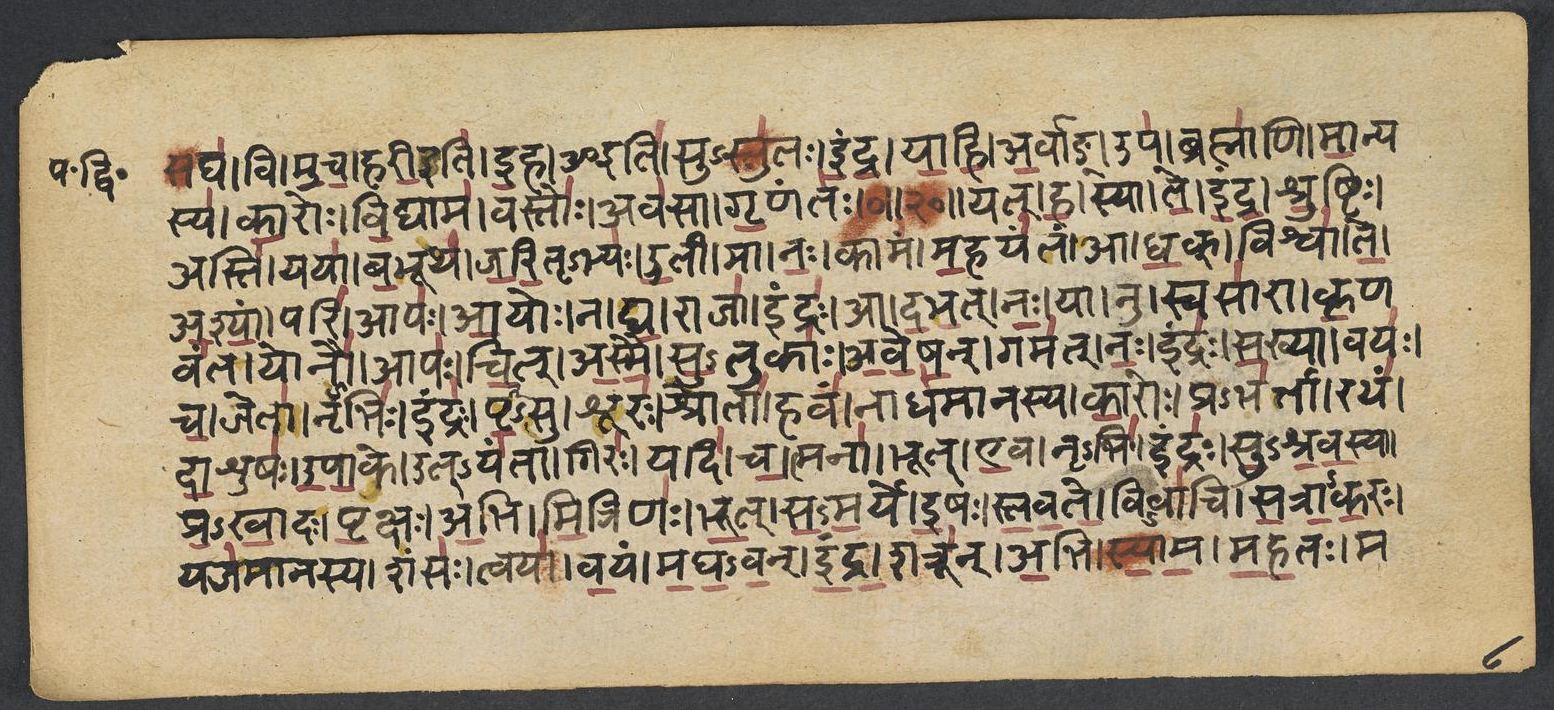
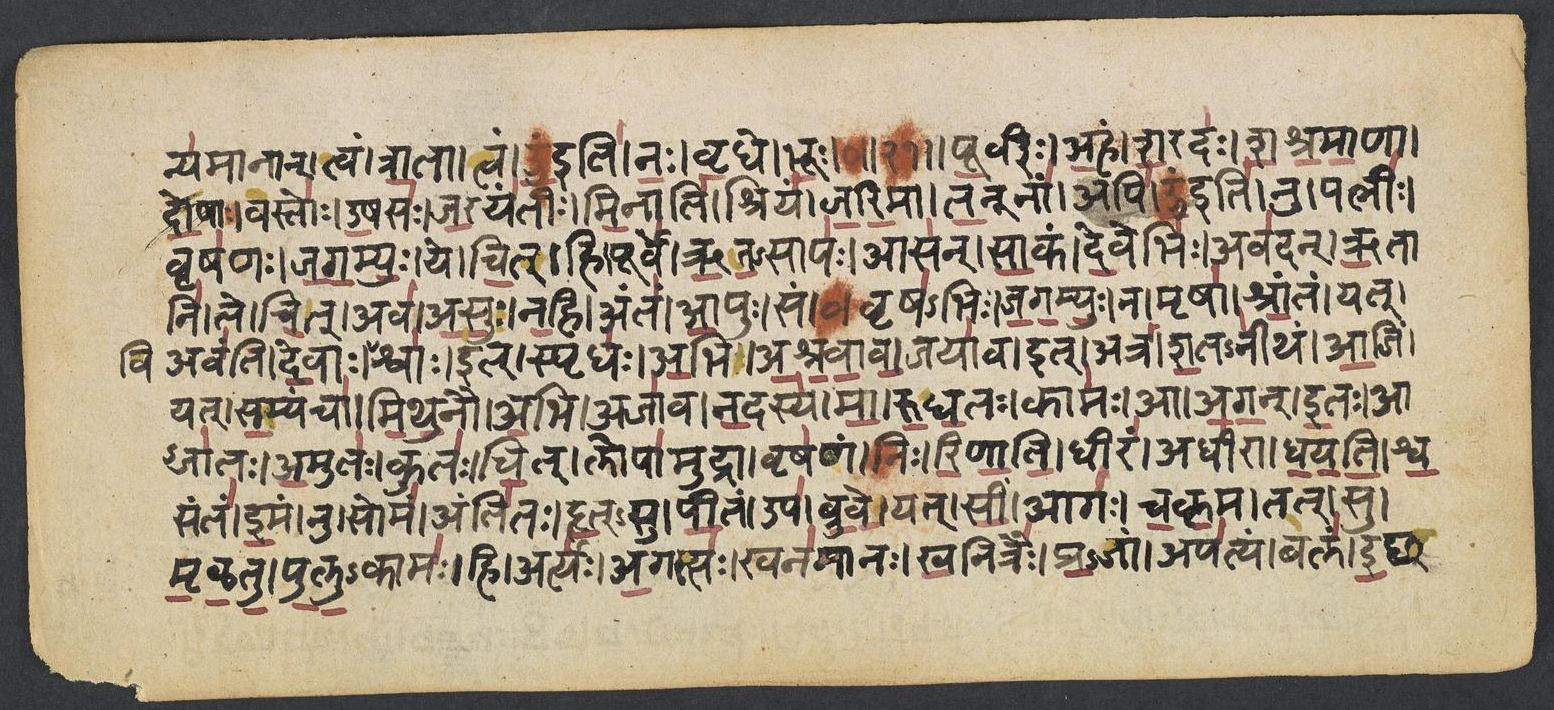
The manuscript shown is Penn Ms. Coll. 390 Item 41 (University of Pennsylvania), an undated paper manuscript of the padapāṭha (the word-by-word recitation text, in which every word is written separately and compounds are split) of the whole Ṛgveda in Devanāgarī, 884 leaves in fascicles, 7-9 lines to the page, accents in red; this hymn stands on fol. 139v-140r. Each section below gives the verses that end on one page; the page boundaries were read on the images (the opening words of every page), not counted out. Where the manuscript is a padapāṭha (the word-by-word recitation text), the section shows Aufrecht's continuous (saṃhitā) text first and, as the edition text, the padapāṭha of the same verses, which is the form written on the page.
How was this verified? (Provenance)
Where on the image
Penn Ms. Coll. 390 Item 41, fol. 139v (numbered 8v by the scribe) (OPenn image 141, upper leaf). Checked on the image: the Rigveda text on this page begins in RV 1.177.4 ‹vi muca harī iti›. The next page with Rigveda text, fol. 140r (numbered 9r by the scribe), begins in RV 1.178.5 ‹-manyamānān tvam trātā tvam›. Verses 1.178.1-4 end on this page.
1yad dha̱ syā ta̍ indra śru̱ṣṭir asti̱ yayā̍ ba̱bhūtha̍ jari̱tṛbhya̍ ū̱tī | mā na̱ḥ kāma̍m ma̱haya̍nta̱m ā dha̱g viśvā̍ te aśyā̱m pary āpa̍ ā̱yoḥ ||
2na ghā̱ rājendra̱ ā da̍bhan no̱ yā nu svasā̍rā kṛ̱ṇava̍nta̱ yonau̍ | āpa̍ś cid asmai su̱tukā̍ aveṣa̱n gama̍n na̱ indra̍ḥ sa̱khyā vaya̍ś ca ||
3jetā̱ nṛbhi̱r indra̍ḥ pṛ̱tsu śūra̱ḥ śrotā̱ hava̱ṁ nādha̍mānasya kā̱roḥ | prabha̍rtā̱ ratha̍ṁ dā̱śuṣa̍ upā̱ka udya̍ntā̱ giro̱ yadi̍ ca̱ tmanā̱ bhūt ||
4e̱vā nṛbhi̱r indra̍ḥ suśrava̱syā pra̍khā̱daḥ pṛ̱kṣo a̱bhi mi̱triṇo̍ bhūt | sa̱ma̱rya i̱ṣaḥ sta̍vate̱ vivā̍ci satrāka̱ro yaja̍mānasya̱ śaṁsa̍ḥ ||
Compare: Padapāṭha (word-by-word text written in the manuscript; Sansknet e-text via GRETIL)
1yat | ha | syā | te | indra | śruṣṭiḥ | asti | yayā | babhūtha | jaritṛ-bhyaḥ | ūtī | mā | naḥ | kāmam | mahayantam | ā | dhak | viśvā | te | aśyām | pari | āpaḥ | āyoḥ
2na | gha | rājā | indraḥ | ā | dabhat | naḥ | yā | nu | svasārā | kṛṇavanta | yonau | āpaḥ | cit | asmai | su-tukāḥ | aveṣan | gamat | naḥ | indraḥ | sakhyā | vayaḥ | ca
3jetā | nṛ-bhiḥ | indraḥ | pṛt-su | śūraḥ | śrotā | havam | nādhamānasya | kāroḥ | pra-bhartā | ratham | dāśuṣaḥ | upāke | ut-yantā | giraḥ | yadi | ca | tmanā | bhūt
4eva | nṛ-bhiḥ | indraḥ | su-śravasyā | pra-khādaḥ | pṛkṣaḥ | abhi | mitriṇaḥ | bhūt | sa-marye | iṣaḥ | stavate | vi-vāci | satrākaraḥ | yajamānasya | śaṃsaḥ
1IF, Indra, thou hast given that gracious hearing where with thou helpest those who sang thy praises. Blast not the wish that would exalt us may I gain all from thee, and pay all man's devotions.
2Let not the Sovran Indra disappoint us in what shall bring both Sisters to our dwelling. To him have run the quickly flowing waters.May Indra come to us with life and friendship.
3Victorious with the men, Hero in battles, Indra, who hearsthe singer's supplication, Will bring his car nigh to the man who offers, if he himself upholds the songs that praise him.
4Yea,Indra, with the men, through love of gloryconsumes the sacred food which friends have offered. The ever-strengthening song of him who worships is sung in fight amid the clash of voices.
Where on the image
Penn Ms. Coll. 390 Item 41, fol. 140r (numbered 9r by the scribe) (OPenn image 141, lower leaf). Checked on the image: the Rigveda text on this page begins in RV 1.178.5 ‹-manyamānān tvam trātā tvam›. The next page with Rigveda text, fol. 140v (numbered 9v by the scribe), begins in RV 1.180.1 ‹-dīyat hiraṇyayā vām pavayaḥ›. Verse 1.178.5 ends on this page; 1.178.5 begins on fol. 139v (numbered 8v by the scribe).
5tvayā̍ va̱yam ma̍ghavann indra̱ śatrū̍n a̱bhi ṣyā̍ma maha̱to manya̍mānān | tvaṁ trā̱tā tvam u̍ no vṛ̱dhe bhū̍r vi̱dyāme̱ṣaṁ vṛ̱jana̍ṁ jī̱radā̍num ||
Compare: Padapāṭha (word-by-word text written in the manuscript; Sansknet e-text via GRETIL)
5tvayā | vayam | magha-van | indra | śatrūn | abhi | syāma | mahataḥ | manyamānān | tvam | trātā | tvam | oṃ iti | naḥ | vṛdhe | bhūḥ | vidyāma | iṣam | vṛjanam | jīra-dānum
5Aided by thee, O Maghavan, O Indra, may we subdue our foes who count them mighty. Be our protector, strengthen and increase us.May we find strengthening food in full abundance.
Notes
- Sanskrit: Aufrecht's edition (1877) with the Vedic accents, as entered by van Nooten and Holland (GRETIL).
- English: Ralph T. H. Griffith, The Hymns of the Rigveda (1889-1892; 2nd ed. 1896-1897), from the VedaWeb digital text; OCR slips in that text were corrected against the printed 2nd edition (data/sources/rigveda/griffith_errata.json).
- Padapāṭha (edition text): Sansknet e-text via GRETIL (CC BY-NC-SA 4.0).
Cite
Sources
- Source: Penn Ms. Coll. 390 Item 41 (undated (catalogued with Penn's 18th-19th c. Vedic manuscripts)), OPenn, Public Domain Mark + Aufrecht's accented text (GRETIL) + Griffith's English (VedaWeb) (holding institution)
- Critical edition: Aufrecht (1877), accented e-text via GRETIL
← previous · → next · v cycle view · l back to library