Rigveda 1.177: To Indra
Introduction
Rigveda 1.177 is a hymn of 5 verses addressed to Indra. It stands in book (maṇḍala) 1, a collection of hymns by many families of poets. The Rigveda is the oldest collection of Sanskrit hymns, composed in the second half of the second millennium BCE and handed down orally for many centuries before it was written down.
The manuscript shown is Penn Ms. Coll. 390 Item 41 (University of Pennsylvania), an undated paper manuscript of the padapāṭha (the word-by-word recitation text, in which every word is written separately and compounds are split) of the whole Ṛgveda in Devanāgarī, 884 leaves in fascicles, 7-9 lines to the page, accents in red; this hymn stands on fol. 139r-139v. Each section below gives the verses that end on one page; the page boundaries were read on the images (the opening words of every page), not counted out. Where the manuscript is a padapāṭha (the word-by-word recitation text), the section shows Aufrecht's continuous (saṃhitā) text first and, as the edition text, the padapāṭha of the same verses, which is the form written on the page.
How was this verified? (Provenance)
Where on the image
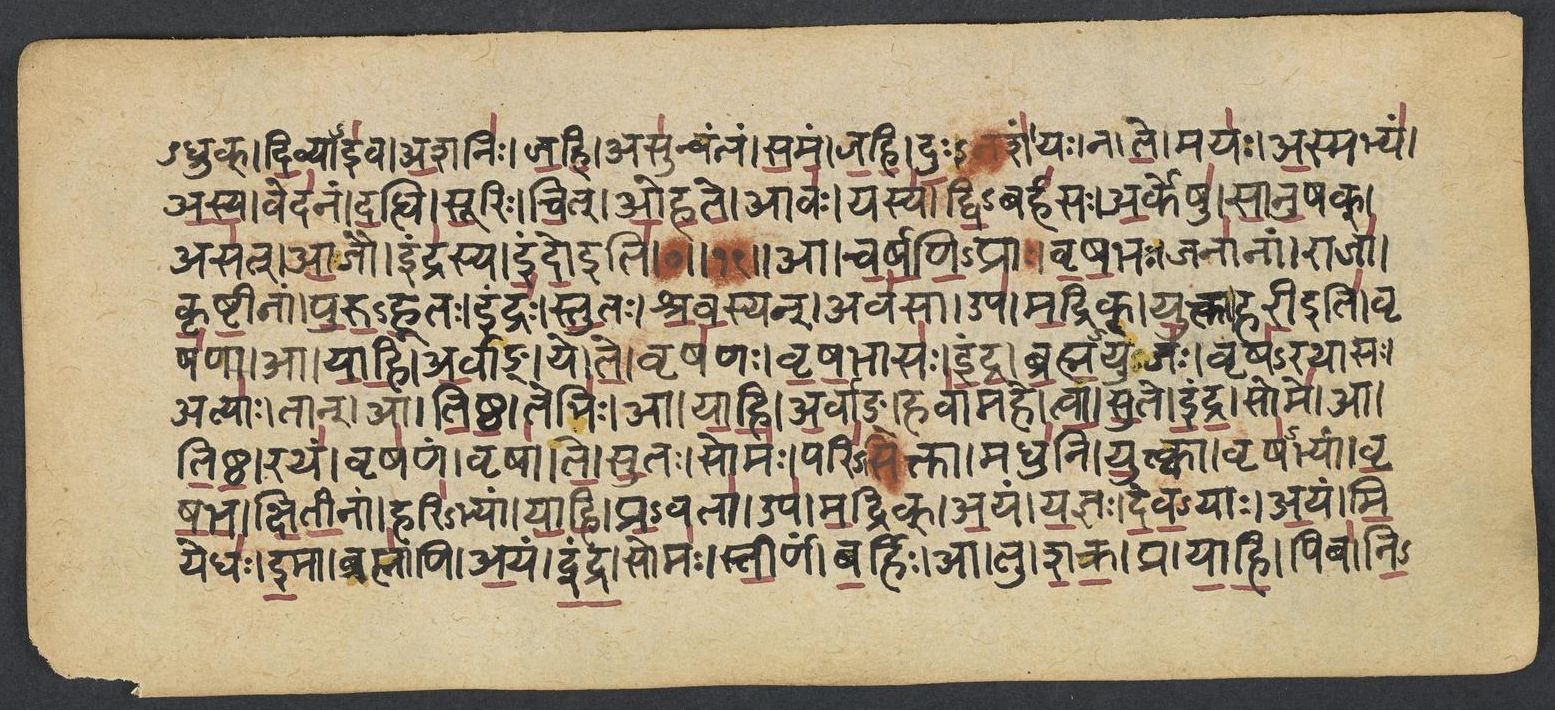
Penn Ms. Coll. 390 Item 41, fol. 139r (numbered 8r by the scribe) (OPenn image 140, lower leaf). Checked on the image: the Rigveda text on this page begins in RV 1.176.3 ‹-asma-dhruk divyāiva aśaniḥ jahi›. The next page with Rigveda text, fol. 139v (numbered 8v by the scribe), begins in RV 1.177.4 ‹vi muca harī iti›. Verses 1.177.1-3 end on this page.
1ā ca̍rṣaṇi̱prā vṛ̍ṣa̱bho janā̍nā̱ṁ rājā̍ kṛṣṭī̱nām pu̍ruhū̱ta indra̍ḥ | stu̱taḥ śra̍va̱syann ava̱sopa̍ ma̱drig yu̱ktvā harī̱ vṛṣa̱ṇā yā̍hy a̱rvāṅ ||
2ye te̱ vṛṣa̍ṇo vṛṣa̱bhāsa̍ indra brahma̱yujo̱ vṛṣa̍rathāso̱ atyā̍ḥ | tām̐ ā ti̍ṣṭha̱ tebhi̱r ā yā̍hy a̱rvāṅ havā̍mahe tvā su̱ta i̍ndra̱ some̍ ||
3ā ti̍ṣṭha̱ ratha̱ṁ vṛṣa̍ṇa̱ṁ vṛṣā̍ te su̱taḥ soma̱ḥ pari̍ṣiktā̱ madhū̍ni | yu̱ktvā vṛṣa̍bhyāṁ vṛṣabha kṣitī̱nāṁ hari̍bhyāṁ yāhi pra̱vatopa̍ ma̱drik ||
Compare: Padapāṭha (word-by-word text written in the manuscript; Sansknet e-text via GRETIL)
1ā | carṣaṇi-prāḥ | vṛṣabhaḥ | janānām | rājā | kṛṣṭīnām | puru-hūtaḥ | indraḥ | stutaḥ | śravasyan | avasā | upa | madrik | yuktvā | harī | vṛṣaṇā | yāhi | arvāṅ
2ye | te | vṛṣaṇaḥ | vṛṣabhāsaḥ | indra | brahma-yujaḥ | vṛṣa-rathāsaḥ | atyāḥ | tān | ā | tiṣṭha | tebhiḥ | ā | yāhi | arvāṅ | havāmahe | tvā | sute | indra | some
3ā | tiṣṭha | ratham | vṛṣaṇam | vṛṣā | te | sutaḥ | somaḥ | pari-siktā | madhūni | yuktvā | vṛṣa-bhyām | vṛṣabha | kṣitīnām | hari-bhyām | yāhi | pra-vatā | upa | madrik
1THE Bull of men, who cherishes all people, King of the Races, Indra, called of many, Fame-loving, praised, hither to me with succour turn having yoked both vigorous Bay Horses!
2Thy mighty Stallions, yoked by prayer, O Indra, thy. Coursers to thy mighty chariot harnessed,– Ascend thou these, and borne by them come hither: with Soma juice out. poured, Indra, we call thee.
3Ascend thy mighty car: the mighty Soma is poured for thee and sweets are sprinkled round us. Come down to us-ward, Bull of human races,come, having harnessed them, with strong Bay Horses.
Where on the image
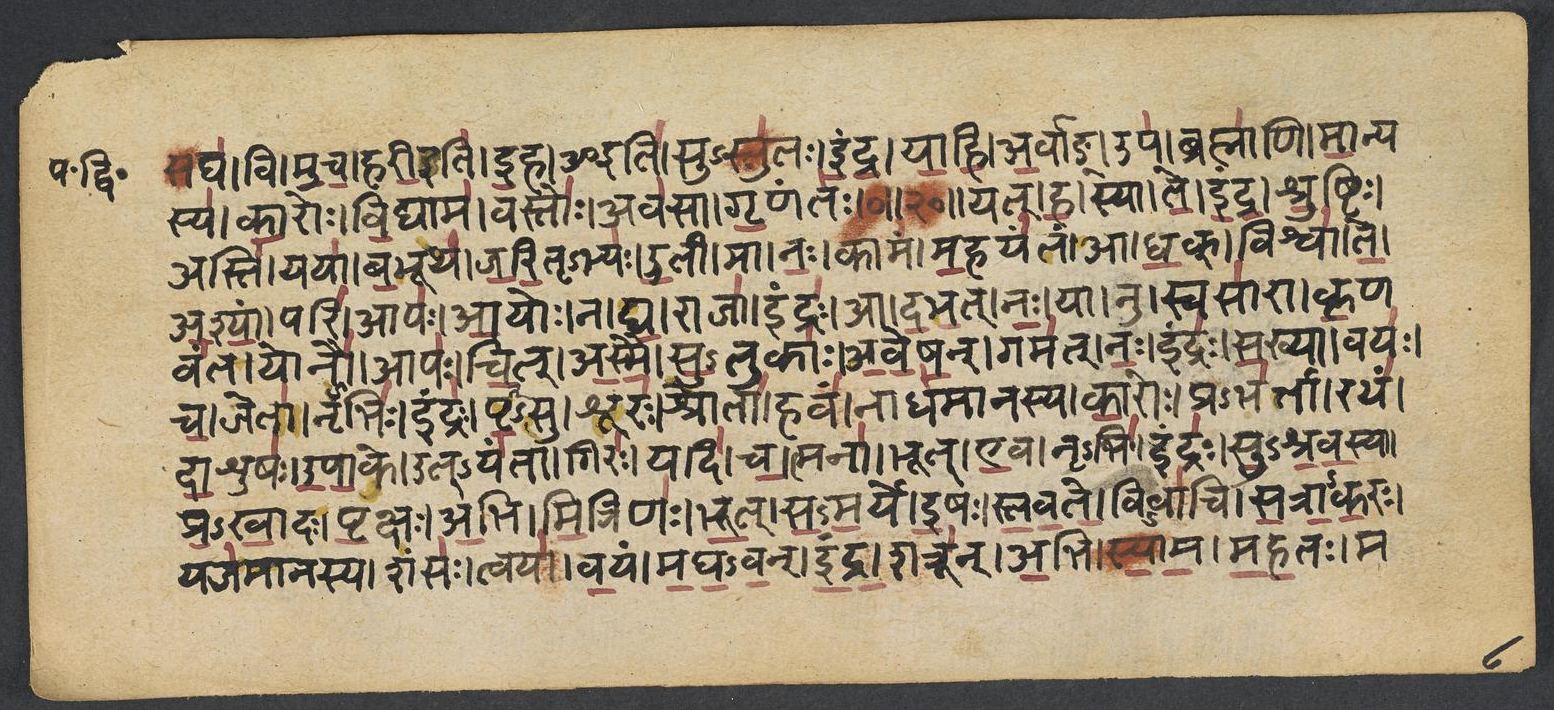
Penn Ms. Coll. 390 Item 41, fol. 139v (numbered 8v by the scribe) (OPenn image 141, upper leaf). Checked on the image: the Rigveda text on this page begins in RV 1.177.4 ‹vi muca harī iti›. The next page with Rigveda text, fol. 140r (numbered 9r by the scribe), begins in RV 1.178.5 ‹-manyamānān tvam trātā tvam›. Verses 1.177.4-5 end on this page; 1.177.4 begins on fol. 139r (numbered 8r by the scribe).
4a̱yaṁ ya̱jño de̍va̱yā a̱yam mi̱yedha̍ i̱mā brahmā̍ṇy a̱yam i̍ndra̱ soma̍ḥ | stī̱rṇam ba̱rhir ā tu śa̍kra̱ pra yā̍hi̱ pibā̍ ni̱ṣadya̱ vi mu̍cā̱ harī̍ i̱ha ||
5o suṣṭu̍ta indra yāhy a̱rvāṅ upa̱ brahmā̍ṇi mā̱nyasya̍ kā̱roḥ | vi̱dyāma̱ vasto̱r ava̍sā gṛ̱ṇanto̍ vi̱dyāme̱ṣaṁ vṛ̱jana̍ṁ jī̱radā̍num ||
Compare: Padapāṭha (word-by-word text written in the manuscript; Sansknet e-text via GRETIL)
4ayam | yajñaḥ | deva-yāḥ | ayam | miyedhaḥ | imā | brahmāṇi | ayam | indra | somaḥ | stīrṇam | barhiḥ | ā | tu | śakra | pra | yāhi | piba | ni-sadya | vi | muca | harī iti | iha
5o iti | su-stutaḥ | indra | yāhi | arvāṅ | upa | brahmāṇi | mānyasya | kāroḥ | vidyāma | vastoḥ | avasā | gṛṇantaḥ | vidyāma | iṣam | vṛjanam | jīra-dānum
4Here is God-reaching sacrifice, here the victim; here, Indra,are the prayers, here is the Soma. Strewn is thesacred grass: come hither, Ṣakra; seatthee and drink: unyoke thy two Bay Coursers.
5Come to us, Indra, come thou highly lauded to the devotions of the singer Mâna. Singing, may we find early through thy succour, may we find strengthening food in full abundance.
Notes
- Sanskrit: Aufrecht's edition (1877) with the Vedic accents, as entered by van Nooten and Holland (GRETIL).
- English: Ralph T. H. Griffith, The Hymns of the Rigveda (1889-1892; 2nd ed. 1896-1897), from the VedaWeb digital text; OCR slips in that text were corrected against the printed 2nd edition (data/sources/rigveda/griffith_errata.json).
- Padapāṭha (edition text): Sansknet e-text via GRETIL (CC BY-NC-SA 4.0).
Cite
Sources
- Source: Penn Ms. Coll. 390 Item 41 (undated (catalogued with Penn's 18th-19th c. Vedic manuscripts)), OPenn, Public Domain Mark + Aufrecht's accented text (GRETIL) + Griffith's English (VedaWeb) (holding institution)
- Critical edition: Aufrecht (1877), accented e-text via GRETIL
← previous · → next · v cycle view · l back to library