Rigveda 1.180: To Asvins
Introduction
Rigveda 1.180 is a hymn of 10 verses addressed to Asvins. It stands in book (maṇḍala) 1, a collection of hymns by many families of poets. The Rigveda is the oldest collection of Sanskrit hymns, composed in the second half of the second millennium BCE and handed down orally for many centuries before it was written down.
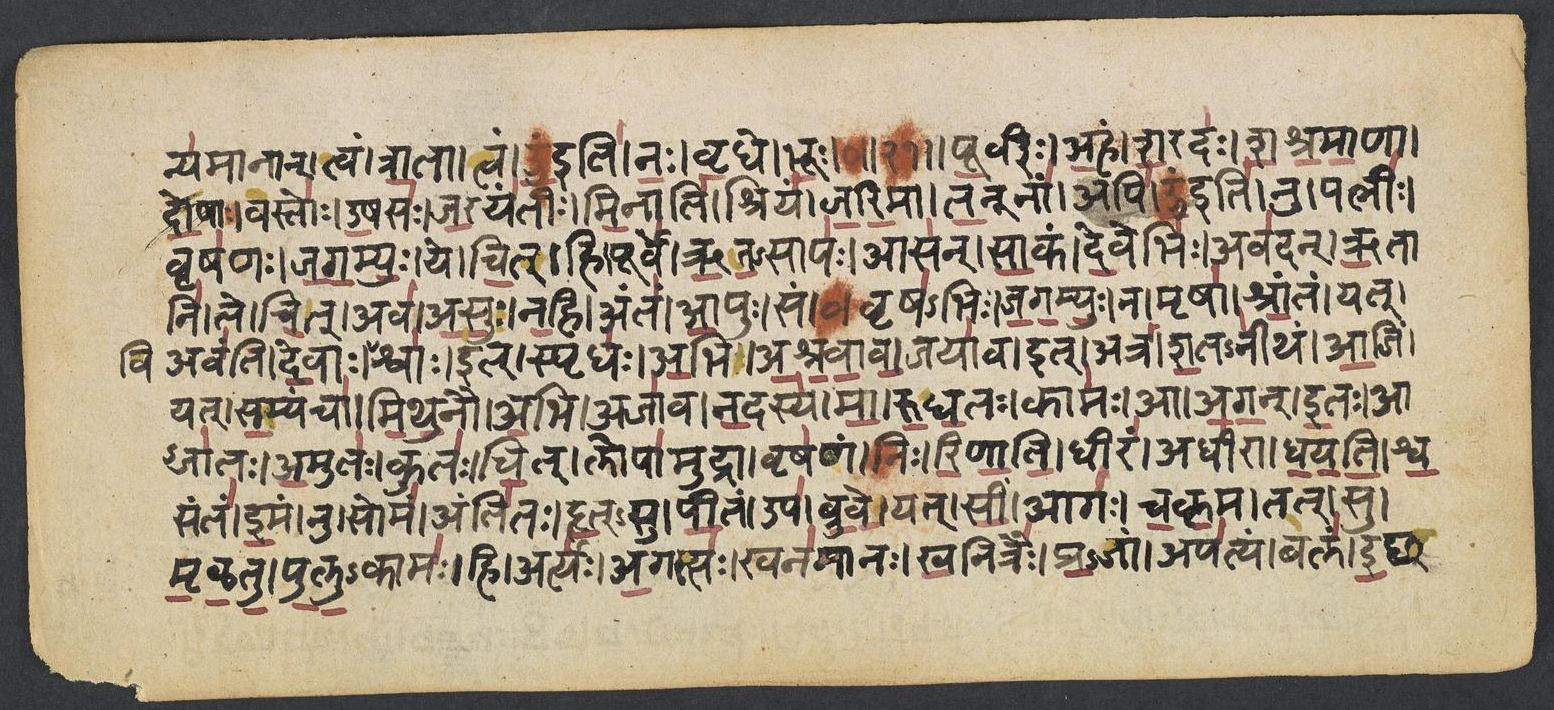
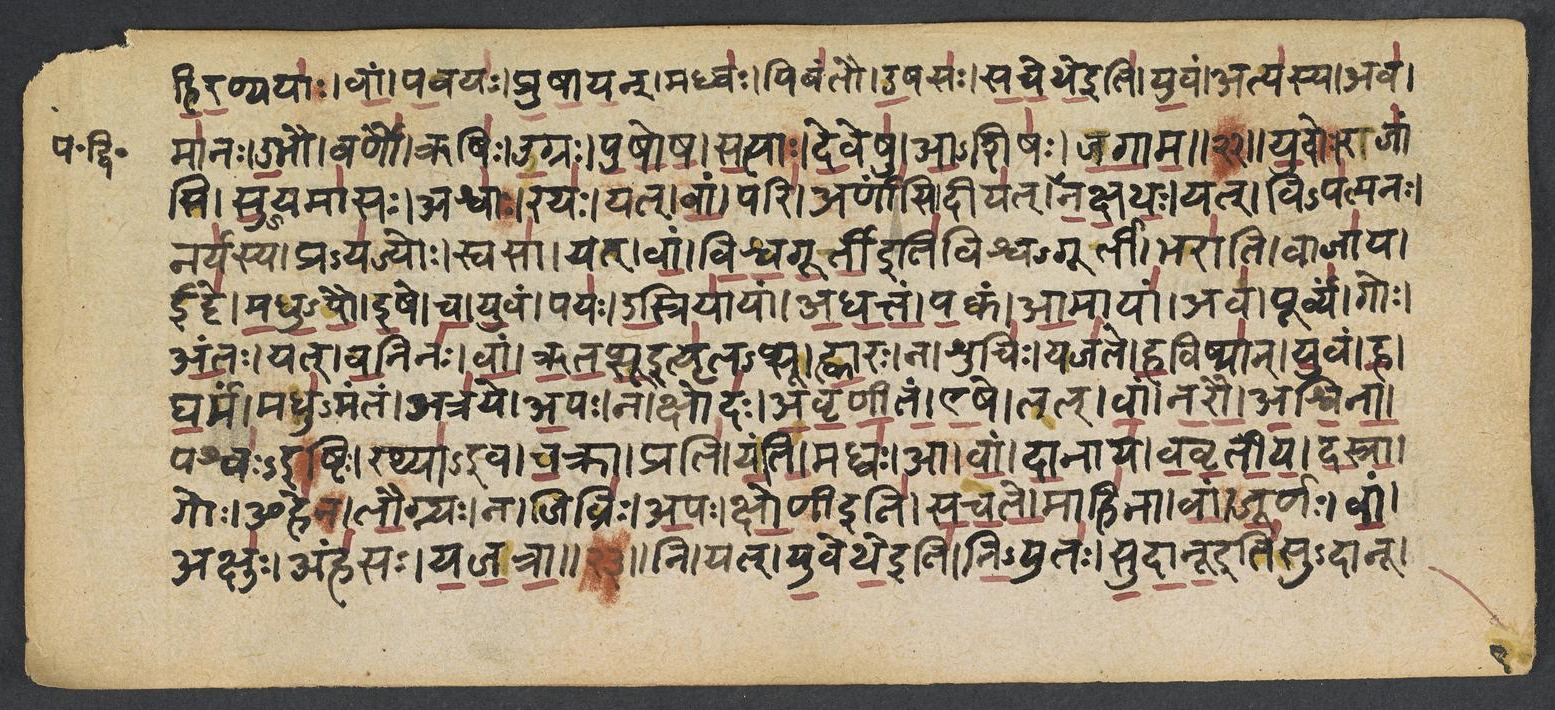
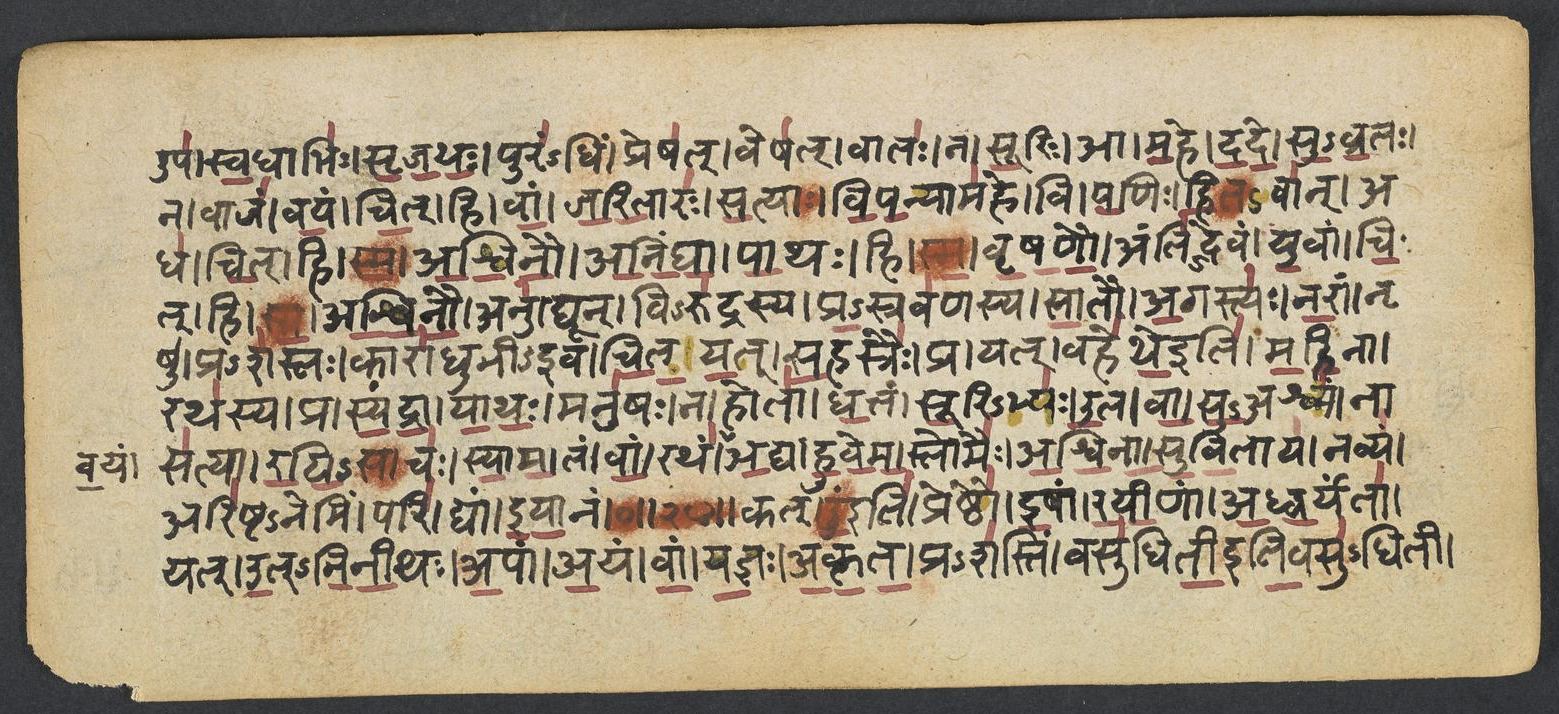
The manuscript shown is Penn Ms. Coll. 390 Item 41 (University of Pennsylvania), an undated paper manuscript of the padapāṭha (the word-by-word recitation text, in which every word is written separately and compounds are split) of the whole Ṛgveda in Devanāgarī, 884 leaves in fascicles, 7-9 lines to the page, accents in red; this hymn stands on fol. 140r-141r. Each section below gives the verses that end on one page; the page boundaries were read on the images (the opening words of every page), not counted out. Where the manuscript is a padapāṭha (the word-by-word recitation text), the section shows Aufrecht's continuous (saṃhitā) text first and, as the edition text, the padapāṭha of the same verses, which is the form written on the page.
How was this verified? (Provenance)
Where on the image
Penn Ms. Coll. 390 Item 41, fol. 140v (numbered 9v by the scribe) (OPenn image 142, upper leaf). Checked on the image: the Rigveda text on this page begins in RV 1.180.1 ‹-dīyat hiraṇyayā vām pavayaḥ›. The next page with Rigveda text, fol. 141r (numbered 10r by the scribe), begins in RV 1.180.6 ‹upa svadhābhiḥ sṛjathaḥ puram-dhim›. Verses 1.180.1-5 end on this page; 1.180.1 begins on fol. 140r (numbered 9r by the scribe).
1yu̱vo rajā̍ṁsi su̱yamā̍so̱ aśvā̱ ratho̱ yad vā̱m pary arṇā̍ṁsi̱ dīya̍t | hi̱ra̱ṇyayā̍ vām pa̱vaya̍ḥ pruṣāya̱n madhva̱ḥ piba̍ntā u̱ṣasa̍ḥ sacethe ||
2yu̱vam atya̱syāva̍ nakṣatho̱ yad vipa̍tmano̱ narya̍sya̱ praya̍jyoḥ | svasā̱ yad vā̍ṁ viśvagūrtī̱ bharā̍ti̱ vājā̱yeṭṭe̍ madhupāv i̱ṣe ca̍ ||
3yu̱vam paya̍ u̱sriyā̍yām adhattam pa̱kvam ā̱māyā̱m ava̱ pūrvya̱ṁ goḥ | a̱ntar yad va̱nino̍ vām ṛtapsū hvā̱ro na śuci̱r yaja̍te ha̱viṣmā̍n ||
4yu̱vaṁ ha̍ gha̱rmam madhu̍manta̱m atra̍ye̱ 'po na kṣodo̍ 'vṛṇītam e̱ṣe | tad vā̍ṁ narāv aśvinā̱ paśva̍ïṣṭī̱ rathye̍va ca̱krā prati̍ yanti̱ madhva̍ḥ ||
5ā vā̍ṁ dā̱nāya̍ vavṛtīya dasrā̱ gor ohe̍ṇa tau̱gryo na jivri̍ḥ | a̱paḥ kṣo̱ṇī sa̍cate̱ māhi̍nā vāṁ jū̱rṇo vā̱m akṣu̱r aṁha̍so yajatrā ||
Compare: Padapāṭha (word-by-word text written in the manuscript; Sansknet e-text via GRETIL)
1yuvaḥ | rajāṃsi | su-yamāsaḥ | aśvāḥ | rathaḥ | yat | vām | pari | arṇāṃsi | dīyat | hiraṇyayā | vām | pavayaḥ | pruṣāyan | madhvaḥ | pibantau | uṣasaḥ | sacetheiti
2yuvam | atyasya | ava | nakṣathaḥ | yat | vi-patmanaḥ | naryasya | pra-yajyoḥ | svasā | yat | vām | viśvagūrtī itiviśva-gūrtī | bharāti | vājāya | īṭe | madhu-pau | iṣe | ca
3yuvam | payaḥ | usriyāyām | adhattam | pakvam | āmāyām | ava | pūrvyam | goḥ | antaḥ | yat | vaninaḥ | vām | ṛtapsūity ṛta-psū | hvāraḥ | na | śuciḥ | yajate | haviṣmān
4yuvam | ha | gharmam | madhu-mantam | atraye | apaḥ | na | kṣodaḥ | avṛṇītam | eṣe | tat | vām | narau | aśvinā | paśvaḥ-iṣṭiḥ | rathyāiva | cakrā | prati | yanti | madhvaḥ
5ā | vām | dānāya | vavṛtīya | dasrā | goḥ | ohena | taugryaḥ | na | jivriḥ | apaḥ | kṣoṇī iti | sacate | māhinā | vām | jūrṇaḥ | vām | akṣuḥ | aṃhasaḥ | yajatrā
1LIGHTLY your coursers travel through the regions when round thesea of air your car is flying. Your golden fellies scatter drops of moisture: drinking the sweetness ye atend the Mornings.
2Ye as ye travel overtake the Courser who flies apart, the Friend of man, most holy. The prayer is that the Sister may convey you, all praised, meath-drinkers! to support and strengthen.
3Ye have deposited, matured within her, in the raw cow the first milk of the milch-cow, Which the bright offerer, shining like a serpent mid trees, presents to you whose form is perfect.
4Ye made the fierce heat to be full of sweetness for Atri at his wish, like streaming water. Fire-offering thence is yours, O Aṣvins, Heroes: your car-wheels speed to us like springs of honey.
5Like Tugra's ancient son may I, ye Mighty, bring you to give your gifts with milk-oblations. Your greatness compasseth Earth, Heaven, and Waters: decayed for you is sorrow's net, ye Holy.
Where on the image
Penn Ms. Coll. 390 Item 41, fol. 141r (numbered 10r by the scribe) (OPenn image 142, lower leaf). Checked on the image: the Rigveda text on this page begins in RV 1.180.6 ‹upa svadhābhiḥ sṛjathaḥ puram-dhim›. The next page with Rigveda text, fol. 141v (numbered 10v by the scribe), begins in RV 1.181.1 ‹avitārā janānām›. Verses 1.180.6-10 end on this page; 1.180.6 begins on fol. 140v (numbered 9v by the scribe).
6ni yad yu̱vethe̍ ni̱yuta̍ḥ sudānū̱ upa̍ sva̱dhābhi̍ḥ sṛjatha̱ḥ pura̍ṁdhim | preṣa̱d veṣa̱d vāto̱ na sū̱rir ā ma̱he da̍de suvra̱to na vāja̍m ||
7va̱yaṁ ci̱d dhi vā̍ṁ jari̱tāra̍ḥ sa̱tyā vi̍pa̱nyāma̍he̱ vi pa̱ṇir hi̱tāvā̍n | adhā̍ ci̱d dhi ṣmā̍śvināv anindyā pā̱tho hi ṣmā̍ vṛṣaṇā̱v anti̍devam ||
8yu̱vāṁ ci̱d dhi ṣmā̍śvinā̱v anu̱ dyūn viru̍drasya pra̱srava̍ṇasya sā̱tau | a̱gastyo̍ na̱rāṁ nṛṣu̱ praśa̍sta̱ḥ kārā̍dhunīva citayat sa̱hasrai̍ḥ ||
9pra yad vahe̍the mahi̱nā ratha̍sya̱ pra sya̍ndrā yātho̱ manu̍ṣo̱ na hotā̍ | dha̱ttaṁ sū̱ribhya̍ u̱ta vā̱ svaśvya̱ṁ nāsa̍tyā rayi̱ṣāca̍ḥ syāma ||
10taṁ vā̱ṁ ratha̍ṁ va̱yam a̱dyā hu̍vema̱ stomai̍r aśvinā suvi̱tāya̱ navya̍m | ari̍ṣṭanemi̱m pari̱ dyām i̍yā̱naṁ vi̱dyāme̱ṣaṁ vṛ̱jana̍ṁ jī̱radā̍num ||
Compare: Padapāṭha (word-by-word text written in the manuscript; Sansknet e-text via GRETIL)
6ni | yat | yuvetheiti | ni-yutaḥ | sudānūitisu-dānū | upa | svadhābhiḥ | sṛjathaḥ | puram-dhim | preṣat | veṣat | vātaḥ | na | sūriḥ | ā | mahe | dade | su-vrataḥ | na | vājam
7vayam | cit | hi | vām | jaritāraḥ | satyāḥ | vipanyāmahe | vi | paṇiḥ | hita-vān | adha | cit | hi | sma | aśvinau | anindyā | pāthaḥ | hi | sma | vṛṣaṇau | anti-devam
8yuvām | cit | hi | sma | aśvinau | anu | dyūn | vi-rudrasya | pra-sravaṇasya | sātau | agastyaḥ | narām | nṛṣu | pra-śastaḥ | kārādhunī-iva | citayat | sahasraiḥ
9pra | yat | vahetheiti | mahinā | rathasya | pra | syandrā | yāthaḥ | manuṣaḥ | na | hotā | dhattam | sūri-bhyaḥ | uta | vā | su-aśvyam | nāsatyā | rayi-sācaḥ | syāma
10tam | vām | ratham | vayam | adya | huvema | stomaiḥ | aśvinā | suvitāya | navyam | ariṣṭa-nemim | pari | dyām | iyānam | vidyāma | iṣam | vṛjanam | jīra-dānum
6When, Bounteous Ones, ye drive your yoked team downward, ye send, by your own natures, understanding. Swift as the wind let the prince please and feast you: he, like a pious man, gains strength for increase.
7For verily we truthful singers praise you the niggard trafficker is here excluded. Now, even now do ye O blameless Aṣvins, ye Mighty, guard the man whose God is near him.
8You of a truth day after day, O Aṣvins, that he might win the very plenteous torrent, Agastya, famous among mortal heroes, roused with a thousand lauds like sounds of music.
9When with the glory of your car ye travel, when we go speeding like the priest of mortals, And give good horses to sacrificers, may we, Nâsatyas! gain our share of riches.
10With songs of praise we call to-day, O Aṣvins, that your new chariot, for our own well-being, That circles heaven with never-injured fellies. May we find strengthening food in full abundance.
Notes
- Sanskrit: Aufrecht's edition (1877) with the Vedic accents, as entered by van Nooten and Holland (GRETIL).
- English: Ralph T. H. Griffith, The Hymns of the Rigveda (1889-1892; 2nd ed. 1896-1897), from the VedaWeb digital text; OCR slips in that text were corrected against the printed 2nd edition (data/sources/rigveda/griffith_errata.json).
- Padapāṭha (edition text): Sansknet e-text via GRETIL (CC BY-NC-SA 4.0).
Cite
Sources
- Source: Penn Ms. Coll. 390 Item 41 (undated (catalogued with Penn's 18th-19th c. Vedic manuscripts)), OPenn, Public Domain Mark + Aufrecht's accented text (GRETIL) + Griffith's English (VedaWeb) (holding institution)
- Critical edition: Aufrecht (1877), accented e-text via GRETIL
← previous · → next · v cycle view · l back to library