Rigveda 1.181: To Asvins
Introduction
Rigveda 1.181 is a hymn of 9 verses addressed to Asvins. It stands in book (maṇḍala) 1, a collection of hymns by many families of poets. The Rigveda is the oldest collection of Sanskrit hymns, composed in the second half of the second millennium BCE and handed down orally for many centuries before it was written down.
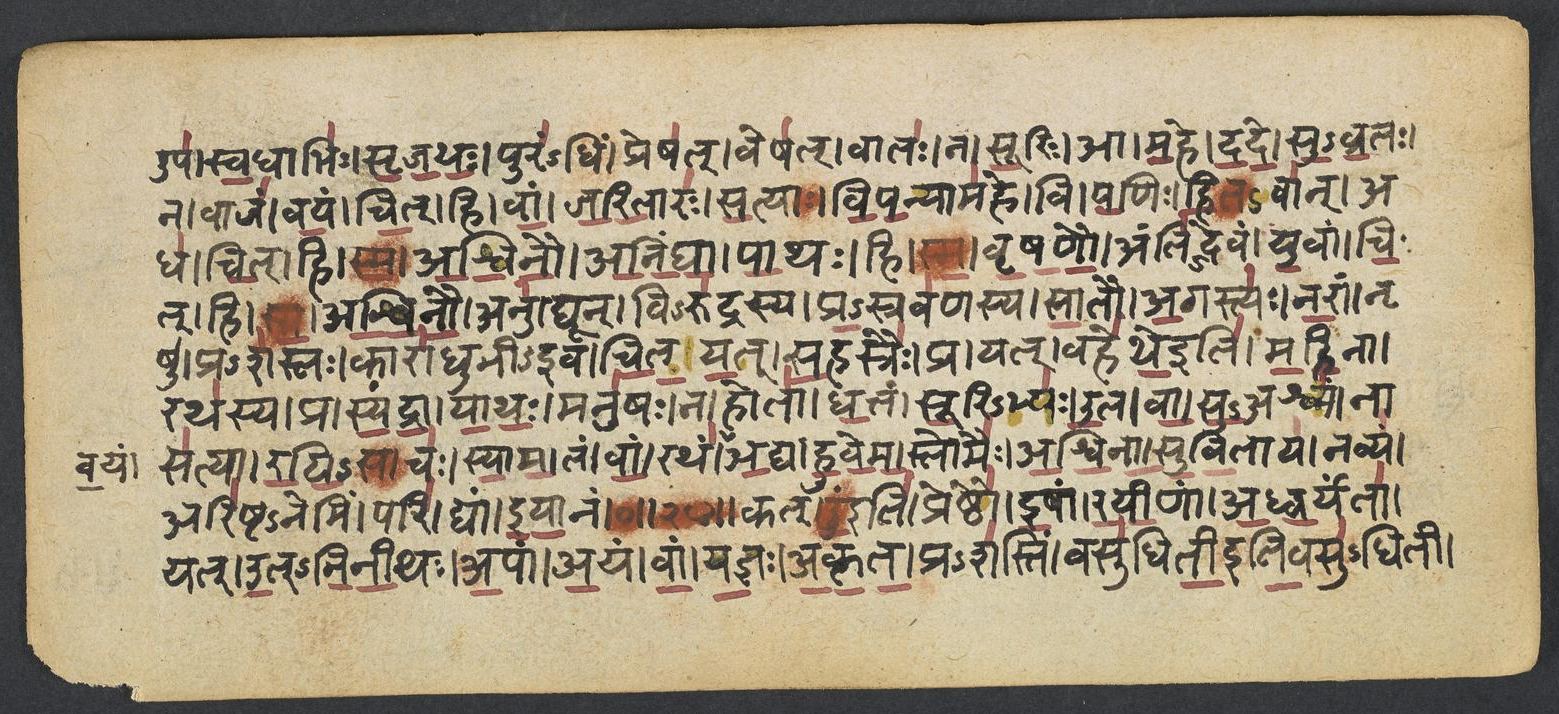
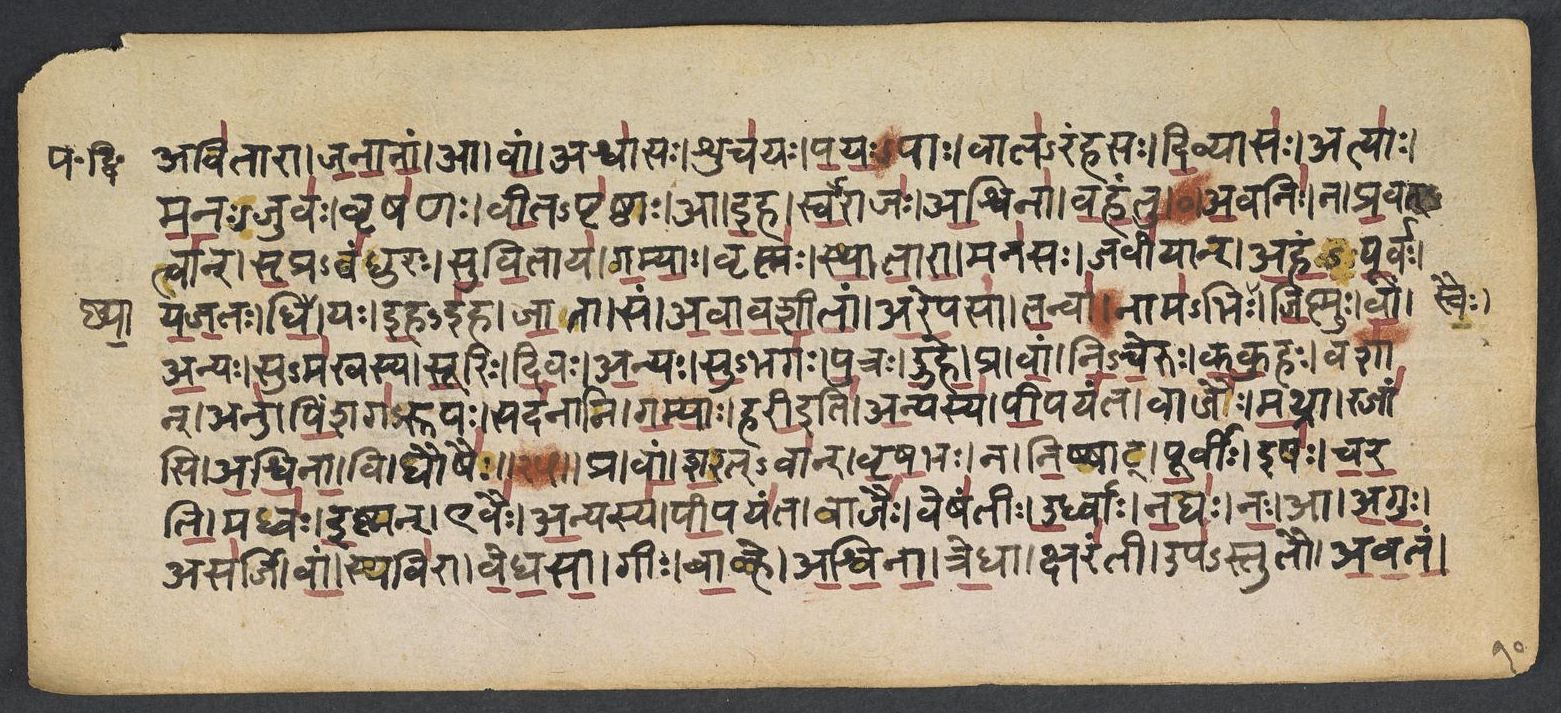
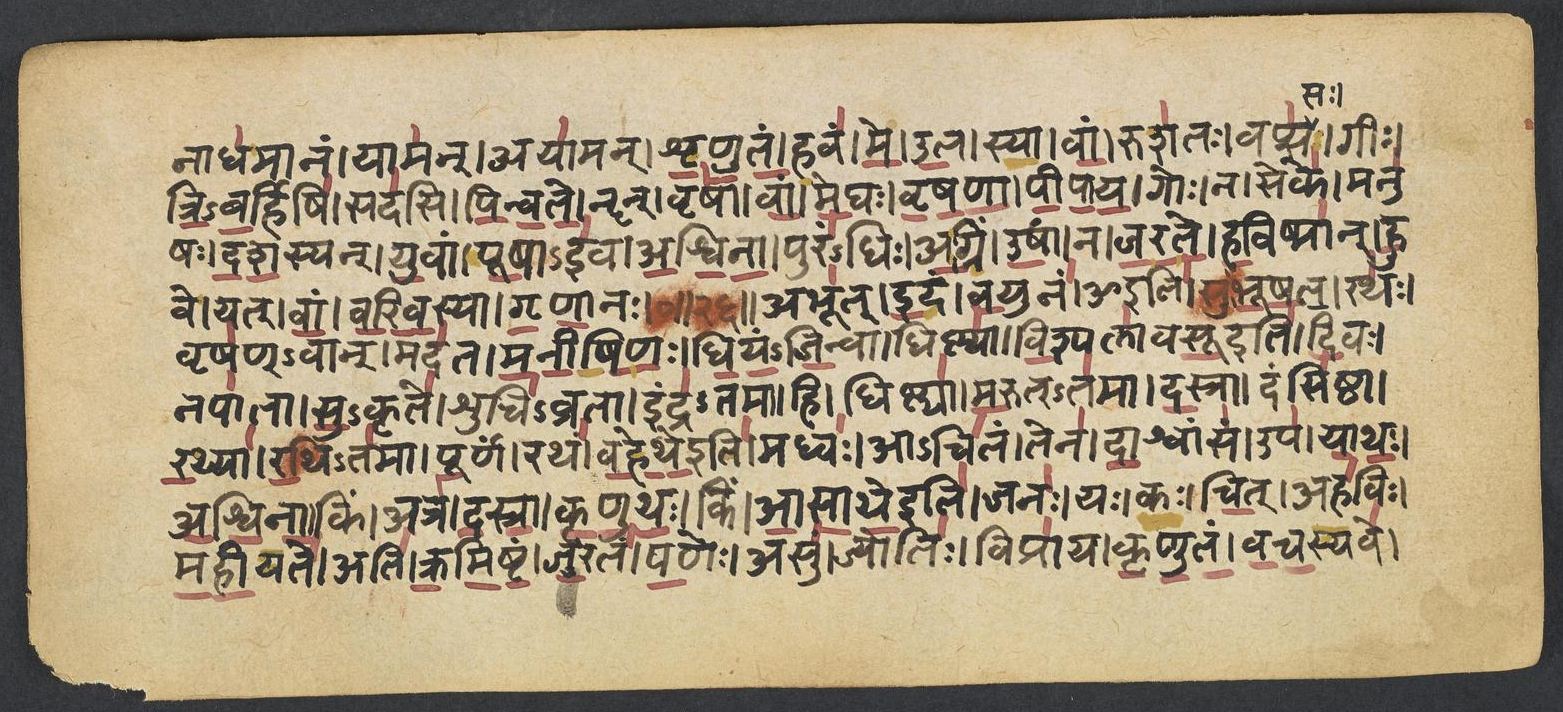
The manuscript shown is Penn Ms. Coll. 390 Item 41 (University of Pennsylvania), an undated paper manuscript of the padapāṭha (the word-by-word recitation text, in which every word is written separately and compounds are split) of the whole Ṛgveda in Devanāgarī, 884 leaves in fascicles, 7-9 lines to the page, accents in red; this hymn stands on fol. 141r-142r. Each section below gives the verses that end on one page; the page boundaries were read on the images (the opening words of every page), not counted out. Where the manuscript is a padapāṭha (the word-by-word recitation text), the section shows Aufrecht's continuous (saṃhitā) text first and, as the edition text, the padapāṭha of the same verses, which is the form written on the page.
How was this verified? (Provenance)
Where on the image
Penn Ms. Coll. 390 Item 41, fol. 141v (numbered 10v by the scribe) (OPenn image 143, upper leaf). Checked on the image: the Rigveda text on this page begins in RV 1.181.1 ‹avitārā janānām›. The next page with Rigveda text, fol. 142r (numbered 11r by the scribe), begins in RV 1.181.7 ‹nādhamānam yāman ayāman śṛṇutam›. Verses 1.181.1-6 end on this page; 1.181.1 begins on fol. 141r (numbered 10r by the scribe).
1kad u̱ preṣṭā̍v i̱ṣāṁ ra̍yī̱ṇām a̍dhva̱ryantā̱ yad u̍nninī̱tho a̱pām | a̱yaṁ vā̍ṁ ya̱jño a̍kṛta̱ praśa̍sti̱ṁ vasu̍dhitī̱ avi̍tārā janānām ||
2ā vā̱m aśvā̍sa̱ḥ śuca̍yaḥ paya̱spā vāta̍raṁhaso di̱vyāso̱ atyā̍ḥ | ma̱no̱juvo̱ vṛṣa̍ṇo vī̱tapṛ̍ṣṭhā̱ eha sva̱rājo̍ a̱śvinā̍ vahantu ||
3ā vā̱ṁ ratho̱ 'vani̱r na pra̱vatvā̍n sṛ̱prava̍ndhuraḥ suvi̱tāya̍ gamyāḥ | vṛṣṇa̍ḥ sthātārā̱ mana̍so̱ javī̍yān ahampū̱rvo ya̍ja̱to dhi̍ṣṇyā̱ yaḥ ||
4i̱heha̍ jā̱tā sam a̍vāvaśītām are̱pasā̍ ta̱nvā̱3̱̍ nāma̍bhi̱ḥ svaiḥ | ji̱ṣṇur vā̍m a̱nyaḥ suma̍khasya sū̱rir di̱vo a̱nyaḥ su̱bhaga̍ḥ pu̱tra ū̍he ||
5pra vā̍ṁ nice̱ruḥ ka̍ku̱ho vaśā̱m̐ anu̍ pi̱śaṅga̍rūpa̱ḥ sada̍nāni gamyāḥ | harī̍ a̱nyasya̍ pī̱paya̍nta̱ vājai̍r ma̱thrā rajā̍ṁsy aśvinā̱ vi ghoṣai̍ḥ ||
6pra vā̍ṁ śa̱radvā̍n vṛṣa̱bho na ni̱ṣṣāṭ pū̱rvīr iṣa̍ś carati̱ madhva̍ i̱ṣṇan | evai̍r a̱nyasya̍ pī̱paya̍nta̱ vājai̱r veṣa̍ntīr ū̱rdhvā na̱dyo̍ na̱ āgu̍ḥ ||
Compare: Padapāṭha (word-by-word text written in the manuscript; Sansknet e-text via GRETIL)
1kat | oṃ iti | preṣṭhau | iṣām | rayīṇām | adhvaryantā | yat | ut-ninīthaḥ | apām | ayam | vām | yajñaḥ | akṛta | pra-śaśtim | vasudhitī itivasu-dhitī | avitārā | janānām
2ā | vām | aśvāsaḥ | śucayaḥ | payaḥ-pāḥ | vāta-raṃhasaḥ | divyāsaḥ | atyāḥ | manaḥ-juvaḥ | vṛṣaṇaḥ | vīta-pṛṣṭhāḥ | ā | iha | sva-rājaḥ | aśvinā | vahantu
3ā | vām | rathaḥ | avaniḥ | na | pravatvān | sṛpra-vandhuraḥ | suvitāya | gamyāḥ | vṛṣṇaḥ | sthātārā | manasaḥ | javīyān | aham-pūrvaḥ | yajataḥ | dhiṣṇyā | yaḥ
4iha-iha | jātā | sam | avāvaśītām | arepasā | tanvā | nāma-bhiḥ | svaiḥ | jiṣṇuḥ | vām | anyaḥ | su-makhasya | sūriḥ | divaḥ | anyaḥ | su-bhagaḥ | putraḥ | ūhe
5pra | vām | ni-ceruḥ | kakuhaḥ | vaśān | anu | piśaṅga-rūpaḥ | sadanāni | gamyāḥ | harī | anyasya | pīpayanta | vājaiḥ | mathnāa | rajāṃsi | aśvinā | vi | ghoṣaiḥ
6pra | vām | śarat-vān | vṛṣabhaḥ | na | niṣṣāṭ | pūrvīḥ | iṣaḥ | carati | madhvaḥ | iṣṇan | evaiḥ | anyasya | pīpayanta | vājaiḥ | veṣantīḥ | ūrdhvāḥ | nadyaḥ | naḥ | ā | aguḥ
1WHAT, dearest Pair, is this in strength and riches that ye as Priests are bring from the waters? This sacrifice is your glorification, ye who protect mankind and give them treasures.
2May your pure steeds, rain-drinkers, bring you hither, swift as the tempest, your celestial coursers, Rapid as thought, with fair backs, full of vigour, resplendent in their native light, O Aṣvins.
3Your car is like a torrent rushing downward: may it come nigh, broad-seated, for our welfare,– Car holy, strong, that ever would be foremost, thought-swift, which ye, for whom we long, have mounted.
4Here sprung to life, they both have sung together, with bodies free from stain, with signs that mark them; One of you Prince of Sacrifice, the Victor, the other counts as Heaven's auspicious offspring.
5May your car-seat, down-gliding, golden-coloured, according to your wish approach our dwellings. Men shall feed full the bay steeds of the other, and, Aṣvins they with roars shall stir the regions.
6Forth comes your strong Bull like a cloud of autumn, sending abundant food of liquid sweetness. Let them feed with the other's ways and vigour: the upper streams have come and do us service.
Where on the image
Penn Ms. Coll. 390 Item 41, fol. 142r (numbered 11r by the scribe) (OPenn image 143, lower leaf). Checked on the image: the Rigveda text on this page begins in RV 1.181.7 ‹nādhamānam yāman ayāman śṛṇutam›. The next page with Rigveda text, fol. 142v (numbered 11v by the scribe), begins in RV 1.182.4 ‹jambhayatam abhitaḥ rāyataḥ śunaḥ›. Verses 1.181.7-9 end on this page; 1.181.7 begins on fol. 141v (numbered 10v by the scribe).
7asa̍rji vā̱ṁ sthavi̍rā vedhasā̱ gīr bā̱ḻhe a̍śvinā tre̱dhā kṣara̍ntī | upa̍stutāv avata̱ṁ nādha̍māna̱ṁ yāma̱nn ayā̍mañ chṛṇuta̱ṁ hava̍m me ||
8u̱ta syā vā̱ṁ ruśa̍to̱ vapsa̍so̱ gīs tri̍ba̱rhiṣi̱ sada̍si pinvate̱ nṝn | vṛṣā̍ vām me̱gho vṛ̍ṣaṇā pīpāya̱ gor na seke̱ manu̍ṣo daśa̱syan ||
9yu̱vām pū̱ṣevā̍śvinā̱ pura̍ṁdhir a̱gnim u̱ṣāṁ na ja̍rate ha̱viṣmā̍n | hu̱ve yad vā̍ṁ variva̱syā gṛ̍ṇā̱no vi̱dyāme̱ṣaṁ vṛ̱jana̍ṁ jī̱radā̍num ||
Compare: Padapāṭha (word-by-word text written in the manuscript; Sansknet e-text via GRETIL)
7asarji | vām | sthavirā | vedhasā | gīḥ | bāḷhe | aśvinā | tredhā | kṣarantī | upa-stutau | avatam | nādhamānam | yāman | ayāman | śṛṇutam | havam | me
8uta | syā | vām | ruśataḥ | vapsasaḥ | gīḥ | tri-barhiṣi | sadasi | pinvate | nṝn | vṛṣā | vām | meghaḥ | vṛṣaṇā | pīpāya | goḥ | na | seke | manuṣaḥ | daśasyan
9yuvām | pūṣāiva | aśvinā | puram-dhiḥ | agnim | uṣām | na | jarate | haviṣmān | huve | yat | vām | varivasyā | gṛṇānaḥ | vidyāma | iṣam | vṛjanam | jīra-dānum
7Your constant song hath been sent forth, Disposers! that flows threefold in mighty strength, O Aṣvins. Thus lauded, give the suppliant protection moving or resting hear mine invocation.
8This song of bright contents for you is swelling in the men's hall where three-fold grass is ready. Your strong rain-cloud, ye Mighty Ones, hath swollen, honouring men as 'twere with milk's outpouring.
9The prudent worshipper, like Pûshan, Aṣvins! praises you as he praises Dawn and Agni, When, singing with devotion, he invokes you. May we find strengthening food in full abundance.
Notes
- Sanskrit: Aufrecht's edition (1877) with the Vedic accents, as entered by van Nooten and Holland (GRETIL).
- English: Ralph T. H. Griffith, The Hymns of the Rigveda (1889-1892; 2nd ed. 1896-1897), from the VedaWeb digital text; OCR slips in that text were corrected against the printed 2nd edition (data/sources/rigveda/griffith_errata.json).
- Padapāṭha (edition text): Sansknet e-text via GRETIL (CC BY-NC-SA 4.0).
Cite
Sources
- Source: Penn Ms. Coll. 390 Item 41 (undated (catalogued with Penn's 18th-19th c. Vedic manuscripts)), OPenn, Public Domain Mark + Aufrecht's accented text (GRETIL) + Griffith's English (VedaWeb) (holding institution)
- Critical edition: Aufrecht (1877), accented e-text via GRETIL
← previous · → next · v cycle view · l back to library