Rigveda 1.33: To Indra
Introduction
Rigveda 1.33 is a hymn of 15 verses addressed to Indra. It stands in book (maṇḍala) 1, a collection of hymns by many families of poets. The Rigveda is the oldest collection of Sanskrit hymns, composed in the second half of the second millennium BCE and handed down orally for many centuries before it was written down.
The manuscript shown is Penn Ms. Coll. 390 Item 41 (University of Pennsylvania), an undated paper manuscript of the padapāṭha (the word-by-word recitation text, in which every word is written separately and compounds are split) of the whole Ṛgveda in Devanāgarī, 884 leaves in fascicles, 7-9 lines to the page, accents in red; this hymn stands on fol. 21r-22v. Each section below gives the verses that end on one page; the page boundaries were read on the images (the opening words of every page), not counted out. Where the manuscript is a padapāṭha (the word-by-word recitation text), the section shows Aufrecht's continuous (saṃhitā) text first and, as the edition text, the padapāṭha of the same verses, which is the form written on the page.
How was this verified? (Provenance)
Where on the image
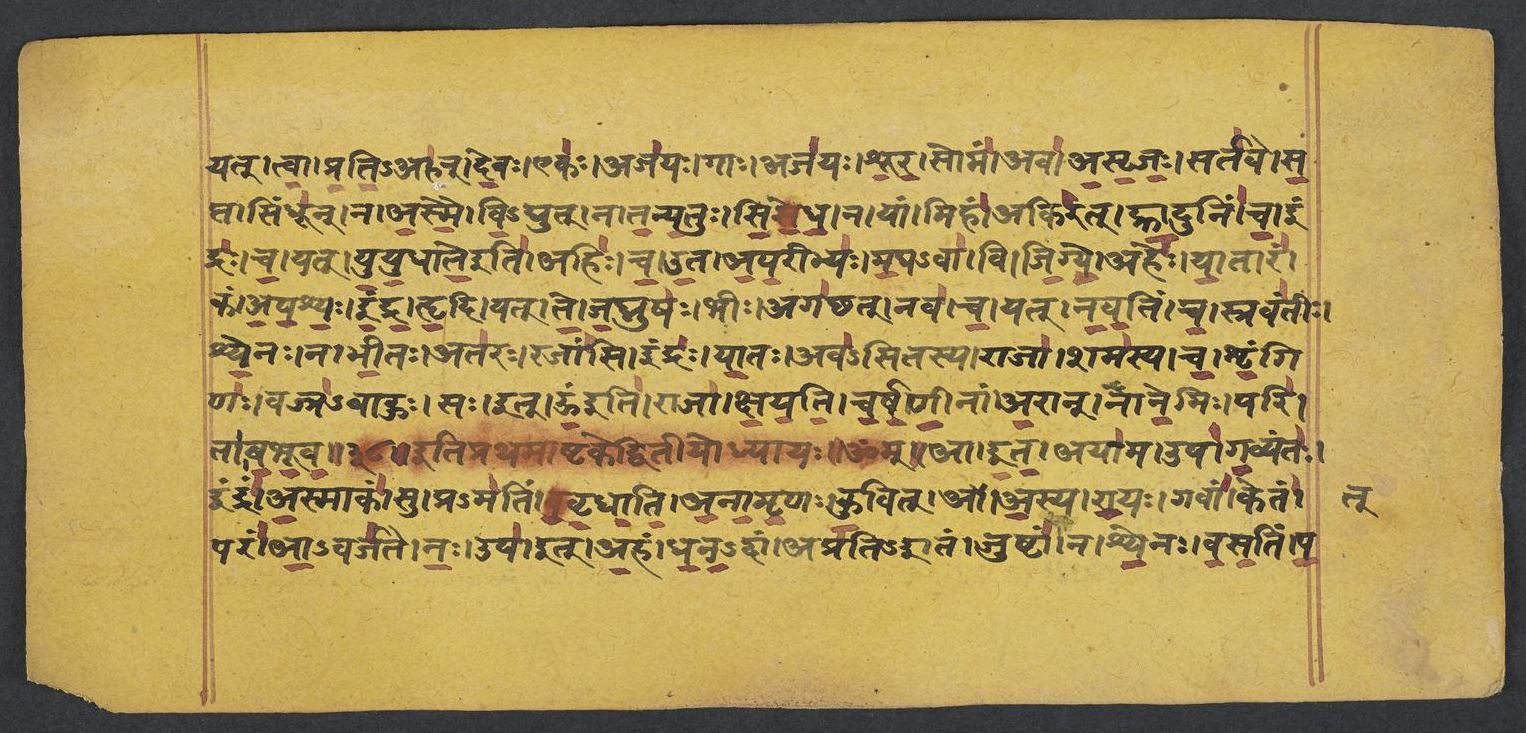
Penn Ms. Coll. 390 Item 41, fol. 21r (OPenn image 22, lower leaf). Checked on the image: the Rigveda text on this page begins in RV 1.32.12 ‹yat tvā prati-ahan devaḥ›. The next page with Rigveda text, fol. 21v, begins in RV 1.33.2 ‹-patāmi indram namasyan upa-mebhiḥ›. Verse 1.33.1 ends on this page.
1etāyā̱mopa̍ ga̱vyanta̱ indra̍m a̱smāka̱ṁ su prama̍tiṁ vāvṛdhāti | a̱nā̱mṛ̱ṇaḥ ku̱vid ād a̱sya rā̱yo gavā̱ṁ keta̱m para̍m ā̱varja̍te naḥ ||
Compare: Padapāṭha (word-by-word text written in the manuscript; Sansknet e-text via GRETIL)
1ā | ita | ayāma | upa | gavyantaḥ | indram | asmākam | su | pra-matim | vavṛdhāti | anāmṛṇaḥ | kuvit | āt | asya | rāyaḥ | gavām | ketam | param | āvarjate | naḥ
1Come, fain for booty let us seek to Indra: yet more shall he increase his care that guides us. Will not the Indestructible endow us with perfect knowledge of this wealth, of cattle?
Where on the image
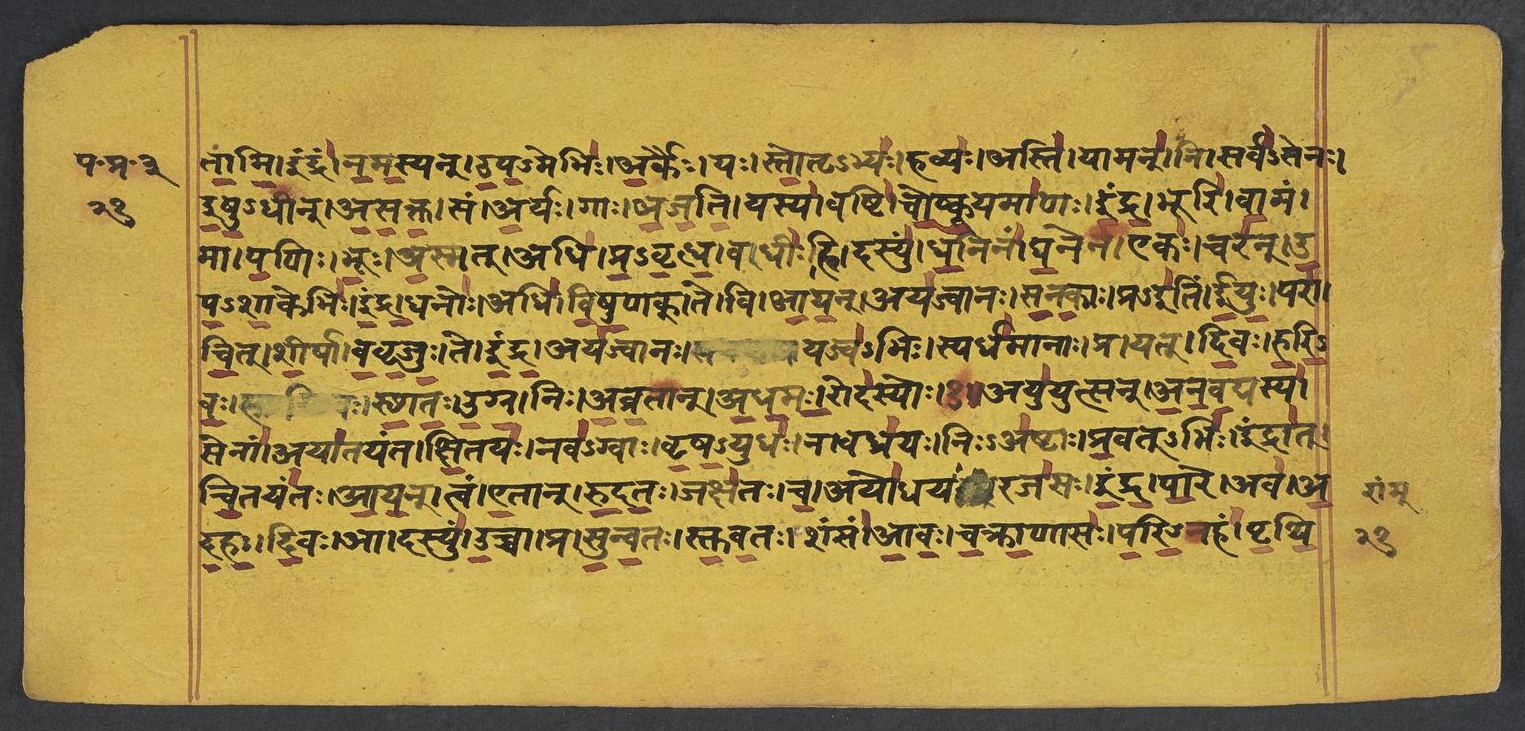
Penn Ms. Coll. 390 Item 41, fol. 21v (OPenn image 23, upper leaf). Checked on the image: the Rigveda text on this page begins in RV 1.33.2 ‹-patāmi indram namasyan upa-mebhiḥ›. The next page with Rigveda text, fol. 22r, begins in RV 1.33.8 ‹-pṛthivyāḥ hiraṇyena maṇinā śumbhamānāḥ›. Verses 1.33.2-7 end on this page; 1.33.2 begins on fol. 21r.
2uped a̱haṁ dha̍na̱dām apra̍tīta̱ṁ juṣṭā̱ṁ na śye̱no va̍sa̱tim pa̍tāmi | indra̍ṁ nama̱syann u̍pa̱mebhi̍r a̱rkair yaḥ sto̱tṛbhyo̱ havyo̱ asti̱ yāma̍n ||
3ni sarva̍sena iṣu̱dhīm̐r a̍sakta̱ sam a̱ryo gā a̍jati̱ yasya̱ vaṣṭi̍ | co̱ṣkū̱yamā̍ṇa indra̱ bhūri̍ vā̱mam mā pa̱ṇir bhū̍r a̱smad adhi̍ pravṛddha ||
4vadhī̱r hi dasyu̍ṁ dha̱nina̍ṁ gha̱nena̱m̐ eka̱ś cara̍nn upaśā̱kebhi̍r indra | dhano̱r adhi̍ viṣu̱ṇak te vy ā̍ya̱nn aya̍jvānaḥ sana̱kāḥ preti̍m īyuḥ ||
5parā̍ cic chī̱rṣā va̍vṛju̱s ta i̱ndrāya̍jvāno̱ yajva̍bhi̱ḥ spardha̍mānāḥ | pra yad di̱vo ha̍rivaḥ sthātar ugra̱ nir a̍vra̱tām̐ a̍dhamo̱ roda̍syoḥ ||
6ayu̍yutsann anava̱dyasya̱ senā̱m ayā̍tayanta kṣi̱tayo̱ nava̍gvāḥ | vṛ̱ṣā̱yudho̱ na vadhra̍yo̱ nira̍ṣṭāḥ pra̱vadbhi̱r indrā̍c ci̱taya̍nta āyan ||
7tvam e̱tān ru̍da̱to jakṣa̍ta̱ś cāyo̍dhayo̱ raja̍sa indra pā̱re | avā̍daho di̱va ā dasyu̍m u̱ccā pra su̍nva̱taḥ stu̍va̱taḥ śaṁsa̍m āvaḥ ||
Compare: Padapāṭha (word-by-word text written in the manuscript; Sansknet e-text via GRETIL)
2upa | it | aham | dhana-dām | aprati-itam | juṣṭām | na | śyenaḥ | vasatim | patāmi | indram | namasyan | upa-mebhiḥ | arkaiḥ | yaḥ | stotṛ-bhyaḥ | havyaḥ | asti | yāman
3ni | sarva-senaḥ | iṣu-dhīn | asakta | sam | aryaḥ | gāḥ | ajati | yasya | vaṣṭi | coṣkūyamāṇaḥ | indra | bhūri | vāmam | mā | paṇiḥ | bhūḥ | asmat | adhi | pra-vṛddha
4vadhīḥ | hi | dasyum | dhaninam | ghanena | ekaḥ | caran | upa-śākebhiḥ | indra | dhanoḥ | adhi | viṣuṇak | te | vi | āyan | ayajvānaḥ | sanakāḥ | pra-itim | īyuḥ
5parā | cit | śīrṣā | vavṛjuḥ | te | indra | ayajvānaḥ | yajva-bhiḥ | spardhamānāḥ | pra | yat | divaḥ | hari-vaḥ | sthātaḥ | ugra | niḥ | avratān | adhamaḥ | rodasyoḥ
6ayuyutsan | anavadyasya | senām | ayātayanta | kṣitayaḥ | nava-gvāḥ | vṛṣa-yudhaḥ | na | vadhrayaḥ | niḥ-aṣṭāḥ | pra-vat-bhiḥ | indrāt | citayantaḥ | āyan
7tvam | etān | rudataḥ | jakṣataḥ | ca | ayodhayaḥ | rajasaḥ | indra | pāre | ava | adahaḥ | divaḥ | ā | dasyum | uccā | pra | sunvataḥ | stuvataḥ | śaṃsam | āvaḥ
2I fly to him invisible Wealth-giver as flies the falcon to his cherished eyrie, With fairest hymns of praise adoring Indra, whom those who laud him must invoke in battle.
3Mid all his host, he bindeth on the quiver he driveth cattle from what foe he pleaseth: Gathering up great store of riches, Indra. be thou no trafficker with us, most mighty.
4Thou slewest with thy bolt the wealthy Dasyu, alone, yet going with thy helpers, Indra! Far from the floor of heaven in all directions, the ancient riteless ones fled to destruction.
5Fighting with pious worshippers, the riteless turned and fled, Indra! with averted faces. When thou, fierce Lord of the Bay Steeds, the Stayer, blewest from earth and heaven and sky the godless.
6They met in fight the army of the blameless. then the Navagvas put forth all their power. They, like emasculates with men contending, fled, conscious, by steep paths from Indra, scattered.
7Whether they weep or laugh, thou hast o'erthrown them, O Indra, on the sky's extremest limit. The Dasyu thou hast burned from heaven, and welcomed the prayer of him who pours the juice and lauds thee.
Where on the image
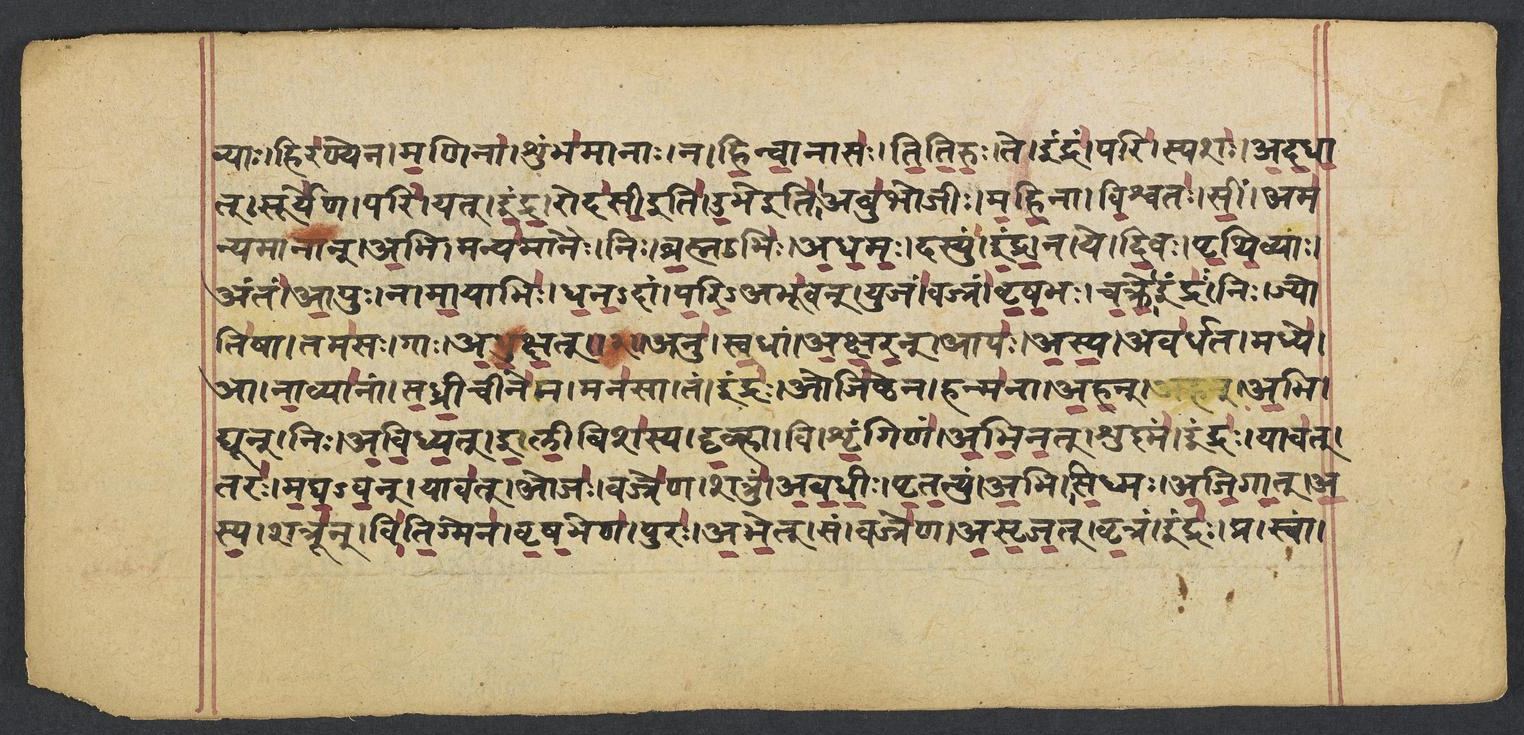
Penn Ms. Coll. 390 Item 41, fol. 22r (OPenn image 23, lower leaf). Checked on the image: the Rigveda text on this page begins in RV 1.33.8 ‹-pṛthivyāḥ hiraṇyena maṇinā śumbhamānāḥ›. The next page with Rigveda text, fol. 22v, begins in RV 1.33.13 ‹matim atirat śāśadānaḥ›. Verses 1.33.8-12 end on this page; 1.33.8 begins on fol. 21v.
8ca̱krā̱ṇāsa̍ḥ parī̱ṇaha̍m pṛthi̱vyā hira̍ṇyena ma̱ṇinā̱ śumbha̍mānāḥ | na hi̍nvā̱nāsa̍s titiru̱s ta indra̱m pari̱ spaśo̍ adadhā̱t sūrye̍ṇa ||
9pari̱ yad i̍ndra̱ roda̍sī u̱bhe abu̍bhojīr mahi̱nā vi̱śvata̍ḥ sīm | ama̍nyamānām̐ a̱bhi manya̍mānai̱r nir bra̱hmabhi̍r adhamo̱ dasyu̍m indra ||
10na ye di̱vaḥ pṛ̍thi̱vyā anta̍m ā̱pur na mā̱yābhi̍r dhana̱dām pa̱ryabhū̍van | yuja̱ṁ vajra̍ṁ vṛṣa̱bhaś ca̍kra̱ indro̱ nir jyoti̍ṣā̱ tama̍so̱ gā a̍dukṣat ||
11anu̍ sva̱dhām a̍kṣara̱nn āpo̍ a̱syāva̍rdhata̱ madhya̱ ā nā̱vyā̍nām | sa̱dhrī̱cīne̍na̱ mana̍sā̱ tam indra̱ oji̍ṣṭhena̱ hanma̍nāhann a̱bhi dyūn ||
12ny ā̍vidhyad ilī̱biśa̍sya dṛ̱ḻhā vi śṛ̱ṅgiṇa̍m abhina̱c chuṣṇa̱m indra̍ḥ | yāva̱t taro̍ maghava̱n yāva̱d ojo̱ vajre̍ṇa̱ śatru̍m avadhīḥ pṛta̱nyum ||
Compare: Padapāṭha (word-by-word text written in the manuscript; Sansknet e-text via GRETIL)
8cakāṇāsaḥ | pari-naham | pṛthivyāḥ | hiraṇyena | maṇinā | śumbhamānāḥ | na | hinvānāsaḥ | titiruḥ | te | indram | pari | spaśaḥ | adadhāt | sūryeṇa
9pari | yat | indra | rodasī iti | ubhe iti | abubhojīḥ | mahinā | viśvataḥ | sīm | amanyamānān | abhi | manyamānaiḥ | niḥ | brahma-bhiḥ | adhamaḥ | dasyum | indra
10na | ye | divaḥ | pṛthivyāḥ | antam | āpuḥ | na | māyābhiḥ | dhana-dām | pari-abhūvan | yujam | vajram | vṛṣabhaḥ | cakre | indraḥ | niḥ | jyotiṣā | tamasaḥ | gāḥ | adhukṣat
11anu | svadhām | akṣaran | āpaḥ | asya | avardhata | madhye | ā | nāvyānām | sadhrīcīnena | manasā | tam | indraḥ | ojiṣṭhena | hanmanā | ahan | abhi | dyūn
12ni | avidhyat | ilībiśasya | dṛḷhā | vi | śṛṅgiṇam | abhinat | śuṣṇam | indraḥ | yāvat | taraḥ | magha-van | yāvat | ojaḥ | vajreṇa | śatrum | avadhīḥ | pṛtanyum
8Adorned with their array of gold and jewels, they o'er the earth a covering veil extended. Although they hastened, they o'ercame not Indra: their spies he compassed with the Sun of morning.
9As thou enjoyest heaven and earth, O Indra, on every side surrounded with thy greatness, So thou with priests hast blown away the Dasyu, and those who worship not with those who worship.
10They who pervaded earth's extremest limit subdued not with their charms the Wealth-bestower: Indra, the Bull, made his ally the thunder, and with its light milked cows from out the darkness.
11The waters flowed according to their nature; he raid the navigable streams waxed mighty. Then Indra, with his spirit concentrated, smote him for ever with his strongest weapon.
12Indra broke through Ilîbiṣa's strong castles, and Ṣushṇa with his horn he cut to pieces: Thou, Maghavan, for all his might and swiftness, slewest thy fighting foeman with thy thunder
Where on the image
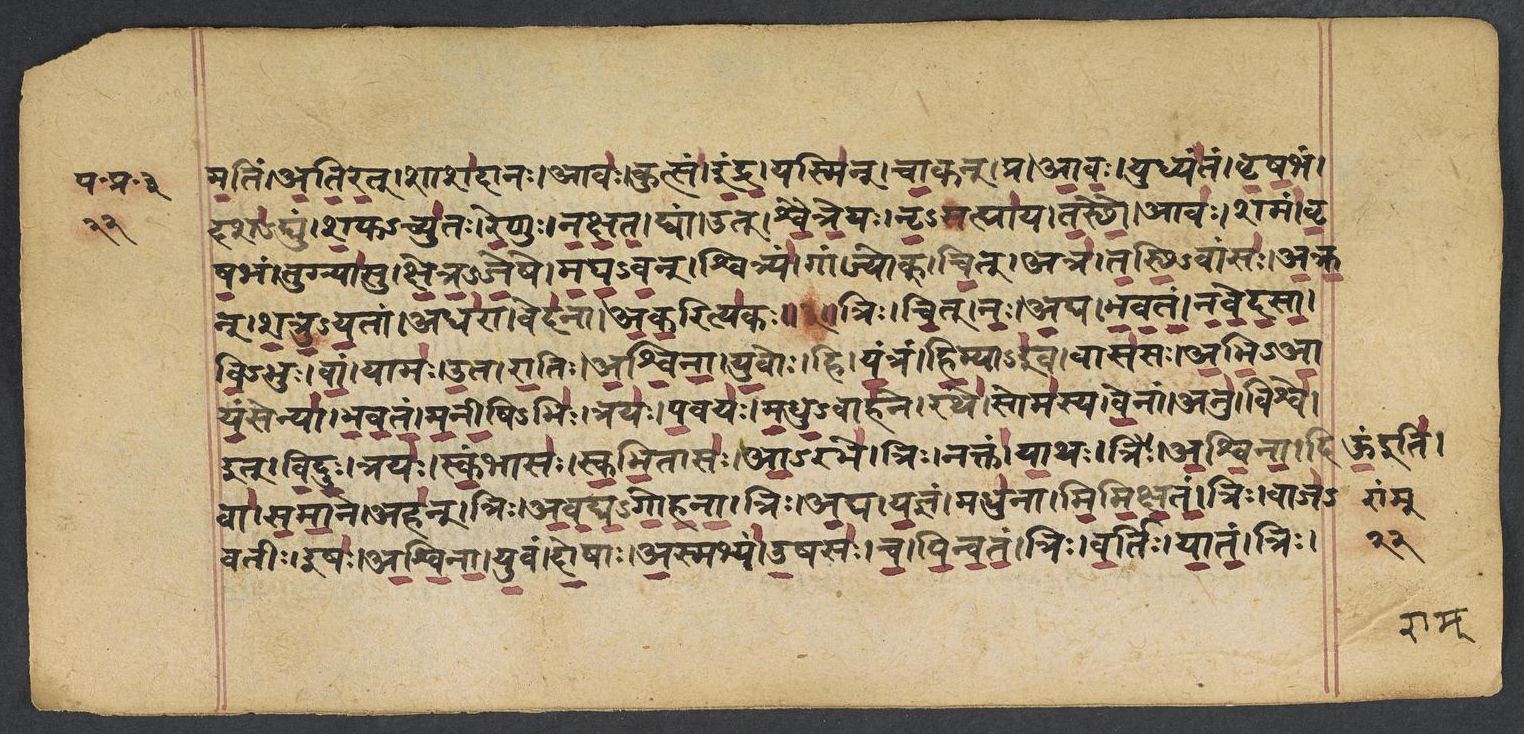
Penn Ms. Coll. 390 Item 41, fol. 22v (OPenn image 24, upper leaf). Checked on the image: the Rigveda text on this page begins in RV 1.33.13 ‹matim atirat śāśadānaḥ›. The next page with Rigveda text, fol. 23r, begins in RV 1.34.4 ‹anu-vrate jane triḥ supra-avye›. Verses 1.33.13-15 end on this page; 1.33.13 begins on fol. 22r.
13a̱bhi si̱dhmo a̍jigād asya̱ śatrū̱n vi ti̱gmena̍ vṛṣa̱bheṇā̱ puro̍ 'bhet | saṁ vajre̍ṇāsṛjad vṛ̱tram indra̱ḥ pra svām ma̱tim a̍tira̱c chāśa̍dānaḥ ||
14āva̱ḥ kutsa̍m indra̱ yasmi̍ñ cā̱kan prāvo̱ yudhya̍ntaṁ vṛṣa̱bhaṁ daśa̍dyum | śa̱phacyu̍to re̱ṇur na̍kṣata̱ dyām uc chvai̍tre̱yo nṛ̱ṣāhyā̍ya tasthau ||
15āva̱ḥ śama̍ṁ vṛṣa̱bhaṁ tugryā̍su kṣetraje̱ṣe ma̍ghava̱ñ chvitrya̱ṁ gām | jyok ci̱d atra̍ tasthi̱vāṁso̍ akrañ chatrūya̱tām adha̍rā̱ veda̍nākaḥ ||
Compare: Padapāṭha (word-by-word text written in the manuscript; Sansknet e-text via GRETIL)
13abhi | sidhmaḥ | ajigāt | asya | śatrūn | vi | tigmena | vṛṣabheṇa | puraḥ | abhet | sam | vajreṇa | asṛjat | vṛtram | indraḥ | pra | svām | matim | atirat | śāśadānaḥ
14āvaḥ | kutsam | indra | yasmin | cākan | pra | āvaḥ | yudhyantam | vṛṣabham | daśa-dyum | śapha-cyutaḥ | reṇuḥ | nakṣata | dyām | ut | śvaitreyaḥ | nṛ-sahyāya | tasthau
15āvaḥ | śamam | vṛṣabham | tugryāsu | kṣetra-jeṣe | magha-van | śvitryam | gām | jyok | cit | atra | tasthi-vāṃsaḥ | akran | śatru-yatām | adharā | vedanā | akar ity akaḥ
13Fierce on his enemies fell Indra's weapon: with. his sharp bull he rent their forts in pieces. He with his thunderbolt dealt blows on Vr̥itra; and conquered, executing all his purpose.
14Indra, thou helpest Kutsa whom thou lovedst, and guardedst brave Daṣadyu when he battled, The dust of trampling horses rose to heaven, and Ṣvitrâ's son stood up again for conquest.
15Ṣvitrâ's mild steer, O Maghavan thou helpest in combat for the land, mid Tugra's houses. Long stood they there before the task was ended: thou wast the master of the foemen's treasure.
Notes
- Sanskrit: Aufrecht's edition (1877) with the Vedic accents, as entered by van Nooten and Holland (GRETIL).
- English: Ralph T. H. Griffith, The Hymns of the Rigveda (1889-1892; 2nd ed. 1896-1897), from the VedaWeb digital text; OCR slips in that text were corrected against the printed 2nd edition (data/sources/rigveda/griffith_errata.json).
- Padapāṭha (edition text): Sansknet e-text via GRETIL (CC BY-NC-SA 4.0).
Cite
Sources
- Source: Penn Ms. Coll. 390 Item 41 (undated (catalogued with Penn's 18th-19th c. Vedic manuscripts)), OPenn, Public Domain Mark + Aufrecht's accented text (GRETIL) + Griffith's English (VedaWeb) (holding institution)
- Critical edition: Aufrecht (1877), accented e-text via GRETIL
← previous · → next · v cycle view · l back to library