Rigveda 1.32: Indra slays Vritra
Introduction
Rigveda 1.32 is a hymn of 15 verses addressed to Indra. It stands in book (maṇḍala) 1, a collection of hymns by many families of poets. The Rigveda is the oldest collection of Sanskrit hymns, composed in the second half of the second millennium BCE and handed down orally for many centuries before it was written down.
The manuscript shown is Penn Ms. Coll. 390 Item 41 (University of Pennsylvania), an undated paper manuscript of the padapāṭha (the word-by-word recitation text, in which every word is written separately and compounds are split) of the whole Ṛgveda in Devanāgarī, 884 leaves in fascicles, 7-9 lines to the page, accents in red; this hymn stands on fol. 20r-21r. Each section below gives the verses that end on one page; the page boundaries were read on the images (the opening words of every page), not counted out. Where the manuscript is a padapāṭha (the word-by-word recitation text), the section shows Aufrecht's continuous (saṃhitā) text first and, as the edition text, the padapāṭha of the same verses, which is the form written on the page.
How was this verified? (Provenance)
Where on the image
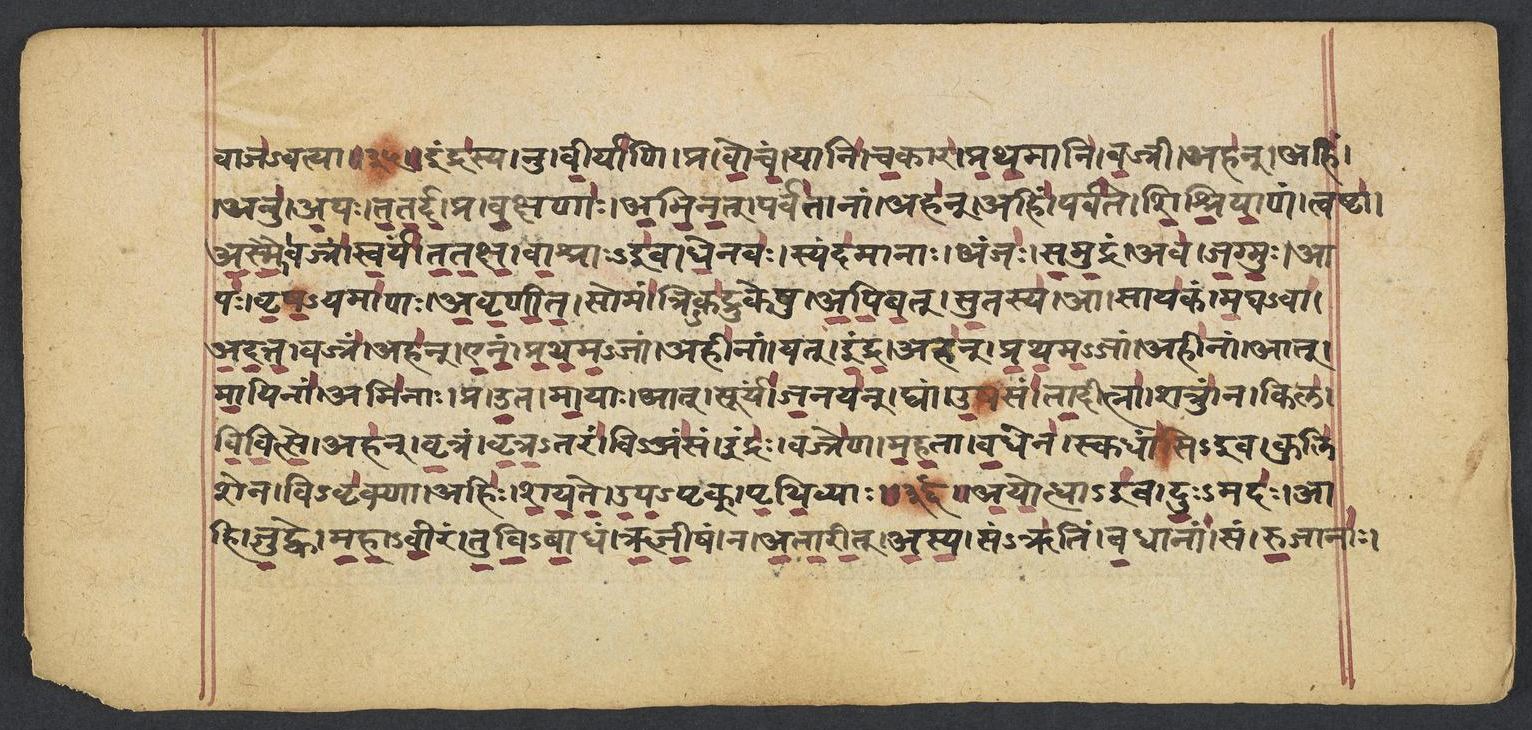
Penn Ms. Coll. 390 Item 41, fol. 20r (OPenn image 21, lower leaf). Checked on the image: the Rigveda text on this page begins in RV 1.31.18 ‹-su-matyā vāja-vatyā›. The next page with Rigveda text, fol. 20v, begins in RV 1.32.6 ‹pipiṣe indra-śatruḥ›. Verses 1.32.1-5 end on this page.
1indra̍sya̱ nu vī̱ryā̍ṇi̱ pra vo̍ca̱ṁ yāni̍ ca̱kāra̍ pratha̱māni̍ va̱jrī | aha̱nn ahi̱m anv a̱pas ta̍tarda̱ pra va̱kṣaṇā̍ abhina̱t parva̍tānām ||
2aha̱nn ahi̱m parva̍te śiśriyā̱ṇaṁ tvaṣṭā̍smai̱ vajra̍ṁ sva̱rya̍ṁ tatakṣa | vā̱śrā i̍va dhe̱nava̱ḥ syanda̍mānā̱ añja̍ḥ samu̱dram ava̍ jagmu̱r āpa̍ḥ ||
3vṛ̱ṣā̱yamā̍ṇo 'vṛṇīta̱ soma̱ṁ trika̍drukeṣv apibat su̱tasya̍ | ā sāya̍kam ma̱ghavā̍datta̱ vajra̱m aha̍nn enam prathama̱jām ahī̍nām ||
4yad i̱ndrāha̍n prathama̱jām ahī̍nā̱m ān mā̱yinā̱m ami̍nā̱ḥ prota mā̱yāḥ | āt sūrya̍ṁ ja̱naya̱n dyām u̱ṣāsa̍ṁ tā̱dītnā̱ śatru̱ṁ na kilā̍ vivitse ||
5aha̍n vṛ̱traṁ vṛ̍tra̱tara̱ṁ vya̍ṁsa̱m indro̱ vajre̍ṇa maha̱tā va̱dhena̍ | skandhā̍ṁsīva̱ kuli̍śenā̱ vivṛ̱kṇāhi̍ḥ śayata upa̱pṛk pṛ̍thi̱vyāḥ ||
Compare: Padapāṭha (word-by-word text written in the manuscript; Sansknet e-text via GRETIL)
1indrasya | nu | vīryāṇi | pra | vocam | yāni | cakāra | prathamāni | vajrī | ahan | ahim | anu | apaḥ | tatarda | pra | vakṣaṇāāḥ | abhinat | parvatānām
2ahan | ahim | parvate | śiśriyāṇam | tvaṣṭā | asmai | vajram | svaryam | tatakṣa | vāśrāḥ-iva | dhenavaḥ | syandamānāḥ | añjaḥ | samudram | ava | jagmuḥ | āpaḥ
3vṛṣa-yamāṇaḥ | avṛṇīta | somam | tri-kadrukeṣu | apibat | sutasya | ā | sāyakam | maghavā | adatta | vajram | ahan | enam | prathama-jām | ahīnām
4yat | indra | ahan | prathama-jām | ahīnām | āt | māyinām | amināḥ | pra | uta | māyāḥ | āt | sūryam | janayan | dyām | uṣāsam | tādītnā | śatrum | na | kilā | vivitse
5ahan | vṛtram | vṛtra-taram | vi-aṃsam | indraḥ | vajreṇa | mahatā | vadhena | skandhāṃsi-iva | kuliśena | vi-vṛkṇā | ahiḥ | śayate | upa-pṛk | pṛthivyāḥ
1I WILL declare the manly deeds of Indra, the first that he achieved, the Thunder-wielder. He slew the Dragon, then disclosed the waters, and cleft the channels of the mountain torrents.
2He slew the Dragon lying on the mountain: his heavenly bolt of thunder Tvashṭar fashioned. Like lowing kine in rapid flow descending the waters glided downward to the ocean.
3Impetuous as a bull, he chose the Soma and in three sacred beakers drank the juices. Maghavan grasped the thunder for his weapon, and smote to death this firstborn of the dragons.
4When, Indra, thou hadst slain the dragon's firstborn, and overcome the charms of the enchanters, Then, giving life to Sun and Dawn and Heaven, thou foundest not one foe to stand against thee.
5Indra with his own great and deadly thunder smote into pieces Vr̥itra, worst of Vr̥itras. As trunks of trees, what time the axe hath felled them, low on the earth so lies the prostrate Dragon.
Where on the image
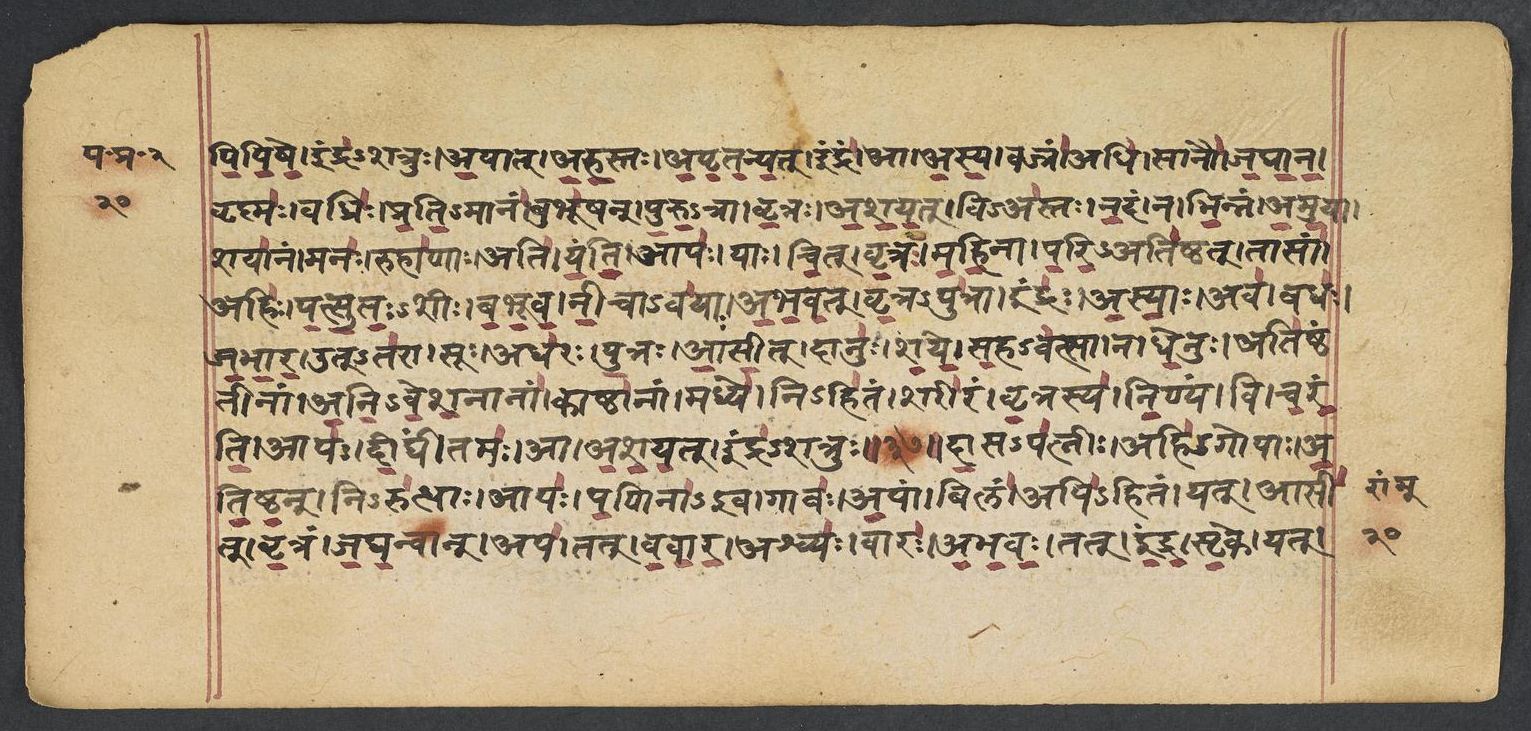
Penn Ms. Coll. 390 Item 41, fol. 20v (OPenn image 22, upper leaf). Checked on the image: the Rigveda text on this page begins in RV 1.32.6 ‹pipiṣe indra-śatruḥ›. The next page with Rigveda text, fol. 21r, begins in RV 1.32.12 ‹yat tvā prati-ahan devaḥ›. Verses 1.32.6-11 end on this page; 1.32.6 begins on fol. 20r.
6a̱yo̱ddheva̍ du̱rmada̱ ā hi ju̱hve ma̍hāvī̱raṁ tu̍vibā̱dham ṛ̍jī̱ṣam | nātā̍rīd asya̱ samṛ̍tiṁ va̱dhānā̱ṁ saṁ ru̱jānā̍ḥ pipiṣa̱ indra̍śatruḥ ||
7a̱pād a̍ha̱sto a̍pṛtanya̱d indra̱m āsya̱ vajra̱m adhi̱ sānau̍ jaghāna | vṛṣṇo̱ vadhri̍ḥ prati̱māna̱m bubhū̍ṣan puru̱trā vṛ̱tro a̍śaya̱d vya̍staḥ ||
8na̱daṁ na bhi̱nnam a̍mu̱yā śayā̍na̱m mano̱ ruhā̍ṇā̱ ati̍ ya̱nty āpa̍ḥ | yāś ci̍d vṛ̱tro ma̍hi̱nā pa̱ryati̍ṣṭha̱t tāsā̱m ahi̍ḥ patsuta̱ḥśīr ba̍bhūva ||
9nī̱cāva̍yā abhavad vṛ̱trapu̱trendro̍ asyā̱ ava̱ vadha̍r jabhāra | utta̍rā̱ sūr adha̍raḥ pu̱tra ā̍sī̱d dānu̍ḥ śaye sa̱hava̍tsā̱ na dhe̱nuḥ ||
10ati̍ṣṭhantīnām aniveśa̱nānā̱ṁ kāṣṭhā̍nā̱m madhye̱ nihi̍ta̱ṁ śarī̍ram | vṛ̱trasya̍ ni̱ṇyaṁ vi ca̍ra̱nty āpo̍ dī̱rghaṁ tama̱ āśa̍ya̱d indra̍śatruḥ ||
11dā̱sapa̍tnī̱r ahi̍gopā atiṣṭha̱n niru̍ddhā̱ āpa̍ḥ pa̱ṇine̍va̱ gāva̍ḥ | a̱pām bila̱m api̍hita̱ṁ yad āsī̍d vṛ̱traṁ ja̍gha̱nvām̐ apa̱ tad va̍vāra ||
Compare: Padapāṭha (word-by-word text written in the manuscript; Sansknet e-text via GRETIL)
6ayoddhāiva | duḥ-madaḥ | ā | hi | juhve | mahāvīram | tuvi-bādham | ṛjīṣam | na | tārīt | asya | sam-ṛtim | vadhānām | sam | rujānāḥ | pipiṣe | indra-śatruḥ
7apāt | ahastaḥ | apṛtanyat | indram | ā | asya | vajram | adhi | sānau | jaghāna | vṛṣṇaḥ | vadhriḥ | prati-mānam | bubhūṣan | puru-trā | vṛtraḥ | aśayat | vi-astaḥ
8nadam | na | bhinnam | amuyā | śayānam | manaḥ | ruhāṇāḥ | ati | yanti | āpaḥ | yāḥ | cit | vṛtraḥ | mahinā | pari-atiṣṭhat | tāsām | ahiḥ | patsutaḥśīḥ | babhūva
9nīcāvayāḥ | abhavat | vṛtra-putrā | indraḥ | asyāḥ | ava | vadhaḥ | jabhāra | ut-tarā | sūḥ | adharaḥ | putraḥ | āsīt | dānuḥ | śaye | saha-vatsā | na | dhenuḥ
10atiṣṭhantīnām | ani-veśanānān | kāṣṭhānām | madhye | ni-hitam | śarīram | vṛtrasya | niṇyam | vi | caranti | āpaḥ | dīrgham | tamaḥ | ā | aśayat | indra-śatruḥ
11dāsa-patnīḥ | ahi-gopāḥ | atiṣṭhan | ni-ruddhāḥ | āpaḥ | paṇināiva | gāvaḥ | apām | bilam | api-hitam | yat | āsīt | vṛtram | jaghanvān | apa | tat | vavāra
6He, like a mad weak warrior, challenged Indra, the great impetuous many-slaying Hero. He. brooking not the clashing of the weapons, crushed-Indra's foe-the shattered forts in falling.
7Footless and handless still he challenged Indra, who smote him with his bolt between the shoulders. Emasculate yet claiming manly vigour, thus Vr̥itra lay with scattered limbs dissevered.
8There as he lies like a bank-bursting river, the waters taking courage flow above him. The Dragon lies beneath the feet of torrents which Vr̥itra with his greatness had encompassed.
9Then humbled was the strength of Vr̥itra's mother: Indra hath cast his deadly bolt against her. The mother was above, the son was under and like a cow beside her calf lay Dânu.
10Rolled in the midst of never-ceasing currents flowing without a rest for ever onward. The waters bear off Vr̥itra's nameless body: the foe of Indra sank to during darkness.
11Guarded by Ahi stood the thralls of Dâsas, the waters stayed like kine held by the robber. But he, when he had smitten Vr̥itra, opened the cave wherein the floods had been imprisoned.
Where on the image
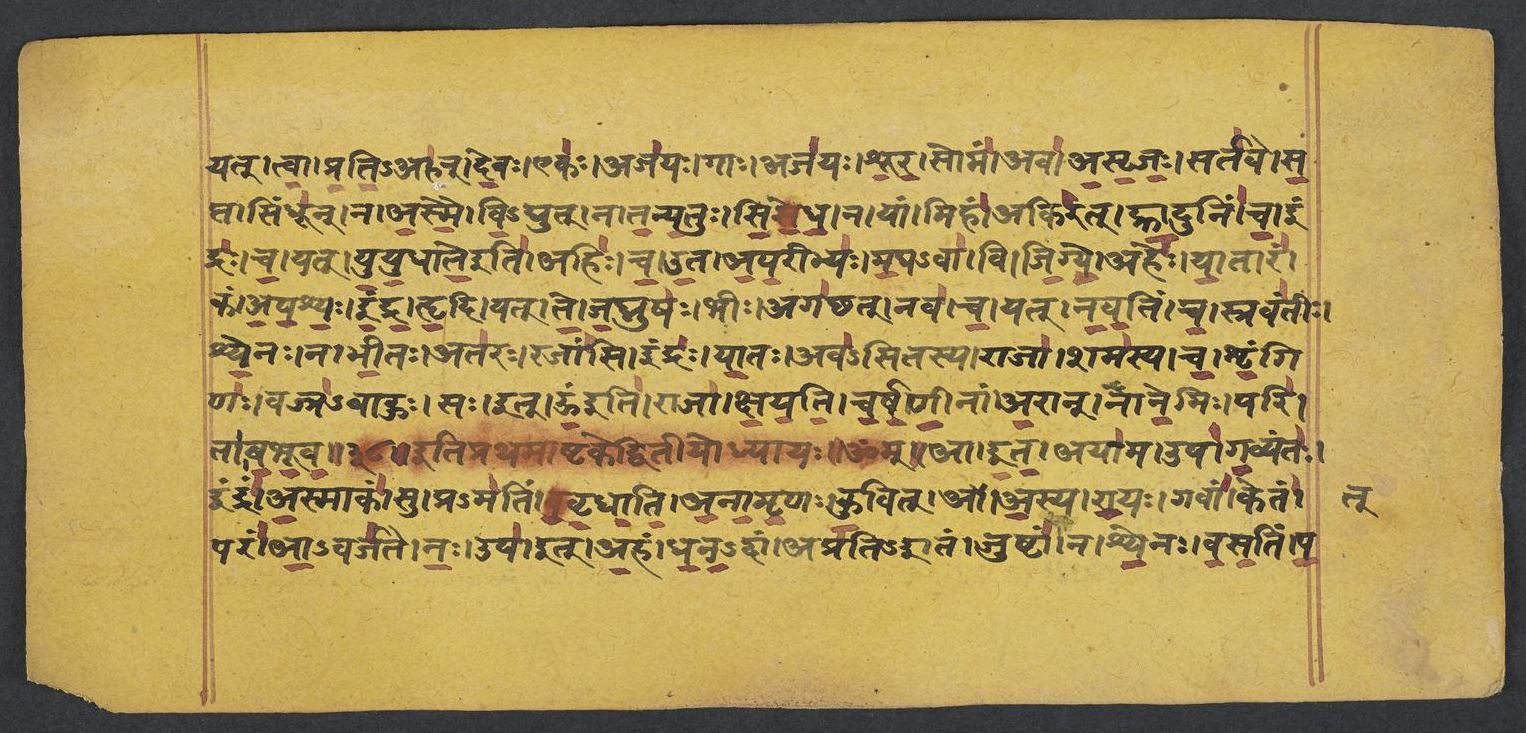
Penn Ms. Coll. 390 Item 41, fol. 21r (OPenn image 22, lower leaf). Checked on the image: the Rigveda text on this page begins in RV 1.32.12 ‹yat tvā prati-ahan devaḥ›. The next page with Rigveda text, fol. 21v, begins in RV 1.33.2 ‹-patāmi indram namasyan upa-mebhiḥ›. Verses 1.32.12-15 end on this page; 1.32.12 begins on fol. 20v.
12aśvyo̱ vāro̍ abhava̱s tad i̍ndra sṛ̱ke yat tvā̍ pra̱tyaha̍n de̱va eka̍ḥ | aja̍yo̱ gā aja̍yaḥ śūra̱ soma̱m avā̍sṛja̱ḥ sarta̍ve sa̱pta sindhū̍n ||
13nāsmai̍ vi̱dyun na ta̍nya̱tuḥ si̍ṣedha̱ na yām miha̱m aki̍rad dhrā̱duni̍ṁ ca | indra̍ś ca̱ yad yu̍yu̱dhāte̱ ahi̍ś co̱tāpa̱rībhyo̍ ma̱ghavā̱ vi ji̍gye ||
14ahe̍r yā̱tāra̱ṁ kam a̍paśya indra hṛ̱di yat te̍ ja̱ghnuṣo̱ bhīr aga̍cchat | nava̍ ca̱ yan na̍va̱tiṁ ca̱ srava̍ntīḥ śye̱no na bhī̱to ata̍ro̱ rajā̍ṁsi ||
15indro̍ yā̱to 'va̍sitasya̱ rājā̱ śama̍sya ca śṛ̱ṅgiṇo̱ vajra̍bāhuḥ | sed u̱ rājā̍ kṣayati carṣaṇī̱nām a̱rān na ne̱miḥ pari̱ tā ba̍bhūva ||
Compare: Padapāṭha (word-by-word text written in the manuscript; Sansknet e-text via GRETIL)
12aśvyaḥ | vāraḥ | abhavaḥ | tat | indra | sṛke | yat | tvā | prati-ahan | devaḥ | ekaḥ | ajayaḥ | gāḥ | ajayaḥ | śūra | somam | ava | asṛjaḥ | sartave | sapta | sindhūn
13na | asmai | vidyut | na | tanyatuḥ | sisedha | na | yām | miham | akirat | hrādunim | ca | indraḥ | ca | yat | yuyudhāteiti | ahiḥ | ca | uta | aparībhyaḥ | magha-vā | vi | jigye
14aheḥ | yātāram | kam | apaśyaḥ | indra | hṛdi | yat | te | jaghnuṣaḥ | bhīḥ | agacchat | nava | ca | yam | navatim | ca | sravantīḥ | śyenaḥ | na | bhītaḥ | ataraḥ | rajāṃsi
15indraḥ | yātaḥ | ava-sitasya | rājā | śamasya | ca | śṛṅgiṇaḥ | vajra-bāhuḥ | saḥ | it | oṃ iti | rājā | kṣayati | carṣaṇīnām | arān | na | nemiḥ | pari | tā | babhūva
12A horse's tail wast thou when he, O Indra, smote on thy bolt; thou, God without a second, Thou hast won back the kine, hast won the Soma; thou hast let loose to flow the Seven Rivers.
13Nothing availed him lightning, nothing thunder, hailstorm or mist which had spread around him: When Indra and the Dragon strove in battle, Maghavan gained the victory for ever.
14Whom sawest thou to avenge the Dragon, Indra, that fear possessed thy heart when thou hadst slain him; That, like a hawk affrighted through the regions, thou crossedst nine-and-ninety flowing rivers?
15Indra is King of all that moves and moves not, of creatures tame and horned, the Thunder-wielder. Over all living men he rules as Sovran, containing all as spokes within the felly.
Notes
- Sanskrit: Aufrecht's edition (1877) with the Vedic accents, as entered by van Nooten and Holland (GRETIL).
- English: Ralph T. H. Griffith, The Hymns of the Rigveda (1889-1892; 2nd ed. 1896-1897), from the VedaWeb digital text; OCR slips in that text were corrected against the printed 2nd edition (data/sources/rigveda/griffith_errata.json).
- Padapāṭha (edition text): Sansknet e-text via GRETIL (CC BY-NC-SA 4.0).
Cite
Sources
- Source: Penn Ms. Coll. 390 Item 41 (undated (catalogued with Penn's 18th-19th c. Vedic manuscripts)), OPenn, Public Domain Mark + Aufrecht's accented text (GRETIL) + Griffith's English (VedaWeb) (holding institution)
- Critical edition: Aufrecht (1877), accented e-text via GRETIL
← previous · → next · v cycle view · l back to library