Rigveda 1.35: To Savitri
Introduction
Rigveda 1.35 is a hymn of 11 verses addressed to Savitri. It stands in book (maṇḍala) 1, a collection of hymns by many families of poets. The Rigveda is the oldest collection of Sanskrit hymns, composed in the second half of the second millennium BCE and handed down orally for many centuries before it was written down.
The manuscript shown is Penn Ms. Coll. 390 Item 41 (University of Pennsylvania), an undated paper manuscript of the padapāṭha (the word-by-word recitation text, in which every word is written separately and compounds are split) of the whole Ṛgveda in Devanāgarī, 884 leaves in fascicles, 7-9 lines to the page, accents in red; this hymn stands on fol. 23v-24v. Each section below gives the verses that end on one page; the page boundaries were read on the images (the opening words of every page), not counted out. Where the manuscript is a padapāṭha (the word-by-word recitation text), the section shows Aufrecht's continuous (saṃhitā) text first and, as the edition text, the padapāṭha of the same verses, which is the form written on the page.
How was this verified? (Provenance)
Where on the image
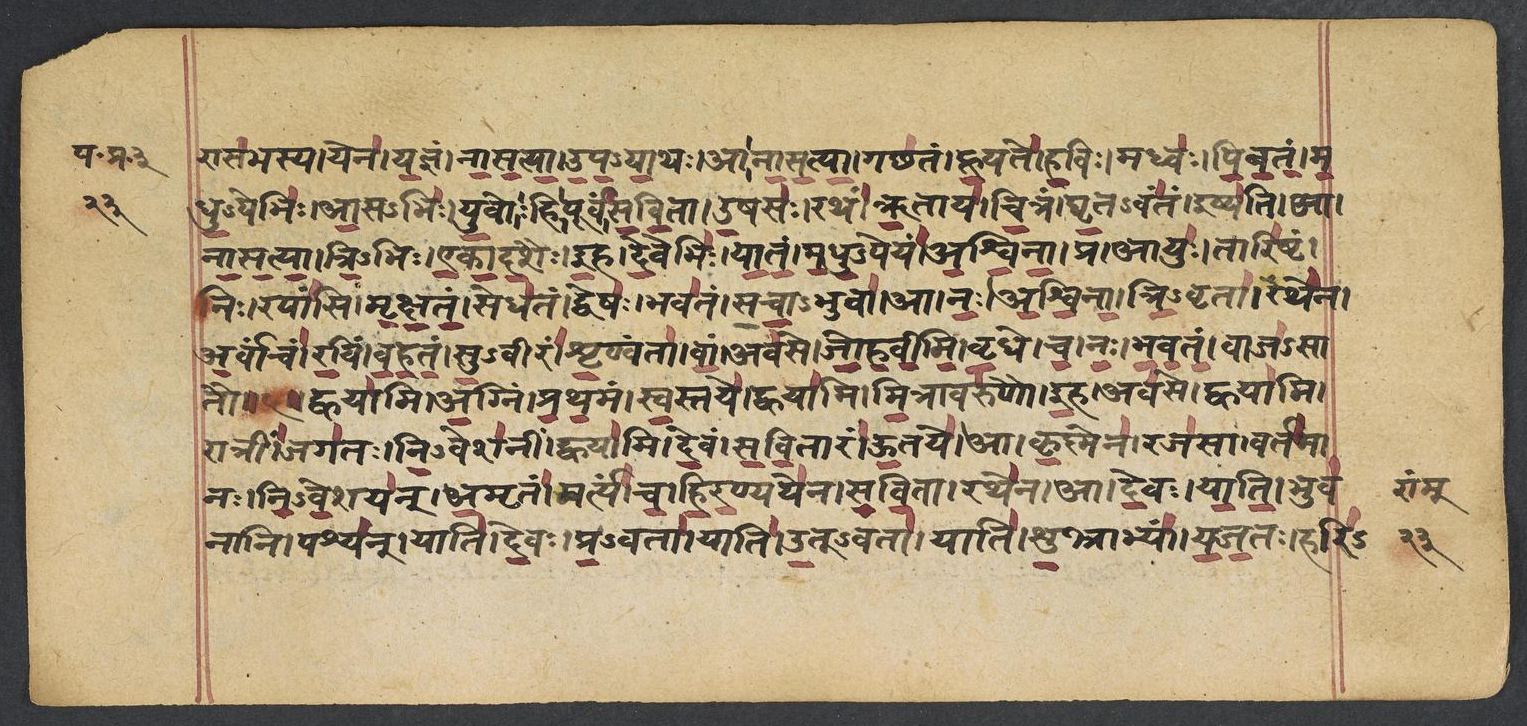
Penn Ms. Coll. 390 Item 41, fol. 23v (OPenn image 25, upper leaf). Checked on the image: the Rigveda text on this page begins in RV 1.34.9 ‹rāsabhasya yena yajñam nāsatyā›. The next page with Rigveda text, fol. 24r, begins in RV 1.35.3 ‹-hari-bhyām ā devaḥ yāti›. Verses 1.35.1-2 end on this page.
1hvayā̍my a̱gnim pra̍tha̱maṁ sva̱staye̱ hvayā̍mi mi̱trāvaru̍ṇāv i̱hāva̍se | hvayā̍mi̱ rātrī̱ṁ jaga̍to ni̱veśa̍nī̱ṁ hvayā̍mi de̱vaṁ sa̍vi̱tāra̍m ū̱taye̍ ||
2ā kṛ̱ṣṇena̱ raja̍sā̱ varta̍māno nive̱śaya̍nn a̱mṛta̱m martya̍ṁ ca | hi̱ra̱ṇyaye̍na savi̱tā rathe̱nā de̱vo yā̍ti̱ bhuva̍nāni̱ paśya̍n ||
Compare: Padapāṭha (word-by-word text written in the manuscript; Sansknet e-text via GRETIL)
1hvayāmi | agnim | prathamam | svastaye | hvayāmi | mitrāvaruṇau | iha | avase | hvayāmi | rātrīm | jagataḥ | niveśanīm | hvayāmi | devam | savitāram | ūtaye
2ā | kṛṣṇena | rajasā | vartamānaḥ | ni-veśayan | amṛtam | martyam | ca | hiraṇyayena | savitā rathena | ā | devaḥ | yāti | bhuvanāni | paśyan
1AGNI I first invoke for our prosperity; I call on Mitra, Varuṇa, to aid us here. I call on Night who gives rest to all moving life; I call on Savitar the God to lend us help.
2Throughout the dusky firmament advancing, laying to rest the immortal and the mortal, Borne in his golden chariot he cometh, Savitar, God who looks on every creature.
Where on the image
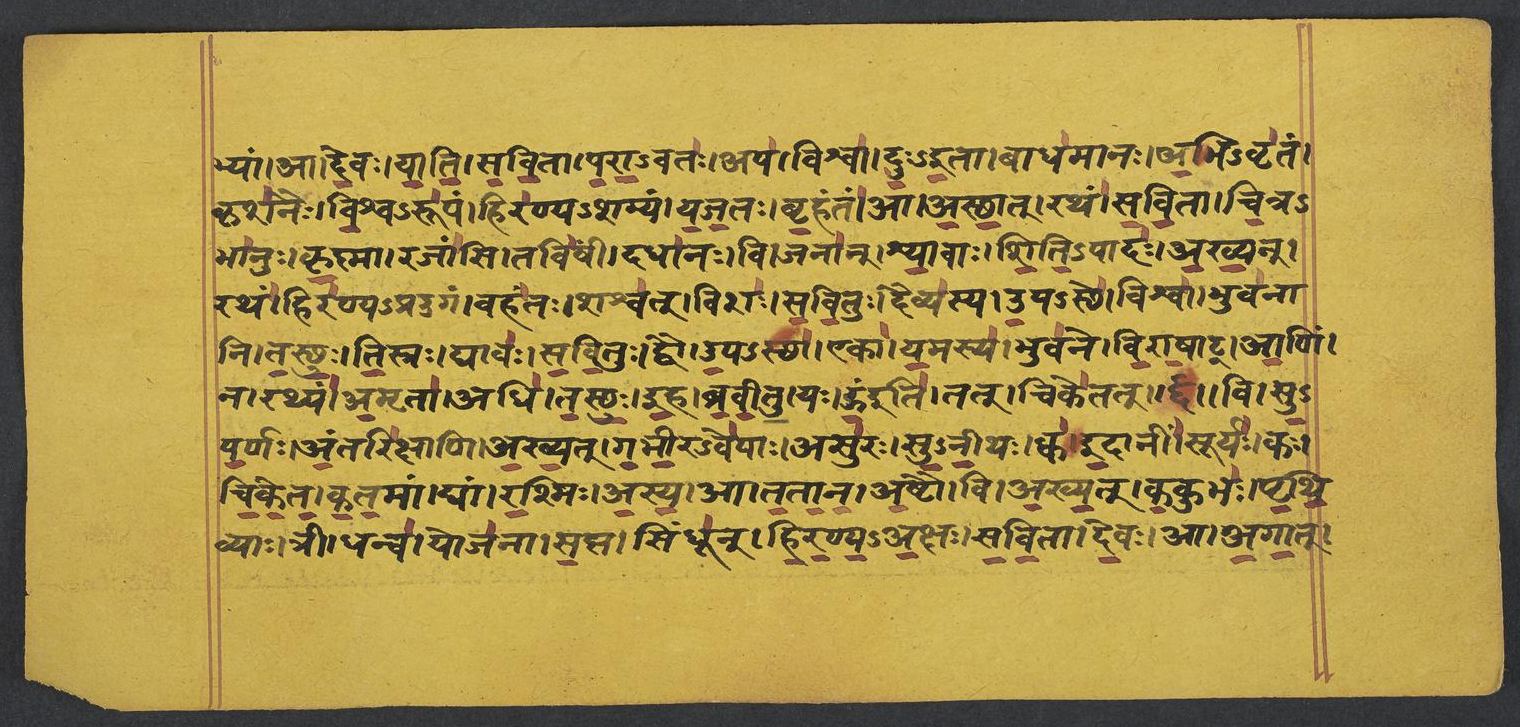
Penn Ms. Coll. 390 Item 41, fol. 24r (OPenn image 25, lower leaf). Checked on the image: the Rigveda text on this page begins in RV 1.35.3 ‹-hari-bhyām ā devaḥ yāti›. The next page with Rigveda text, fol. 24v, begins in RV 1.35.8 ‹dadhat ratnā dāśuṣe vāryāṇi›. Verses 1.35.3-7 end on this page; 1.35.3 begins on fol. 23v.
3yāti̍ de̱vaḥ pra̱vatā̱ yāty u̱dvatā̱ yāti̍ śu̱bhrābhyā̍ṁ yaja̱to hari̍bhyām | ā de̱vo yā̍ti savi̱tā pa̍rā̱vato 'pa̱ viśvā̍ duri̱tā bādha̍mānaḥ ||
4a̱bhīvṛ̍ta̱ṁ kṛśa̍nair vi̱śvarū̍pa̱ṁ hira̍ṇyaśamyaṁ yaja̱to bṛ̱hanta̍m | āsthā̱d ratha̍ṁ savi̱tā ci̱trabhā̍nuḥ kṛ̱ṣṇā rajā̍ṁsi̱ tavi̍ṣī̱ṁ dadhā̍naḥ ||
5vi janā̍ñ chyā̱vāḥ śi̍ti̱pādo̍ akhya̱n ratha̱ṁ hira̍ṇyapraüga̱ṁ vaha̍ntaḥ | śaśva̱d viśa̍ḥ savi̱tur daivya̍syo̱pasthe̱ viśvā̱ bhuva̍nāni tasthuḥ ||
6ti̱sro dyāva̍ḥ savi̱tur dvā u̱pasthā̱m̐ ekā̍ ya̱masya̱ bhuva̍ne virā̱ṣāṭ | ā̱ṇiṁ na rathya̍m a̱mṛtādhi̍ tasthur i̱ha bra̍vītu̱ ya u̱ tac cike̍tat ||
7vi su̍pa̱rṇo a̱ntari̍kṣāṇy akhyad gabhī̱rave̍pā̱ asu̍raḥ sunī̱thaḥ | kve̱3̱̍dānī̱ṁ sūrya̱ḥ kaś ci̍keta kata̱māṁ dyāṁ ra̱śmir a̱syā ta̍tāna ||
Compare: Padapāṭha (word-by-word text written in the manuscript; Sansknet e-text via GRETIL)
3yāti | devaḥ | pra-vatā | yāti | ut-vatā | yāti | śubhrābhyām | yajataḥ | hari-bhyām | ā | devaḥ | yāti | savitā | parāvataḥ | apa | viśvā | duḥ-itā | bādhamānaḥ
4abhi-vṛtam | kṛśanaiḥ | viśva-rūpam | hiraṇya-śamyam | yajataḥ | bṛhantam | ā | asthāt | ratham | savitā | citra-bhānuḥ | kṛṣṇā | rajāṃsi | taviṣīm | dadhānaḥ
5vi | janān | śyāvāḥ | śiti-pādaḥ | akhyan | ratham | hiraṇya-pra-ugam | vahantaḥ | śaśvat | viśaḥ | savituḥ | daivyasya | upa-sthe | viśvā | bhuvanāni | tasthuḥ
6tisraḥ | dyāvaḥ | savituḥ | dvau | upa-sthā | ekā | yamasya | bhuvane | virāṣāṭ | āṇim | na | rathyam | amṛtā | adhi | tasthuḥ | iha | bravītu | yaḥ | oṃ iti | tat | ciketat
7vi | su-parṇaḥ | antarikṣāṇi | akhyat | gabhīra-vepāḥ | asuraḥ | su-nīthaḥ | kva | idānīm | sūryaḥ | kaḥ | ciketa | katamām | dyām | raśmiḥ | asya | ā | tatāna
3The God moves by the upward path, the downward; with two bright Bays, adorable, he journeys. Savitar comes, the God from the far distance, and chases from us all distress and sorrow.
4His chariot decked with pearl, of various colours, lofty, with golden pole, the God hath mounted, The many-rayed One, Savitar the holy, bound, bearing power and might, for darksome regions.
5Drawing the gold-yoked car his Bays, white-footed, have manifested light to all the peoples. Held in the lap of Savitar, divine One, all men, all beings have their place for ever.
6Three heavens there are; two Savitar's, adjacent: in Yama's world is one, the home of heroes, As on a linch-pin, firm, rest things immortal: he who hath known it let him here declare it.
7He, strong of wing, hath lightened up the regions, deep-quivering Asura, the gentle Leader. Where now is Sûrya, where is one to tell us to what celestial sphere his ray hath wandered?
Where on the image
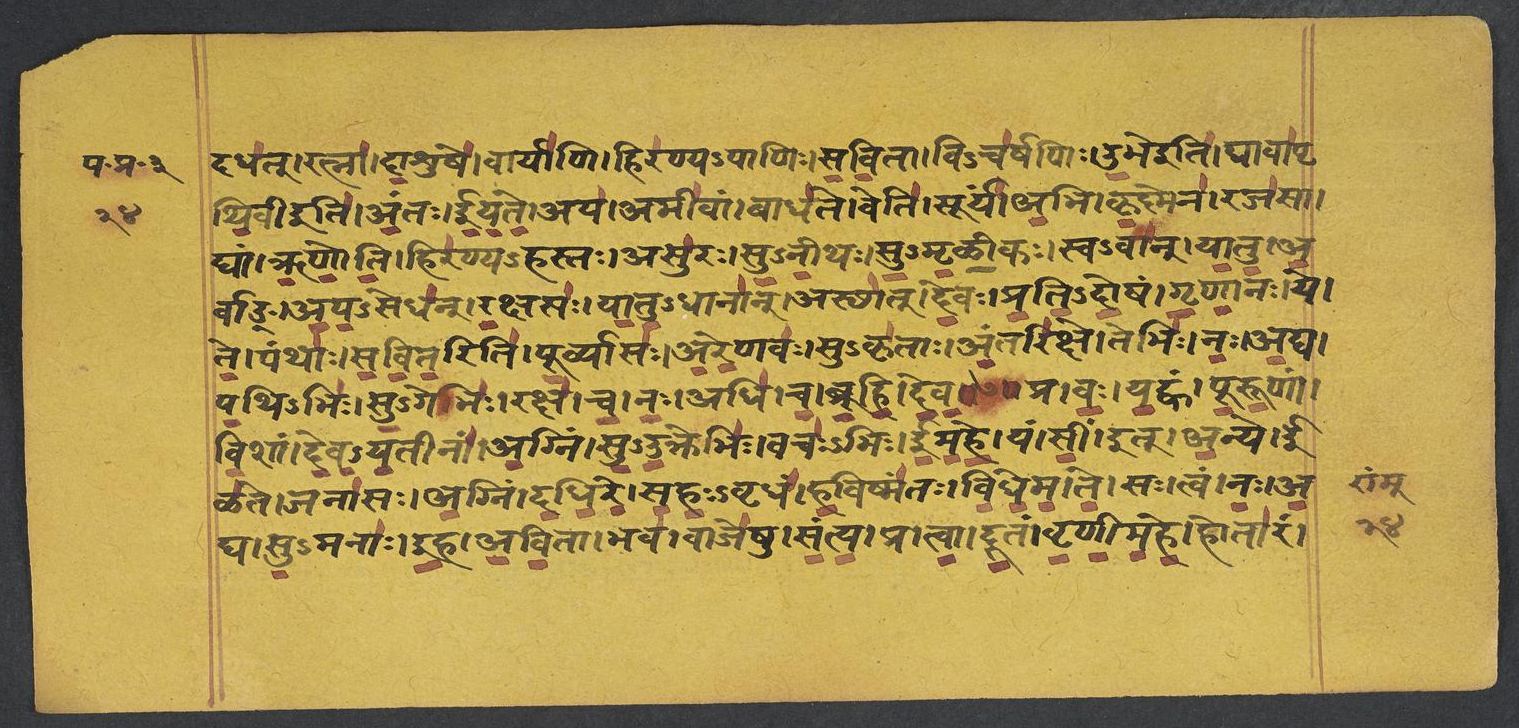
Penn Ms. Coll. 390 Item 41, fol. 24v (OPenn image 26, upper leaf). Checked on the image: the Rigveda text on this page begins in RV 1.35.8 ‹dadhat ratnā dāśuṣe vāryāṇi›. The next page with Rigveda text, fol. 25r, begins in RV 1.36.3 ‹viśva-vedasam mahaḥ te sataḥ›. Verses 1.35.8-11 end on this page; 1.35.8 begins on fol. 24r.
8a̱ṣṭau vy a̍khyat ka̱kubha̍ḥ pṛthi̱vyās trī dhanva̱ yoja̍nā sa̱pta sindhū̍n | hi̱ra̱ṇyā̱kṣaḥ sa̍vi̱tā de̱va āgā̱d dadha̱d ratnā̍ dā̱śuṣe̱ vāryā̍ṇi ||
9hira̍ṇyapāṇiḥ savi̱tā vica̍rṣaṇir u̱bhe dyāvā̍pṛthi̱vī a̱ntar ī̍yate | apāmī̍vā̱m bādha̍te̱ veti̱ sūrya̍m a̱bhi kṛ̱ṣṇena̱ raja̍sā̱ dyām ṛ̍ṇoti ||
10hira̍ṇyahasto̱ asu̍raḥ sunī̱thaḥ su̍mṛḻī̱kaḥ svavā̍m̐ yātv a̱rvāṅ | a̱pa̱sedha̍n ra̱kṣaso̍ yātu̱dhānā̱n asthā̍d de̱vaḥ pra̍tido̱ṣaṁ gṛ̍ṇā̱naḥ ||
11ye te̱ panthā̍ḥ savitaḥ pū̱rvyāso̍ 're̱ṇava̱ḥ sukṛ̍tā a̱ntari̍kṣe | tebhi̍r no a̱dya pa̱thibhi̍ḥ su̱gebhī̱ rakṣā̍ ca no̱ adhi̍ ca brūhi deva ||
Compare: Padapāṭha (word-by-word text written in the manuscript; Sansknet e-text via GRETIL)
8aṣṭau | vi | akhyat | kakubhaḥ | pṛthivyāḥ | trī | dhanva | yojanā | sapta | sindhūn | hiraṇya-akṣaḥ | savitā | devaḥ | ā | agāt | dadhat | ratnā | dāśuṣe | vāryāṇi
9hiraṇya-pāṇiḥ | savitā | vi-carṣaṇiḥ | ubhe iti | dyāvāpṛthivī iti | antaḥ | īyate | apa | amīvām | bādhate | veti | sūryam | abhi | kṛṣṇena | rajasā | dyām | ṛṇoti
10hiraṇya-hastaḥ | asuraḥ | su-nīthaḥ | su-mṛḷīkaḥ | sva-vān | yātu | arvāṅ | apa-sedham | rakṣasaḥ | yātu-dhānān | asthāt | devaḥ | prati-doṣam | gṛṇānaḥ
11ye | te | panthāḥ | savitariti | pūrvyāsaḥ | areṇavaḥ | su-kṛtāḥ | antarikṣe | tebhiḥ | naḥ | adya | pathi-bhiḥ | su-gebhiḥ | rakṣa | ca | naḥ | adhi | ca | brūhi | deva
8The earth's eight points his brightness hath illumined, three desert regions and the Seven Rivers. God Savitar the gold-eyed hath come hither, giving choice treasures unto him who worships.
9The golden-handed Savitar, far-seeing, goes on his way between the earth and heaven, Drives away sickness, bids the Sun approach us, and spreads the bright sky through the darksome region.
10May he, gold-handed Asura, kind Leader, come hither to us with his help and favour. Driving off Raksasas and Yatudhanas, the God is present, praised in hymns at evening.
11O Savitar, thine ancient dustless pathways are well established in the air's midregion: O God, come by those paths so fair to travel, preserve thou us from harm this day, and bless us.
Notes
- Sanskrit: Aufrecht's edition (1877) with the Vedic accents, as entered by van Nooten and Holland (GRETIL).
- English: Ralph T. H. Griffith, The Hymns of the Rigveda (1889-1892; 2nd ed. 1896-1897), from the VedaWeb digital text; OCR slips in that text were corrected against the printed 2nd edition (data/sources/rigveda/griffith_errata.json).
- Padapāṭha (edition text): Sansknet e-text via GRETIL (CC BY-NC-SA 4.0).
Cite
Sources
- Source: Penn Ms. Coll. 390 Item 41 (undated (catalogued with Penn's 18th-19th c. Vedic manuscripts)), OPenn, Public Domain Mark + Aufrecht's accented text (GRETIL) + Griffith's English (VedaWeb) (holding institution)
- Critical edition: Aufrecht (1877), accented e-text via GRETIL
← previous · → next · v cycle view · l back to library