Rigveda 1.36: To Agni
Introduction
Rigveda 1.36 is a hymn of 20 verses addressed to Agni. It stands in book (maṇḍala) 1, a collection of hymns by many families of poets. The Rigveda is the oldest collection of Sanskrit hymns, composed in the second half of the second millennium BCE and handed down orally for many centuries before it was written down.
The manuscript shown is Penn Ms. Coll. 390 Item 41 (University of Pennsylvania), an undated paper manuscript of the padapāṭha (the word-by-word recitation text, in which every word is written separately and compounds are split) of the whole Ṛgveda in Devanāgarī, 884 leaves in fascicles, 7-9 lines to the page, accents in red; this hymn stands on fol. 24v-26r. Each section below gives the verses that end on one page; the page boundaries were read on the images (the opening words of every page), not counted out. Where the manuscript is a padapāṭha (the word-by-word recitation text), the section shows Aufrecht's continuous (saṃhitā) text first and, as the edition text, the padapāṭha of the same verses, which is the form written on the page.
How was this verified? (Provenance)
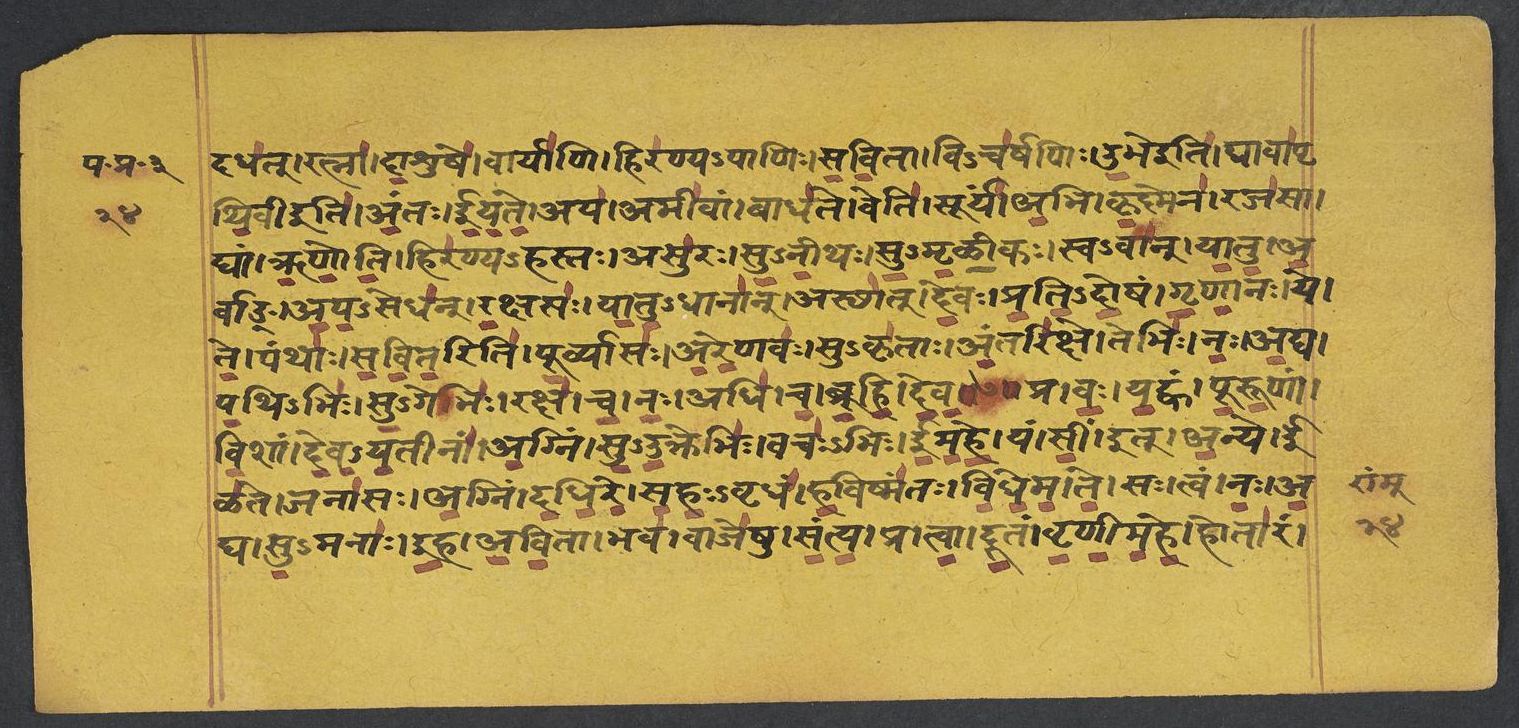
Where on the image
Penn Ms. Coll. 390 Item 41, fol. 24v (OPenn image 26, upper leaf). Checked on the image: the Rigveda text on this page begins in RV 1.35.8 ‹dadhat ratnā dāśuṣe vāryāṇi›. The next page with Rigveda text, fol. 25r, begins in RV 1.36.3 ‹viśva-vedasam mahaḥ te sataḥ›. Verses 1.36.1-2 end on this page.
1pra vo̍ ya̱hvam pu̍rū̱ṇāṁ vi̱śāṁ de̍vaya̱tīnā̍m | a̱gniṁ sū̱ktebhi̱r vaco̍bhir īmahe̱ yaṁ sī̱m id a̱nya īḻa̍te ||
2janā̍so a̱gniṁ da̍dhire saho̱vṛdha̍ṁ ha̱viṣma̍nto vidhema te | sa tvaṁ no̍ a̱dya su̱manā̍ i̱hāvi̱tā bhavā̱ vāje̍ṣu santya ||
Compare: Padapāṭha (word-by-word text written in the manuscript; Sansknet e-text via GRETIL)
1pra | vaḥ | yahvam | purūṇām | viśām | deva-yatīnām | agnim | su-uktebhiḥ | vacaḥ-bhiḥ | īmahe | yam | sīm | it | anye | īḷate
2janāsaḥ | agnim | dadhire | sahaḥ-vṛdham | haviṣmantaḥ | vidhema | te | saḥ | tvam | naḥ | adya | su-manāḥ | iha | avitā | bhava | vājeṣu | santya
1WITH words sent forth in holy hymns, Agni we supplicate, the Lord Of many families who duly serve the Gods, yea, him whom others also praise.
2Men have won Agni, him who makes their strength abound: we, with oblations, worship thee. Our gracious-minded Helper in our deeds of might, be thou, O Excellent, this day.
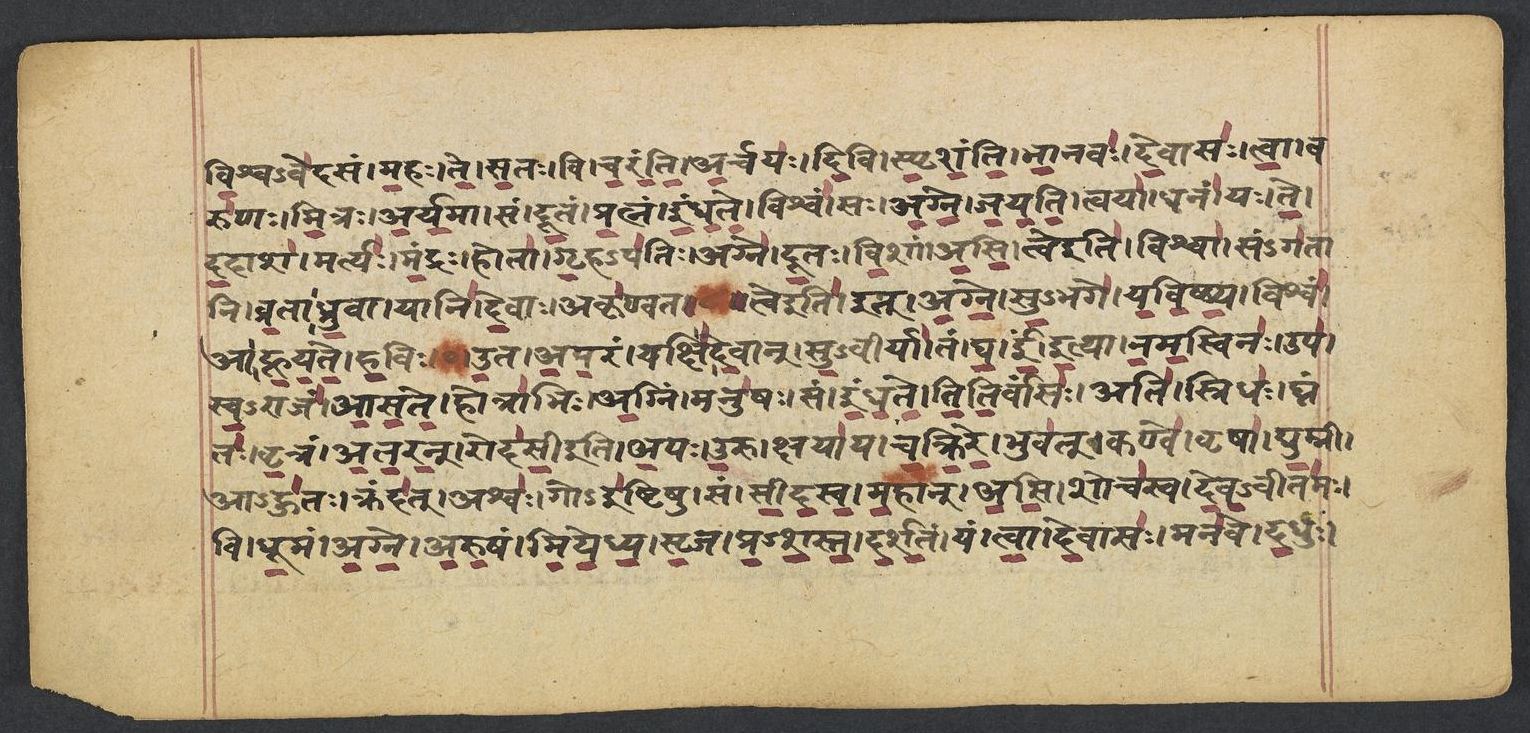
Where on the image
Penn Ms. Coll. 390 Item 41, fol. 25r (OPenn image 26, lower leaf). Checked on the image: the Rigveda text on this page begins in RV 1.36.3 ‹viśva-vedasam mahaḥ te sataḥ›. The next page with Rigveda text, fol. 25v, begins in RV 1.36.10 ‹iha yajiṣṭham havya-vāhana yam›. Verses 1.36.3-9 end on this page; 1.36.3 begins on fol. 24v.
3pra tvā̍ dū̱taṁ vṛ̍ṇīmahe̱ hotā̍raṁ vi̱śvave̍dasam | ma̱has te̍ sa̱to vi ca̍ranty a̱rcayo̍ di̱vi spṛ̍śanti bhā̱nava̍ḥ ||
4de̱vāsa̍s tvā̱ varu̍ṇo mi̱tro a̍rya̱mā saṁ dū̱tam pra̱tnam i̍ndhate | viśva̱ṁ so a̍gne jayati̱ tvayā̱ dhana̱ṁ yas te̍ da̱dāśa̱ martya̍ḥ ||
5ma̱ndro hotā̍ gṛ̱hapa̍ti̱r agne̍ dū̱to vi̱śām a̍si | tve viśvā̱ saṁga̍tāni vra̱tā dhru̱vā yāni̍ de̱vā akṛ̍ṇvata ||
6tve id a̍gne su̱bhage̍ yaviṣṭhya̱ viśva̱m ā hū̍yate ha̱viḥ | sa tvaṁ no̍ a̱dya su̱manā̍ u̱tāpa̱raṁ yakṣi̍ de̱vān su̱vīryā̍ ||
7taṁ ghe̍m i̱tthā na̍ma̱svina̱ upa̍ sva̱rāja̍m āsate | hotrā̍bhir a̱gnim manu̍ṣa̱ḥ sam i̍ndhate titi̱rvāṁso̱ ati̱ sridha̍ḥ ||
8ghnanto̍ vṛ̱tram a̍tara̱n roda̍sī a̱pa u̱ru kṣayā̍ya cakrire | bhuva̱t kaṇve̱ vṛṣā̍ dyu̱mny āhu̍ta̱ḥ kranda̱d aśvo̱ gavi̍ṣṭiṣu ||
9saṁ sī̍dasva ma̱hām̐ a̍si̱ śoca̍sva deva̱vīta̍maḥ | vi dhū̱mam a̍gne aru̱ṣam mi̍yedhya sṛ̱ja pra̍śasta darśa̱tam ||
Compare: Padapāṭha (word-by-word text written in the manuscript; Sansknet e-text via GRETIL)
3pra | tvā | dūtam | vṛṇīmahe | hotāram | viśva-vedasam | mahaḥ | te | sataḥ | vi | caranti | arcayaḥ | divi | spṛśanti | bhānavaḥ
4devāsaḥ | tvā | varuṇaḥ | mitraḥ | aryamā | sam | dūtam | pratnam | indhate | viśvam | saḥ | agne | jayati | tvayā | dhanam | yaḥ | te | dadāśa | martyaḥ
5mandraḥ | hotā | gṛha-patiḥ | agne | dūtaḥ | viśām | asi | tve iti | viśvā | sam-gatāni | vratā | dhruvā | yāni | devāḥ | akṛṇvata
6tve | it | agne | subhage | yaviṣṭhya | viśvam | ā | hūyate | haviḥ | saḥ | tvam | naḥ | adya | su-manāḥ | uta | aparam | yakṣi | devān | su-vīryā
7tam | gha | īm | itthā | namasvinaḥ | upa | sva-rājam | āsate | hotrābhiḥ | agnim | manuṣaḥ | sam | indhate | titirvāṃsaḥ | ati | sridhaḥ
8ghnantaḥ | vṛtram | ataran | rodasī iti | apaḥ | uru | kṣayāya | cakrire | bhuvat | kaṇve | vṛṣā | dyumnī | āhutaḥ | krandat | aśvaḥ | go--iṣṭiṣu
9sam | sīdasva | mahān | asi | śocasva | deva-vītamaḥ | vi | dhūmam | agne | aruṣam | miyedhya | sṛja | pra-śasta | darsatam
3Thee for our messenger we choose, thee, the Omniscient, for our Priest. The flames of thee the mighty are spread wide around: thy splendour reaches to the sky.
4The Gods enkindle thee their ancient messenger, – Varuṇa, Mitra, Aryaman. That mortal man, O Agni, gains through thee all wealth, who hath poured offerings unto thee.
5Thou, Agni, art a cheering Priest, Lord of the House, men's messenger: All constant high decrees established by the Gods, gathered together, meet in thee.
6In thee, the auspicious One, O Agni, youthfullest, each sacred gift is offered up: This day, and after, gracious, worship thou our Gods, that we may have heroic sons.
7To him in his own splendour bright draw near in worship the devout. Men kindle Agni with their sacrificial gifts, victorious o'er the enemies.
8Vr̥itra they smote and slew, and made the earth and heaven and firmament a wide abode. The glorious Bull, invoked, hath stood at Kaṇva's side: loud neighed the Steed in frays for kine.
9Seat thee, for thou art mighty; shine, best entertainer of the Gods. Worthy of sacred food, praised Agni! loose the smoke, ruddy and beautiful to see.
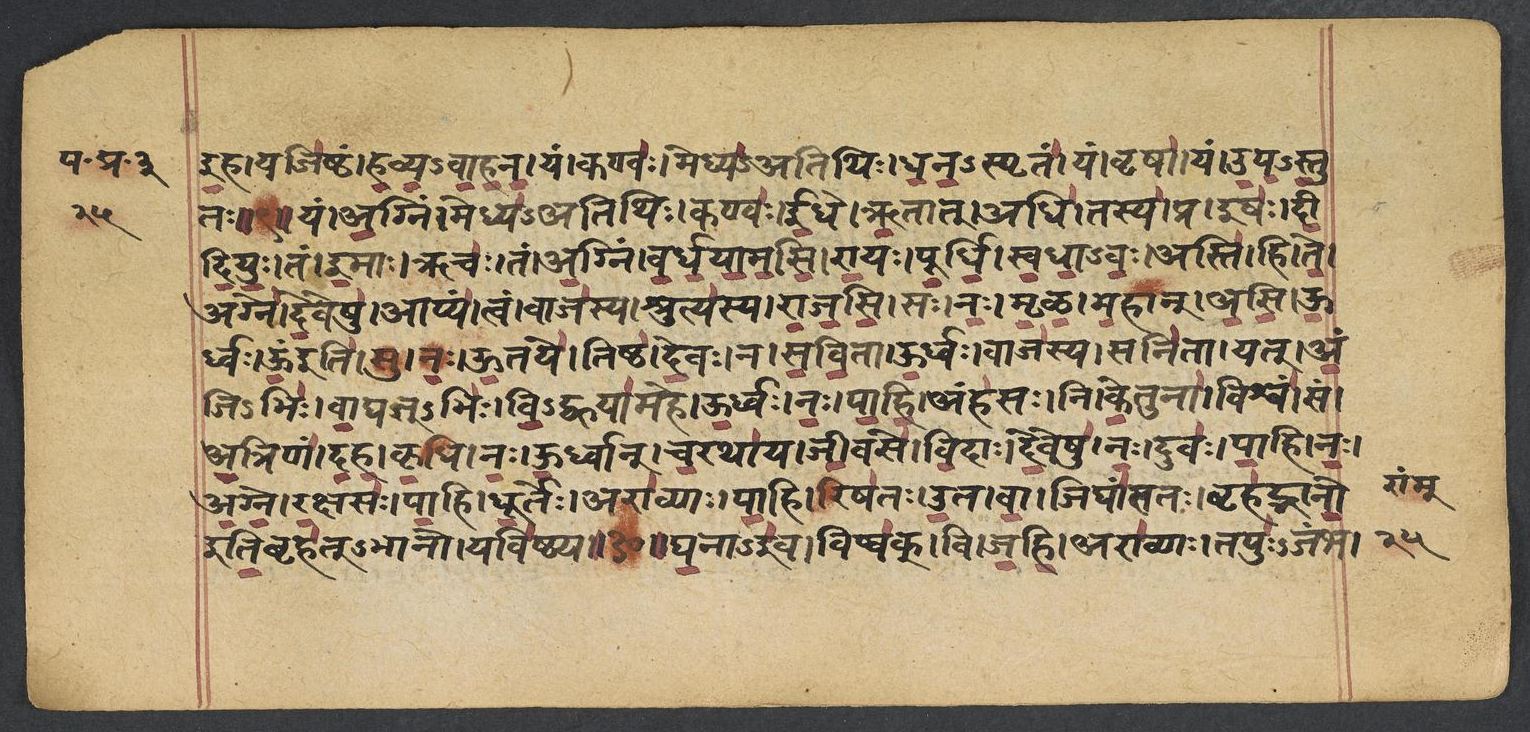
Where on the image
Penn Ms. Coll. 390 Item 41, fol. 25v (OPenn image 27, upper leaf). Checked on the image: the Rigveda text on this page begins in RV 1.36.10 ‹iha yajiṣṭham havya-vāhana yam›. The next page with Rigveda text, fol. 26r, begins in RV 1.36.16 ‹yaḥ asma-dhruk yaḥ martyaḥ›. Verses 1.36.10-15 end on this page; 1.36.10 begins on fol. 25r.
10yaṁ tvā̍ de̱vāso̱ mana̍ve da̱dhur i̱ha yaji̍ṣṭhaṁ havyavāhana | yaṁ kaṇvo̱ medhyā̍tithir dhana̱spṛta̱ṁ yaṁ vṛṣā̱ yam u̍pastu̱taḥ ||
11yam a̱gnim medhyā̍tithi̱ḥ kaṇva̍ ī̱dha ṛ̱tād adhi̍ | tasya̱ preṣo̍ dīdiyu̱s tam i̱mā ṛca̱s tam a̱gniṁ va̍rdhayāmasi ||
12rā̱yas pū̍rdhi svadhā̱vo 'sti̱ hi te 'gne̍ de̱veṣv āpya̍m | tvaṁ vāja̍sya̱ śrutya̍sya rājasi̱ sa no̍ mṛḻa ma̱hām̐ a̍si ||
13ū̱rdhva ū̱ ṣu ṇa̍ ū̱taye̱ tiṣṭhā̍ de̱vo na sa̍vi̱tā | ū̱rdhvo vāja̍sya̱ sani̍tā̱ yad a̱ñjibhi̍r vā̱ghadbhi̍r vi̱hvayā̍mahe ||
14ū̱rdhvo na̍ḥ pā̱hy aṁha̍so̱ ni ke̱tunā̱ viśva̱ṁ sam a̱triṇa̍ṁ daha | kṛ̱dhī na̍ ū̱rdhvāñ ca̱rathā̍ya jī̱vase̍ vi̱dā de̱veṣu̍ no̱ duva̍ḥ ||
15pā̱hi no̍ agne ra̱kṣasa̍ḥ pā̱hi dhū̱rter arā̍vṇaḥ | pā̱hi rīṣa̍ta u̱ta vā̱ jighā̍ṁsato̱ bṛha̍dbhāno̱ yavi̍ṣṭhya ||
Compare: Padapāṭha (word-by-word text written in the manuscript; Sansknet e-text via GRETIL)
10yam | tvā | devāsaḥ | manave | dadhuḥ | iha | yajiṣṭham | havya-vāhana | yam | kaṇvaḥ | medhya-atithiḥ | dhana-spṛtam | yam | vṛṣā | yam | upa-stutaḥ
11yam | agnim | medhya-atithiḥ | kaṇvaḥ | īghe | ṛtāt | adhi | tasya | pra | iṣaḥ | dīdiyuḥ | tam | imāḥ | ṛcaḥ | tam | agnim | vardhayāmasi
12rāyaḥ | pūrdhi | svadhā-vaḥ | asti | hi | te | agne | deveṣu | āpyam | tvam | vājasya | śrutyasya | rājasi | saḥ | naḥ | mṛḷha | mahān | asi
13ūrdhvaḥ | oṃ iti | su | naḥ | ūtaye | tiṣṭha | devaḥ | na | savitā | ūrdhvaḥ | vājasya | sanitā | yat | añji-bhiḥ | vāghat-bhiḥ | vi-hvayāmahe
14ūrdhvaḥ | naḥ | pāhi | aṃhasaḥ | ni | ketunā | viśvam | sam | itriṇam | daha | kṛdhi | naḥ | ūrdhvān | carathāya | jīvase | vidāḥ | deveṣu | naḥ | duvaḥ
15pāhi | naḥ | agne | rakṣasaḥ | pāhi | dhūrteḥ | arāvṇaḥ | pāhi | riṣataḥ | uta | vā | jighāṃsataḥ | bṛhadbhāno itibṛhat-bhāno | yaviṣṭhya
10Bearer of offerings, whom, best sacrificing Priest, the Gods for Manu's sake ordained; Whom Kaṇva, whom Medhyâtithi made the source of wealth, and Vr̥ishan and Upastuta.
11Him, Agni, whom Medhyâtithi, whom Kaṇva kindled for his rite, Him these our songs of praise, him, Agni, we extol: his powers shine out preeminent.
12Make our wealth perfect thou, O Agni, Lord divine: for thou hast kinship with the Gods. Thou rulest as a King o'er widely-famous strength: be good to us, for thou art great.
13Stand up erect to lend us aid, stand up like Savitar the God: Erect as strength-bestower we call aloud, with unguents and with priests, on thee.
14Erect, preserve us from sore trouble; with thy flame burn thou each ravening demon dead. Raise thou us up that we may walk and live. so thou shalt find our worship mid the Gods.
15Preserve us, Agni, from the fiend, preserve us from malicious wrong. Save us from him who fain would injure us or slay, Most Youthful, thou with lofty light.
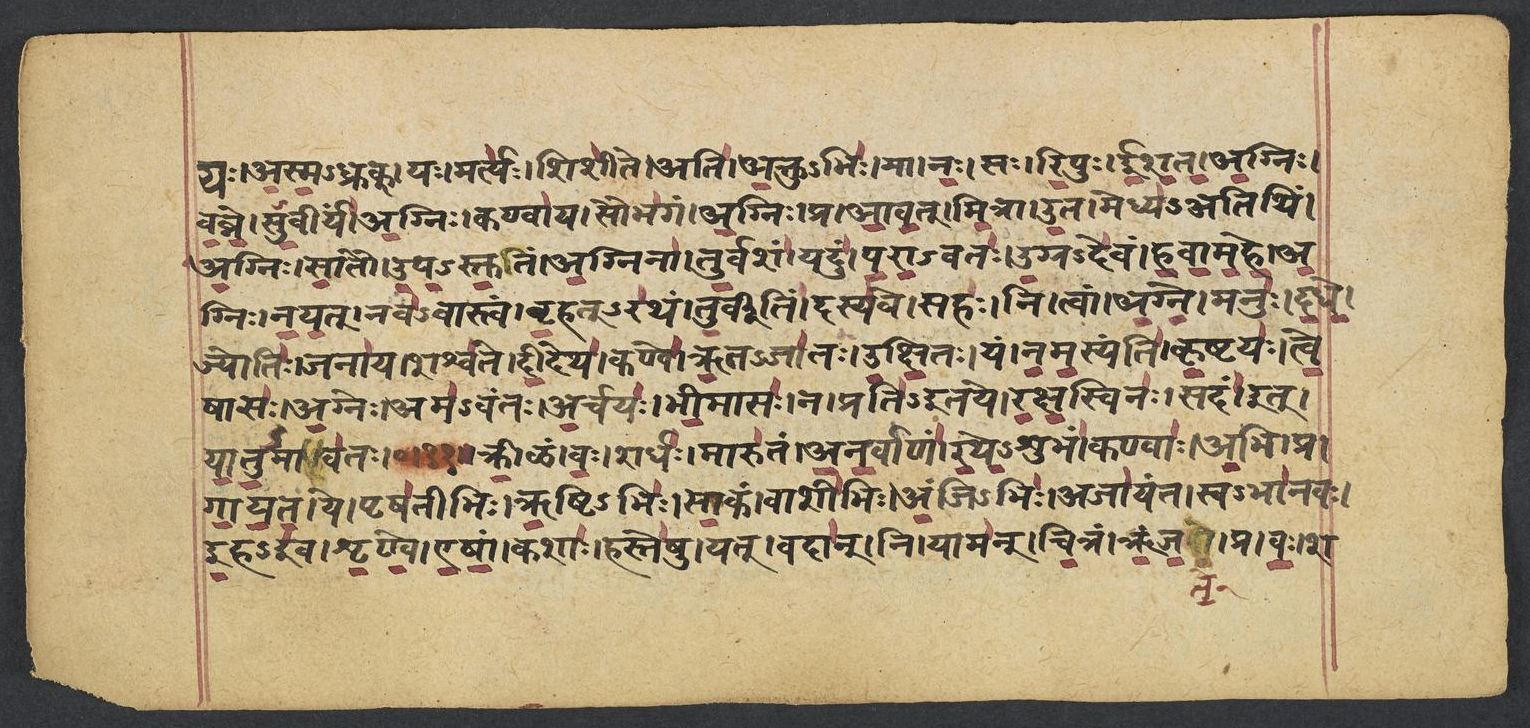
Where on the image
Penn Ms. Coll. 390 Item 41, fol. 26r (OPenn image 27, lower leaf). Checked on the image: the Rigveda text on this page begins in RV 1.36.16 ‹yaḥ asma-dhruk yaḥ martyaḥ›. The next page with Rigveda text, fol. 26v, begins in RV 1.37.4 ‹-śardhāya ghṛṣvaye tveṣa-dyumnāya śuṣmiṇe›. Verses 1.36.16-20 end on this page; 1.36.16 begins on fol. 25v.
16gha̱neva̱ viṣva̱g vi ja̱hy arā̍vṇa̱s tapu̍rjambha̱ yo a̍sma̱dhruk | yo martya̱ḥ śiśī̍te̱ aty a̱ktubhi̱r mā na̱ḥ sa ri̱pur ī̍śata ||
17a̱gnir va̍vne su̱vīrya̍m a̱gniḥ kaṇvā̍ya̱ saubha̍gam | a̱gniḥ prāva̍n mi̱trota medhyā̍tithim a̱gniḥ sā̱tā u̍pastu̱tam ||
18a̱gninā̍ tu̱rvaśa̱ṁ yadu̍m parā̱vata̍ u̱grāde̍vaṁ havāmahe | a̱gnir na̍ya̱n nava̍vāstvam bṛ̱hadra̍thaṁ tu̱rvīti̱ṁ dasya̍ve̱ saha̍ḥ ||
19ni tvām a̍gne̱ manu̍r dadhe̱ jyoti̱r janā̍ya̱ śaśva̍te | dī̱detha̱ kaṇva̍ ṛ̱tajā̍ta ukṣi̱to yaṁ na̍ma̱syanti̍ kṛ̱ṣṭaya̍ḥ ||
20tve̱ṣāso̍ a̱gner ama̍vanto a̱rcayo̍ bhī̱māso̱ na pratī̍taye | ra̱kṣa̱svina̱ḥ sada̱m id yā̍tu̱māva̍to̱ viśva̱ṁ sam a̱triṇa̍ṁ daha ||
Compare: Padapāṭha (word-by-word text written in the manuscript; Sansknet e-text via GRETIL)
16ghanāiva | viṣvak | vi | jahi | arāvṇaḥ | tapuḥ-jambha | yaḥ | asma-dhruk | yaḥ | martyaḥ | śiśīte | ati | aktu-bhiḥ | mā | naḥ | saḥ | ripuḥ | īśata
17agniḥ | vavne | su-vīryam | agniḥ | kaṇvāya | saubhagam | agniḥ | pra | āvat | mitrā | uta | medhya-atithim | agniḥ | sātau | upa-stutam
18agninā | turvaśam | yadum | parāvataḥ | ugra-devam | havāmahe | agniḥ | nayat | nava-vāstvam | bṛhat-ratham | turvītim | dasyave | sahaḥ
19ni | tvām | agne | manuḥ | dadhe | jyotiḥ | janāya | śaśvate | dīdetha | kaṇve | ṛta-jātaḥ | ukṣitaḥ | yam | namasyanti | kṛṣṭayaḥ
20tveṣāsaḥ | agneḥ | ama-vantaḥ | arcayaḥ | bhīmāsaḥ | na | prati-itaye | rakṣasvinaḥ | sadam | it | yātu-māvataḥ | viśvam | sam | atriṇam | daha
16Smite down as with a club, thou who hast fire for teeth, smite thou the wicked, right and left. Let not the man who plots against us in the night, nor any foe prevail o'er us.
17Agni hath given heroic might to Kainva, and felicity: Agni hath helped our friends, hath helped Medhyitithi, hath helped Upastuta to win.
18We call on Ugrâdeva, Yadu, Turvaṣa, by means of Agni, from afar; Agni, bring Navavâstva and Br̥ihadratba, Turvîti, to subdue the foe.
19Manu hath stablished thee a light, Agni, for all the race of men: Sprung from the Law, oil-fed, for Kaṇva hast thou blazed, thou whom the people reverence.
20The flames of Agni full of splendour and of might are fearful, not to be approached. Consume for ever all demons and sorcerers, consume thou each devouring fiend.
Notes
- Sanskrit: Aufrecht's edition (1877) with the Vedic accents, as entered by van Nooten and Holland (GRETIL).
- English: Ralph T. H. Griffith, The Hymns of the Rigveda (1889-1892; 2nd ed. 1896-1897), from the VedaWeb digital text; OCR slips in that text were corrected against the printed 2nd edition (data/sources/rigveda/griffith_errata.json).
- Padapāṭha (edition text): Sansknet e-text via GRETIL (CC BY-NC-SA 4.0).
Cite
Sources
- Source: Penn Ms. Coll. 390 Item 41 (undated (catalogued with Penn's 18th-19th c. Vedic manuscripts)), OPenn, Public Domain Mark + Aufrecht's accented text (GRETIL) + Griffith's English (VedaWeb) (holding institution)
- Critical edition: Aufrecht (1877), accented e-text via GRETIL
← previous · → next · v cycle view · l back to library