Rigveda 1.38: To the Maruts
Introduction
Rigveda 1.38 is a hymn of 15 verses addressed to the Maruts. It stands in book (maṇḍala) 1, a collection of hymns by many families of poets. The Rigveda is the oldest collection of Sanskrit hymns, composed in the second half of the second millennium BCE and handed down orally for many centuries before it was written down.
The manuscript shown is Penn Ms. Coll. 390 Item 41 (University of Pennsylvania), an undated paper manuscript of the padapāṭha (the word-by-word recitation text, in which every word is written separately and compounds are split) of the whole Ṛgveda in Devanāgarī, 884 leaves in fascicles, 7-9 lines to the page, accents in red; this hymn stands on fol. 27r-27v. Each section below gives the verses that end on one page; the page boundaries were read on the images (the opening words of every page), not counted out. Where the manuscript is a padapāṭha (the word-by-word recitation text), the section shows Aufrecht's continuous (saṃhitā) text first and, as the edition text, the padapāṭha of the same verses, which is the form written on the page.
How was this verified? (Provenance)
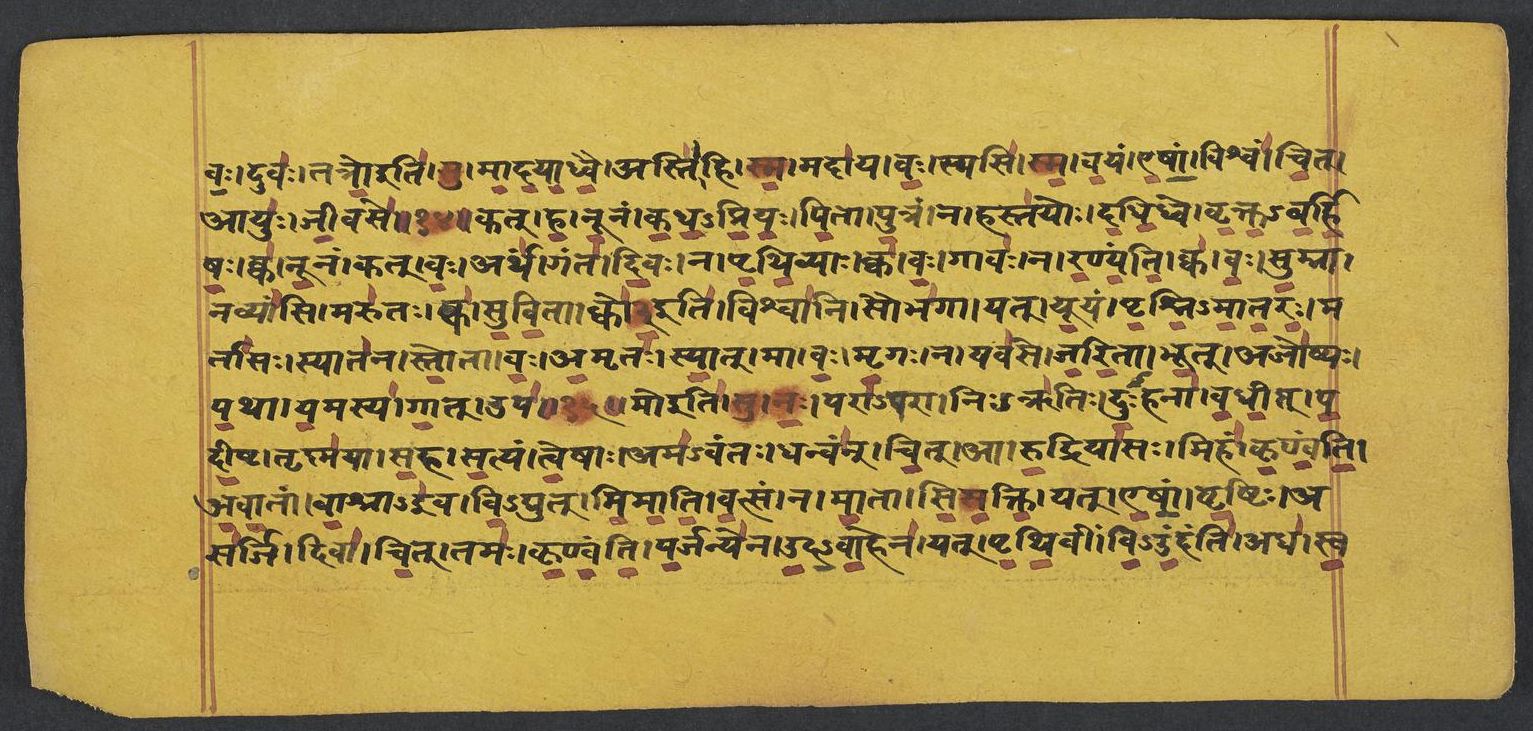
Where on the image
Penn Ms. Coll. 390 Item 41, fol. 27r (OPenn image 28, lower leaf). Checked on the image: the Rigveda text on this page begins in RV 1.37.14 ‹vaḥ duvaḥ tatro iti›. The next page with Rigveda text, fol. 27v, begins in RV 1.38.10 ‹-svanāt marutām viśvam ā›. Verses 1.38.1-9 end on this page.
1kad dha̍ nū̱naṁ ka̍dhapriyaḥ pi̱tā pu̱traṁ na hasta̍yoḥ | da̱dhi̱dhve vṛ̍ktabarhiṣaḥ ||
2kva̍ nū̱naṁ kad vo̱ artha̱ṁ gantā̍ di̱vo na pṛ̍thi̱vyāḥ | kva̍ vo̱ gāvo̱ na ra̍ṇyanti ||
3kva̍ vaḥ su̱mnā navyā̍ṁsi̱ maru̍ta̱ḥ kva̍ suvi̱tā | kvo̱3̱̍ viśvā̍ni̱ saubha̍gā ||
4yad yū̱yam pṛ̍śnimātaro̱ martā̍sa̱ḥ syāta̍na | sto̱tā vo̍ a̱mṛta̍ḥ syāt ||
5mā vo̍ mṛ̱go na yava̍se jari̱tā bhū̱d ajo̍ṣyaḥ | pa̱thā ya̱masya̍ gā̱d upa̍ ||
6mo ṣu ṇa̱ḥ parā̍-parā̱ nirṛ̍tir du̱rhaṇā̍ vadhīt | pa̱dī̱ṣṭa tṛṣṇa̍yā sa̱ha ||
7sa̱tyaṁ tve̱ṣā ama̍vanto̱ dhanva̍ñ ci̱d ā ru̱driyā̍saḥ | miha̍ṁ kṛṇvanty avā̱tām ||
8vā̱śreva̍ vi̱dyun mi̍māti va̱tsaṁ na mā̱tā si̍ṣakti | yad e̍ṣāṁ vṛ̱ṣṭir asa̍rji ||
9divā̍ ci̱t tama̍ḥ kṛṇvanti pa̱rjanye̍nodavā̱hena̍ | yat pṛ̍thi̱vīṁ vyu̱ndanti̍ ||
Compare: Padapāṭha (word-by-word text written in the manuscript; Sansknet e-text via GRETIL)
1kat | ha | nūnam | kadha-priyaḥ | pitā | putram | na | hastayoḥ | dadhidhve | vṛkta-barhiṣaḥ
2kva | nūnam | kat | vaḥ | artham | gantā | divaḥ | na | pṛthivyāḥ | kva | vaḥ | gāvaḥ | na | raṇyanti
3kva | vaḥ | sumnā | navyāṃsi | marutaḥ | kva | suvitā | kva | viśvāni | saubhagā
4yat | yūyam | pṛśni-mātaraḥ | martāsaḥ | syātana | stotā | vaḥ | amṛtaḥ | syāt
5mā | vaḥ | mṛgaḥ | na | yavase | jaritā | bhūt | ajoṣyaḥ | pathā | yamasya | gāt | upa
6mo iti | su | ṇaḥ | parāparā | niḥ-ṛtiḥ | duḥ-hanā | vadhīt | padīṣṭa | tṛṣṇayā | saha
7satyam | tveṣāḥ | ama-vantaḥ | dhanvam | cit | ā | rudriyāsaḥ | miham | kṛṇvanti | avātām
8vāśrāiva | vi-dyut | mimāti | vatsam | na | mātā | siṣakti | yat | eṣām | vṛṣṭiḥ | asarji
9divā | cit | tamaḥ | kṛṇvanti | parjanyena | uda-vāhena | yat | pṛthivīm | vi-undanti
1WHAT now? When will ye take us by both hands, as a dear sire his son, Gods, for whom sacred grass is clipped?
2Now whither? To what goal of yours go ye in heaven, and not on earth? Where do your cows disport themselves?
3Where are your newest favours shown? Where, Maruts, your prosperity? Where all your high felicities?
4If, O ye Maruts, ye the Sons whom Pr̥iṣni bare, were mortal, and Immortal he who sings your praise.
5Then never were your praiser loathed like a wild beast in pasture-land, Nor should he go on Yama's path.
6Let not destructive plague on plague hard to be conquered, strike its down: Let each, with drought, depart from us.
7Truly, they the fierce and mighty Sons of Rudra send their windless Rain e'en on the desert places.
8Like a cow the lightning lows and follows, motherlike, her youngling, When their rain-flood hath been loosened.
9When they inundate the earth they spread forth darkness e'en in day time, With the water-laden rain-cloud.
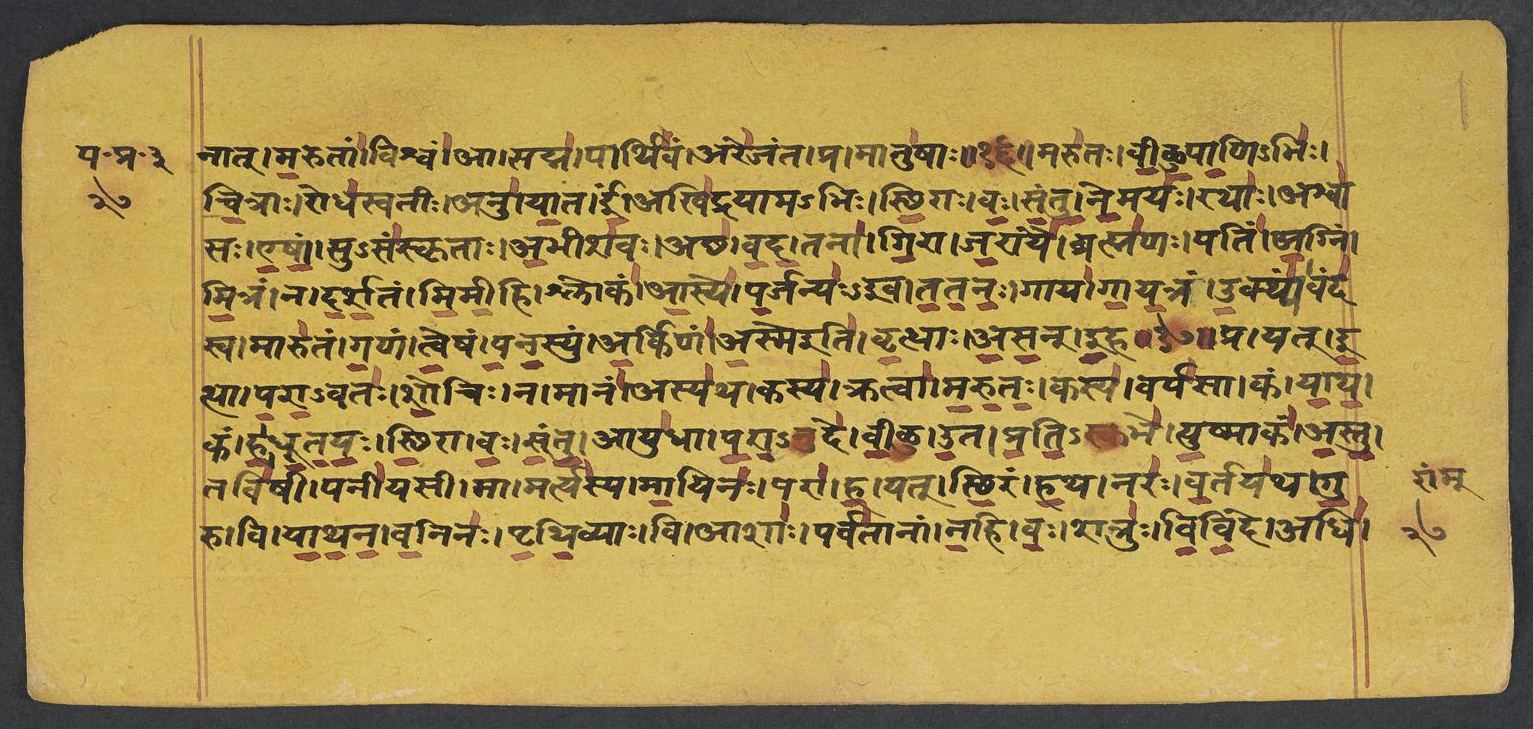
Where on the image
Penn Ms. Coll. 390 Item 41, fol. 27v (OPenn image 29, upper leaf). Checked on the image: the Rigveda text on this page begins in RV 1.38.10 ‹-svanāt marutām viśvam ā›. The next page with Rigveda text, fol. 28r, begins in RV 1.39.4 ‹dyavi na bhūmyām riśādasaḥ›. Verses 1.38.10-15 end on this page; 1.38.10 begins on fol. 27r.
10adha̍ sva̱nān ma̱rutā̱ṁ viśva̱m ā sadma̱ pārthi̍vam | are̍janta̱ pra mānu̍ṣāḥ ||
11maru̍to vīḻupā̱ṇibhi̍ś ci̱trā rodha̍svatī̱r anu̍ | yā̱tem akhi̍drayāmabhiḥ ||
12sthi̱rā va̍ḥ santu ne̱mayo̱ rathā̱ aśvā̍sa eṣām | susa̍ṁskṛtā a̱bhīśa̍vaḥ ||
13acchā̍ vadā̱ tanā̍ gi̱rā ja̱rāyai̱ brahma̍ṇa̱s pati̍m | a̱gnim mi̱traṁ na da̍rśa̱tam ||
14mi̱mī̱hi śloka̍m ā̱sye̍ pa̱rjanya̍ iva tatanaḥ | gāya̍ gāya̱tram u̱kthya̍m ||
15vanda̍sva̱ māru̍taṁ ga̱ṇaṁ tve̱ṣam pa̍na̱syum a̱rkiṇa̍m | a̱sme vṛ̱ddhā a̍sann i̱ha ||
Compare: Padapāṭha (word-by-word text written in the manuscript; Sansknet e-text via GRETIL)
10adha | svanāt | marutām | viśvam | ā | sadma | pārthivam | arejanta | pra | mānuṣāḥ
11marutaḥ | vīḷupāṇi-bhiḥ | citrāḥ | rodhasvatīḥ | anu | yāta | īm | akhidrayāma-bhiḥ
12sthirāḥ | vaḥ | santu | nemayaḥ | rathāḥ | aśvāsaḥ | eṣām | su-saṃskṛtāḥ | abhīśavaḥ
13accha | vada | tanā | girā | jarāyai | brahmaṇaḥ | patim | agnim | mitram | na | darśatam
14mimīhi | ślokam | āsye | parjanyaḥ-iva | tatanaḥ | gāya | gāyatram | ukthyam
15vandasva | mārutam | gaṇam | tveṣam | panasyum | arkiṇam | asme iti | vṛddhāḥ | asan | iha
10O Maruts, at your voice's sound this earthly habitation shakes, And each man reels who dwells therein.
11O Maruts, with your strong-hoofed steeds, unhindered in their courses, haste Along the bright embanked streams.
12Firm be the fellies of your wheels, steady your horses and your cars, And may your reins be fashioned well.
13Invite thou hither with this song, for praise, Agni the Lord of Prayer, Him who is fair as Mitra is.
14Form in thy mouth the hymn of praise expand thee like, a rainy cloud Sing forth the measured eulogy.
15Sing glory to the Marut host, praiseworthy, tuneful, vigorous: Here let the Strong Ones dwell with us.
Notes
- Sanskrit: Aufrecht's edition (1877) with the Vedic accents, as entered by van Nooten and Holland (GRETIL).
- English: Ralph T. H. Griffith, The Hymns of the Rigveda (1889-1892; 2nd ed. 1896-1897), from the VedaWeb digital text; OCR slips in that text were corrected against the printed 2nd edition (data/sources/rigveda/griffith_errata.json).
- Padapāṭha (edition text): Sansknet e-text via GRETIL (CC BY-NC-SA 4.0).
Cite
Sources
- Source: Penn Ms. Coll. 390 Item 41 (undated (catalogued with Penn's 18th-19th c. Vedic manuscripts)), OPenn, Public Domain Mark + Aufrecht's accented text (GRETIL) + Griffith's English (VedaWeb) (holding institution)
- Critical edition: Aufrecht (1877), accented e-text via GRETIL
← previous · → next · v cycle view · l back to library