Rigveda 1.37: To the Maruts
Introduction
Rigveda 1.37 is a hymn of 15 verses addressed to the Maruts. It stands in book (maṇḍala) 1, a collection of hymns by many families of poets. The Rigveda is the oldest collection of Sanskrit hymns, composed in the second half of the second millennium BCE and handed down orally for many centuries before it was written down.
The manuscript shown is Penn Ms. Coll. 390 Item 41 (University of Pennsylvania), an undated paper manuscript of the padapāṭha (the word-by-word recitation text, in which every word is written separately and compounds are split) of the whole Ṛgveda in Devanāgarī, 884 leaves in fascicles, 7-9 lines to the page, accents in red; this hymn stands on fol. 26r-27r. Each section below gives the verses that end on one page; the page boundaries were read on the images (the opening words of every page), not counted out. Where the manuscript is a padapāṭha (the word-by-word recitation text), the section shows Aufrecht's continuous (saṃhitā) text first and, as the edition text, the padapāṭha of the same verses, which is the form written on the page.
How was this verified? (Provenance)
Where on the image
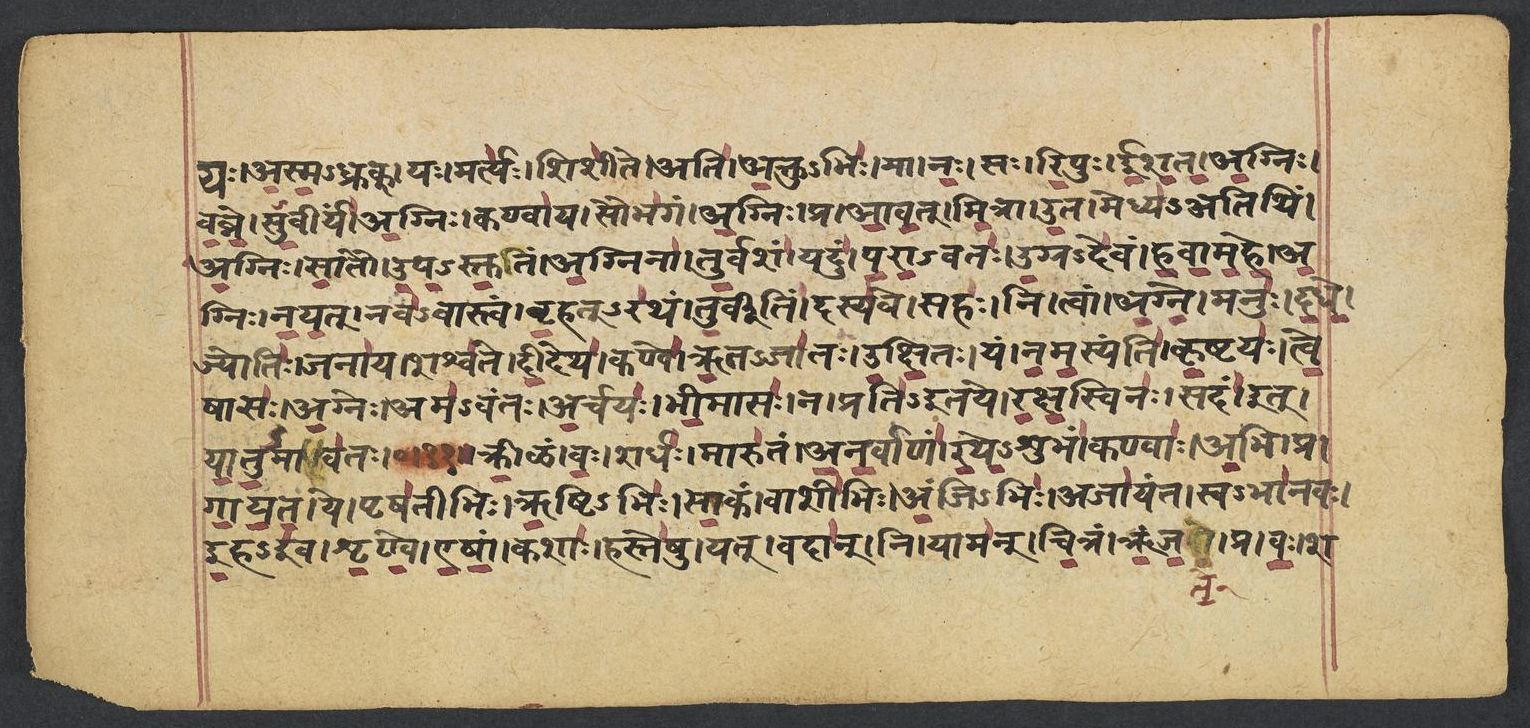
Penn Ms. Coll. 390 Item 41, fol. 26r (OPenn image 27, lower leaf). Checked on the image: the Rigveda text on this page begins in RV 1.36.16 ‹yaḥ asma-dhruk yaḥ martyaḥ›. The next page with Rigveda text, fol. 26v, begins in RV 1.37.4 ‹-śardhāya ghṛṣvaye tveṣa-dyumnāya śuṣmiṇe›. Verses 1.37.1-3 end on this page.
1krī̱ḻaṁ va̱ḥ śardho̱ māru̍tam ana̱rvāṇa̍ṁ rathe̱śubha̍m | kaṇvā̍ a̱bhi pra gā̍yata ||
2ye pṛṣa̍tībhir ṛ̱ṣṭibhi̍ḥ sā̱kaṁ vāśī̍bhir a̱ñjibhi̍ḥ | ajā̍yanta̱ svabhā̍navaḥ ||
3i̱heva̍ śṛṇva eṣā̱ṁ kaśā̱ haste̍ṣu̱ yad vadā̍n | ni yāma̍ñ ci̱tram ṛ̍ñjate ||
Compare: Padapāṭha (word-by-word text written in the manuscript; Sansknet e-text via GRETIL)
1krīḷam | vaḥ | śardhaḥ | mārutam | anarvāṇam | rathe--śubham | kaṇvāḥ | abhi | pra | gāyata
2ye | pṛṣatībhiḥ | ṛṣṭi-bhiḥ | sākam | vāśībhiḥ | añji-bhiḥ | ajāyanta | sva-bhānavaḥ
3iha-iva | śṛṇva | eṣām | kaśāḥ | hasteṣu | yat | vadān | ni | yāman | citram | ṛñjate
1SING forth, O Kaṇvas, to your band of Maruts unassailable, Sporting, resplendent on their car
2They who, self-luminous, were born together, with the spotted deer, Spears, swords, and glittering ornaments.
3One hears, as though 'twere close at hand, the cracking of the whips they hold They gather glory on their way.
Where on the image
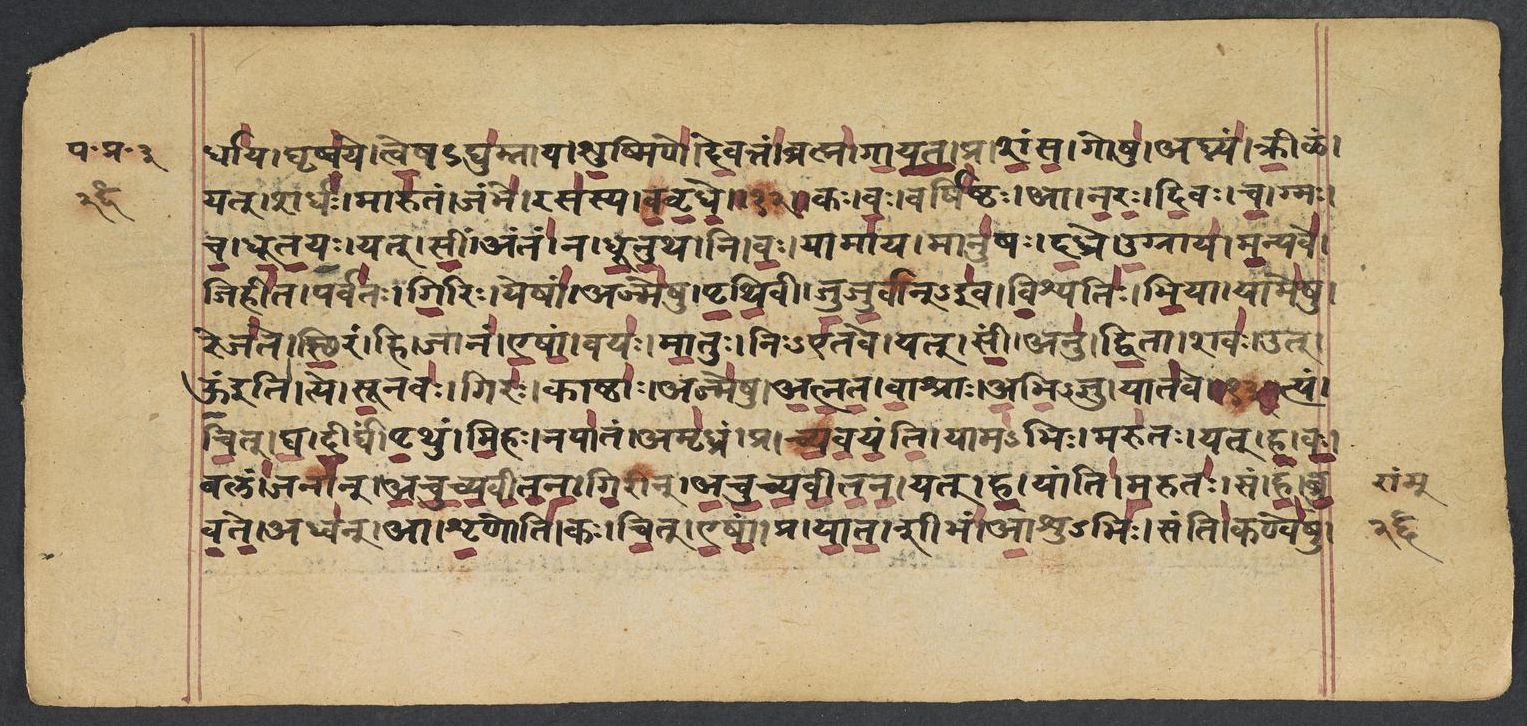
Penn Ms. Coll. 390 Item 41, fol. 26v (OPenn image 28, upper leaf). Checked on the image: the Rigveda text on this page begins in RV 1.37.4 ‹-śardhāya ghṛṣvaye tveṣa-dyumnāya śuṣmiṇe›. The next page with Rigveda text, fol. 27r, begins in RV 1.37.14 ‹vaḥ duvaḥ tatro iti›. Verses 1.37.4-13 end on this page; 1.37.4 begins on fol. 26r.
4pra va̱ḥ śardhā̍ya̱ ghṛṣva̍ye tve̱ṣadyu̍mnāya śu̱ṣmiṇe̍ | de̱vatta̱m brahma̍ gāyata ||
5pra śa̍ṁsā̱ goṣv aghnya̍ṁ krī̱ḻaṁ yac chardho̱ māru̍tam | jambhe̱ rasa̍sya vāvṛdhe ||
6ko vo̱ varṣi̍ṣṭha̱ ā na̍ro di̱vaś ca̱ gmaś ca̍ dhūtayaḥ | yat sī̱m anta̱ṁ na dhū̍nu̱tha ||
7ni vo̱ yāmā̍ya̱ mānu̍ṣo da̱dhra u̱grāya̍ ma̱nyave̍ | jihī̍ta̱ parva̍to gi̱riḥ ||
8yeṣā̱m ajme̍ṣu pṛthi̱vī ju̍ju̱rvām̐ i̍va vi̱śpati̍ḥ | bhi̱yā yāme̍ṣu̱ reja̍te ||
9sthi̱raṁ hi jāna̍m eṣā̱ṁ vayo̍ mā̱tur nire̍tave | yat sī̱m anu̍ dvi̱tā śava̍ḥ ||
10ud u̱ tye sū̱navo̱ gira̱ḥ kāṣṭhā̱ ajme̍ṣv atnata | vā̱śrā a̍bhi̱jñu yāta̍ve ||
11tyaṁ ci̍d ghā dī̱rgham pṛ̱thum mi̱ho napā̍ta̱m amṛ̍dhram | pra cyā̍vayanti̱ yāma̍bhiḥ ||
12maru̍to̱ yad dha̍ vo̱ bala̱ṁ janā̍m̐ acucyavītana | gi̱rīm̐r a̍cucyavītana ||
13yad dha̱ yānti̍ ma̱ruta̱ḥ saṁ ha̍ bruva̱te 'dhva̱nn ā | śṛ̱ṇoti̱ kaś ci̍d eṣām ||
Compare: Padapāṭha (word-by-word text written in the manuscript; Sansknet e-text via GRETIL)
4pra | vaḥ | śardhāya | ghṛṣvaye | tveṣa-dyumnāya | śuṣmiṇe | devattam | brahma | gāyata
5pra | śaṃsa | goṣu | aghnyam | krīḷam | yat | śardhaḥ | mārutam | jambhe | rasasya | vavṛdhe
6kaḥ | vaḥ | varṣiṣṭhaḥ | ā | naraḥ | divaḥ | ca | gmaḥ | ca | dhūtayaḥ | yat | sīm | antam | na | dhūnutha
7ni | vaḥ | yāmāya | mānuṣaḥ | dadhre | ugrāya | manyave | jihīta | parvataḥ | giriḥ
8yeṣām | ajmeṣu | pṛthivī | jujurvān-iva | viśpatiḥ | bhiyā | yāmeṣu | rejate
9sthiram | hi | jānam | eṣām | vayaḥ | mātuḥ | niḥ-etave | yat | sīm | anu | dvitā | śavaḥ
10ut | oṃ iti | tye | sūnavaḥ | giraḥ | kāṣṭhāḥ | ajmeṣu | atnata | vāśrāḥ | abhi-jñu | yātave
11tyam | cit | gha | dīrgham | pṛthum | mihaḥ | napātam | amṛdhram | pra | cyavayanti | yāma-bhiḥ
12marutaḥ | yat | ha | vaḥ | balam | janān | acucyavītana | girīn | acucyavītana
13yat | ha | yānti | marutaḥ | sam | ha | bruvate | adhvan | ā | śṛṇoti | kaḥ | cit | eṣām
4Now sing ye forth the God-given hymn to your exultant Marut host, The fiercely-vigorous, the strong.
5Praise ye the Bull among the cows; for 'tis the Maruts' sportive band: It strengthened as it drank the rain.
6Who is your mightiest, Heroes, when, O shakers of the earth and heaven, Ye shake them like a garment's hem?
7At your approach man holds him down before the fury of your wrath: The rugged-jointed mountain yields.
8They at whose racings forth the earth, like an age-weakened lord of men, Trembles in terror on their ways.
9Strong is their birth: vigour have they to issue from their Mother; strength, Yea, even twice enough, is theirs.
10And these, the Sons, the Singers, in their racings have enlarged the bounds, So that the kine must walk knee-deep.
11Before them, on the ways they go, they drop this offspring of the cloud, Long, broad, and inexhaustible.
12O Maruts, as your strength is great, so have ye cast men down on earth, So have ye made the mountains fall.
13The while the Maruts pass along, they talk together on the way: Doth any hear them as they speak?
Where on the image
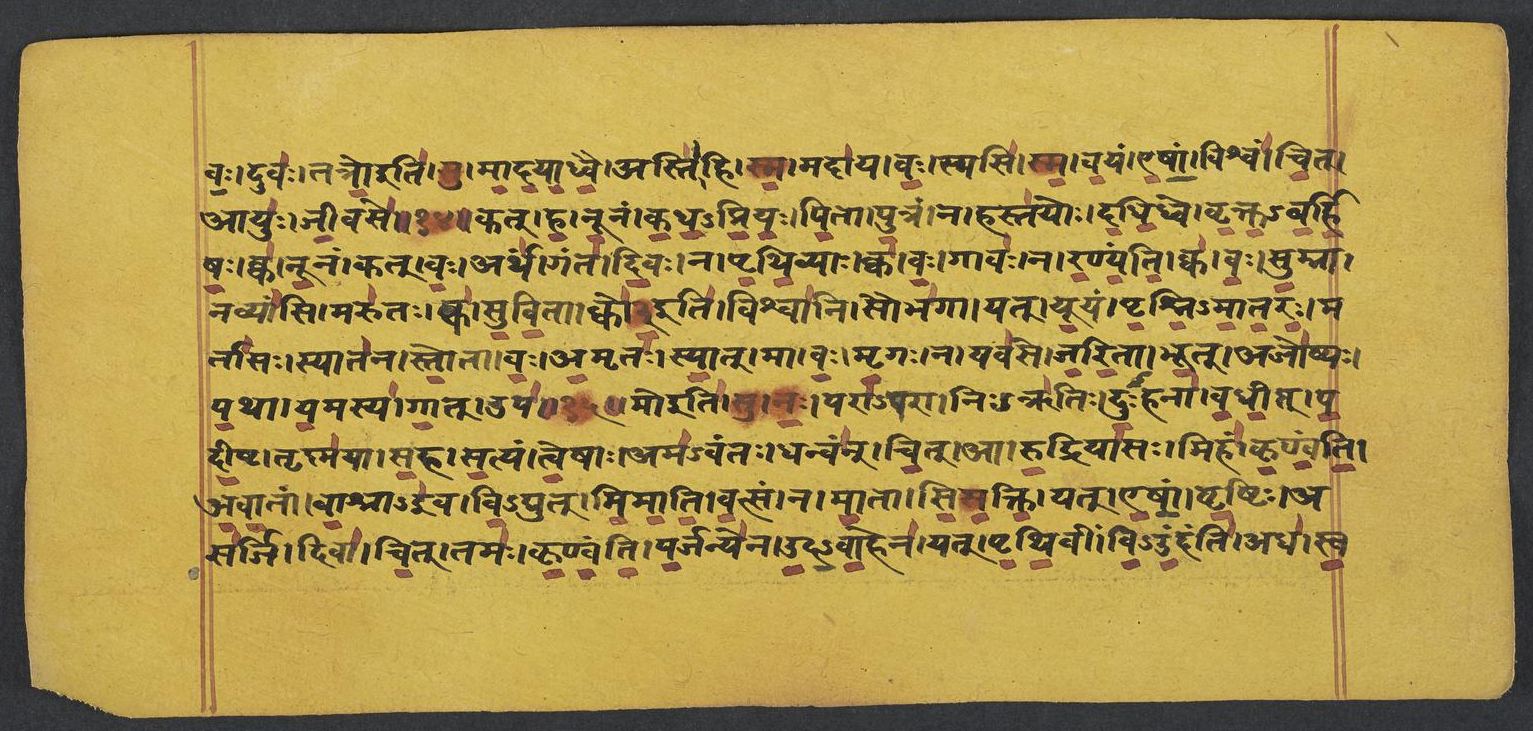
Penn Ms. Coll. 390 Item 41, fol. 27r (OPenn image 28, lower leaf). Checked on the image: the Rigveda text on this page begins in RV 1.37.14 ‹vaḥ duvaḥ tatro iti›. The next page with Rigveda text, fol. 27v, begins in RV 1.38.10 ‹-svanāt marutām viśvam ā›. Verses 1.37.14-15 end on this page; 1.37.14 begins on fol. 26v.
14pra yā̍ta̱ śībha̍m ā̱śubhi̱ḥ santi̱ kaṇve̍ṣu vo̱ duva̍ḥ | tatro̱ ṣu mā̍dayādhvai ||
15asti̱ hi ṣmā̱ madā̍ya va̱ḥ smasi̍ ṣmā va̱yam e̍ṣām | viśva̍ṁ ci̱d āyu̍r jī̱vase̍ ||
Compare: Padapāṭha (word-by-word text written in the manuscript; Sansknet e-text via GRETIL)
14pra | yāta | śībham | āśubhiḥ | santi | kaṇveṣu | vaḥ | duvaḥ | tatro iti | su | mādayādhvai
15asti | hi | sma | madāya | vaḥ | smasi | sma | vayam | eṣām | viśvam | cit | āyuḥ | jīvase
14Come quick with swift steeds, for ye have worshippers among Kaṇva's sons May you rejoice among them well.
15All is prepared for your delight. We are their servants evermore, To live as long as life may last.
Notes
- Sanskrit: Aufrecht's edition (1877) with the Vedic accents, as entered by van Nooten and Holland (GRETIL).
- English: Ralph T. H. Griffith, The Hymns of the Rigveda (1889-1892; 2nd ed. 1896-1897), from the VedaWeb digital text; OCR slips in that text were corrected against the printed 2nd edition (data/sources/rigveda/griffith_errata.json).
- Padapāṭha (edition text): Sansknet e-text via GRETIL (CC BY-NC-SA 4.0).
Cite
Sources
- Source: Penn Ms. Coll. 390 Item 41 (undated (catalogued with Penn's 18th-19th c. Vedic manuscripts)), OPenn, Public Domain Mark + Aufrecht's accented text (GRETIL) + Griffith's English (VedaWeb) (holding institution)
- Critical edition: Aufrecht (1877), accented e-text via GRETIL
← previous · → next · v cycle view · l back to library