Rigveda 1.44: To Agni
Introduction
Rigveda 1.44 is a hymn of 14 verses addressed to Agni. It stands in book (maṇḍala) 1, a collection of hymns by many families of poets. The Rigveda is the oldest collection of Sanskrit hymns, composed in the second half of the second millennium BCE and handed down orally for many centuries before it was written down.
The manuscript shown is Penn Ms. Coll. 390 Item 41 (University of Pennsylvania), an undated paper manuscript of the padapāṭha (the word-by-word recitation text, in which every word is written separately and compounds are split) of the whole Ṛgveda in Devanāgarī, 884 leaves in fascicles, 7-9 lines to the page, accents in red; this hymn stands on fol. 30r-31r. Each section below gives the verses that end on one page; the page boundaries were read on the images (the opening words of every page), not counted out. Where the manuscript is a padapāṭha (the word-by-word recitation text), the section shows Aufrecht's continuous (saṃhitā) text first and, as the edition text, the padapāṭha of the same verses, which is the form written on the page.
How was this verified? (Provenance)
Where on the image
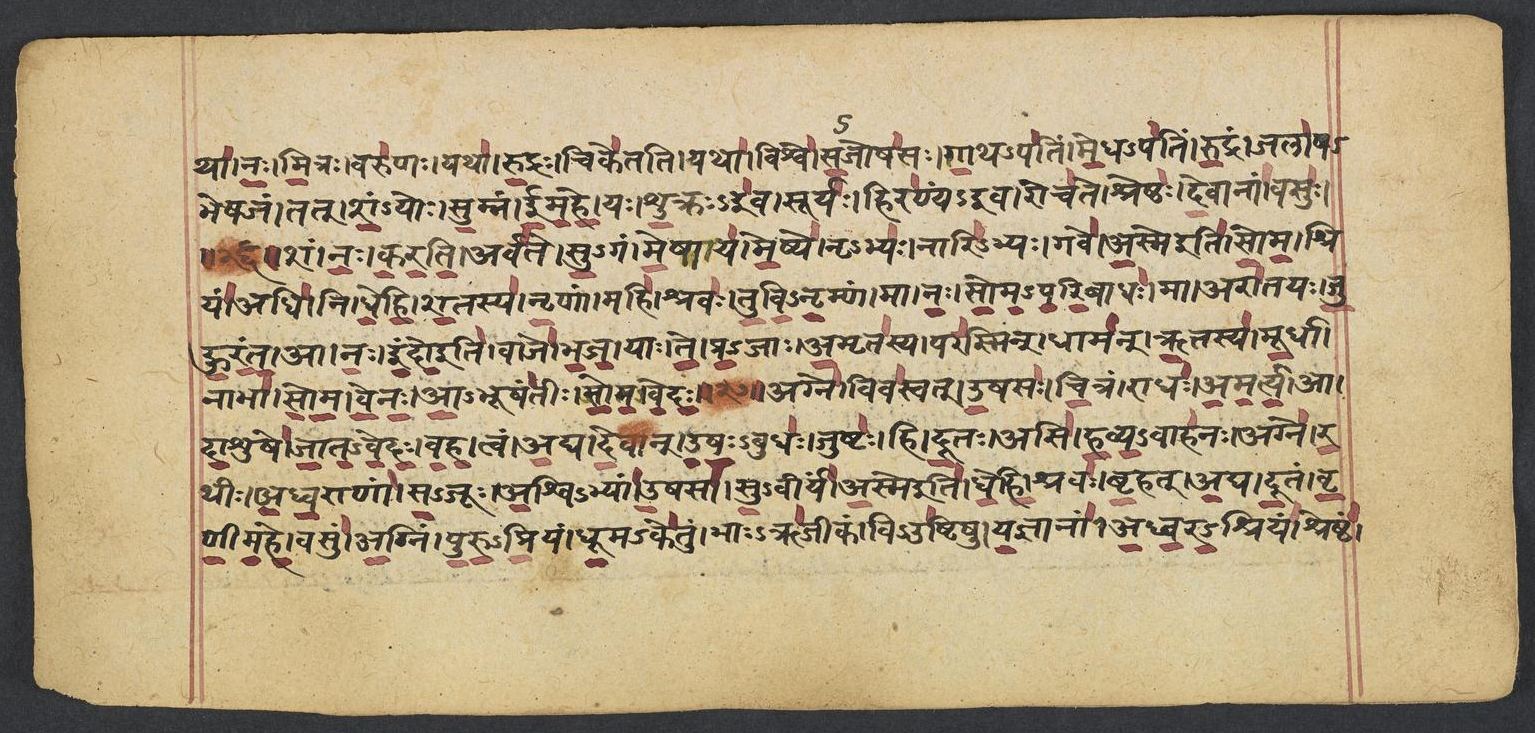
Penn Ms. Coll. 390 Item 41, fol. 30r (OPenn image 31, lower leaf). Checked on the image: the Rigveda text on this page begins in RV 1.43.3 ‹yathā naḥ mitraḥ varuṇaḥ›. The next page with Rigveda text, fol. 30v, begins in RV 1.44.4 ‹yaviṣṭham atithim su-āhutam juṣṭam›. Verses 1.44.1-3 end on this page.
1agne̱ viva̍svad u̱ṣasa̍ś ci̱traṁ rādho̍ amartya | ā dā̱śuṣe̍ jātavedo vahā̱ tvam a̱dyā de̱vām̐ u̍ṣa̱rbudha̍ḥ ||
2juṣṭo̱ hi dū̱to asi̍ havya̱vāha̱no 'gne̍ ra̱thīr a̍dhva̱rāṇā̍m | sa̱jūr a̱śvibhyā̍m u̱ṣasā̍ su̱vīrya̍m a̱sme dhe̍hi̱ śravo̍ bṛ̱hat ||
3a̱dyā dū̱taṁ vṛ̍ṇīmahe̱ vasu̍m a̱gnim pu̍rupri̱yam | dhū̱make̍tu̱m bhāṛ̍jīka̱ṁ vyu̍ṣṭiṣu ya̱jñānā̍m adhvara̱śriya̍m ||
Compare: Padapāṭha (word-by-word text written in the manuscript; Sansknet e-text via GRETIL)
1agne | vivasvat | uṣasaḥ | citram | rādhaḥ | amartya | ā | dāśuṣe | jāta-vedaḥ | vaha | tvam | adya | devām | uṣaḥ-budhaḥ
2juṣṭaḥ | hi | dūtaḥ | asi | havya-vāhanaḥ | agne | rathīḥ | adhvarāṇām | sa-jūḥ | aśvi-bhyām | uṣasā | su-vīryam | asme iti | dhehi | śravaḥ | bṛhat
3adya | dūtam | vṛṇīmahe | vasum | agnim | puru-priyam | dhūma-ketum | bhāḥ-ṛjīkam | vi-uṣṭiṣu | yajñānām | adhvara-śriyam
1IMMORTAL Jâtavedas, thou many-hued fulgent gift of Dawn, Agni, this day to him who pays oblations bring the Gods who waken with the morn.
2For thou art offering-bearer and loved messenger, the charioteer of sacrifice: Accordant with the Aṣvins and with Dawn grant us heroic strength and lofty fame.
3As messenger we choose to-day Agni the good whom many love, Smoke-bannered spreader of the light, at break of day glory of sacrificial rites.
Where on the image
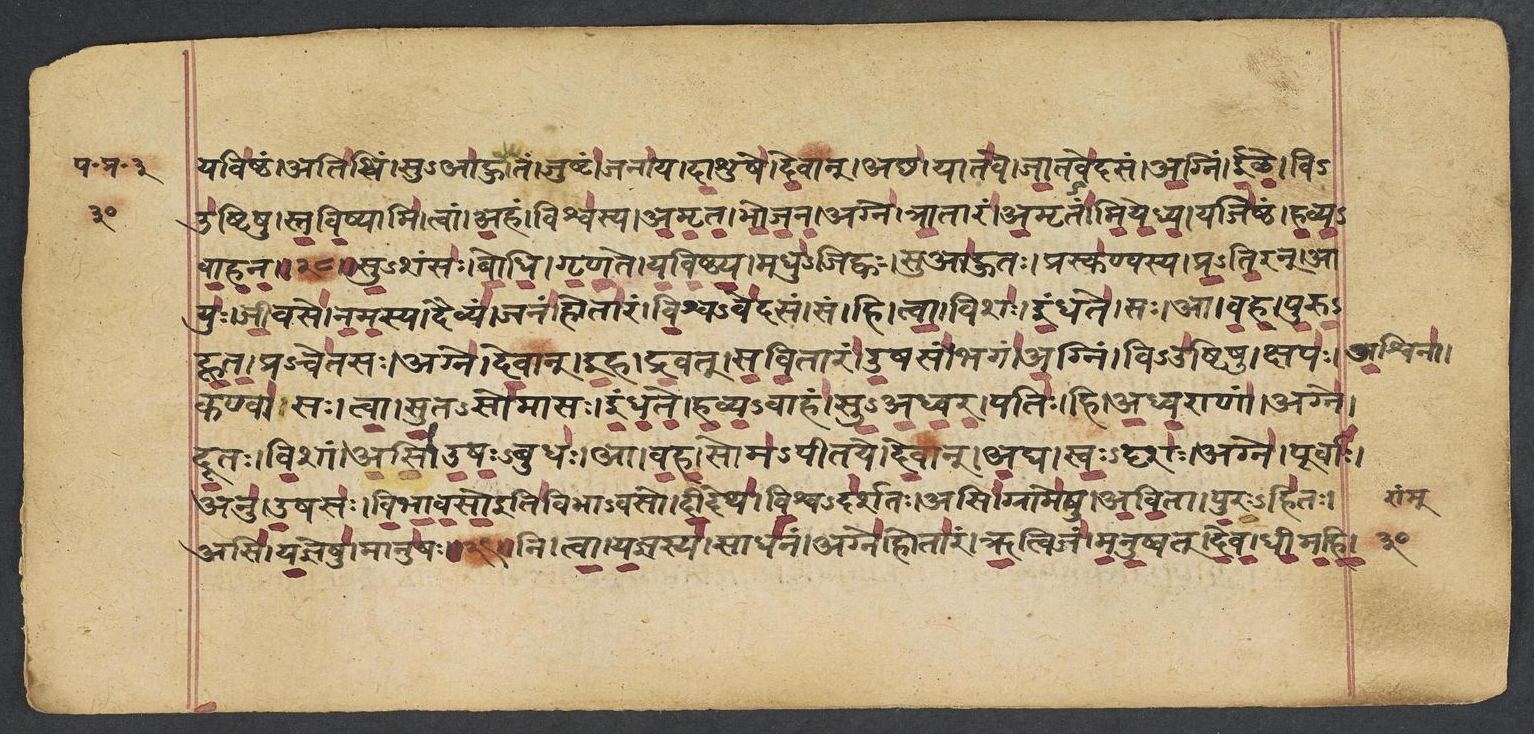
Penn Ms. Coll. 390 Item 41, fol. 30v (OPenn image 32, upper leaf). Checked on the image: the Rigveda text on this page begins in RV 1.44.4 ‹yaviṣṭham atithim su-āhutam juṣṭam›. The next page with Rigveda text, fol. 31r, begins in RV 1.44.11 ‹pra-cetasam jīram dūtam amartyam›. Verses 1.44.4-10 end on this page; 1.44.4 begins on fol. 30r.
4śreṣṭha̱ṁ yavi̍ṣṭha̱m ati̍thi̱ṁ svā̍huta̱ṁ juṣṭa̱ṁ janā̍ya dā̱śuṣe̍ | de̱vām̐ acchā̱ yāta̍ve jā̱tave̍dasam a̱gnim ī̍ḻe̱ vyu̍ṣṭiṣu ||
5sta̱vi̱ṣyāmi̱ tvām a̱haṁ viśva̍syāmṛta bhojana | agne̍ trā̱tāra̍m a̱mṛta̍m miyedhya̱ yaji̍ṣṭhaṁ havyavāhana ||
6su̱śaṁso̍ bodhi gṛṇa̱te ya̍viṣṭhya̱ madhu̍jihva̱ḥ svā̍hutaḥ | praska̍ṇvasya prati̱rann āyu̍r jī̱vase̍ nama̱syā daivya̱ṁ jana̍m ||
7hotā̍raṁ vi̱śvave̍dasa̱ṁ saṁ hi tvā̱ viśa̍ i̱ndhate̍ | sa ā va̍ha puruhūta̱ prace̍ta̱so 'gne̍ de̱vām̐ i̱ha dra̱vat ||
8sa̱vi̱tāra̍m u̱ṣasa̍m a̱śvinā̱ bhaga̍m a̱gniṁ vyu̍ṣṭiṣu̱ kṣapa̍ḥ | kaṇvā̍sas tvā su̱taso̍māsa indhate havya̱vāha̍ṁ svadhvara ||
9pati̱r hy a̍dhva̱rāṇā̱m agne̍ dū̱to vi̱śām asi̍ | u̱ṣa̱rbudha̱ ā va̍ha̱ soma̍pītaye de̱vām̐ a̱dya sva̱rdṛśa̍ḥ ||
10agne̱ pūrvā̱ anū̱ṣaso̍ vibhāvaso dī̱detha̍ vi̱śvada̍rśataḥ | asi̱ grāme̍ṣv avi̱tā pu̱rohi̱to 'si̍ ya̱jñeṣu̱ mānu̍ṣaḥ ||
Compare: Padapāṭha (word-by-word text written in the manuscript; Sansknet e-text via GRETIL)
4śreṣṭham | yaviṣṭham | atithim | su-āhutam | juṣṭam | janāya | dāśuṣe | devān | accha | yātave | jāta-vedasam | agnim | īḷe | vi-uṣṭiṣu
5staviṣyāmi | tvām | aham | viśvasya | amṛta | bhojana | agne | trātāram | amṛtam | miyedhya | yajiṣṭham | havya-vāhana
6suśaṃsaḥ | bodhi | gṛṇate | yaviṣṭhya | madhu-jihvaḥ | su-āhutaḥ | praskaṇvasya | pra-tiran | āyuḥ | jīvase | namasya | daivyam | janam
7hotāram | viśva-vedasam | sam | hi | tvā | viśaḥ | indhate | saḥ | ā | vaha | puru-hūta | pra-cetasaḥ | agne | devān | iha | dravat
8savitāram | uṣasam | aśvinā | bhagam | agnim | vi-uṣṭiṣu | kṣapaḥ | kaṇvāsaḥ | tvā | suta-somāsaḥ | indhate | havya-vāham | su-adhvara
9patiḥ | hi | adhvarāṇām | agne | dūtaḥ | viśām | asi | uṣaḥ-budhaḥ | ā | vaha | soma-pītaye | devān | adya | svaḥ-dṛśaḥ
10agne | pūrvāḥ | anu | uṣasaḥ | vibhāvaso itivibhāvaso | dīdetha | viśva-darśataḥ | asi | grāmeṣu | avitā | puraḥ-hitaḥ | asi | yajñeṣu | mānuṣaḥ
4Him noblest and most youthful, richly worshipped guest, dear to the men who offer gifts, Him, Agni Jâtavedas, I beseech at dawn that he may bring the Gods to us.
5Thee, Agni, will I glorify, deathless nourisher of the world, Immortal, offering-bearer, meet for sacred food, preserver, best at sacrifice.
6Tell good things to thy praiser, O most youthful God, as richly worshipped, honey-tongued, And, granting to Praskaṇva lengthened days of life, show honour to the Heavenly Host.
7For the men, Agni, kindle thee as all possessor and as Priest; So Agni, much-invoked, bring hither with all speed the Gods, the excellently wise,
8At dawn of day, at night, Ushas and Savitar, the Aṣvins, Bhaga, Agni's self: Skilled in fair rites, with Soma poured, the Kaṇvas light thee, the oblation-wafting God.
9For, Agni, Lord of sacrifice and messenger of men art thou: Bring thou the Gods who wake at dawn who see the light, this day to drink the Soma juice.
10Thou shonest forth, O Agni, after former dawns, all visible, O rich in light. Thou art our help in battle-strife, the Friend of inan, the great high priest in sacrifice.
Where on the image
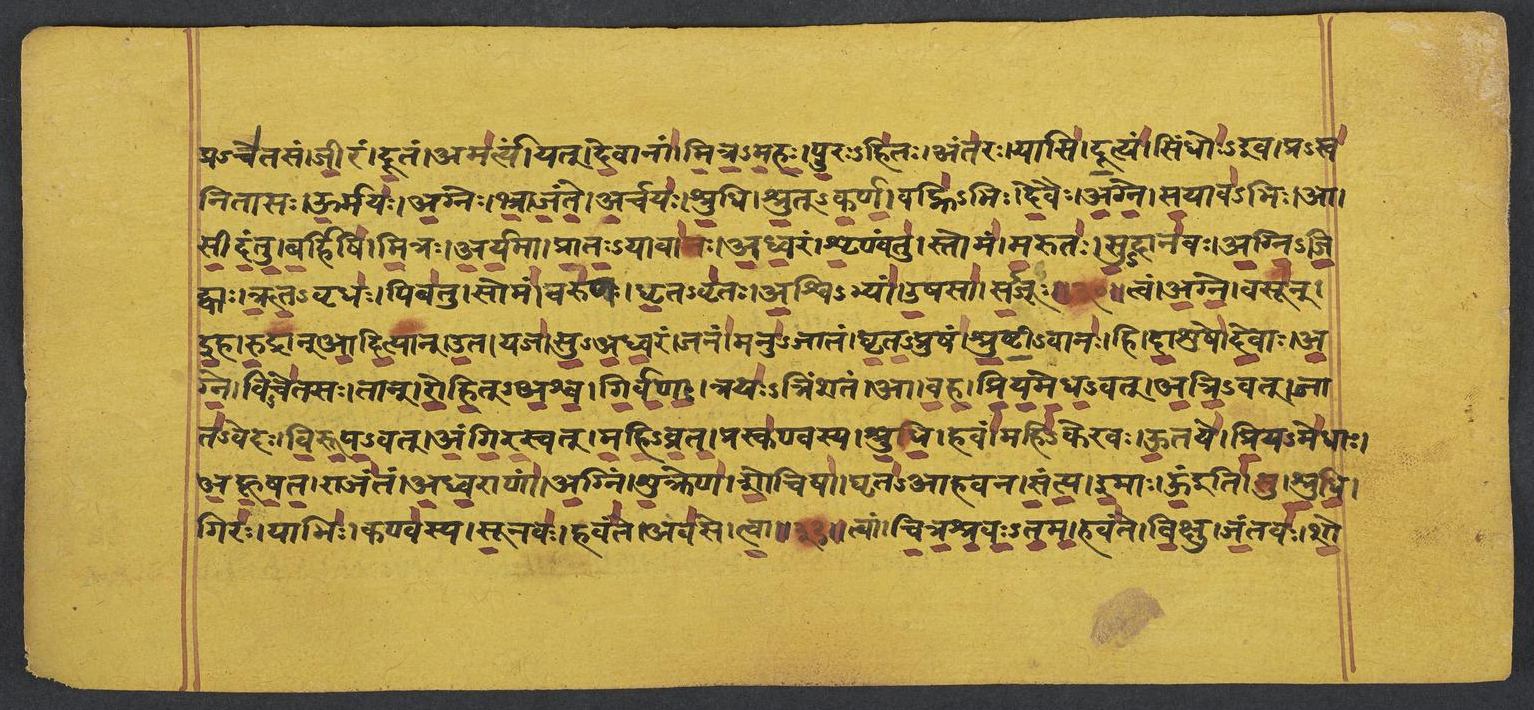
Penn Ms. Coll. 390 Item 41, fol. 31r (OPenn image 32, lower leaf). Checked on the image: the Rigveda text on this page begins in RV 1.44.11 ‹pra-cetasam jīram dūtam amartyam›. The next page with Rigveda text, fol. 31v, begins in RV 1.45.6 ‹-śociḥ-keśam puru-priya agne havyāya›. Verses 1.44.11-14 end on this page; 1.44.11 begins on fol. 30v.
11ni tvā̍ ya̱jñasya̱ sādha̍na̱m agne̱ hotā̍ram ṛ̱tvija̍m | ma̱nu̱ṣvad de̍va dhīmahi̱ prace̍tasaṁ jī̱raṁ dū̱tam ama̍rtyam ||
12yad de̱vānā̍m mitramahaḥ pu̱rohi̱to 'nta̍ro̱ yāsi̍ dū̱tya̍m | sindho̍r iva̱ prasva̍nitāsa ū̱rmayo̱ 'gner bhrā̍jante a̱rcaya̍ḥ ||
13śru̱dhi śru̍tkarṇa̱ vahni̍bhir de̱vair a̍gne sa̱yāva̍bhiḥ | ā sī̍dantu ba̱rhiṣi̍ mi̱tro a̍rya̱mā prā̍ta̱ryāvā̍ṇo adhva̱ram ||
14śṛ̱ṇvantu̱ stoma̍m ma̱ruta̍ḥ su̱dāna̍vo 'gniji̱hvā ṛ̍tā̱vṛdha̍ḥ | piba̍tu̱ soma̱ṁ varu̍ṇo dhṛ̱tavra̍to̱ 'śvibhyā̍m u̱ṣasā̍ sa̱jūḥ ||
Compare: Padapāṭha (word-by-word text written in the manuscript; Sansknet e-text via GRETIL)
11ni | tvā | yajñasya | sādhanam | agne | hotāram | ṛtvijam | manuṣvat | deva | dhīmahi | pra-cetasam | jīram | dūtam | amartyam
12yat | devānām | mitra-mahaḥ | puraḥ-hitaḥ | antaraḥ | yāsi | dūtyam | sindhoḥ-iva | pra-svanitāsaḥ | ūrmayaḥ | agneḥ | bhrājante | arcayaḥ
13śrudhi | śrut-karṇa | vahni-bhiḥ | devaiḥ | agne | sayāva-bhiḥ | ā | sīdantu | barhiṣi | mitraḥ | aryamā | prātaḥ-yāvānaḥ | adhvaram
14śṛṇvantu | somam | marutaḥ | su-dānavaḥ | agni-jihvāḥ | ṛta-vṛdhaḥ | pibatu | somam | varuṇaḥ | dhṛta-vrataḥ | aśvi-bhyām | uṣasā | sa-jūḥ
11Like Manu, we will stablish thee, Agni, performer of the rite, Invoker, ministering Priest, exceeding wise, the swift immortal messenger.
12When as the Gods' High Priest, by many loved, thou dost their mission as their nearest Friend, Then, like the far-resounding billows of the flood, thy flames, O Agni, roar aloud.
13Heat-, Agni, who hast ears to hear, with all thy train of escort Gods; Let Mitra, Aryaman,– seeking betimes our rite, seat them upon the sacred grass.
14Let those who strengthen Law, who bountifully give, the life-tongued Maruts, hear our praise. May Law-supporting Varuṇa with the Aṣvins twain and Ushas, drink the Soma juice.
Notes
- Sanskrit: Aufrecht's edition (1877) with the Vedic accents, as entered by van Nooten and Holland (GRETIL).
- English: Ralph T. H. Griffith, The Hymns of the Rigveda (1889-1892; 2nd ed. 1896-1897), from the VedaWeb digital text; OCR slips in that text were corrected against the printed 2nd edition (data/sources/rigveda/griffith_errata.json).
- Padapāṭha (edition text): Sansknet e-text via GRETIL (CC BY-NC-SA 4.0).
Cite
Sources
- Source: Penn Ms. Coll. 390 Item 41 (undated (catalogued with Penn's 18th-19th c. Vedic manuscripts)), OPenn, Public Domain Mark + Aufrecht's accented text (GRETIL) + Griffith's English (VedaWeb) (holding institution)
- Critical edition: Aufrecht (1877), accented e-text via GRETIL
← previous · → next · v cycle view · l back to library