Rigveda 1.45: To Agni
Introduction
Rigveda 1.45 is a hymn of 10 verses addressed to Agni. It stands in book (maṇḍala) 1, a collection of hymns by many families of poets. The Rigveda is the oldest collection of Sanskrit hymns, composed in the second half of the second millennium BCE and handed down orally for many centuries before it was written down.
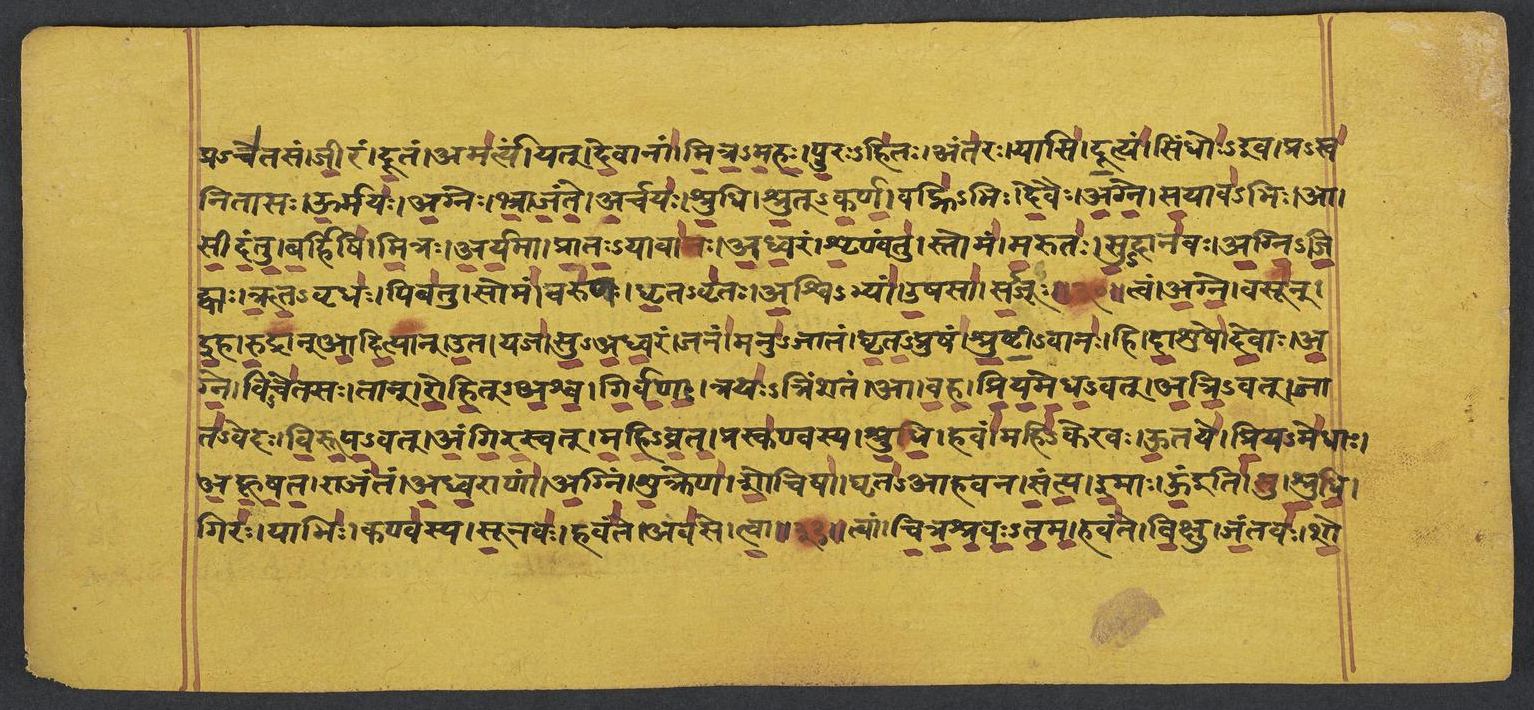
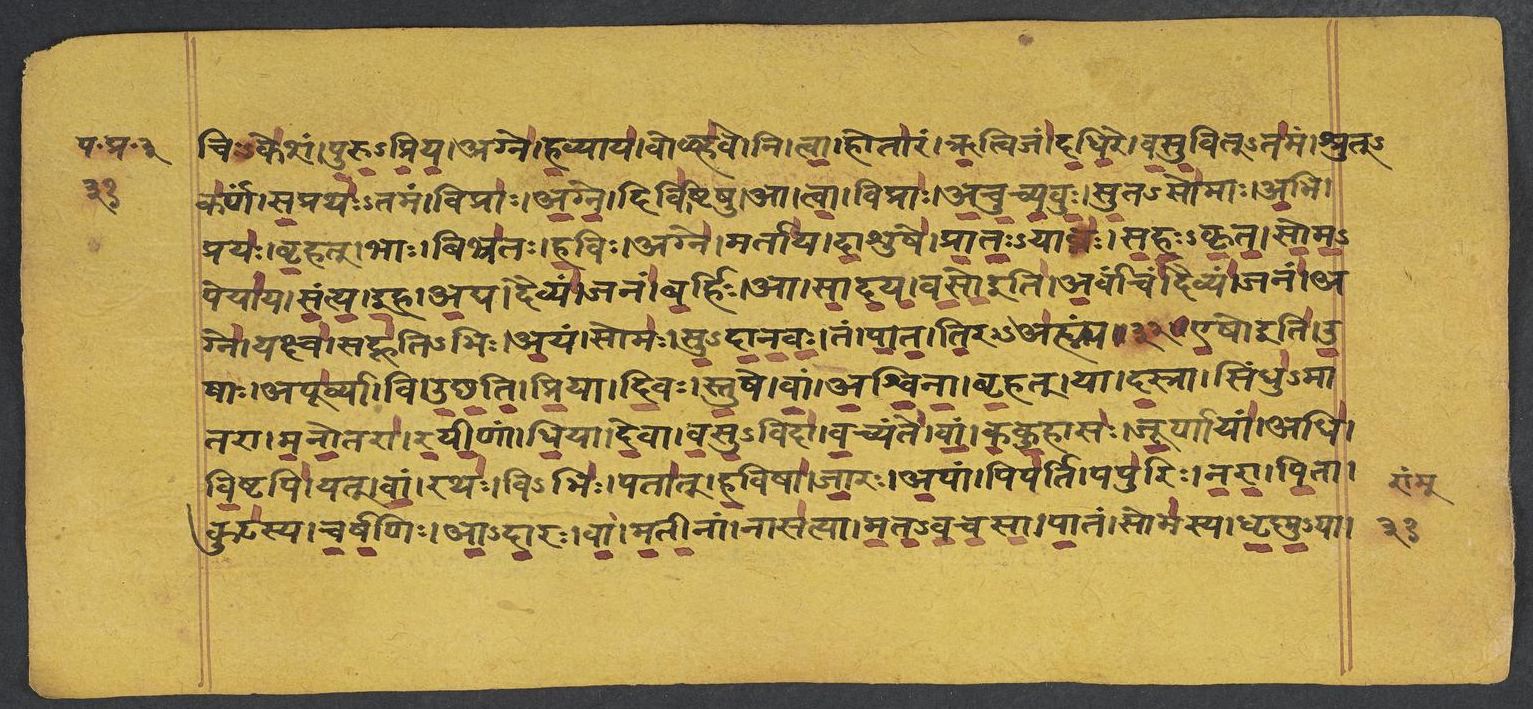
The manuscript shown is Penn Ms. Coll. 390 Item 41 (University of Pennsylvania), an undated paper manuscript of the padapāṭha (the word-by-word recitation text, in which every word is written separately and compounds are split) of the whole Ṛgveda in Devanāgarī, 884 leaves in fascicles, 7-9 lines to the page, accents in red; this hymn stands on fol. 31r-31v. Each section below gives the verses that end on one page; the page boundaries were read on the images (the opening words of every page), not counted out. Where the manuscript is a padapāṭha (the word-by-word recitation text), the section shows Aufrecht's continuous (saṃhitā) text first and, as the edition text, the padapāṭha of the same verses, which is the form written on the page.
How was this verified? (Provenance)
Where on the image
Penn Ms. Coll. 390 Item 41, fol. 31r (OPenn image 32, lower leaf). Checked on the image: the Rigveda text on this page begins in RV 1.44.11 ‹pra-cetasam jīram dūtam amartyam›. The next page with Rigveda text, fol. 31v, begins in RV 1.45.6 ‹-śociḥ-keśam puru-priya agne havyāya›. Verses 1.45.1-5 end on this page.
1tvam a̍gne̱ vasū̍m̐r i̱ha ru̱drām̐ ā̍di̱tyām̐ u̱ta | yajā̍ svadhva̱raṁ jana̱m manu̍jātaṁ ghṛta̱pruṣa̍m ||
2śru̱ṣṭī̱vāno̱ hi dā̱śuṣe̍ de̱vā a̍gne̱ vice̍tasaḥ | tān ro̍hidaśva girvaṇa̱s traya̍striṁśata̱m ā va̍ha ||
3pri̱ya̱me̱dha̱vad a̍tri̱vaj jāta̍vedo virūpa̱vat | a̱ṅgi̱ra̱svan ma̍hivrata̱ praska̍ṇvasya śrudhī̱ hava̍m ||
4mahi̍kerava ū̱taye̍ pri̱yame̍dhā ahūṣata | rāja̍ntam adhva̱rāṇā̍m a̱gniṁ śu̱kreṇa̍ śo̱ciṣā̍ ||
5ghṛtā̍havana santye̱mā u̱ ṣu śru̍dhī̱ gira̍ḥ | yābhi̱ḥ kaṇva̍sya sū̱navo̱ hava̱nte 'va̍se tvā ||
Compare: Padapāṭha (word-by-word text written in the manuscript; Sansknet e-text via GRETIL)
1tvam | agne | vasūn | iha | rudrān | ādityān | uta | yaja | su-adhvaram | janam | manu-jātam | ghṛta-pruṣam
2śruṣṭī-vānaḥ | hi | dāśuṣe | devāḥ | agne | vicetasaḥ | tān | rohit-aśva | girvaṇaḥ | trayaḥ-triṃśatam | ā | vaha
3priyamedha-vat | atri-vat | jāta-vedaḥ | virūpa-vat | aṅgirasvat | mahi-vrata | praskaṇvasya | śrudhi | havam
4mahi-keravaḥ | ūtaye | priya-medhāḥ | ahūṣata | rājantam | adhvarāṇām | agnim | śukreṇa | śociṣā
5ghṛta-āhavana | santya | imāḥ | oṃ iti | su | śrudhi | giraḥ | yābhiḥ | kaṇvasya | sūnavaḥ | havante | avase | tvā
1WORSHIP the Vasus, Agni! here, the Rudras, the Âdityas, all Who spring from Manu, those who know fair rites, who pour their blessings down.
2Agni, the Gods who understand give ear unto the worshipper: Lord of Red Steeds, who lovest song, bring thou those Three-and-Thirty Gods.
3O Jâtavedas, great in act, hearken thou to Praskaṇva's call, As Priyamedha erst was heard, Atri, Virûpa, Angiras.
4The sons of Priyamedha skilled in lofty praise have called for help On Agni who with fulgent flame is Ruler of all holy rites.
5Hear thou, invoked withholy oil, bountiful giver of rewards, These eulogies, whereby the sons of Kaṇva call thee to their aid.
Where on the image
Penn Ms. Coll. 390 Item 41, fol. 31v (OPenn image 33, upper leaf). Checked on the image: the Rigveda text on this page begins in RV 1.45.6 ‹-śociḥ-keśam puru-priya agne havyāya›. The next page with Rigveda text, fol. 32r, begins in RV 1.46.6 ‹yā naḥ pīparat aśvinā›. Verses 1.45.6-10 end on this page; 1.45.6 begins on fol. 31r.
6tvāṁ ci̍traśravastama̱ hava̍nte vi̱kṣu ja̱ntava̍ḥ | śo̱ciṣke̍śam purupri̱yāgne̍ ha̱vyāya̱ voḻha̍ve ||
7ni tvā̱ hotā̍ram ṛ̱tvija̍ṁ dadhi̱re va̍su̱vitta̍mam | śrutka̍rṇaṁ sa̱pratha̍stama̱ṁ viprā̍ agne̱ divi̍ṣṭiṣu ||
8ā tvā̱ viprā̍ acucyavuḥ su̱taso̍mā a̱bhi praya̍ḥ | bṛ̱had bhā bibhra̍to ha̱vir agne̱ martā̍ya dā̱śuṣe̍ ||
9prā̱ta̱ryāvṇa̍ḥ sahaskṛta soma̱peyā̍ya santya | i̱hādya daivya̱ṁ jana̍m ba̱rhir ā sā̍dayā vaso ||
10a̱rvāñca̱ṁ daivya̱ṁ jana̱m agne̱ yakṣva̱ sahū̍tibhiḥ | a̱yaṁ soma̍ḥ sudānava̱s tam pā̍ta ti̱roa̍hnyam ||
Compare: Padapāṭha (word-by-word text written in the manuscript; Sansknet e-text via GRETIL)
6tvām | citraśravaḥ-tama | havante | vikṣu | jantavaḥ | śociḥ-keśam | puru-priya | agne | havyāya | voḷhave
7ni | tvā | hotāram | ṛtvijam | dadhire | vasuvit-tamam | śrut-karṇam | saprathaḥ-tamam | viprāḥ | agne | diviṣṭiṣu
8ā | tvā | viprāḥ | acucyavuḥ | suta-somāḥ | abhi | prayaḥ | bṛhat | bhāḥ | bibhrataḥ | haviḥ | agne | martāya | dāśuṣe
9prātaḥ-yāvnaḥ | sahaḥ-kṛta | soma-peyāya | santya | iha | adya | daivyam | janam | barhiḥ | ā | sādaya | vaso iti
10arvāñcam | daivyam | janam | agne | yakṣva | sahūti-bhiḥ | ayam | somaḥ | su-dānavaḥ | tam | pāta | tiraḥ-ahnyam
6O Agni, loved by many, thou of fame most wondrous, in their homes Men call on thee whose hair is flame, to be the bearer of their gifts.
7Thee, Agni, best to find out wealth, most widely famous, quick to hear, Singers have stablished in their rites Herald and ministering Priest.
8Singers with Soma pressed have made thee, Agni, hasten to the feast, Great light to mortal worshipper, what time they bring the sacred gift.
9Good, bounteous, Son of Strength, this day seat here on sacred grass the Gods Who come at early morn, the host of heaven, to drink the Soma juice
10Bring with joint invocations thou, O Agni, the celestial host: Here stands the Soma, bounteous Gods drink this expressed ere yesterday.
Notes
- Sanskrit: Aufrecht's edition (1877) with the Vedic accents, as entered by van Nooten and Holland (GRETIL).
- English: Ralph T. H. Griffith, The Hymns of the Rigveda (1889-1892; 2nd ed. 1896-1897), from the VedaWeb digital text; OCR slips in that text were corrected against the printed 2nd edition (data/sources/rigveda/griffith_errata.json).
- Padapāṭha (edition text): Sansknet e-text via GRETIL (CC BY-NC-SA 4.0).
Cite
Sources
- Source: Penn Ms. Coll. 390 Item 41 (undated (catalogued with Penn's 18th-19th c. Vedic manuscripts)), OPenn, Public Domain Mark + Aufrecht's accented text (GRETIL) + Griffith's English (VedaWeb) (holding institution)
- Critical edition: Aufrecht (1877), accented e-text via GRETIL
← previous · → next · v cycle view · l back to library