Rigveda 1.48: To Usas
Introduction
Rigveda 1.48 is a hymn of 16 verses addressed to Usas. It stands in book (maṇḍala) 1, a collection of hymns by many families of poets. The Rigveda is the oldest collection of Sanskrit hymns, composed in the second half of the second millennium BCE and handed down orally for many centuries before it was written down.
The manuscript shown is Penn Ms. Coll. 390 Item 41 (University of Pennsylvania), an undated paper manuscript of the padapāṭha (the word-by-word recitation text, in which every word is written separately and compounds are split) of the whole Ṛgveda in Devanāgarī, 884 leaves in fascicles, 7-9 lines to the page, accents in red; this hymn stands on fol. 33r-34r. Each section below gives the verses that end on one page; the page boundaries were read on the images (the opening words of every page), not counted out. Where the manuscript is a padapāṭha (the word-by-word recitation text), the section shows Aufrecht's continuous (saṃhitā) text first and, as the edition text, the padapāṭha of the same verses, which is the form written on the page.
How was this verified? (Provenance)
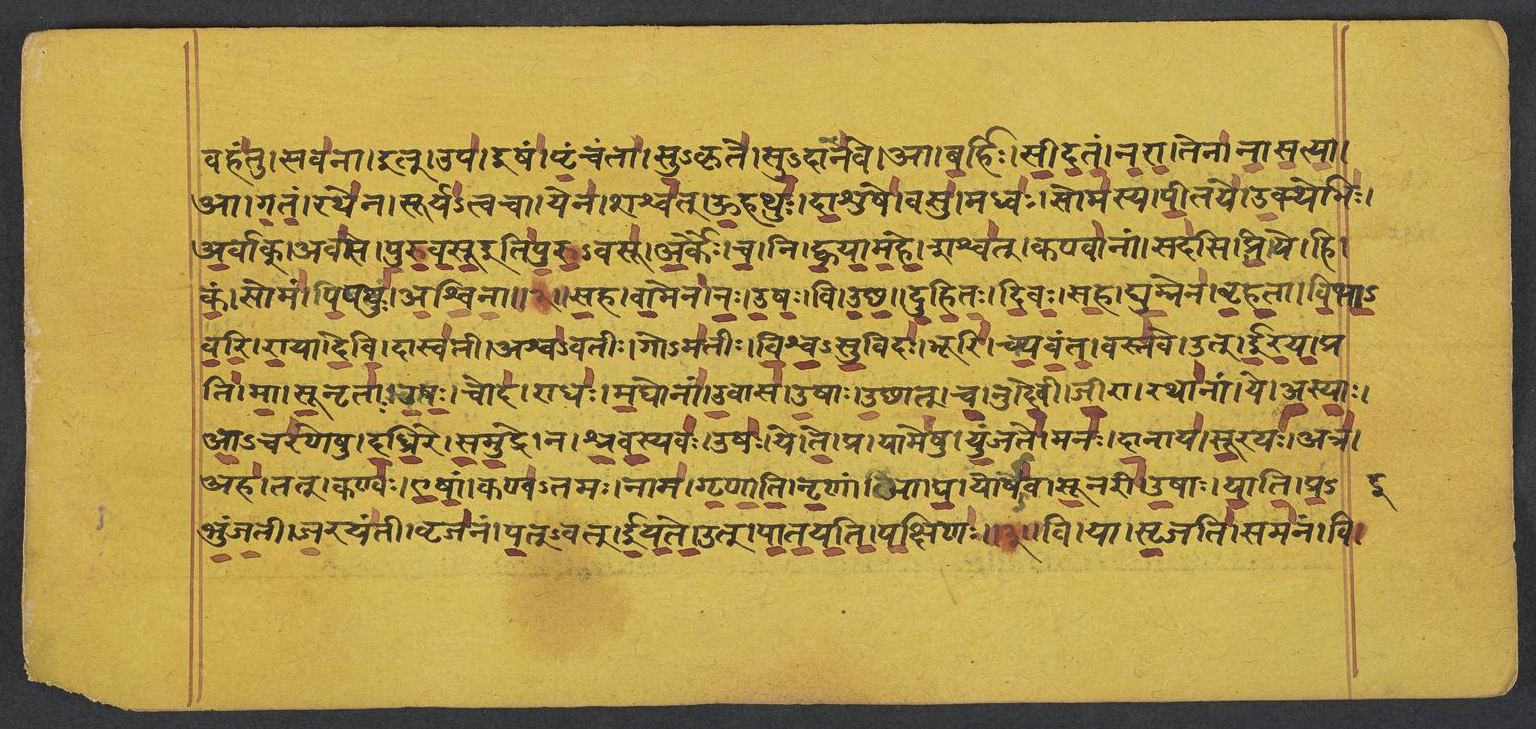
Where on the image
Penn Ms. Coll. 390 Item 41, fol. 33r (OPenn image 34, lower leaf). Checked on the image: the Rigveda text on this page begins in RV 1.47.8 ‹vahantu savanā it upa›. The next page with Rigveda text, fol. 33v, begins in RV 1.48.6 ‹arthinaḥ padam na veti›. Verses 1.48.1-5 end on this page.
1sa̱ha vā̱mena̍ na uṣo̱ vy u̍cchā duhitar divaḥ | sa̱ha dyu̱mnena̍ bṛha̱tā vi̍bhāvari rā̱yā de̍vi̱ dāsva̍tī ||
2aśvā̍vatī̱r goma̍tīr viśvasu̱vido̱ bhūri̍ cyavanta̱ vasta̍ve | ud ī̍raya̱ prati̍ mā sū̱nṛtā̍ uṣa̱ś coda̱ rādho̍ ma̱ghonā̍m ||
3u̱vāso̱ṣā u̱cchāc ca̱ nu de̱vī jī̱rā rathā̍nām | ye a̍syā ā̱cara̍ṇeṣu dadhri̱re sa̍mu̱dre na śra̍va̱syava̍ḥ ||
4uṣo̱ ye te̱ pra yāme̍ṣu yu̱ñjate̱ mano̍ dā̱nāya̍ sū̱raya̍ḥ | atrāha̱ tat kaṇva̍ eṣā̱ṁ kaṇva̍tamo̱ nāma̍ gṛṇāti nṛ̱ṇām ||
5ā ghā̱ yoṣe̍va sū̱nary u̱ṣā yā̍ti prabhuñja̱tī | ja̱raya̍ntī̱ vṛja̍nam pa̱dvad ī̍yata̱ ut pā̍tayati pa̱kṣiṇa̍ḥ ||
Compare: Padapāṭha (word-by-word text written in the manuscript; Sansknet e-text via GRETIL)
1saha | vāmena | naḥ | uṣaḥ | vi | uccha | duhitaḥ | divaḥ | saha | dyumnena | bṛhatā | vibhāvari | rāyā | devi | dāsvatī
2aśva-vatīḥ | go--matīḥ | viśva-suvidaḥ | bhūri | cyavanta | vastave | ut | īraya | prati | mā | sūnṛtāḥ | uṣaḥ | coda | rādhaḥ | maghonām
3uvāsa | uṣāḥ | ucchāt | ca | nu | devī | jīrā | rathānām | ye | asyāḥ | ācaraṇeṣu | dadhrire | samudre | na | śravasyavaḥ
4uṣaḥ | ye | te | pra | yāmeṣu | yuñjate | manaḥ | dānāya | sūrayaḥ | atra | aha | tat | kaṇvaḥ | eṣām | kaṇva-tamaḥ | nāma | gṛṇāti | nṛṇām
5ā | gha | yoṣāiva | sūnarī | uṣāḥ | yāti | pra-bhuñjatī | jarayantī | vṛjanam | pat-vat | īyate | ut | pātayati | pakṣiṇaḥ
1DAWN on us with prosperity, O Ushas, Daughter of the Sky, Dawn with great glory, Goddess, Lady of the Light, dawn thou with riches, Bounteous One.
2They, bringing steeds and kine, boon-givers of all wealth, have oft sped forth to lighten us. O Ushas, waken up for me the sounds of joy: send us the riches of the great.
3Ushas hath dawned, and now shall dawn, the Goddess, driver forth of cars Which, as she cometh nigh, have fixed their thought on her, like glory-seekers on the flood.
4Here Kaṇva, chief of Kaṇva's race, sings forth aloud the glories of the heroes' names,– The. princes who, O Ushas, as thou comest near, direct their thoughts to liberal gifts.
5Like a good matron Ushas comes carefully tending everything: Rousing all life she stirs all creatures that have feet, and makes the birds of air fly up.
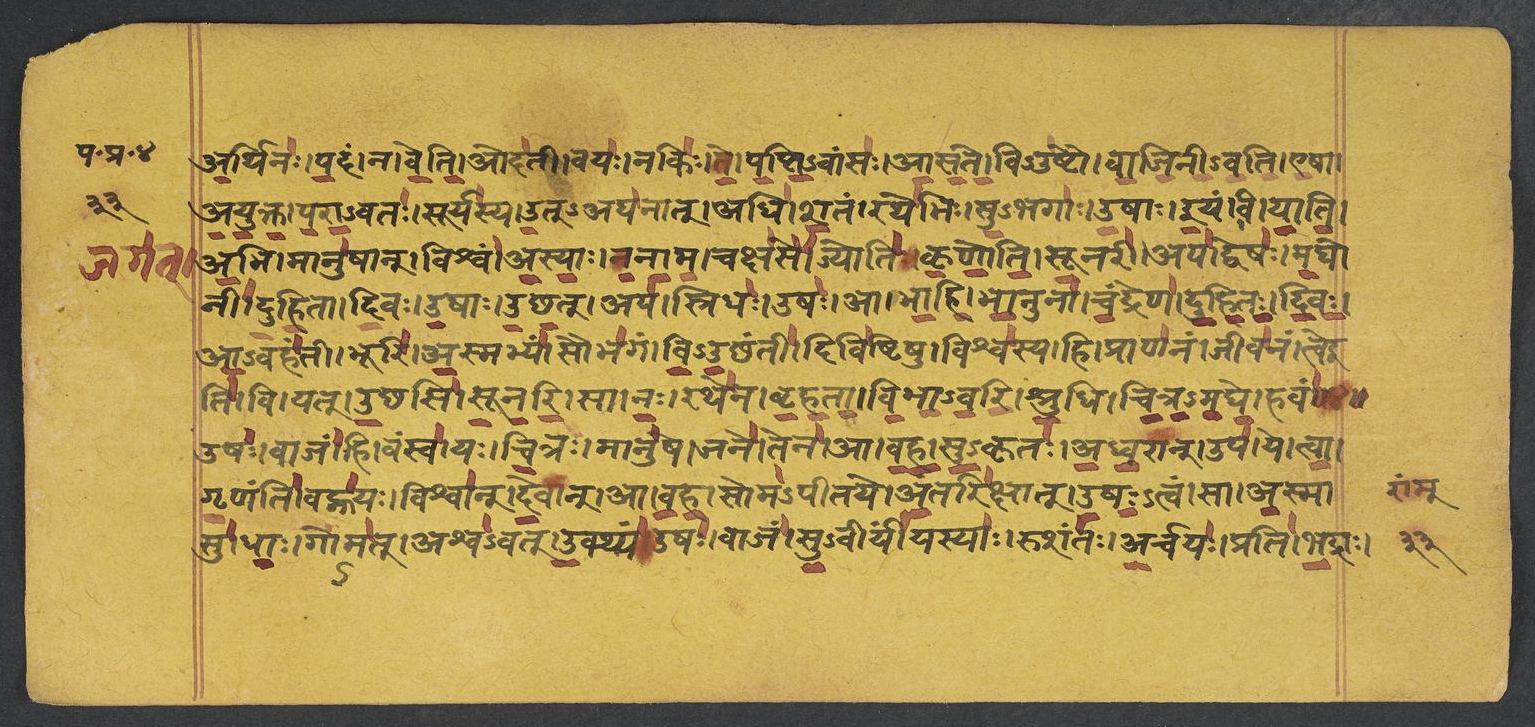
Where on the image
Penn Ms. Coll. 390 Item 41, fol. 33v (OPenn image 35, upper leaf). Checked on the image: the Rigveda text on this page begins in RV 1.48.6 ‹arthinaḥ padam na veti›. The next page with Rigveda text, fol. 34r, begins in RV 1.48.13 ‹adṛkṣata sā naḥ rayim›. Verses 1.48.6-12 end on this page; 1.48.6 begins on fol. 33r.
6vi yā sṛ̱jati̱ sama̍na̱ṁ vy a1̱̍rthina̍ḥ pa̱daṁ na ve̱ty oda̍tī | vayo̱ naki̍ṣ ṭe papti̱vāṁsa̍ āsate̱ vyu̍ṣṭau vājinīvati ||
7e̱ṣāyu̍kta parā̱vata̱ḥ sūrya̍syo̱daya̍nā̱d adhi̍ | śa̱taṁ rathe̍bhiḥ su̱bhago̱ṣā i̱yaṁ vi yā̍ty a̱bhi mānu̍ṣān ||
8viśva̍m asyā nānāma̱ cakṣa̍se̱ jaga̱j jyoti̍ṣ kṛṇoti sū̱narī̍ | apa̱ dveṣo̍ ma̱ghonī̍ duhi̱tā di̱va u̱ṣā u̍ccha̱d apa̱ sridha̍ḥ ||
9uṣa̱ ā bhā̍hi bhā̱nunā̍ ca̱ndreṇa̍ duhitar divaḥ | ā̱vaha̍ntī̱ bhūry a̱smabhya̱ṁ saubha̍gaṁ vyu̱cchantī̱ divi̍ṣṭiṣu ||
10viśva̍sya̱ hi prāṇa̍na̱ṁ jīva̍na̱ṁ tve vi yad u̱cchasi̍ sūnari | sā no̱ rathe̍na bṛha̱tā vi̍bhāvari śru̱dhi ci̍trāmaghe̱ hava̍m ||
11uṣo̱ vāja̱ṁ hi vaṁsva̱ yaś ci̱tro mānu̍ṣe̱ jane̍ | tenā va̍ha su̱kṛto̍ adhva̱rām̐ upa̱ ye tvā̍ gṛ̱ṇanti̱ vahna̍yaḥ ||
12viśvā̍n de̱vām̐ ā va̍ha̱ soma̍pītaye̱ 'ntari̍kṣād uṣa̱s tvam | sāsmāsu̍ dhā̱ goma̱d aśvā̍vad u̱kthya1̱̍m uṣo̱ vāja̍ṁ su̱vīrya̍m ||
Compare: Padapāṭha (word-by-word text written in the manuscript; Sansknet e-text via GRETIL)
6vi | yā | sṛjati | samanam | vi | arthinaḥ | padam | na | veti | odatī | vayaḥ | naki ḥ | te | paptivāṃsaḥ | āsatevi-uṣṭau vājinī-vati
7eṣā | ayukta | parāvataḥ | sūryasya | ut-ayanāt | adhi | śatam | rathebhiḥ | su-bhagā | uṣāḥ | iyam | vi | yāti | abhi | mānuṣān
8viśvam | asyāḥ | nanāma | cakṣase | jagat | jyotiḥ | kṛṇoti | sūnarī | apa | dveṣaḥ | maghonī | divaḥ | uṣāḥ | ucchat | apa | sridhaḥ
9uṣaḥ | ā | bhāhi | bhānunā | candreṇa | duhitaḥ | divaḥ | āvahantī | bhūri | asmabhyam | saubhagam | vi-ucchantī | diviṣṭiṣu
10viśvasya | hi | prāṇanam | jīvanam | tve iti | vi | yat | ucchasi | sūnari | sā | naḥ | rathena | bṛhatā | vibhāvari | śrudhi | citra-maghe | havam
11uṣaḥ | vājam | hi | vaṃsva | yaḥ | citraḥ | mānuṣe | jane | tena | ā | vaha | su-kṛtaḥ | adhvarān | upa | ye | tvā | gṛṇanti | vahnayaḥ
12viśvān | devān | ā | vaha | soma-pītaye | antarikṣāt | uṣaḥ | tvam | sā | asmāsu | ghāḥ | go--mat | aśva-vat | ukthyam | uṣaḥ | vājam | su-vīryam
6She sends the busy forth, each man to his pursuit: delay she knows not as she springs. O rich in opulence, after thy dawning birds that have flown forth no longer rest.
7This Dawn hath yoked her steeds afar, beyond the rising of the Sun: Borne on a hundred chariots she, auspicious Dawn, advances on her way to Men.
8To meet her glance all living creatures bend them down: Excellent One, she makes the light. Ushas, the Daughter of the Sky, the opulent, shines foes and enmities away.
9Shine on us with thy radiant light, O Ushas, Daughter of the Sky, Bringing to us great store of high felicity, and beaming on our solemn rites.
10For in thee is each living creature's breath and life, when, Excellent! thou dawnest forth. Borne on thy lofty car, O Lady of the Light, hear, thou of wondrous wealth, our call.
11O Ushas, win thyself the strength which among men is wonderful. Bring thou thereby the pious unto holy rites, those who as priests sing praise to thee.
12Bring from the firmament, O Ushas, all the Gods, that they may drink our Soma juice, And, being what thou art, vouchsafe us kine and steeds, strength meet for praise and hero might.
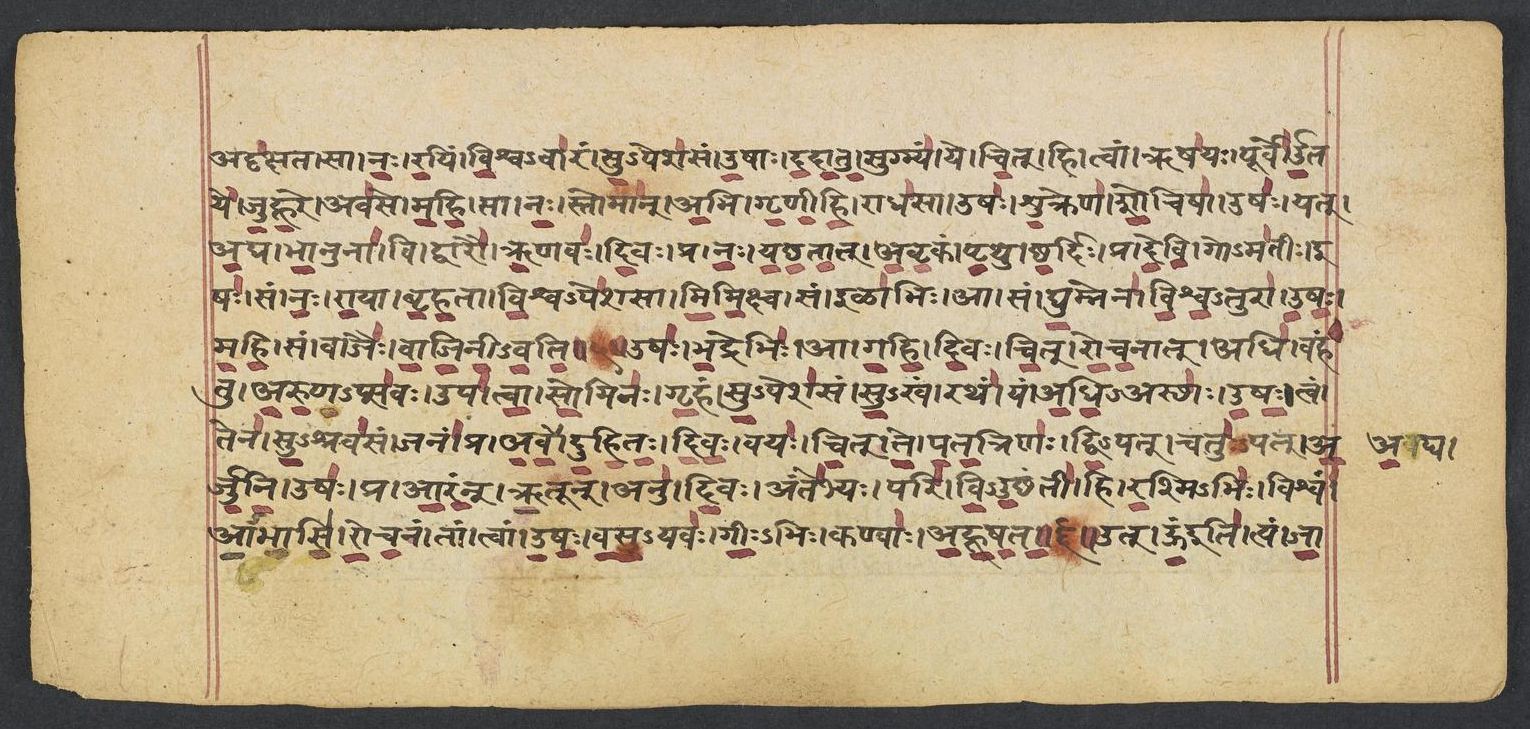
Where on the image
Penn Ms. Coll. 390 Item 41, fol. 34r (OPenn image 35, lower leaf). Checked on the image: the Rigveda text on this page begins in RV 1.48.13 ‹adṛkṣata sā naḥ rayim›. The next page with Rigveda text, fol. 34v, begins in RV 1.50.1 ‹jāta-vedasam devam vahanti ketavaḥ›. Verses 1.48.13-16 end on this page; 1.48.13 begins on fol. 33v.
13yasyā̱ ruśa̍nto a̱rcaya̱ḥ prati̍ bha̱drā adṛ̍kṣata | sā no̍ ra̱yiṁ vi̱śvavā̍raṁ su̱peśa̍sam u̱ṣā da̍dātu̱ sugmya̍m ||
14ye ci̱d dhi tvām ṛṣa̍ya̱ḥ pūrva̍ ū̱taye̍ juhū̱re 'va̍se mahi | sā na̱ḥ stomā̍m̐ a̱bhi gṛ̍ṇīhi̱ rādha̱soṣa̍ḥ śu̱kreṇa̍ śo̱ciṣā̍ ||
15uṣo̱ yad a̱dya bhā̱nunā̱ vi dvārā̍v ṛ̱ṇavo̍ di̱vaḥ | pra no̍ yacchatād avṛ̱kam pṛ̱thu ccha̱rdiḥ pra de̍vi̱ goma̍tī̱r iṣa̍ḥ ||
16saṁ no̍ rā̱yā bṛ̍ha̱tā vi̱śvape̍śasā mimi̱kṣvā sam iḻā̍bhi̱r ā | saṁ dyu̱mnena̍ viśva̱turo̍ṣo mahi̱ saṁ vājai̍r vājinīvati ||
Compare: Padapāṭha (word-by-word text written in the manuscript; Sansknet e-text via GRETIL)
13yasyāḥ | ruśantaḥ | arcayaḥ | prati | bhadrāḥ | adṛkṣata | sā | naḥ | rayim | v iśva-vāram | su-peśasam | uṣāḥ | dadātu | sugmyam
14ye | cit | hi | tvām | ṛṣayaḥ | pūrve | ūtaye | juhūre | avase | mahi | sā | naḥ | stomān | abhi | gṛṇīhi | rādhasā | uṣaḥ | śukreṇa | śociṣā
15uṣaḥ | yat | adya | bhānunā | vi | dvārau | ṛṇavaḥ | divaḥ | pra | naḥ | yacchatāt | avṛkam | pṛthu | chardiḥ | pra | devi | go--matīḥ | iṣaḥ
16sam | naḥ | rāyā | bṛhatā | viśva-peśasā | mimikṣva | sam | iḷābhiḥ | ā | sam | dyumnena | viśva-turā | uṣaḥ | mahi | sam | vājaiḥ | vājinī-vati
13May Ushas whose auspicious rays are seen resplendent round about, Grant us great riches, fair in form, of all good things, wealth which light labour may attain.
14Mighty One, whom the R̥ishis of old time invoked for their protection and their help, O Ushas, graciously answer our songs of praise with bounty and with brilliant light.
15Ushas, as thou with light to day hast opened the twin doors of heaven, So grant thou us a dwelling wide and free from foes. O Goddess, give us food with kine.
16Bring us to wealth abundant, sent in every shape, to plentiful refreshing food, To all-subduing splendour, Ushas, Mighty One, to strength, thou rich in spoil and wealth.
Notes
- Sanskrit: Aufrecht's edition (1877) with the Vedic accents, as entered by van Nooten and Holland (GRETIL).
- English: Ralph T. H. Griffith, The Hymns of the Rigveda (1889-1892; 2nd ed. 1896-1897), from the VedaWeb digital text; OCR slips in that text were corrected against the printed 2nd edition (data/sources/rigveda/griffith_errata.json).
- Padapāṭha (edition text): Sansknet e-text via GRETIL (CC BY-NC-SA 4.0).
Cite
Sources
- Source: Penn Ms. Coll. 390 Item 41 (undated (catalogued with Penn's 18th-19th c. Vedic manuscripts)), OPenn, Public Domain Mark + Aufrecht's accented text (GRETIL) + Griffith's English (VedaWeb) (holding institution)
- Critical edition: Aufrecht (1877), accented e-text via GRETIL
← previous · → next · v cycle view · l back to library