Rigveda 1.59: To Agni Vaisvanara
Introduction
Rigveda 1.59 is a hymn of 7 verses addressed to Agni Vaisvanara. It stands in book (maṇḍala) 1, a collection of hymns by many families of poets. The Rigveda is the oldest collection of Sanskrit hymns, composed in the second half of the second millennium BCE and handed down orally for many centuries before it was written down.
The manuscript shown is Penn Ms. Coll. 390 Item 41 (University of Pennsylvania), an undated paper manuscript of the padapāṭha (the word-by-word recitation text, in which every word is written separately and compounds are split) of the whole Ṛgveda in Devanāgarī, 884 leaves in fascicles, 7-9 lines to the page, accents in red; this hymn stands on fol. 41v-42r. Each section below gives the verses that end on one page; the page boundaries were read on the images (the opening words of every page), not counted out. Where the manuscript is a padapāṭha (the word-by-word recitation text), the section shows Aufrecht's continuous (saṃhitā) text first and, as the edition text, the padapāṭha of the same verses, which is the form written on the page.
How was this verified? (Provenance)
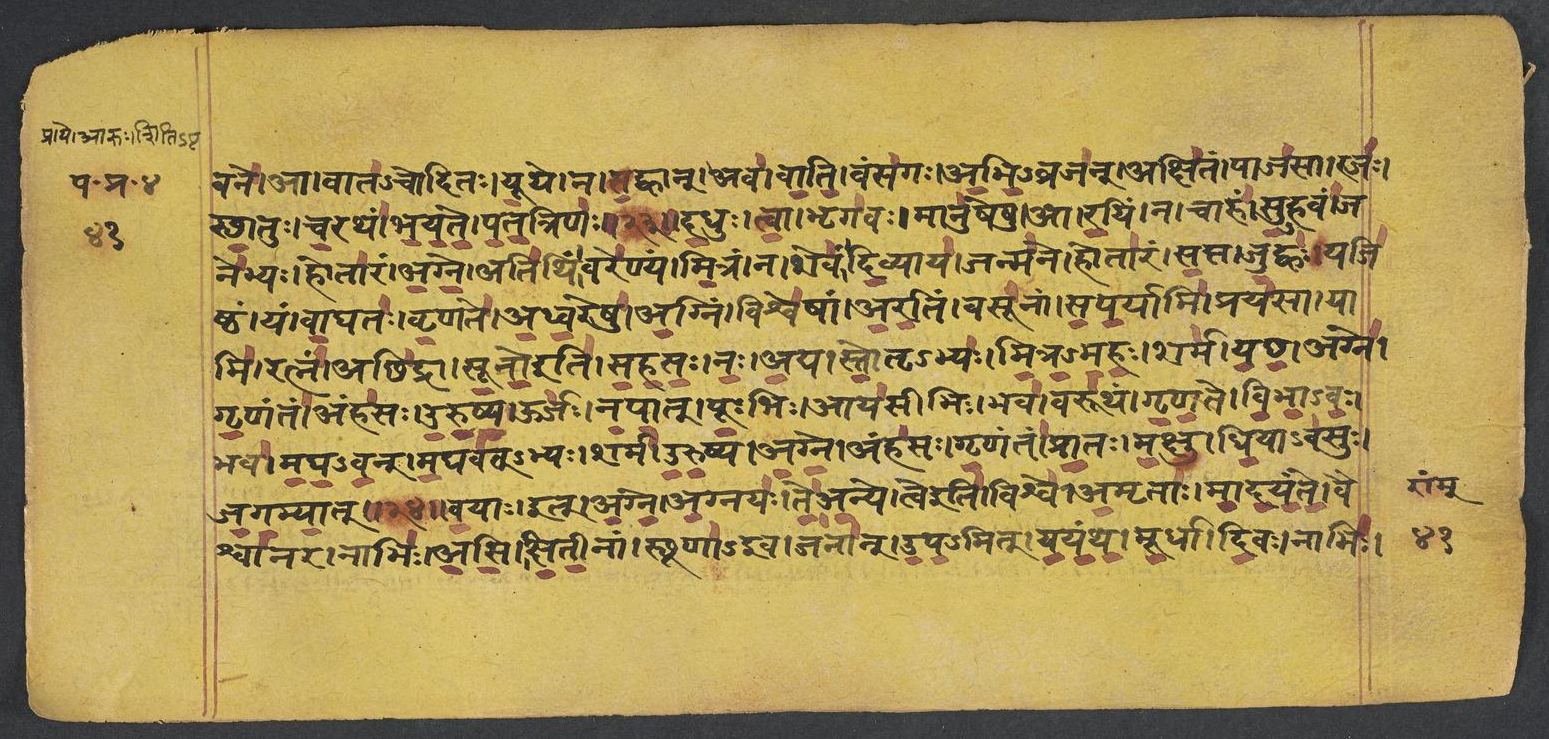
Where on the image
Penn Ms. Coll. 390 Item 41, fol. 41v (OPenn image 43, upper leaf). Checked on the image: the Rigveda text on this page begins in RV 1.58.5 ‹vane ā vāta-coditaḥ yūthe›. The next page with Rigveda text, fol. 42r, begins in RV 1.59.2 ‹agniḥ pṛthivyāḥ atha abhavat›. Verse 1.59.1 ends on this page.
1va̱yā id a̍gne a̱gnaya̍s te a̱nye tve viśve̍ a̱mṛtā̍ mādayante | vaiśvā̍nara̱ nābhi̍r asi kṣitī̱nāṁ sthūṇe̍va̱ janā̍m̐ upa̱mid ya̍yantha ||
Compare: Padapāṭha (word-by-word text written in the manuscript; Sansknet e-text via GRETIL)
1vayāḥ | it | agne | agnayaḥ | te | anye | tve iti | viśve | amṛtāḥ | mādayante | vaiśvānara | nābhiḥ | asi | kṣitīnām | sthūṇāiva | janān | upa-mit | yayantha
1THE other fires are, verily, thy branches; the Immortals all rejoice in thee, O Agni. Centre art thou, Vaigvdnara, of the people, sustaining men like a deep-founded pillar.
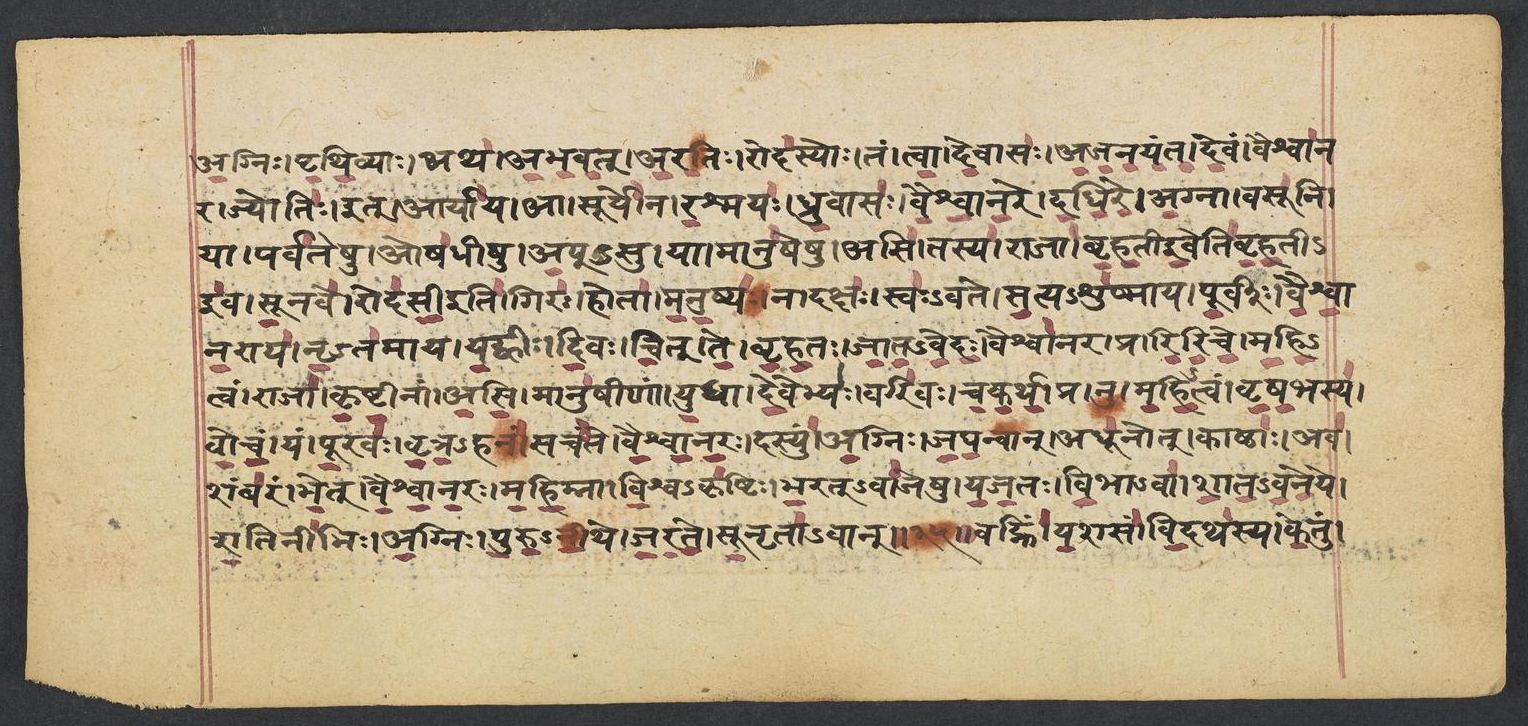
Where on the image
Penn Ms. Coll. 390 Item 41, fol. 42r (OPenn image 43, lower leaf). Checked on the image: the Rigveda text on this page begins in RV 1.59.2 ‹agniḥ pṛthivyāḥ atha abhavat›. The next page with Rigveda text, fol. 42v, begins in RV 1.60.1 ‹supra-avyam dūtam sadyaḥ-artham dvi-janmānam›. Verses 1.59.2-7 end on this page; 1.59.2 begins on fol. 41v.
2mū̱rdhā di̱vo nābhi̍r a̱gniḥ pṛ̍thi̱vyā athā̍bhavad ara̱tī roda̍syoḥ | taṁ tvā̍ de̱vāso̍ 'janayanta de̱vaṁ vaiśvā̍nara̱ jyoti̱r id āryā̍ya ||
3ā sūrye̱ na ra̱śmayo̍ dhru̱vāso̍ vaiśvāna̱re da̍dhire̱ 'gnā vasū̍ni | yā parva̍te̱ṣv oṣa̍dhīṣv a̱psu yā mānu̍ṣe̱ṣv asi̱ tasya̱ rājā̍ ||
4bṛ̱ha̱tī i̍va sū̱nave̱ roda̍sī̱ giro̱ hotā̍ manu̱ṣyo̱3̱̍ na dakṣa̍ḥ | sva̍rvate sa̱tyaśu̍ṣmāya pū̱rvīr vai̍śvāna̱rāya̱ nṛta̍māya ya̱hvīḥ ||
5di̱vaś ci̍t te bṛha̱to jā̍tavedo̱ vaiśvā̍nara̱ pra ri̍rice mahi̱tvam | rājā̍ kṛṣṭī̱nām a̍si̱ mānu̍ṣīṇāṁ yu̱dhā de̱vebhyo̱ vari̍vaś cakartha ||
6pra nū ma̍hi̱tvaṁ vṛ̍ṣa̱bhasya̍ voca̱ṁ yam pū̱ravo̍ vṛtra̱haṇa̱ṁ saca̍nte | vai̱śvā̱na̱ro dasyu̍m a̱gnir ja̍gha̱nvām̐ adhū̍no̱t kāṣṭhā̱ ava̱ śamba̍ram bhet ||
7vai̱śvā̱na̱ro ma̍hi̱mnā vi̱śvakṛ̍ṣṭir bha̱radvā̍jeṣu yaja̱to vi̱bhāvā̍ | śā̱ta̱va̱ne̱ye śa̱tinī̍bhir a̱gniḥ pu̍ruṇī̱the ja̍rate sū̱nṛtā̍vān ||
Compare: Padapāṭha (word-by-word text written in the manuscript; Sansknet e-text via GRETIL)
2mūrdhā | divaḥ | nābhiḥ | agniḥ | pṛthivyāḥ | atha | abhavat | aratiḥ | rodasyoḥ | tam | tvā | devāsaḥ | ajanayanta | devam | vaiśvānara | jyotiḥ | it | āryāya
3ā | sūrye | na | raśmayaḥ | dhruvāsaḥ | vaiśvānare | dadhire | agnā | vasūni | yā | parvateṣu | oṣadhīṣu | ap-su | yā | mānuṣeṣu | asi | tasya | rājā
4bṛhatīivetibṛhatī-iva | sūnave | rodasī iti | giraḥ | hotā | manuṣyaḥ | na | dakṣaḥ | svaḥ-vate | satya-śuṣmāya | pūvīrḥ | vaiśvānarāya | nṛ-tamāya | yahvīḥ
5divaḥ | cit | te | bṛhataḥ | jāta-vedaḥ | vaiśvānara | pra | ririce | mahi-tvam | rājā | kṛṣṭīnām | asi | mānuṣīṇām | yudhā | devebhyaḥ | varivaḥ | cakartha
6pra | nu | mahi-tvam | vṛṣabhasya | vocam | yam | pūravaḥ | vṛtra-hanam | sacante | vaiśvānaraḥ | dasyum | agniḥ | jaghanvān | adhūnot | kāṣṭhāḥ | ava | śambaram | bhet
7vaiśvānaraḥ | mahimnā | viśva-kṛṣṭiḥ | bharat-vājeṣu | yajataḥ | vibhāvā | śāta-vaneye | śatinībhiḥ | agniḥ | puru-nīthe | jarate | sūnṛtāvān
2The forehead of the sky, earth's centre, Agni became the messenger of earth and heaven. Vaiṣvânara, the Deities produced thee, a God, to be a light unto the Ârya.
3As in the Sun firm rays are set for ever, treasures are in Vaiṣvânara, in Agni. Of all the riches in the hills, the waters, the herbs, among mankind, thou art the Sovran.
4As the great World-halves, so are their Son's praises; skilled, as a man, to act, is he the Herald. Vaiṣvânara, celestial, truly mighty, most manly One, hath many a youthful consort.
5Even the lofty heaven, O Jâtavedas Vaiṣvânara, hath not attained thy greatness. Thou art the King of lands where men are settled, thou hast brought comfort to the Gods in battle.
6Now will I tell the greatness of the Hero whom Prarti's sons follow as Vr̥itra's slayer: Agni Vaiṣvânara struck down the Dasyu, cleave Ṣambara through and shattered down his fences.
7Vaiṣvânara, dwelling by his might with all men, far-shining, holy mid the Bharadvâjas, Is lauded, excellent, with hundred praises by Purunîtha, son of Ṣatavani.
Notes
- Sanskrit: Aufrecht's edition (1877) with the Vedic accents, as entered by van Nooten and Holland (GRETIL).
- English: Ralph T. H. Griffith, The Hymns of the Rigveda (1889-1892; 2nd ed. 1896-1897), from the VedaWeb digital text; OCR slips in that text were corrected against the printed 2nd edition (data/sources/rigveda/griffith_errata.json).
- Padapāṭha (edition text): Sansknet e-text via GRETIL (CC BY-NC-SA 4.0).
Cite
Sources
- Source: Penn Ms. Coll. 390 Item 41 (undated (catalogued with Penn's 18th-19th c. Vedic manuscripts)), OPenn, Public Domain Mark + Aufrecht's accented text (GRETIL) + Griffith's English (VedaWeb) (holding institution)
- Critical edition: Aufrecht (1877), accented e-text via GRETIL
← previous · → next · v cycle view · l back to library