Rigveda 1.58: To Agni
Introduction
Rigveda 1.58 is a hymn of 9 verses addressed to Agni. It stands in book (maṇḍala) 1, a collection of hymns by many families of poets. The Rigveda is the oldest collection of Sanskrit hymns, composed in the second half of the second millennium BCE and handed down orally for many centuries before it was written down.
The manuscript shown is Penn Ms. Coll. 390 Item 41 (University of Pennsylvania), an undated paper manuscript of the padapāṭha (the word-by-word recitation text, in which every word is written separately and compounds are split) of the whole Ṛgveda in Devanāgarī, 884 leaves in fascicles, 7-9 lines to the page, accents in red; this hymn stands on fol. 41r-41v. Each section below gives the verses that end on one page; the page boundaries were read on the images (the opening words of every page), not counted out. Where the manuscript is a padapāṭha (the word-by-word recitation text), the section shows Aufrecht's continuous (saṃhitā) text first and, as the edition text, the padapāṭha of the same verses, which is the form written on the page.
How was this verified? (Provenance)
Where on the image
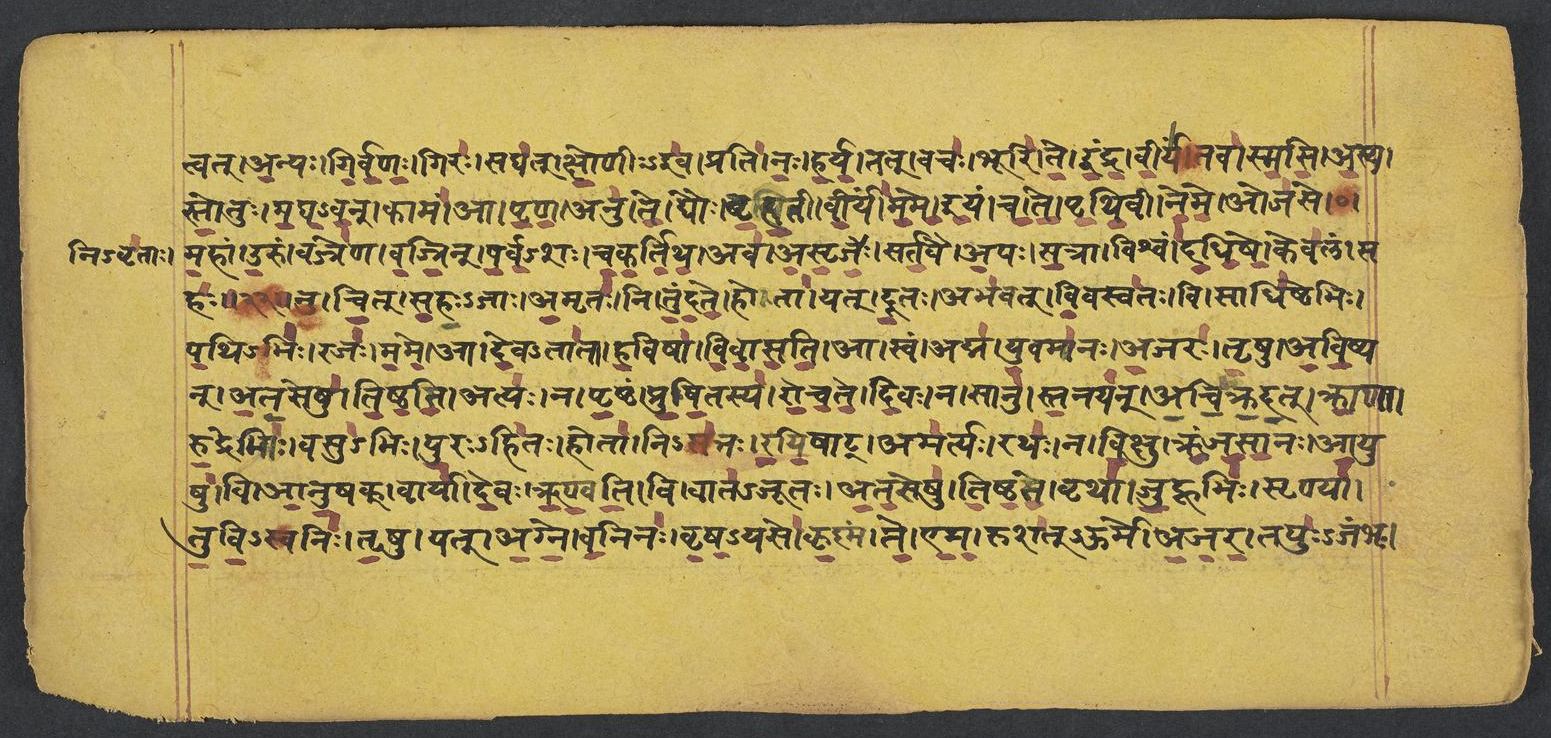
Penn Ms. Coll. 390 Item 41, fol. 41r (OPenn image 42, lower leaf). Checked on the image: the Rigveda text on this page begins in RV 1.57.4 ‹tvat anyaḥ girvaṇaḥ giraḥ›. The next page with Rigveda text, fol. 41v, begins in RV 1.58.5 ‹vane ā vāta-coditaḥ yūthe›. Verses 1.58.1-4 end on this page.
1nū ci̍t saho̱jā a̱mṛto̱ ni tu̍ndate̱ hotā̱ yad dū̱to abha̍vad vi̱vasva̍taḥ | vi sādhi̍ṣṭhebhiḥ pa̱thibhī̱ rajo̍ mama̱ ā de̱vatā̍tā ha̱viṣā̍ vivāsati ||
2ā svam adma̍ yu̱vamā̍no a̱jara̍s tṛ̱ṣv a̍vi̱ṣyann a̍ta̱seṣu̍ tiṣṭhati | atyo̱ na pṛ̱ṣṭham pru̍ṣi̱tasya̍ rocate di̱vo na sānu̍ sta̱naya̍nn acikradat ||
3krā̱ṇā ru̱drebhi̱r vasu̍bhiḥ pu̱rohi̍to̱ hotā̱ niṣa̍tto rayi̱ṣāḻ ama̍rtyaḥ | ratho̱ na vi̱kṣv ṛ̍ñjasā̱na ā̱yuṣu̱ vy ā̍nu̱ṣag vāryā̍ de̱va ṛ̍ṇvati ||
4vi vāta̍jūto ata̱seṣu̍ tiṣṭhate̱ vṛthā̍ ju̱hūbhi̱ḥ sṛṇyā̍ tuvi̱ṣvaṇi̍ḥ | tṛ̱ṣu yad a̍gne va̱nino̍ vṛṣā̱yase̍ kṛ̱ṣṇaṁ ta̱ ema̱ ruśa̍dūrme ajara ||
Compare: Padapāṭha (word-by-word text written in the manuscript; Sansknet e-text via GRETIL)
1nu | cit | sahaḥ-jāḥ | amṛtaḥ | ni | tundate | hotā | yat | dūtaḥ | abhavat | vivasvataḥ | vi | sādhiṣṭhebhiḥ | pathi-bhiḥ | rajaḥ | mame | ā | deva-tātā | haviṣā | vivāsati
2ā | svam | adma | yuvamānaḥ | ajaraḥ | tṛṣu | aviṣyan | ataseṣu | tiṣṭhati | atyaḥ | na | pṛṣṭham | pruṣitasya | rocate | divaḥ | na | sānu | stanayan | acikradat
3kroṇā | rudrebhiḥ | vasu-bhiḥ | puraḥ-hitaḥ | hotā | ni-sattaḥ | rayiṣāṭ | amatyarḥ | rathaḥ | na | vikṣu | ṛñjasānaḥ | āyuṣu | vi | ānuṣak | vāryā | devaḥ | ṛṇvati
4vi | vāta-jūtaḥ | ataseṣu | tiṣṭhate | vṛthā | juhūbhiḥ | sṛṇyā | tuvi-svaṇiḥ | tṛṣu | yat | agne | vaninaḥ | vṛṣa-yase | kṛṣṇam | te | ema | ruśat-ūrme | ajara
1NE'ER waxeth faint the Immortal, Son of Strength, since he, the Herald, hath become Vivasvan's messenger.
2Never decaying, seizing his appropriate food, rapidly, eagerly through the dry wood he spreads. His back, as he is sprinkled, glistens like a horse: loud hath he roared and shouted like the heights of heaven?
3Set high in place o'er all that Vasus, Rudras do, immortal, Lord of riches, seated as High Priest; Hastening like a car to men, to those who live, the God without delay gives boons to be desired.
4Urged by the wind be spreads through dry wood as he lists, armed with his tongues for sickles, with a mighty roar. Black is thy path, Agni, changeless, with glittering waves! when like a bull thou rushest eager to the trees.
Where on the image
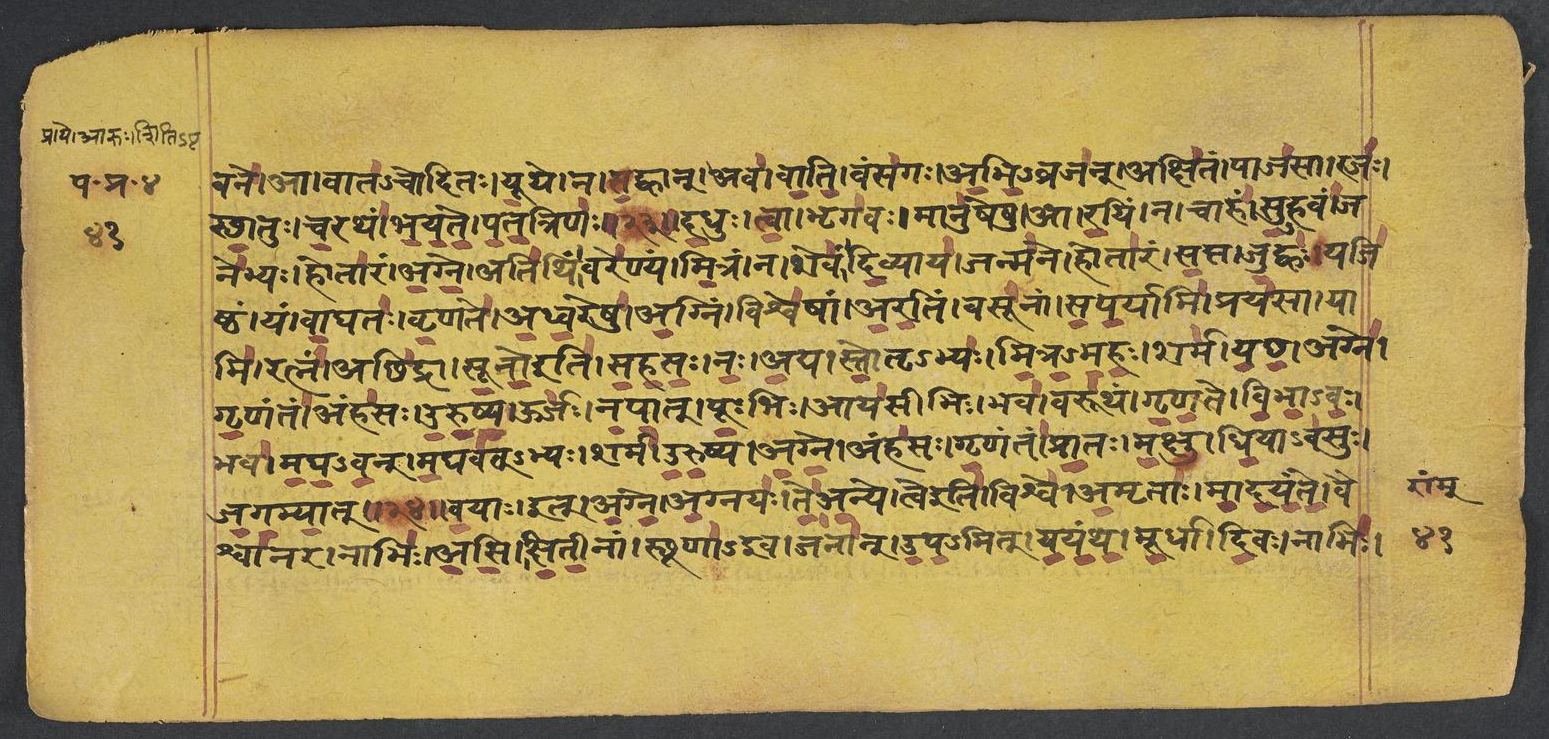
Penn Ms. Coll. 390 Item 41, fol. 41v (OPenn image 43, upper leaf). Checked on the image: the Rigveda text on this page begins in RV 1.58.5 ‹vane ā vāta-coditaḥ yūthe›. The next page with Rigveda text, fol. 42r, begins in RV 1.59.2 ‹agniḥ pṛthivyāḥ atha abhavat›. Verses 1.58.5-9 end on this page; 1.58.5 begins on fol. 41r.
5tapu̍rjambho̱ vana̱ ā vāta̍codito yū̱the na sā̱hvām̐ ava̍ vāti̱ vaṁsa̍gaḥ | a̱bhi̱vraja̱nn akṣi̍ta̱m pāja̍sā̱ raja̍ḥ sthā̱tuś ca̱ratha̍m bhayate pata̱triṇa̍ḥ ||
6da̱dhuṣ ṭvā̱ bhṛga̍vo̱ mānu̍ṣe̱ṣv ā ra̱yiṁ na cāru̍ṁ su̱hava̱ṁ jane̍bhyaḥ | hotā̍ram agne̱ ati̍thi̱ṁ vare̍ṇyam mi̱traṁ na śeva̍ṁ di̱vyāya̱ janma̍ne ||
7hotā̍raṁ sa̱pta ju̱hvo̱3̱̍ yaji̍ṣṭha̱ṁ yaṁ vā̱ghato̍ vṛ̱ṇate̍ adhva̱reṣu̍ | a̱gniṁ viśve̍ṣām ara̱tiṁ vasū̍nāṁ sapa̱ryāmi̱ praya̍sā̱ yāmi̱ ratna̍m ||
8acchi̍drā sūno sahaso no a̱dya sto̱tṛbhyo̍ mitramaha̱ḥ śarma̍ yaccha | agne̍ gṛ̱ṇanta̱m aṁha̍sa uru̱ṣyorjo̍ napāt pū̱rbhir āya̍sībhiḥ ||
9bhavā̱ varū̍thaṁ gṛṇa̱te vi̍bhāvo̱ bhavā̍ maghavan ma̱ghava̍dbhya̱ḥ śarma̍ | u̱ru̱ṣyāgne̱ aṁha̍so gṛ̱ṇanta̍m prā̱tar ma̱kṣū dhi̱yāva̍sur jagamyāt ||
Compare: Padapāṭha (word-by-word text written in the manuscript; Sansknet e-text via GRETIL)
5tapuḥ-jambhaḥ | vane | ā | vāta-coditaḥ | yūthe | na | sāhvān | ava | vāti | vaṃsagaḥ | abhi-vrajan | akṣitam | pājasā | rajaḥ | sthātuḥ | caratham | bhayate | patatri ṇaḥ
6dadhuḥ | tvā | bhṛgavaḥ | mānuṣeṣu | ā | rayim | na | cārum | su-havam | janebhyaḥ | hotāram | agne | atithim | vareṇyam | mitram | na | śevam | divyāya | janmane
7hotāram | sapta | juhvaḥ | yajiṣṭham | yam | vāghataḥ | vṛṇate | adhvareṣu | agnim | viśveṣām | aratim | vasūnām | saparyāmi | prayasā | yāmi | ratnam
8acchidrā | sūno iti | sahasaḥ | naḥ | adya | stotṛ-bhyaḥ | mitra-mahaḥ | śarma | yaccha | agne | gṛṇantam | aṃhasaḥ | uruṣya | ūrjaḥ | napāt | pūḥ-bhiḥ | āyasībhiḥ
9bhava | varūtham | gṛṇate | vibhāvaḥ | bhava | maghavan | maghavat-bhyaḥ | śarma | uruṣya | agne | aṃhasaḥ | gṛṇantam | prātaḥ | makṣu | dhiyāvasuḥ | jagamyāt
5With teeth of flame, wind-driven, through the wood he speeds, triumphant like a bull among the herd of cows, With bright strength roaming to the everlasting air: things fixed, things moving quake before him as he flies.
6The Bhr̥igus established thee among mankind for men, like as a treasure, beauteous, easy to invoke; Thee, Agni, as a herald and choice-worthy guest, as an auspicious Friend to the Celestial Race.
7Agni, the seven tongues' deftest Sacrificer, him whom the priests elect at solemn worship, The Herald, messenger of all the Vasus, I serve with dainty food, I ask for riches.
8Grant, Son of Strength, thou rich in friends, a refuge without a flaw this day to us thy praisers. O Agni, Son of Strength, with forts of iron preserve thou from distress the man who lauds thee.
9Be thou a refuge, Bright One, to the singer, a shelter, Bounteous Lord, to those who worship. Preserve the singer from distress, O Agni. May he, enriched with prayer, come soon and early.
Notes
- Sanskrit: Aufrecht's edition (1877) with the Vedic accents, as entered by van Nooten and Holland (GRETIL).
- English: Ralph T. H. Griffith, The Hymns of the Rigveda (1889-1892; 2nd ed. 1896-1897), from the VedaWeb digital text; OCR slips in that text were corrected against the printed 2nd edition (data/sources/rigveda/griffith_errata.json).
- Padapāṭha (edition text): Sansknet e-text via GRETIL (CC BY-NC-SA 4.0).
Cite
Sources
- Source: Penn Ms. Coll. 390 Item 41 (undated (catalogued with Penn's 18th-19th c. Vedic manuscripts)), OPenn, Public Domain Mark + Aufrecht's accented text (GRETIL) + Griffith's English (VedaWeb) (holding institution)
- Critical edition: Aufrecht (1877), accented e-text via GRETIL
← previous · → next · v cycle view · l back to library