Rigveda 1.61: To Indra
Introduction
Rigveda 1.61 is a hymn of 16 verses addressed to Indra. It stands in book (maṇḍala) 1, a collection of hymns by many families of poets. The Rigveda is the oldest collection of Sanskrit hymns, composed in the second half of the second millennium BCE and handed down orally for many centuries before it was written down.
The manuscript shown is Penn Ms. Coll. 390 Item 41 (University of Pennsylvania), an undated paper manuscript of the padapāṭha (the word-by-word recitation text, in which every word is written separately and compounds are split) of the whole Ṛgveda in Devanāgarī, 884 leaves in fascicles, 7-9 lines to the page, accents in red; this hymn stands on fol. 42v-44r. Each section below gives the verses that end on one page; the page boundaries were read on the images (the opening words of every page), not counted out. Where the manuscript is a padapāṭha (the word-by-word recitation text), the section shows Aufrecht's continuous (saṃhitā) text first and, as the edition text, the padapāṭha of the same verses, which is the form written on the page.
How was this verified? (Provenance)
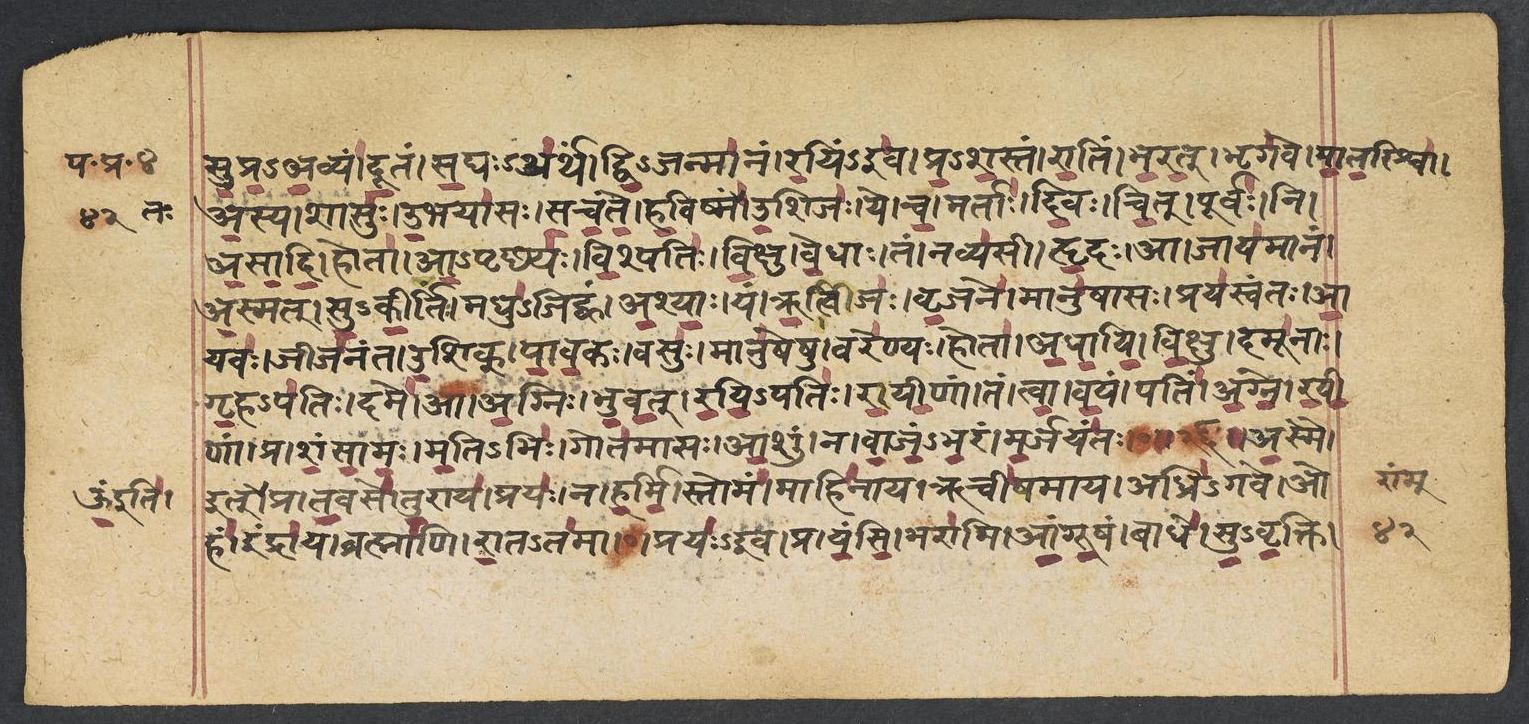
Where on the image
Penn Ms. Coll. 390 Item 41, fol. 42v (OPenn image 44, upper leaf). Checked on the image: the Rigveda text on this page begins in RV 1.60.1 ‹supra-avyam dūtam sadyaḥ-artham dvi-janmānam›. The next page with Rigveda text, fol. 43r, begins in RV 1.61.2 ‹indrāya hṛdā manasā manīṣā›. Verse 1.61.1 ends on this page.
1a̱smā id u̱ pra ta̱vase̍ tu̱rāya̱ prayo̱ na ha̍rmi̱ stoma̱m māhi̍nāya | ṛcī̍ṣamā̱yādhri̍gava̱ oha̱m indrā̍ya̱ brahmā̍ṇi rā̱tata̍mā ||
Compare: Padapāṭha (word-by-word text written in the manuscript; Sansknet e-text via GRETIL)
1asmai | it | oṃ iti | pra | tavase | turāya | prayaḥ | na | harmi | stomam | māhināya | ṛcīṣamāya | adhri-gave | oham | indrāya | brahmāṇi | rāta-tamā
1EVEN to him, swift, strong and high. exalted, I bring my song of praise as dainty viands, My thought to him resistless, praise-deserving, prayers offered most especially to Indra.
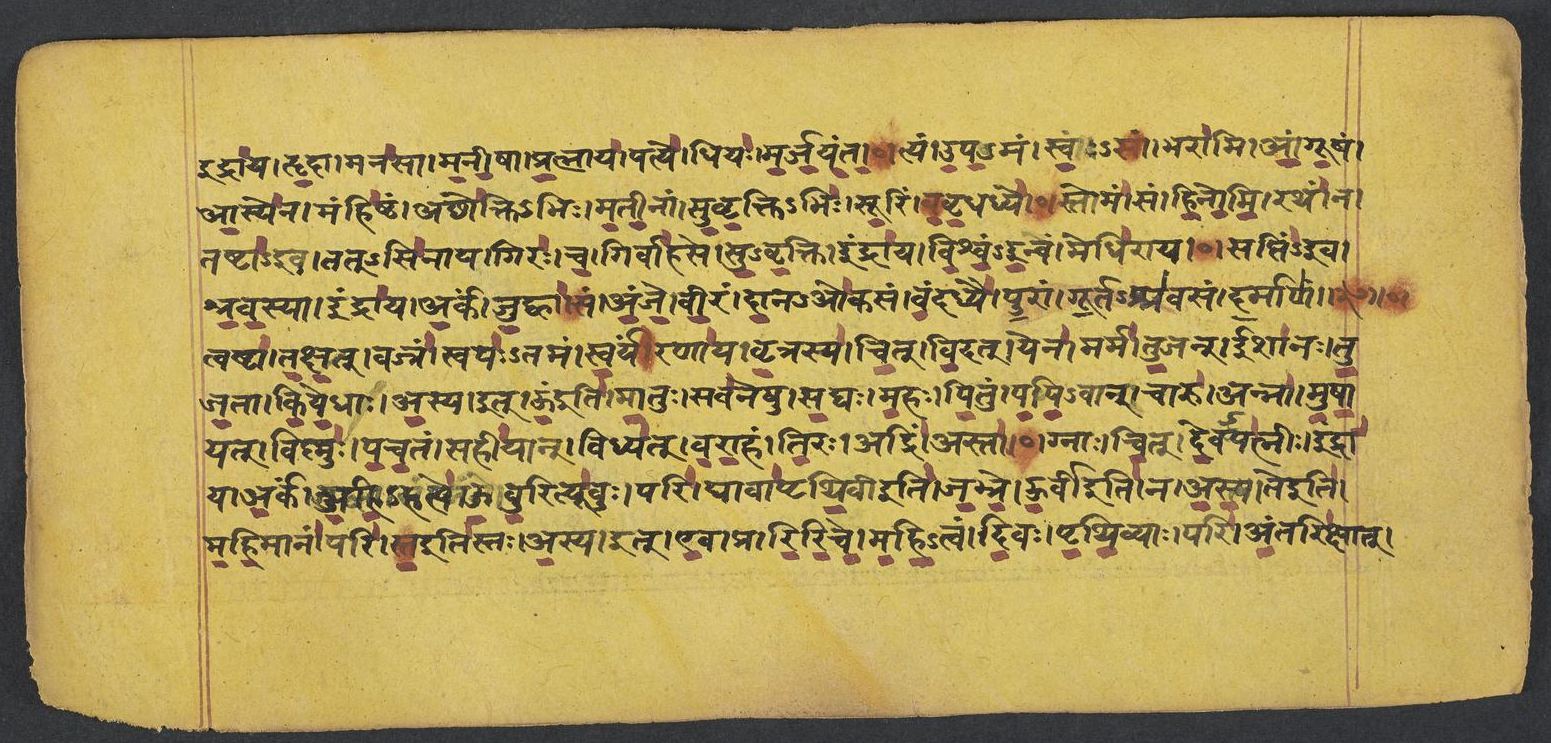
Where on the image
Penn Ms. Coll. 390 Item 41, fol. 43r (OPenn image 44, lower leaf). Checked on the image: the Rigveda text on this page begins in RV 1.61.2 ‹indrāya hṛdā manasā manīṣā›. The next page with Rigveda text, fol. 43v, begins in RV 1.61.9 ‹sva-rāṭ indraḥ dame ā›. Verses 1.61.2-8 end on this page; 1.61.2 begins on fol. 42v.
2a̱smā id u̱ praya̍ iva̱ pra ya̍ṁsi̱ bharā̍my āṅgū̱ṣam bādhe̍ suvṛ̱kti | indrā̍ya hṛ̱dā mana̍sā manī̱ṣā pra̱tnāya̱ patye̱ dhiyo̍ marjayanta ||
3a̱smā id u̱ tyam u̍pa̱maṁ sva̱rṣām bharā̍my āṅgū̱ṣam ā̱sye̍na | maṁhi̍ṣṭha̱m accho̍ktibhir matī̱nāṁ su̍vṛ̱ktibhi̍ḥ sū̱riṁ vā̍vṛ̱dhadhyai̍ ||
4a̱smā id u̱ stoma̱ṁ saṁ hi̍nomi̱ ratha̱ṁ na taṣṭe̍va̱ tatsi̍nāya | gira̍ś ca̱ girvā̍hase suvṛ̱ktīndrā̍ya viśvami̱nvam medhi̍rāya ||
5a̱smā id u̱ sapti̍m iva śrava̱syendrā̍yā̱rkaṁ ju̱hvā̱3̱̍ sam a̍ñje | vī̱raṁ dā̱nauka̍saṁ va̱ndadhyai̍ pu̱rāṁ gū̱rtaśra̍vasaṁ da̱rmāṇa̍m ||
6a̱smā id u̱ tvaṣṭā̍ takṣa̱d vajra̱ṁ svapa̍stamaṁ sva̱rya1̱̍ṁ raṇā̍ya | vṛ̱trasya̍ cid vi̱dad yena̱ marma̍ tu̱jann īśā̍nas tuja̱tā ki̍ye̱dhāḥ ||
7a̱syed u̍ mā̱tuḥ sava̍neṣu sa̱dyo ma̱haḥ pi̱tum pa̍pi̱vāñ cārv annā̍ | mu̱ṣā̱yad viṣṇu̍ḥ paca̱taṁ sahī̍yā̱n vidhya̍d varā̱haṁ ti̱ro adri̱m astā̍ ||
8a̱smā id u̱ gnāś ci̍d de̱vapa̍tnī̱r indrā̍yā̱rkam a̍hi̱hatya̍ ūvuḥ | pari̱ dyāvā̍pṛthi̱vī ja̍bhra u̱rvī nāsya̱ te ma̍hi̱māna̱m pari̍ ṣṭaḥ ||
Compare: Padapāṭha (word-by-word text written in the manuscript; Sansknet e-text via GRETIL)
2asmai | it | oṃ iti | prayaḥ-iva | pra | yaṃsi | bharāmi | āṅgūṣam | bādhe | su-vṛkti | indrāya | hṛdā | manasā | manīṣā | pratnāya | patye | dhiyaḥ | marjayanta
3asmai | it | oṃ iti | tyam | upa-mam | svaḥ-sām | bharāmi | āṅgūṣam | āsyena | maṃhiṣṭham | acchokti-bhiḥ | matīnām | suvṛkti-bhiḥ | sūrim | vavṛdhadhyai
4asmai | it | oṃ iti | stomam | sam | hinomi | ratham | na | taṣṭāiva | tat-sināya | giraḥ | ca | girvāhase | su-vṛkti | indrāya | viśvam-invam | medhirāya
5asmai | it | oṃ iti | saptim-iva | śravasyā | indrāya | arkam | juhvā | sam | añje | vīram | dāna-okasam | vandadhyai | purām | gūrta-śravasam | darmāṇam
6asmai | it | oṃ iti | tvaṣṭā | takṣat | vajram | svapaḥ-tamam | svaryam | raṇāya | vṛtrasya | cit | vidat | yena | marma | tujan | īśānaḥ | tujatā | kiyedhāḥ
7asya | it | oṃ iti | mātuḥ | savaneṣu | sadyaḥ | mahaḥ | pitum | papivān | cāru | annā | muṣāyat | viṣṇuḥ | pacatam | sahīyān | vidhyat | varāham | tiraḥ | adrim | astā
8asmai | it | oṃ iti | gnāḥ | cit | deva-patnīḥ | indrāya | arkam | ahi-hatye | ūvur ity ūvuḥ | pari | dyāvāpṛthivī iti | jabhre | urvī iti | na | asya | te iti | mahimānam | pari | staitistaḥ
2Praise, like oblation, I present, and utter aloud my song, my fair hymn to the Victor. For Indra, who is Lord of old, the singers have decked their lauds with heart and mind and spirit.
3To him then with my lips mine adoration, winning heaven's light, most excellent, I offer, To magnify with songs of invocation and with fair hymns the Lord, most bounteous Giver.
4Even for him I frame a laud, as fashions the wright a chariot for the man who needs it,– Praises to him who gladly hears our praises, a hymn well-formed, all-moving, to wise Indra.
5So with my tongue I deck, to please that Indra, my hymn, as 'twere a horse, through love of glory, To reverence the Hero, bounteous Giver, famed far and wide, destroyer of the castles.
6Even for him hath Tvashṭar forged the thunder, most deftly wrought, celestial, for the battle, Wherewith he reached the vital parts of Vr̥itra, striking-the vast, the mighty with the striker.
7As soon as, at libations of his mother, great Vishṇu had drunk up the draught, he plundered. The dainty cates, the cooked mess; but One stronger transfixed the wild boar, shooting through the mountain.
8To him, to Indra, when he slew the Dragon, the Dames, too, Consorts of the Gods, wove praises. The mighty heaven and earth hath he encompassed: thy greatness heaven and earth, combined, exceed not.
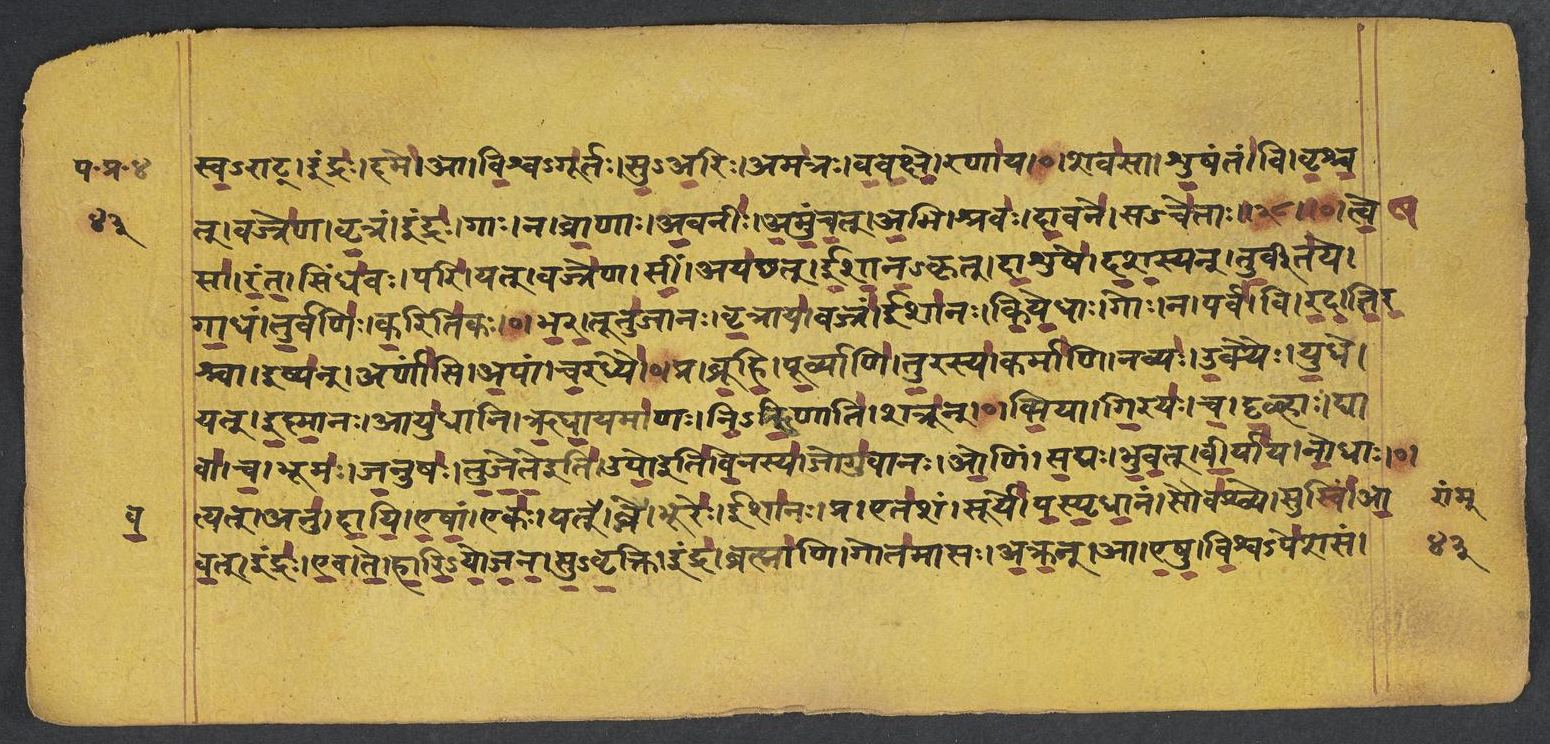
Where on the image
Penn Ms. Coll. 390 Item 41, fol. 43v (OPenn image 45, upper leaf). Checked on the image: the Rigveda text on this page begins in RV 1.61.9 ‹sva-rāṭ indraḥ dame ā›. The next page with Rigveda text, fol. 44r, begins in RV 1.61.16 ‹-viśva-peśasam dhiyam dhāḥ prātaḥ›. Verses 1.61.9-15 end on this page; 1.61.9 begins on fol. 43r.
9a̱syed e̱va pra ri̍rice mahi̱tvaṁ di̱vas pṛ̍thi̱vyāḥ pary a̱ntari̍kṣāt | sva̱rāḻ indro̱ dama̱ ā vi̱śvagū̍rtaḥ sva̱rir ama̍tro vavakṣe̱ raṇā̍ya ||
10a̱syed e̱va śava̍sā śu̱ṣanta̱ṁ vi vṛ̍śca̱d vajre̍ṇa vṛ̱tram indra̍ḥ | gā na vrā̱ṇā a̱vanī̍r amuñcad a̱bhi śravo̍ dā̱vane̱ sace̍tāḥ ||
11a̱syed u̍ tve̱ṣasā̍ ranta̱ sindha̍va̱ḥ pari̱ yad vajre̍ṇa sī̱m aya̍cchat | ī̱śā̱na̱kṛd dā̱śuṣe̍ daśa̱syan tu̱rvīta̍ye gā̱dhaṁ tu̱rvaṇi̍ḥ kaḥ ||
12a̱smā id u̱ pra bha̍rā̱ tūtu̍jāno vṛ̱trāya̱ vajra̱m īśā̍naḥ kiye̱dhāḥ | gor na parva̱ vi ra̍dā tira̱śceṣya̱nn arṇā̍ṁsy a̱pāṁ ca̱radhyai̍ ||
13a̱syed u̱ pra brū̍hi pū̱rvyāṇi̍ tu̱rasya̱ karmā̍ṇi̱ navya̍ u̱kthaiḥ | yu̱dhe yad i̍ṣṇā̱na āyu̍dhāny ṛghā̱yamā̍ṇo niri̱ṇāti̱ śatrū̍n ||
14a̱syed u̍ bhi̱yā gi̱raya̍ś ca dṛ̱ḻhā dyāvā̍ ca̱ bhūmā̍ ja̱nuṣa̍s tujete | upo̍ ve̱nasya̱ jogu̍vāna o̱ṇiṁ sa̱dyo bhu̍vad vī̱ryā̍ya no̱dhāḥ ||
15a̱smā id u̱ tyad anu̍ dāyy eṣā̱m eko̱ yad va̱vne bhūre̱r īśā̍naḥ | praita̍śa̱ṁ sūrye̍ paspṛdhā̱naṁ sauva̍śvye̱ suṣvi̍m āva̱d indra̍ḥ ||
Compare: Padapāṭha (word-by-word text written in the manuscript; Sansknet e-text via GRETIL)
9asya | it | eva | pra | ririce | mahitvam | divaḥ | pṛthivyāḥ | pari | antarikṣāt | sva-rāṭ | indraḥ | dame | ā | viśva-gūrtaḥ | su-ariḥ | amatraḥ | vavakṣe | raṇāya
10asya | it | eva | śavasā | śuṣantam | vi | vṛścat | vajreṇa | vṛtram | indraḥ | gāḥ | na | vrāṇāḥ | avanīḥ | amuñcat | abhi | śravaḥ | dāvane | sa-cetāḥ
11asya | it | oṃ iti | tveṣasā | ranta | sindhavaḥ | pari | yat | vajreṇa | sīm | ayacchat | īśāna-kṛt | dāśuṣe | daśasyan | turvītaye | gādham | turvaṇiḥ | karitikaḥ
12asmai | it | oṃ iti | pra | bhara | tūtujānaḥ | vṛtrāya | vajram | īśānaḥ | kiyedhāḥ | goḥ | na | parva | vi | rada | tiraścā | iṣyan | arṇāṃsi | apām | caradhyai
13asya | it | oṃ iti | pra | brūhi | pūrvyāṇi | turasya | karmāṇi | navyaḥ | ukthaiḥ | yudhe | yat | iṣṇānaḥ | āyudhāni | ṛghāyamāṇaḥ | ni-riṇāti | śatrūn
14asya | it | oṃ iti | bhiyā | girayaḥ | ca | dṛḷhāḥ | dyāvā | ca | bhūmā | januṣaḥ | tujeteiti | upo iti | venasya | joguvānaḥ | oṇim | sadyaḥ | bhuvat | vīryāya | nodhāḥ
15asmai | it | oṃ iti | tyat | anu | dāyi | eṣām | ekaḥ | yat | vavne | bhūreḥ | īśānaḥ | pra | etaśam | sūrye | paspṛdhānam | sauvaśvye | suṣvim | āvat | indraḥ
9Yea, of a truth, his magnitude surpasseth the magnitude of earth, mid-air, and heaven. Indra, approved by all men, self-resplendent, waxed in his home, loud-voiced and strong for battle.
10Through his own strength Indra with bolt of thunder cut piece-meal Vr̥itra, drier up of waters. He let the floods go free, like cows imprisoned, for glory, with a heart inclined to bounty.
11The rivers played, through his impetuous splendour, since with his bolt he compassed them on all sides. Using his might and favouring him who worshipped, he made a ford, victorious, for Turvîti.
12Vast, with thine ample power, with eager movement, against this Vr̥itra cast thy bolt of thunder. Rend thou his joints, as of an ox, dissevered, with bolt oblique, that floods of rain may follow.
13Sing with new lauds his exploits wrought aforetime, the deeds of him, yea, him who moveth swiftly, When, hurling forth his weapons in the battle, he with impetuous wrath lays low the foemen.
14When he, yea, he, comes forth the firm. Set mountains and the whole heaven and earth, tremble for terror. May Nodhas, ever praising the protection of that dear Friend, gain quickly strength heroic.
15Now unto him of these things hath been given what he who rules alone o'er much, electeth. Indra hath helped Etaṣa, Soma-presser, contending in the race of steeds with Sarya.
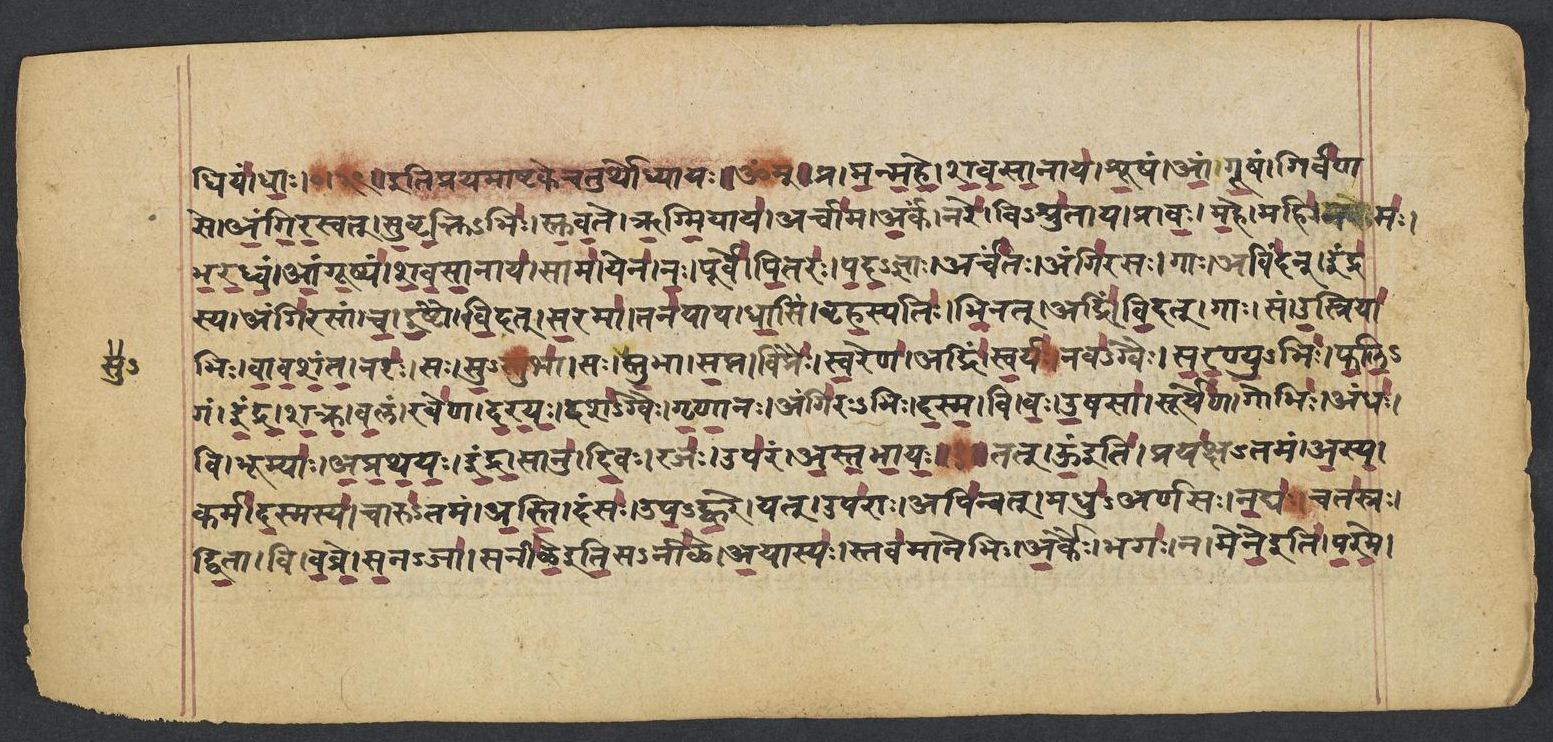
Where on the image
Penn Ms. Coll. 390 Item 41, fol. 44r (OPenn image 45, lower leaf). Checked on the image: the Rigveda text on this page begins in RV 1.61.16 ‹-viśva-peśasam dhiyam dhāḥ prātaḥ›. The next page with Rigveda text, fol. 44v, begins in RV 1.62.7 ‹vi-oman adhārayat rodasī iti›. Verse 1.61.16 ends on this page; 1.61.16 begins on fol. 43v.
16e̱vā te̍ hāriyojanā suvṛ̱ktīndra̱ brahmā̍ṇi̱ gota̍māso akran | aiṣu̍ vi̱śvape̍śasa̱ṁ dhiya̍ṁ dhāḥ prā̱tar ma̱kṣū dhi̱yāva̍sur jagamyāt ||
Compare: Padapāṭha (word-by-word text written in the manuscript; Sansknet e-text via GRETIL)
16eva | te | hāri-yojana | su-vṛkti | indra | brahmāṇi | gotamāsaḥ | akran | ā | eṣu | viśva-peśasam | dhiyam | dhāḥ | prātaḥ | makṣu | dhiyāvasuḥ | jagamyāt
16Thus to thee, Indra, yoker of Bay Coursers, the Gotamas have brought their prayers to please thee. Bestow upon them thought, decked with all beauty. May he, enriched with prayer, come soon and early.
Notes
- Sanskrit: Aufrecht's edition (1877) with the Vedic accents, as entered by van Nooten and Holland (GRETIL).
- English: Ralph T. H. Griffith, The Hymns of the Rigveda (1889-1892; 2nd ed. 1896-1897), from the VedaWeb digital text; OCR slips in that text were corrected against the printed 2nd edition (data/sources/rigveda/griffith_errata.json).
- Padapāṭha (edition text): Sansknet e-text via GRETIL (CC BY-NC-SA 4.0).
Cite
Sources
- Source: Penn Ms. Coll. 390 Item 41 (undated (catalogued with Penn's 18th-19th c. Vedic manuscripts)), OPenn, Public Domain Mark + Aufrecht's accented text (GRETIL) + Griffith's English (VedaWeb) (holding institution)
- Critical edition: Aufrecht (1877), accented e-text via GRETIL
← previous · → next · v cycle view · l back to library