Rigveda 1.62: To Indra
Introduction
Rigveda 1.62 is a hymn of 13 verses addressed to Indra. It stands in book (maṇḍala) 1, a collection of hymns by many families of poets. The Rigveda is the oldest collection of Sanskrit hymns, composed in the second half of the second millennium BCE and handed down orally for many centuries before it was written down.
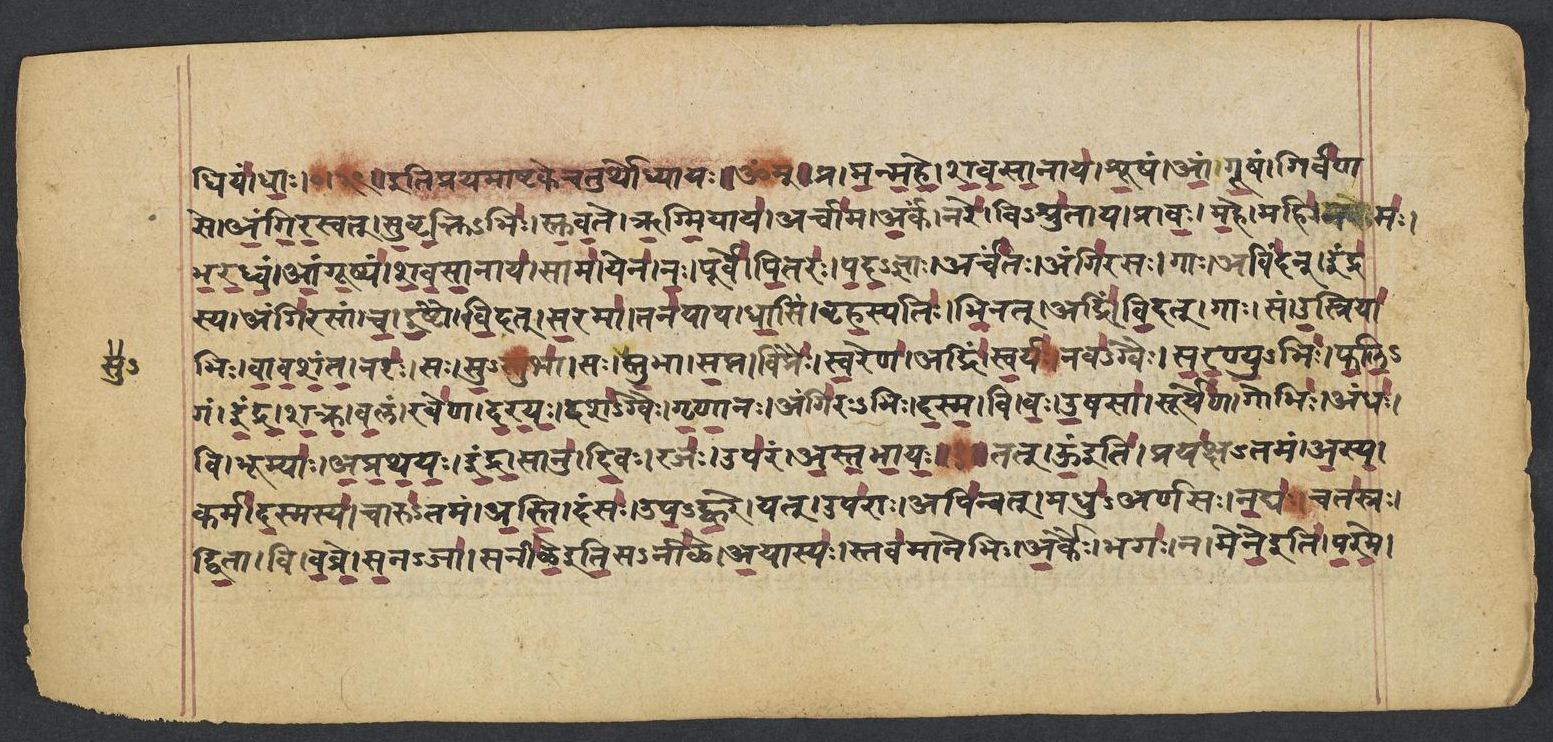
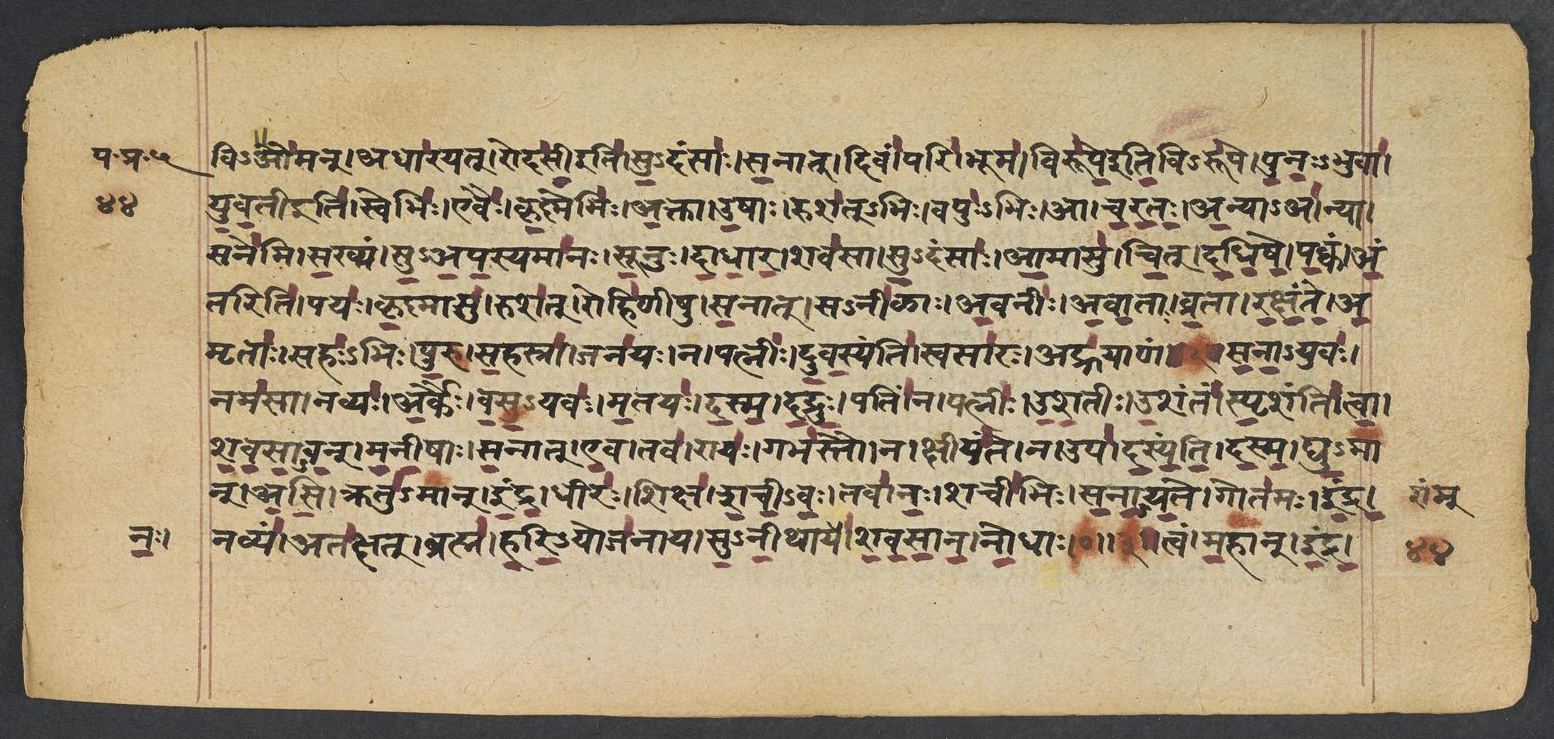
The manuscript shown is Penn Ms. Coll. 390 Item 41 (University of Pennsylvania), an undated paper manuscript of the padapāṭha (the word-by-word recitation text, in which every word is written separately and compounds are split) of the whole Ṛgveda in Devanāgarī, 884 leaves in fascicles, 7-9 lines to the page, accents in red; this hymn stands on fol. 44r-44v. Each section below gives the verses that end on one page; the page boundaries were read on the images (the opening words of every page), not counted out. Where the manuscript is a padapāṭha (the word-by-word recitation text), the section shows Aufrecht's continuous (saṃhitā) text first and, as the edition text, the padapāṭha of the same verses, which is the form written on the page.
How was this verified? (Provenance)
Where on the image
Penn Ms. Coll. 390 Item 41, fol. 44r (OPenn image 45, lower leaf). Checked on the image: the Rigveda text on this page begins in RV 1.61.16 ‹-viśva-peśasam dhiyam dhāḥ prātaḥ›. The next page with Rigveda text, fol. 44v, begins in RV 1.62.7 ‹vi-oman adhārayat rodasī iti›. Verses 1.62.1-6 end on this page.
1pra ma̍nmahe śavasā̱nāya̍ śū̱ṣam ā̍ṅgū̱ṣaṁ girva̍ṇase aṅgira̱svat | su̱vṛ̱ktibhi̍ḥ stuva̱ta ṛ̍gmi̱yāyārcā̍mā̱rkaṁ nare̱ viśru̍tāya ||
2pra vo̍ ma̱he mahi̱ namo̍ bharadhvam āṅgū̱ṣya̍ṁ śavasā̱nāya̱ sāma̍ | yenā̍ na̱ḥ pūrve̍ pi̱tara̍ḥ pada̱jñā arca̍nto̱ aṅgi̍raso̱ gā avi̍ndan ||
3indra̱syāṅgi̍rasāṁ ce̱ṣṭau vi̱dat sa̱ramā̱ tana̍yāya dhā̱sim | bṛha̱spati̍r bhi̱nad adri̍ṁ vi̱dad gāḥ sam u̱sriyā̍bhir vāvaśanta̱ nara̍ḥ ||
4sa su̱ṣṭubhā̱ sa stu̱bhā sa̱pta viprai̍ḥ sva̱reṇādri̍ṁ sva̱ryo̱3̱̍ nava̍gvaiḥ | sa̱ra̱ṇyubhi̍ḥ phali̱gam i̍ndra śakra va̱laṁ rave̍ṇa darayo̱ daśa̍gvaiḥ ||
5gṛ̱ṇā̱no aṅgi̍robhir dasma̱ vi va̍r u̱ṣasā̱ sūrye̍ṇa̱ gobhi̱r andha̍ḥ | vi bhūmyā̍ aprathaya indra̱ sānu̍ di̱vo raja̱ upa̍ram astabhāyaḥ ||
6tad u̱ praya̍kṣatamam asya̱ karma̍ da̱smasya̱ cāru̍tamam asti̱ daṁsa̍ḥ | u̱pa̱hva̱re yad upa̍rā̱ api̍nva̱n madhva̍rṇaso na̱dya1̱̍ś cata̍sraḥ ||
Compare: Padapāṭha (word-by-word text written in the manuscript; Sansknet e-text via GRETIL)
1pra | manmahe | śavasānāya | śūṣam | āṅgūṣam | girvaṇase | aṅgirasvat | suvṛkt i-bhiḥ | stuvate | ṛgmiyāya | arcāma arkam | nare | vi-śrutāya
2pra | vaḥ | mahe | mahi | namaḥ | bharadhvam | āṅgūṣyam | śavasānāya | sāma | yena | naḥ | pūrve | pitaraḥ | pada-jñāḥ | arcantaḥ | aṅgirasaḥ | gāḥ | avindan
3indrasya | aṅgirasām | ca | iṣṭau | vidat | saramā | tanayāya | dhāsim | bṛhaspatiḥ | bhinat | adrim | vidat | gāḥ | sam | usriyābhiḥ | vāvaśanta | naraḥ
4saḥ | su-stubhā | saḥ | stubhā | sapta | vipraiḥ | svareṇa | adrim | svaryaḥ | nava-gvaiḥ | saraṇyu-bhiḥ | phali-gam | indra | śakra | valam | raveṇa | daśa-gvaiḥ
5gṛṇānaḥ | aṅgiraḥ-bhiḥ | dasma | vi | vaḥ | uṣasā | sūryeṇa | gobhiḥ | andhaḥ | vi | bhūmyāḥ | aprathayaḥ | indra | sānu | divaḥ | rajaḥ | uparam | astabhāyaḥ
6tat | oṃ iti | prayakṣa-tamam | asya | karma | dasmasya | cāru-tamam | asti | daṃsaḥ | upa-hvare | yat | uparāḥ | apinvat | madhu-arṇasaḥ | nadyaḥ | catasraḥ
1LIKE Angiras a gladdening laud we ponder to him who loveth song, exceeding mighty. Let us sing glory to the far-famed Hero who must be praised with fair hymns by the singer.
2Unto the great bring ye great adoration, a chant with praise to him exceeding mighty, Through whom our sires, Angirases, singing praises and knowing well the places, found the cattle.
3When Indra and the Angirases desired it, Saramâ found provision for her offspring. Br̥ihaspati cleft the mountain, found the cattle: the heroes shouted with the kine in triumph.
4Mid shout, loud shout, and roar, with the Navagvas, seven singers, hast thou, heavenly, rent the mountain; Thou hast, with speeders, with Daṣagvas, Indra, Ṣakra, with thunder rent obstructive Vala.
5Praised by Angirases, thou, foe-destroyer, hast, with the Dawn, Sun, rays, dispellcd the darkness. Thou Indra, hast spread out the earths high ridges, and firmly fixed the region under heaven.
6This is the deed most worthy of all honour, the fairest marvel of the Wonder-Worker, That, nigh where heaven bends down, he made four rivers flow full with waves that carry down sweet water.
Where on the image
Penn Ms. Coll. 390 Item 41, fol. 44v (OPenn image 46, upper leaf). Checked on the image: the Rigveda text on this page begins in RV 1.62.7 ‹vi-oman adhārayat rodasī iti›. The next page with Rigveda text, fol. 45r, begins in RV 1.63.1 ‹yaḥ ha śuṣmaiḥ dyāvā›. Verses 1.62.7-13 end on this page; 1.62.7 begins on fol. 44r.
7dvi̱tā vi va̍vre sa̱najā̱ sanī̍ḻe a̱yāsya̱ḥ stava̍mānebhir a̱rkaiḥ | bhago̱ na mene̍ para̱me vyo̍ma̱nn adhā̍raya̱d roda̍sī su̱daṁsā̍ḥ ||
8sa̱nād diva̱m pari̱ bhūmā̱ virū̍pe puna̱rbhuvā̍ yuva̱tī svebhi̱r evai̍ḥ | kṛ̱ṣṇebhi̍r a̱ktoṣā ruśa̍dbhi̱r vapu̍rbhi̱r ā ca̍rato a̱nyānyā̍ ||
9sane̍mi sa̱khyaṁ sva̍pa̱syamā̍naḥ sū̱nur dā̍dhāra̱ śava̍sā su̱daṁsā̍ḥ | ā̱māsu̍ cid dadhiṣe pa̱kvam a̱ntaḥ paya̍ḥ kṛ̱ṣṇāsu̱ ruśa̱d rohi̍ṇīṣu ||
10sa̱nāt sanī̍ḻā a̱vanī̍r avā̱tā vra̱tā ra̍kṣante a̱mṛtā̱ḥ saho̍bhiḥ | pu̱rū sa̱hasrā̱ jana̍yo̱ na patnī̍r duva̱syanti̱ svasā̍ro̱ ahra̍yāṇam ||
11sa̱nā̱yuvo̱ nama̍sā̱ navyo̍ a̱rkair va̍sū̱yavo̍ ma̱tayo̍ dasma dadruḥ | pati̱ṁ na patnī̍r uśa̱tīr u̱śanta̍ṁ spṛ̱śanti̍ tvā śavasāvan manī̱ṣāḥ ||
12sa̱nād e̱va tava̱ rāyo̱ gabha̍stau̱ na kṣīya̍nte̱ nopa̍ dasyanti dasma | dyu̱mām̐ a̍si̱ kratu̍mām̐ indra̱ dhīra̱ḥ śikṣā̍ śacīva̱s tava̍ na̱ḥ śacī̍bhiḥ ||
13sa̱nā̱ya̱te gota̍ma indra̱ navya̱m ata̍kṣa̱d brahma̍ hari̱yoja̍nāya | su̱nī̱thāya̍ naḥ śavasāna no̱dhāḥ prā̱tar ma̱kṣū dhi̱yāva̍sur jagamyāt ||
Compare: Padapāṭha (word-by-word text written in the manuscript; Sansknet e-text via GRETIL)
7dvitā | vi | vavre | sa-najā | sanīḷe itisa-nīḷe | ayāsyaḥ | stavamānebhiḥ | arkaiḥ | bhagaḥ | na | meneiti | parame | vi-oman | adhārayat | rodasī iti | su-daṃsāḥ
8sanāt | divam | pari | bhūma | virūpeitivi-rūpe | punaḥ-bhuvā | yuvatī iti | svebhiḥ | evaiḥ | kṛṣṇebhiḥ | aktā | uṣāḥ | ruśat-bhiḥ | vapuḥ-bhiḥ | ā | carataḥ | anyāanyā
9sanemi | sakhyam | su-apasyamānaḥ | sūnuḥ | dādhāra | śavasā | su-daṃsāḥ | āmāsu | cit | dadhiṣe | pakvam | antariti | payaḥ | kṛṣṇāsu | ruśat | rohiṇīṣu
10sanāt | sa-nīḷāḥ | avanīḥ | avātāḥ | vratā | rakṣante | amṛtāḥ | sahaḥ-bhiḥ | puru | sahasrā | janayaḥ | na | patnīḥ | duvasyanti | svasāraḥ | ahrayāṇam
11sanāyuvaḥ | namasā | navyaḥ | arkaiḥ | vasu-yavaḥ | matayaḥ | dasma | dadruḥ | patim | na | patnīḥ | uśatīḥ | uśantam | spṛśanti | tvā | śavasāvan | manīṣāḥ
12sanāt | eva | tava | rāyaḥ | gabhastau | na | kṣīyante | na | upa | dasyanti | dasma | dyumān | asi | kratu-mān | indra | dhīraḥ śikṣa | śacī-vaḥ | tava | naḥ | śacībhiḥ
13sanāyate | gotamaḥ | indra | navyam | atakṣat | brahma | hari-yojanāya | su-nīthāya | naḥ | śavasāna | nodhāḥ | prātaḥ | makṣu | dhiyāvasuḥ | jagamyāt
7Unwearied, won with lauding hymns, he parted of old the ancient Pair, united ever. In highest sky like Bhaga, he the doer of marvels set both Dames and earth and heaven.
8Still born afresh, young Dames, each in her manner, unlike in hue, the Pair in alternation Round heaven and earth from ancient time have travelled, Night with her dark limbs, Dawn with limbs of splendour.
9Rich in good actions, skilled in operation, the Son with might maintains his perfect friendship. Thou in the raw cows, black of hue or ruddy, storest the ripe milk glossy white in colour.
10Their paths, of old connected, rest uninjured; they with great might preserve the immortal statutes. For many thousand holy works the Sisters wait on the haughty Lord like wives and matrons.
11Thoughts ancient, seeking wealth, with adoration, with newest lauds have sped to thee, O Mighty. As yearning wives cleave to their yearning husband, so cleave our hymns to thee, O Lord most potent.
12Strong God, the riches which thy hands have holden from days of old have perished not nor wasted. Splendid art thou, O Indra, wise, unbending:strengthen us with might, O Lord of Power.
13O mighty Indra, Gotama's son Nodhas hath fashioned this new prayer to thee Eternal, Sure leader, yoker of the Tawny Coursers. May he, enriched with prayer, come soon and early.
Notes
- Sanskrit: Aufrecht's edition (1877) with the Vedic accents, as entered by van Nooten and Holland (GRETIL).
- English: Ralph T. H. Griffith, The Hymns of the Rigveda (1889-1892; 2nd ed. 1896-1897), from the VedaWeb digital text; OCR slips in that text were corrected against the printed 2nd edition (data/sources/rigveda/griffith_errata.json).
- Padapāṭha (edition text): Sansknet e-text via GRETIL (CC BY-NC-SA 4.0).
Cite
Sources
- Source: Penn Ms. Coll. 390 Item 41 (undated (catalogued with Penn's 18th-19th c. Vedic manuscripts)), OPenn, Public Domain Mark + Aufrecht's accented text (GRETIL) + Griffith's English (VedaWeb) (holding institution)
- Critical edition: Aufrecht (1877), accented e-text via GRETIL
← previous · → next · v cycle view · l back to library