Rigveda 1.85: To the Maruts
Introduction
Rigveda 1.85 is a hymn of 12 verses addressed to the Maruts. It stands in book (maṇḍala) 1, a collection of hymns by many families of poets. The Rigveda is the oldest collection of Sanskrit hymns, composed in the second half of the second millennium BCE and handed down orally for many centuries before it was written down.
The manuscript shown is Penn Ms. Coll. 390 Item 41 (University of Pennsylvania), an undated paper manuscript of the padapāṭha (the word-by-word recitation text, in which every word is written separately and compounds are split) of the whole Ṛgveda in Devanāgarī, 884 leaves in fascicles, 7-9 lines to the page, accents in red; this hymn stands on fol. 57v-58v. Each section below gives the verses that end on one page; the page boundaries were read on the images (the opening words of every page), not counted out. Where the manuscript is a padapāṭha (the word-by-word recitation text), the section shows Aufrecht's continuous (saṃhitā) text first and, as the edition text, the padapāṭha of the same verses, which is the form written on the page.
How was this verified? (Provenance)
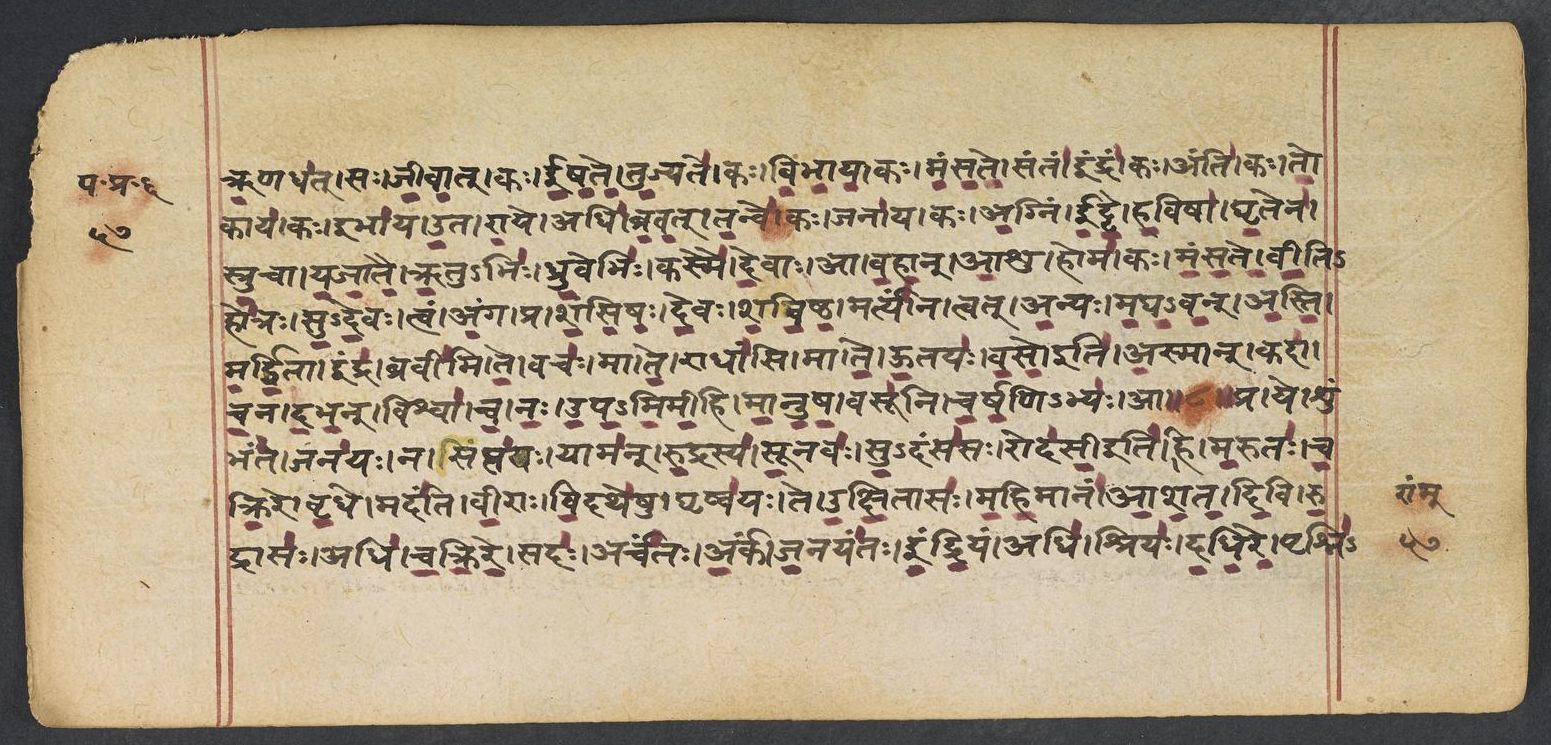
Where on the image
Penn Ms. Coll. 390 Item 41, fol. 57v (OPenn image 59, upper leaf). Checked on the image: the Rigveda text on this page begins in RV 1.84.16 ‹ṛṇadhat saḥ jīvāt›. The next page with Rigveda text, fol. 58r, begins in RV 1.85.2 ‹-pṛśni-mātaraḥ›. Verse 1.85.1 ends on this page.
1pra ye śumbha̍nte̱ jana̍yo̱ na sapta̍yo̱ yāma̍n ru̱drasya̍ sū̱nava̍ḥ su̱daṁsa̍saḥ | roda̍sī̱ hi ma̱ruta̍ś cakri̱re vṛ̱dhe mada̍nti vī̱rā vi̱dathe̍ṣu̱ ghṛṣva̍yaḥ ||
Compare: Padapāṭha (word-by-word text written in the manuscript; Sansknet e-text via GRETIL)
1pra | ye | śumbhante | janayaḥ | na | saptayaḥ | yāman | rudrasya | sūnavaḥ | su-daṃsasaḥ | rodasī | hi | marutaḥ | cakrire | vṛdhe | madanti | vīrāḥ | vidatheṣu | ghṛṣvayaḥ
1THEY who are glancing forth, like women, on their way, doers of mighty deeds, swift racers, Rudra's Sons, The Maruts have made heaven and earth increase and grow: in sacrifices they delight, the strong and wild.
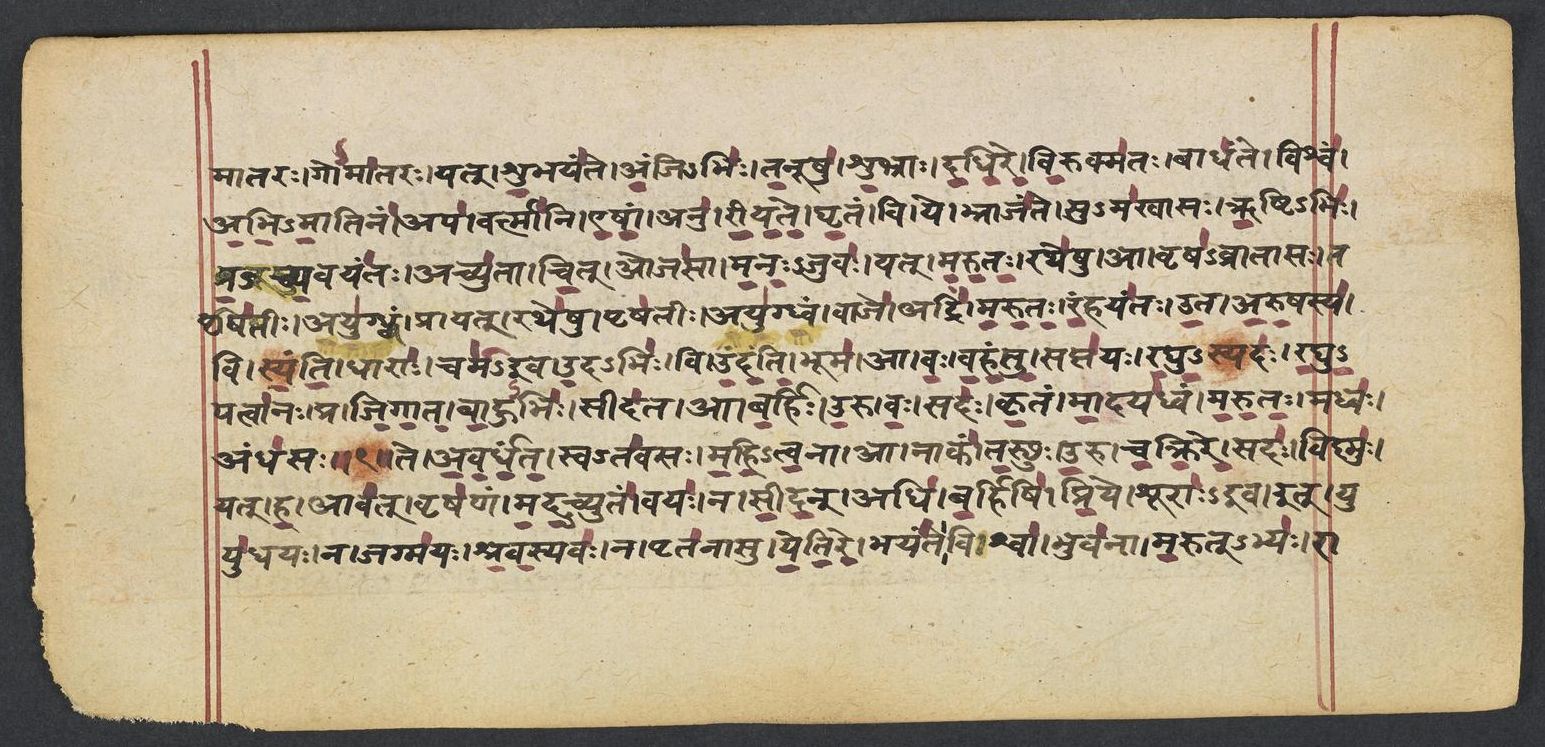
Where on the image
Penn Ms. Coll. 390 Item 41, fol. 58r (OPenn image 59, lower leaf). Checked on the image: the Rigveda text on this page begins in RV 1.85.2 ‹-pṛśni-mātaraḥ›. The next page with Rigveda text, fol. 58v, begins in RV 1.85.8 ‹-rājānaḥ-iva tveṣa-sandṛśaḥ naraḥ›. Verses 1.85.2-7 end on this page; 1.85.2 begins on fol. 57v.
2ta u̍kṣi̱tāso̍ mahi̱māna̍m āśata di̱vi ru̱drāso̱ adhi̍ cakrire̱ sada̍ḥ | arca̍nto a̱rkaṁ ja̱naya̍nta indri̱yam adhi̱ śriyo̍ dadhire̱ pṛśni̍mātaraḥ ||
3gomā̍taro̱ yac chu̱bhaya̍nte a̱ñjibhi̍s ta̱nūṣu̍ śu̱bhrā da̍dhire vi̱rukma̍taḥ | bādha̍nte̱ viśva̍m abhimā̱tina̱m apa̱ vartmā̍ny eṣā̱m anu̍ rīyate ghṛ̱tam ||
4vi ye bhrāja̍nte̱ suma̍khāsa ṛ̱ṣṭibhi̍ḥ pracyā̱vaya̍nto̱ acyu̍tā ci̱d oja̍sā | ma̱no̱juvo̱ yan ma̍ruto̱ rathe̱ṣv ā vṛṣa̍vrātāsa̱ḥ pṛṣa̍tī̱r ayu̍gdhvam ||
5pra yad rathe̍ṣu̱ pṛṣa̍tī̱r ayu̍gdhva̱ṁ vāje̱ adri̍m maruto ra̱ṁhaya̍ntaḥ | u̱tāru̱ṣasya̱ vi ṣya̍nti̱ dhārā̱ś carme̍vo̱dabhi̱r vy u̍ndanti̱ bhūma̍ ||
6ā vo̍ vahantu̱ sapta̍yo raghu̱ṣyado̍ raghu̱patvā̍na̱ḥ pra ji̍gāta bā̱hubhi̍ḥ | sīda̱tā ba̱rhir u̱ru va̱ḥ sada̍s kṛ̱tam mā̱daya̍dhvam maruto̱ madhvo̱ andha̍saḥ ||
7te̍ 'vardhanta̱ svata̍vaso mahitva̱nā nāka̍ṁ ta̱sthur u̱ru ca̍krire̱ sada̍ḥ | viṣṇu̱r yad dhāva̱d vṛṣa̍ṇam mada̱cyuta̱ṁ vayo̱ na sī̍da̱nn adhi̍ ba̱rhiṣi̍ pri̱ye ||
Compare: Padapāṭha (word-by-word text written in the manuscript; Sansknet e-text via GRETIL)
2te | ukṣitāsaḥ | mahimānam | āśata | divi | rudrāsaḥ | adhi | cakrire | sadaḥ | arcantaḥ | arkam | janayantaḥ | indriyam | adhi | śriyaḥ | dadhire | pṛśni-mātaraḥ
3go--mātaraḥ | yat | śubhayante | añji-bhiḥ | tanūṣu | śubhrāḥ | dadhire | virukmataḥ | bādhante | viśvam | abhi-mātinam | apa | vartmāni | eṣām | anu | rīyate | ghṛtam
4vi | ye | bhrājante | su-makhāsaḥ | ṛṣṭi-bhiḥ | pra-cyavayantaḥ | acyutā | cit | ojasā | manaḥ-juvaḥ | yat | marutaḥ | ratheṣu | ā | vṛṣa-vrātāsaḥ | pṛṣatīḥ | ayugdhvam
5pra | yat | ratheṣu | pṛṣatīḥ | ayugdhvam | vāje | adrim | marutaḥ | raṃhayantaḥ | uta | aruṣasya | vi | syanti | dhārāḥ | carma-iva | uda-bhiḥ | vi | undanti | bhūma
6ā | vaḥ | vahantu | saptayaḥ | raghu-syadaḥ | raghu-patvānaḥ | pra | jigāta | bāhu-bhiḥ | sīdatā | barhiḥ | uru | vaḥ | sadaḥ | kṛtam | mādayadhvam | marutaḥ | madhvaḥ | andhasaḥ
7te | avardhanta | sva-tavasaḥ | mahi-tvanā | ā | nākam | tasthuḥ | uru | cakrire | sadaḥ | viṣṇuḥ | yat | ha | āvat | vṛṣaṇam | mada-cyutam | vayaḥ | na | sdan | adhi | barhiṣi | priye
2Grown to their perfect strength greatness have they attained; the Rudras have established their abode in heaven. Singing their song of praise and generating might, they have put glory on, the Sons whom Prani bare.
3When, Children of the Cow, they shine in bright attire, and on their fair limbs lay their golden ornaments, They drive away each adversary from their path, and, following their traces, fatness floweth down,
4When, mighty Warriors, ye who glitter with your spears, o'erthrowing with your strength e'en what is ne'er o'erthrown, When, O ye Maruts, ye the host that send the rain, had harnessed to your cars the thought-fleet spotted deer.
5When ye have harnessed to your cars the spotted deer, urging the thunderbolt, O Maruts, to the fray, Forth rush the torrents of the dark red stormy cloud, and moisten, like a skin, the earth with waterfloods.
6Let your swift-gliding coursers bear you hitherward with their fleet pinions. Come ye forward with your arms. Sit on the grass; a wide scat hath been made for you: delight yourselves, O Maruts, in the pleasant food.
7Strong in their native strength to greatness have they grown, stepped to the firmament and made their dwelling wide. When Vishṇu saved the Soma bringing wild delight, the Maruts sate like birds on their dear holy grass.
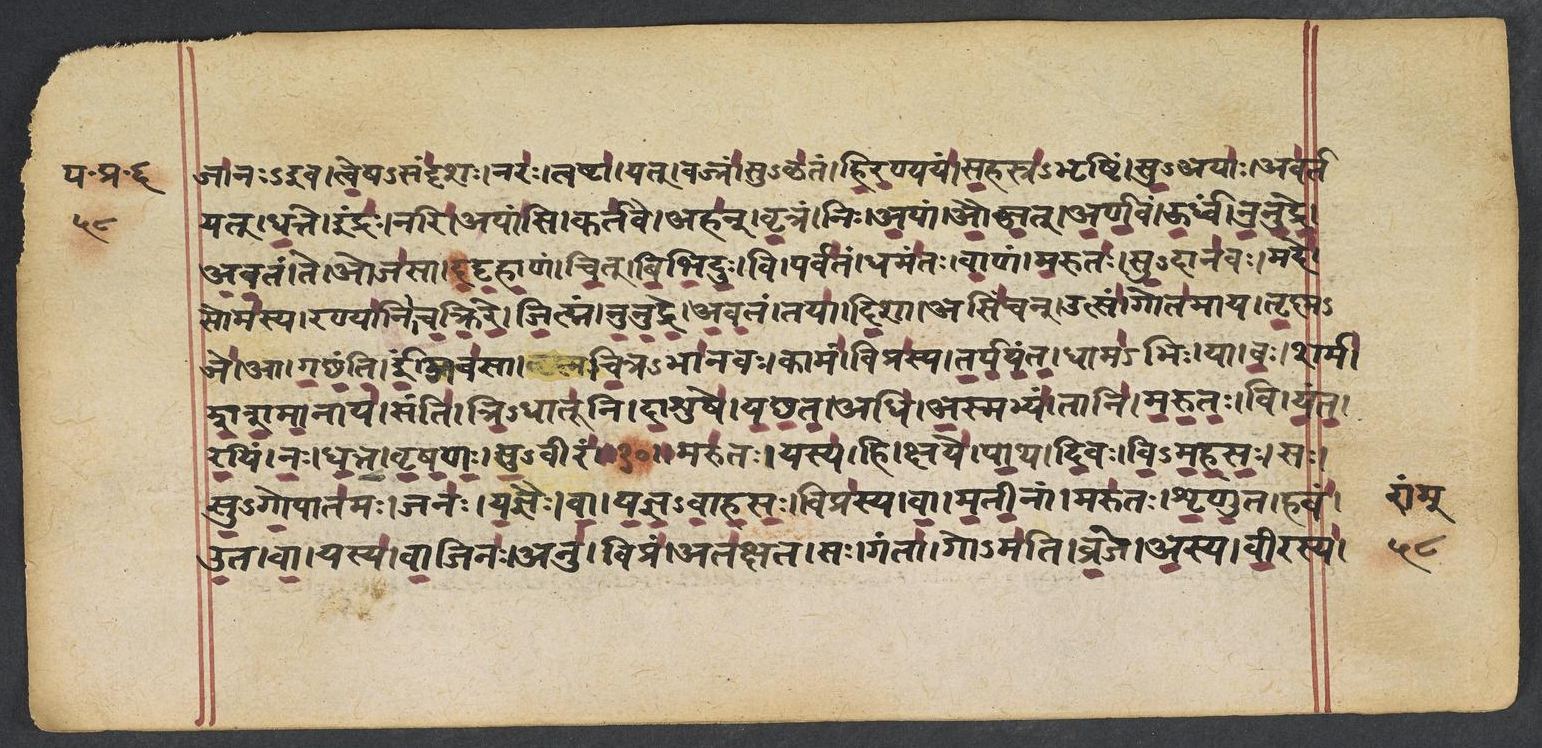
Where on the image
Penn Ms. Coll. 390 Item 41, fol. 58v (OPenn image 60, upper leaf). Checked on the image: the Rigveda text on this page begins in RV 1.85.8 ‹-rājānaḥ-iva tveṣa-sandṛśaḥ naraḥ›. The next page with Rigveda text, fol. 59r, begins in RV 1.86.4 ‹barhiṣi sutaḥ somaḥ diviṣṭiṣu›. Verses 1.85.8-12 end on this page; 1.85.8 begins on fol. 58r.
8śūrā̍ i̱ved yuyu̍dhayo̱ na jagma̍yaḥ śrava̱syavo̱ na pṛta̍nāsu yetire | bhaya̍nte̱ viśvā̱ bhuva̍nā ma̱rudbhyo̱ rājā̍na iva tve̱ṣasa̍ṁdṛśo̱ nara̍ḥ ||
9tvaṣṭā̱ yad vajra̱ṁ sukṛ̍taṁ hira̱ṇyaya̍ṁ sa̱hasra̍bhṛṣṭi̱ṁ svapā̱ ava̍rtayat | dha̱tta indro̱ nary apā̍ṁsi̱ karta̱ve 'ha̍n vṛ̱traṁ nir a̱pām au̍bjad arṇa̱vam ||
10ū̱rdhvaṁ nu̍nudre 'va̱taṁ ta oja̍sā dādṛhā̱ṇaṁ ci̍d bibhidu̱r vi parva̍tam | dhama̍nto vā̱ṇam ma̱ruta̍ḥ su̱dāna̍vo̱ made̱ soma̍sya̱ raṇyā̍ni cakrire ||
11ji̱hmaṁ nu̍nudre 'va̱taṁ tayā̍ di̱śāsi̍ñca̱nn utsa̱ṁ gota̍māya tṛ̱ṣṇaje̍ | ā ga̍cchantī̱m ava̍sā ci̱trabhā̍nava̱ḥ kāma̱ṁ vipra̍sya tarpayanta̱ dhāma̍bhiḥ ||
12yā va̱ḥ śarma̍ śaśamā̱nāya̱ santi̍ tri̱dhātū̍ni dā̱śuṣe̍ yaccha̱tādhi̍ | a̱smabhya̱ṁ tāni̍ maruto̱ vi ya̍nta ra̱yiṁ no̍ dhatta vṛṣaṇaḥ su̱vīra̍m ||
Compare: Padapāṭha (word-by-word text written in the manuscript; Sansknet e-text via GRETIL)
8śūrāḥ-iva | it | yuyudhayah | na | jagmayaḥ | śravasyavaḥ | na | pṛtanāsu | yetire | bhayante | viśvā | bhuvanā | marut-bhyaḥ | rājānaḥ-iva | tveṣa-sandṛśaḥ | naraḥ
9tvaṣṭā | yat | vajram | su-kṛtam | hiraṇyayam | sahasra-bhṛṣṭim | su-apāḥ | avartayat | dhatte | indraḥ | nari | apāṃsi | kartave | ahan | vṛtram | niḥ | apām | aubjat | arṇavam
10ūrdhvam | nunudre | avatam | te | ojasā | dādṛhāṇam | cit | bibhiduḥ | vi | parvatam | dhamantaḥ | vāṇam | marutaḥ | su-dānavah | made | somasya | raṇyāni | cakrire
11jihmam | nunudre | avatam | tayā | diśā | asiñcan | utsam | gotamāya | tṛṣṇa-je | ā | gacchanti | īm | avasā | citra-bhānavaḥ | kāmam | viprasya | tarpayanta | dhāma-bhiḥ
12yā | vaḥ | śarma | śaśamānāya | santi | tri-dhātūni | dāśuṣe | yacchata | adhi | asmabhyam | tāni | marutaḥ | vi | yanta | rayim | naḥ | dhatta | vṛṣaṇaḥ | su-vīram
8In sooth like heroes fain for fight they rush about, like combatants fame-seeking have they striven in war. Before the Maruts every creature is afraid: the men are like to Kings, terrible to behold.
9When Tvashṭar deft of hand had turned the thunderbolt, golden, with thousand edges, fashioned more skilfully, Indra received it to perform heroic deeds. Vr̥itra he slew, and forced the flood of water forth.
10They with their vigorous strength pushed the well up on high, and clove the cloud in twain though it was passing strong. The Maruts, bounteous Givers, sending forth their voice, in the wild joy of Soma wrought their glorious deeds.
11They drave the cloud transverse directed hitherward, and poured the fountain forth for thirsting Gotama. Shining with varied light they come to him with help: they with their might fulfilled the longing of the sage.
12The shelters which ye have for him who lauds you, bestow them threefold on the man who offers. Extend the same boons unto us, ye Maruts. Give us, O Heroes, wealth with noble offspring.
Notes
- Sanskrit: Aufrecht's edition (1877) with the Vedic accents, as entered by van Nooten and Holland (GRETIL).
- English: Ralph T. H. Griffith, The Hymns of the Rigveda (1889-1892; 2nd ed. 1896-1897), from the VedaWeb digital text; OCR slips in that text were corrected against the printed 2nd edition (data/sources/rigveda/griffith_errata.json).
- Padapāṭha (edition text): Sansknet e-text via GRETIL (CC BY-NC-SA 4.0).
Cite
Sources
- Source: Penn Ms. Coll. 390 Item 41 (undated (catalogued with Penn's 18th-19th c. Vedic manuscripts)), OPenn, Public Domain Mark + Aufrecht's accented text (GRETIL) + Griffith's English (VedaWeb) (holding institution)
- Critical edition: Aufrecht (1877), accented e-text via GRETIL
← previous · → next · v cycle view · l back to library