Rigveda 1.84: To Indra
Introduction
Rigveda 1.84 is a hymn of 20 verses addressed to Indra. It stands in book (maṇḍala) 1, a collection of hymns by many families of poets. The Rigveda is the oldest collection of Sanskrit hymns, composed in the second half of the second millennium BCE and handed down orally for many centuries before it was written down.
The manuscript shown is Penn Ms. Coll. 390 Item 41 (University of Pennsylvania), an undated paper manuscript of the padapāṭha (the word-by-word recitation text, in which every word is written separately and compounds are split) of the whole Ṛgveda in Devanāgarī, 884 leaves in fascicles, 7-9 lines to the page, accents in red; this hymn stands on fol. 56v-57v. Each section below gives the verses that end on one page; the page boundaries were read on the images (the opening words of every page), not counted out. Where the manuscript is a padapāṭha (the word-by-word recitation text), the section shows Aufrecht's continuous (saṃhitā) text first and, as the edition text, the padapāṭha of the same verses, which is the form written on the page.
How was this verified? (Provenance)
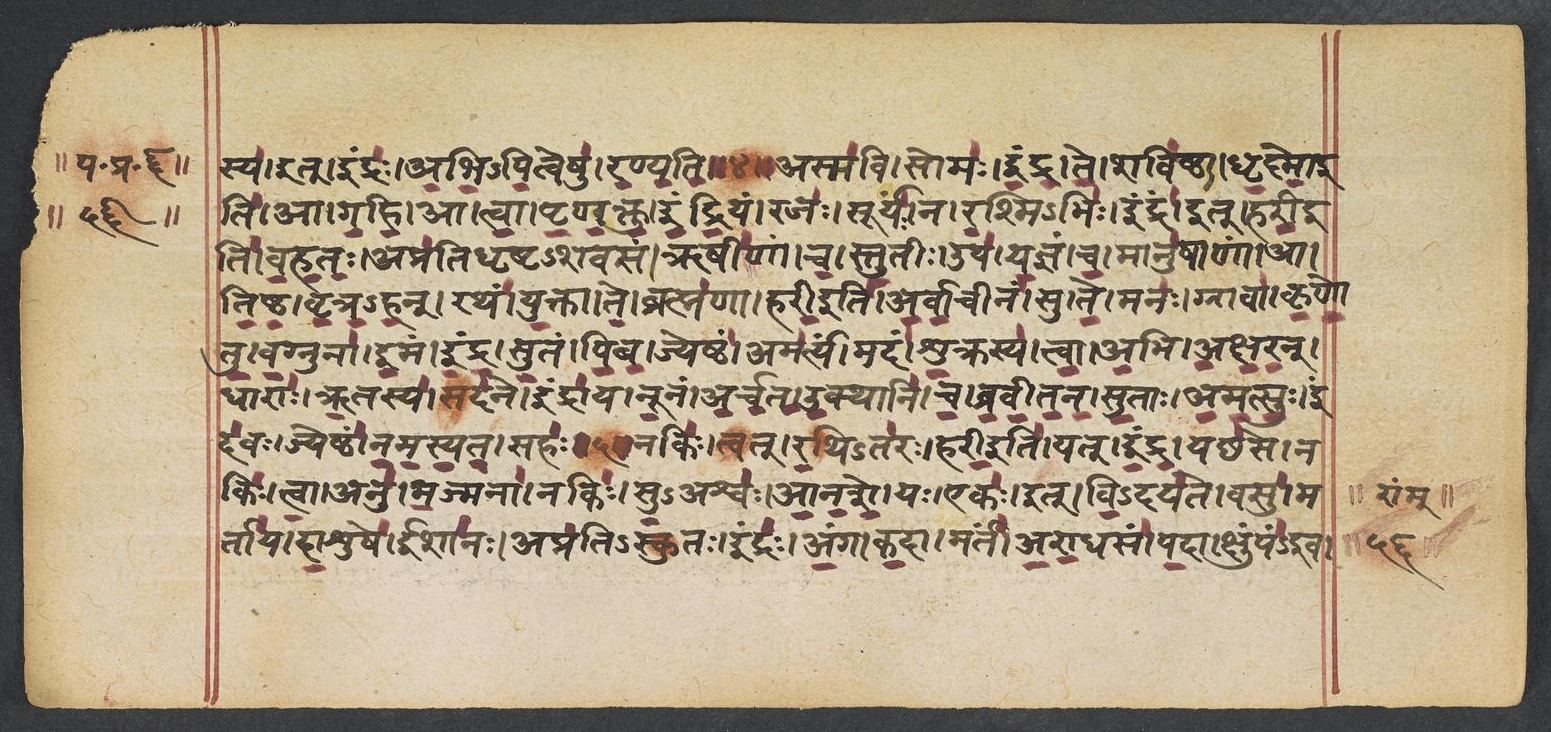
Where on the image
Penn Ms. Coll. 390 Item 41, fol. 56v (OPenn image 58, upper leaf). Checked on the image: the Rigveda text on this page begins in RV 1.83.6 ‹-tasya it indraḥ abhi-pitveṣu›. The next page with Rigveda text, fol. 57r, begins in RV 1.84.8 ‹sphurat kadā naḥ śuśravat›. Verses 1.84.1-7 end on this page.
1asā̍vi̱ soma̍ indra te̱ śavi̍ṣṭha dhṛṣṇa̱v ā ga̍hi | ā tvā̍ pṛṇaktv indri̱yaṁ raja̱ḥ sūryo̱ na ra̱śmibhi̍ḥ ||
2indra̱m id dharī̍ vaha̱to 'pra̍tidhṛṣṭaśavasam | ṛṣī̍ṇāṁ ca stu̱tīr upa̍ ya̱jñaṁ ca̱ mānu̍ṣāṇām ||
3ā ti̍ṣṭha vṛtraha̱n ratha̍ṁ yu̱ktā te̱ brahma̍ṇā̱ harī̍ | a̱rvā̱cīna̱ṁ su te̱ mano̱ grāvā̍ kṛṇotu va̱gnunā̍ ||
4i̱mam i̍ndra su̱tam pi̍ba̱ jyeṣṭha̱m ama̍rtya̱m mada̍m | śu̱krasya̍ tvā̱bhy a̍kṣara̱n dhārā̍ ṛ̱tasya̱ sāda̍ne ||
5indrā̍ya nū̱nam a̍rcato̱kthāni̍ ca bravītana | su̱tā a̍matsu̱r inda̍vo̱ jyeṣṭha̍ṁ namasyatā̱ saha̍ḥ ||
6naki̱ṣ ṭvad ra̱thīta̍ro̱ harī̱ yad i̍ndra̱ yaccha̍se | naki̱ṣ ṭvānu̍ ma̱jmanā̱ naki̱ḥ svaśva̍ ānaśe ||
7ya eka̱ id vi̱daya̍te̱ vasu̱ martā̍ya dā̱śuṣe̍ | īśā̍no̱ apra̍tiṣkuta̱ indro̍ a̱ṅga ||
Compare: Padapāṭha (word-by-word text written in the manuscript; Sansknet e-text via GRETIL)
1asāvi | somaḥ | indra | te | śaviṣṭha | dhṛṣṇo iti | ā | gahi | ā | tvā | pṛṇaktu | indriyam | rajaḥ | sūryaḥ | na | raśmi-bhiḥ
2indram | it | harī | vahataḥ | apratidhṛṣṭa-śavasam | ṛṣīṇām | ca | stutīḥ | upa | yajñam | ca | mānuṣāṇām
3ā | tiṣṭha | vṛtra-han | ratham | yuktā | te | brahmaṇā | harī iti | arvācīnam | su | te | manaḥ | grāvā | kṛṇotu | vagnunā
4imam | indra | sutam | piba | jyeṣṭham | amartyam | madam | śukrasya | tvā | abhi | akṣaran | dhārāḥ | ṛtasya | sādane
5indrāya | nūnam | arcata | ukthāni | ca | bravītana | sutāḥ | amatsuḥ | indavaḥ | jyeṣṭham | namasyata | sahaḥ
6nakiḥ | tvat | rathītaraḥ | harī | yat | indra | yacchase | nakiḥ | tvā | anu | majmanā | nakiḥ | su-aśvaḥ | ānaśe
7yaḥ | ekaḥ | it | vi-dayate | vasu | martāya | dāśuṣe | īśānaḥ | aprati-skutaḥ | indraḥ | aṅga
1The Soma hath been pressed for thee, O Indra; mightiest, bold One, come. May Indra-vigour fill thee full, as the Sun fills mid-air with rays.
2His pair of Tawny Coursers bring Indra of unresisted might Hither to R̥ishis' songs of praise and sacrifice performed by men.
3Slayer of Vr̥itra, mount thy car; thy Bay Steeds have been yoked by prayer. May, with its voice, the pressing-stone draw thine attention hitherward.
4This poured libation, Indra, drink, immortal, gladdening, excellent. Streams of the bright have flowed to thee here at the seat of holy Law.
5Sing glory now to Indra, say to him your solemn eulogies. The drops poured forth have made him glad: pay reverence to his might supreme.
6When, Indra, thou dost yoke thy Steeds, there is no better charioteer: None hath surpassed thee in thy might, none with good steeds o'ertaken thee.
7He who alone bestoweth on mortal man who offereth gifts, The ruler of resistless power, is Indra, sure.
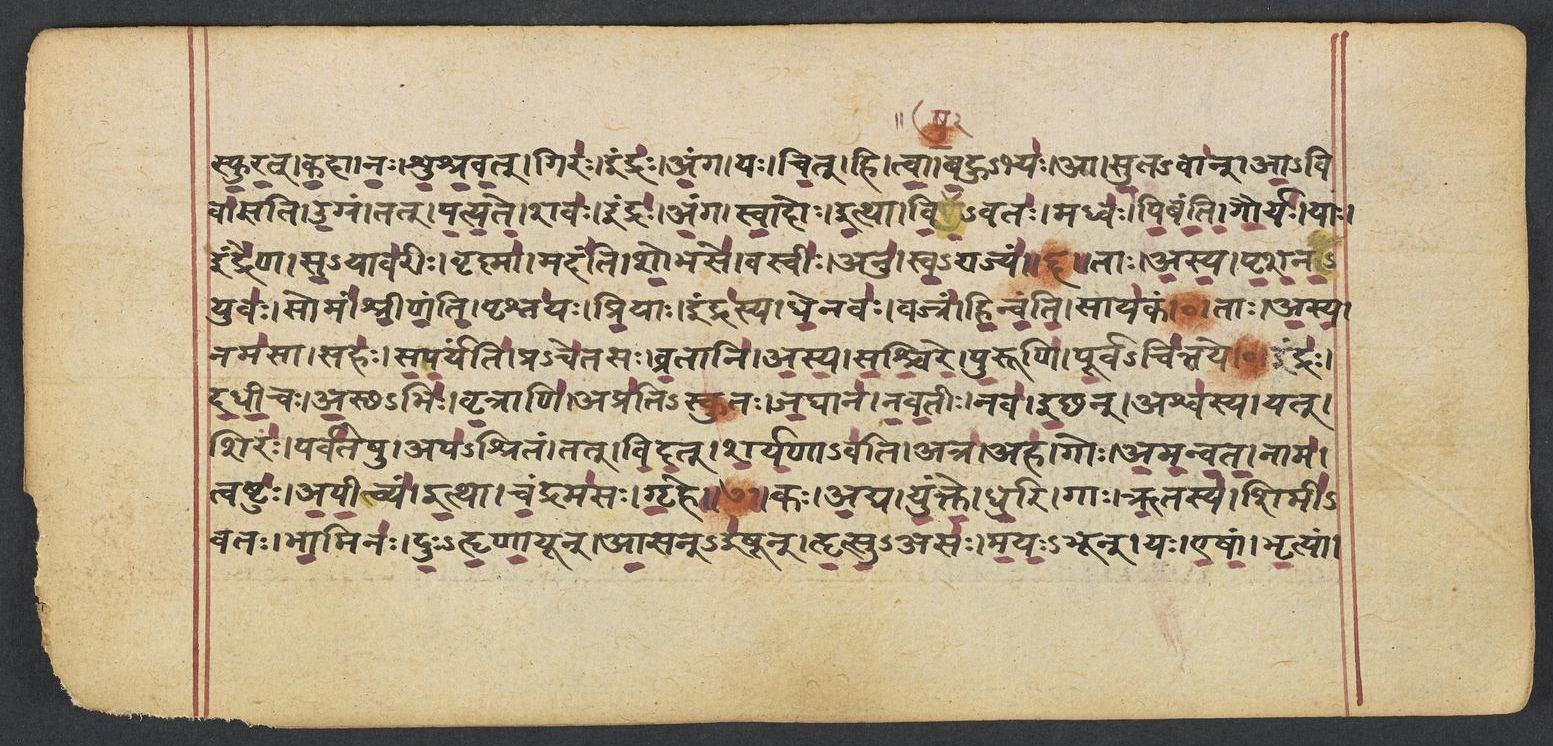
Where on the image
Penn Ms. Coll. 390 Item 41, fol. 57r (OPenn image 58, lower leaf). Checked on the image: the Rigveda text on this page begins in RV 1.84.8 ‹sphurat kadā naḥ śuśravat›. The next page with Rigveda text, fol. 57v, begins in RV 1.84.16 ‹ṛṇadhat saḥ jīvāt›. Verses 1.84.8-15 end on this page; 1.84.8 begins on fol. 56v.
8ka̱dā marta̍m arā̱dhasa̍m pa̱dā kṣumpa̍m iva sphurat | ka̱dā na̍ḥ śuśrava̱d gira̱ indro̍ a̱ṅga ||
9yaś ci̱d dhi tvā̍ ba̱hubhya̱ ā su̱tāvā̍m̐ ā̱vivā̍sati | u̱graṁ tat pa̍tyate̱ śava̱ indro̍ a̱ṅga ||
10svā̱dor i̱tthā vi̍ṣū̱vato̱ madhva̍ḥ pibanti gau̱rya̍ḥ | yā indre̍ṇa sa̱yāva̍rī̱r vṛṣṇā̱ mada̍nti śo̱bhase̱ vasvī̱r anu̍ sva̱rājya̍m ||
11tā a̍sya pṛśanā̱yuva̱ḥ soma̍ṁ śrīṇanti̱ pṛśna̍yaḥ | pri̱yā indra̍sya dhe̱navo̱ vajra̍ṁ hinvanti̱ sāya̍ka̱ṁ vasvī̱r anu̍ sva̱rājya̍m ||
12tā a̍sya̱ nama̍sā̱ saha̍ḥ sapa̱ryanti̱ prace̍tasaḥ | vra̱tāny a̍sya saścire pu̱rūṇi̍ pū̱rvaci̍ttaye̱ vasvī̱r anu̍ sva̱rājya̍m ||
13indro̍ dadhī̱co a̱sthabhi̍r vṛ̱trāṇy apra̍tiṣkutaḥ | ja̱ghāna̍ nava̱tīr nava̍ ||
14i̱cchann aśva̍sya̱ yac chira̱ḥ parva̍te̱ṣv apa̍śritam | tad vi̍dac charya̱ṇāva̍ti ||
15atrāha̱ gor a̍manvata̱ nāma̱ tvaṣṭu̍r apī̱cya̍m | i̱tthā ca̱ndrama̍so gṛ̱he ||
Compare: Padapāṭha (word-by-word text written in the manuscript; Sansknet e-text via GRETIL)
8kadā | martam | arādhasam | padā | kṣumpam-iva | sphurat | kadā | naḥ | śuśravat | giraḥ | indraḥ | aṅga
9yaḥ | cit | hi | tvā | bahu-bhyaḥ | ā | suta-vān | āvivāsati | ugram | tat | patyate | śavaḥ | indraḥ | aṅga
10svādoḥ | itthā | viṣu-vataḥ | madhvaḥ | pibanti | gauryaḥ | yāḥ | indreṇa | sa-yāvarīḥ | vṛṣṇā | madanti | śobhase | vasvīḥ | anu | sva-rājyam
11tāḥ | asya | pṛśana-yuvaḥ | somam | śrīṇanti | pṛśnayaḥ | priyāḥ | indrasya | dhenavaḥ | vajram | hinvanti | sāyakam | vasvīḥ | anu | sva-rājyam
12tāḥ | asya | namasā | sahaḥ | saparyanti | pra-cetasaḥ | vratāni | asya | saścire | purūṇi | pūrva-cittaye | vasvīḥ | anu | sva-rājyam
13indraḥ | dadhīcaḥ | astha-bhiḥ | vṛtrāṇi | aprati-skutaḥ | jaghāna | navatīḥ | nava
14icchan | aśvasya | yat | śiraḥ | parvateṣu | apa-śritam | tat | vidat | śaryaṇāvati
15atra | aha | goḥ | amanvata | nāma | tvaṣṭuḥ | apīcyam | itthā | candramasaḥ | gṛhe
8When will he trample, like a weed, the man who hath no gift for him? When, verily, will Indra hear our songs of praise?
9He who with Soma juice prepared amid the many honours thee,– Verily Indra gains thereby tremendous might.
10The juice of Soma thus diffused, sweet to the taste, the bright cows drink, Who for the sake of splendour close to mighty Indra's side rejoice, good in their own supremacy.
11Craving his touch the dappled kine mingle the Soma with their milk. The milch-kine dear to Indra send forth his death-dealing thunderbolt, good in their own supremacy.
12With veneration, passing wise, honouring his victorious might, They follow close his many laws to win them due preeminence, good in their own supremacy.
13With bones of Dadhyac for his arms, Indra, resistless in attack, Struck nine-and-ninety Vr̥itras dead.
14He, searching for the horse's head, removed among the mountains, found At Ṣaryaṇâvân what he sought.
15Then verily they recognized the essential form of Tvashṭar's Bull, Here in the mansion of the Moon.
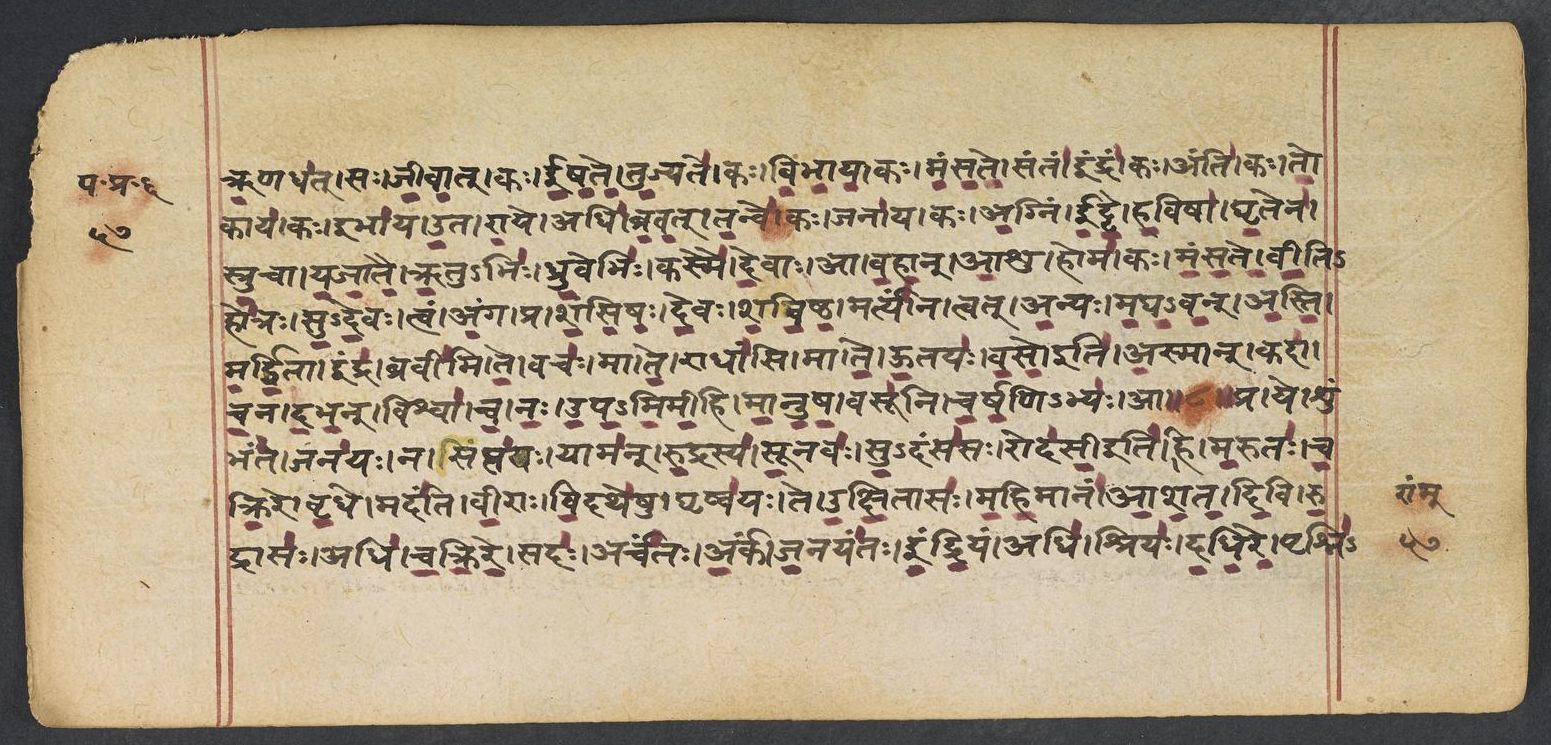
Where on the image
Penn Ms. Coll. 390 Item 41, fol. 57v (OPenn image 59, upper leaf). Checked on the image: the Rigveda text on this page begins in RV 1.84.16 ‹ṛṇadhat saḥ jīvāt›. The next page with Rigveda text, fol. 58r, begins in RV 1.85.2 ‹-pṛśni-mātaraḥ›. Verses 1.84.16-20 end on this page; 1.84.16 begins on fol. 57r.
16ko a̱dya yu̍ṅkte dhu̱ri gā ṛ̱tasya̱ śimī̍vato bhā̱mino̍ durhṛṇā̱yūn | ā̱sanni̍ṣūn hṛ̱tsvaso̍ mayo̱bhūn ya e̍ṣām bhṛ̱tyām ṛ̱ṇadha̱t sa jī̍vāt ||
17ka ī̍ṣate tu̱jyate̱ ko bi̍bhāya̱ ko ma̍ṁsate̱ santa̱m indra̱ṁ ko anti̍ | kas to̱kāya̱ ka ibhā̍yo̱ta rā̱ye 'dhi̍ bravat ta̱nve̱3̱̍ ko janā̍ya ||
18ko a̱gnim ī̍ṭṭe ha̱viṣā̍ ghṛ̱tena̍ sru̱cā ya̍jātā ṛ̱tubhi̍r dhru̱vebhi̍ḥ | kasmai̍ de̱vā ā va̍hān ā̱śu homa̱ ko ma̍ṁsate vī̱tiho̍traḥ sude̱vaḥ ||
19tvam a̱ṅga pra śa̍ṁsiṣo de̱vaḥ śa̍viṣṭha̱ martya̍m | na tvad a̱nyo ma̍ghavann asti marḍi̱tendra̱ bravī̍mi te̱ vaca̍ḥ ||
20mā te̱ rādhā̍ṁsi̱ mā ta̍ ū̱tayo̍ vaso̱ 'smān kadā̍ ca̱nā da̍bhan | viśvā̍ ca na upamimī̱hi mā̍nuṣa̱ vasū̍ni carṣa̱ṇibhya̱ ā ||
Compare: Padapāṭha (word-by-word text written in the manuscript; Sansknet e-text via GRETIL)
16kaḥ | adya | yuṅkte | dhuri | gāḥ | ṛtasya | śimī-vataḥ | bhāminaḥ | duḥ-hṛṇāyūn | āsan-iṣūn | hatsu-asaḥ | maya-bhūn | yaḥ | eṣām | bhṛtyām | ṛṇadhat | saḥ | jīvāt
17kaḥ | īṣate | tujyate | kaḥ | bibhāya | kaḥ | maṃsate | santam | indram | kaḥ | anti | kaḥ | tokāya | kaḥ | ibhāya | uta | rāye | adhi | bravat | tanve | kaḥ | janāya
18kaḥ | agnim | īṭe | haviṣā | ghṛtena | srucā | yajātai | ṛtu-bhiḥ | dhruvebhiḥ | kasmai | devāḥ | ā | vahān | āśu | homa | kaḥ | maṃsate | vīti-hotraḥ | su-devaḥ
19tvam | aṅga | pra | śaṃsiṣaḥ | devaḥ | śaviṣṭha | martyam | na | tvat | anyaḥ | magha-van | asti | marḍitā | indra | bravīmi | te | vacaḥ
20mā | te | rādhāṃsi | mā | te | ūtayaḥ | vaso iti | asmān | kadā | cana | dabhan | viśvā | ca | naḥ | upa-mimīhi | mānuṣa | vasūn i | carṣaṇi-bhyaḥ | ā
16Who yokes to-day unto the pole of Order the strong and passionate steers of checkless spirit, With shaft-armed mouths, heart-piercing, health-bestowing? Long shall he live who richly pays their service.
17Who fleeth forth? who suffereth? who feareth? Who knoweth Indra present, Indra near us? Who sendeth benediction on his offspring, his household, wealth and person, and the People?
18Who with poured oil and offering honours Agni, with ladle worships at appointed seasons? To whom to the Gods bring oblation quickly? What offerer, God-favoured, knows him thoroughly?
19Thou as a God, O Mightiest, verily blessest mortal man. O Maghavan, there is no comforter but thou: Indra, I speak my words to thee.
20Let not thy bounteous gifts, let not thy saving help fail us, good Lord, at any time; And measure out to us, thou lover of mankind, all riches hitherward from men.
Notes
- Sanskrit: Aufrecht's edition (1877) with the Vedic accents, as entered by van Nooten and Holland (GRETIL).
- English: Ralph T. H. Griffith, The Hymns of the Rigveda (1889-1892; 2nd ed. 1896-1897), from the VedaWeb digital text; OCR slips in that text were corrected against the printed 2nd edition (data/sources/rigveda/griffith_errata.json).
- Padapāṭha (edition text): Sansknet e-text via GRETIL (CC BY-NC-SA 4.0).
Cite
Sources
- Source: Penn Ms. Coll. 390 Item 41 (undated (catalogued with Penn's 18th-19th c. Vedic manuscripts)), OPenn, Public Domain Mark + Aufrecht's accented text (GRETIL) + Griffith's English (VedaWeb) (holding institution)
- Critical edition: Aufrecht (1877), accented e-text via GRETIL
← previous · → next · v cycle view · l back to library